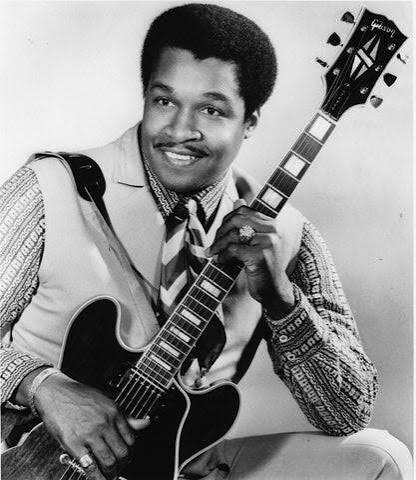
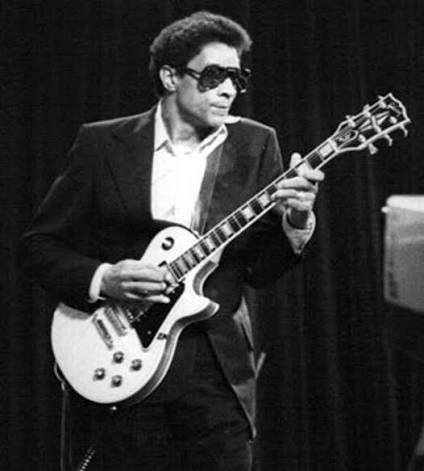
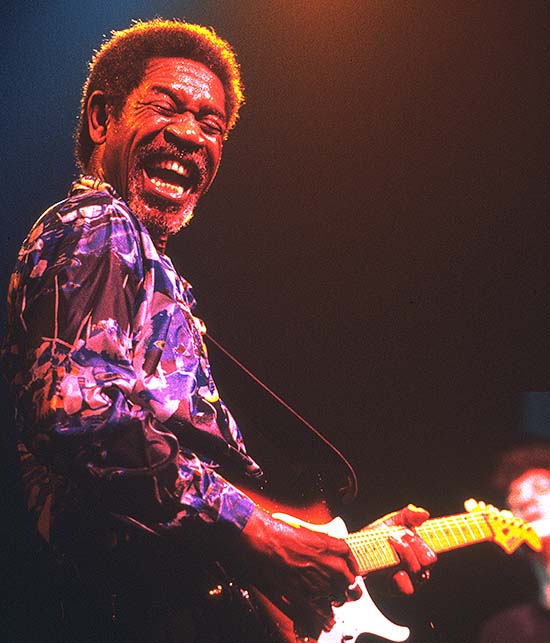
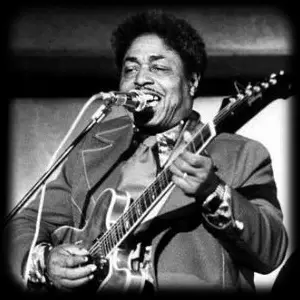
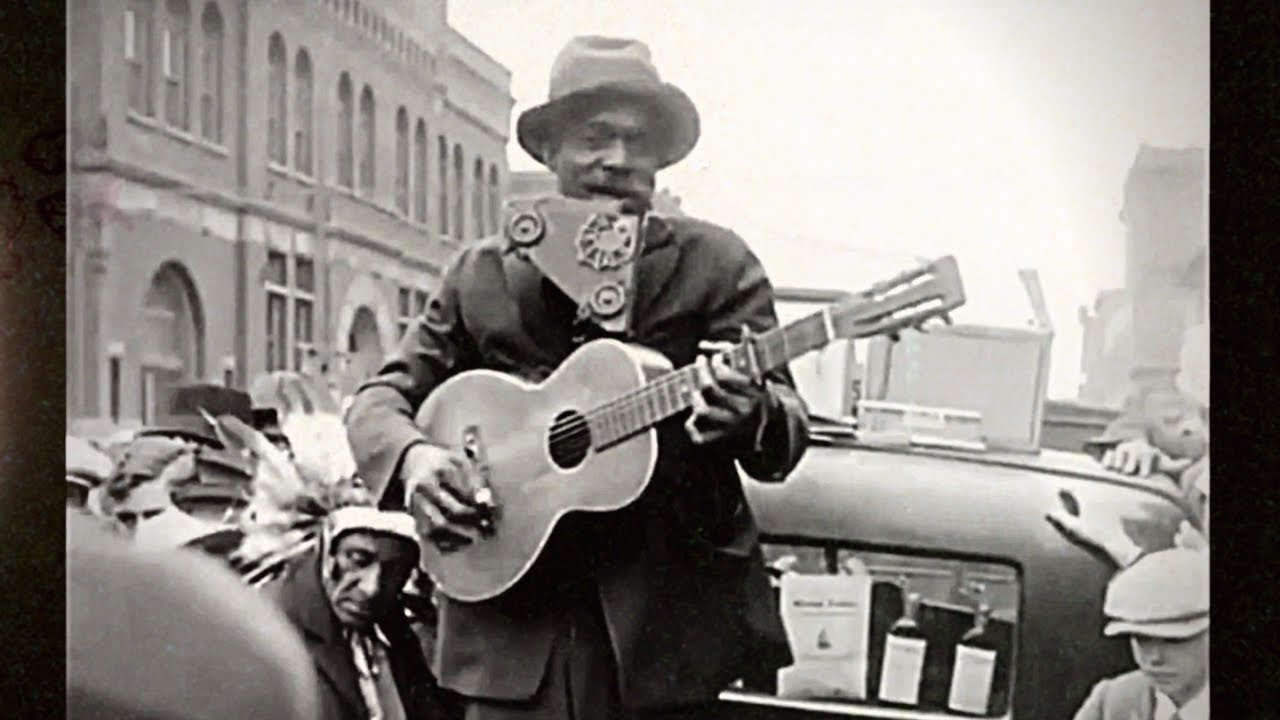
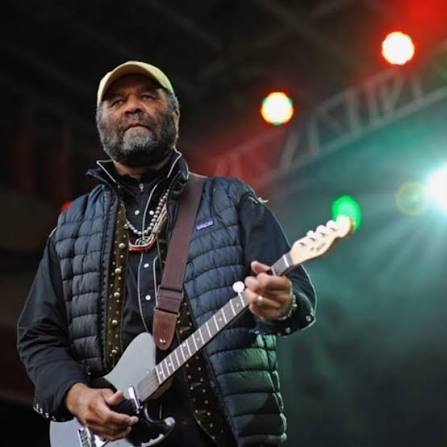
James Milton Campbell Jr.—known to the world as Little Milton—was one of the most versatile and enduring figures in American blues and soul music. Over a career that spanned more than five decades, he evolved from a teenage guitar-slinging prodigy in the Mississippi Delta to a chart-topping soul-blues star, a savvy record label executive, a mentor to future legends, and ultimately an elder statesman of the genre whose influence continues to resonate through generations of musicians. With a voice that could shift from tender balladry to roof-raising shout, and a guitar style that blended the sting of B.B. King with the emotional depth of Bobby "Blue" Bland, Little Milton carved out a unique space in American music that defied easy categorization.
Early Life and Musical Awakening
James Milton Campbell Jr. was born on September 7, 1934, on Duncan's Plantation near Inverness, Mississippi, in the heart of the Mississippi Delta. His father, Milton Campbell Sr., was known locally as "Big Milton"—a farmer and part-time blues musician who performed around Greenville. The nickname "Little" was bestowed on the son simply to distinguish him from his father, though as one observer noted, there was nothing little about him in stature or physique. He spent much of his early childhood with his mother in Magenta, Washington County, before returning to live with his father in Inverness.
Milton's first exposure to music came through multiple channels. He listened to the Grand Ole Opry on the radio, absorbing the sounds of country music, and was influenced by a remarkably diverse range of artists including Eddy Arnold, Ernest Tubb, Frank Sinatra, Roy Brown, and Sammy Davis Jr. His love affair with the guitar began when he was around twelve years old. He built a one-stringed instrument on the side of his home before saving enough money from picking cotton to buy his first real six-string guitar for $14.40 from a Marshall Field catalog.
His first professional experience came with Leland blues bandleader Eddie Cusic, who gave the young Milton his first opportunities to perform for paying audiences. Milton later recounted the story with characteristic humor: he and his brother wandered into a juke joint where Cusic was playing, and the bandleader let the teenager sit in. The crowd responded enthusiastically to his powerful young voice, and soon Cusic was paying him $1.50 a night—though Milton noted that he had worked for as little as thirty-five cents with other bands. By his late teens, he had moved to Greenville, where he performed with local luminaries including Sonny Boy Williamson II (Rice Miller), Joe Willie Wilkins, and pianist Willie Love. He even hosted a radio program on WGVM in Greenville.
The Early Recording Years: Trumpet, Sun, and Meteor (1951–1957)
Little Milton's recording career began in 1951 when, at approximately sixteen or seventeen years old, he traveled to Jackson, Mississippi, to record as a sideman backing pianist Willie Love for Trumpet Records. These early sessions gave him his first taste of the studio, but it would be two years before he stepped out as a leader.
In 1953, while still a teenager playing in local bars around Greenville, Milton caught the attention of Ike Turner, who was then working as a talent scout for Sam Phillips at Sun Records in Memphis. Turner, whom Milton later described as "always the business man" and "like the brain thing," recognized the young guitarist's potential and brought him to Phillips. Milton signed with Sun and recorded a number of singles, including "Somebody Told Me," which was a primitive variation on B.B. King's "Woke Up This Morning." Turner provided backing for these sessions, and the recordings displayed a youthful energy and raw promise. However, none of Milton's Sun singles broke through commercially. The same year Milton recorded for Sun, a young white singer named Elvis Presley would make his first recordings for the same label, and Phillips's attention soon shifted toward the rock and roll revolution that Presley represented. Milton's association with Sun was over by the end of 1954.
Undaunted, Milton continued to pursue his recording career. In 1955 and 1956, he released singles on Meteor Records, a subsidiary of the Los Angeles-based Modern Records. These recordings showed increasing sophistication, but still failed to find a national audience. The frustration of these early years would prove formative, teaching Milton lessons about the music business that he would later apply to his own entrepreneurial ventures.
Bobbin Records and the Move to St. Louis (1958–1961)
In 1958, Little Milton made a pivotal decision that would alter the trajectory of his career: he moved to East St. Louis, Illinois, across the river from St. Louis, Missouri. The city was becoming a hub for blues musicians migrating from the South, and Milton quickly established himself in the local scene, playing at juke joints such as the Dynaflow, the Birdcage, and Chappie's Lounge.
In St. Louis, Milton befriended local disc jockey Bob Lyons. Together, they decided to create their own record label, christened Bobbin Records. The venture was born of necessity—Milton had recorded a demo in hopes of landing a deal with Mercury Records, but the label passed. Rather than accept rejection, Milton and Lyons took matters into their own hands. Bobbin's very first release, "I'm a Lonely Man," sold approximately 60,000 copies—an extraordinary achievement for a tiny independent label with no distribution network. The success attracted the attention of the Chicago blues establishment.
As head of A&R for Bobbin, Milton demonstrated the business acumen that would define his later career. He discovered and signed two artists who would become major stars: Albert King, the towering blues guitarist from Mississippi, and Fontella Bass, the powerful singer and pianist who would later achieve fame with "Rescue Me." Bass sang backing vocals and played piano in Milton's band during this period. The caliber of Bobbin's roster impressed Leonard Chess, the Polish immigrant co-founder of Chess Records in Chicago, who offered the label a wider distribution deal.
The Chess/Checker Years: Finding the Soul-Blues Sound (1961–1971)
In 1961, Little Milton signed to Checker Records, the subsidiary label of Chess Records that had been established to handle the growing roster of blues and R&B artists. It was at Checker that Milton would finally achieve the national success that had eluded him for nearly a decade. His first significant chart hit came in 1962 with "So Mean to Me," which reached No. 14 on the Billboard R&B chart. The record established Milton as a force to be reckoned with, though his sound was still evolving. Early Checker sides found him working in a straightforward blues mode, heavily influenced by B.B. King, with whom he would be compared throughout his career.
The turning point came in 1964 with "Blind Man," a cover of a Bobby Bland song. Milton later explained his approach: "It wasn't my goal to go out to get Bobby Bland. My goal was to try to look out for Little Milton. I heard the tune—they recorded it first—and I liked it. And it didn't do anything for them. They had it on an album. I thought it could be a smash, so I did it... I did put a little more guts into it and slowed it down some—gave it a little more meaningful beat." The record gave Milton his first national reputation, though some critics dismissed him as merely a Bland imitator.
Those critics were silenced in 1965. Working with producer Billy Davis, Milton crafted an original fusion of blues and soul that would become his trademark. "We're Gonna Make It" was released in May 1965 and became a phenomenon. The song topped the Billboard R&B chart for three weeks and crossed over to the pop chart, reaching No. 25 on the Billboard Hot 100. Its success was particularly resonant because its lyrics—celebrating perseverance in the face of poverty ("we may have to eat beans every day / but we're gonna make it")—captured the spirit of the civil rights movement then sweeping America. As one writer noted, the title "seemed to capture the black mood of the time." The record earned Chess its first R&B No. 1 since Chuck Berry's "Sweet Little Sixteen" in 1958, and it kicked off the most successful period of Milton's career.
Milton followed "We're Gonna Make It" with a string of hits that defined the soul-blues genre:
-
"Who's Cheating Who?" (1965) — Reached No. 4 on the R&B chart, a classic tale of romantic suspicion with a driving groove.
-
"Feel So Bad" (1966) — A hit version of Lightnin' Hopkins's song, reaching No. 7 on the R&B chart and No. 91 on the pop chart, demonstrating Milton's ability to reinterpret blues standards for a modern audience.
-
"Grits Ain't Groceries (All Around The World)" (1968) — A No. 13 R&B hit that became one of his signature songs, its title drawn from a Southern colloquialism.
-
"If Walls Could Talk" (1969) — Reached No. 10 on the R&B chart, a dramatic ballad featuring memorable lyrics ("If cars could say who's been inside / And who's been taken for a ride!").
-
"Baby, I Love You" (1970) — A cover of the Aretha Franklin hit that reached the R&B chart.
Throughout the late 1960s, Milton released numerous moderately successful singles and albums, including We're Gonna Make It (1965), Grits Ain't Groceries (1969), and If Walls Could Talk (1970). His sound grew increasingly orchestrated, with lush horn and string arrangements that placed his soulful baritone and stinging guitar in a more polished, pop-oriented context. He could still "reach back in the alley," as he did with his raw blues recordings, but his commercial success came from the sophisticated blend of blues emotion and soul production values.
The Stax Years: Return to Memphis (1971–1975)
The death of Leonard Chess in 1969 threw Chess Records and its subsidiary Checker into disarray. Milton, who had been one of the label's most consistent hitmakers, found himself in a period of uncertainty. In 1971, he made a significant career move by signing with Stax Records, the Memphis-based label that had defined Southern soul music with artists like Otis Redding, Isaac Hayes, and Booker T. & the M.G.'s.
At Stax, Milton was given complete artistic control over his recordings—a rare privilege that reflected the label's respect for his talents. He began featuring his guitar more prominently than he had on his later Checker sides, and his sound expanded with complex orchestration arranged by James Mitchell. The results were two masterpieces of modern blues:
Waiting for Little Milton and
Blues 'n Soul.
The Stax years produced several notable hits:
-
"That's What Love Will Make You Do" (1971) — Reached No. 9 on the R&B chart, a passionate ballad that showcased Milton's mature vocal style.
-
"Walking the Back Streets and Crying" (1972) — One of his most enduring songs, a haunting tale of loneliness that became a staple of his live performances. Milton performed the song atop a tenement roof in the landmark documentary film Wattstax (1973), which documented the historic benefit concert at the Los Angeles Memorial Coliseum. The film, released in 1973, captured Milton at the height of his powers, delivering a performance of searing emotional intensity.
-
"What It Is" (1972) — From the live album What It Is: Live at Montreux, recorded at the prestigious Montreux Jazz Festival.
-
"Little Bluebird" and "Annie Mae's Cafe" — Further Stax releases that demonstrated his continued relevance.
Despite these successes, Stax was facing severe financial difficulties that had begun in the late 1960s. The label was forced into bankruptcy in 1975, leaving Milton once again in search of a musical home.
The Wilderness Years and the Malaco Renaissance (1975–2005)
After Stax's collapse, Little Milton entered a difficult period. He moved first to the Evidence label, then to MCA's Mobile Fidelity Records imprint, where he released
Age Ain't Nothin' But a Number in 1983. The title track became his last significant hit single. He also recorded for the TK/Glades label, which was better known for funk and disco acts, and released "Friend of Mine," which achieved minor success. But these years were marked by label instability and a struggle to maintain the commercial momentum of his Chess and Stax heyday.
The turning point came in 1984, when Milton signed with Malaco Records, the Jackson, Mississippi-based independent label that had become the preeminent home for Southern soul and blues artists. The association would last for the remainder of his life—eighteen years—and prove to be the most stable and productive label relationship of his career. At Malaco, Milton found a company that understood his audience and his artistry, and he responded with some of the finest work of his later years.
During his Malaco tenure, Milton recorded fourteen albums and developed what would become his latter-day anthem: "The Blues Is Alright." Released in 1984, the song became a staple of bar bands and blues festivals across America and Europe, a declaration of resilience and pride that spoke to aging blues fans who had grown up with his music. Other notable Malaco releases included
Welcome to Little Milton (1999), which earned him his second Grammy nomination, and a string of albums that maintained his reputation as a living legend of the genre.
Milton remained an avid touring act throughout his later years, performing on the Southern soul and blues circuit where he was a major attraction. He moved to Las Vegas but kept an apartment in Memphis to stay close to the performance circuit that was his lifeblood. In May 2005, he made one of his final appearances, sharing a bill with The Allman Brothers Band.
The Man and His Music
Little Milton's musical style was a sophisticated blend of blues, soul, and R&B that defied easy categorization. As a vocalist, he was equally effective with powerful anthems and soft ballads, capable of shifting from a gritty blues shout to a smooth, crooning intimacy. As a guitarist, he had few peers, wielding a hollow-bodied Gibson with a stinging, precise attack that drew comparisons to B.B. King while maintaining a distinctively personal voice.
His influences were remarkably diverse. T-Bone Walker was his primary guitar influence, and the Texas blues pioneer's showmanship and electric attack can be heard throughout Milton's work. B.B. King's elegant phrasing and vibrato were also central to his style, and Bobby "Blue" Bland's dramatic, gospel-inflected vocal approach provided a model for Milton's ballad singing. Yet Milton was never merely an imitator. As he told
Living Blues magazine, his goal was always to "look out for Little Milton"—to find his own voice within the traditions he loved.
Milton was also a savvy businessman who demanded professionalism from his bands and insisted on maintaining a consistent musical identity. He produced many of his own records and, with his wife Pat, ran Camil Productions, a booking and management company that handled his career and represented other artists. This entrepreneurial spirit, born of the hard lessons of his early years, ensured that he maintained control over his art and his livelihood in an industry that often exploited Black musicians.
Honors and Recognition
Little Milton's contributions to American music were recognized throughout his life and after his death. In 1988, he was inducted into the Blues Hall of Fame and won the W.C. Handy Award for Blues Entertainer of the Year—acknowledgment of his status as one of the genre's premier performers. During his career, he placed a total of twenty-nine singles and seventeen albums on the Billboard charts, a remarkable achievement for an artist who worked primarily within the Black music market.
He received his second Grammy nomination in 1999 for
Welcome to Little Milton, a testament to the enduring quality of his Malaco recordings. His influence extended beyond the blues world into rock and soul, with artists like the Spencer Davis Group recording his compositions (though, in a typical industry injustice, his authorship of "Let Me Down Easy" was not acknowledged on their 1965 release). Etta James chose his "Let Me Down Easy" as the final track on her 2011 album
The Dreamer, a posthumous tribute from one soul legend to another.
Final Days and Legacy
On July 27, 2005, Little Milton suffered a massive stroke in his adopted hometown of Memphis, Tennessee. He died on August 4, 2005, at the age of 70, from complications following the stroke. His passing marked the end of an era in blues and soul music.
He was posthumously honored with a marker on the Mississippi Blues Trail in Inverness, near his birthplace, commemorating his journey from the cotton fields of the Delta to the stages of the world. The marker stands as a testament to a career that embodied the resilience, creativity, and entrepreneurial spirit of the blues tradition.
Little Milton's legacy is multifaceted. As a recording artist, he created a body of work that spans the transition from down-home Delta blues to sophisticated soul-blues, documenting the evolution of Black popular music across five decades. As a businessman, he demonstrated that blues artists could control their own careers, founding Bobbin Records and later running Camil Productions with his wife. As a mentor, he helped launch the careers of Albert King and Fontella Bass, ensuring that the blues tradition would be carried forward by new generations.
But perhaps his greatest legacy is the music itself—the soul-blues fusion that he perfected at Chess and Stax, the anthems of perseverance like "We're Gonna Make It" that gave voice to the struggles and triumphs of working-class Black America, and the late-career declaration that "The Blues Is Alright," which became a rallying cry for a genre that has survived every challenge history has thrown at it. Little Milton Campbell was, in the words of Fontella Bass, a man of "a certain gentleness united with inner strength" who kept his audiences "completely mesmerized by his performance." That mesmerism continues, in the records he left behind and in the countless artists he influenced, from B.B. King disciples to Southern soul singers to the bar bands that still play "The Blues Is Alright" in tiny, smoky rooms wherever the blues has an audience.
Suggested Listening
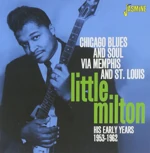 Buy from Amazon Chicago Blues And Soul Via Memphis And St Louis - His Early Years 1953-1962 - Little Milton
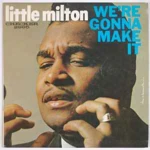 Buy from Amazon We're Gonna Make It
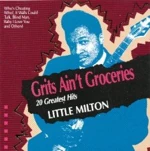 Buy from Amazon Grits Ain't Groceries