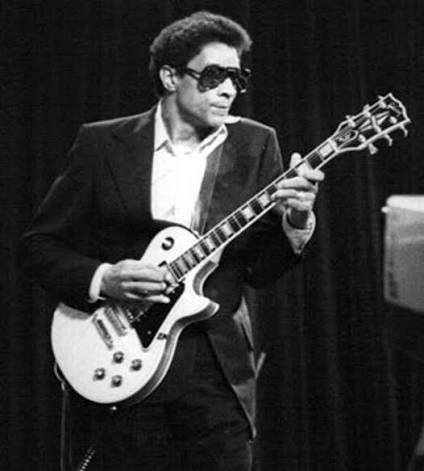
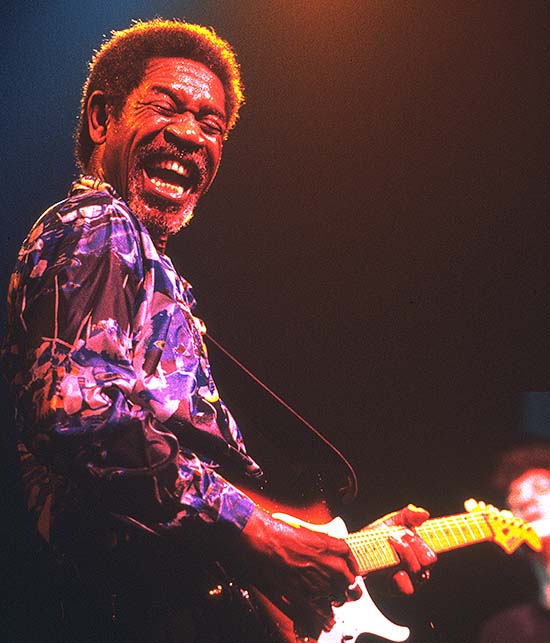
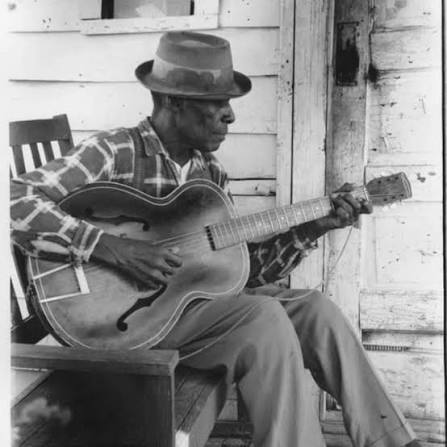
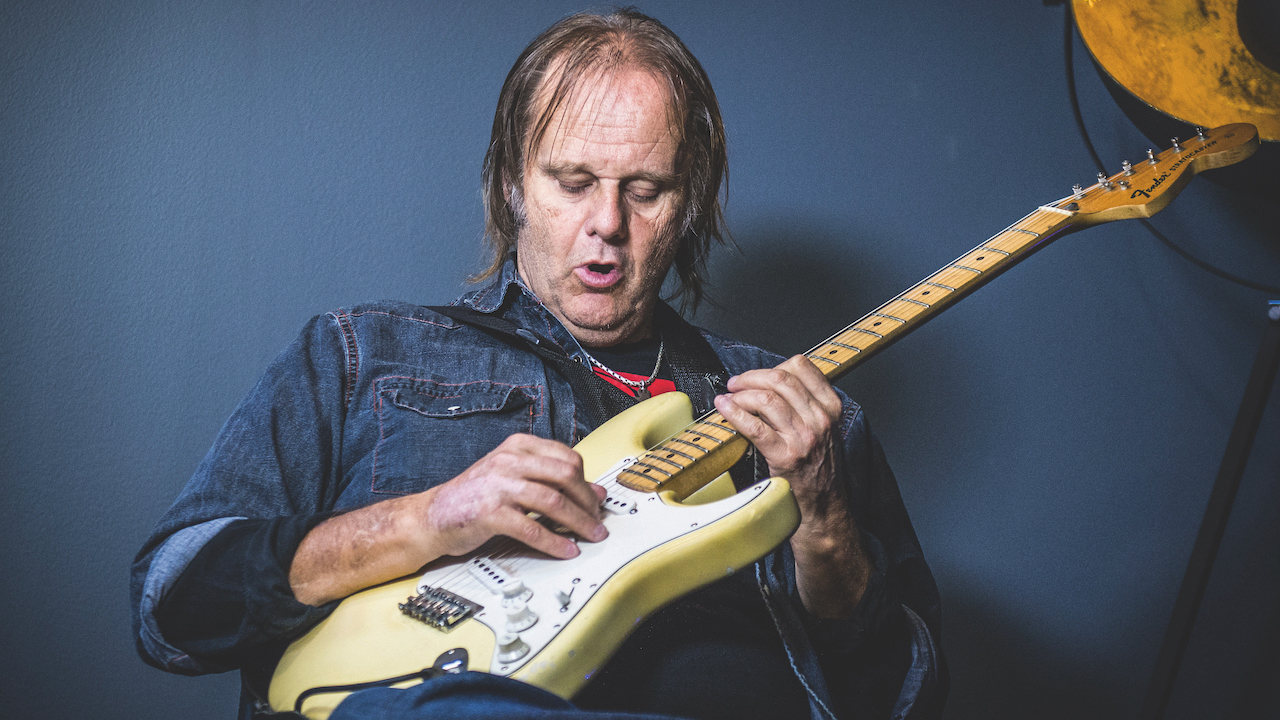
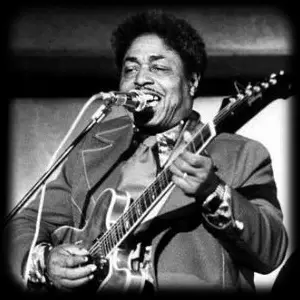
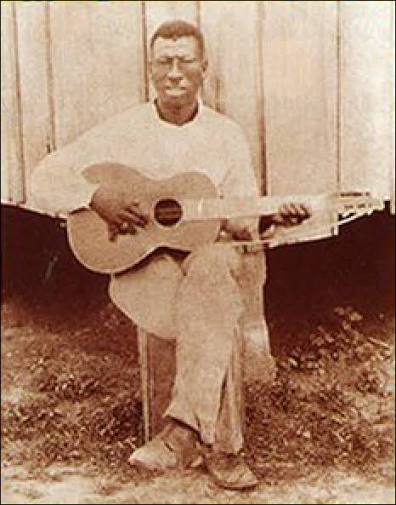
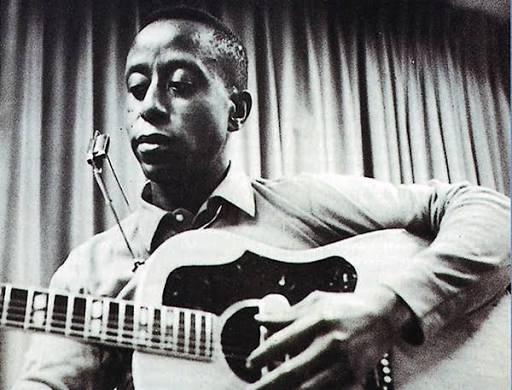
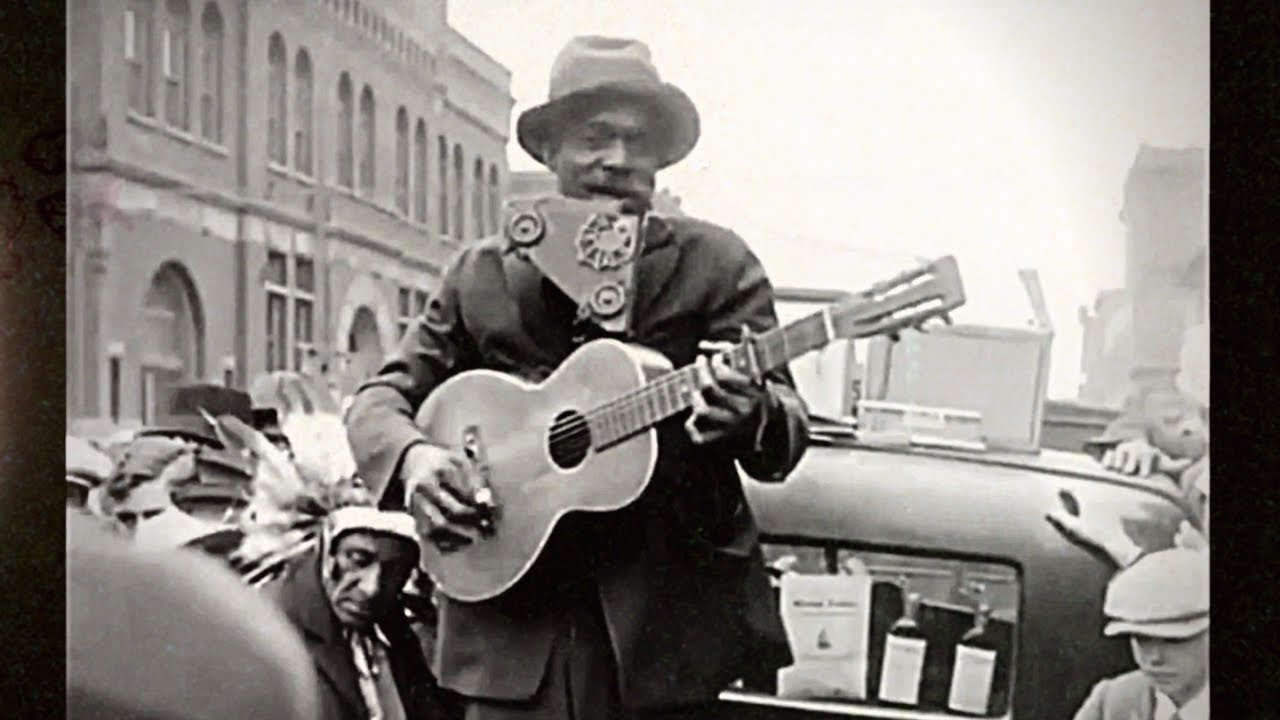
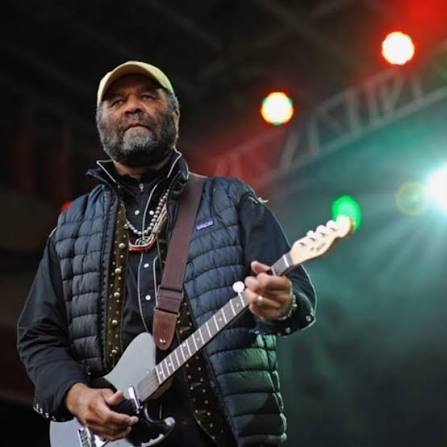
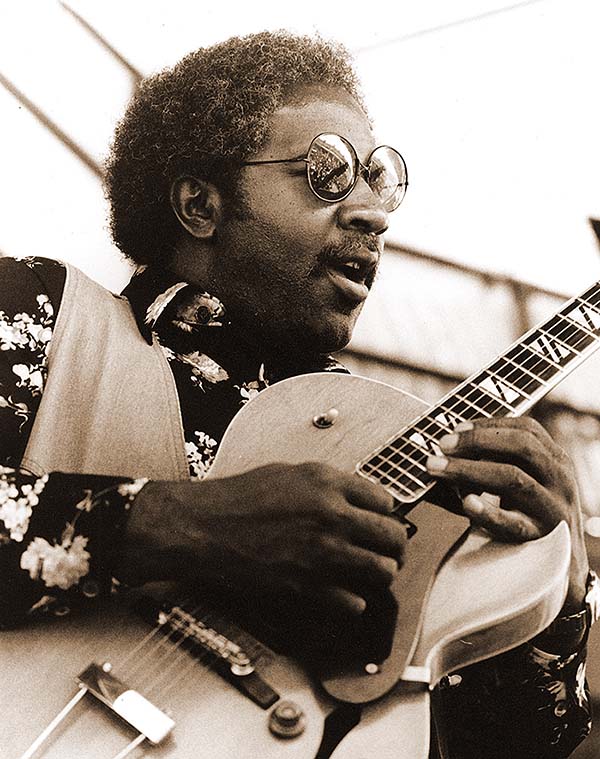
Fenton Lee Robinson was one of the most distinctive and underappreciated voices in the history of Chicago blues. A guitarist and singer of remarkable subtlety and sophistication, Robinson carved out a musical identity that stood apart from the raw, electrified sound that defined the Windy City's blues scene. His Japanese admirers dubbed him "the mellow blues genius," a title that captured both the smooth, jazz-inflected quality of his guitar work and the understated power of his vocals. Though he never achieved the household-name status of B.B. King or Muddy Waters, Robinson's influence on contemporary blues artists—particularly Robert Cray—and his composition of "Somebody Loan Me a Dime," one of the most enduring blues standards of the modern era, secured his place as a true connoisseur's choice.
Early Life and Musical Awakening
Fenton Lee Robinson was born on September 23, 1935, in Minter City, Mississippi, near Greenwood in Leflore County, deep in the Mississippi Delta. He was raised on a plantation, the son of a family that straddled the line between the sacred and the secular—a common experience for African American musicians of his generation. "I was a spiritual singer, you know. I was born with that. Came up a kid singing spirituals, and I turned from spirituals to blues," Robinson later recalled. His early musical education came from the jukebox: on weekends, his parents would let him go to town, where he would put a nickel in the machine and listen to T-Bone Walker, Arthur "Big Boy" Crudup, Lowell Fulson, and Muddy Waters. B.B. King was also a formative influence, particularly as a singer. "B.B. King was sort of an influence singing blues, because he's been out there popular longer than any blues artists been around," Robinson noted.
Like many Delta children, Robinson's first instrument was a piece of baling wire nailed to the wall—a longstanding Mississippi tradition. But it was not until he moved to Memphis in 1951, at the age of sixteen, that he fully committed to the guitar. There, he met Charles McGowan, a local guitarist who became his teacher and musical partner. "There was a friend of mine taught me how to play by the name of Charles McGowan. He was playing, and I bought myself a $13 Stella guitar. We used to walk the streets at night, playing and singing," Robinson remembered. The duo, billing themselves as "The McGowan Brothers," began performing on the streets of Memphis and soon graduated to the amateur shows at the Palace or New Daisy Theater on Beale Street, appearing every Wednesday night.
The Memphis and Little Rock Years (1951–1961)
Robinson's early professional life was characterized by constant movement. Around 1954, he and McGowan relocated to Little Rock, Arkansas, where they established a band and worked a circuit that extended to Memphis, Missouri, St. Louis, and Cairo, Illinois. "We worked around Memphis; Little Rock; Missouri; St. Louis; Cairo, Illinois," Robinson said of this period. The itinerant lifestyle was typical of young blues musicians of the era, driven by the need to find sufficient work to pay the bills.
Robinson made his recording debut in 1957, returning to Memphis to cut a single for Lester Bihari's Meteor label, a subsidiary of Los Angeles-based Modern Records. Backed by his band, the Dukes—with McGowan on second guitar and Larry Davis on drums—Robinson recorded "Tennessee Woman," a Latin-tinged number featuring a blistering guitar solo, and "Crying Out Loud" on the flip side. The record label misspelled his name as "Fention," an error that would persist at his next recording home. B.B. King's early vocal style informed Robinson's aggressive singing on these tracks, and his rapid-fire fretwork showed the stamp of King's guitar approach as well. "Tennessee Woman" would remain in Robinson's repertoire for decades, and he would revisit it in more polished form later in his career.
The Duke-Peacock Years and "Texas Flood" (1958–1959)
Robinson's big break came through a chance encounter at Little Rock's Flamingo Club. Bobby Bland, already a rising star on the Duke-Peacock label, caught Robinson and Larry Davis performing and was sufficiently impressed to bring them to the attention of Don Robey, the formidable owner of Duke-Peacock Records in Houston. At the time, Duke-Peacock was the largest Black-owned record label in the country, with a roster that included Bland, Little Richard, Otis Rush, Gatemouth Brown, Memphis Slim, Roscoe Gordon, and Big Mama Thornton. Robey signed both Robinson and Davis, and the two years Robinson spent on the label (1958–1959) proved pivotal.
Robinson's first Duke release, "The Freeze," credited to "Fention and the Castle Rockers," was an instrumental cover of an Albert Collins tune that found Robinson trying to emulate the icy Texas guitarist's sound. It was not representative of his strengths. Far more indicative was his next offering, the swaggering shuffle "Mississippi Steamboat," supplied by Duke bandleader Joe Scott, which featured a hair-raising B.B. King-style vocal and a give-and-take between Robinson's guitar and a saxophonist, with Larry Davis supplying thundering electric bass. Robinson also co-wrote the hard-driving flip side, "Crazy Crazy Loving."
Perhaps the most historically significant recording of Robinson's Duke tenure was his guitar work on Larry Davis's "Texas Flood." Robinson provided the distinctive guitar parts on the original 1958 recording, with Davis on vocals and bass, James Booker on piano, David Dean on tenor saxophone, Booker Crutchfield on baritone saxophone, and an unknown drummer. The song would become a signature tune for Stevie Ray Vaughan nearly three decades later, but it was Robinson's guitar that helped define its sound.
Robinson's 1959 Duke sessions produced what many consider his first masterpiece: "As the Years Go By," a slow blues written by Peppermint Harris (though credited to Robey's pseudonym, Deadric Malone). Robinson's hair-raising vocal and fleet-fingered guitar work framed the regretful lyrics with extraordinary emotional depth. "Peppermint Harris wrote that tune for me," Robinson later clarified. "I get a lot of inspiration out of other peoples' tunes. It makes me feel good." The B-side, "School Boy," was a romping jump blues featuring a vicious guitar break. The follow-up single revisited "Tennessee Woman" in a far more polished form, with Duke's house band—driven by bassist Hamp Simmons and featuring a brilliant piano solo credited to James Booker (though some sources suggest it may have been Edward Frank)—absolutely raging behind him. The flip side, "You've Got to Pass This Way Again," was a heartrending blues ballad that Robinson wrung for every ounce of emotion.
Chicago: The Long Apprenticeship (1962–1967)
In 1962, at the age of twenty-seven, Robinson made the move that would define the rest of his career: he relocated to Chicago. "I came to Chicago in 1961," he said, though other sources place the move in 1962. "I just wanted to travel around, you know, and see what I could get into." What he got into was the most competitive blues scene in America. He quickly found work at Theresa's Lounge on 48th and Indiana, where he held down a residency for four or five years, working both as a sideman and fronting his own band. The musicians he backed during this period read like a who's who of Chicago blues: Sonny Boy Williamson II, Junior Wells, Charlie Musselwhite, and Otis Rush among others. He also wrote songs for other artists, including Lowell Fulson.
From Theresa's, Robinson moved to a steady gig at the Peppermint Lounge, and it was during this period that his mature style began to crystallize. Drawing on the influences of T-Bone Walker, Pee Wee Crayton, and B.B. King, Robinson developed what he termed a "Texas Style" approach to the blues—a clean tone, a mellower sound, and improvisational chordal changes that set him apart from his Chicago contemporaries, who favored a heavier, more aggressive attack built on single notes, string bends, and heavily punctuated fills. "Fenton Robinson presented a smoother side of Chicago's Blues scene," one commentator observed. "And, to top it all off, Robinson offered complimentary vocals – relaxed, understated, and convincing."
Never content to rest on his laurels, Robinson continued his musical education in Chicago. He took lessons at Lyon & Healy, the downtown music store, before switching to private instruction from Reggie Boyd, a light-fingered guitarist who had played the dazzling solos on Jimmy Rogers' 1959 Chess recording of "Rock This House." Robinson's versatility extended beyond the blues: he worked with Prince James, a tenor saxophonist, for four or five years, playing jazz. "Great tenor player. We had a lot of fun together," Robinson recalled. This jazz influence would become increasingly central to his musical identity.
Recording opportunities in Chicago were initially scarce. Pianist Detroit Jr. finally connected Robinson with the U.S.A. label in 1966, resulting in the marvelous swinger "Say You're Leavin'," with Detroit Jr. on piano and a solid rhythm section of bassist Bobby Anderson and drummer Billy Davenport. Robinson revived Little Richard's "From My Heart" on the B-side, peeling off a gorgeously intricate guitar solo. But it was his next recording that would change his life.
"Somebody Loan Me a Dime" and the Palos Session (1967)
In early 1967, Robinson recorded for Sunny Sawyer's Palos Records, a small Chicago label. The session produced "Somebody (Loan Me a Dime)," a gripping slow blues that would become his signature song and, eventually, one of the most widely performed blues standards of the modern era. Pianist Alberto Gianquinto (soon to join Santana), bassist Bobby Anderson, and B.B. King's drummer Sonny Freeman formed the driving rhythm section, and Robinson was on fire both vocally and on guitar. "It was a small company, and they couldn't distribute the record like it should be," Robinson later admitted. After a strong start in Chicago, the record failed to break nationally. A funky, horn-laced "I Believe" was its plattermate.
The story of "Somebody Loan Me a Dime" might have ended there, another great regional blues record lost to history. But in 1969, Boz Scaggs, then a young singer-songwriter recording his first domestic album for Atlantic, covered the song in an extended, marathon arrangement featuring Duane Allman on guitar. The version was a revelation, introducing Robinson's composition to a whole new audience of rock and blues fans. But there was a problem: Scaggs' album credits claimed he had written the song. "I didn't have it covered, so it was just laying there for somebody to pick it up. But I'll never make that mistake again," Robinson said of the experience. Extended legal proceedings eventually rectified the error, and Robinson and his estate received rightful credit and royalties. But the damage to his career momentum was significant. The song has since become a blues standard; according to the
Encyclopedia of Blues (1997), it is "part of the repertoire of one out of every two blues artists." It was also featured in the film
The Blues Brothers (1980), playing on the radio when Jake Blues (John Belushi) is being transported and paroled.
The Giant and Sound Stage 7 Years (1967–1973)
Following the Palos session, Robinson recorded for the Giant label in 1967, producing singles including "Farmers Son" and "Let Me Rock You To Sleep," both written in collaboration with Milton Middlebrook (an alias for producer Mel Collins). These were funky, modern upbeat blues with a soul tinge and plenty of commercial potential, but they failed to chart. His 1968 Giant encore, "You're Cracking Me Up" and "I Put My Baby In High Society," continued in a similar vein, with "I Put My Baby In High Society" representing Robinson at his most compelling, with rapid-fire fretting and emotional depth.
In 1970, Robinson signed with Sound Stage 7, the label run by Nashville R&B deejay John Richbourg (known on air as "John R"), whose 50,000-watt broadcasts over WDIA radio could be heard across much of the country. Richbourg's main artist was soul singer Joe Simon, but he brought Robinson aboard with the intention of steering him in a more commercial direction. The results were mixed. Richbourg initially pushed Robinson into a soul bag with a cover of Roscoe Robinson's "Leave You In The Arms Of Your Other Man," featuring chanting chorines and arranger Bergen White's thrusting horns. The crunchy lead guitar was not Robinson's, and the overall feel was more R&B than blues. Robinson's self-penned B-side, "The Getaway," was a straightahead blues that hinted at what he could do when left to his own devices.
Bassist-producer Tim Drummond assembled a version of the SS7 house band to record with Robinson at Nashville's Music City Studio, with Elvis Presley's longtime lead guitarist Scotty Moore engineering. The 1971 single "The Sky Is Crying"—a grinding revival of Elmore James's 1960 slide guitar hit—was paired with the simmering soul ballad "Let Me Come On Home." Additional tracks recorded for SS7 included the bongo-laced gem "She's A Wiggler" (released in 1973), the galloping "Sideman," the languid minor-key blues "Mellow Fellow," and the thoroughly modern "Laughing And Crying Blues." A track then called "I Fell In Love One Time," featuring unusual flamenco guitar and a string section, would be rescued by Robinson on his first Alligator album as "You Don't Know What Love Is."
In retrospect, both Richbourg and Robinson acknowledged that the restrictive, rock-oriented approach of the SS7 sessions did not serve Robinson's talents well, given his freer, more jazz-directed feel. The Sound Stage 7 years represented a period of commercial compromise that failed to yield the hits both artist and label hoped for.
The Alligator Years: Masterpieces and Misfortune (1974–1984)
The turning point in Fenton Robinson's career came in 1974, when he signed with Alligator Records, the Chicago-based independent label founded by Bruce Iglauer. Alligator had built its reputation on "Genuine Houserockin' Music"—raw, aggressive blues that thrived in the city's club scene. Robinson, with his subtle, melodic style and low-key stage presence, was not a typical Alligator artist. But Iglauer recognized his singular talents, and the partnership produced three albums that stand as Robinson's definitive work.
Somebody Loan Me a Dime (1974)
Robinson's Alligator debut,
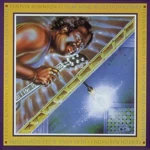
Somebody Loan Me a Dime, was the third time he had recorded his signature song, and it was the version that finally captured the song's full emotional weight. Exquisitely produced by Iglauer and Robinson at Chicago's Sound Studios, with Stu Black engineering, the album featured a sympathetic combo including rhythm guitarist Mighty Joe Young, bassist Cornelius "Mule" Boyson, and drummer Tony Gooden. The set saw Robinson revisiting past triumphs—"The Getaway," "Directly From My Heart," "Say You're Leavin'," and Larry Davis's "Texas Flood"—alongside fresh material. "I really like the way that came out," Robinson said. "My sound is based on good blues sound. I use a lot of chord progressions. Over a period of years, if you stay with it, you come up with beautiful sounds, beautiful chord progressions. I've been studying for a long time, off and on. I never do it every day. I may study three or four months out of the year, something like that, then I lay back. I don't like to study too much. I don't think it's good to study too much."
The album received glowing reviews, including a five-star rating in the
Rolling Stone Record Guide. It should have made Robinson a major blues luminary. But fate intervened. Robinson had fatally struck a pedestrian in an automobile accident in 1969. He had appealed his involuntary manslaughter conviction for years, but the court system decreed that he serve time at Joliet Penitentiary at the beginning of 1975, just as his album was breaking. "I had a little accident," he explained. "That hurt more than anything." A letter-writing campaign organized by Bruce Iglauer and blues fans secured his release after nine months, but his momentum was seriously impacted.
I Hear Some Blues Downstairs (1977)
Robinson's second Alligator album,
I Hear Some Blues Downstairs (1977), was both a Grammy nominee and a Blues Hall of Fame inductee. The album featured an exuberant title track, a pair of T-Bone Walker remakes ("West Side Baby" and "Tell Me What's The Reason"), and a stunning revival of "As The Years Go Passing By." The album demonstrated Robinson's continued growth as an artist and his ability to balance blues tradition with personal innovation.
Nightflight (1984)
Robinson's third Alligator album,
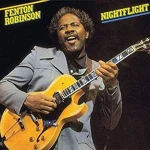
Nightflight, was released in 1984. Originally recorded for the Dutch Black Magic imprint and produced by Robinson and Dick Shurman, it was picked up by Alligator for American distribution. The album found Robinson in a more exploratory mode, pushing the boundaries of his jazz-inflected blues style. Though he and Alligator eventually parted ways, the three albums remain the cornerstone of his recorded legacy.
The Later Years: Teaching and Performing (1985–1997)
By the late 1980s, Robinson had grown discouraged. His subtle, melodic style and low-key stage presence were not well-suited to the raucous blues bar audiences that had come to expect the high-volume theatrics of Stevie Ray Vaughan and his imitators. Robinson moved first to Springfield, Illinois, where he immersed himself in blues education, working in the city's school systems and teaching youngsters the roots of the blues as well as instrumental techniques. He performed occasionally but found greater satisfaction in his role as a teacher.
In the last years of his life, Robinson married and lived in Rockford, Illinois. He continued to play, including a memorable main stage appearance at the 1995 Chicago Blues Festival in front of a massive throng of fans. But Robinson had been experiencing health problems that he traced to a 1952 auto accident in Memphis. "We turned over three or four times down in Memphis. I was a teenager. You know, I could carry it—young and strong," he said. "It was there. I didn't know it was bothering me as much until recently it started doing things. It started cutting me off of things. I was started to get nauseated, things like that." He underwent an operation in 1996 to remove a brain tumor, but the tumor grew back and proved to be cancerous.
Fenton Robinson died on November 25, 1997, in Rockford, Illinois, at the age of 62. The blues world lost one of its truly exceptional artists. In 2014, the Killer Blues Headstone Project placed a headstone for Robinson at Booker Cemetery in Marks, Mississippi, ensuring that his final resting place would be marked. In 2023, he was inducted into the Blues Hall of Fame, a posthumous recognition of his enduring contribution to the genre.
The Musical Style: A Scholarly Approach to the Blues
Fenton Robinson's musical style was defined by its sophistication and restraint. Where many of his Chicago contemporaries favored volume and aggression, Robinson cultivated a clean, complex, and well-structured approach that drew heavily on jazz harmony and the smooth, urban blues of T-Bone Walker. His guitar work was characterized by elaborate chordal progressions, fluid single-note lines, and a tone that was warm and full-bodied rather than piercing or distorted. "Fenton plays stunningly clean, complex and well-structured guitar, while singing with absolutely haunting power and beauty...a great artist,"
Living Blues magazine declared.
His vocal style was equally distinctive: relaxed, understated, and convincing, with a silky quality that complemented his guitar work rather than competing with it. He was not a shouter or a showman in the traditional blues mold; his power came from precision and emotional depth rather than volume or histrionics. As Bruce Iglauer of Alligator Records observed, "In a world of barroom entertainers Fenton Robinson was a serious musician who is best appreciated with greater concentration than the audience usually gave him."
Robinson's approach to the blues was scholarly and deliberate. He was a constant student of the guitar, studying chord progressions and harmonic possibilities with the dedication of a jazz musician. "I use a lot of chord progressions," he explained. "Over a period of years, if you stay with it, you come up with beautiful sounds, beautiful chord progressions." This intellectual approach to the blues—treating it as a serious art form worthy of lifelong study—set him apart from many of his peers and helped establish the template for the contemporary blues artists who would follow.
Influence and Legacy
Fenton Robinson's influence on subsequent generations of blues musicians is significant, though often indirect. His most immediate impact was on Robert Cray, the contemporary blues star whose smooth, soulful style and jazz-inflected guitar work owe a clear debt to Robinson's example. Cray's polished approach to the blues—eschewing the rawness of traditional Chicago blues in favor of a more refined, urbane sound—can be traced directly to the path Robinson carved.
Robinson's early recordings inspired numerous cover versions by established artists. Albert King, Elvin Bishop, Eric Burdon, Maggie Bell, and Charlie Musselwhite all recorded Robinson's early hits. Boz Scaggs's 1969 version of "Somebody Loan Me a Dime" introduced the song to rock audiences, and the legal battle over its authorship, while damaging to Robinson at the time, ultimately ensured that his name would be attached to one of the most widely performed blues standards of the modern era.
Beyond his direct musical influence, Robinson's career offers a case study in the challenges faced by sophisticated artists in a genre that often rewards rawness and spectacle over subtlety and refinement. His struggle to find an audience that appreciated his "mellow" approach—his discouragement at the raucous blues bar environment, his turn to teaching, his eventual move away from Chicago—reflects the broader tension between artistic integrity and commercial viability that has defined the blues throughout its history.
Discography
Singles
-
"Tennessee Woman" / "Crying Out Loud" (1957), Meteor
-
"The Freeze" (1958), Duke (as "Fention and the Castle Rockers")
-
"Mississippi Steamboat" / "Crazy Crazy Loving" (1958), Duke
-
"As the Years Go By" / "School Boy" (1959), Duke
-
"Tennessee Woman" / "You've Got to Pass This Way Again" (1959), Duke
-
"Say You're Leavin'" / "From My Heart" (1966), U.S.A.
-
"Somebody (Loan Me a Dime)" / "I Believe" (1967), Palos
-
"Farmers Son" / "Let Me Rock You To Sleep" (1967), Giant
-
"You're Cracking Me Up" / "I Put My Baby In High Society" (1968), Giant
-
"The Sky Is Crying" / "Let Me Come On Home" (1971), Sound Stage 7
-
"She's A Wiggler" (1973), Seventy 7
Albums
-
Mello Fellow (1970), Sound Stage 7
-
Monday Morning Boogie & Blues (1972), Seventy 7 Records; reissued by Sunset Blvd Records
-
The Getaway (1973), Seventy 7
-
Somebody Loan Me a Dime (1974), Alligator
-
I Hear Some Blues Downstairs (1977), Alligator
-
Blues In Progress (aka Nightflight) (1984), Black Magic; Alligator
-
Special Road (1989), Black Magic; Evidence
Conclusion: The Mellow Blues Genius
Fenton Robinson was, as his Japanese fans recognized, a genius of the mellow blues—a musician whose sophistication, subtlety, and scholarly dedication to his craft set him apart from the mainstream of Chicago blues. His career was marked by extraordinary bad luck: the misattribution of his signature song, the prison term that derailed his breakthrough album, the brain tumor that cut short his life. Yet through it all, he maintained an unwavering commitment to his art, constantly seeking "something new and compelling" in his music.
His legacy rests on three pillars: his three Alligator albums, which represent the pinnacle of his recorded work; "Somebody Loan Me a Dime," which ensured his name would live on in the repertoire of blues musicians worldwide; and his influence on Robert Cray and the generation of contemporary blues artists who followed his example of smooth, jazz-inflected sophistication. He was not a household name, but he was, in the words of Living Blues, "a great artist"—one whose music rewards the careful listener with "beautiful sounds, beautiful chord progressions" and a depth of feeling that transcends the limitations of his commercial success. The mellow blues genius may be gone, but his music continues to sing.

 Buy from Amazon Somebody Loan Me a Dime
 Buy from Amazon I Hear Some Blues Downstairs
 Buy from Amazon Night Flight