Introduction: The Label That Documented Chicago
There is a sentence in the liner notes to Delmark Records' 70th anniversary anthology that functions as both a statement of fact and a declaration of principle: Delmark is "the oldest independent jazz and blues record label in the world, boasting a catalog bulging with over twelve thousand recordings by a virtual who's who of jazz and blues." The sentence is accurate as far as it goes. But it understates the nature of what Delmark accomplished across seventy years of operation. This was not merely a label that documented music; it was a label that, on multiple occasions and in multiple musical contexts, was present at the creation — there when something that had not existed before came into being in a recording studio, and alert enough to recognise it and committed enough to release it.
Junior Wells and Buddy Guy making what would become widely regarded as one of the first albums by a working Chicago blues band. Roscoe Mitchell and his sextet recording the first commercially available document of the Association for the Advancement of Creative Musicians (AACM), establishing on record a musical movement that would reshape the landscape of contemporary jazz. Sleepy John Estes, rediscovered in a Tennessee hospital after thirty years of silence, walking back into a Chicago studio and demonstrating that the voice and the music had survived every assault of time and circumstance. Magic Sam arriving at Sound Studios on a July day in 1967 to record the first track of what would become West Side Soul — an album that many critics consider the definitive document of Chicago's West Side blues style. These were not routine commercial recording sessions. They were historical events, and Delmark was there.
The label's presence at these moments was not an accident. It was the consequence of a specific individual — Robert G. Koester, born in Wichita, Kansas, on October 30, 1932 — who possessed in unusual combination the collector's instinct, the entrepreneur's pragmatism, and the music lover's absolute conviction that what he was hearing mattered and needed to be preserved. Koester ran Delmark for sixty-five years, from its founding as "Delmar" in St. Louis in 1953 to his retirement and sale of the label to new management in 2018. His death on May 12, 2021, at the age of eighty-eight, prompted tributes that confirmed what musicians, collectors, and music journalists had known for decades: that Delmark Records, and the Jazz Record Mart that subsidised and promoted it, had been one of the most important institutions in American music history.
This is the story of that institution.
The Founder: Bob Koester Before Delmark
Robert Gregg Koester was the son of a petroleum engineer, which meant that his family moved frequently during his childhood, following the work wherever it led. This itinerant early life may have contributed to the restlessness that would characterise his adult approach to music — always looking for the next find, the next artist, the next genre that deserved documentation. He was in the hospital with polio as a child, and it was during this enforced stillness that he listened to the radio and was cheered up by the sounds of Eddie Condon and Benny Goodman. The music, heard in illness, lodged itself permanently.
As a teenager in Kansas City and its environs, Koester heard live jazz and blues at a level of quality that shaped his entire subsequent aesthetic. He attended concerts featuring Red Allen, Count Basie, Jimmy Rushing, Tommy Douglas, Lionel Hampton, and Jay McShann — musicians who represented the full vigour of the swing and blues traditions, and whose performances made the music feel like something that happened to you, not something you observed politely from a distance. He began buying old records from a Salvation Army store, developing the collector's sensibility that would prove as important to his career as any business acumen. By the time he enrolled at Saint Louis University in 1951 to study business and cinematography, he had a collection of some two thousand albums.
At Saint Louis University he met Ron Fister, another record collector, through the local St. Louis Jazz Club. The two of them opened a small record store, K & F Sales, in an old restaurant storefront, changing the name shortly to the Blue Note Record Shop. This venture marked Koester's first experience as a retailer — he was also selling records by mail order from his dormitory room, developing the distribution relationships that would prove essential to Delmark's subsequent survival.
When Fister and Koester parted ways, Koester moved to a location at the corner of Delmar and Olive streets in St. Louis. The street name — Delmar, the principal east-west artery of St. Louis's African American commercial district — would give the label its original name and, slightly transformed, its permanent identity. Delmar Boulevard was not just an address; it was a musical environment, a neighbourhood steeped in blues and jazz heritage, and Koester's decision to name his label after it reflected his understanding that what he was doing was rooted in a specific place and a specific culture.
He was twenty-one years old when he started the label. The aspiration that had originally drawn him to Saint Louis University — he wanted to be a filmmaker — had given way, as he later put it with characteristic directness, to seduction by the music. "I got seduced by the music, simple as that," he told an interviewer late in his life. "I'm glad I didn't get into filmmaking. I'd have to live in Los-fucking-Angeles." He stayed in the Midwest, and the Midwest got Delmark Records.
St. Louis, 1953–1958: The Founding Years
The first Delmark release — catalogue number 101 — was a recording by the Windy City Six, a traditional jazz ensemble based in St. Louis, recorded in 1953. The group's name pointed toward Chicago rather than St. Louis, reflecting the geographic aspirations of jazz musicians in the mid-twentieth century for whom Chicago represented the promised land of the music business. But the Windy City Six were local, and their recording was modest in scope and ambition — a document of traditional jazz, the style that Koester had loved since Eddie Condon's music reached him through a hospital radio. The record didn't sell particularly well; a few months after its release the group changed its leader and name to the Mound City Six. "This didn't help sales," Koester recalled drily.
The next phase of Delmar's St. Louis activity moved in a direction that would prove far more consequential. Koester began seeking out and recording African American blues musicians of the 1920s and 1930s who were still living in St. Louis and the surrounding area — artists whose recording careers had effectively ended with the Depression but who were still playing, still performing, still maintaining the music in forms that had not changed dramatically from their original recordings. Speckled Red — Rufus Perryman, a boogie-woogie and barrelhouse piano player whose 1929 recording "The Dirty Dozens" had been one of the most celebrated recordings of the early race records era — was living in St. Louis and became one of Koester's earliest blues subjects. Big Joe Williams, a wandering Mississippi guitarist whose nine-string guitar was as singular as his personality, was another. J.D. Short, James Crutchfield, and Barrelhouse Buck McFarland were among the others Koester recorded in St. Louis.
The choice to record these older artists was not commercially obvious. The music they played — unaccompanied or sparsely accompanied acoustic blues, rooted in traditions that predated the amplified Chicago sound — was not what the mainstream music market of the mid-1950s was interested in. But Koester's motivation was fundamentally documentary: he understood that these musicians represented a tradition that was in danger of disappearing entirely, and that recording them was an act of preservation as much as commercial enterprise. This documentary impulse would characterise Delmark's work throughout its history, giving the label a significance that went beyond the commercial success or failure of individual releases.
In 1956, Koester's father gave him $500 to help establish the company. Koester used the money to print covers for five albums — but made the disastrous calculation of printing ten-inch LP covers at precisely the moment when the industry standardised on the twelve-inch format. Almost overnight, the covers were obsolete. Delmark was in severe financial difficulties. Koester survived, characteristically, by turning the disaster into an opportunity: he went to record distributors and bought up their surplus stock of ten-inch LPs at deeply discounted prices, reselling them at a modest profit. The crisis passed, though it demonstrated the precarious economics on which an independent label of this kind operated.
A trip to Chicago in 1958 to acquire the rights to Paramount label's holdings — the company that had recorded Charley Patton, Skip James, and the foundational documents of Delta blues — led to Koester moving to Chicago permanently. He bought Seymour Schwartz's jazz store at 439 South Wabash Avenue, renamed it the Jazz Record Mart, and established the Jazz Record Mart's basement as the new home of Delmark Records. The label's name changed from "Delmar" to "Delmark" at this point — partly because of a threatened lawsuit from another company using a similar name — and the new name reflected both the St. Louis roots (Delmar) and the new Chicago identity (the added k giving the word a slightly harder, more urban edge).
The Jazz Record Mart: The Hub of a Musical Universe
Before continuing the story of Delmark as a label, it is essential to understand the Jazz Record Mart as an institution, because the two were inseparable for the entirety of Koester's tenure. The store — which moved multiple times over the decades, from South Wabash to West Grand to East Illinois and finally to a smaller version on North Rockwell and Irving Park — was, for thirty years and more, the epicentre of Chicago's blues and jazz culture. Musicians, collectors, critics, tourists, students, and dreamers passed through its doors in a continuous stream that made it one of the most culturally significant commercial spaces in American music history.
The store was subsidised Delmark — the retail income covered costs that the label's modest sales could not — but it also performed a function that no amount of money could easily replicate: it served as a salon, a meeting place, a clearinghouse for information about who was playing where and when, and a training ground for a generation of people who would go on to make significant contributions to American music. As one former employee observed, the store was "the center of info on who was playing where and when in Chi environs."
The roster of people who passed through the Jazz Record Mart as employees, customers, or regular visitors reads like a who's who of American music from the 1960s onward. Mike Bloomfield — the guitarist who would define the sound of the Paul Butterfield Blues Band and Electric Flag — worked at the store collating records. As Koester recalled: "Mike Bloomfield used to come in and collate records. We would get LP's from one plant and jackets from another. This was before shrinkwrap so he would package them together. He would do this for about 100 LP's and we would pay him by giving him some records." Charlie Musselwhite, who became one of the most celebrated harmonica players in blues history, came into the store one day looking like, as Koester put it, "an old wandering orphan with a guitar on his back." Koester gave him a back bedroom in a nearby apartment for $25-$50 a week.
Bruce Iglauer arrived in 1968 from the University of Wisconsin, looking for someone to take him to the blues clubs. Iglauer had read about the Jazz Record Mart in a Canadian folk magazine that advised: "If you want to hear live blues in Chicago, find your way to the Jazz Record Mart at 7 West Grand Avenue and ask the owner, Bob Koester, to take you to the clubs on the South and West Sides of the city." Koester did exactly that, becoming Iglauer's guide to a world that would eventually produce Alligator Records — one of the most commercially successful blues labels in history. When Iglauer asked Koester to record Hound Dog Taylor and the House Rockers and Koester declined — he was having cash flow problems and didn't share Iglauer's enthusiasm for the raw, unpolished Taylor sound — Iglauer founded Alligator Records to record them himself. The decision not to record Taylor was arguably Koester's most consequential commercial misjudgement, but it produced a second great Chicago label.
Iglauer was not the only Delmark employee to found his own label. Chuck Nessa, the Jazz Record Mart manager who would play a crucial role in the AACM story, founded Nessa Records. Jim O'Neal founded Rooster Records. Michael Frank founded Earwig Records. Bruce Kaplan founded Flying Fish Records. The list makes the Jazz Record Mart sound less like a record store than like an incubator for the entire independent label ecology of American music. Koester, whose stated philosophy was that he didn't respect anyone who worked for him for too long without striking out on their own, seems to have regarded this entrepreneurial departure of his employees as something close to an institutional success metric.
The Blues Documentary Work: Rediscovery and Preservation
The most historically significant work of Delmark's early Chicago years was the documentation of blues artists who had made records in the 1920s and 1930s and then disappeared from commercial music — artists whose records were being rediscovered by the folk revival community but who were assumed by many to be dead. Koester's decision to go and find these musicians, bring them to Chicago, and record them created some of the most remarkable documents of the folk blues revival.
The most dramatic of these rediscoveries was that of Sleepy John Estes. As discussed at length in the previous essay on Estes in this series, the guitarist and singer from Brownsville, Tennessee, was assumed by most blues scholars to be dead — Big Bill Broonzy had even stated in a memoir that Estes had died. In 1962, it was David Blumenthal — a documentary filmmaker who had been steered toward Brownsville by Memphis Slim — who found Estes alive in a sharecropper's shack near the town. Blumenthal passed the information to Koester. The resulting session of March 24, 1962, brought Estes to Chicago, where — supported by Ed Wilkinson on bass, John "Knocky" Parker on piano, and his long-time harmonica partner Hammie Nixon — he recorded the sides that became The Legend of Sleepy John Estes (Delmark DD 603, 1962).
Koester's own account of the Estes recording gives a flavour of how he approached such sessions: "John was somebody that I already had some of his records," he said. "In Big Bill Broonzy's book, he said, 'Estes was an old man when I was just a kid working on a track laying gang.' Broonzy lied his ass off in that book." Koester's characteristic directness extended to his assessment of the pre-existing scholarship, and his correction of the record was itself an act of musical justice: the real Sleepy John Estes was younger than Broonzy's book had implied, and the voice was still as extraordinary as it had been on the Paramount and Decca recordings of the 1930s.
The Legend of Sleepy John Estes was followed by Brownsville Blues (Delmark 613), drawing on material from the same sessions, and then Broke and Hungry (Ragged and Dirty, Too) (Delmark 608, 1964), which reunited Estes with his old collaborators Yank Rachell and Hammie Nixon and added the young Mike Bloomfield on guitar. The three albums together constitute the most important document of Estes's career and one of the most significant achievements of the folk blues revival era.
Big Joe Williams's recordings for Delmark were also among the label's most important contributions to blues documentation. Williams was a wandering Mississippi guitarist whose nine-string guitar — rigged up, by his own account, to prevent other musicians from borrowing it — gave him a sound that was literally like no one else. Koester recorded Williams in 1958, while he was still in St. Louis, producing material that would become Piney Woods Blues (Delmark 602, 1961). Williams was still recording for Delmark well into the 1960s, producing a substantial body of material that documented the Delta blues tradition in its most direct and unmediated form. Williams also had a habit of turning up at the Jazz Record Mart in person and sleeping in the basement, an informal residency that delighted and occasionally inconvenienced Koester in equal measure.
Speckled Red — whose The Dirty Dozens (Delmark 601, 1962) became the label's first blues album release — was another older artist whose Delmark recordings captured a tradition that had been documented on 78s in the late 1920s and early 1930s but had almost entirely disappeared from commercial record. Red's boogie-woogie and barrelhouse piano represented a direct line to the earliest African American secular piano traditions, and his Delmark album, like the Estes recordings, documented something that was genuinely in danger of passing from the world unrecorded in its mature, fully developed form.
Robert Nighthawk, Roosevelt Sykes, and Arthur "Big Boy" Crudup were among the other older artists whose Delmark recordings contributed to this documentary project. Sykes, whose piano style had influenced a generation of Chicago musicians, recorded Hard Drivin' Blues for Delmark; Nighthawk, one of the great slide guitarists of the post-war era, made his only album recordings for the label.
The Chicago Blues Revolution: Junior Wells, Magic Sam, and the West Side Sound
If the documentary work of the early 1960s was Delmark's most historically significant contribution to blues preservation, the recordings of Chicago's working blues bands in the mid-to-late 1960s were its most commercially and critically successful blues output, and the recordings that most directly influenced the subsequent development of the music worldwide.
The pivotal recording was Hoodoo Man Blues by Junior Wells, released in November 1965 as Delmark catalogue number 612. The album's production history encodes several of the most characteristic qualities of the Koester-era Delmark approach. Wells was given the liberty to select his own sidemen and tracklist, without the usual limitation of songs two or three minutes long. The result was "blatantly non-commercial," as one observer put it, and Koester knew it — he was anxious about the commercial response but believed sufficiently in Wells's music to proceed regardless. Wells selected his regular sideman Buddy Guy as guitarist, but Guy's participation created immediate complications: he was believed to be contractually bound to Chess Records, and his name could not appear in the credits. The solution was the alias "Friendly Chap," a name proposed by Peter Brown with the explanation that "A buddy is a friend, a guy is a chap." For parts of the session, Guy's guitar amplifier was not working, and his guitar was wired instead through the Leslie speaker of the studio's Hammond organ — an accident that contributed to the album's distinctive sound.
The album's title track had its own fraught history. Wells had recorded "Hoodoo Man Blues" on a 78 rpm record years before, but when the song was presented to radio personnel it had been rejected violently — "throwing it on the floor and stomping on it," as Wells later recalled. Wells was too disappointed to try again. Koester's encouragement was essential to the song's inclusion on the album. When the album appeared, it became Delmark's then-bestseller, a distinction it had not been surpassed as of 2003. The Delmark label note on the album captures Koester's characteristically self-effacing production philosophy: "Delmark is proud of the part Hoodoo Man Blues played in the popularizing of real Chicago blues and of Junior Wells. But the credit belongs to Junior, Buddy, Jack and Billy — they made the music. We just sat and dug it!"
The success of Hoodoo Man Blues opened the door to a series of West Side blues recordings that constituted one of the most remarkable single-label concentrations of blues talent in the post-war era. Magic Sam — Samuel Maghett, a guitarist and singer whose energy and originality had made him one of the most exciting performers in Chicago's West Side clubs but whose commercial recordings had been limited to singles on the small Cobra label in the late 1950s — came to Delmark for his first album recording in 1967.
The West Side Soul sessions took place on July 12 and October 25, 1967, produced and supervised by Koester and engineered by Stu Black at Sound Studios. The personnel on the album reflected the musicians Sam worked with regularly in the clubs: Mighty Joe Young on second guitar, Earnest Johnson on bass, and Odie Payne on drums. The Swedish pianist Per Notini (billed as Stockholm Slim) filled in when a regular pianist left town unexpectedly. Sam's singing and guitar playing were at their absolute peak — his house-rocking blues style, with its roots in both the Mississippi fiddle music of his childhood and the electric blues of his adopted city, was something genuinely new in the Chicago blues vocabulary.
Living Blues magazine subsequently named West Side Soul one of its top ten Desert Island Blues Discs — a ranking that confirms what critics and fans have consistently said about the album: it is not merely a great Chicago blues record but one of the handful of recordings that define what the genre is capable of at its most intense and most alive. The liner notes observe with characteristic Delmark directness: "Sam's Singing and playing have their roots deeply implanted in the Mississippi soil of his youth as well as in the traumatic everyday life of the raw West Side. But like all good blues and all great art, he reaches far beyond his ethnic origins and his everyday experiences and speaks for us all."
The tragedy that followed the album's release cast a permanent shadow over this creative peak. Magic Sam died on December 1, 1969, of a heart attack — he was only thirty-two years old, and he had been on the verge of the kind of national and international recognition that his talent deserved. The Delmark recordings of West Side Soul and its follow-up Black Magic are the primary document of what he was capable of, and the completeness with which they capture his genius makes the early death all the more devastating.
Otis Rush — another of the great West Side guitarists, whose early Cobra recordings "All Your Love (I Miss Loving)" and "I Can't Quit You Baby" had established the West Side sound's defining characteristics — recorded Cold Day in Hell for Delmark, extending and deepening a legacy that had been established in the 1950s. Jimmy Dawkins, Luther Allison, J.B. Hutto, and Jimmy Johnson were among the other West Side and South Side artists who recorded for the label during this extraordinary period. The Delmark catalogue of 1965-1975 represents the most complete single-label documentation of Chicago blues at its post-war peak.
The Jazz Programme: Traditional, Bebop, and Beyond
Delmark's blues work has tended to overshadow its jazz recordings in popular memory, partly because the blues releases had more commercial success and partly because the guitar-driven West Side blues sound has proven more durably appealing to rock-era audiences than the label's jazz output. But the jazz recordings were, from Koester's perspective, co-equal in importance, and several of them represent genuinely historic achievements.
The earliest Chicago jazz releases — beginning with the recordings that appeared after Koester relocated from St. Louis in 1958 — covered traditional and swing jazz territory. Ira Sullivan, one of Chicago's most versatile jazz musicians, appeared on the label's first Chicago recording, Nicky's Tune, recorded in December 1958 with trumpeter Nicky Hill and pianist Jodie Christian. Barney Bigard, Donald Byrd, Jimmy Forrest, George Lewis, and Bud Powell were among the jazz artists who recorded for Delmark in the label's first Chicago years, giving the jazz catalogue an impressive breadth and quality alongside the blues work.
The most significant jazz development in the label's history came in 1966, through the advocacy of Chuck Nessa. Nessa was the manager of the Jazz Record Mart, and by 1966 he had become deeply engaged with the musical community forming around the Association for the Advancement of Creative Musicians — the AACM, the Chicago-based collective of avant-garde musicians that included Roscoe Mitchell, Muhal Richard Abrams, Joseph Jarman, Anthony Braxton, and the musicians who would form the Art Ensemble of Chicago. Nessa pleaded with Koester to sign Mitchell, Jarman, and Abrams to Delmark contracts. As Koester recalled: "Everyone kept telling me, 'You've got to record Roscoe Mitchell.' And I figured, 'Well, I better record Roscoe Mitchell.'"
The result was Sound (Delmark 408, 1966), the first commercially available AACM recording and one of the most important avant-garde jazz documents of the decade. The album received a five-star review in DownBeat — the highest rating the magazine gives, reserved for recordings of exceptional significance — confirming that what Mitchell and his sextet had created was not merely interesting but genuinely revolutionary. As one critic wrote, Mitchell's "structural originality, confusions of scale through sensitivity to dynamics and mordant humor" were "already fully formed" on this debut. The sextet that recorded Sound included, alongside Mitchell, the musicians who would form the Art Ensemble of Chicago: Lester Bowie on trumpet, Malachi Favors on bass, Joseph Jarman on saxophone, and Phillip Wilson on drums.
The Sound recording opened a sustained period of AACM documentation on Delmark that produced some of the most important recordings in the avant-garde jazz tradition. Muhal Richard Abrams's Levels and Degrees of Light (1968) was the debut album of one of AACM's three founders — a pianist, composer, and conceptual thinker whose influence on virtually every AACM member was profound. Joseph Jarman's Song For (1967) presented the saxophonist and poet in a more expressionistic mode than Mitchell's debut, featuring the sole document of Fred Anderson's young quartet alongside Jarman's own ensemble. Kalaparusha Maurice McIntyre's Humility in the Light of the Creator (1969) added another voice to the AACM portrait. Anthony Braxton's For Alto (1969) — a double album of solo alto saxophone music that went to places no saxophone had gone before — was one of the most audacious and consequential recordings the label ever released, establishing Braxton's international reputation as one of the most important creative musicians of the late twentieth century.
Equally significant was Delmark's release of two of Sun Ra's earliest albums. Sun Song (1967) and Sound of Joy (1968), originally recorded in the mid-1950s as Saturn Records releases, appeared on Delmark and introduced Sun Ra's cosmic jazz philosophy to a wider audience than the self-released Saturn pressings had reached. Sun Ra — the pianist, composer, and bandleader who claimed Egyptian cosmic origins and whose Arkestra had been a consistent presence on Chicago's South Side since the mid-1950s — was one of the most singular figures in American music, and Delmark's decision to release his earliest recordings gave those recordings a permanence and distribution that they could not otherwise have achieved.
Koester was, by his own admission, not always a natural listener for the most challenging of the AACM recordings. "I can't say I've mastered the art of listening to avant-garde jazz," he told an interviewer, laughing. But his willingness to trust the judgement of Nessa and others who were more deeply engaged with the AACM project, and to release the recordings on the strength of that trust, was itself a form of artistic courage. The AACM albums were genuinely uncommercial — they sold in small numbers to a specialised audience — but they were also genuinely important, and Delmark's decision to document them has given the label a significant place in jazz history quite apart from its blues achievements.
The Label's Production Philosophy and Studio Approach
Any serious account of Delmark must attend to the production approach that characterised the label's recordings — the aesthetic philosophy, not always articulated explicitly but consistently audible in the results, that distinguished Delmark's recordings from those of more commercially oriented labels.
The core principle was what Koester called trying to "come up with what the group would sound like in a club." Rather than smoothing over the rough edges of live performance or adding studio polish that would make the recordings sound more conventionally professional, Delmark aimed to capture music as it existed in its natural environment — the South Side and West Side clubs where Junior Wells and Magic Sam and J.B. Hutto played for audiences who knew the music from the inside. This approach produced recordings that have worn remarkably well precisely because they are not products of their commercial moment; they sound like themselves rather than like the prevailing production fashion of 1965 or 1967.
Stu Black, the engineer who recorded many of Delmark's classic 1960s sessions, was essential to the realisation of this philosophy. The analogue stereo mixes that Black made for albums like West Side Soul captured the warmth and physical presence of the instruments — the weight of Magic Sam's guitar, the texture of Odie Payne's drums — in ways that subsequent digital reissues have worked hard to preserve. The original source material, captured well in the first place, has given Delmark's catalogue an archival durability that more commercially processed recordings from the same era sometimes lack.
The production credit on most Delmark blues albums from the Koester era reads "Album Production and Supervision: Robert G. Koester" — a formulation that captures the somewhat hands-off quality of his studio role. Koester supervised rather than directed; he created the conditions in which musicians could perform their best music and then, as he famously put it, "sat and dug it." The musicians were given considerable freedom — Wells choosing his own sidemen and tracklist for Hoodoo Man Blues, Magic Sam bringing the musicians he played with in the clubs to West Side Soul — and this freedom produced recordings that had the quality of lived music rather than studio constructions.
The Label's Ecosystem: Mentorship, Influence, and Offshoots
One of the most remarkable aspects of Delmark's history is the way it functioned not just as a record label but as an ecosystem — a set of relationships and opportunities that generated new musical ventures far beyond the label itself. The Jazz Record Mart was the hub of this ecosystem, and Koester was its sometimes gruff, always passionate centre.
Bruce Iglauer's founding of Alligator Records is the most commercially significant of the label's offshoots. When Koester declined to record Hound Dog Taylor and the House Rockers — citing cash flow problems and genuine uncertainty about Taylor's commercial potential — Iglauer took the initiative himself, recording Taylor for two evenings direct to two-track tape in 1971 and mixing the album as it was being recorded. Alligator Records became, over the subsequent five decades, the most successful blues label in the world, its roster including artists from Koko Taylor to Shemekia Copeland to Tommy Castro. Without Koester's mentorship and the Delmark experience, Iglauer has said, he would not have become a record producer. And without Koester's refusal to record Taylor, Alligator Records might not have come into existence.
Charlie Musselwhite, who took the bedroom in Koester's apartment and went on to become one of the most celebrated blues harmonica players in the world, represents another form of the Delmark influence — the mentorship of a musician rather than a label operator. Mike Bloomfield, who collated records in exchange for LPs and went on to define the sound of the Chicago-influenced rock guitar, was another. The Paul Butterfield Blues Band — which included Bloomfield and was directly influenced by the West Side Chicago blues that the Jazz Record Mart and Delmark documented and promoted — was one of the most important acts in the blues-rock synthesis that would produce the music of the late 1960s.
The Nessa Records label, founded by Chuck Nessa after he left Delmark, became an important documentation outlet for the AACM artists that Koester had introduced him to — including recordings of Anthony Braxton, Leo Smith, and others. Jim O'Neal's Rooster Records became an important document of traditional blues. Michael Frank's Earwig Records has consistently produced significant Chicago blues recordings. Flying Fish Records, Bruce Kaplan's label, became a significant force in acoustic American music. The network of labels that grew from the Jazz Record Mart and Delmark constitutes, taken together, one of the most significant clusters of independent music documentation in American cultural history.
Key Artists and Albums: A Selective Survey
The Delmark catalogue is too vast for comprehensive coverage, but several recordings beyond those already discussed deserve particular attention as representative of the label's range and significance.
J.B. Hutto and the Hawks — Joseph Benjamin Hutto was a slide guitarist and singer whose South Side blues sound was rawer and more direct than the polished West Side style of Magic Sam and Otis Rush. His Delmark album Hawk Squat (Delmark 617, 1968) captured the full energy of his live performances, with the Hawks' rhythm section driving the music with an urgency that made the more arranged West Side recordings sound almost sedate by comparison.
Luther Allison — Allison was a guitarist who straddled the boundary between blues and rock, his emotional intensity and technical ambition making him equally at home in blues clubs and rock venues. His Delmark recordings, beginning with Love Me Mama (Delmark 625, 1969), documented a major talent at the beginning of what would become an extraordinary international career. Allison's relationship with Delmark helped launch him to European audiences who embraced him more enthusiastically than the American market initially did.
Jimmy Dawkins — "Fast Fingers" Dawkins was another West Side guitarist of exceptional ability, his aggressive playing style and facility creating a sound that complemented but differed from Magic Sam and Otis Rush. His Delmark recordings, including Transatlantic 770 (Delmark 633, 1972) and All For Business (Delmark 634, 1971), documented an artist who deserved wider recognition than he received.
Jimmy Johnson — Johnson's Johnson's Whacks (Delmark 640, 1979) was a debut album that arrived after years of activity in the Chicago music scene, and its quality made the wait worthwhile. The album became, in Delmark's characteristically understated description, "a modern blues classic." Johnson, who died in 2021, continued recording for Delmark into his final years, his last album — Every Day of Your Life — being "highly praised" according to the label.
Sun Ra — The Delmark reissues of Sun Song and Sound of Joy, originally recorded for Ra's self-distributed Saturn label in the mid-1950s, gave the label a significant place in the documentation of one of American music's most original minds. These recordings showed Ra's music before it had achieved the cosmic grandeur of his later work — smaller in scale but already fully committed to a musical vision that was unlike anything else in jazz.
Sonny Stitt — Stitt's Delmark recordings placed the label firmly in the bebop mainstream, documenting one of the most fluent and technically accomplished alto saxophonists in jazz history. His appearances on the label demonstrated that Delmark's jazz programme encompassed not just the avant-garde AACM tradition but the hard bop and bebop traditions that had preceded it.
The New Ownership: Julia Miller and Elbio Barilari
In May 2018, Bob Koester retired and sold Delmark Records to Delmark Records LLC — a new ownership structure led by two Chicago-based musicians: Julia A. Miller, who became the label's President and CEO, and Elbio Barilari, who became Vice President and Artistic Director. The sale included the label's subsidiary labels, its CD and LP inventory, the catalogue of masters, and Riverside Studio — the physical recording facility that had become the label's production base.
The transfer of ownership to two active musicians represented a significant shift in the label's culture. Miller and Barilari brought a performer's perspective to the label's work — a direct familiarity with what it means to be in the studio and on the stage that complemented the archival and documentary instincts that had characterised Koester's tenure. Barilari, originally from Uruguay and a significant figure in Chicago's jazz scene, brought an international perspective to the label's jazz programme. Miller, a singer and producer, brought an emphasis on new music and contemporary artists alongside the continuation of the archival work that the catalogue required.
The new management moved quickly to demonstrate both continuity with the label's traditions and a genuine commitment to new directions. Under Miller and Barilari, Delmark released more than thirty albums in the five years following the sale — a rate of production that exceeded the Koester-era pace in some respects, reflecting the new management's eagerness to build on the label's heritage while developing new talent. The label also made its back catalogue digitally available in a comprehensive way, putting "12,000+ tracks" on streaming platforms and making the historic recordings accessible to audiences who had no access to physical media.
Koester's personal archive — his collection of vintage films, his correspondence, his business records — was donated to the University of Chicago Library after his death, where the Bob Koester Collection joined the academic record of Chicago cultural life. The donation was appropriate: Koester had, in effect, been an archivist of living music throughout his career, and it was fitting that his personal archive should find its way into institutional care.
The Legacy: What Delmark Built
The legacy of Delmark Records operates at several distinct levels, each of which deserves acknowledgement.
At the most direct level, it is the recordings themselves — the specific albums that captured specific artists at specific moments and preserved those moments permanently. Hoodoo Man Blues and West Side Soul are genuine masterpieces of American music, and they would not exist without Delmark's willingness to record artists who were playing in clubs for audiences of dozens or hundreds rather than thousands. Roscoe Mitchell's Sound was the document that proved the AACM's music was not merely a local phenomenon but an internationally significant artistic movement. The Sleepy John Estes albums gave a long-silenced voice its second hearing, and in doing so gave the folk blues revival its most powerful single document of an artist recalled from obscurity.
At a broader level, Delmark's legacy includes the entire ecosystem of labels and careers that the Jazz Record Mart and the Delmark operation produced. Alligator Records, now the most commercially successful blues label in the world, traces its origins directly to Delmark. The careers of Charlie Musselwhite, Mike Bloomfield, and other musicians whose early development was shaped by their relationship with the Jazz Record Mart and Bob Koester form part of the inheritance.
And at the broadest level, there is the cultural legacy — the demonstration that a small, undercapitalised independent label in the American Midwest, run by an obsessive collector who had originally wanted to be a filmmaker, could become one of the most important institutions in American music history. Koester did it by following his ears rather than the market, by trusting his instincts about what mattered rather than what would sell, and by understanding that preservation and documentation were as important as promotion and profit. As Michael Gaertner, owner of Lincoln Square's Interstellar Space, put it after Koester's death: "He launched an independent and later Chicago-based label that released music in multiple genres. Delmark documented Chicago blues, and we take that for granted." The parenthetical remark — "we take that for granted" — is the most important part of the sentence. We take it for granted because the documentation happened. Without Delmark, we would not.
Conclusion: Still Alive After Seventy Years
In 2023, Delmark Records celebrated its seventieth anniversary — a milestone that no other continuously operating jazz and blues independent label in the world could claim. The anniversary compilation brought together tracks from Junior Wells, Magic Sam, Otis Rush, Dinah Washington, T-Bone Walker, Little Walter, Memphis Slim, Jimmy Johnson, and Buddy Guy — a roster that underscored both the extraordinary quality of what had been built and the continuing vitality of the label under its new management.
Bob Koester, who died in May 2021 at the age of eighty-eight, did not live to see the seventieth anniversary. But the label he built continued without him, and the catalogue he assembled — those twelve thousand recordings, that virtual who's who of jazz and blues — continued to speak for itself. The recordings of Junior Wells and Buddy Guy, of Magic Sam and Otis Rush, of Sleepy John Estes and Big Joe Williams, of Roscoe Mitchell and Anthony Braxton: these are not historical curiosities but living music, as capable of moving a first-time listener in 2023 as they were capable of moving the handful of people who heard them in the clubs and studios of Chicago in the 1960s.
That durability is the ultimate measure of what Delmark accomplished. Not the commercial success, which was always modest by the standards of the major labels. Not the critical recognition, which came belatedly and was never quite adequate to the achievement. But the music itself — the recordings that Koester sat and dug in studios in Chicago and kept in print for decades when no commercial logic required him to, and that are now, in the digital age, more accessible than they have ever been in their history. "Delmark documented Chicago blues," the neighbour said, "and we take that for granted." We should not take it for granted. We should be grateful.
Selected Discography
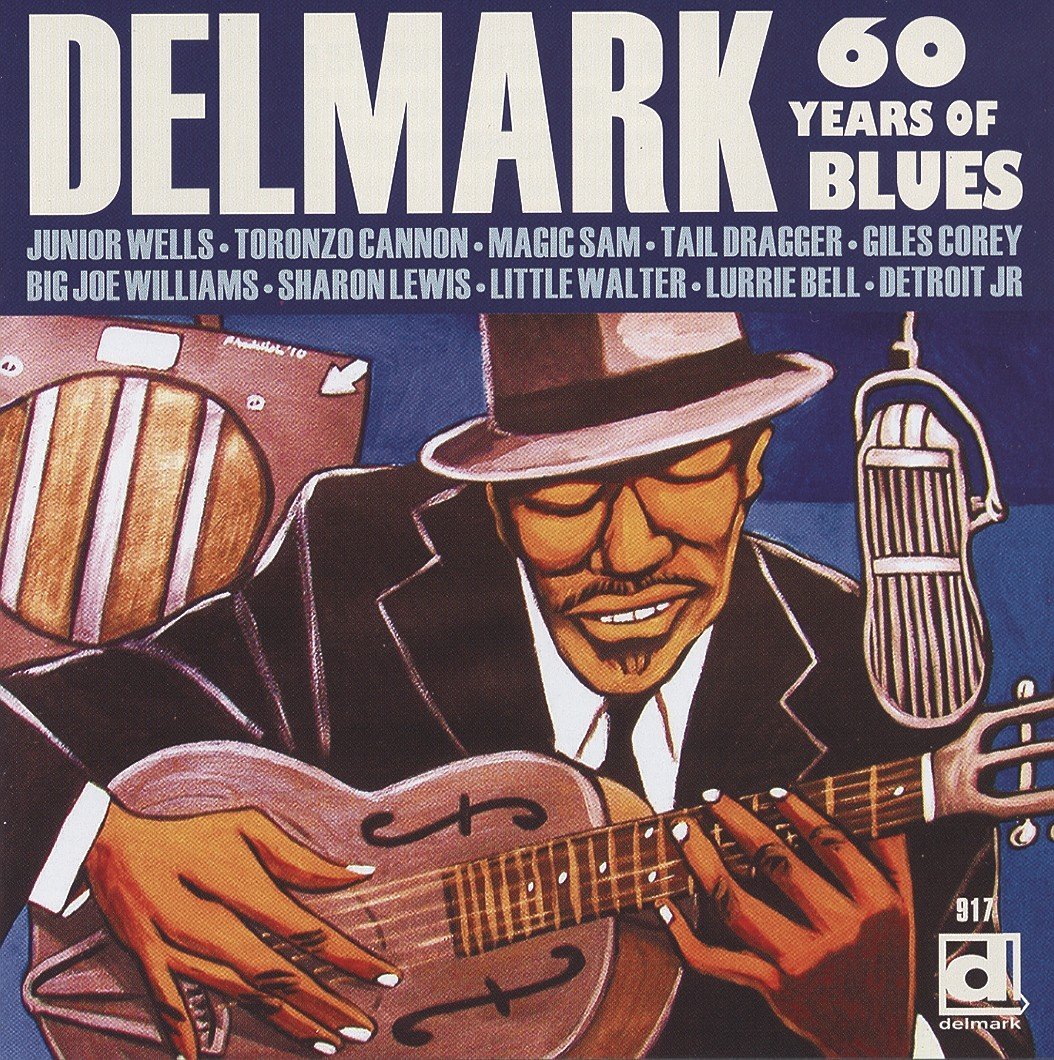
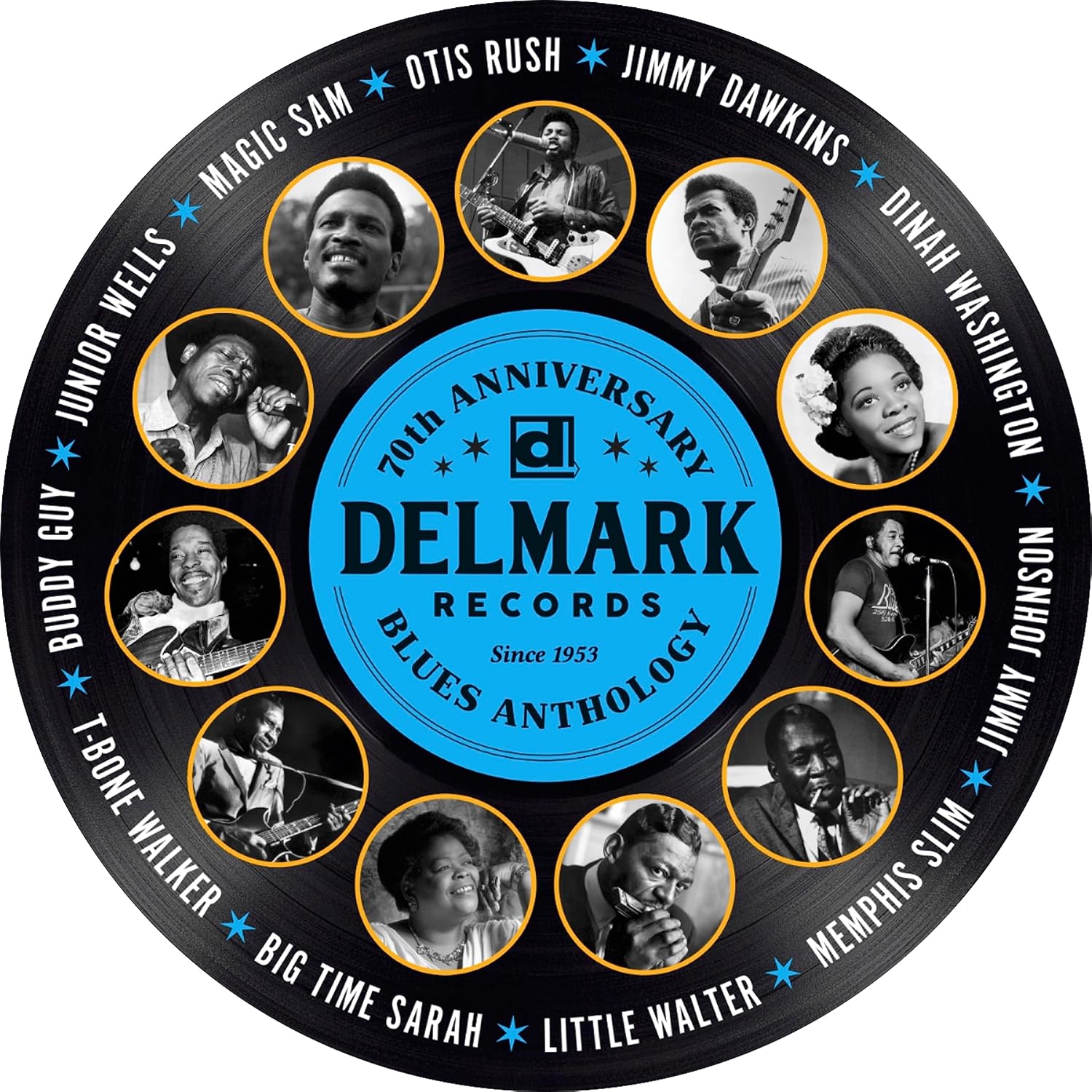
Delmark 70th Anniversary Blues Anthology
Delmark Records was founded by Robert G. Koester as Delmar Records in St. Louis, Missouri, in 1953. It relocated to Chicago in August 1958, when the name changed to Delmark. Koester sold the label to Delmark Records LLC in May 2018. The new management consists of Julia A. Miller (President and CEO) and Elbio Barilari (Vice President and Artistic Director). Robert G. Koester died on May 12, 2021, at the age of eighty-eight. Delmark Records is the oldest continuously operating jazz and blues independent record label in the United States. Its catalogue numbers more than twelve thousand recordings.