Introduction: The Album That Never Was, and the Legacy It Built
There is a particular irony at the centre of Lowell Fulson's most celebrated body of work. Between 1954 and 1962, Fulson recorded prolifically for Checker Records, the Chess Records subsidiary, producing some of the most essential West Coast blues of the post-war era. The recordings were hits, near-hits, and album filler across multiple cities and with a cast of musicians that reads like a who's who of mid-century American rhythm and blues. Yet Chess Records never assembled these recordings into a contemporaneous LP. While he only recorded a few dozen sides for the company — none of which were ever assembled into a contemporaneous LP — his first was a stunner. Fulson's Checker work existed only as singles and B-sides for the entirety of his tenure with the label, leaving it to posthumous compilers and reissue labels to create the albums that Chess never got around to making.
The album that bears the title Reconsider Baby — in its various guises on Charly, Jasmine, and other reissue labels — is therefore not a contemporary release but a retrospective construction: a gathering of the finest material from those eight years of Checker sessions, taking its name from the song that opened his Checker account and remained his most celebrated recording for the rest of his life. To understand the album is to understand the sessions from which it was drawn, and to understand those sessions is to follow Fulson across three cities — Dallas, Chicago, and Los Angeles — as he moved between different producers, different musicians, and different sonic approaches, while maintaining throughout the essential character of his art: a warm, expressive vocal, a guitar style that owed everything to T-Bone Walker and something to the Texas blues tradition he came from, and a songwriter's instinct for the memorable phrase and the durable song.
This is the story of those sessions, those musicians, those songs, and the standard that gave the album its name.
Lowell Fulson: The Man Who Made the Standard
Before the sessions, the man. Lowell Fulson was born on March 31, 1921, on a Choctaw reservation in Atoka, Oklahoma, to Mamie and Martin Fulson. His ancestry was mixed — he claimed both Cherokee lineage through his father and Choctaw connections — and his early musical environment was correspondingly eclectic, absorbing both the sacred music of the church and the secular guitar traditions of the southwestern plains. His father played guitar and introduced him to the instrument, though Lowell did not begin playing seriously until he was around twelve years old.
His father was killed when Lowell was still a child, a loss that left its mark on a family that moved several times through his youth, settling eventually in the area around Coalgate and Ada, Oklahoma. By his late teens, Fulson was a capable enough guitarist to attract professional attention. In 1939 or 1940, at the age of eighteen or nineteen, he joined Alger "Texas" Alexander for a brief touring stint through western Oklahoma and Texas — a formative apprenticeship with a veteran of the classic blues era. As Fulson later recalled in the book Meeting the Blues: "I went on a trip with him to Texas. First, we started out in Western Oklahoma and played Saturday night fish fries and whatever else they had going on. They'd cut the nickelodeon if they thought you sounded pretty good."
The experience of travelling with Alexander gave Fulson his first real education in the travelling musician's life, but it was the Navy that gave him California. Drafted in 1943, he served until 1945 and was discharged in Oakland — a city that would become his adopted home and the geographic centre of his career. Oakland and the wider Bay Area had a thriving African American music scene fed by the wartime migration of Black workers from the South, and Fulson found a ready audience for the blues he was playing. He teamed up with producer Bob Giddins and began recording for the small Big Town and Swing Time labels, where he would record through the early 1950s.
The West Coast period produced his first significant commercial successes. His original composition "Three O'Clock Blues" was a top ten R&B hit for Fulson himself and then a chart-topping smash when B.B. King covered it in 1951 — one of the most consequential acts of artistic transmission in blues history. Fulson's band during this period was remarkable: at various points it included the young Ray Charles on piano and vocals, and the tenor saxophonist Stanley Turrentine, later to become a jazz giant. Charles and Fulson toured together extensively in the early 1950s, and it was through this connection that the Lowell Fulson band served as a kind of musical finishing school for a generation of players.
David "Fathead" Newman met and befriended Ray Charles in early 1951 when Charles was playing piano and singing with the Lowell Fulson band. Newman himself had worked with Fulson and pianist Lloyd Glenn before joining Charles, creating a web of musical relationships that would have enormous consequences for American music in the years that followed. The Fulson band was, in the early 1950s, one of the most talent-dense organisations in American rhythm and blues.
The Swing Time recordings established Fulson as a major figure in West Coast blues — the style that had been defined by T-Bone Walker and that Fulson, more than any other artist, was carrying forward. After T-Bone Walker, he was the most important figure in West Coast blues in the 1940s and 1950s. The style was characterised by jump blues rhythms, jazz-inflected guitar lines, polished horn arrangements, and vocals that drew from both the blues tradition and the smoother approaches of urban R&B. It was blues for a mixed audience — the kind of music that could work in a dance hall as easily as in a juke joint.
By 1953, Fulson was recording for Aladdin in New Orleans, and the relationship with that label was winding down when Chess Records' subsidiary Checker came calling. The deal that followed would define the most commercially visible chapter of his career.
The Deal with Checker: Chess Comes to Texas
The circumstances of Lowell Fulson's signing with Checker Records in 1954 and the recording of his debut single are among the most entertaining in post-war blues history. In Fulson's own telling, preserved in the liner notes to the Chess Blues compilation: "I wrote a song, finished it, and I happened to be touring with a band down in Texas — Fathead Newman, Leroy Cooper, and the boys. I told them, 'Man, I got a tune I'd sure like to cut, but I can't go back to Chicago with all you guys…' The boys said, 'We'll do it with you,' and there was a recording studio there. I called the Chess brothers, and they told me, you want to cut it there, no, come to Chicago with us. I told them, 'No, I'm not coming to Chicago. I'll cut here, or I'll just keep the song.' They said, 'All right.' So I produced my own, 'Reconsider Baby' and 'Check Yourself.' I went down to Studio Seven, Dallas, TX and cut it, and then Chess had Stan Lewis from Shreveport come along and pay the musicians. The masters were sent right back to Chess, and, oh, I'll say in a couple of months, I had a record out."
This account reveals several things of significance. Fulson had the confidence to dictate terms to Leonard and Phil Chess — the formidable brothers who ran one of the most powerful independent labels in American music — and made it stick. He self-produced the session, making his own artistic decisions without the guidance of the label's in-house producers. And the song he was insisting on recording — "Reconsider Baby" — was one he had enough confidence in to risk the relationship over.
The producer who appeared on behalf of Chess was Stan Lewis, a Shreveport, Louisiana record retailer and distributor who would later found Jewel Records. Shreveport record retailer and distributor Stan Lewis, who later founded Jewel Records, produced the session in Dallas. Lewis's role was primarily supervisory and financial — making sure the musicians were paid and the masters got back to Chicago — rather than creative. The artistic direction of the session was Fulson's own.
The Producers: Stan Lewis, Willie Dixon, and the Chess House Sound
For the Checker sessions that followed the Dallas debut, Fulson worked with a range of production arrangements. The Chicago sessions of 1955 and 1956 came under the orbit of Willie Dixon, the bassist, songwriter, and arranger who was the creative backbone of the Chess operation during its golden years. Dixon's role at Chess was multifarious: he wrote songs for the label's artists, arranged sessions, played bass on countless recordings, and served as an unofficial artistic director whose influence extended across the entire Muddy Waters–Howlin' Wolf–Little Walter axis of Chicago blues.
Dixon's contribution to the Fulson Checker sessions was characteristically practical. He played bass on the Chicago sides, wrote at least one song for Fulson ("Do Me Right" and "Tollin' Bells"), and brought the Chicago house band to bear on a West Coast blues artist whose style was quite different from the electric Delta blues that Chess was primarily known for. The combination of Fulson's West Coast sensibility with the Chess Chicago rhythm section produced a sound that sat somewhere between the two worlds — more polished and arranged than a typical Muddy Waters session, less jazz-inflected than pure West Coast blues.
For the later Los Angeles sessions of 1960 onwards, Fulson worked in a more genuinely West Coast context, with pianist Lloyd Glenn and a rotating cast of Los Angeles-based musicians. These sessions, for which the primary producer in the Chess organisation was likely Leonard Chess himself, had a noticeably different character from the Chicago sides: warmer, more relaxed, with Glenn's smooth piano style giving the recordings a quality close to cocktail blues or sophisticated R&B.
The Key Musicians: A Cross-Country Roster
The Reconsider Baby album draws on multiple sessions with different personnel, creating a composite portrait of Fulson's working relationships across three cities and nearly a decade. Understanding the musicians is essential to understanding why the recordings sound the way they do.
Paul Drake (piano, Dallas 1954 session): Drake played piano on the original "Reconsider Baby" session. A Dallas musician, he provides the rolling 12-bar piano figure that is the rhythmic backbone of the title track, giving the song its "grinding" quality. His playing has a boogie-influenced directness that suits the song's mood perfectly.
David "Fathead" Newman (tenor saxophone, Dallas 1954 session): Newman was a Dallas native who had worked extensively in the Texas blues and jazz orbit, including previous work with Fulson. Newman was a leading proponent of the "Texas Tenor" saxophone style, a big-toned, bluesy approach popularized by jazz tenor players from that state. At the time of the September 1954 session, Newman was on the verge of joining Ray Charles's band permanently — he would make that move almost immediately after. His tenor work on "Reconsider Baby" reflects this Texas Tenor tradition: big-toned, assured, bluesy without sacrificing melodic clarity. He would go on to become one of the most celebrated saxophonists of the post-war era.
Leroy Cooper (baritone saxophone, Dallas 1954 session): Cooper was another musician in the Texas orbit who would subsequently join Ray Charles's band. His baritone anchors the horn section with the kind of bottom-heavy authority that distinguished West Coast arrangements from the thinner-sounding Chicago equivalents.
Choker Campbell (tenor saxophone, Dallas 1954 session): William "Choker" Campbell was a journeyman tenor saxophonist who worked extensively in the R&B recording world. His presence adds to the fullness of the Dallas horn section.
Julian Beasley (alto and baritone saxophones, Dallas 1954 session): Beasley's dual role — covering both alto and baritone — gave the Dallas session an unusually full horn palette for a recording that was, in other respects, modestly budgeted.
Phillip Gilbeaux (trumpet, Dallas 1954 session): Fulson's arrangement for "Reconsider Baby" included brass alongside the saxophones, and Gilbeaux's trumpet — rare in Chicago blues recordings of the period — gives the track its distinctive, slightly warm West Coast brass colour.
Phatz Morris (trombone, Dallas 1954 session): Morris completes the full brass picture on the debut session, his trombone contributing to the depth and body of the horn section. Morris would appear again on some of the Chicago sessions as "Fats Morris."
Bobby Nicholson (bass, Dallas 1954 session): The bassist on the original session, providing the walking foundation under the piano and drums.
Chick Booth (drums, Dallas 1954 session): Booth drove the session with a direct, propulsive groove that suited the song's mid-tempo character. The drums on "Reconsider Baby" have the quality of a live dance band rather than a carefully arranged studio recording — they push the song forward with genuine momentum.
Otis Spann (piano, Chicago 1955 sessions): For the Chicago sessions, the piano chair was taken by Otis Spann — Muddy Waters's regular pianist and one of the great blues pianists of his generation. Spann's playing has a different character from Drake's Dallas work: more swinging, more jazz-influenced, with a touch of the blues barrelhouse tradition. His presence on the 1955 sessions brings a genuinely Chicago feel to music that was otherwise quite West Coast in character.
Eddie Chamblee (tenor saxophone, Chicago 1955–1956 sessions): Chamblee was a Chicago-based tenor player who served as the primary horn voice on the 1955 and 1956 Chicago sessions. His work has the directness and drive of the Chicago R&B horn tradition.
Earl Brown (alto saxophone, Chicago and Los Angeles sessions): Brown appears on both the Chicago and the later Los Angeles sessions, providing continuity across the different recording contexts. His alto work has a clean, melodic quality that suits Fulson's arranged, polished approach to the blues.
Willie Dixon (bass, Chicago 1955–1956 sessions): Dixon's bass playing was as important as his songwriting and production contributions to the Chess sound. His walking bass lines on the Chicago Fulson sessions have the characteristic Dixon quality: melodically sophisticated, rhythmically reliable, and always in service of the song rather than the player.
Fred Below (drums, Chicago 1955 sessions): Below was the Chess house drummer — the man behind the kit on countless Muddy Waters, Little Walter, and Sonny Boy Williamson recordings. His drumming on the Fulson sessions has the same quality that distinguished his Chess work generally: swinging, fluid, with a particularly expressive hi-hat approach.
Billy Hadnott (bass, Los Angeles sessions): For the Los Angeles sessions beginning in 1960, Hadnott played bass. A West Coast musician, his playing has a somewhat different character from Dixon's Chicago work — more relaxed, less driving, suited to the cocktail blues atmosphere of the later recordings.
Lloyd Glenn (piano, Los Angeles sessions): Glenn was a veteran West Coast pianist who had had his own hit with "Chickaboo" and had worked extensively in the Los Angeles R&B scene. His smooth, rolling piano style gives the Los Angeles Checker sessions their distinctive character — sophisticated, jazz-tinged, always melodically interesting. Newman recalled: "I had met Ray [Charles] a little earlier, when I was playing with Lloyd Glenn, a piano player with a hit record called 'Chickaboo,' and Ray was with Lowell Fulsom, who featured him playing piano and singing."
Robert Sims (drums, Los Angeles sessions): The drummer on the later Los Angeles sessions, Sims gave those recordings a West Coast relaxation that contrasted with Below's more driving Chicago work.
Big Jim Wynn (baritone saxophone, Los Angeles sessions): Wynn anchored the horn section on the later Los Angeles sessions. A veteran of the California R&B scene, his baritone work suited the warmer sound of the West Coast recordings.
Big Jay McNeely (tenor saxophone, some Los Angeles sessions): McNeely was a showman and screamer as well as a capable straight blues player, and his appearances on some of the Los Angeles Fulson sessions bring a different energy from the more measured Chamblee contributions to the Chicago work.
The Sessions: Dallas, September 27, 1954
The session that produced "Reconsider Baby" was held on September 27, 1954, at Studio Seven in Dallas, Texas. The date is confirmed by the Wikipedia entry on the song: it was recorded September 27, 1954, in Dallas, Texas, under the supervision of Leonard Chess associate and Jewel Records owner Stan Lewis. Fulson brought the band he was touring with — a group of Texas-based musicians augmented by the horn players he had been working with on the road.
The session's informality was its strength. These were musicians who had been playing together on the road, who knew each other's tendencies, who had absorbed the songs in performance before the tape was running. The directness and assurance of the "Reconsider Baby" recording reflects this pre-session preparation: there is nothing tentative or exploratory about the performance. Everyone knows exactly what they are doing and why, and the result sounds inevitable.
Two masters were cut at the session: "Reconsider Baby" and "Check Yourself," which became the debut Checker single (Checker 804). Both sides reflected Fulson's West Coast blues approach: polished horn arrangements, swinging rhythmic foundation, a vocal style that drew from both the blues and the smoother end of R&B.
The Sessions: Chicago, 1955–1956
After the success of "Reconsider Baby" — which spent fifteen weeks on the Billboard R&B chart and reached number three — Chess brought Fulson to Chicago for a series of sessions in 1955 and 1956 that produced the bulk of his Checker output. These sessions took place at the Chess studios at 2120 South Michigan Avenue, the building that would later inspire the Rolling Stones to write an instrumental tribute.
The Chicago sessions were the ones that placed Fulson most squarely within the Chess aesthetic. With Otis Spann at the piano, Willie Dixon on bass, Fred Below on drums, and Eddie Chamblee leading the horn section, Fulson was surrounded by the musicians who defined the Chess house sound — the same rhythm section that appeared on Muddy Waters's greatest recordings. The combination of Fulson's West Coast sensibility with the Chess rhythm section creates a hybrid sound that is one of the most appealing qualities of his Checker work: the guitar playing and the vocal approach belong to California, but the rhythm section has the Chicago grit and swing.
Two of the most significant recordings from the Chicago period were produced by or in association with Willie Dixon: "Do Me Right" (written by Dixon himself) and "Tollin' Bells" (also a Dixon composition). In his memoir I Am the Blues, Dixon stated, "I wrote 'Tollin' Bells' for Lowell Fulson and the idea was like in New Orleans, when they'd have a funeral, guys would be marching for the funeral with the church bells tolling."
The 1956 Chicago session also produced "It's All Your Fault Baby," which would prove to have unexpected consequences for younger Chicago bluesmen. A 1970 entry in the Chess Vintage Series, Hung Down Head contains some of Blues Hall of Famer Lowell Fulson's finest work... 'It's All Your Fault' was a key influence on young Chicago bluesman Magic Sam's style. Magic Sam's guitar approach — the fluid, highly melodic style that defined Chicago's West Side blues — drew directly from Fulson's recording, demonstrating how the California visitor's music was absorbed and transformed by the Chicago scene he passed through.
The Chicago session for "Tollin' Bells" also produced one of the rare moments in Chess history when the label released outtakes and studio patter. The inclusion of the multiple false starts and studio patter on 'Tollin' Bells' marked one of the first times Chess released such material to document historic sessions for collectors and completists. The false starts and between-take conversation captured on the eventual release give "Tollin' Bells" a uniquely documentary quality among Checker recordings, making it not just a musical performance but a historical record of how a Blues session was actually constructed.
The Sessions: Los Angeles, 1960–1962
The later sessions, beginning in 1960, saw Fulson recording in Los Angeles with a primarily West Coast cast of musicians. The change in location brought a change in atmosphere: where the Chicago sides had the grit and drive of the Chess house sound, the Los Angeles recordings have a warmer, more relaxed character that suited the cocktail blues and sophisticated R&B direction in which Fulson's work was evolving.
Lloyd Glenn's piano playing was central to this evolution. Glenn brought a refinement to the sessions that reflected his years working in the Los Angeles jazz and R&B world, and his interaction with Fulson's guitar created a front-line partnership of considerable musical sophistication. The later sessions also introduced Big Jim Wynn on baritone saxophone and Eddie Chamblee's replacement tenors, giving the horn section a West Coast warmth that the Chicago recordings had approached from a different direction.
Songs recorded in the 1960 Los Angeles sessions include "Worry Worry," "Coming Home," "Have You Changed Your Mind," "K.C. Bound," "I'm Glad You Reconsidered," "Low Society," "Blue Shadows," and "I Want to Know (Parts 1 & 2)." The 1961 sessions produced "So Many Tears," "Why Don't You Write Me," "Hung Down Head," and "Pay Day Blues." The 1962 sessions yielded "Shed No Tears," "Can She (Do It)," "Trouble with the Blues," and "Love Grows Cold."
Track by Track: The Songs and Their Histories
The following analysis treats the album in the form in which it has most commonly been presented on reissue compilations, covering the key recordings from the Checker period in roughly chronological order.
1. "Reconsider Baby" (Lowell Fulson)
Recorded: September 27, 1954, Studio Seven, Dallas, Texas Personnel: Lowell Fulson (vocals, guitar); Paul Drake (piano); Bobby Nicholson (bass); Chick Booth (drums); Phillip Gilbeaux (trumpet); Phatz Morris (trombone); Julian Beasley (alto and baritone saxophones); Choker Campbell (tenor saxophone); David "Fathead" Newman (tenor saxophone)
The song that defined Lowell Fulson's career and secured his place in blues history. "Reconsider Baby" has a twelve-bar structure with prominent guitar soloing by Fulson. It was recorded September 27, 1954, in Dallas, Texas. The lyric is a model of emotional compression: a narrator watching a lover prepare to leave, unable to stop her, able only to plead for reconsideration and wonder aloud how much he will miss her. Blues historian Jim O'Neal describes it as "Lowell Fulson's wistful goodbye and plea to a departing lover, with a lyrical message so strong (and memorable music to match) that it became a standard in the modern-day blues repertoire."
Music critics have been precise about the song's qualities: Bill Dahl describes it as a "relentless mid-tempo blues" and Don Snowden comments on its "utterly assured, swingtime groove." Both descriptions are accurate. The groove is the key: a grinding number propelled by a 12-bar piano figure, driving horns (typically unheard on Chicago blues records) and Fulson's simple but intense guitar attack.
The horn section is what makes "Reconsider Baby" unusual in the context of contemporary blues recording. Chicago blues sessions of 1954 rarely used this kind of full horn arrangement — it was the West Coast style, the jump blues approach, that incorporated brass and saxophones as arranging tools rather than just soloists. Fulson brought California to Texas and then sent it to Chicago, and the result was a sound that didn't quite fit any existing category, which may be precisely why it worked so well commercially.
The song became a hit, spending 15 weeks during 1954 and 1955 on Billboard's Rhythm & Blues Records chart where it reached number three. It was inducted into the Blues Foundation Hall of Fame in 1993 and included in the Rock and Roll Hall of Fame's list of 500 Songs That Shaped Rock and Roll — one of the rare blues recordings to achieve this dual recognition.
Among those who subsequently recorded "Reconsider Baby": Elvis Presley, who included it on his 1960 album Elvis Is Back!, the first record he made after his Army discharge; Eric Clapton, who recorded it for his 1994 all-blues album From the Cradle; T-Bone Walker; Bobby Bland; Ike and Tina Turner; Freddie King; and Joe Bonamassa. The song's cover history is itself a measure of its canonical status — it has been recorded by artists ranging from straight blues to rock to country blues, in electric and acoustic settings, by white and Black artists across multiple generations.
2. "Check Yourself" (Lowell Fulson)
Recorded: September 27, 1954, Studio Seven, Dallas, Texas Personnel: Same as "Reconsider Baby"
The B-side of the debut Checker single, recorded at the same September 27 session with the same personnel. "Check Yourself" is a more uptempo piece than "Reconsider Baby" — a driving, swinging number that showed the dance-floor side of Fulson's West Coast approach. Where the A-side is introspective and wistful, "Check Yourself" is brash and assertive, with Fulson's guitar more prominently featured in a series of single-note runs that demonstrate the T-Bone Walker influence clearly. The song instructs a faithless or careless woman to examine her own behaviour before complaining about his — a standard blues rhetorical move, but delivered with the confidence and swing that characterised Fulson's best work. The Chess organisation apparently thought enough of it to include an alternate take among the eventually released Complete Chess Masters compilation, suggesting that multiple acceptable performances were achieved at the session.
3. "Lonely Hours" (Lowell Fulson)
Recorded: Chicago, 1955 Personnel: Lowell Fulson (vocals, guitar); Otis Spann (piano); Willie Dixon (bass); Fred Below (drums); Eddie Chamblee (tenor saxophone); Earl Brown (alto saxophone)
The first of the Chicago sessions' contributions, "Lonely Hours" demonstrates the shift in atmosphere between the Dallas and Chicago recordings. Otis Spann's piano is immediately identifiable — that rolling, slightly hesitant approach that characterised his playing with Muddy Waters and on his own recordings — and Fred Below's drumming gives the track a different rhythmic feel from Chick Booth's work on the Dallas sides. Where Dallas had the directness of a road band cutting a record between gigs, Chicago has the more settled, assured quality of a professional recording organisation at work. "Lonely Hours" is a slow blues in which Fulson explores the territory of insomnia and heartache with the deliberate pace that suited the Chess house sound. An alternate take was among the first takes released from the Fulson Checker archive, suggesting the session produced multiple viable performances.
4. "Loving You (Is All I Crave)" (Lowell Fulson)
Recorded: Chicago, 1955 Personnel: Lowell Fulson (vocals, guitar); Otis Spann (piano); Willie Dixon (bass); Fred Below (drums); Eddie Chamblee (tenor saxophone); Earl Brown (alto saxophone)
One of the most commercially successful of the Chicago sides, "Loving You" became one of Fulson's acknowledged Checker hits alongside "Reconsider Baby." The song has a lighter, more swinging character than the slow blues that dominate parts of the Checker catalogue — it belongs to the jump blues tradition that had always been an important part of Fulson's repertoire. Spann's piano is particularly effective here, providing melodic fills between Fulson's vocal phrases in a manner reminiscent of the T-Bone Walker–Lloyd Glenn partnership that had defined West Coast piano-guitar interplay. The song's directness and its clearly stated emotional content made it one of the more radio-friendly recordings of the Chicago period.
5. "Do Me Right" (Willie Dixon)
Recorded: Chicago, 1955 Personnel: Lowell Fulson (vocals, guitar); Otis Spann (piano); Willie Dixon (bass); Fred Below (drums); Eddie Chamblee (tenor saxophone); Earl Brown (alto saxophone)
The only song in the core Checker catalogue not written by Fulson himself comes from Willie Dixon, the Chess Records house songwriter. Dixon's compositional approach — direct lyric, memorable hook, blues structure that allows maximum emotional communication — suited Fulson's vocal style well. "Do Me Right" asks for fair treatment in a romantic relationship with the same mixture of assertion and vulnerability that characterised Fulson's best self-written work. Dixon's bass playing on the track has an especially commanding quality — the songwriter-bassist playing his own composition, with the authority of someone who has heard exactly how the piece should sound. The song demonstrates both Dixon's versatility as a writer (equally effective for Muddy Waters's Delta blues style and Fulson's West Coast approach) and Fulson's ability to inhabit material written by others without losing his own character.
6. "Trouble, Trouble" (Lowell Fulson)
Recorded: Chicago, 1955 Personnel: Lowell Fulson (vocals, guitar); Otis Spann (piano); Willie Dixon (bass); Fred Below (drums); Eddie Chamblee (tenor saxophone); Earl Brown (alto saxophone)
One of the most urgent and driven of the Chicago sides, "Trouble, Trouble" showcases Fulson's guitar playing at its most assertive. The song catalogues the varieties of trouble a hard-living man accumulates — money trouble, woman trouble, trouble with the law — in the tradition of blues social documentation that stretches back to the earliest recordings of the genre. Chamblee's tenor saxophone is particularly forceful on this track, providing the kind of riffing horn support that distinguished the Chicago R&B approach from both the jump blues of California and the horn-free Delta style. The song would become one of the Checker sides that subsequent compilation albums returned to most frequently, its driving energy making it an obvious choice for any overview of Fulson's Chess work.
7. "I Still Love You Baby" (Lowell Fulson)
Recorded: Chicago, 1955 Personnel: Lowell Fulson (vocals, guitar); Otis Spann (piano); Willie Dixon (bass); Fred Below (drums); Eddie Chamblee (tenor saxophone); Earl Brown (alto saxophone)
A slower, more tender piece than the urgent "Trouble, Trouble," "I Still Love You Baby" appeared on the same 1955 Checker single (Checker 812) and represents the pairing strategy that Chess consistently used: a driving side paired with a more intimate ballad, giving radio programmers and jukebox operators options for different contexts and moods. Fulson's vocal on the slow side shows the smoother, more crooning dimension of his artistry — the side that owed something to Charles Brown and the California cocktail blues tradition rather than to the rawer country blues roots from which the genre had grown. Spann's piano is particularly sympathetic on the slow material, his playing opening out to give Fulson's voice more space.
8. "It's All Your Fault Baby (It's Your Own Fault)" (Lowell Fulson)
Recorded: Chicago, February 1956 Personnel: Lowell Fulson (vocals, guitar); Otis Spann (piano); Willie Dixon (bass); Fred Below (drums); Eddie Chamblee (tenor saxophone); Earl Brown (alto saxophone)
The February 1956 Chicago session produced what may be the most historically significant track of Fulson's Checker work after "Reconsider Baby" itself, if perhaps the least commercially successful. "It's All Your Fault" was a key influence on young Chicago bluesman Magic Sam's style. Magic Sam's approach — fluid, melodic guitar lines, a high emotional intensity, a sophisticated synthesis of West Side Chicago and West Coast influences — drew directly from Fulson's playing on this track. The song's guitar work represents Fulson at his most technically ambitious on the Checker sides: longer solo passages, more complex melodic invention, a willingness to let the instrumental dimension of the performance share space with the vocal. The title's rhetorical position — insisting on the lover's culpability while implicitly acknowledging the narrator's pain — is classic blues double consciousness, and Fulson delivers it with the dry authority of a man who has had this argument many times.
9. "Tollin' Bells" (Willie Dixon)
Recorded: Chicago, February 1956 Personnel: Lowell Fulson (vocals, guitar); Otis Spann (piano); Willie Dixon (bass); Fred Below (drums); Eddie Chamblee (tenor saxophone); Earl Brown (alto saxophone)
The second Dixon composition in the Fulson Checker catalogue, "Tollin' Bells" is among the most compositionally distinctive songs he recorded for Chess. As Dixon himself explained: "the idea was like in New Orleans, when they'd have a funeral, guys would be marching for the funeral with the church bells tolling." The song's imagery is indeed funereal — the narrator's love life has died, and the tolling bells mark its passing — but the musical setting is far from mournful, using the New Orleans second-line funeral tradition that transforms grief into a strangely celebratory march. The song's release, in the version that included the multiple false starts and studio chatter, marked one of the first times Chess released such material to document historic sessions for collectors and completists. Those false starts are invaluable: they capture the process of a blues recording session in a way that polished final takes never do, with musicians adjusting their approach, Fulson commenting on the feel, the whole human reality of the recording process made audible.
10. "Smokey Room" (Lowell Fulson)
Recorded: Chicago, 1956 Personnel: Lowell Fulson (vocals, guitar); Otis Spann (piano); Willie Dixon (bass); Fred Below (drums); Eddie Chamblee (tenor saxophone); Earl Brown (alto saxophone)
An evocative slow blues that draws on the rich tradition of blues as atmosphere-painting, "Smokey Room" describes the interior of a juke joint or bar with the kind of sensory specificity that made Fulson's best writing so immediately vivid. The smoky room of the title is simultaneously a real physical space and a metaphor for a certain state of mind — hazy, pleasurably melancholy, suspended between the end of the evening and the beginning of regret. Fulson's guitar work here is particularly atmospheric, his sustained notes allowed to decay slowly against Spann's rolling accompaniment in a way that reinforces the drowsy, enveloping quality of the lyric.
11. "It Took a Long Time" (Lowell Fulson)
Recorded: Chicago, 1956 Personnel: Lowell Fulson (vocals, guitar); Otis Spann (piano); Willie Dixon (bass); Fred Below (drums); Eddie Chamblee (tenor saxophone); Earl Brown (alto saxophone)
A mid-tempo blues with a more direct lyrical approach than the atmospheric "Smokey Room," "It Took a Long Time" reflects on the slow process of wising up to a situation — a relationship or a life circumstance — that should have been obvious from the beginning. The self-deprecating humour that blues has always used as a defence against self-pity is present here: the narrator acknowledges his own slowness of perception with a wry good humour that makes the song more rather than less affecting. Chamblee's tenor saxophone gets significant space on this track, his solo combining the directness of the Chicago R&B horn tradition with a melodic sophistication that reflects his broader jazz awareness.
12. "Please Don't Go" (Lowell Fulson)
Recorded: Chicago, 1956 Personnel: Lowell Fulson (vocals, guitar); some personnel as other 1956 Chicago sides
A track that revisits the leave-me-not territory of "Reconsider Baby" from a slightly different angle. Where "Reconsider Baby" accepts the departure and pleads for second thoughts, "Please Don't Go" is the more desperate antecedent — the narrator still in the moment of crisis, not yet resigned, still actively begging. The emotional arc of the two songs makes them natural companions, and their pairing on various reissue albums reinforces the sense of a narrative progression across the Checker catalogue. Fulson's vocal on "Please Don't Go" has an urgency that distinguishes it from the resigned wistfulness of "Reconsider Baby" — these are two different emotional states rather than two versions of the same feeling.
13. "Blues Rhumba" (Lowell Fulson)
Recorded: Chicago, 1956 Personnel: Lowell Fulson (vocals, guitar); with Jimmy Smith (piano), John Johnson (tenor saxophone), Milt Thomas (tenor saxophone), Leroy Cooper (baritone saxophone), Sylvester Morton (bass)
One of the more harmonically adventurous of the Checker sides, "Blues Rhumba" incorporates Latin rhythmic elements into a 12-bar blues structure — the rhumba beat that was fashionable in late 1950s R&B providing an unexpected rhythmic foundation for Fulson's guitar work. The arrangement is more elaborate than most of the Chicago sides, reflecting a slightly different personnel (Jimmy Smith on piano rather than Otis Spann, with a different horn configuration). The Latin tinge in American popular music was a consistent undercurrent through the 1950s, and Fulson's willingness to incorporate it into his blues aesthetic shows the adventurousness that prevented his music from becoming formulaic.
14. "Worry, Worry" (Lowell Fulson)
Recorded: Los Angeles, 1960 Personnel: Lowell Fulson (vocals, guitar); Lloyd Glenn (piano); Billy Hadnott (bass); Robert Sims (drums); Earl Brown (alto saxophone); Louis Williams (tenor saxophone); Big Jim Wynn (baritone saxophone)
The first of the Los Angeles recordings, "Worry, Worry" announces the shift in atmosphere immediately. Lloyd Glenn's piano has a warmer, more rolling quality than Spann's Chicago work, and the rhythm section — Hadnott and Sims replacing Dixon and Below — gives the track a different feel: more relaxed, less driven, closer to the West Coast cocktail blues tradition in which Fulson had his roots. The song itself revisits the worry and anxiety that had always been central Fulson themes, but the Los Angeles setting gives the feeling a different colour — less the urgent city blues of Chicago, more the reflective late-night mood of a California bar.
15. "Blue Shadows" (Lloyd Glenn)
Recorded: Los Angeles, 1960 Personnel: Lowell Fulson (vocals, guitar); Lloyd Glenn (piano); Billy Hadnott (bass); Robert Sims (drums); Earl Brown (alto saxophone); Louis Williams (tenor saxophone); Big Jim Wynn (baritone saxophone)
The only track on the album written not by Fulson or Dixon but by his pianist, Lloyd Glenn. Glenn had recorded "Blue Shadows" as an instrumental — it was a West Coast R&B standard associated with his name — and Fulson's vocal version gives it a blues context that suits the gentle melancholy of Glenn's composition. The song has a slightly more jazz-influenced harmonic palette than the typical Checker blues, reflecting Glenn's broader musical background, and Fulson's vocal is correspondingly smoother and more melodically adventurous. The collaboration between the two veterans — both of them central figures in the West Coast blues world — gives "Blue Shadows" a warmth and mutual understanding that comes through clearly in the recording.
16. "Coming Home" (Lowell Fulson)
Recorded: Los Angeles, 1960 Personnel: Lowell Fulson (vocals, guitar); Lloyd Glenn (piano); Billy Hadnott (bass); Robert Sims (drums); Earl Brown (alto saxophone); Louis Williams (tenor saxophone); Big Jim Wynn (baritone saxophone)
One of the most emotionally direct of the Los Angeles recordings, "Coming Home" draws on the homesickness and displacement that are enduring themes in blues music. Fulson's vocal carries a genuine warmth here — this is not the wistful loss of "Reconsider Baby" or the urgent desperation of "Please Don't Go," but something closer to longing and anticipation. Glenn's piano provides a particularly sympathetic accompaniment, his rolling left-hand patterns creating a sense of movement and direction that suits the song's journey imagery perfectly.
17. "So Many Tears" (Lowell Fulson)
Recorded: Los Angeles, 1961 Personnel: Lowell Fulson (vocals, guitar); Lloyd Glenn (piano); Billy Hadnott (bass); Robert Sims (drums); Earl Brown (alto saxophone); Big Jay McNeely (tenor saxophone); Big Jim Wynn (baritone saxophone)
The 1961 sessions introduce Big Jay McNeely on tenor saxophone, adding a different energy to the horn section. McNeely was known primarily as a showman and screamer — his stage theatrics were legendary — but his studio work was more measured, and on "So Many Tears" he brings a plaintive quality to the tenor role that suits the song's lamentation. The title speaks for itself: this is a tears song, a full-immersion emotional bath of the kind that blues does best. Fulson's vocal is among his most committed on the later sessions, and the Los Angeles rhythm section's warmth gives the grief a particular quality — not raw and urgent but deep and settled, the tears of someone who has been crying for a long time.
18. "Hung Down Head" (B. Rogers, J. Wilson)
Recorded: Los Angeles, 1961 Personnel: Lowell Fulson (vocals, guitar); Lloyd Glenn (piano); Billy Hadnott (bass); Robert Sims (drums); Earl Brown (alto saxophone); Big Jay McNeely (tenor saxophone); Big Jim Wynn (baritone saxophone)
One of the few tracks in the Fulson Checker catalogue credited to writers other than Fulson himself or Willie Dixon, "Hung Down Head" was written by B. Rogers and J. Wilson. The Chess Vintage compilation Hung Down Head took its title from this recording, suggesting the label considered it among Fulson's most representative Checker sides. The song's imagery — the hung-down head as a posture of defeat and shame — draws on a long blues tradition of physical gesture as emotional expression. Fulson inhabits the defeated posture with the same conviction he brought to the more assertive tracks, and Glenn's piano provides a quietly sympathetic foundation.
19. "Shed No Tears" (Gladys Patterson)
Recorded: Los Angeles, 1962 Personnel: Lowell Fulson (vocals, guitar); Lloyd Glenn (piano); Billy Hadnott (bass); Robert Sims (drums); Earl Brown (alto saxophone); Big Jim Wynn (baritone saxophone)
From the final Los Angeles sessions before Fulson departed Checker for Kent Records, "Shed No Tears" was written by Gladys Patterson. A response to, or perhaps companion piece for, "So Many Tears" in its emotional territory, the song counsels against crying over a lost love — advice that blues singers have always found difficult to follow. The 1962 recordings have a slightly more polished, produced quality than the earlier Los Angeles sides, reflecting the evolution in recording technology and studio practice across the eight years of the Checker tenure. Fulson's vocal remains consistent across this evolution: the same warmth, the same expressiveness, the same ability to inhabit a song completely.
20. "Trouble with the Blues" (Lowell Fulson, Louis L. Griffin)
Recorded: Los Angeles, 1962 Personnel: Lowell Fulson (vocals, guitar); Lloyd Glenn (piano); Billy Hadnott (bass); Robert Sims (drums); Earl Brown (alto saxophone); Big Jim Wynn (baritone saxophone)
Co-written with Louis L. Griffin, "Trouble with the Blues" takes a slightly meta approach to its subject: the blues is itself the trouble, as much as whatever caused the blues in the first place. The paradox that blues music simultaneously expresses and perpetuates suffering — that singing about pain is not quite the same as resolving it — is one of the great unspoken themes of the genre, and Fulson brings it closer to the surface here than on most of his recordings. The song closes out the Checker period with a kind of self-aware reckoning that makes it a fitting coda to eight years of blues-making.
The Legacy of the Checker Sessions
The Checker recordings gave Lowell Fulson his most commercially successful period and established him as a figure of genuine importance in blues history. The single "Reconsider Baby" in particular took on a life beyond anything a regional blues record might normally expect: it became another Top 10 R&B record and a blues standard on its own, covered by Elvis Presley, T-Bone Walker, Little Milton and Ike & Tina Turner.
In 1993, the Blues Foundation inducted it into its Blues Hall of Fame in the "Classics of Blues Recordings" category. The Rock and Roll Hall of Fame included it on its list of 500 Songs That Shaped Rock and Roll. When Elvis Presley recorded "Reconsider Baby" for Elvis Is Back! in 1960, he was acknowledging its status as a standard — something that had entered the common vocabulary of American popular music sufficiently that a return to civilian life demanded a reckoning with it.
Eric Clapton's 1994 recording for From the Cradle placed the song in the canon of essential blues that a committed blues-rock artist needed to address. Joe Bonamassa's version continued that tradition into the twenty-first century. Each cover adds a layer to the song's cultural authority, confirming and extending the reach of a performance that began in a Dallas studio in September 1954, with a group of Texas musicians and a West Coast bluesman who had refused to go to Chicago.
Fulson himself continued recording and performing into the 1990s, working for Kent Records in the 1960s (where he produced his second national hit, "Tramp," co-written with Jimmy McCracklin and later covered by Otis Redding and Carla Thomas), and for Rounder Records in the later years of his career. He was inducted into the Blues Foundation Hall of Fame in 1993, a recognition that, had it come twenty years earlier, might have been accepted with more time to appreciate it. He died on March 7, 1999, in Long Beach, California, having outlasted most of the musicians he had made his greatest recordings with.
The Reconsider Baby album, in its various configurations, remains the essential document of his art — a gathering of eight years of recordings from three cities with musicians ranging from the pre-Ray Charles Fathead Newman to the West Side–defining Lloyd Glenn, produced under circumstances ranging from total artistic control to the Chess house machine, and unified throughout by the quality that no production arrangement or city could change: the voice, the guitar, and the songwriter's instinct that made Lowell Fulson one of the great blues artists of the twentieth century.
Selected Discography
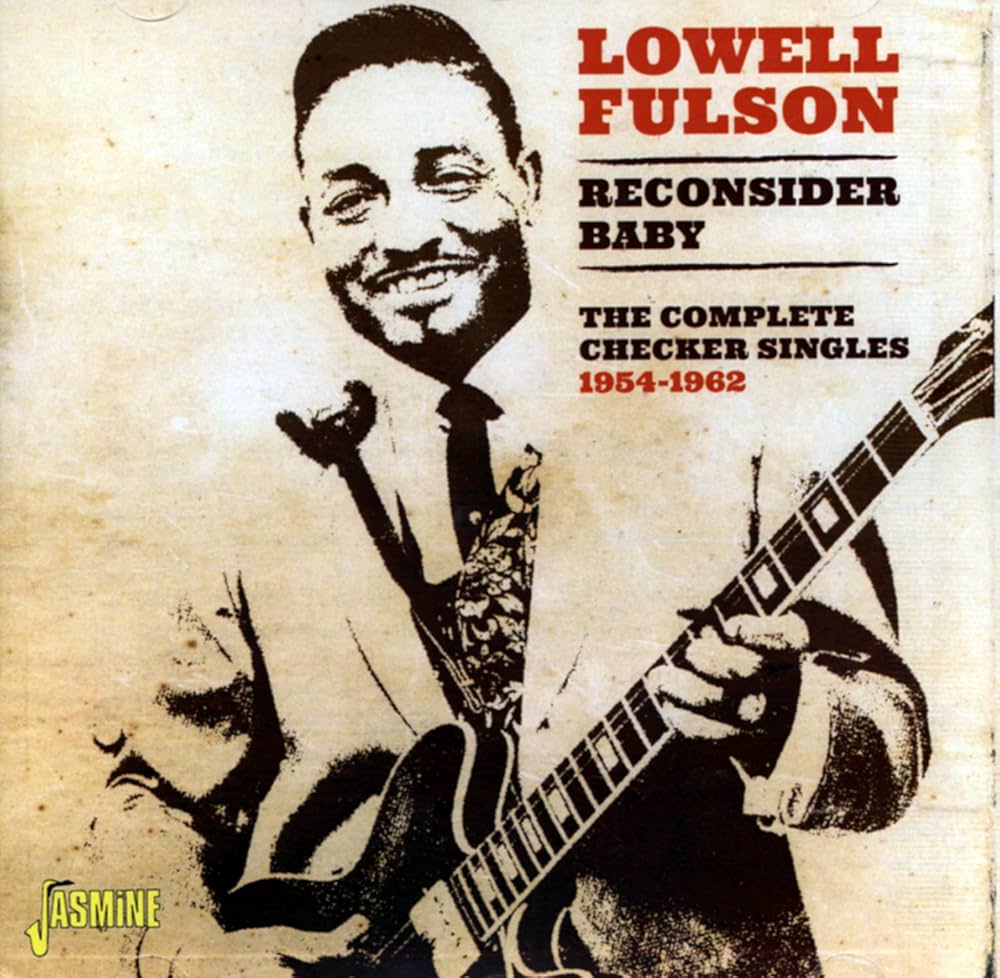
Reconsider Baby - The Complete Checker Singles 1954-1962 ORIGINAL RECORDINGS REMASTERED
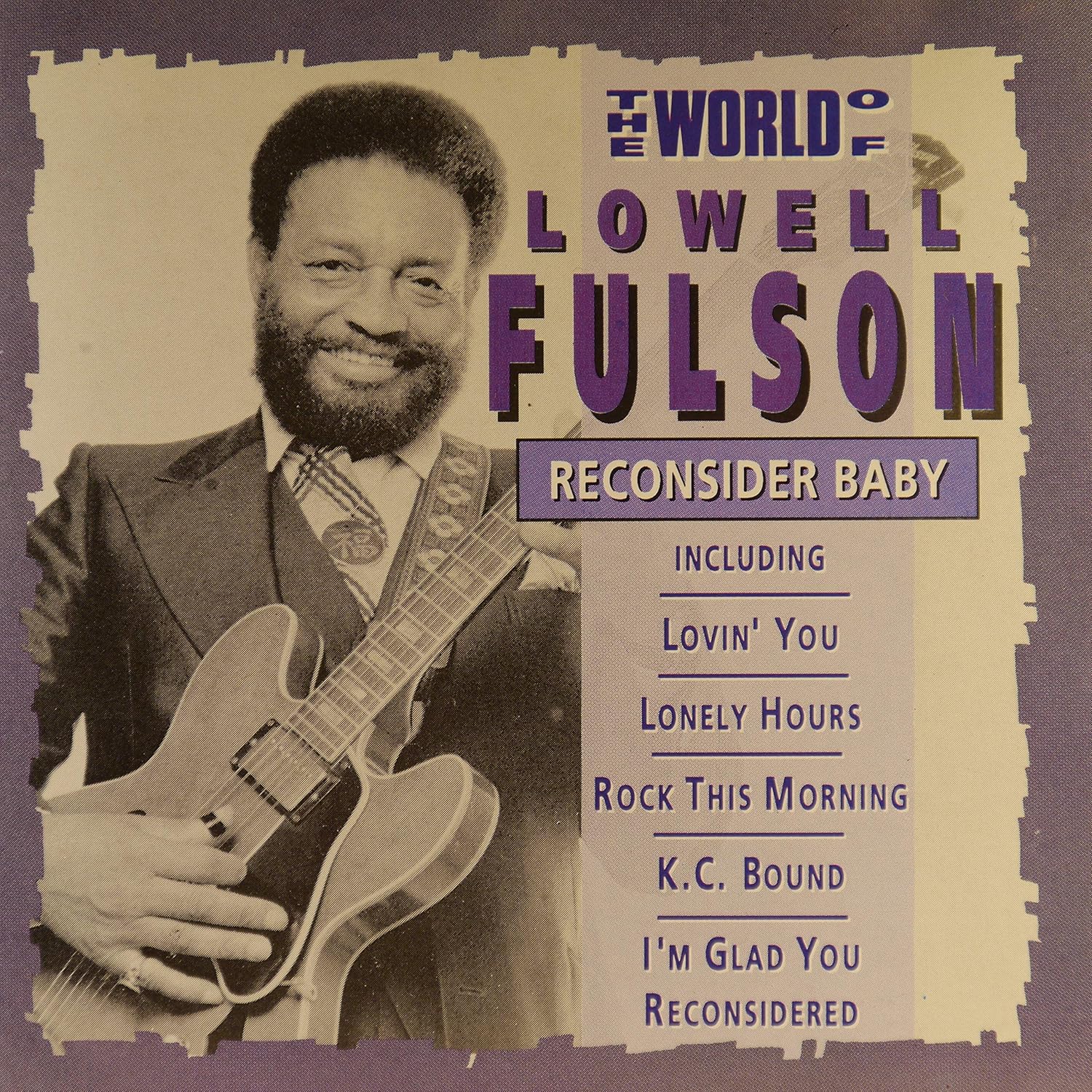
Lowell Fulson 16 Titles Incl. Reconsider Baby Lovin' You I'm Glad You Reconsidered It To
Principal personnel across all sessions: Lowell Fulson (vocals, guitar); Paul Drake (piano, Dallas 1954); Otis Spann (piano, Chicago 1955–56); Lloyd Glenn (piano, Los Angeles 1960–62); Willie Dixon (bass, Chicago sessions); Billy Hadnott (bass, Los Angeles sessions); Fred Below (drums, Chicago sessions); Robert Sims (drums, Los Angeles sessions); David "Fathead" Newman (tenor saxophone, Dallas 1954); Eddie Chamblee (tenor saxophone, Chicago sessions); Earl Brown (alto saxophone, Chicago and Los Angeles sessions); Big Jim Wynn (baritone saxophone, Los Angeles sessions); Leroy Cooper (baritone saxophone, Dallas 1954). Produced by Lowell Fulson with Stan Lewis (Dallas 1954), Willie Dixon (Chicago sessions), and the Chess organisation (Los Angeles sessions). Recorded at Studio Seven, Dallas TX; Chess Studios, 2120 South Michigan Avenue, Chicago IL; and various Los Angeles studios, 1954–1962. Released on Checker Records (Chess Records subsidiary).