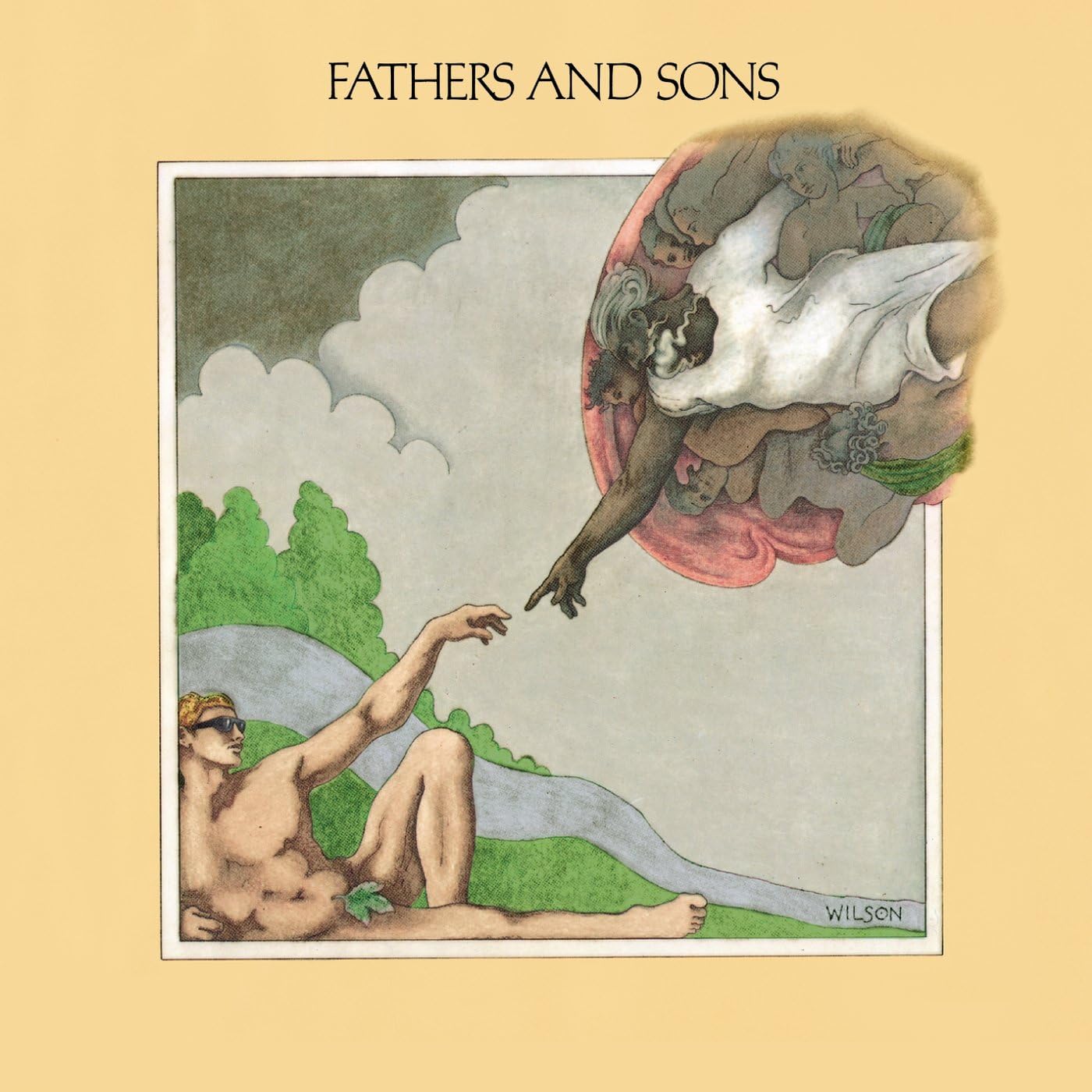
Released in August 1969 on Chess Records as a double LP (Chess LPS 127), Fathers and Sons stands as one of the most remarkable documents in blues history — a record that brought together the founding architect of Chicago electric blues with the young white musicians who had built their reputations channeling his influence. Muddy Waters, the undisputed patriarch of postwar Chicago blues, joined forces with Paul Butterfield, Mike Bloomfield, Sam Lay, Donald "Duck" Dunn, Buddy Miles, and Otis Spann in sessions that crackled with mutual reverence and creative fire. The album captured both studio recordings and a live performance at the Super Cosmic Joy-Scout Jamboree in Chicago, producing a sprawling, generous document that proved Muddy Waters was no museum piece but a vital, commanding artist who could meet any generation on equal terms. Fathers and Sons became the best-selling album of Muddy's career up to that point, introducing him to the vast rock audience that had long worshipped his music secondhand through the Rolling Stones, Cream, and the Paul Butterfield Blues Band.
Background and Context
Muddy Waters in the Late 1960s
By 1969, McKinley Morganfield — known to the world as Muddy Waters — found himself in a strange and frustrating position. He was universally acknowledged as the single most important figure in Chicago blues, the man who had electrified the Delta sound and created the template that rock and roll would eventually plunder without apology. His recordings for Chess Records from the late 1940s through the early 1960s — "Rollin' Stone," "Hoochie Coochie Man," "Got My Mojo Working," "Mannish Boy" — constituted something close to holy scripture in the blues canon. Yet by the mid-1960s, his commercial fortunes had declined sharply among Black audiences as soul music and rhythm and blues reshaped popular taste, and Chess Records had responded with a series of ill-conceived attempts to make Muddy relevant to the psychedelic rock market. The notorious Electric Mud (1968) and its follow-up After the Rain (1969) dressed Muddy's voice in wah-wah guitars, fuzz effects, and arrangements that bore almost no relationship to his artistic identity. While Electric Mud actually sold reasonably well — reaching the Billboard pop charts in a way his traditional recordings never had — the album earned widespread critical scorn and reportedly left Muddy himself deeply unhappy. He understood that the rock audience discovering him through the British Invasion bands wanted the real thing, not a psychedelic imitation of what those bands were already doing.
The Chess Records Situation
Chess Records in 1969 was itself in transition. Leonard Chess, the label's co-founder and the man who had personally overseen many of Muddy's greatest recordings, was in declining health and would die of a heart attack in October 1969, just two months after Fathers and Sons reached stores. The label had been sold to GRT Corporation earlier that year, ending the independent family ownership that had defined its character since 1950. Marshall Chess, Leonard's son, was increasingly involved in the label's operations and was more attuned to the rock audience than his father had been. The decision to pair Muddy with sympathetic younger musicians rather than burying him under inappropriate production represented a significant course correction from the Electric Mud debacle — an acknowledgment that authenticity, not gimmickry, was the path to reaching the audience that revered Muddy's legacy.
The "Fathers and Sons" Concept
The album's title articulated its central premise with elegant clarity. The "fathers" were Muddy Waters and his longtime pianist Otis Spann, the elder statesmen of Chicago blues whose artistry had created the musical vocabulary that a generation of younger players had absorbed. The "sons" were Paul Butterfield, Mike Bloomfield, Sam Lay, Buddy Miles, and Donald "Duck" Dunn — white musicians (and in Sam Lay's case, a Black musician who had played in Butterfield's band) who had built their careers on the foundation Muddy and his peers had laid. The concept was neither novel nor subtle, but it was deeply felt by all involved, and the sessions bore out its emotional truth in ways that a more contrived project might not have achieved.
Paul Butterfield had grown up on the South Side of Chicago, haunting the blues clubs as a teenager and learning harmonica directly from the masters he heard there. His Paul Butterfield Blues Band, formed in 1963, had been one of the first integrated blues-rock groups and had served as a crucial bridge between the Black blues tradition and the white rock audience. Mike Bloomfield, Butterfield's original guitarist, had similarly apprenticed in the Chicago clubs before achieving wider fame through the Butterfield band and the Electric Flag, as well as his legendary session work on Bob Dylan's Highway 61 Revisited. Both men regarded Muddy Waters with a reverence that bordered on the devotional.
Sam Lay occupied a unique position in the project. An accomplished drummer who had played with Howlin' Wolf, Little Walter, and numerous other Chicago blues artists, he had also been a member of the Butterfield band's early lineup and had played at the famous Newport Folk Festival set where Dylan went electric in 1965. He was both a "father" in his blues credentials and a "son" in his association with the younger white musicians who had carried the music to new audiences.
The Sessions
Recording Details
The studio sessions for Fathers and Sons took place over two days — April 21 and 22, 1969 — at Ter Mar Studios in Chicago. Ter Mar, located at 306 East Marquette Road on the city's South Side, was the recording facility that Chess Records had been increasingly using during this period, supplementing and eventually replacing the legendary studio at 2120 South Michigan Avenue that had produced so many Chess classics. The sessions were organized quickly, driven in part by the availability of the musicians and in part by the kind of spontaneous energy that characterized the best Chess recordings. Norman Dayron, who served as producer, later recalled that the sessions had a loose, jam-like quality, with arrangements worked out on the studio floor rather than from charts or extensive pre-production.
Following the studio sessions, Muddy Waters and the same core group of musicians performed a live concert on April 24, 1969, at the Super Cosmic Joy-Scout Jamboree, held at the Auditorium Theatre in Chicago. This performance was recorded and selections from it comprised the fourth side of the original double LP. The concert captured the electricity of the collaboration in a live setting, with the energy of a responsive audience adding another dimension to the performances.
Production
Norman Dayron produced the album, with Gene Barge receiving a co-production credit. Dayron was a young producer and engineer who had been working at Chess and had a more sympathetic understanding of blues aesthetics than whoever had been responsible for the Electric Mud sessions. His approach to Fathers and Sons was fundamentally respectful — he placed Muddy's voice and guitar at the center of the recordings and allowed the ensemble to develop a natural, unforced dynamic. The production eschewed the heavy effects processing and psychedelic ornamentation that had marred the preceding albums, opting instead for a clean, warm sound that captured the musicians in something close to a live room configuration. The studio recordings have a fullness and presence that reflects the assembled talent without sacrificing the intimacy that Muddy's music demands, while the live recordings possess the rawer, more immediate quality of a concert document.
Musicians
The personnel assembled for Fathers and Sons represented an extraordinary convergence of talent drawn from overlapping but distinct musical worlds.
Muddy Waters sang lead vocals and played electric guitar throughout, reasserting his authority as a bandleader after the disempowering Electric Mud sessions where session musicians had largely dictated the arrangements.
Otis Spann played piano on the studio sessions and the live performance. Spann had been a cornerstone of Muddy's bands since 1952, and his rolling, percussive piano style was as integral to the Muddy Waters sound as Muddy's own singing and slide guitar. Tragically, Spann was suffering from the liver cancer that would kill him in April 1970, making these sessions among his final significant recordings.
Paul Butterfield played harmonica throughout, occupying the role that Little Walter, Junior Wells, and James Cotton had filled in various iterations of Muddy's working bands. Butterfield's harmonica style owed an enormous debt to Little Walter's amplified approach, and he brought both technical command and emotional depth to the sessions.
Mike Bloomfield played lead and rhythm guitar, his fluid, stinging tone complementing Muddy's rawer, more percussive guitar approach. Bloomfield was, by 1969, widely regarded as one of the finest guitarists in American music, and his playing on Fathers and Sons demonstrated the directness and economy he had learned from the Chicago blues tradition rather than the more expansive improvisations of his rock work.
Donald "Duck" Dunn played bass. Dunn was best known as the bassist for Booker T. & the M.G.'s, the house band at Stax Records in Memphis, where he had anchored countless soul classics. His presence on the sessions brought a rhythmic sophistication and a deep groove sensibility that connected the Chicago blues tradition to the Memphis soul sound.
Sam Lay played drums on the studio sessions and brought his deep experience in Chicago blues drumming — the shuffle patterns, the sensitivity to dynamics, the understanding of how to support a vocalist without overwhelming the song.
Buddy Miles played drums on the live recordings. Miles, who had drummed for the Electric Flag and would go on to work extensively with Jimi Hendrix in the Band of Gypsys, brought a heavier, more rock-inflected approach to the drum chair that suited the live setting's higher energy level.
Phil Upchurch played guitar on certain tracks, adding another layer of Chicago musical expertise. Upchurch was a veteran session guitarist who had worked across blues, jazz, and soul contexts and whose versatility made him a natural fit for these sessions.
Songwriters
The songwriting credits on Fathers and Sons reflect the complex and often contentious history of blues authorship. Many of the songs were credited to Muddy Waters himself, drawing on both his original compositions and traditional material he had adapted and made his own. Several tracks carried the familiar Chess Records credit to "McKinley Morganfield," Muddy's legal name, sometimes in combination with Willie Dixon, whose role as Chess's in-house songwriter and bass player had produced many of the label's most enduring songs. Other compositions were drawn from the broader Chicago blues repertoire, reflecting the communal, tradition-based nature of the music.
Track-by-Track Breakdown
Side One
"All Aboard"
Songwriter: McKinley Morganfield (Muddy Waters)
The album opens with a train-themed instrumental that functions as both an overture and a statement of intent. The locomotive rhythm established by Sam Lay's drums and Duck Dunn's bass creates a chugging momentum over which Muddy's slide guitar and Bloomfield's lead lines weave and respond. Butterfield's harmonica adds the high, lonesome wail of a train whistle, and Otis Spann's piano fills out the middle register with rolling chords. The track announces unmistakably that this is Muddy Waters' territory — the sound is rooted in his tradition, played with conviction and authority, and the younger musicians are operating within his framework rather than imposing their own. As an opener, it establishes the collaborative dynamic that will govern the entire album: Muddy leads, and the ensemble follows with skill and respect.
"Mean Disposition"
Songwriter: McKinley Morganfield (Muddy Waters)
Muddy's vocal enters with commanding presence on this medium-tempo shuffle, his voice carrying the deep, authoritative timbre that no imitator had ever successfully reproduced. The lyrical content explores the familiar blues territory of a difficult temperament and its consequences in romantic relationships, but Muddy's delivery invests every line with specificity and lived experience. Bloomfield's guitar responds to Muddy's vocal phrases with concise, biting fills that demonstrate his understanding of the conversational dynamic between singer and lead instrument in Chicago blues. Spann's piano anchors the harmonic foundation while Butterfield's harmonica floats above, adding commentary without cluttering the arrangement. The rhythm section of Lay and Dunn locks into a groove that is simultaneously relaxed and propulsive, giving Muddy's voice the platform it deserves.
"Blow Wind Blow"
Songwriter: McKinley Morganfield (Muddy Waters)
One of Muddy's compositions from the 1950s, "Blow Wind Blow" receives a treatment that honors its origins while benefiting from the expanded instrumentation. The song's imagery — invoking the wind as an agent of emotional catharsis and change — belongs to the deep well of Delta blues metaphor that Muddy had carried north to Chicago and electrified without domesticating. The arrangement builds gradually, with Spann's piano providing a foundation over which Muddy's vocal unfolds with patient authority. Butterfield's harmonica work here is particularly effective, channeling the amplified harmonica tradition of Little Walter with genuine feeling rather than mere imitation. Bloomfield restrains himself admirably, offering supportive rhythm work and brief solo passages that serve the song rather than showcasing his considerable technical abilities.
"Can't Lose What You Ain't Never Had"
Songwriter: McKinley Morganfield (Muddy Waters)
This track captures one of Muddy's most philosophically resonant lyrical sentiments — the paradoxical wisdom that loss requires possession, and that certain forms of deprivation carry their own perverse freedom. Muddy's vocal delivery balances world-weariness with a wry humor that prevents the sentiment from collapsing into self-pity. The arrangement is relatively spare compared to some of the album's fuller-sounding tracks, allowing Muddy's voice and guitar to occupy the foreground while the ensemble provides sympathetic support. Duck Dunn's bass work is notable here, his lines creating a rhythmic and harmonic conversation with Spann's piano that gives the track a sophistication rooted in feel rather than complexity.
Side Two
"Walking Thru the Park"
Songwriter: McKinley Morganfield (Muddy Waters)
A more uptempo number that showcases the band's ability to swing as a unit, "Walking Thru the Park" finds Muddy in a comparatively buoyant mood. The rhythm section drives the track with a confident shuffle feel, and Bloomfield's guitar work opens up into more extended solo passages that reveal his debt to B.B. King and Freddie King alongside the Muddy Waters influence. Butterfield's harmonica and Spann's piano trade phrases in the instrumental breaks, creating a call-and-response texture that evokes the sound of a particularly inspired night in a Chicago blues club. The track demonstrates that the Fathers and Sons ensemble could generate considerable heat when the material called for it, moving beyond the reverent atmosphere that might have constrained a less confident group of musicians.
"40 Days and 40 Nights"
Songwriter: Bernard Roth
Written by Bernard Roth, this song had been a hit for Muddy in 1956 and represents one of his signature pieces from the mid-1950s Chess catalog. The Fathers and Sons version stretches the arrangement somewhat, giving the expanded instrumentation room to explore the song's rhythmic and harmonic possibilities. Muddy's vocal on this familiar material is assured and commanding, drawing on years of live performance to deliver the lyrics with practiced authority while still finding moments of spontaneity and surprise. The interplay between Bloomfield's guitar and Butterfield's harmonica during the instrumental sections is particularly compelling, the two younger musicians pushing each other toward greater intensity while never losing sight of the groove that Lay and Dunn maintain with steady precision.
"Standin' Round Cryin'"
Songwriter: McKinley Morganfield (Muddy Waters)
Originally recorded for Chess in 1952, "Standin' Round Cryin'" was one of Muddy's classic slow blues performances, and the Fathers and Sons version treats it with the gravity it deserves. The tempo is unhurried, almost stately, giving every note and every vocal inflection room to breathe and resonate. Otis Spann's piano is particularly prominent here, his playing achieving a depth of feeling that speaks to both his mastery of the instrument and his long partnership with Muddy. There is an unavoidable poignancy in hearing Spann play with such power and beauty on what would prove to be one of his final recording sessions. Muddy's vocal on this track ranks among the finest on the album — controlled, deeply felt, and possessed of the kind of emotional specificity that separates great blues singing from competent blues singing.
"I'm Ready"
Songwriter: Willie Dixon
Willie Dixon's composition, originally recorded by Muddy in 1954 with a lineup that included Little Walter and Jimmy Rogers, stands as one of the quintessential Chicago blues performances. The Fathers and Sons version maintains the swaggering confidence of the original while benefiting from the particular chemistry of this ensemble. The famous lyric — "I'm ready, ready as anybody can be" — is a declaration of masculine potency and readiness for confrontation that Muddy delivers with the same commanding authority he had brought to it fifteen years earlier. Bloomfield's guitar drives the arrangement with a muscular insistence, and Butterfield's harmonica fills the role that Little Walter had created on the original with skill and evident passion. Duck Dunn's bass provides a bottom-end power that the original recording's technology could not have captured, grounding the arrangement in a physical presence that matches the lyric's bravado.
Side Three
"Twenty Four Hours"
Songwriter: Roosevelt Sykes
Written by the great blues pianist Roosevelt Sykes, "Twenty Four Hours" allows Muddy to explore material from outside his own catalog while remaining firmly within the Chicago blues tradition. The song's structure provides ample room for both vocal and instrumental exploration, and Muddy engages with Sykes' lyrical scenario with interpretive conviction. Spann's piano is especially fitting on this track given Sykes' own identity as a pianist-singer, and his playing pays implicit tribute to Sykes while remaining unmistakably his own. The arrangement demonstrates the breadth of the ensemble's collective vocabulary, moving through different dynamic levels and textural combinations with the fluidity of musicians who are listening intently to one another.
"Sugar Sweet"
Songwriter: McKinley Morganfield (Muddy Waters)
A track that emphasizes the warmth and sensuality in Muddy's vocal palette, "Sugar Sweet" offers a counterpoint to the harder-edged material elsewhere on the album. Muddy's voice conveys genuine tenderness here, and the ensemble responds with a lighter touch — Bloomfield's guitar adopts a cleaner tone, Butterfield's harmonica floats rather than wails, and the rhythm section settles into a groove that sways rather than drives. The track reveals a dimension of Muddy's artistry that the more aggressive material sometimes obscured: his capacity for gentleness, for singing about desire as something sweet rather than desperate.
"Long Distance Call"
Songwriter: McKinley Morganfield (Muddy Waters)
Another cornerstone of Muddy's Chess catalog, "Long Distance Call" had been recorded originally in 1951 and remained a staple of his live performances. The Fathers and Sons version captures the song's essential qualities — the yearning vocal, the conversational interplay between voice and instruments, the sense of distance and longing embedded in the telephone metaphor — while situating them within the fuller, warmer sound of this particular ensemble. Butterfield's harmonica is central to the arrangement, his playing channeling the ghost of Little Walter's original contribution while bringing his own tonal character to the part. The track builds with patient intensity toward its climax, the ensemble's collective dynamic sense ensuring that the emotional arc of the song is fully realized.
"Baby, Please Don't Go"
Songwriter: Joe Williams (Big Joe Williams)
This version of the classic song associated with Big Joe Williams connects Muddy's music to the broader Delta blues tradition from which it emerged. The song predates Muddy's recording career and belongs to the common repertoire of the pre-war Mississippi blues tradition, though Big Joe Williams' 1935 recording is generally considered the definitive early version. Muddy brings his own authority to the material, transforming it from a Delta acoustic piece into a full-band Chicago blues performance. The ensemble attacks the arrangement with collective force, Bloomfield and Muddy's guitars interweaving while Lay's drums push the tempo with insistent energy. The track serves as a reminder that Muddy's music existed within a continuum that stretched back to the Mississippi Delta and forward to the rock musicians who had adopted its language.
Side Four (Live at the Super Cosmic Joy-Scout Jamboree)
"Got My Mojo Working" (Parts 1 & 2)
Songwriter: Preston Foster
The live portion of the album opens with what may be Muddy's most universally recognized performance piece, split across two tracks that together capture an extended, galvanizing performance. "Got My Mojo Working" had been Muddy's signature concert number since the late 1950s, and the Fathers and Sons live version demonstrates why — the song's riff is irresistible, its lyric is participatory, and Muddy's performance transforms it from a song into an event. Buddy Miles replaces Sam Lay on drums for the live recordings, and his heavier, more rock-inflected approach drives the performance with an intensity that suits the concert setting. Bloomfield's guitar solos are more extended and exploratory than on the studio recordings, and Butterfield's harmonica reaches for a rawer, more aggressive sound. The audience response, clearly audible throughout, confirms that the collaboration is generating genuine excitement rather than mere nostalgia. Muddy commands the stage with the authority of a man who has been doing exactly this for more than twenty years and has no intention of ceding the spotlight to anyone, regardless of their reputation or their generation.
"Honey Bee"
Songwriter: McKinley Morganfield (Muddy Waters)
Performed live with the crackling energy of the concert setting, "Honey Bee" connects the performance to Muddy's earliest Chess recordings — the song dates from 1951 and represents the foundational period of his recorded legacy. The live arrangement is necessarily looser and more spontaneous than the studio versions of other songs on the album, and the ensemble navigates its changes with the confidence of musicians who have internalized the blues form so thoroughly that it requires no conscious thought. Spann's piano is less prominent in the live mix than on the studio recordings, but his presence remains felt in the rhythmic and harmonic foundation he provides.
"The Same Thing"
Songwriter: Willie Dixon
Another Willie Dixon composition, "The Same Thing" had been one of Muddy's most effective concert vehicles since the mid-1960s, its lyrical premise — a series of double-entendre verses building to the repeated conclusion that men and women are fundamentally driven by "the same thing" — lending itself to the call-and-response dynamic of live performance. The Fathers and Sons concert version captures this dynamic effectively, with the audience audibly engaged in the song's rhetorical structure. Muddy's delivery is playful and commanding in equal measure, and the band drives the arrangement with an energy that reflects the heightened emotional stakes of live performance.
Buy The Album
Significance and Legacy
Reclaiming Muddy's Identity
The most immediate significance of Fathers and Sons was its role in restoring Muddy Waters' artistic credibility after the Electric Mud debacle. Where that album had buried Muddy's voice and guitar beneath inappropriate psychedelic production, Fathers and Sons placed him unambiguously at the center of the music, surrounded by musicians who understood and revered his tradition. The album demonstrated that Muddy did not need to be disguised or updated to reach a contemporary audience — he needed only to be presented honestly, performing the music he had created and mastered over three decades. This lesson would inform the remainder of Muddy's career, particularly the Johnny Winter-produced trilogy of the late 1970s and early 1980s — Hard Again (1977), I'm Ready (1978), and Muddy "Mississippi" Waters Live (1979) — which adopted a similar philosophy of placing Muddy in the company of sympathetic, blues-literate musicians and letting the music speak for itself.
Commercial Success
Fathers and Sons became one of the best-selling albums in the Chess Records catalog upon its release, reaching the Billboard pop album chart and significantly expanding Muddy's audience beyond the blues market. The album's commercial performance validated the approach of presenting Muddy authentically to the rock audience rather than attempting to reshape his music into something it was not. It demonstrated that there was a substantial audience of young, predominantly white listeners who wanted to hear the real Muddy Waters — who had come to him through the Rolling Stones, the Yardbirds, and the Paul Butterfield Blues Band, and who were prepared to embrace the source rather than settling for derivations. This commercial success had implications beyond Muddy's own career, suggesting a market for other veteran blues artists presented in sympathetic contexts.
The Generational Bridge
The album's conceptual framework — fathers and sons, tradition and succession, the blues as a living continuum rather than a museum artifact — articulated something that the blues world had been living through for the better part of a decade but had rarely expressed so directly. The British Invasion had created a peculiar cultural circuit in which Black American music was exported to Britain, absorbed and transformed by young white British musicians, re-exported to America as rock and roll, and then belatedly credited to its originators as young white American listeners traced the music back to its sources. Fathers and Sons short-circuited this convoluted process by putting the originators and their inheritors on the same stage and in the same studio, making the continuity explicit rather than implicit. The album argued, in musical rather than polemical terms, that the blues tradition was capacious enough to accommodate all of these musicians — that Muddy and Bloomfield, Spann and Butterfield, Lay and Dunn could share a bandstand not as representatives of different musics but as practitioners of the same one, separated by generation and experience but united by a common musical language.
Otis Spann's Final Chapter
The album holds particular significance as one of the last major recordings by Otis Spann, who died of liver cancer on April 24, 1970 — almost exactly one year after the Fathers and Sons sessions. Spann's playing on the album is magnificent, his piano providing the harmonic and rhythmic backbone that had defined Muddy's bands for nearly two decades. Hearing him in this context — surrounded by younger musicians who clearly recognize his genius, playing with the authority and feeling of a man at the height of his powers even as his health was failing — adds a layer of emotional weight to the recordings that deepens with each passing year. The album serves, in retrospect, as both a celebration of Spann's artistry and an inadvertent memorial to it.
Production as Restoration
Norman Dayron's production deserves recognition for its intelligent restraint. After the excesses of Electric Mud, the temptation might have been to overcorrect in the opposite direction — to strip the sound down to something austere and archival, emphasizing authenticity at the expense of vitality. Dayron avoided this trap by allowing the full ensemble to be heard in a mix that is warm, spacious, and dynamic without being cluttered or overproduced. The studio recordings have enough room in them for each musician to be distinctly heard, and the live recordings capture the concert energy without sacrificing intelligibility. This production approach would influence subsequent attempts to record veteran blues artists with contemporary musicians, establishing a template of respectful, naturalistic recording that served the music rather than imposing an external aesthetic upon it.
Influence on Subsequent Collaborations
Fathers and Sons established a model for intergenerational blues collaboration that would be revisited repeatedly in subsequent decades. The Johnny Winter-produced Muddy Waters albums of the late 1970s followed a similar conceptual and aesthetic template. John Lee Hooker's late-career albums — The Healer (1989), Mr. Lucky (1991), Boom Boom (1992) — similarly paired a blues patriarch with younger admirers, though those recordings tended toward a more polished, commercially oriented sound. B.B. King's collaborations with younger rock and pop musicians followed the same general principle. In each case, the underlying dynamic pioneered by Fathers and Sons remained visible: the elder artist brings authenticity and mastery, the younger musicians bring energy and audience reach, and the resulting music benefits from the tension and complementarity between tradition and innovation.
A Document of Chicago Blues in Transition
Beyond its immediate musical merits, Fathers and Sons serves as a historical document of a particular moment in the evolution of Chicago blues and American popular music more broadly. The late 1960s represented a period of profound transition for the blues — the original audience was shrinking, the rock audience was expanding, and the relationship between the two was being renegotiated in real time. The album captures this negotiation in progress, its very personnel embodying the questions that the blues world was grappling with: Who owns this music? Who has the right to play it? What happens when the children grow up and the fathers grow old? Fathers and Sons answered these questions not with theory but with practice, putting the musicians in a room together and letting the music resolve what argument could not.
Album Details Summary
- Artist: Muddy Waters
- Album: Fathers and Sons
- Label: Chess Records (LPS 127)
- Format: Double LP
- Recorded: April 21–22, 1969 (studio sessions, Ter Mar Studios, Chicago); April 24, 1969 (live at the Super Cosmic Joy-Scout Jamboree, Auditorium Theatre, Chicago)
- Released: August 1969
- Producer: Norman Dayron (with Gene Barge)
- Personnel: Muddy Waters (vocals, electric guitar), Otis Spann (piano), Paul Butterfield (harmonica), Mike Bloomfield (guitar), Donald "Duck" Dunn (bass), Sam Lay (drums — studio), Buddy Miles (drums — live), Phil Upchurch (guitar)
- Songwriters: McKinley Morganfield (Muddy Waters), Willie Dixon, Preston Foster, Bernard Roth, Joe Williams (Big Joe Williams), Roosevelt Sykes
- Genre: Chicago Blues, Electric Blues