Introduction: The Boy Who Reinvented an Instrument
There is a moment in May 1952 when you can hear American popular music change. It happens at the beginning of a recording session at Bill Putnam's Universal Recorders studio at 111 East Ontario Street in Chicago. A twenty-two-year-old musician from Louisiana cups a small bullet-shaped microphone against his harmonica, the signal runs through a guitar amplifier cranked past its intended limits, and the resulting sound — a deep, saxophone-like wail, simultaneously urban and ancient, technically unprecedented and immediately comprehensible to anyone who has ever heard the blues — comes out of the speaker. The first completed take of the first song attempted at the first Little Walter session for Leonard Chess is the one that gets released. The song is called "Juke." It goes to number one on the Billboard R&B chart, where it stays for eight weeks, the only harmonica instrumental ever to achieve that position. The man who made it leaves Muddy Waters's band immediately after the record hits, because a number one record means you have your own band to lead now. He never looks back.
That is the biographical story of Little Walter's breakthrough. The historical story is larger. What Walter did with the amplified harmonica was not merely a commercial success; it was a conceptual revolution that redefined an instrument's place in American music and created the sonic foundation on which the entire subsequent history of Chicago blues was built. Tony Glover, Scott Dirks, and Ward Gaines — co-authors of the definitive biography Blues with a Feeling and liner notes for the Complete Chess Masters box set — described Walter as creating "a totally new spectrum of sounds, sweetly sustained moans, razor sharp howls, and thundering chords, sounds that literally had never existed before," and asserted that in blues harmonica, there had been nothing comparable before or since. Comparisons to Charlie Parker's reinvention of the alto saxophone and Jimi Hendrix's reinvention of the electric guitar have been made regularly since Walter's death, and they hold up.
He was thirty-seven years old when he died, on February 15, 1968, of a blood clot sustained in a street fight on the South Side of Chicago. In the thirty-seven years between his birth and his death, he had been on the road alone since the age of twelve, had developed the most influential harmonica technique in the history of American music, had recorded the biggest run of hits in the entire Chess Records catalogue, and had drunk himself steadily toward a death that came too early but not entirely without warning. This is his story.
Origins: Marksville, Louisiana, and a Farm on Rapides Parish
Marion Walter Jacobs was born on May 1, 1930, in Marksville, Louisiana — the seat of Avoyelles Parish, in the south-central part of the state, a community of French Creole heritage that sat well south of the Mississippi Delta world where most Chicago blues musicians had their origins. His parents were Adams Jacobs and Beatrice Leveige; he grew up on a farm in Rapides Parish, near Alexandria, in conditions of rural poverty that were the common experience of African American farm families in Louisiana during the Depression.
The biographical record of his earliest years is sparse and sometimes contradictory — born without a birth certificate, his exact birthdate has been disputed, with May 1, 1930 the most widely accepted date — but the outline is clear. At around eight years old, he acquired a harmonica and began teaching himself to play it by listening to the recordings of John Lee "Sonny Boy" Williamson, the Tennessee-born harmonica player whose Bluebird recordings of the late 1930s had made him the most commercially successful blues harmonica stylist of his generation. Williamson's records — "Good Morning Little School Girl," "Bluebird Blues," "Sloppy Drunk Blues" — gave Walter his first model of what the harmonica could do, and what it could do commercially.
The jump from listening to performing was accomplished with remarkable speed. By the time Walter was eleven or twelve, his harmonica playing was good enough to earn him a living. At twelve, he quit school — the extent of his formal education appears to have been about four or five years — and left home. He was not pushed out; he simply went, the restlessness and the talent too large for the farm to contain. For the next several years he worked his way through the South, playing small clubs and juke joints and street corners in Louisiana, Arkansas, and Missouri, absorbing everything he encountered and adding it to a developing musical vocabulary that was already more sophisticated than his age might suggest.
The route from Marksville to Chicago took him through New Orleans, where he busked and played briefly; through Helena, Arkansas, where he encountered the musical world centred around the King Biscuit Time radio programme and met, among others, Sonny Boy Williamson II (Rice Miller) and the young guitarist Honeyboy Edwards; and through St. Louis and other Midwestern cities. At each stop he added something: the New Orleans musical environment with its jazz-inflected approach to rhythm; the Delta blues tradition he encountered in Helena; the boogie-woogie and jump blues styles that were circulating everywhere in the late 1940s.
The New World Encyclopedia's account of his early development captures the essential synthesis he was constructing: "Fusing the style of his mentor John Lee Williamson with the jump blues of saxophonist Louis Jordan, Walter varied the harmonica, as Paul Oliver wrote in The Blackwell Guide to Blues Records, as a 'capable but crude horn substitute.' A country-bred musician with a modern sensibility for swing music, Walter created an amplified sound filled with dark, haunting tones and flowing melodic lines that became an integral element in the emergence of Chicago blues."
The Louis Jordan influence deserves emphasis. Jordan's jump blues — the tight, rhythmically propulsive small-band sound that had dominated the R&B charts throughout the 1940s — gave Walter a model of how a single melodic instrument could carry a popular song with commercial directness and jazz sophistication simultaneously. Jordan's alto saxophone and Walter's harmonica were not the same instrument, but they occupied the same conceptual role: the voice of an ensemble, the melodic and emotional centre of a sound that was built for both dancing and listening.
Chicago: Maxwell Street and the Muddy Waters Band
Walter arrived in Chicago around 1945-1946 — accounts vary slightly — and supported himself in the initial period by playing on street corners in the city's outdoor market district around Maxwell Street. The Maxwell Street market was, in the late 1940s, one of the most musically vibrant street performance environments in America: an outdoor commercial district where musicians competed for the attention of shoppers and passers-by, playing electric instruments powered by outlets in nearby buildings, developing the amplified street blues style that would feed directly into the recording studios of Chess and other Chicago labels.
His performances on Maxwell Street attracted the attention of Chicago musicians who were building the South Side's post-war electric blues scene. According to Chicago bluesman Floyd Jones, Walter's first recording was an unreleased demo made shortly after his arrival, on which Walter played guitar backing Jones. In 1947, he made his first released recordings — for Bernard Abrams's tiny Ora-Nelle label in Chicago — under the title "I Just Keep Loving You." The Ora-Nelle records demonstrated the emerging style but did not achieve significant commercial distribution; they serve now as historical documents of a musician still finding the specific form his artistry would take.
The critical connection came through Muddy Waters, who had been building the band that would define Chicago blues since his own arrival from Mississippi. Waters — McKinley Morganfield — had recorded for Alan Lomax for the Library of Congress in 1941 and 1942 while still in Mississippi, and had arrived in Chicago in 1943 with the fundamental musical materials of the Delta blues tradition: the slide guitar, the intense Delta vocal, the rhythmic drive of the field holler and the juke joint. His Chess Records recordings beginning in 1950 would build those materials into the electric Chicago blues — amplified, driven by a rhythm section, urban in its energy — that became one of the defining sounds of post-war American music.
Walter joined Waters's band in 1948, completing a core lineup that included Jimmy Rogers on second guitar. The three of them — Muddy on slide, Rogers on rhythm, Walter on harmonica — made a sound the South Side had never heard before, and their Chess recordings beginning in 1950 documented it with the directness and energy that Chess's production philosophy typically achieved.
The specific description of Walter's role in the Waters band captures what made the combination so powerful. Former New York Times music correspondent Robert Palmer wrote in his Rock and Roll Hall of Fame biographical note: "The harp lines wrap themselves around Muddy's vocals, now chording like an organ, now filling melodically like a horn." This dual function — simultaneously harmonic and melodic, simultaneously supporting and leading — was what Walter brought to the Waters recordings, and it was what would make him so revolutionary when applied to his own solo material.
The first appearance of Walter's amplified harmonica on record was on Waters's "Country Boy," recorded on July 11, 1951. Walter had been playing acoustic harmonica on Waters's Chess recordings before this; the July 1951 session was when the technique he had been developing — cupping the small microphone with the harmonica and running the signal through an amplifier — first appeared on a commercial release. The Waters classic "She Moves Me," from the same session, and the subsequent recordings made with Waters through 1952 established the amplified harmonica as the third instrumental voice of the Waters band, equal in presence and authority to the two guitars.
The technique itself was not, in its basic form, entirely new. Other blues harmonica players — Sonny Boy Williamson II (Rice Miller) and Snooky Pryor among them — had used microphones for added volume. What Walter did differently, in the description of the New World Encyclopedia, was to use amplification "to explore radical new timbres and sonic effects previously unheard from a harmonica." He was the first musician of any kind, one biographer claimed, to purposely use electronic distortion as a creative tool. He pushed his amplifiers past their intended limits specifically to achieve the distorted, saxophone-like tones that his music required. He "sometimes intentionally used small amplifiers with blown-out speakers in order to create distortions that added to the effect of his wailing solos." The technique that Channel Eye described as "using a cheap bullet-shaped intercom mic — the size and shape of which was perfect to cup a harmonica against in your hands — plugged into a valve-guitar amp" was not accidental; it was the product of deliberate experimentation over years of live performance.
The specific equipment — the Shure Bullet microphone, the small practice amplifier or occasionally larger P.A. systems — gave Walter a sonic palette that had never been available to any harmonica player before him. The Bullet microphone's frequency response, combined with the harmonic distortion of an overdriven amplifier, created a midrange presence and a slight compression that made the harmonica sound simultaneously more powerful and more expressive than its acoustic form could achieve. The distortion was not noise; it was information — emotional information, the edge and grain of Walter's feeling pressing through the electronic medium and arriving at the listener with an immediacy that polished, clean recording could not replicate.
The Chess Years: 1952–1958, The Golden Era
The session of May 12, 1952, at Bill Putnam's Universal Recorders studio changed Little Walter's life and changed American music. Leonard Chess had seen the solo potential early and set up a Checker Records session — Checker being Chess's subsidiary label — with a band that would become Walter's primary backing group: Dave Myers and Louis Myers on guitars, and Fred Below on drums. These four musicians would become known as the Aces — and then, when backing Walter on tour, as the Jukes.
"Juke" was recorded in two takes; the first complete take was the one Chess released. Its origins were multiple: the opening eight-bar "head" used a repeated six-note phrase that Jimmy Rogers identified as derived from an unrecorded theme by pianist Sunnyland Slim, while the general framework was claimed by Snooky Pryor as an elaboration of his 1948 "Snooky and Moody's Boogie." Junior Wells later claimed he had been playing it before Walter recorded it. The Wikipedia article on "Juke" acknowledges these disputed origins while confirming the recording's historical significance: it is "still the only harmonica instrumental ever to be a number one hit on the Billboard R&B chart."
The song is played as a swinging shuffle in the key of E, with Walter playing in "second position" (cross harp) on a harmonica tuned to A. The harmonica playing is "deep-toned and features long saxophone-like phrases," the overall structure "dynamic, building and releasing in intensity several times." The opening eight bars consist of a repeated six-note phrase "commonly and frequently played by jazz and swing horn players in the 1930s and 1940s," most notably in Louis Armstrong's 1941 recording "Leap Frog." Walter was not referencing Armstrong explicitly; he was drawing on the shared vocabulary of swing and jump blues that had been circulating in the African American musical world for years, and applying it to an instrument that had never previously been used to express it at this level.
What "Juke" accomplished, in the Channel Eye analysis, was "the blues harmonica equivalent of a tenor or alto saxophone led R&B instrumental." It proved the harmonica could carry a song on its own terms, without the support of a vocalist, and could do so with commercial success that rivalled anything the major labels were producing. Its immediate commercial impact was staggering: the song reached number one and stayed there for eight weeks, spending a total of twenty weeks on the charts, making it "one of the biggest R&B hits in the U.S. in 1952" and "the biggest hit to date for any artist on Chess and its affiliated labels."
Three other harmonica instrumentals were simultaneously on the Billboard R&B top ten while "Juke" was still charting: "Off the Wall" at number eight, "Roller Coaster" at number six, and "Sad Hours" at number two. The dominance of Little Walter on the R&B charts in the second half of 1952 was total and unprecedented. He had eclipsed the chart success of his former boss Muddy Waters within months of leaving the band.
Walter left Waters's band immediately after "Juke" became a hit, recruiting the Aces — who had been backing Junior Wells in Chicago — as his permanent supporting group. The decision demonstrated his confidence in his solo commercial position, but it also created a paradox: Chess continued to hire him to play harmonica on Waters's recording sessions for years after his departure, so that Walter's harp is featured on most of Waters's classic recordings of the 1950s even though he was simultaneously building a competing solo career. The two careers — Muddy Waters's band recordings with Walter's harmonica, and Walter's solo recordings without Waters — constitute together the definitive document of Chicago blues harmonica at its creative peak.
The seven years between 1952 and 1958 produced an extraordinary run of commercial and artistic achievement. Walter recorded fourteen top ten hits on the Billboard R&B charts between 1952 and 1958, including two number one hits. The second number one, "My Babe" in 1955, was written by Willie Dixon and based on the traditional gospel song "This Train (Is Bound for Glory)," which Sister Rosetta Tharpe had recorded as a major hit in 1939. Dixon's adaptation replaced the train imagery with secular romantic devotion, and Walter's vocal — driven by the same deep, direct quality that characterised his instrumental work — made it one of the most commercially effective performances in the Chess catalogue.
"Blues with a Feeling" (1953) demonstrated the depth of his slow blues playing, his vocal and harmonica combining to create a performance of sustained emotional intensity that Bill Dahl described as "soaring and swooping with a jazz sensibility." (This is discussed in more detail here Blues with a Feeling by Little Walter) "Mean Old World" (1952) showed the jazz influences in his phrasing — the long, sinuous melodic lines that owed as much to Charlie Parker and Coleman Hawkins as to any blues tradition. (This is discussed in more detail here How Little Walter Turned a Blues Standard Into a Chicago Masterpiece: The recording of Mean Old World by Little Walter ) "You're So Fine" (1954) was the most fully developed of his romantic ballad recordings, his harmonica taking on the sustaining, sighing quality of a human voice in its most vulnerable register.
The Myers brothers — Dave and Louis — and Fred Below gave Walter the rhythmic foundation that his solo career required. Below in particular was one of the great drummers of the Chicago blues era: his swinging, jazz-inflected approach to the blues beat gave the Little Walter recordings a lightness and rhythmic sophistication that distinguished them from the heavier, more churning sound of the Muddy Waters band. Below's drumming "swings like a loose wheel on a freight train," as one critic put it — an assessment that captures both his rhythmic authority and the slight, productive unpredictability that made his playing so alive.
By 1955, the Aces had separately left Walter to pursue other opportunities, replaced by guitarists Robert "Junior" Lockwood and Luther Tucker, and drummer Odie Payne. Lockwood — the Mississippi-born guitarist whose stepfather had been Robert Johnson — brought a guitar style of considerable sophistication to Walter's recordings, his jazz-inflected single-note lines providing a front-line complement to Walter's harmonica that neither the Myers brothers nor Tucker could quite match. The Lockwood-era recordings, while less consistently celebrated than the Aces-era sessions, contain some of Walter's most adventurous playing.
Walter also recorded extensively as a sideman during this period, appearing on sessions with Muddy Waters, Memphis Minnie, Johnny Shines, Floyd Jones, Bo Diddley, Otis Rush, Johnny Young, and Robert Nighthawk. His harmonica is audible on a significant proportion of the Chess Records catalogue from the early and mid-1950s — a ubiquitous presence that demonstrates both his commercial value to the label and the breadth of the musical contexts in which his playing proved effective.
The Technique: What Walter Did That Nobody Had Done Before
Any serious account of Little Walter's career must dwell on the technical dimensions of his artistry, because the technical innovations were genuinely revolutionary in ways that went far beyond mere proficiency. He was not simply a very good harmonica player who amplified his instrument; he was a musician who conceived the harmonica as a different kind of instrument from what it had previously been, and who developed the technical means to realise that conception.
The harmonica he played was primarily the diatonic ten-hole instrument in a variety of keys — the standard blues harmonica. But he also "used chromatic harmonicas to great effect," most notably on the Muddy Waters hit "I'm Ready," where the chromatic harmonica's ability to play notes outside the standard diatonic scale gave his solo a different harmonic colour from his typical diatonic work. His command of both instruments, and his ability to move between them as the musical context required, gave him a versatility that very few blues harmonica players have matched.
The most distinctive technical dimension of his diatonic playing was his use of "second position" or "cross harp" — playing a harmonica whose home key is a fourth below the key of the song, which gives the player access to bending techniques and tonal possibilities not available in "first position" (playing in the harmonica's home key). Cross harp playing is standard practice for blues harmonica today, and its standardisation is substantially Walter's doing: he demonstrated so completely what the technique made possible that subsequent players had no choice but to adopt it or be left behind.
His bending technique — the manipulation of the airflow through the instrument to alter the pitch of individual notes — was, in the assessment of Steve Calt and other blues historians, the most advanced in the history of the instrument at the time of his recording career. He could bend notes with a precision and a musical purposefulness that gave his melodic lines a vocal quality — the notes curved and shaped the way a singer curves a phrase, following the emotional logic of the music rather than the mechanical logic of the instrument. His "long saxophone-like phrases" were not merely technically impressive; they were emotionally specific, each note serving the feeling of the song.
The amplification technique — cupping the microphone with the harmonica, running the signal through a slightly overdriven amplifier — gave Walter's sound its particular character: warmer and rounder than an acoustic harmonica, with a midrange presence that cut through the band mix without dominating it, and with the slight compression and harmonic distortion that gave each note a sustained, singing quality. He was, as the New World Encyclopedia confirms, "the first musician of any kind to purposely use electronic distortion" as a creative resource — a claim that, if sustained, makes him a figure of the first importance not just in blues history but in the broader history of popular music.
The emotional range that this technical mastery served was extraordinary. Bill Dahl's description of his playing as "soaring and swooping with a jazz sensibility" captures one dimension: the extroverted, assertive improviser who could build a solo through a series of musical statements that had the architecture of jazz without its harmonic complexity. But Robert Palmer's description of his role in the Waters band — "now chording like an organ, now filling melodically like a horn" — captures another: the supportive, listening, ensemble player who subordinated his individual voice to the needs of the music around him. Walter could do both things, in the same performance if necessary, moving between the assertive and the supportive with the ease of someone who understood that both functions were always simultaneously available.
The Decline: After 1958
The period from 1958 onward saw a gradual but increasingly marked decline in Walter's commercial fortunes and, eventually, in his artistic consistency. The rock and roll revolution that was reshaping the music market had reduced the commercial space available to straight blues and R&B, and Walter's fourteen top ten hits between 1952 and 1958 gave way to a much thinner commercial record in the years that followed. Chess continued to record him, but the hits had stopped coming with the regularity that had defined the earlier period.
The personal dimensions of the decline were as significant as the commercial ones. Walter had always been, by the accounts of those who knew him, a difficult and volatile personality — quick-tempered, prone to violence, unable or unwilling to sustain the professional relationships that a successful bandleader's career required. The frequent personnel turnover in his band reflected this: musicians came and went, some leaving by their own choice, others by Walter's. His increasing dependence on alcohol intensified both the personal volatility and its professional consequences. Engagements were missed, performances were compromised, the reputation for unreliability that spread through the Chicago music community made booking him an increasingly risky proposition.
He continued to tour and record through the 1960s, playing what audiences he could find and recording for Chess with diminishing frequency and diminishing commercial return. The European tours with the American Folk Blues Festival — he participated in the 1967 tour — brought him to audiences who received him with the reverence his historical importance deserved, but the European exposure was not sufficient to revive the commercial momentum that had dissipated at home.
His final Chess recordings, made in the mid-1960s, are uneven documents of a musician whose technical gifts had not entirely abandoned him but whose ability to sustain the concentration and energy that his best work required had been compromised by years of drinking and difficult living. The moments of genuine brilliance that appear in these later recordings only make the overall diminishment more striking: you can hear what he still had, and what had been lost.
Death: February 15, 1968
The circumstances of Little Walter's death were consistent with the trajectory of his final decade: a street fight, a blood clot, a death that might have been prevented by better medical attention and a different set of life choices. He died on February 15, 1968, at the age of thirty-seven, at home on the South Side of Chicago, having sustained the head injuries that killed him in a fight the previous evening.
He was thirty-seven years old — younger than Robert Johnson when he died, younger than Buddy Holly, younger than Jimi Hendrix would be at his own death two years later. The Rock and Roll Hall of Fame induction that would have been his appropriate recognition during his lifetime came forty years after his death, in 2008, in the Early Influences category. The Complete Chess Masters box set, released in 2009, won the Grammy Award for Best Historical Album in 2010 — a formal institutional acknowledgement of the magnitude of the achievement that the years since his death had made increasingly evident.
He was among the first class of inductees into the Blues Hall of Fame in 1980. His influence had been growing, steadily and irreversibly, since his Chess recordings had begun circulating through the British blues revival community in the early 1960s.
The Recordings: A Selective Survey
The body of work that Little Walter produced for Chess and Checker between 1950 and the mid-1960s — approximately 126 tracks, documented in the five-disc Complete Chess Masters: 1950–1967 box set produced by Hip-O Records in 2009 — is one of the most sustained and coherent bodies of work in the history of Chicago blues.
"Juke" (1952) remains the starting point and the touchstone: the instrumental that proved what an amplified harmonica in Walter's hands could do commercially and artistically. Eight choruses, a swinging shuffle in E, the opening phrase drawn from the jazz vocabulary and the subsequent improvisations pushing into new harmonic territory.
"Sad Hours" (1952) — one of the three harmonica instrumentals that entered the top ten simultaneously with "Juke" — has a more melancholy character than its hit companion, the long, sighing phrases of the harmonica capturing the emotional state the title names with a directness that pure instrumental music rarely achieves.
"Mean Old World" (1952) features both vocal and instrumental, Walter's voice carrying the lyric with the same quality of sustained, dark feeling that his harmonica brings to the instrumental passages. The song demonstrates the jazz influence most clearly: the phrasing is rhythmically freer than standard blues, the melodic lines more extended, the overall approach closer to a jazz ballad than a conventional 12-bar blues.
"Blues with a Feeling" (1953) is, by the consensus of blues critics, one of the definitive recordings of Walter's ballad playing — the slow blues treated with the depth and commitment that the style requires. Every note is placed with intention; nothing is hurried, nothing is wasted. It is the sound of a musician who has complete control of his instrument and is choosing to use that control for the expression of feeling rather than the display of technique.
"You're So Fine" (1954) shows Walter in full romantic mode, the harmonica sighing and sustaining above a rhythm section that plays with the lightness and swing that Fred Below and the Aces characteristically brought to the slower material.
"My Babe" (1955) — Willie Dixon's adaptation of Sister Rosetta Tharpe's "This Train (Is Bound for Glory)" — gave Walter his second number one R&B hit and demonstrated the vocal dimension of his artistry fully. Dixon's lyric, which transferred the gospel song's devotional energy into romantic commitment, suits Walter's direct, undemonstrative singing style perfectly.
"Confessin' the Blues" (1952) and "Last Night" (1954) are among the recordings that show his ability to vary the emotional register: "Confessin'" dark and guilty, "Last Night" more open and direct, both demonstrating the expressiveness that made him more than a technical innovator.
"I Got to Go" (1955) is one of the more explicitly jump-blues influenced recordings, the harmonica and rhythm section generating the kind of propulsive energy that connects Walter's music to the jump blues tradition of Louis Jordan that had been one of his early models.
The Musicians: The Aces, the Jukes, and the Collaborators
The musicians who supported Little Walter through his prime commercial period were collectively among the finest Chicago blues performers of their generation.
Dave Myers and Louis Myers — the brothers who anchored the guitar work on the Aces/Jukes recordings — brought a clean, swinging guitar approach to the Little Walter recordings that was quite different from the heavier, more distorted sound of the Muddy Waters band. Their guitar playing emphasised rhythm and ensemble support over individual statement, creating the platform on which Walter's harmonica could move freely.
Fred Below was, in the assessment of many blues historians, the greatest drummer in Chicago blues history. His swinging, jazz-inflected approach — rooted in the swing drum tradition but adapted to the blues context — gave the Little Walter recordings their particular rhythmic character. Below would later work extensively with the Muddy Waters band and with other Chess artists, and his influence on the Chicago blues rhythm section tradition extended far beyond his work with Walter.
Robert "Junior" Lockwood, who joined Walter's band in 1955 after the Aces had departed, brought a different guitar voice: more jazz-inflected, harmonically sophisticated, with a single-note style that complemented rather than duplicated Walter's harmonica approach. Lockwood had learned guitar from his stepfather Robert Johnson, and the harmonic sophistication of Johnson's approach was audible in his own playing.
Willie Dixon served as Chess's house songwriter and arranger through much of the 1950s, and his contributions to the Little Walter catalogue — "My Babe" most prominently — were as important as his better-celebrated work for Muddy Waters and Howlin' Wolf.
The Influence: How Little Walter Changed Everything
The influence of Little Walter on subsequent harmonica playing is so total and so pervasive that it is barely separable from the history of blues harmonica itself. Every significant blues harmonica player of the post-war era has had to reckon with Walter — to absorb what he did, to find their own relationship to it, to place themselves in a tradition that he essentially created.
James Cotton, who replaced Walter in the Muddy Waters band in 1955, built his entire approach on the foundation Walter had established. Junior Wells, who had been playing "Juke" before Walter recorded it and whose career in some ways paralleled Walter's, operated throughout his career in the shadow of Walter's influence and was the better for it. Paul Butterfield, the white Chicago harmonica player who would introduce Walter's approach to the rock generation of the 1960s through the Paul Butterfield Blues Band, has described Walter as the singular, defining influence on his own development. Charlie Musselwhite, Kim Wilson, Sugar Ray Norcia — every significant contemporary blues harmonica player owes a direct and acknowledged debt to Little Walter.
The British blues revival that so profoundly shaped the development of rock music in the 1960s absorbed Walter's influence both directly and indirectly. The Rolling Stones, who covered Chicago blues extensively in their early recordings, incorporated Walter's harmonica approach through Brian Jones's harp work on early recordings. The Who, the Yardbirds, and the Animals all drew from the Chess catalogue that Walter had dominated. The Paul Butterfield Blues Band's debut album in 1965 — which featured Butterfield's explicitly Walter-derived harmonica alongside the electric guitars of Mike Bloomfield and Elvin Bishop — was one of the most direct transmissions of the Walter approach to the white rock audience, and its influence on the subsequent development of blues rock was immediate and traceable.
The harmonica technique that Walter developed — the cupped microphone, the amplifier overdrive, the second-position bending, the saxophone-like phrasing — is now the standard approach for any blues harmonica player who plays through an amplifier. It has been adopted so completely that players who have never heard a Little Walter record are nonetheless playing, in their basic technical approach, exactly what Walter invented. The universality of his influence has, paradoxically, made it harder to see clearly: it is everywhere, and everywhere it is, it has become invisible.
The comparison to Charlie Parker — his influence on jazz saxophone and Walter's influence on blues harmonica — is the one that comes closest to capturing the magnitude of what he accomplished. Parker reinvented the alto saxophone by applying bebop's harmonic and rhythmic revolution to an instrument that had previously been used in simpler ways; Walter reinvented the harmonica by applying the amplified blues and jazz saxophonists' approach to an instrument that had previously been limited to acoustic use. In both cases, the instrument was never the same afterward, and every subsequent player has lived in the world that the revolutionary created.
Conclusion: The Weight of Thirty-Seven Years
Little Walter was thirty-seven years old when he died. In those thirty-seven years, he had left home at twelve, wandered through the South learning everything the blues tradition had to teach, arrived in Chicago with a harmonica technique already more advanced than most of his seniors, transformed that technique through the creative application of electronic amplification into something entirely new, recorded fourteen top ten R&B hits in seven years, played on most of the classic recordings of Muddy Waters, and invented the approach to blues harmonica that every subsequent player in the tradition would have to engage with, consciously or not.
His personal life was a sustained series of crises: the volatility, the violence, the drinking that accelerated through the 1960s toward the death that came in a street fight at thirty-seven. The talent and the self-destruction coexisted in the same person, mutually incomprehensible in their proximity. The man who played "Blues with a Feeling" with the sustained emotional intelligence and technical mastery of a mature artist is the same man who died in a fight in the street. The music does not explain the life, and the life does not explain the music. Both are what they are.
What endures is the recordings. The "Juke" that is still the only harmonica instrumental to reach number one. The "Blues with a Feeling" that defines what slow blues harmonica can do. The "My Babe" that made Willie Dixon's gospel-rooted adaptation a number one hit. The Muddy Waters recordings — "She Moves Me," "I'm Ready," "Hoochie Coochie Man" — on which Walter's harp wraps around Muddy's vocals, "now chording like an organ, now filling melodically like a horn." Together they constitute one of the most significant bodies of work in the history of American popular music, and they remain, in their directness and their energy and their absolute technical authority, as vital and alive as on the days they were recorded.
Bruce Iglauer, founder of Alligator Records, said of Pinetop Perkins that he was "absolutely the premier blues piano player." For Little Walter, the equivalent statement has been made by virtually every blues authority who has engaged with the question: there has been no greater harmonica player in the history of American blues. The tiny instrument that he cupped in his hands along with a cheap bullet microphone and plugged into an overdriven amplifier was, in his hands, one of the most expressive voices in the entire tradition. He found in it what no one before him had found, and what everyone after him has been seeking to find again.
For more detail on individual songs follow these links Blues with a Feeling by Little Walter and How Little Walter Turned a Blues Standard Into a Chicago Masterpiece: The recording of Mean Old World by Little Walter
Suggested Reading
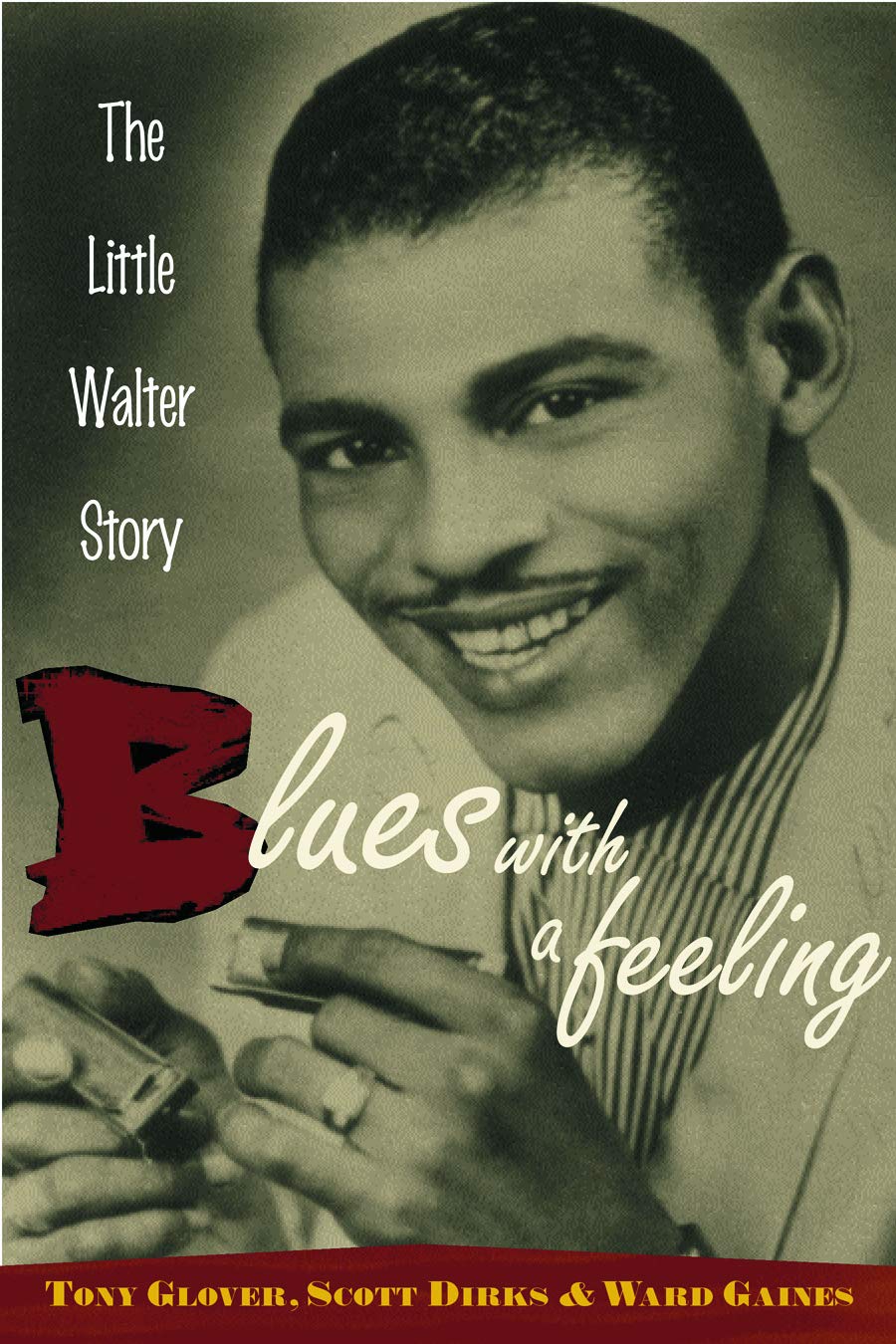 Buy from Amazon Blues with a Feeling
Selected Discography
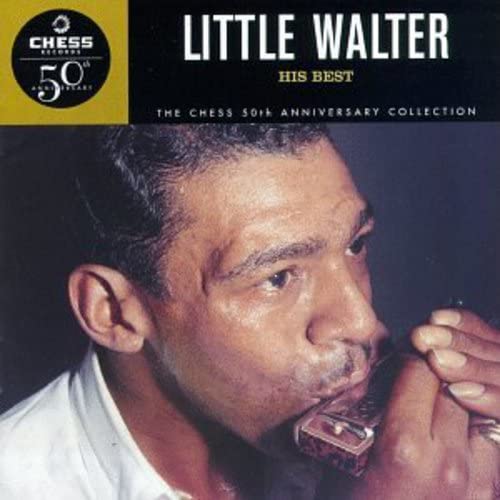 Buy from Amazon His Best: The Chess 50th Anniversary Collection
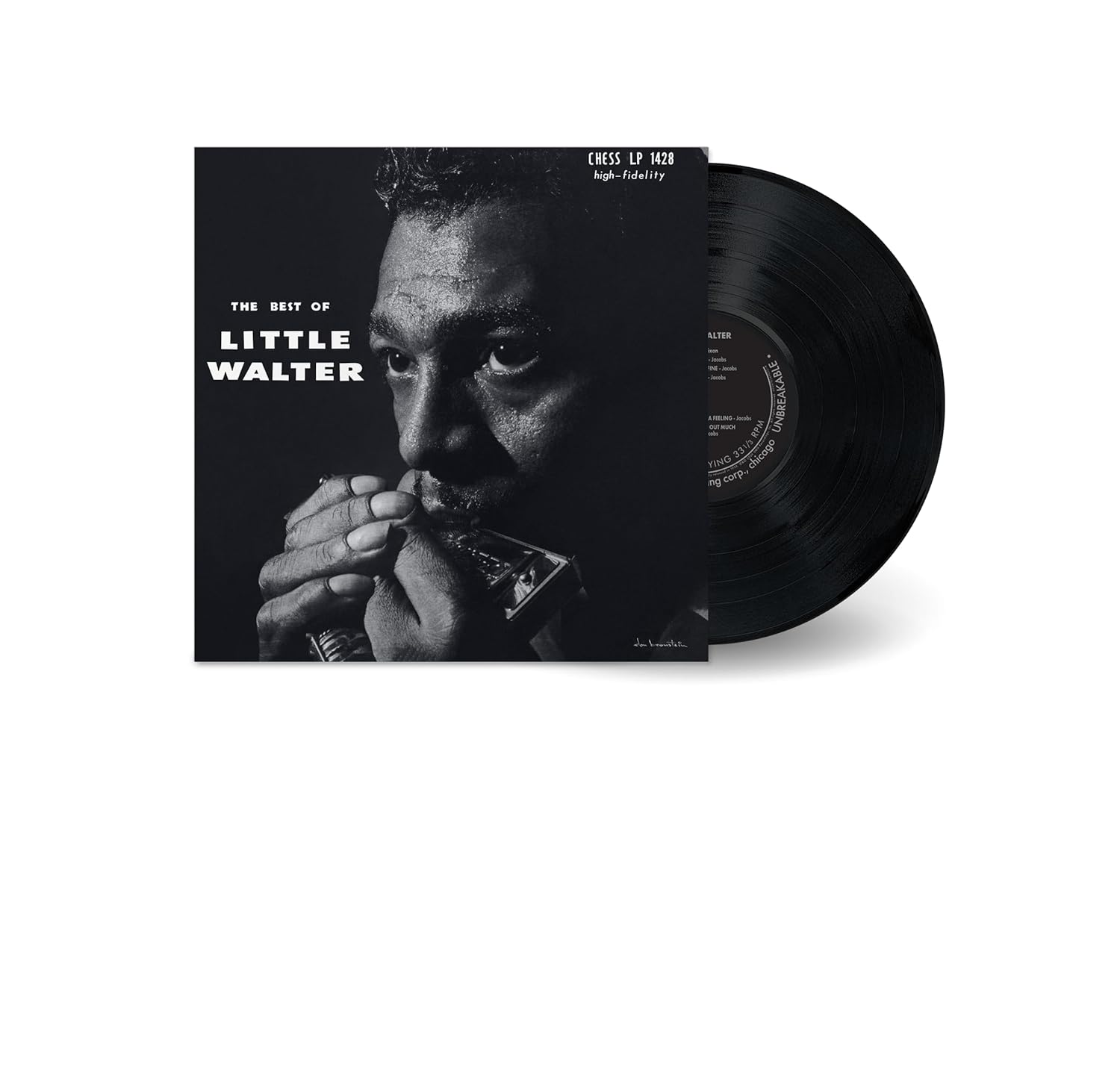 Buy from AmazonThe Best of Little Walter Chess 75 Series
Marion Walter Jacobs "Little Walter" (born May 1, 1930, Marksville, Louisiana — died February 15, 1968, Chicago, Illinois). Induction: Blues Hall of Fame (1980, first class of inductees); Rock and Roll Hall of Fame (2008, Early Influences category). Grammy Award for Best Historical Album for The Complete Chess Masters 1950–1967 (2010, posthumous). Principal recordings: Checker Records / Chess Records, 1952–1967. Key recordings: "Juke" (1952, #1 R&B, 8 weeks); "Sad Hours" (1952, #2 R&B); "Mean Old World" (1952); "Blues with a Feeling" (1953); "My Babe" (1955, #1 R&B); "You're So Fine" (1954). As sideman: Muddy Waters Chess recordings, 1950–1958. Principal backing bands: The Aces / The Jukes (Dave Myers, Louis Myers guitars; Fred Below drums, 1952–1955); subsequent configurations featuring Junior Lockwood, Luther Tucker (guitars) and Odie Payne (drums).