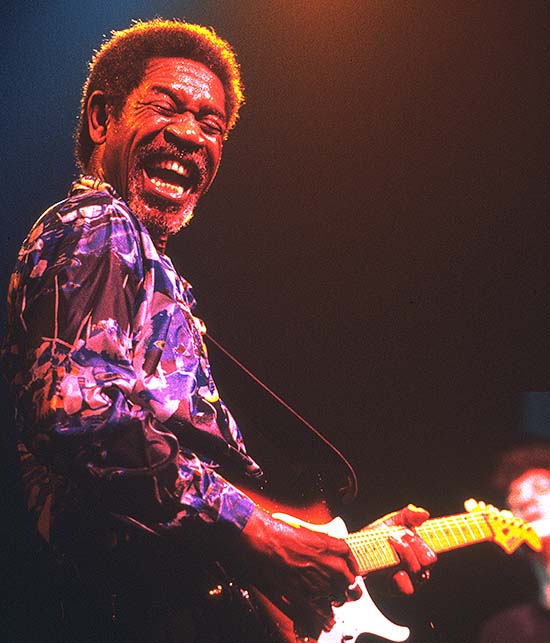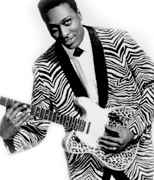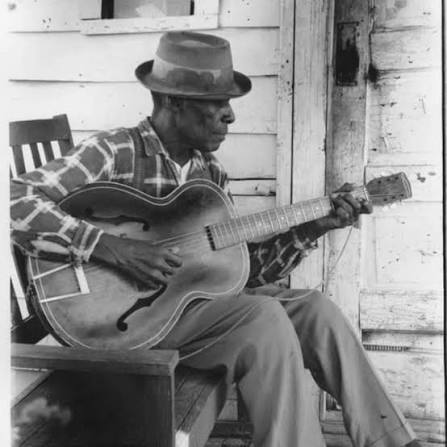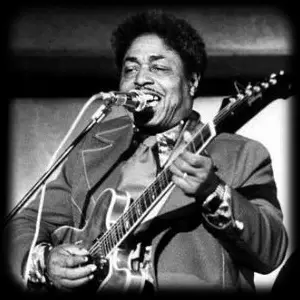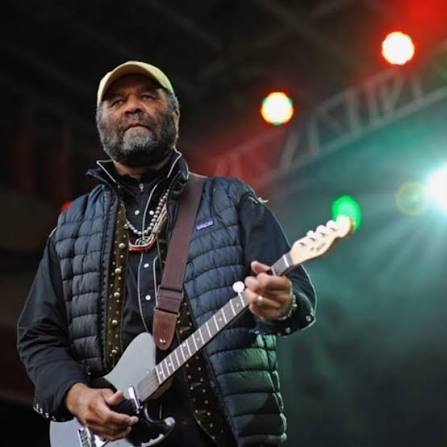
From the Jersey Shore to the bandstands of Canned Heat and John Mayall, through addiction, a near-fatal liver failure and a second life on stage, Walter Trout has turned five decades of hard living into some of the most honest blues-rock of his generation.
Walter Trout once said that great guitarists are a dime a dozen. Coming from a man whose name has been shorthand for fiery, overdriven blues-rock guitar for more than three decades, that line might sound like false modesty. It isn't. Trout has spent the later part of his career trying to steer the conversation away from his fingers and toward his songs. He would rather be thought of, he has said, as a singer, songwriter and performer who also plays guitar.
That ambition says a great deal about the man. For years Trout was filed under "guitar hero": the sweat-soaked, long-haired player who could tear the roof off a European festival tent with a twenty-minute solo, the sideman who had held down the lead guitar chair in both Canned Heat and John Mayall's Bluesbreakers. All of that was true, and none of it was the whole story. Underneath the volume there was always a writer trying to tell the truth about his own life, and Trout's life has given him a great deal of truth to tell. He survived a hard childhood, a long struggle with drugs and alcohol, and, in 2014, a liver failure that brought him within days of death. Each of those experiences ended up in his songs.
What follows is the story of a career that runs from the bars of the Jersey Shore to the Royal Albert Hall, from the backing bands of John Lee Hooker and Big Mama Thornton to the top of the Billboard blues chart. It is the story of a musician who was more popular in Europe than at home for much of his career, who nearly lost everything more than once, and who, well into his seventies, is still writing, recording and touring with the urgency of a man who knows exactly how precious extra time can be.
A Jersey Shore Childhood
Walter Trout was born on March 6, 1951, on the Jersey Shore. Most references give Ocean City as his birthplace, though some list nearby Atlantic City. He later attended Collingswood High School, across the state near Philadelphia. The Jersey Shore of the 1950s and 1960s was a place of boardwalks, summer crowds and bar bands, and music was in the air from the start. Trout has spoken warmly of his mother's role in exposing him to music, and of hearing jazz as a boy; jazz, he has suggested, gave him an early sense of what a band could do when it was firing on all cylinders.
His home life was not easy. In his memoir and in many interviews, Trout has described a troubled household, including violence at the hands of a stepfather, and he has been candid about how much those years shaped him. Music became a refuge, a place where he could feel in control, and the guitar became the instrument through which he could express what he could not say any other way. Like many blues musicians, he would eventually turn that childhood pain into material, but it took decades before he could write about it directly.
He took up the guitar in his teens, and like so many young American guitarists of his generation, he was changed by the blues revival of the mid-1960s. The record that did it for him, by his own frequent account, was the Paul Butterfield Blues Band, with Mike Bloomfield on lead guitar. Bloomfield's playing, with its long, singing lines and its deep grounding in the Chicago masters, showed the teenage Trout that a young white kid could play the blues with real feeling and conviction, not as an imitation but as an act of love. Through Bloomfield and Butterfield he found his way back to the sources: B.B. King, Albert King, Freddie King, Otis Rush, Buddy Guy and the rest of the Chicago and Memphis tradition. He also absorbed the British blues boom, and he has long cited John Mayall's records, particularly the Blues Breakers album with Eric Clapton, as formative. It is a nice irony that the young man who learned from those records would one day stand in the guitar chair once filled by Clapton, Peter Green and Mick Taylor.
Through his late teens and early twenties, Trout played in bands around New Jersey, working bars and clubs, learning to hold an audience, and developing the stamina that would become one of his trademarks.
Los Angeles
In 1973, Trout headed west to Los Angeles. It was a gamble, as moves to Los Angeles always are, but it put him in a city where a hard-working guitarist could find steady employment if he was good enough and willing to play anything for anyone.
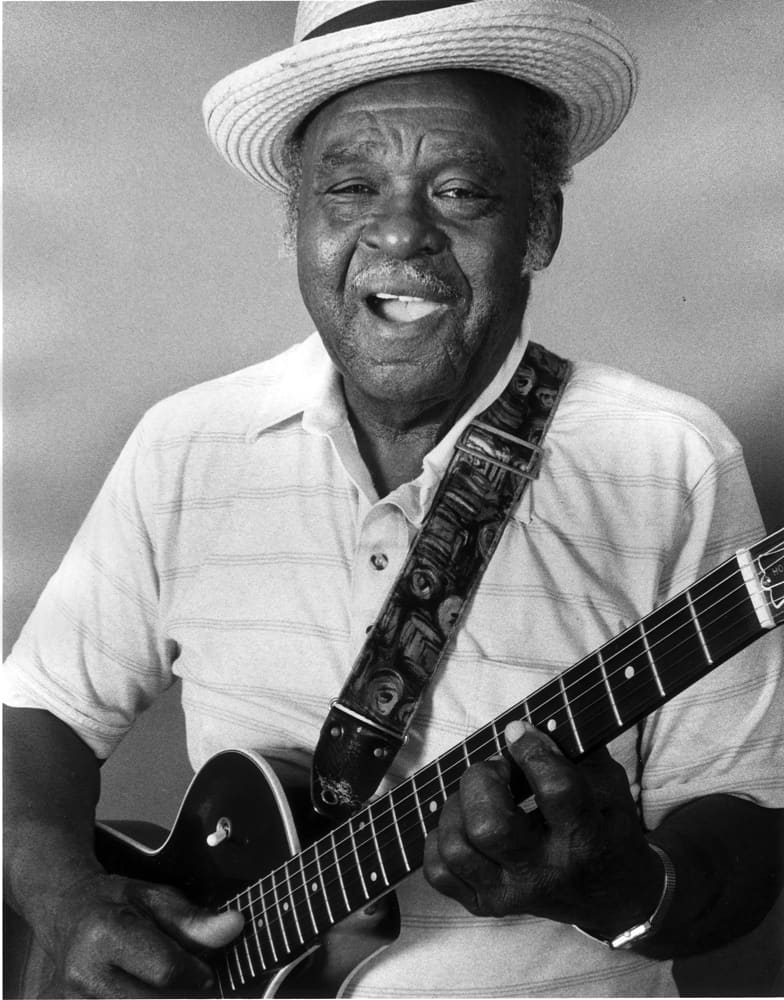
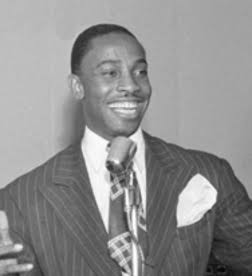
Trout was both. Through the 1970s he worked as a sideman, backing a remarkable list of artists, many of them veterans of the rhythm-and-blues and blues circuits who still toured relentlessly through California's clubs. Over these years he played behind John Lee Hooker, Big Mama Thornton, Percy Mayfield, Joe Tex and others, along with keyboardist and bandleader Deacon Jones, a fixture of the Los Angeles blues scene. For a young player, it was an apprenticeship of incomparable value. Backing Hooker meant learning to follow a man who changed chords when he felt like it and whose sense of time was entirely his own. Backing Thornton meant learning to support one of the most commanding voices in the history of the music. Backing Mayfield, the great poet of rhythm and blues, meant learning what a well-crafted song could do.
Trout has often spoken about what he learned from these elders, not only musically but about how to conduct himself as a working musician. He has also been frank about the darker side of those years. The Los Angeles music scene of the 1970s was awash in drugs and alcohol, and Trout was drinking heavily and using drugs. For a long time, the addiction and the music grew together, and he would later describe himself during this period as someone who was functioning, playing well, but slowly destroying himself.
Canned Heat
In 1981, Trout joined Canned Heat. It was his first high-profile gig, and it put him in a band with real history.
Canned Heat had been formed in Los Angeles in the mid-1960s by a group of serious blues record collectors, most notably Alan "Blind Owl" Wilson and Bob "The Bear" Hite. The band had scored huge hits with "On the Road Again" and "Going Up the Country," played Monterey and Woodstock, and recorded with John Lee Hooker on the celebrated double album Hooker 'n Heat. But by the early 1980s, the band had been through tremendous upheaval. Wilson had died in 1970 and Hite in 1981, and the group was carrying on under drummer Adolfo "Fito" de la Parra, working the club circuit with a shifting line-up.
Trout's years with Canned Heat, roughly 1981 to 1984, were hard ones. The band toured constantly, and it was by most accounts a chaotic, hard-living outfit; Trout has told stories of those years that are equal parts hilarious and harrowing. But the gig mattered. It put him in front of bigger audiences, connected him to one of the great American blues-rock traditions, and taught him how to play night after night for crowds who had come expecting a show. Canned Heat's devotion to the old blues masters also reinforced Trout's own sense of where the music came from.
The Bluesbreakers
Then came the call that changed his career. Around 1984, John Mayall was re-forming the Bluesbreakers, and he asked Trout to join.
For a guitarist who had grown up on Mayall's records, it was the opportunity of a lifetime. The Bluesbreakers had been, in the 1960s, the great finishing school of British blues guitar. Eric Clapton had passed through, then Peter Green, then Mick Taylor, and each had gone on to fame: Clapton to Cream, Green to Fleetwood Mac, Taylor to the Rolling Stones. Mayall had a remarkable eye for talent and a willingness to give young players room to stretch out, and the guitar chair in his band carried enormous prestige.
The new Bluesbreakers of the mid-1980s featured not one but two lead guitarists: Trout and Coco Montoya. Montoya, a left-handed player who had served a long apprenticeship with Albert Collins, was a fiery, soulful guitarist in his own right, and the pairing worked brilliantly. The two players pushed each other, traded solos, and gave the band a twin-guitar firepower it had never had before. Trout stayed with Mayall for roughly five years, through the end of the 1980s, touring the world and recording albums including Behind the Iron Curtain, a live record made in Eastern Europe, and Chicago Line.
The Mayall years did several things for Trout. They gave him international exposure, particularly in Europe, where Mayall was revered and where audiences took the blues very seriously indeed. They gave him a reputation; night after night, Mayall gave him a featured spot, and European crowds began to notice the American guitarist who played with such ferocity. And they gave him a mentor. Trout has spoken of Mayall with deep affection and gratitude for decades. When Mayall died in 2024, Trout said that he could not overstate Mayall's influence on his life.
Getting Sober
The Mayall years also coincided with the most important personal turning point of Trout's life. In 1987, he got sober.
By his own account, he had reached the end of the line. He has credited a post-gig encounter with Carlos Santana during the Mayall years with helping pull him back from the edge. The drinking and drug use that had been part of his life since his teens had become unmanageable, and he has said that he believed he would die if he kept going. With help, he stopped. He has remained sober ever since, and he has been open about his recovery throughout his career, talking about it in interviews, writing about it in songs, and making clear to fans who are struggling that recovery is possible.
Sobriety changed his music as well as his life. It gave him clarity, discipline and focus, and it laid the groundwork for the solo career that was about to begin. It also gave him a subject. Many of Trout's finest songs over the decades have been about addiction, recovery, struggle and survival, and they carry the authority of a man who has been there.
Around the same time, Trout met Marie Braaf, a Danish woman who would become his wife, his manager and, increasingly, his songwriting partner. It is impossible to tell Trout's story without her. Marie has managed his career for decades, steered him through the business, and, as he has said many times, saved his life in more ways than one. In recent years she has also written lyrics for many of his songs.
Going Solo
In 1989, Trout left the Bluesbreakers to form his own band. It was a risk; plenty of great sidemen have failed as leaders. But Trout had a crucial advantage. Thanks to his years with Mayall, he already had an audience in Europe, and particularly in Scandinavia and the Netherlands, where the Dutch label Provogue was eager to sign him.
His first solo album, Life in the Jungle, was released in 1990, and it established the template for much of what followed: hard-driving, guitar-heavy blues-rock, rooted in the Chicago and Texas traditions but played with rock volume and intensity, and fronted by Trout's gruff, heartfelt vocals. Prisoner of a Dream followed quickly, and then Transition in 1992. Trout and his band toured relentlessly, and in Europe they became a major draw. His first two albums reportedly sold more than 100,000 copies between them, and in 1991 his song "The Love That We Once Knew" became a Top 10 radio hit in the Netherlands, cementing his status there with appearances at Pinkpop and Parkpop. In Denmark he played to huge crowds at festivals such as Midtfyns and Skanderborg. In those countries Trout was not a cult figure but a genuine star, selling large numbers of records and headlining big venues and festivals. It is one of the curious patterns of blues history that so many American players have found their biggest audiences overseas, and Trout is a prime example.
The early-1990s records, released under the name Walter Trout Band, are often raw and occasionally overstuffed, the work of a guitarist delighted to have his own stage and determined to fill it. But they also show his songwriting developing, and they contain some of his most enduring concert staples. Tellin' Stories in 1994 and Breaking the Rules in 1995 continued the run, building his European base.
Why Europe Listened First
Trout's European success deserves a closer look, because it explains a great deal about the shape of his career. American blues musicians have been finding grateful audiences across the Atlantic since the 1950s, when Big Bill Broonzy, Muddy Waters and others toured Britain, and since the American Folk Blues Festival tours of the 1960s, which brought dozens of bluesmen to Germany, Britain and Scandinavia. European listeners, by and large, approached the blues as an art form with a history, not as a commercial category that rose and fell with the charts. That made them loyal. An artist who won them over could count on them for decades.
Trout won them over in the late 1980s, night after night, as Mayall's featured guitarist, and when he went solo, the audience followed. The Netherlands and Denmark were his strongholds, but he built a following across Germany, Scandinavia and Britain as well. Provogue, the Dutch label that released his early solo albums and remains his home today, understood that audience and knew how to reach it. Festivals gave him huge stages; European blues and rock magazines gave him serious coverage.
There was also something about Trout's style that suited those crowds. His shows were long, loud and generous, and his commitment on stage was total. European festival audiences, standing in fields or packed into tents, responded to that intensity. In the United States in the early 1990s, by contrast, the blues market was dominated by a handful of established names and by the long shadow of Stevie Ray Vaughan, who had died in 1990, and a guitarist with a similar fire could struggle to be heard as anything but a follower. In Europe, Trout was simply Walter Trout.
The relationship has lasted. Long after he became a draw at home, Trout has continued to tour Europe regularly, and many of his most celebrated live recordings, including Alive in Amsterdam and the Royal Albert Hall shows, were made there. It is fair to say that without his European audience, there might not have been a solo career at all.
Breaking Through at Home
For much of the 1990s, Trout was in the odd position of being a festival headliner in Europe and a relative unknown in his own country. American blues audiences had heard of him, if at all, as a Mayall alumnus. That began to change toward the end of the decade, as his records started to be released and distributed in the United States and he began to tour there more regularly. His self-titled American release in 1998 helped introduce him to listeners at home, and records with his band the Free Radicals, including Livin' Every Day, kept up the pace.
The 2000s were a decade of consolidation and steady growth. Go the Distance (2001), Relentless (2003) and Deep Trout kept the catalog flowing, and Trout became a fixture on the American blues and blues-rock circuit. He was no longer filed only under "former Bluesbreaker." He was a headliner in his own right.
Full Circle and the Brotherhood of Guitar
In 2006, Trout released Full Circle, one of the most enjoyable records of his career and a clear statement of where he stood in the blues world. The album was built around collaborations with an impressive guest list that included his old boss John Mayall, his old bandmate Coco Montoya, Jeff Healey, Joe Bonamassa, Guitar Shorty, Junior Watson, Bernard Allison, Finis Tasby and others. It was a kind of family reunion, and it showed how widely respected Trout had become among his peers, especially among younger players.
That respect matters to his story. Trout has been, for many younger blues-rock guitarists, a generous elder: encouraging, supportive, ready to share a stage. Joe Bonamassa, in particular, has spoken warmly of Trout's support early in his career, and the two have appeared together many times.
The records that followed, The Outsider (2008), Unspoiled by Progress (2009) and Common Ground (2010), regularly placed in the upper reaches of the blues charts. Blues for the Modern Daze (2012) was a turning point of a different kind: a deliberate move back toward traditional blues forms, written as a reflection on contemporary life, with Trout explicitly trying to write blues songs about the world as it is now rather than recycling old themes. It was followed in 2013 by Luther's Blues, a tribute to his friend Luther Allison, the Chicago bluesman who had, like Trout, found his biggest audience in Europe before a late-career comeback in America. Trout's versions of Allison's songs are heartfelt and fierce, and the album is one of the best introductions to his playing.
The Illness
And then everything nearly ended.
Trout had been diagnosed with hepatitis C, and by 2013 the damage to his liver had progressed to cirrhosis and liver failure. His health collapsed with frightening speed. He lost a great deal of weight, suffered from confusion and memory loss caused by the disease, and became so weak that he could barely walk, let alone play. He has said that, for a time, he could no longer play the guitar at all and did not know if he ever would again.
He needed a transplant, and he needed it quickly. The transplant system in the United States is notoriously difficult, and Trout's chances were complicated by the realities of medical insurance and by the scarcity of donor organs. Marie led a campaign to raise money for his care, and fans around the world responded, donating to a fund that helped pay for treatment. Trout was moved to the Nebraska Medical Center in Omaha, where he waited, growing weaker by the day. He has said that he was very near the end.
In May 2014, he received a new liver. The operation saved his life.
Before the transplant, too sick to tour, Trout managed to complete an album, The Blues Came Callin', released in 2014. It includes some of his most raw and unguarded songs, written and recorded by a man who did not know whether he would survive, and it is a remarkable document of courage. It also includes a moving guest appearance by John Mayall.
Learning to Play Again
The recovery was long and brutal. Trout has described having to relearn the guitar almost from scratch, his hands and his brain no longer working together the way they once had. For a musician who had spent his life on the instrument, it was a humbling and frightening experience. He practiced for hours a day, slowly rebuilding his technique.
He also wrote. Battle Scars, released in 2015, is the album in which Trout confronted his illness head-on. The songs deal with the fear, the pain, the hospital, the waiting and the gratitude of survival, and they are among the most personal he has ever written. "Almost Gone," "Omaha," "Please Take Me Home" and "Gonna Live Again" chart the journey from near-death to renewed life with remarkable candor. For many fans, Battle Scars is his masterpiece, the record where the songwriter finally caught up with the guitarist.
Trout returned to the stage in 2015, and his comeback included a triumphant, emotional appearance at the Royal Albert Hall in London. The concert, captured in part on later live releases, was a celebration of survival, and those who were there have described it as one of the most moving shows they ever saw. The same year saw the publication of his memoir, Rescued From Reality, written with the British music journalist Henry Yates, a frank account of his childhood, his addictions, his career and his illness. A live album recorded in Amsterdam, Alive in Amsterdam, followed in 2016.
We're All in This Together
In 2017, Trout released We're All in This Together, a duets album that rivals Full Circle for star power and surpasses it in ambition. Each song was written for a specific guest, and the list reads like a roll call of modern blues and blues-rock: Joe Bonamassa, Kenny Wayne Shepherd, Warren Haynes, Sonny Landreth, Charlie Musselwhite, Robben Ford, Eric Gales, Mike Zito, Randy Bachman, Edgar Winter, John Németh, John Mayall and Trout's own son Jon Trout, himself a guitarist.
The album was a celebration of survival and of community, and it was received as such, with Trout clearly delighted to be alive and playing with his friends. The title track with Bonamassa became one of his most popular recordings. "Gonna Hurt Like Hell," with Kenny Wayne Shepherd, and a fiery reading of "The Sky Is Crying" with Warren Haynes, are highlights. The album was a reminder that, whatever the blues-rock world's rivalries and egos, there is a genuine fellowship among its players, and Trout sits at the heart of it.
Survivor Blues and the Late Flowering
What followed was one of the most productive late-career runs in modern blues. Survivor Blues (2019) was a fascinating project: an album of lesser-known songs by blues greats, deliberately avoiding the standards that everyone covers. Trout dug deep into his record collection for songs by artists including J.B. Lenoir, Sunnyland Slim, Jimmy Dawkins, Mississippi Fred McDowell, Otis Rush and Luther Johnson, and the result is both a tribute and an education, a guided tour through the corners of blues history from a man who clearly loves every one of these songs. For blues enthusiasts, it may be the most rewarding album in his catalog.
Ordinary Madness (2020) turned inward, with songs about mental health, anxiety and the struggle to stay sane, and it was widely praised as one of his finest records. Ride (2022) was openly autobiographical, with songs drawing on memories of his childhood and youth, including the trauma he had long kept hidden. Broken (2024), which featured Beth Hart on the title track, debuted at number one on the Billboard blues chart, a striking achievement for an artist in his seventies.
Then came Sign of the Times, released in September 2025 on Provogue, the label that had signed him more than three decades earlier. The album finds Trout looking outward at a divided world. The opening track, "Artificial," is a harmonica-spiced, satirical blast at a culture of fakery, with lines aimed at artificial photos, artificial music and, as Trout told interviewers, his alarm about artificial intelligence. "No Strings Attached" takes on hypocrisy and bigotry, while "Hurt No More" is, in his words, his recovery song. "Mona Lisa Smile," an acoustic piece with accordion, mandolin and violin from arranger Stevie Blacke, came to him in a dream. The title track is one of the most experimental recordings of his career, deliberately dissonant, because, as he put it, dissonance is a sign of the times.
Self-produced and cut at Strawhorse Studios in Los Angeles with his longtime studio band of drummer Michael Leasure, bassist John Avila and keyboardist Teddy "Zig Zag" Andreadis, and mixed by J.J. Blair, it is one of the toughest-sounding records he has made. Classic Rock described it as threaded with a fierce edge and raw, personal candor, and called Trout among the most underrated songwriters of his generation. It was exactly the kind of review he had been waiting for. In March 2026, he followed it with a new single, "All I Ask of You."
A Life on the Road
To understand Trout's music, it helps to understand how much of his life has been spent on tour. For more than four decades, first as a sideman and then as a leader, he has kept up a touring schedule that few musicians half his age would attempt, crossing North America and Europe in vans, buses and planes. The road is where his reputation was built, one show at a time, long before any record charted.
That life takes a toll, and Trout has never pretended otherwise. He has written songs about exhaustion, loneliness, homesickness and the strange disconnect of living out of a suitcase, and he has spoken about the strain the road places on family life. For a recovering alcoholic, it also brings constant temptation: bars, after-show parties and the long empty hours between gigs. That he has stayed sober through decades of touring is a quiet testament to his discipline and to the support around him.
But the road also gives him something he clearly needs. Trout has described the two hours on stage as the place where everything makes sense, where pain and worry fall away and he and the audience become, for a while, a single community. The comeback after his transplant was, more than anything, a return to that place. It is hard to imagine him without it, and as of 2026, at seventy-five, he shows little sign of giving it up.
The Guitarist
For all his insistence on his songwriting, it is impossible to discuss Walter Trout without discussing his guitar playing, which is among the most recognizable in blues-rock.
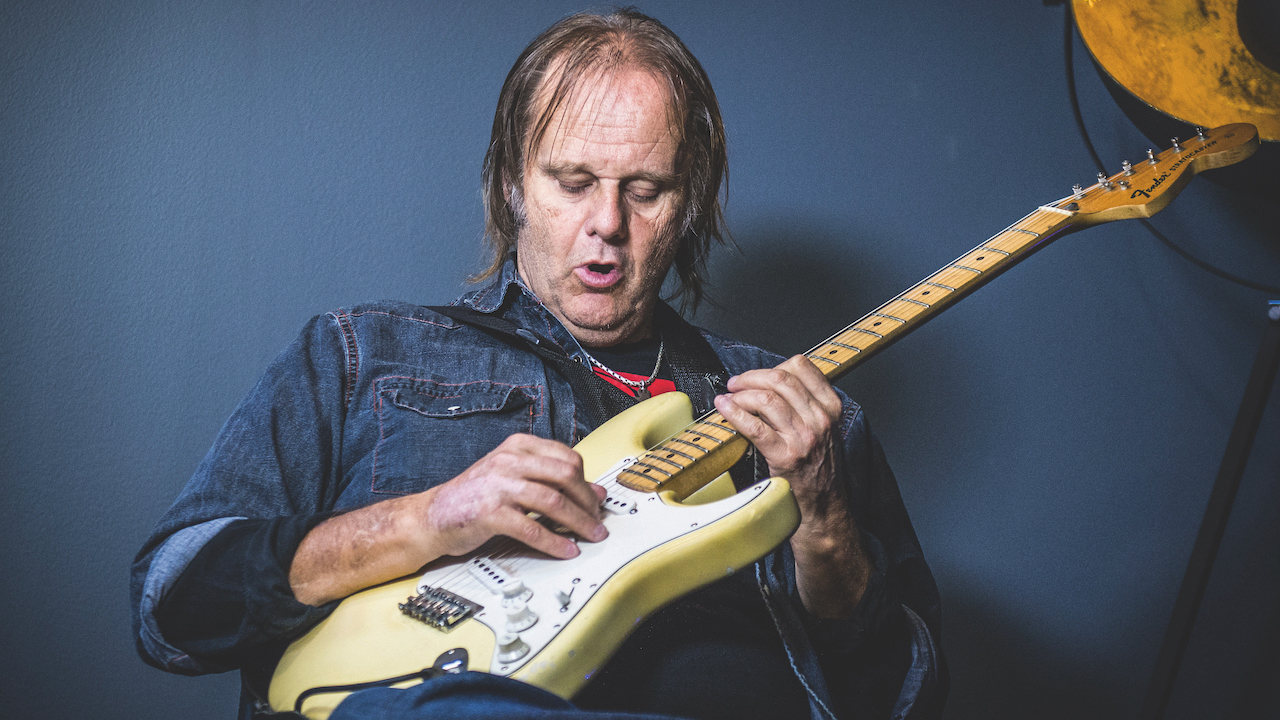
His tone is raw, biting and heavily overdriven, built for the most part on a Fender Stratocaster through loud amplifiers, and it has a vocal, almost human quality, especially in his use of vibrato and bends. His technique is formidable; he can play extremely fast, with long, flowing runs that owe something to the jazz he heard as a boy and to the rock players of the 1970s. But at his best, his speed serves the emotion of the music rather than replacing it. The influence of Mike Bloomfield is audible in his long, sustained lines, and the influence of the three Kings is audible in his phrasing and his sense of drama.
Above all, Trout is an intensely physical, emotional player. Watching him live, one is struck by the sheer commitment: the grimaces, the sweat, the way he seems to throw his whole body into every note. He has always been famous for his long solos and for the energy of his live shows, which can stretch well beyond two hours. Some critics have found him excessive. Fans would say that excess is the point: he gives everything he has, every night.
The Singer and the Songwriter
Trout's voice is not a conventionally beautiful instrument. It is gruff, earnest and weathered, a working man's voice. But it is completely believable, and it has deepened and grown more expressive with age. The voice that sings the songs on Battle Scars and Ride is the voice of a man who has lived every word.
His songwriting has undergone the most dramatic evolution. The early solo records contain good, solid songs in the blues-rock vein, but they can lean on familiar themes. From Blues for the Modern Daze onward, and especially after his illness, Trout became a far more personal and ambitious writer. He began writing directly about his own experience: addiction and recovery, mortality and illness, childhood trauma, mental health, aging, politics and social change. His partnership with Marie, who writes lyrics for many of his songs, has broadened his range further.
That evolution puts him in the deepest tradition of the blues. The music has always been at its most powerful when it tells the truth about life as it is actually lived, and Trout, in his later work, has done exactly that. He has turned his own suffering into songs that speak to others who are suffering, and many fans have told him that his songs about addiction and illness helped them through their own struggles.
Family
Trout's family is woven into his story in a way that is unusual among blues-rock guitarists. Marie, has been his manager, his business partner, his advocate during his illness and, increasingly, his lyricist. Trout has never been shy about crediting her; he has said, more than once, that he would not be alive without her.
The couple raised sons together, and music runs in the family. Jon Trout, a gifted guitarist, has played with his father on stage and on record, including on We're All in This Together, and the sight of father and son trading solos has become one of the pleasures of Trout's later concerts. For a man who grew up in a violent and unhappy home, building a stable, loving family of his own has been, by his own account, one of his proudest achievements, and a theme that runs through much of his later writing. Songs of gratitude and devotion sit alongside the songs of struggle in his catalog, and they ring just as true.
Influence and Legacy
Trout's influence works on several levels. As a guitarist, he has been an important model for younger blues-rock players, demonstrating that it is possible to combine technical brilliance with deep feeling and an unshakeable connection to the blues tradition. Players including Joe Bonamassa and many others of the modern blues-rock generation have acknowledged his example and his encouragement.
As a link in the chain of blues history, he connects the old masters he backed in the 1970s, including John Lee Hooker, Big Mama Thornton and Percy Mayfield, and the British blues lineage of John Mayall to the present day. Few working musicians can claim to have played behind Hooker and recorded with Bonamassa. And as an advocate for the music's history, through projects like Luther's Blues and Survivor Blues, he has worked to keep attention on lesser-known masters whose work might otherwise be forgotten.
He has also been a vital part of the European blues scene, a reminder of how much the international audience has done to sustain American blues. And through his honesty about addiction, recovery and illness, he has reached many people far outside the usual blues audience, offering a powerful example of resilience. He has also been a vocal advocate for organ donation, speaking about how a stranger's gift saved his life.
Where to Start
For listeners new to Walter Trout, the best starting point may be Battle Scars, the record in which his life and his art came together most powerfully. From there, Survivor Blues offers a superb tour of blues history through his eyes, and We're All in This Together is a joyous celebration of the modern blues-rock community. Luther's Blues is an excellent showcase for his guitar playing and a moving tribute to a friend. For his early, high-octane style, go back to Life in the Jungle or Transition, and for the full live experience seek out Alive in Amsterdam or one of the recordings of his Royal Albert Hall comeback. Then hear where he is now with Ordinary Madness, Ride, Broken and Sign of the Times. And if you want the whole story in his own words, read Rescued From Reality.
 Buy from Amazon Battle Scars
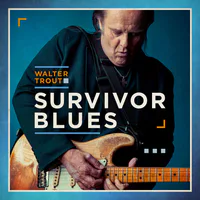 Buy from Amazon Survivor Blues
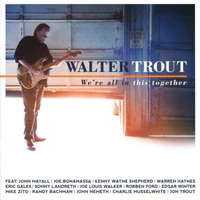 Buy from Amazon We're All in This Together
Coda
At an age when most musicians have long since retired, Walter Trout is still on the road, still writing, still recording. Asked about retirement, he has made it clear he has no such plans. He talks instead about nurturing his talent and becoming the best artist he can possibly be, which is a remarkable thing to hear from a man with half a century of professional music behind him.
That restlessness may be the key to understanding him. Trout has survived so much: a painful childhood, years of addiction, the hard grind of the road, and a disease that should have killed him. Each time, he has come back, and each time, his music has grown deeper. The young guitar hero who once tore through solos with the Bluesbreakers has become something rarer and more valuable: a mature artist who uses the blues to tell the truth about his life and his times.
That, in the end, is what the blues has always been for. Walter Trout learned it from the records of Mike Bloomfield and John Mayall, from the bandstands he shared with John Lee Hooker and Big Mama Thornton, and from his own hard-won experience. He has spent his life passing it on.