There is a particular kind of genius that announces itself early, not with fireworks but with a quiet, almost unsettling certainty. Peter Allen Greenbaum was born on October 29, 1946, in Bethnal Green, in the East End of London, into a Jewish family that could not have imagined what their youngest child would become.
His father, Joe Greenbaum, worked as a tailor; his mother, Ann, kept the household. He was the youngest of four children, and it was his brother Michael who first placed a guitar in his hands, teaching him the basic chords that would become the foundation of everything. By the age of eleven, Peter was teaching himself, working out the songs he heard on the radio by ear, developing the acute musical intelligence that would later astonish everyone from B.B. King to Eric Clapton.
The London of Peter Green's childhood was a city still recovering from the devastation of the Second World War. Bethnal Green, in the borough of Tower Hamlets, was working-class to its bones, a neighborhood of terraced houses and bomb sites, of markets and pubs and the constant rumble of the city. For a Jewish boy in postwar London, there were the ordinary cruelties of childhood—the taunts, the feeling of difference, the sense that the world was not entirely built for you. Green would later attribute some of the emotional depth of his blues playing to these early experiences, to the scars that never fully healed. His girlfriend in the 1960s, Sandra Elsdon-Vigon, would observe that "the blues to him are Jewish blues," a statement that captures the essential truth of Green's art: he did not play the blues as an anthropological exercise or a musical tourism, but as a man who understood suffering from the inside.
Hank Marvin of the Shadows was his first guitar hero, and the instrumental records of the early 1960s—the twangy, reverb-drenched sound of British rock and roll—were his initial musical language. He played Shadows covers in his first bands, learned the vocabulary of melody and tone that would never leave him, even when he moved into the far more demanding world of Chicago blues. But the conversion came, as it did for so many British musicians of his generation, through the sound of American blues on imported records. A friend's 78 rpm copy of Muddy Waters's "Honey Bee" turned the key in the lock, and Peter Green stepped through the door into a world that would consume him entirely.
By the age of fifteen, he was playing professionally, working day jobs for east London shipping companies while playing bass in Bobby Dennis and the Dominoes, a band that covered pop chart hits and rock and roll standards.
The Dominoes were not a blues band; they were a working-class dance band, playing whatever the audience wanted to hear. But even then, Green's musical ambition was apparent. He moved from bass to lead guitar, joined rhythm and blues outfits like the Muskrats, and by Christmas 1965 found himself playing lead guitar in Peter Bardens's band, Peter B's Looners. It was here that he made his recording debut, on a cover of Jimmy Soul's "If You Wanna Be Happy," backed with Bardens's instrumental "Jodrell Blues."
The record is a curiosity now, a glimpse of a young guitarist still finding his voice, but it contains the seeds of what would come—the melodic sensibility, the clean tone, the sense that this was a musician who thought in phrases rather than in licks.
The Shotgun Express and the Path to Mayall
The British music scene of the mid-1960s was a churning, competitive world where bands formed and dissolved with bewildering speed. In early 1966, Green and some of his colleagues from Peter B's Looners formed the Shotgun Express, a Motown-style soul band that also featured a young Rod Stewart on vocals.
The Shotgun Express was a detour, an attempt to ride the wave of British soul that was sweeping London's clubs, but Green's heart was never truly in it. He left after a few months, his restlessness already apparent, his sense that he was meant for something else growing stronger by the day.
The something else arrived in the form of John Mayall's Bluesbreakers, the legendary finishing school for British blues guitarists. In October 1965, Eric Clapton had abruptly left the Bluesbreakers for a Greek holiday, and Mayall needed a replacement. Green had been attending Bluesbreakers shows at the Marquee, sizing up the competition, and when Clapton's departure created an opening, he made his move. He told Mayall, repeatedly, that he was better than the temporary replacement, Jeff Kribbett. Mayall, to his credit, listened.
The story of Green's audition for the Bluesbreakers has become part of the mythology of British rock. Producer Mike Vernon was in the studio when the band arrived to record without Clapton. He noticed an amplifier he had never seen before and asked Mayall where their star guitarist was. Mayall's reply has been quoted a thousand times: "He's not with us anymore... Don't worry, we got someone better." Vernon was incredulous. But Mayall was adamant: "In a couple of years he's going to be the best."
The album that resulted,
A Hard Road, released in 1967, features two Green compositions—"The Same Way" and "The Supernatural"—that announced the arrival of a major talent. "The Supernatural" in particular is a revelation, one of Green's first instrumentals, a slow blues that showcases the sustained notes and trembling vibrato that would become his trademarks. His playing on the album is not flashy in the manner of Clapton's pyrotechnics on
Blues Breakers with Eric Clapton; it is more measured, more melodic, more concerned with the emotional weight of each note than with the speed of its execution. The nickname that his musician friends bestowed upon him during this period—"The Green God," a play on Clapton's "God" moniker—was not entirely ironic.
It was during his time with the Bluesbreakers that Green was reunited with Mick Fleetwood, the gangly drummer from Peter B's Looners who had joined Mayall's band in April 1967, only to be fired two weeks later for drunkenness. And it was here that Green met John McVie, the bassist who would form the rhythmic foundation of everything that followed. The three of them played together in Mayall's band for a brief, electric period, and when Green decided to leave in 1967, the reason he gave was characteristically direct: he did not like the direction the Bluesbreakers were taking, the way they were moving away from the pure blues that had drawn him to the band in the first place.
Mayall, generous as always, funded a recording session as a birthday gift for Green. One of the tracks recorded was given the title "Fleetwood Mac," a name that would soon mean something far beyond a blues instrumental.
The Creation of Fleetwood Mac
Peter Green's new band was initially called "Peter Green's Fleetwood Mac featuring Jeremy Spencer," a cumbersome name that reflected Green's ambivalence about fronting a band and his desire to honor the musicians who played with him. Bob Brunning, a trainee teacher, was hired temporarily on bass, since John McVie was not yet ready to leave the security of Mayall's employ.
Within a month of forming, they played the Windsor National Jazz and Blues Festival in August 1967, and were quickly signed to Mike Vernon's Blue Horizon label. By September, McVie had come aboard, and the classic lineup was in place.
The band's first single, "I Believe My Time Ain't Long" backed with Green's "Rambling Pony," did not chart, but their self-titled debut album, released in February 1968, made a significant impression, remaining in the British charts for thirty-seven weeks.
The album was a mixture of blues covers and originals, with Green's guitar and vocals providing the central focus. Jeremy Spencer contributed his Elmore James-influenced slide guitar and manic stage presence, but it was Green's musicianship that defined the record—the fluid, evocative playing, the gravelly voice that sounded older than its years, the sense that here was a man who had absorbed the blues not as a style but as a way of being.
The album's success established Fleetwood Mac as one of the leading bands of the British blues boom, but Green was already restless. The second album, Mr. Wonderful, released later in 1968, continued the formula of blues covers and originals, but Green's songwriting was evolving rapidly. "Black Magic Woman," released as a single in 1968, was a Green original that combined a Latin rhythmic feel with the minor-key intensity of the blues, creating something that sounded like nothing else in British rock at the time.
The song would become a massive hit for Carlos Santana two years later, but in its original incarnation, it is Green's guitar that dominates—the out-of-phase tone of his 1959 Gibson Les Paul, the tremolo effect from his Fender amplifier, the sustained notes that seem to hang in the air like smoke.
The instrumental "Albatross," released in 1969, marked a departure from the band's blues-rock sound into something more ethereal, more atmospheric. Inspired by Santo and Johnny's 1959 hit "Sleep Walk," the piece features Green's guitar weaving a dreamy, Hawaiian-tinged melody over a slow, hypnotic rhythm. It reached number one in the British singles charts, a remarkable achievement for a guitar instrumental in the age of psychedelic pop.
The hits continued to flow from Green's pen: "Oh Well," a two-part composition that begins with a hard-rocking riff and segues into a classical-influenced acoustic section; "Man of the World," a melancholy ballad that revealed the deepening darkness in Green's soul; and finally, "The Green Manalishi (With the Two Prong Crown)," a song of such ominous power that it seemed to predict the mental collapse that was already underway.
In 1969, the band recorded Blues Jam in Chicago at the Chess Records Ter-Mar Studio, a double album that brought them face to face with their American heroes—Otis Spann, Big Walter Horton, Willie Dixon, J.T. Brown, and Buddy Guy.
For Green, this must have been both a validation and a challenge, the opportunity to measure himself against the masters who had created the music he loved. The recordings show him holding his own, his playing respectful but not submissive, his own voice emerging even in the presence of giants.
The third studio album,
Then Play On, released in September 1969, featured the addition of eighteen-year-old Danny Kirwan, a guitarist Green had discovered playing with his trio Boilerhouse in 1967. Kirwan's choirboy voice and fluid guitar provided a contrast to Green's world-weary vocals, and their intertwining guitars on tracks like "Coming Your Way" established a template for twin-guitar rock that bands like Wishbone Ash would later expand upon.
But the album's most startling feature was its ambition, its refusal to be confined by the conventions of blues or rock. It was Peter Green's blues, fusing Chicago with London, English folk with African rhythms, Jewish melancholy with black American sorrow.
The Sound of Sorrow: Green's Guitar and the Mystery of Tone
To discuss Peter Green's music without discussing his tone is to miss half the story. His sound was instantly recognizable, a tone that puzzled guitarists for decades and that B.B. King described with awe: "He has the sweetest tone I ever heard; he was the only one who gave me the cold sweats."
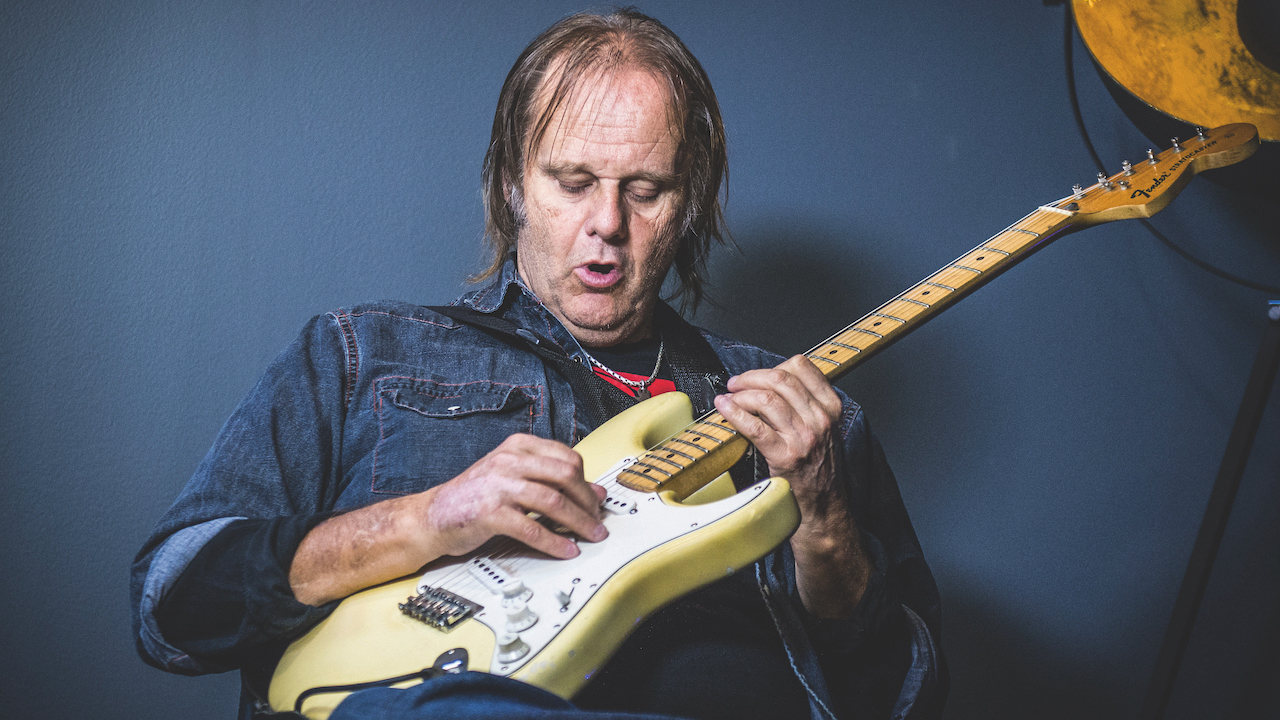
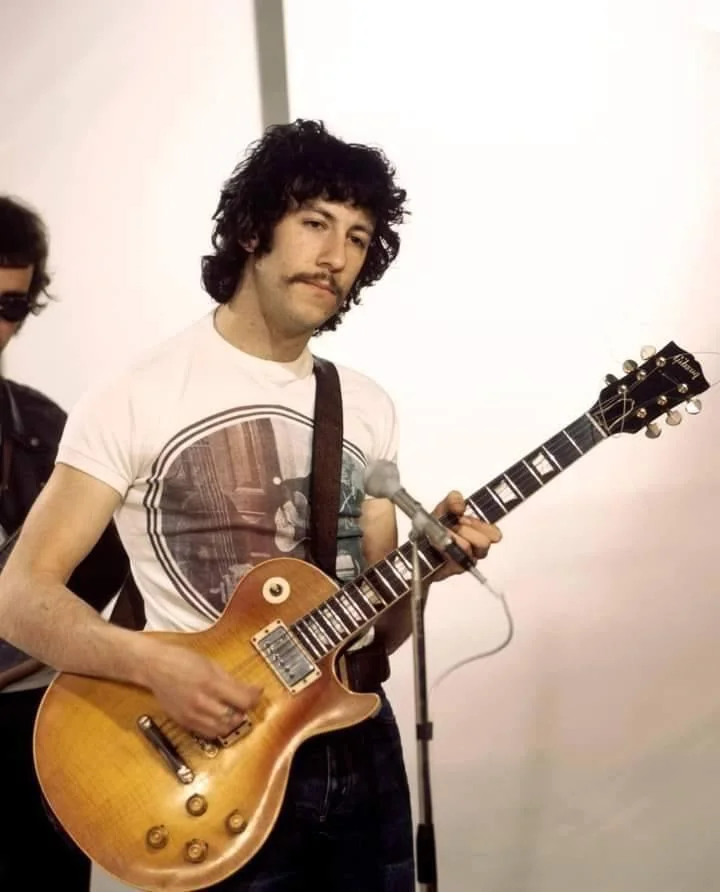
The source of that tone was a 1959 Gibson Les Paul Standard that Green had purchased for approximately £110 at Selmer's music shop on Charing Cross Road in London, sometime in 1964 or 1965.
The guitar, which would become known as "Greeny," had a peculiar characteristic that Green himself never fully understood or exploited deliberately: the neck pickup had a reversed magnet, creating an out-of-phase effect when both pickups were selected simultaneously. This produced a tone that combined the warmth and sustain of a Les Paul with the clarity and definition of a Fender Stratocaster—a nasal, cutting quality that sounded like nothing else.
When Guitar Player magazine asked Green about his "magic" guitar in 2000, he gave an answer that tells you everything about the man: "I never had a magic one. Mine wasn't magical. It might have looked similar to others from a distance, but it was an old-fashioned one with a funny-shaped neck — a kind of semicircle neck. It just barely worked."
The equipment was only part of the equation. Green's signal chain was almost absurdly simple: guitar straight into amplifier, with no effects pedals, no rack units, no digital processing. The tremolo on "Black Magic Woman" was the built-in tremolo circuit of his Fender amplifier. The reverb was Fender spring reverb. The distortion came from the amplifier operating at volume, pushed by the output of the guitar's pickups.
But the true source of Green's tone was in his hands. His vibrato was fast, narrow, and intensely concentrated, producing an effect that Guitar Player described as "quick" and "stinging"—urgent enough to feel immediate, intense enough to feel painful.
His melodic sense was extraordinary; his solos tell stories with clear beginnings, developments, and resolutions, phrases that breathe and pause, that use silence as deliberately as sound. You can sing a Peter Green solo, note for note, in the exact order and rhythm he played it. That is the definition of melodic clarity, and it is rarer in rock guitar than most players would care to admit.
His influences were the canonical figures of American blues—Robert Johnson, Muddy Waters, B.B. King, Freddie King, Elmore James, Otis Rush—but he synthesized them into something that sounded entirely his own. Where Eric Clapton's playing in the Bluesbreakers was a declaration of technical supremacy, Green's was a confession of emotional vulnerability. He did not play to impress; he played to communicate, to reach across the gap between performer and listener and say, "This is how I feel, and maybe you feel it too."
The Unraveling
The signs of Peter Green's mental decline were visible to his bandmates long before the crisis of 1970. Beginning with the melancholy lyrics of "Man of the World"—"Some day I'll die, and maybe then I'll be with you"—they noticed changes in his behavior, his appearance, his relationship to the world around him.
He began taking large doses of LSD, grew a beard, and started wearing robes and a crucifix on stage. He renounced Judaism and converted to Christianity, though his attempt to spread the word of Jesus to strangers on the street was quickly abandoned after a "city gent" in Denmark "slaughtered" him in argument.
More disturbing was his growing obsession with money, or rather, with the evil of money. Mick Fleetwood recalled conversations in which Green was "obsessive about us not making money, wanting us to give it all away."
He wrote large checks to charities; he tried to persuade his bandmates to do the same. The success that should have been a validation became a burden, a source of guilt and anxiety that he could not shake.
The breaking point came in March 1970, during a tour of Europe. Fleetwood Mac were in Munich when Green was invited to the High-Fish Commune, a left-wing collective preaching free love and drugs. He was smitten by Uschi Obermaier, a famous model and actress who would later have a long-running affair with Keith Richards.
Green's roadie Dennis Keane accompanied him to the commune and later claimed their drinks had been spiked with LSD. Whether this was true or not, the experience was devastating. Green stayed at the commune for three days, and when his bandmates finally persuaded him to leave for that night's gig, he was still tripping. On stage, his playing became increasingly unhinged. "I did this thing with my guitar which made it sound like an air-raid siren," he recalled years later. "I said to Mick: 'What did you think of my playing?' He said, 'You were mad tonight… mad.'"
He told Jeremy Spencer at the time that the music he had recorded at the commune was "the most spiritual music I've ever recorded in my life." But the spiritual experience came at a terrible cost. After a final performance on May 20, 1970, Peter Green left Fleetwood Mac for good.
The reasons he gave were characteristically vague and direct at the same time. "I wanted to be free or something," he said decades later, shrugging at a question he seemed never to have fully answered for himself. At the time, Mick Fleetwood explained that Peter "wanted to be just Peter Green. Not Peter Green of Fleetwood Mac."
The Wilderness Years
The decade that followed Green's departure from Fleetwood Mac was one of the most harrowing in the history of rock music, a slow-motion tragedy that unfolded in psychiatric hospitals, courtrooms, and the margins of the music industry. Green recorded a jam session album,
The End of the Game, released in 1970, which contains some of his fiercest guitar playing but also a sense of fragmentation, of a musician losing his grip on the structures that had contained his genius.
He made sporadic appearances—at the Bath Festival of Blues and Progressive Music in June 1970 with John Mayall, on Peter Bardens's solo album
The Answer, on sessions with B.B. King in London in 1971. In 1971, he briefly rejoined Fleetwood Mac to help them complete a U.S. tour after Jeremy Spencer's abrupt departure to join a religious cult, performing under the pseudonym Peter Blue.
He released a solo single, "Heavy Heart," and performed it on
Top of the Pops, but the momentum was gone. His mental illness and drug use had become entrenched, and he faded into professional obscurity.
The diagnosis, when it came, was schizophrenia, though the exact nature and cause of his condition remain subjects of debate. Green himself would later say that he took LSD "eight or nine times," and that "the effect of that stuff lasts so long... I wanted to give away all my money... I went kind of holy – no, not holy, religious. I thought I could do it, I thought I was all right on drugs. My failing!"
The 1970s were a decade of institutionalization and electroconvulsive therapy. He was an inpatient at West Park Hospital and Horton Hospital in Epsom, received outpatient ECT treatment at St. Thomas' Hospital in London, and was admitted to the Priory Clinic.
He described the treatment in stark terms: "They gave me ECT. They gave me injections and tranquillizers. I could hardly walk or keep my eyes open."
There were episodes of erratic behavior that brought him into conflict with the law. In 1977, he was arrested for threatening his accountant, David Simmons, with a shotgun during a dispute over money. The most famous version of the story has Green wanting Simmons to stop sending him money, but Green's own account, given in the 2011 BBC documentary
Peter Green: Man of the World, was more nuanced: he had just returned from Canada needing money, and during a telephone conversation with his accounts manager, he alluded to having brought back a gun from his travels. The accounts manager called the police, who surrounded Green's house.
He was remanded in prison before trial, then committed to Horton Psychiatric Hospital in Epsom, and from there transferred to the private Priory Clinic. The main reason for his hospitalization, he later stated, was "for giving my money away."
Between institutionalizations, he worked as a gravedigger, a hospital porter, a gardener. He lived rough at times. He married Jane Samuels, a Canadian, in 1978; they had a daughter, Rosebud, and divorced the following year.
The man who had been hailed as the greatest blues guitarist in Britain was now a ghost, wandering the margins of society, his genius buried under layers of medication, trauma, and the slow erosion of self that accompanies severe mental illness.
The First Re-emergence
The late 1970s brought the first glimmers of a return. With the help of his brother Michael, Green was signed to Peter Vernon-Kell's PVK label, and in 1979 he released
In the Skies, his first solo album in nearly a decade.
The album showed a musician struggling to find his way back, the guitar playing competent but lacking the supernatural fire of his peak years. He also made an uncredited appearance on Fleetwood Mac's
Tusk album that same year, playing on "Brown Eyes," a quiet reminder that the connection to his former band had never been entirely severed.
The 1980s were a period of fits and starts. He contributed to Mick Fleetwood's solo album
The Visitor in 1981, playing on "Rattlesnake Shake" and "Super Brains." He recorded with Katmandu, a band featuring Ray Dorset of Mungo Jerry, Vincent Crane of The Crazy World of Arthur Brown, and Len Surtees of The Nashville Teens, resulting in the album
A Case for the Blues in 1985.
He played with a band called Colors in the mid-1980s, made an album with his brother Micky under the name The Enemy Within, and occasionally surfaced in recording studios and on stages, always with the sense that he was fighting his way back from something that had nearly consumed him entirely.
Gibson Guitar Corporation attempted to start talks about producing a Peter Green signature Les Paul, but Green's instrument of choice during this period was a Gibson Howard Roberts Fusion, a semi-hollow jazz guitar that spoke to his evolving musical tastes.
He was, by his own account in 1988, still recuperating from the effects of drugs and the treatments that had been intended to cure him. The decade was a long, slow process of rebuilding, of learning to live with a mind that had been fundamentally altered by chemistry and circumstance.
The Splinter Group and the Long Road Back
The true comeback began in the mid-1990s, when Peter Green tentatively returned to performing and recording with the assistance of Nigel Watson, an old friend and collaborator, and Cozy Powell, the legendary drummer who had played with everyone from Jeff Beck to Black Sabbath. The Peter Green Splinter Group was formed in 1996, and their self-titled debut album, released in 1997, was the first fruit of Green's return to the music business after approximately ten years of near-total absence.
The album was mostly recorded live on a tour of the UK, and it consisted of blues covers—standards like "Going Down," "Dark End of the Street," "The Stumble," and acoustic versions of Robert Johnson songs.
The critics were sympathetic but measured. The Independent wrote that "his guitar-playing, while understandably lacking the extreme sensitivity of his work with Fleetwood Mac, is still a matter of wonder."
AllMusic's review was more direct: "Green himself plays competently, but there are only a handful of times where his playing is unexpected and inspired. That might seem like a disappointment, but it's reassuring to have any flashes of brilliance, and they suggest that he could record a full-fledged return to form if given some time."
The Splinter Group would release nine albums between 1997 and 2004, mostly written by Watson, covering the blues repertoire that Green had first encountered as a teenager.
They were not the masterpieces that Green's early work had been, but they were something perhaps more valuable: evidence that the man was still alive, still playing, still capable of finding joy in the music that had saved him as a boy and nearly destroyed him as a young man.
In 1998, Green was inducted into the Rock and Roll Hall of Fame as a member of Fleetwood Mac, an honor that placed him among the immortals of popular music. At the ceremony, he jammed with Carlos Santana—their song of choice was "Black Magic Woman," the Green composition that had become Santana's signature.
It was a moment of circular grace, the man who had written the song sharing a stage with the man who had made it famous, both of them acknowledging the debt that rock and roll owes to the blues.
The early 2000s brought rumors of a reunion of the early Fleetwood Mac lineup, involving Green and Jeremy Spencer, but the two guitarists were apparently unconvinced of the merits of such a project.
In 2004, a Splinter Group tour was cancelled and the recording of a new studio album stopped when Green left the band and moved to Sweden.
But he returned again, touring as Peter Green and Friends beginning in February 2009, playing to audiences who had never given up on him, who still remembered what he had been and were grateful for what he could still give.
The Greeny Guitar and the Chain of Legends
The story of Peter Green cannot be separated from the story of his guitar, the 1959 Les Paul Standard that passed through his hands and into legend. When Green left Fleetwood Mac in 1970, he sold the guitar to a young Northern Irish guitarist named Gary Moore for roughly what he had paid for it—about £100.
Moore would play Greeny for the next thirty-six years, using it on Thin Lizzy records, on "Parisienne Walkways," and on the 1995 tribute album
Blues for Greeny, an entire record of Peter Green compositions played on the very instrument that had created them.
When Moore ran into financial difficulties and sold the guitar in 2006, it passed through private collectors and dealers until Kirk Hammett of Metallica acquired it in 2014.
Hammett has used it on Metallica recordings and live performances, including a Peter Green tribute at the London Palladium in 2020. The guitar, with its factory-error reversed magnet, has become one of the most famous instruments in rock history, the subject of a documentary film, multiple replica models, and a six-figure price tag.
The man who bought it for £110 "just barely" thought it worked. The discrepancy between how others heard him and how he heard himself is one of the sadder facts in rock guitar history. He may never have fully understood what he had.
The Tribute and the Final Years
In February 2020, five months before his death, Mick Fleetwood organized a tribute concert at the London Palladium to honor the music of Peter Green and the early years of Fleetwood Mac. The all-star lineup included David Gilmour, Pete Townshend, Billy Gibbons, Noel Gallagher, Steven Tyler, Kirk Hammett, Jonny Lang, John Mayall, Christine McVie, Jeremy Spencer, and Bill Wyman, among others.
The concert was a celebration of the blues days where it all began, and Fleetwood spoke of his "greatest mentor" with a mixture of love and lingering sadness. "Peter was my greatest mentor and it gives me such joy to pay tribute to his incredible talent," he said. "I am honoured to be sharing the stage with some of the many artists Peter has inspired over the years."
Green did not perform at the tribute, though Fleetwood said he was aware of it. The concert film was broadcast in April 2020, and the album was released shortly thereafter. It would be the final major public acknowledgment of Green's contribution to music during his lifetime.
Peter Green died peacefully in his sleep on July 25, 2020, at the age of seventy-three, in Canvey Island, Essex.
The announcement from his family was simple and dignified: "A further statement will be issued in the coming days." The world learned that one of its greatest guitarists was gone.
Influence and the Green Legacy
The influence of Peter Green on subsequent generations of musicians is both vast and somewhat hidden, precisely because his active career was so brief. He recorded fewer than five years of truly essential music before mental illness ended his professional life. In that time, he shaped what British blues guitar could be, and his echoes can be heard in virtually every blues-rock guitarist who followed.
Gary Moore was the most direct inheritor, not merely because he owned Green's guitar but because he absorbed Green's melodic approach, his emotional directness, his refusal to play a note that did not serve the song. Moore's Blues for Greeny was the most explicit tribute, but his entire career as a blues guitarist was shaped by what he had learned from Green's records.
Carlos Santana's debt is equally clear. "Black Magic Woman" became one of Santana's signature songs, and the Latin-rock sound that Santana pioneered owes a direct debt to Green's original conception. When the two men jammed at the Rock and Roll Hall of Fame induction in 1998, it was a moment of mutual recognition between two musicians who had taken the blues in different directions but who shared a common source.
The list of guitarists who have cited Green as an influence reads like a roll call of British and American rock: Eric Clapton, who praised him as "a truly phenomenal player"; Noel Gallagher of Oasis, who named him one of his favorite singers from the 1960s; Joe Perry of Aerosmith; Andy Powell of Wishbone Ash; Mark Knopfler; Rich Robinson of The Black Crowes; Jimmy Page, who told the Crowes "so many Peter Green stories" that it was clear he "loves the man's talent."
Judas Priest covered "The Green Manalishi" in 1978, turning it into the heavy metal song it had always threatened to be. Tom Petty recorded Green's songs. Status Quo, Midge Ure, and countless others have adapted his compositions. The 1995 tribute album Rattlesnake Guitar: The Music of Peter Green and its 2000 reissue as Peter Green Songbook brought together a diverse array of artists to honor a man who had given the world fewer than fifty original compositions but who had made each one count.
Beyond the specific musicians he influenced, Green established a way of playing the blues that emphasized feeling over flash, tone over technique, melody over speed. In an era when British blues guitar was becoming increasingly virtuosic—when Clapton, Beck, and Page were pushing the boundaries of what the instrument could do—Green carved out a space for something more intimate, more vulnerable, more human. His playing was not a display of power but an act of communication, a conversation between one soul and another.
The Man of the World
Peter Green remains one of the most enigmatic figures in the history of rock music, a man who achieved greatness and then walked away from it, who created some of the most enduring music of the 1960s and then spent decades trying to escape its shadow. His story is often told as a cautionary tale about the dangers of drugs and the fragility of genius, and there is truth in that telling. But it is also a story about the blues itself—about the music's capacity to express the inexpressible, to give voice to sorrow and longing and the dark nights of the soul.
To listen to "Black Magic Woman" today is to hear a young man from the East End of London channeling something ancient and universal, transforming his own sexual frustration and spiritual confusion into music that transcends its origins. To listen to "Albatross" is to float on a sea of sound that seems to come from somewhere beyond the everyday world, a dream of beauty that briefly touched the pop charts and then vanished, leaving only its echo. To listen to "Oh Well" is to hear a musician refusing to be categorized, moving from hard rock to acoustic meditation in the span of a single song, following his muse wherever it led.
The tragedy of Peter Green is not merely that he lost his mind, though that is tragedy enough. It is that he never fully understood what he had given the world. B.B. King said he was the finest blues guitarist in the world. Green said his guitar "just barely worked." The world heard a god; he heard a man struggling to get by. Perhaps that gap between perception and reality was itself a source of the pain that drove him, the sense that he was never good enough, never worthy of the praise that rained down upon him.
For the blues enthusiast, Peter Green offers something that cannot be found elsewhere: not the technical perfection of a studio musician, not the showmanship of a rock star, but the raw, unfiltered expression of a human being wrestling with his demons and occasionally, miraculously, turning that wrestling into art. His best recordings—the Bluesbreakers tracks, the early Fleetwood Mac albums, the handful of solo gems—remain essential listening, not because they are historically important, though they are, but because they still move us, still speak to something deep in the human heart that recognizes its own sorrow in the sound of a man playing guitar.
Peter Green was the founder of Fleetwood Mac, but he was never Fleetwood Mac. The band that bore his name went on to become one of the biggest acts in the world, selling millions of records and defining the sound of 1970s California pop-rock. Green watched from the sidelines, sometimes with amusement, sometimes with a sadness he could not articulate. "Yeah, I like
Rumours," he said. "Just as well. It sold about 22 million—just last week."
The joke was funny because it was true, and because it masked a deeper truth: the man who had started it all was no longer part of it, and the world had moved on without him.
But the music remained. The blues remained. And in the end, that is what matters. Peter Green was a bluesman in the truest sense, a man who took the music of the American South and made it his own, who poured his Jewish East End soul into the twelve-bar form and came out with something that no one had heard before and that no one has heard since. He was the Green God, the Man of the World, the boy from Bethnal Green who became one of the greatest guitarists of his generation and then, slowly, painfully, became himself again.
He died in his sleep, peacefully, at the age of seventy-three, having lived a life that no one would have chosen but that he endured with a dignity that those who knew him never forgot. The tribute concert at the Palladium, the reissues of his recordings, the continued reverence of guitarists who were not yet born when he made his greatest music—all of these testify to a legacy that outlives the pain and the confusion and the lost decades. Peter Green gave the world some of the most beautiful, most sorrowful, most human music ever made by a British guitarist. That is enough. That is more than enough. That is everything.

 Buy from Amazon A Hard Road
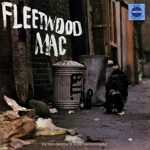 Buy from Amazon Fleetwood Mac
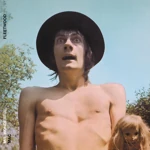 Buy from Amazon Mr. Wonderful
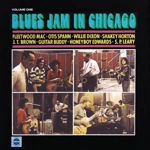 Buy from Amazon Blues Jam in Chicago Volume 1
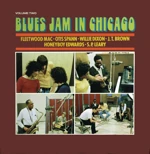 Buy from Amazon Blues Jam in Chicago Volume 2
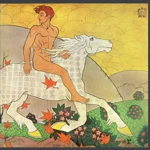 Buy from Amazon Then Play On
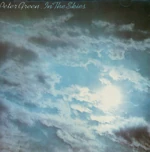 Buy from Amazon In the Skies