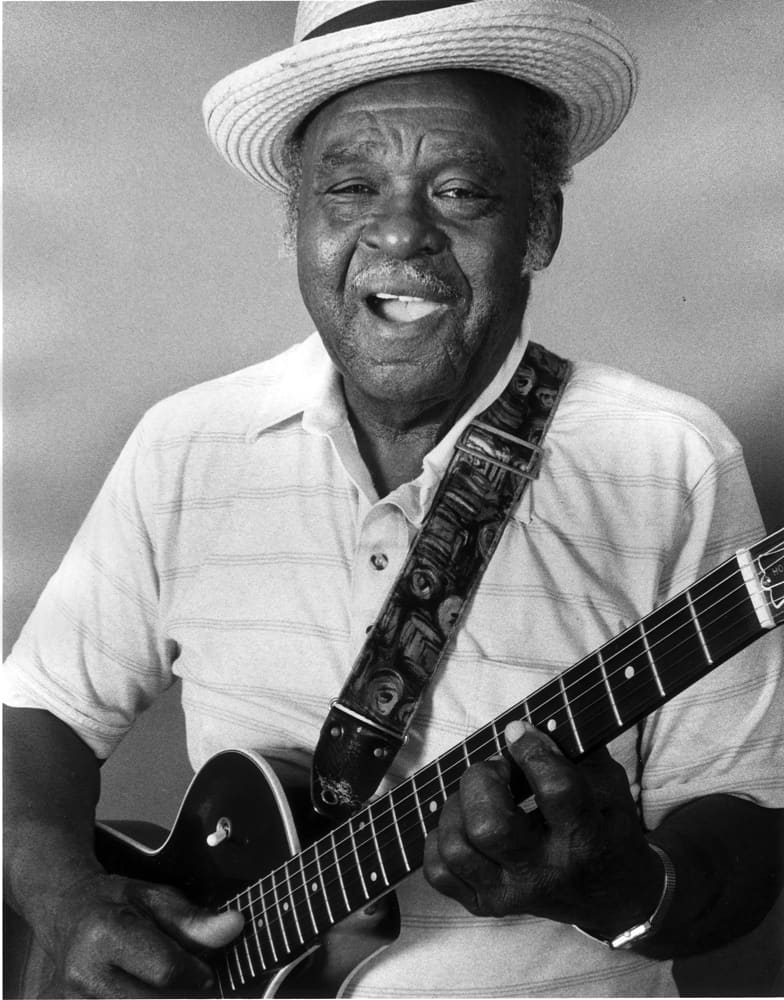
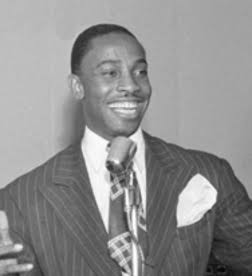
From a childhood in Mississippi and gospel work in Birmingham to the West Side clubs of Chicago, Eddy Clearwater built a six-decade career on restless guitar, a room-filling voice and an instinct for bringing blues into conversation with whatever else moved him.
On January 10, 2014, Eddy Clearwater celebrated his seventy-ninth birthday by doing what he had done for most of his adult life: taking the stage. The Evanston concert at SPACE became Soul Funky, a live album that moves from the strutting introduction “They Call Me the Chief” into blues, rock-and-roll, soul and gospel. Ronnie Baker Brooks, Billy Branch and pianist Johnny Iguana were among the guests, but Clearwater remained at the center—singing, playing and steering the room. It was not a valedictory performance. In 2018, he was still planning another album with Baker Brooks and had performed his final show less than two weeks before his death. 1 9 13 14
That longevity is only one part of Clearwater’s story. He was a Chicago bluesman who could make a hard-driving West Side shuffle feel at home beside a Chuck Berry rocker, a gospel ballad or a rockabilly number. He called the synthesis “rock-a-blues”: not a fixed recipe, but a working musician’s freedom to combine the styles he had heard and loved. The familiar image—the left-handed guitarist, the duckwalk, the feathered headdress—can make him sound like a showman first and a musician second. His records resist that separation. The guitar’s unusual rhythmic drive, a voice that could turn from grainy slow blues to bright rocker, and a steady stream of original songs made the stagecraft part of the music, not decoration around it. 2 3 4 13
Macon, Birmingham and the first music
Eddy Clearwater was born Edward Harrington in Macon, Mississippi, on January 10, 1935. His grandparents raised him; in an interview late in life, he said he had never known his mother and had met his father only twice. Those facts sketch a childhood marked by absence. In his recollections, music took center stage: the blues and gospel around the family, the guitar his uncle played, and the records that came through a small juke joint. 1 2
His uncle, the Reverend Houston H. Harrington, owned the Atomic-H record label in Chicago, but before that he had a juke joint in Mississippi. Its jukebox introduced the young Harrington to Louis Jordan. Clearwater recalled hearing Jordan’s “Caldonia” and “Ain’t Nobody Here But Us Chickens” and recognizing, in the buoyant combination of rhythm, wit and horns, a kind of excitement he wanted to understand. Gospel was his first sustained musical education; Jordan showed him how readily blues could carry a dance beat and a joke. The two influences would remain audible in his own music. 1 4
He first learned to play on an old acoustic guitar that belonged to his uncle. Harrington would listen to the Reverend play but hesitated to touch the instrument without permission. One day he tried it while his uncle was out of the room; when he was caught, the response was not a scolding but an invitation to go ahead. The instrument had been set up for a right-handed player. Harrington was left-handed, so he turned it over and worked out his own approach. He continued to play a right-handed guitar upside down, a physical peculiarity that became part of his sound rather than a problem he later corrected. 1 4 3
When his family moved to Birmingham, Alabama, in 1948, Harrington was thirteen. The move brought him into a larger city and into church music. He played guitar with gospel groups, including the Five Blind Boys of Alabama, but later clarified that he was a fill-in rather than a permanent member. He also backed other quartets, including the Soul Stirrers and the Norfleet Brothers. The work taught him to support a vocal lead, listen for changes and keep a song moving—skills he would carry into blues clubs. He did not present gospel as a phase he outgrew; its emotional force and call-and-response remained among the resources he drew on throughout his career. 2 4
The family’s move did not sever Harrington’s ties to Mississippi. Rural songs and gospel remained part of the musical memory he carried north, later surfacing in songs about picking cotton and in gospel-inflected performances. 2 7
A teenager on the West Side
In September 1950, at fifteen, Harrington left Birmingham for Chicago after his uncle invited him north. The Reverend sent him a Greyhound ticket that cost fifteen dollars and promised a chance to pursue music. Chicago was intimidating in scale, but it was also the place where Muddy Waters, Howlin’ Wolf, Jimmy Reed, Little Walter and Elmore James were playing night after night. Harrington arrived not as an established bluesman but as a teenager with a guitar, a church background and a determination to enter the Chicago blues life he had heard about. He stayed with his uncle, took work as a dishwasher and began playing in churches before finding his way into clubs. 1 2 3
His first club opportunity came through harmonica player Little Mack Simmons, who needed a guitarist when his regular player became unavailable. Clearwater remembered a tavern near Cottage Grove and 39th Street, where Simmons announced that his young nephew would sing. Harrington was more comfortable with the guitar than the microphone, but he sang Elvis Presley’s “Let’s Have a Party.” It was a small, accidental beginning, and it mattered: the Chicago audience heard a singer as well as a guitarist. 1
By 1953 he was working regularly in bars on the South and West Sides as Guitar Eddy. He formed Guitar Eddy and the Cutaways, a flexible ensemble whose membership shifted with the gig. He recalled that the group sometimes used a second guitar in place of a bass—a makeshift arrangement that reflected his knack for making a compact band sound full. His professional identity was built in rooms where the band had to hold attention, support a singer and keep dancers on the floor—not in a studio designed around the guitar solo. 1 8
The South and West Side scene was competitive, but Clearwater remembered that competition as sociable as well as serious. Sunday jam sessions were nicknamed “haircutting sessions”: musicians joked that they would “cut” one another’s hair by outplaying them, then planned to meet again the following week. The clubs—708 Club, Lee’s Lounge, the Four Aces, the Blue Flame and others—were training grounds and social networks. Clearwater met the musicians whose records had drawn him north, heard new approaches at close range and acquired friends as well as models. The city’s blues was not a single school. It was a field of neighboring voices, with different bands and guitarists pushing one another to sound more personal. 4 15
One of the most consequential friendships began when Clearwater went to hear Magic Sam at the Blue Flame Lounge. Sam broke an E string during a set and asked whether anyone had one. Clearwater ran home for spare strings and returned with two. The gesture led to a friendship and regular jams; Sam later borrowed Clearwater’s red Gibson ES-335 for performances. Their relationship was not a one-way lesson from famous musician to young admirer. Clearwater had something to offer, too—a guitar, ears, energy and a fellow musician’s generosity. He would describe Sam as a close friend and teacher, and the exchange helps explain why the West Side sound was made through personal contact as much as through records. 4
Clearwater was also related to Carey Bell, the celebrated harmonica player, through the Harrington family. That connection linked his own career to another strand of Chicago blues, and it would surface later in joint performances and on Reservation Blues. Still, kinship did not substitute for a musical identity of his own. The guitar work that emerged from those early years had a sharp attack and a strong rhythmic center, while his voice could move from relaxed, almost conversational phrasing to a rougher, more forceful delivery. He learned by playing beside people, listening closely and taking what suited him. 2 10
A bluesman with more than one audience
Clearwater’s early career crossed a sharply divided city and region. He played blues clubs for Black audiences on Chicago’s South and West Sides, and rock-and-roll sets in suburban venues that catered to white crowds. In a 2002 interview, he recalled playing Berry, Little Richard, Elvis Presley, Fats Domino and Dale Hawkins in the suburbs, while leaning toward B.B. King and Bobby “Blue” Bland on the South Side. He said he was one of very few Black musicians working some white suburban clubs regularly. The crossover created opportunity, but it did not erase segregation; it demanded that he read each room, adjust his set and retain a recognizable musical identity. 4 12
Chuck Berry was the key that brought rock and roll into sharper focus. Clearwater heard Berry’s “Oh, Baby Doll” on the radio in 1957 and was struck by the way blues changes, country flavor, direct lyrics and a danceable beat could fit into one concise package. He studied Berry’s records and began writing and playing in dialogue with them. This was more than imitation: Berry showed him that blues did not have to reject the new music taking shape around it. Clearwater could borrow the propulsion, guitar attack and humor, then bend them to the cadence of Chicago blues and his own left-handed playing. 1 4 11
Their exchange came into focus in 1968, when Clearwater appeared on the same bill as Berry in Oak Park. The crowd kept calling for Berry songs, and Clearwater was shy about singing one in front of its author. Berry pointed to him and gave him the go-ahead. Clearwater played “Johnny B. Goode.” It is a neat anecdote, but not because it proves a contest was won. The moment shows a younger Chicago performer acknowledging the source of his inspiration while standing in his own right before the audience. 4
The range of his influences was wider than Berry. Clearwater named Freddie King, Otis Rush, Magic Sam and John Lee Hooker, and he had grown up with gospel and Louis Jordan. He also admired James Brown and Jackie Wilson as stage performers, learning from their timing and command of a crowd. His music took in country, R&B, rockabilly and soul without treating those styles as foreign objects. In his formulation, rock and roll was “another part of the blues.” The phrase did not mean every song had to sound alike; it meant that his musical world was broad enough to keep changing. 1 4 13
His stagecraft was just as deliberate. He used the duckwalk, stepped into the audience, and played with the guitar raised or held behind his head. These gestures were more than showmanship; they helped him read what the crowd needed next. He might follow an energetic number with a slow blues to surprise a lively room, or push up the tempo for a quiet one. He rarely depended on a rigid set list. The performance was a conversation, and the band had to be ready to follow. 3 13
Clear Waters on a small label
Clearwater’s first records came from a family connection. His uncle Houston Harrington had founded Atomic-H to record gospel groups and occasional blues musicians. In 1958 Harrington’s nephew made his debut under the name Clear Waters, a play on Muddy Waters’ name proposed by drummer and manager Armand “Jump” Jackson. The single paired “Boogie Woogie Baby” with “Hill Billy Blues.” The credit read “Clear Waters and His Band,” and the session included pianist Lazy Bill Lucas. 1 2
The two sides already contain much of the later Clearwater. “Boogie Woogie Baby” draws on the jump-blues swing he had heard in Louis Jordan; “Hill Billy Blues” tips its hat to Berry’s new rock-and-roll guitar language. One is buoyant and urban, the other a young player leaning into a sound that was still taking shape. Neither is simply a novelty record. Both announce a musician who understood that blues could be tough, playful and rhythmically supple at once. The small label gave him a first chance to record; the wider Chicago club circuit gave those ideas a place to grow. 1 2
In 1959, after a successful appearance on Chicago’s Bandstand Matinee, he returned to Atomic-H with “I Don’t Know Why” and “A Minor Cha-Cha.” The first is a slow, lilting ballad; the second, an instrumental in a minor key, sets a Latin-inflected rhythm beneath a scraping, sharply articulated guitar line. Clearwater said he began it by simply picking around on the guitar, and the recording retains that loose, exploratory feel. 1 2
The name on the records changed as his career developed. Jump Jackson had invented “Clear Waters” as a pun on Muddy Waters; in time it became Clearwater, and record labels variously billed him as Clear Waters, Clearwater or Eddy Clearwater. Those shifts reflect the flexible, often improvised business of regional recording in the 1950s and ’60s. The identity listeners eventually knew was not created all at once. It was assembled through singles, club bills, local television and the reputation of a performer who made himself memorable in person. 1 8
The Atomic-H releases brought more local radio play, but Clearwater did not remain tied to his uncle’s label. In 1961 he recorded for Jump Jackson’s LaSalle imprint, including “Cool Clear Waters,” a Berry-inspired track recorded with Mando and the Chili Peppers, and “Baby Please.” He also made two singles for King Records’ Federal subsidiary under producer Sonny Thompson: “I Was Gone”/“Twist Like This” and “A Real Good Time”/“Hey Bernadine.” The Federal sides used a seasoned Chicago lineup, including second guitarist Bobby King and saxophonist Jesse Anderson, with Thompson himself at the piano. Clearwater was already moving among blues, pop and rock settings, using whoever could give a song the right push. 1
His work with the Mexican-American band Mando and the Chili Peppers made that openness more than a musical metaphor. When the group’s bassist became ill, Clearwater filled in. He recalled some initial trepidation about crossing racial lines, but the arrangement worked: the band kept him on for a few songs each set, and the collaboration continued for several years. The episode reveals how Chicago’s segregated music scene could produce working relationships across racial lines, though not without hesitation or negotiation. 1
The collaboration also opened a path into rock-and-roll venues. Through the Chili Peppers, Clearwater worked with local rocker Eddie Bell and played sock hops as well as blues clubs. He appeared on Bell’s “The Masked Man (Hi Yo Silver)” and later played on “Johnny Be-Goode Is in Hollywood.” In the early 1960s he could be singing blues in a tavern one night and playing for teenagers at a record hop another. These were not parallel careers so much as adjoining parts of the same one: the blues phrasing, guitar attack and showman’s timing could travel between them. 1
Further singles followed for small labels. A 1966 single on Chicago’s USA label paired “The Duck Walk,” a salute to Berry’s famous stage move, with “Momee, Momee,” a comic plea from a teenager hoping to attend a concert. In 1969 Clearwater recorded “Doin’ the Model,” a James Brown-style funk workout, with a remake of “I Don’t Know Why” on the flip. By then the name Clearwater had taken hold, and he was appearing on Atomic-H and Eddie Blazonczyk’s Versa label. 1
Not every single became a hit, and not every recorded idea was widely distributed. But the variety makes it difficult to describe Clearwater as a bluesman who simply “added” rock and roll later. He began recording as a young guitarist who was already testing the borders between blues, jump, gospel, rhythm and blues and rock. The shape of his eventual sound was present in the early singles, even as he changed his name, labels, bandmates and audience. 1 8
The hard years and the road to The Chief
Clearwater’s working life was less uninterrupted than the catalog may suggest. In the early 1970s, discouraged by the difficulties of sustaining a music career, he temporarily stepped away from performing and took a job assembling guitar bodies at the Harmony factory. A co-worker eventually recognized him from television and asked what he was doing there. Clearwater’s telling of the episode has a comic finish: he left the factory and went back to music. Beneath the humor is a familiar blues-business truth. A working musician could be admired on a local circuit and still need a steady wage; talent alone did not make the rent. 4
He had already started his own Cleartone label in the 1970s, a step toward controlling his recording life rather than waiting for another company to choose him. His career continued to involve practical decisions—how to get a record made, where to play, whether touring would pay and what sort of music might reach the next audience. The flexibility he had developed in clubs was an artistic strength and a working musician’s skill: he knew how to keep earning without abandoning the music he wanted to play. 1 9
In 1975, Clearwater admired a feathered headdress hanging in the home of a Westmont bartender and asked if he could buy it. It had belonged to her late husband, so she gave it to him as a good-luck gift on the condition that he never part with it. Clearwater later described wearing it as a tribute to his Cherokee grandmother. The gift became a distinctive stage image and helped shape the persona on his first American full-length. In his telling, it was more than a costume: a keepsake tied to family and memory. 4 5 15
Europe offered a larger stage. In the 1970s, Clearwater joined a George Wein-organized blues tour with Buddy Guy and Junior Wells. He recalled playing twenty-one dates across France, Switzerland, Sweden, England and Spain. The tour brought his name to audiences who had not seen him in Chicago and, by his account, sent word back to the United States that he was one of the standout performers. It also put him in a context that could make his mixture of styles seem less like a departure from blues and more like evidence of its reach. 2 4
European companies released Clearwater albums before he had a full-length U.S. LP. His live European album Black Night appeared in 1979, before The Chief; other overseas titles included I Don’t Give a Damn If Whites Buy It. The distinction matters: his 1980 American album debut was not his first encounter with the album format, nor was he unknown outside Chicago. He had already toured, recorded and found listeners abroad. 4 8
That breakthrough was The Chief, his first full-length U.S. album, released in 1980 by Jim and Amy O’Neal’s Rooster Blues label. Clearwater recorded it in a marathon session in November 1979, working from midday into the next morning. The album cover showed him on horseback in the headdress, and its title fixed the stage persona in the public imagination. The music itself was urgent but not one-dimensional: the guitar cuts sharply, the voice sounds rough and commanding, and the songs leave room for slow blues as well as rockers. Clearwater’s theatrical entrance drew the eye, but the record showed that the energy came from musicianship, not from the image alone. 1 2 3
A catalog built one record at a time
The years after The Chief brought a substantial, if scattered, album catalog. Two Times Nine followed in 1981; Flimdoozie arrived on Rooster Blues in 1986, with Otis Rush appearing as a guest; Blues Hang Out came in 1989, and Real Good Time: Live! captured the stage show in 1990. Clearwater recorded Help Yourself for Blind Pig in 1992, then continued through labels including Delmark, Bullseye/Rounder and Wolf. The point is not the number of sleeves but the persistence of a working artist who kept recording through changing markets. 4 8 10
Boogie My Blues Away (1995), Mean Case of the Blues (1996) and Cool Blues Walk (1998) show Clearwater in a mature period, confident enough to move between driving band blues, ballads and rock-inflected numbers without treating variety as a gimmick. Duke Robillard produced Cool Blues Walk and Reservation Blues (2000), where Carey Bell’s harmonica made the family connection audible. The broader run also includes Chicago Blues Session, Vol. 23 with Bell and Chicago Daily Blues. Across them, Clearwater remained a songwriter, bandleader and interpreter, not merely a touring act replaying the 1980 breakthrough. 8 10
Health interrupted the momentum. In 1997, Clearwater underwent triple-bypass heart surgery. He resumed recording and touring after the operation. The event belongs in the story not as a sentimental turning point but as a practical obstacle: he had to recover, rebuild stamina and decide how to continue. His career depended not only on energetic performance but also on the less glamorous work of staying healthy enough to keep playing. 10
In the early 2000s, Clearwater and his wife, Renee Greenman, opened Reservation Blues, a restaurant and club in Chicago’s Wicker Park neighborhood. They ran it for about three years. The business gave him a home for music and a way to present other artists, but running a venue competed with touring; he eventually chose the road. The choice fits a recurring pattern: Clearwater was entrepreneurial—he founded a label, helped run a club and took responsibility for his own recordings—but he did not want business administration to displace the act of playing. 1 4 10
By this time he had become a familiar figure to the North Side college crowd and to blues audiences overseas, even as the wider public still knew him less well than some of his contemporaries. Chicago Reader described him as virtually unknown outside Chicago until the 1970s; his reach grew through clubs, touring and records rather than a major pop hit. The description “late recognition” is true only if one defines success by a national profile. Clearwater had been working steadily for decades, earning a living and building a following long before the broader blues industry caught up. 12 2
The surf-rock detour that was not a detour
In 2003 Clearwater made one of the most surprising albums in his catalog, Rock ’N’ Roll City, with Los Straitjackets, the masked surf-rock band. The pairing looked like a novelty on paper: a veteran Chicago bluesman with a group whose stage identity drew on Mexican wrestling masks and instrumental surf music. The music made the logic clear. Clearwater had been interested in rock and roll since Berry’s “Oh, Baby Doll” stopped him in his tracks; Los Straitjackets were not an escape from blues so much as a band that understood how much pleasure could be built from riff, rhythm and show. 1 2 6
The record runs through songs including “You’re Humbuggin’ Me,” “Ding Dong Daddy,” “Lonesome Town,” “Monkey Paw” and “Good Times Are Coming.” Clearwater did not disappear inside the backing band. His vocals and guitar gave the songs a blues center, while the Straitjackets supplied surf textures and a sense of playful theatricality. The album’s good humor was not at odds with his deep blues chops; the pairing made them more accessible. Its nomination for Best Traditional Blues Album at the 46th Annual Grammy Awards captured the unexpected fit: surf-rock backing, a bluesman at the center and a traditional-blues category. 6 13
Clearwater himself was surprised by the nomination. He described the album as outside the regular blues format and said he had not expected the Academy to notice it. That humility suited him, but the collaboration was less accidental than he implied. He had spent his career dissolving the boundary between blues and rock, and he could shift from a slow blues to a Berry-style rocker without changing his basic musical personality. Rock ’N’ Roll City made the connection explicit and introduced him to listeners who might not have entered through The Chief. 13 6
Coming back to the West Side
Five years later, West Side Strut brought Clearwater to Alligator Records, the Chicago label whose roster had helped define modern blues for decades. Produced by his nephew, guitarist Ronnie Baker Brooks, the 2008 album looked back to the West Side neighborhood that had formed Clearwater and forward to a new generation of players. Brooks and his band provide a muscular framework, but the record is not a handoff that sidelines its older star. Clearwater remains the lead voice and guitarist, with his own songs and arrangements at the center. 7 2
The track sequence demonstrates how many registers he could still command. “A Good Leavin’ Alone” opens with a hard shuffle and Billy Branch’s harmonica; “Hypnotized” and “Gotta Move On” bring a contemporary edge. Clearwater turns to Muddy Waters’ “Walking Through the Park” and Lowell Fulson’s “Trouble, Trouble,” not as museum pieces but as songs he can inhabit. “Too Old to Get Married” is a playful exchange with Lonnie Brooks, while “Do Unto Others,” featuring Otis Clay and Jimmy Johnson, draws directly on gospel and soul. The closing “A Time for Peace” widens the sound with a vocal ensemble. Seven of the twelve tracks were written or co-written by Clearwater, a reminder that his identity as a singer-guitarist rested on songwriting as well as performance. 7 2
The standout is “Came Up the Hard Way,” an acoustic duet with Ronnie Baker Brooks. Each man tells his own story of hardship and arrival: Clearwater’s rural Mississippi background beside Brooks’s Chicago upbringing. The arrangement allows a quieter, more reflective Clearwater to emerge, then folds the voices and guitars together. It makes generational collaboration more than a publicity line. The older guitarist is not simply handing down a style; he is comparing experience with a younger musician and finding a song in the distance between them. 7 11
West Side Strut was a career highlight and an unusually apt late statement. Clearwater named the album for a “mood” and a “groove,” the swagger a performer needed to command the clubs he had known as a young man. He had not become a revivalist imitating a vanished era. The record uses current production and younger players, but its authority comes from a musician who had lived the styles he was combining. 7
The last live recording—and the last show
Soul Funky was released in 2014 on Clearwater’s Cleartone label, his first live album in nearly a quarter-century. Recorded at SPACE in Evanston with his band and guests including Baker Brooks, Branch and Iguana, it gives a late-career portrait in motion. The set opens with the Ronnie Baker Brooks composition “They Call Me the Chief,” then moves through “Hypnotized,” “Too Old to Get Married,” “Cool Blues Walk,” “Find You a Job” and the thirteen-minute “Came Up the Hard Way”/“Root to the Fruit” sequence. B.B. King’s “Please Accept My Love” provides a slow-blues counterweight. 9 10
The set captures Clearwater’s instinct for pacing: a rocker gives way to a slow ballad, the guitar answers the vocal, then the band builds again. His voice is weathered but direct; at seventy-nine, he was not disguising his age or turning the show into a retrospective. He was playing songs he still wanted to play and reading the crowd in real time. 9 13
In 2018, Clearwater told an interviewer he and Baker Brooks were working on an all-original album for Alligator. He was writing songs, discussing arrangements and planning to continue touring. His final show took place at Buddy Guy’s Legends on May 19. On June 1, he died of heart failure at his home in Skokie, Illinois, at the age of eighty-three. His death came while he was still making plans, not after he had quietly withdrawn from music. The unfinished project is a small but telling measure of how he understood his career: not as a body of work already complete, but as a continuing conversation with the band, the audience and the next song. 13 14 11
Suggested Listening
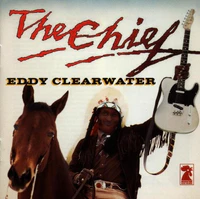 The Chief
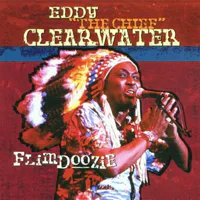 Flim Doozie
What the Chief left behind
Clearwater was part of the generation that made Chicago’s West Side blues internationally recognizable. Magic Sam, Otis Rush and Freddie King are often named first, and there is good reason: their records and guitar styles became reference points for later blues musicians. Clearwater belonged in that company, though his career did not achieve the same level of commercial recognition. The Chicago Tribune described him as one of the last of the West Side guitar players who modernized the blues in the 1950s and carried that legacy forward. His strength lay in making that modernization audible without reducing the blues to a backing for rock and roll. 11 12
His upside-down guitar technique was not a visual trick. It required him to develop a personal approach to the instrument, and the resulting attack—slashing and rhythmically precise—became a signature. Chicago musicians heard a player who could hold a shuffle, answer a singer, shift into rock and roll and still sound like himself. Lurrie Bell praised the way Clearwater “chorded,” noting that his progressions were unusual. That is a more useful description of his influence than reducing it to speed or stage antics: he expanded the sound of the guitar within the West Side blues vocabulary. 11
Clearwater’s influence also lay in what he demonstrated about audience and repertoire. A blues musician could play for Black clubgoers on the South Side, for suburban rock-and-roll fans, for college crowds on the North Side and for blues festivals in Europe without becoming four different artists. Clearwater adjusted his repertoire and set order, but the connecting force was his own playing and personality. This is not to pretend the markets were equal or that race ceased to matter. It is to recognize the skill required to work across those boundaries and the musical range that made it possible. 4 2
The range is audible across the catalog: “A Minor Cha-Cha” joins blues guitar to a Latin rhythm; “Doin’ the Model” reaches toward funk; Rock ’N’ Roll City pairs him with surf rock; West Side Strut returns to the West Side without sounding like an exercise in nostalgia. His slow blues and gospel ballads are not detours from the rockers, but part of the same musical center. 1 7 13
His influence also traveled through working relationships with younger musicians. The clearest late-career example is Ronnie Baker Brooks, Clearwater’s nephew: he produced West Side Strut, co-wrote with Clearwater and joined him onstage and on Soul Funky. The exchange was reciprocal. Baker Brooks brought new arrangements and a younger band sound; Clearwater brought songs, a repertoire and decades of experience reading an audience. Asked what he would tell younger guitarists, Clearwater advised them to play every chance they got, stay consistent and mean what they played. It is a practical measure of influence—built through records, sessions and the repeated act of showing up. 4 7 9
Clearwater received major honors during his lifetime: the W. C. Handy Blues Award for Contemporary Blues Male Artist of the Year in 2001, induction into the Blues Foundation’s Blues Hall of Fame in 2016, and a Blues Blast Lifetime Achievement Award. Rock ’N’ Roll City earned a Grammy nomination in 2004. These recognitions did not make him famous in the pop sense, but they made a career that had once been strongest in clubs and on the road visible to a wider blues audience. 2 5 6 10
His range is perhaps best heard in the way his albums move among contrasting moods. He could open with a party rocker and follow it with a song about hardship; place a family story beside a gospel-inflected appeal for peace; move from an upside-down guitar attack to a ballad that depended on restraint. That breadth made him an entertainer, but it also made him an interpreter of Chicago’s musical life. He did not merely carry blues from Mississippi to Chicago. He showed how that music could absorb the city’s clubs, gospel churches, rock-and-roll records, racial divisions and changing audiences without surrendering its emotional force. 7 9
The phrase “The Chief” remains attached to him, but the title does not tell the whole story. Clearwater was a teenager on a bus, a church guitarist, a club musician who learned to sing into the microphone, a label-hopping singles artist, a touring bandleader, a songwriter, a businessman and a performer still making plans at eighty-three. The headdress might have brought an audience’s eyes to the stage; the music kept them there. His career’s most lasting lesson is not that blues must change in order to survive, but that it has always changed in the hands of musicians who know it well enough to make it their own.