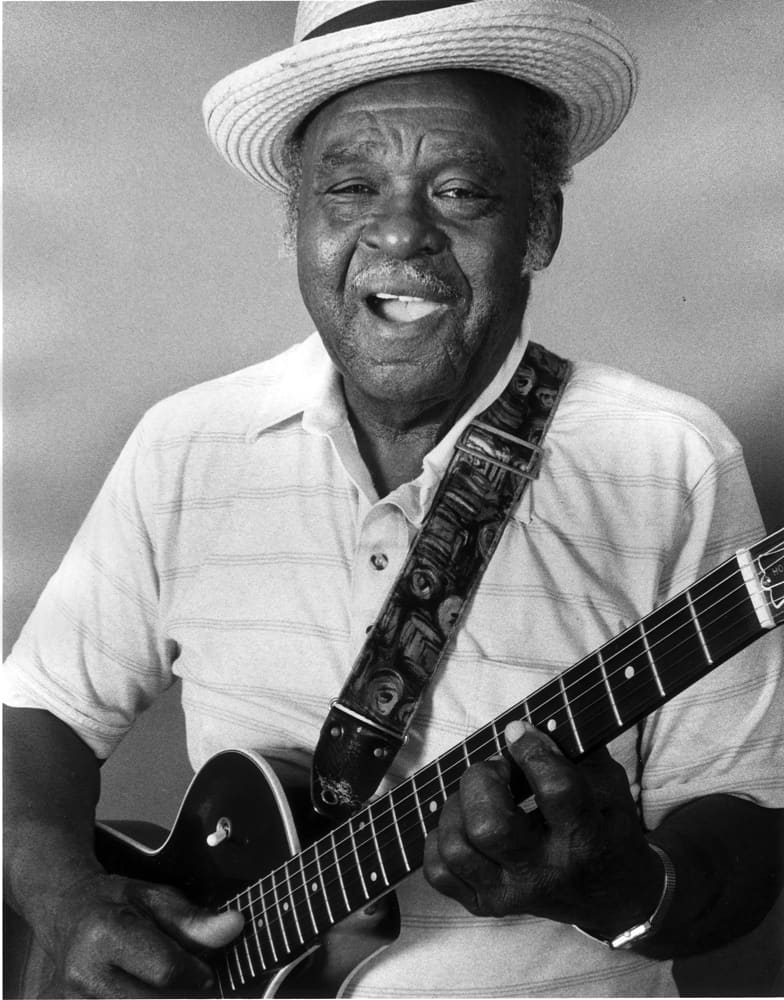
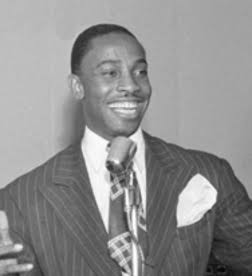
He made a handful of discs, spent most of his life in one small Mississippi community and became a teacher to a new generation only near the end. In the spaces between those facts lies the achievement of a bluesman whose influence was carried not by celebrity, but by songs, recordings and a neighbor who kept listening.
In 1967, folklorist George Mitchell recorded Mississippi Joe Callicott singing and playing guitar at home in Nesbit. The session came nearly four decades after Callicott's two solo Brunswick sides and an unissued early recording. It did not start his musical life; it made a local musician audible again to listeners far beyond his community.
The documented career is spare but not simple: a long partnership with guitarist Garfield Akers; a 1929 duet; two solo Brunswick sides in 1930; decades without new recordings; then a brief return to recording and performance before Callicott's death in May 1969. The clearest lines of influence run through people and songs: his young neighbor and pupil Kenny Brown, and “France Chance,” which Ry Cooder recorded for a much wider audience.
The gaps in Callicott's biography are part of the story, but they are not proof that his music stopped. He remained rooted in a local world the records only partly captured. This article follows the documented chronology, listens closely to the surviving sides and treats uncertainty as a fact rather than an invitation to invent.
Nesbit, in the Memphis orbit
Callicott was born in Nesbit, an unincorporated community in DeSoto County, northern Mississippi, a short distance south of Memphis. The location matters. In broad record-shop language he is often filed under Delta blues, and that is not wrong as a practical introduction; yet Nesbit belongs to a particular North Mississippi and Memphis corridor, with its own local networks of musicians, dances, house parties and work. The map here is not a neat division between “Delta” and “Memphis.” It is a porous region in which rural communities looked toward the city for jobs, entertainment and, occasionally, a recording session.
His exact birth date is uncertain. Many summaries place him in 1899, while music catalogs and databases have assigned him different years around the turn of the century. It is safer to say that he was born around the turn of the century and died in May 1969 than to build a biographical argument on a disputed birthday. The Mississippi Blues Trail gives his lifespan as 1899–1969; the University of California, Santa Barbara's Discography of American Historical Recordings notes conflicting birth data in the sources it collates. That small discrepancy is a reminder of how much basic information about working musicians of his generation was never consistently recorded. 1 2
Even his name took more than one form. “Callicott” is the spelling most commonly used now, but “Calicott” appeared on a Brunswick label, and “Callicutt” turns up in company paperwork. Those variations were not unusual in the early record industry, where names were written down by clerks and producers with varying degrees of care. They also complicate modern searches: a musician can be harder to find not because he left no trace, but because the trace was filed under several spellings.
The Mississippi Blues Trail places Callicott alongside Frank Stokes and Jim Jackson, musicians who connected local country blues to the Memphis scene. It describes Callicott and Akers playing informal engagements around the area and notes the local style's affinities with Stokes and Jim Jackson. Callicott is often grouped with Delta bluesmen, but Nesbit's musical world was also shaped by its proximity to Memphis and the wider North Mississippi circuit. Those labels are useful so long as they do not flatten the local differences. The commercial session made Callicott audible beyond his home ground; it did not create his musical life. 1
In this rural world, a guitar could animate a gathering, accompany singing or bring a musician occasional income. The surviving evidence cannot supply Callicott's working itinerary, but it does show that he spent most of his life in Nesbit and was known there before George Mitchell arrived. Blues historian Gayle Dean Wardlow recalled that Callicott worked in fields and levee camps as well as playing music. The detail places performance alongside the labor that sustained rural life, without implying that music was his full-time occupation. A local music scene is not a waiting room for a national audience; it has its own listeners and standards of recognition. 3
Learning by ear
A short reminiscence preserved with Callicott's recordings offers a glimpse of how he learned. He described watching other guitarists, taking in what they did without drawing attention to himself, then going home to try it on his own instrument. “I'd catch it. I'd come home to my box and play it,” he recalled. The method was not academic, but it was exacting: listen closely, remember the shape of a phrase, discover where the fingers belong, and make the pattern speak. The Big Legal Mess/Fat Possum archive says he began playing guitar at about fifteen. 4
That account describes a common blues education. A young player learned how a bass note steadies a song, how a higher phrase answers the voice, and how a familiar tune can be made personal. The teaching came through proximity to older musicians, at gatherings and in homes. A student learned not only fingering but repertory, timing and the social intelligence of performance: when to repeat, vary or leave space.
A few decades later, Callicott would pass the same kind of ear-led knowledge to a young neighbor, Kenny Brown. Beyond his own recollection, the sources do not identify Callicott's first guitar or first performance.
Two guitars, one conversation
Callicott's first important recording appearance came through his partnership with Garfield Akers. The two played together for years around their home region. The surviving 1929 recording documents Akers in the lead and Callicott on second guitar; each also recorded solo. In September 1929 they traveled to Memphis, where a temporary recording operation had been set up at the Peabody Hotel. Akers sang and played the lead guitar on “Cottonfield Blues”; Callicott supplied the second guitar. Vocalion issued the performance as a two-part 78, with the two sides running about 2:52 and 3:16. The side break interrupts the listening experience but allowed the duo to preserve a performance longer than a single disc face could hold. The Mississippi Blues Trail calls the record a landmark example of how blues could grow from the sound of field hollers. 1 5
Hear the record as a duet, not simply as a lead singer with a backing guitarist. Akers gives the piece its vocal identity, but Callicott's guitar is not ornamental furniture. It helps make the song's movement possible. The two instruments are locked into a shared rhythmic argument: one can push the pulse while the other steadies it, and the listener hears a single, flexible fabric rather than two players taking turns to show off. This is a different kind of virtuosity from the spectacular solo break. Its art lies in making the whole arrangement feel inevitable.
The session belonged to a larger commercial project: labels sent crews to regional centers such as Memphis to record performers who might never travel to Chicago or New York. The Peabody Hotel became a temporary studio for musicians from across the area. A partnership like Akers and Callicott's could reach listeners far beyond Mississippi, but only if a company chose to issue the take. The disc is both music and document—evidence of a local collaboration and of an industry beginning to notice a musical life already in progress.
Akers and Callicott were among several artists whose work linked country-blues performance with Memphis. The local historical marker associates their style with Frank Stokes and Jim Jackson, while later writers have noted Callicott's affinities with Stokes in particular. It is useful to hear those connections without flattening the musicians into a single school. A shared place and repertoire can create family resemblances; they do not erase individual touch.
The Peabody sessions: a tiny catalog begins
The 1929 Memphis visit included a solo recording by Callicott, “Mississippi Boll Weevil Blues.” It was not issued. The University of California, Santa Barbara's DAHR database lists it among the Brunswick recordings made in September 1929, alongside an unidentified matrix; the Mississippi Blues Trail also notes the unissued performance. A year later, Callicott returned to the studio and recorded the two solo sides that would define his prewar catalog: “Fare Thee Well Blues” and “Traveling Mama Blues,” cut in Memphis on February 20, 1930, and released by Brunswick. The Mt. Zion Memorial Fund dates the Akers recording of “Cottonfield Blues” to September 23, 1929, and Callicott's unissued solo “Boll Weevil” to September 25, making the sequence unusually clear: two days after supporting Akers, Callicott had a chance to sing and play under his own name. 1 2 3
“Fare Thee Well Blues” offers a title that sounds like a leave-taking, and the performance does not need a crowded arrangement to make the feeling legible. Callicott's guitar sets a steady frame; his voice rides above it with a directness that belongs to a singer addressing a listener at close range. “Traveling Mama Blues,” by contrast, belongs to a broad tradition of blues songs in which departure, mobility and romantic uncertainty are woven together. These are not songs that explain the singer's biography. They show his command of a repertoire whose emotional vocabulary could be reshaped from one performance to another.
The sides also reveal the limitations of early commercial records. A 78 preserved only a small slice of a working musician's repertory, and a short catalog cannot stand in for everything Callicott knew or played. It is a mistake to hear the two Brunswick titles and conclude that he had only two songs. They are simply the two solo performances the company released from that early period. The unissued “Boll Weevil” take, the Akers duet, and the later records already make the documentary story more complicated than a two-song legend.
The two Brunswick sides were advertised in the Chicago Daily Tribune in November 1930, evidence that they were marketed beyond the Memphis area, though not of how well they sold. Wardlow later estimated that Callicott received about $300 from the record company and described the session as bringing him immediate local acceptance. The figure is a retrospective estimate, not a complete account of royalties or a measure of lasting financial security; it does, however, suggest that the trip to Memphis carried both social and economic significance. No reliable account explains why Callicott did not record commercially again for decades. The Depression is part of the period's context, but it cannot be treated as the sole cause. The silence in the catalogs marks the edge of a paper trail, not necessarily the moment he stopped making music. 3
The long interval: silence on record, not a life erased
The years between Brunswick and Mitchell are the least documented part of Callicott's career. Accounts agree that he remained in the Nesbit area and had played for many years with Akers. They differ, however, on when he withdrew from public performance. The Mississippi Blues Trail says he gave up performing in the 1940s, while the inscription on his later memorial headstone remembers him as a songster who played throughout the Delta from 1918 until his death. Other summaries say he largely put the guitar aside after Akers died around 1959. Those statements may describe different kinds of activity, but the sources do not give enough detail to reconcile them with certainty. 1 3 4
The gap is not wholly empty even in the record shelves: in 1965, Callicott's 1930 “Fare Thee Well Blues” appeared on Origin Jazz Library's anthology The Mississippi Blues Number 2. Collectors could encounter the side years before Mitchell's home tapes, but the anthology was a reissue, not a new recording or evidence of a revived public career. The safest account is modest: Callicott's documented recording career went quiet and his public activity appears to have narrowed, but he did not vanish from the lives of people around him. “Lost to obscurity” is misleading; what largely disappeared was his broad visibility beyond the local community, especially to the wider record-buying public, researchers and urban folk-blues audiences. A note preserved with the 1967 recordings describes him living in Nesbit with his wife and sister, one rare glimpse of home life. Mitchell's work preserved Callicott's playing and opened a route to new listeners; it did not create the local knowledge from which his music had grown. 5 4
George Mitchell's recorder
Folklorist George Mitchell met Callicott in 1967 and recorded him in Nesbit. The session is dated September 1, 1967; Fat Possum's archival notes place the performances on Callicott's front porch. The intimacy is not a quaint detail: it shapes what we hear, an acoustic singer-guitarist recorded at home rather than reassembled in a commercial studio. 5 4
Mitchell was part of a generation of researchers who went into Mississippi communities with portable equipment to record musicians whose work had never received much commercial attention. The technique could preserve performances quickly and directly. It could also leave the later audience with an unbalanced archive: what was recorded depended on who knew whom, who had time, who had a tape machine, what the collector wanted and what the musician was willing to play. The presence of a microphone does not make a performance less real, but it does shape what survives. In Callicott's case, the home recordings are not a complete survey of his repertory; they are a valuable window opened at one late moment.
The 1967 session yielded nineteen sides, according to discographical research. Selections surfaced on Arhoolie's Mississippi Delta Blues, Vol. 2 and Revival's Deal Gone Down; Fat Possum's Ain't a Gonna Lie to You later gathered twelve performances for a new generation of listeners. The changing selections and titles are part of the archival story: no single LP represents everything Mitchell recorded, and Callicott's late repertoire is best approached as a body of performances rather than one definitive album. 6 4
Those recordings reveal a singer whose voice had changed with age without losing its personality. The Mississippi Blues Trail describes his rich vocals and delicate guitar style. The shift is not a simple story of decline, but a change in balance: the urgency of the 1930 Brunswick sides gives way to a more measured presence, in which a phrase can settle rather than force its way forward.
The songs on the porch
The 2003 Fat Possum compilation Ain't a Gonna Lie to You gives a concise route into the Mitchell-era Callicott. Its twelve tracks move between traditional narrative songs, blues standards, personal blues and spiritual material. “Frankie and Albert” is a ballad with a long life in American song; “Roll and Tumble” belongs to a repertory shared and reshaped by countless players; “Down to the River Jordan” places spiritual material alongside the secular blues without contradiction. “Laughing to Keep from Crying” compresses a familiar emotional paradox into its title, while “Lonesome Katy” and “Come Home to Me Baby” turn domestic longing into song. 4 7
The tracks are more than a list of titles; their contrasts are part of the listening experience. On “Frankie and Albert,” Callicott plays with the melody and meter of a familiar ballad, making a well-worn story feel newly shaped. “Laughing to Keep from Crying” sets a steady guitar figure against a lyric about hiding grief behind laughter. “Lonesome Katy” draws out a sweet falsetto, while “France Chance” settles into a cyclical, hill-country pulse. “Down to the River Jordan” shifts the emotional register again, placing spiritual material beside the blues without treating it as an interruption. The sequence shows not just breadth of repertory but a performer capable of changing mood and delivery while keeping his own musical center. 7
This breadth explains why “songster” matters. It is not simply an elegant synonym for “bluesman,” nor is it a narrowly defined genre. Smithsonian scholar Barry Lee Pearson uses the term for itinerant Black musicians whose repertories could move among blues, ballads, dance tunes, gospel and popular songs. Callicott's records bear out that flexibility: the 2003 set moves from the ballad “Frankie and Albert” to “Roll and Tumble” and the spiritual “Down to the River Jordan.” Beyond that selection, the Mississippi Blues Trail notes songs about World War I and the nightlife of Beale Street. That pairing extends the image of Callicott beyond private romance: his repertory could take in a global conflict and an urban scene as well as blues about love and loneliness. These references tell us what kinds of material he sang, not where he traveled or what he personally experienced; a songster's repertory is not a diary. His headstone calls him an “original medicine show songster,” but that commemorative phrase cannot stand in for a complete travel itinerary—especially when sources disagree about how long he performed publicly. It does point to an older entertainment culture in which range mattered as much as belonging to a single commercial style. 1 3 8
He plays with economy but never sounds bare. A repeated bass figure can anchor a tune, while the higher notes add just enough variation to keep the pattern alive. The rhythm remains gentle but firm; the guitar does not crowd the voice, and it does not need a long solo to establish its character. There is an art to sustaining a groove without polishing away its rough edges. Callicott's performances can feel hypnotic because the guitar offers a stable surface while the vocal line bends, lengthens and finds its own emphasis.
The voice changes across the surviving recordings. Accounts of the 1930 Brunswick sides describe a high, forceful delivery; in the later tapes, the tone is warmer and more measured, though Callicott could still rise into a striking falsetto. The difference is not simply youth against age. The early records press their phrases forward, while the later performances let them settle into the steady guitar pulse. Several of the late recordings run longer than the 78-era sides, allowing the repeated patterns and vocal turns to gather force over time. 6
The recordings also resist the idea that “authentic” country blues must be raw in one prescribed way. Callicott could sound relaxed and intimate, but the earlier Brunswick sides were more forceful; the repertoire includes devotional songs as well as romantic blues; and the later studio session occasionally introduces another instrument. The music is not a museum object sealed in an imagined past. It is a practice that changes with age, circumstance and audience.
The related titles “Fare Thee Well Blues” (1930) and “Fare You Well Blues” (1967, also listed as “Fare You Well Baby Blues”) invite a comparison across the decades. Heard together, they reveal the change from the younger, more forceful singer on the Brunswick side to the measured voice of the later home recordings, without making either version definitive.
Memphis, New York and the Blue Horizon sessions
On July 20, 1968, Callicott played the Memphis Country Blues Festival at the Municipal Shell in Overton Park, sharing the program with veterans including Furry Lewis, Robert Wilkins, Bukka White and Nathan Beauregard. The festival record, issued as The 1968 Memphis Country Blues Festival, preserves his “You Don't Know My Mind” and “Great Long Ways from Home.” Producer Mike Vernon recorded the third annual festival, with Jim Crosthwait as master of ceremonies; Blue Horizon and Sire issued the performances. The booking placed a musician whose career had been rooted in local gatherings before a wider audience without changing the acoustic music that brought him there. Callicott also traveled as far as New York City; his daughter Velma Brown later recalled how proud he was to have performed there. The revival mattered not only as an expanding discography, but as an experience Callicott himself valued. 1 5 9
The following day, July 21, 1968, producer Mike Vernon recorded Callicott at Ardent Studios in Memphis for Blue Horizon. The session yielded far more material than the eight tracks selected for Presenting the Country Blues. The album is often dated 1969, while some discographies date the UK release to 1970; the recording date itself is clear. Its selections include “Dough Roller Blues,” “War Time Blues,” “On My Last Go Round,” “Hoist Your Window and Let Your Curtain Down,” “Married Woman Blues” and “Poor Boy Blues.” The 2007 two-disc Furry Lewis & Mississippi Joe Callicott: The Complete Blue Horizon Sessions adds alternate takes and previously unreleased Callicott performances, making the scale of the Ardent session more apparent than the original LP did. 5 10 11
The Blue Horizon session is not identical in texture to Mitchell's porch tapes. Callicott remains at the center, singing and playing guitar, but selected tracks add Bill Barth on second guitar and Bukka White's whistling. That small expansion matters. Rather than surrounding Callicott with a modern band or dressing the material in fashionable production, Vernon lets a few additional sounds enter the frame. The effect is still rooted in acoustic country blues, but the studio setting makes the exchange between musicians more explicit.
“Dough Roller Blues” is an especially telling link between the eras. Akers had recorded the song in 1930; decades later, Callicott's performance placed the tune back in circulation. It is not simply a reprise by a surviving member of the old partnership. It is a reminder that repertories moved among musicians, changing hands and taking on new accents. The title itself maps an older musical community across time: what once belonged to Akers and Callicott together could be carried into a later solo performance, then into the record collections of listeners who had never heard the duo in person.
Together, the festival and studio recordings catch Callicott not as an antique but as a working musician still choosing songs, playing with others and reaching new audiences.
A discography assembled after the fact
Callicott's recorded legacy did not arrive as one coherent set of albums released during a long career. It was assembled across labels, decades and changing formats. The prewar sides appeared as 78s: the Akers duet on Vocalion, and Callicott's two released solo titles on Brunswick. In the revival years, his Mitchell recordings appeared on Arhoolie and Revival releases, including Mississippi Delta Blues, Vol. 2 and Deal Gone Down. The Blue Horizon material documented the 1968 performance and studio sessions. Later anthologies gathered tracks under titles such as North Mississippi Blues and, most influentially for newer listeners, Ain't a Gonna Lie to You.
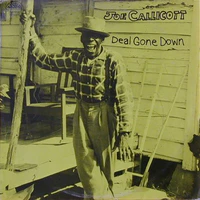 Buy from Amazon Deal Gone Down
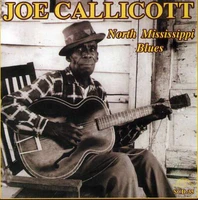 Buy from Amazon North Mississippi Blues
Some early sides also reached anthology listeners. “Traveling Mama Blues” appeared on Yazoo Records' 1968 Mississippi Moaners 1927–1942, a multi-artist collection of prewar blues. The side returned to circulation among listeners exploring prewar blues, not as part of a Callicott solo album. 5
These releases do not offer interchangeable versions of one album. Arhoolie's Mississippi Delta Blues, Vol. 2 placed Callicott selections alongside recordings by R. L. Burnside and Rosa Lee Hill; Revival's Deal Gone Down offered a different selection from the Mitchell tapes. The Arhoolie LP frames Callicott within a shared regional collection, while the 2003 Fat Possum set brings twelve of his performances together under his own name. Their overlap is useful to collectors, but for a general listener the important distinction is between a contemporary release date and the date of the performance it contains.
That scattered afterlife changes how one should approach the albums. A title on a streaming service may combine recordings made decades apart; a track may appear under a variant title, such as “Love Me Baby Blues” and “France Chance”; and one issue may overlap substantially with another. The 1969 Arhoolie LP is a shared compilation, while the 2003 Fat Possum CD gathers twelve Mitchell recordings under Callicott's name. Because these albums were assembled after the performances, their track order and titles are editorial choices, not sequences Callicott devised. That is not a flaw in the music; it is part of the story of how small archives were licensed and repackaged for listeners who had not known him in his lifetime.
The teacher next door
The most direct measure of Callicott's influence is the relationship with Kenny Brown. Brown's family moved to Nesbit in 1960, and he was already hearing fife-and-drum bands and country picnics before he met the older guitarist next door. In 1964, still a child, he gathered the nerve to approach Callicott. Brown later described visiting him before and after school, listening and learning by demonstration. In a 2026 interview, Brown recalled that Callicott was not teaching him to read music; he would simply show him how to play a phrase—“hit it like this, boy.” The Mississippi Blues Trail says Callicott taught him for several years; the Mt. Zion Memorial Fund's account recalls Callicott on the porch in the afternoons and Brown learning from him “like a father.” Brown was not related to Callicott, but the connection became familial in feeling. 1 3 12
The apprenticeship joined technique to repertory: Brown could hear Callicott's timing and touch at first hand, then carry songs beyond the porch and into his own performances.
Brown later became a leading figure in North Mississippi blues, including a twenty-year musical partnership with R. L. Burnside. His 2003 album Stingray includes three Callicott songs. This does not make Callicott the sole source of a regional style; Brown learned from several elders and developed an identity of his own. Mt. Zion's account also recalls Bobby Ray Watson as a regular student of Callicott's who connected younger players with musicians such as Johnny Woods and Fred McDowell. These overlapping relationships place Callicott's teaching within a local network, not a simple one-master, one-pupil story. 1 3
That lineage should not collapse distinct styles. A No Depression review hears Callicott's uncluttered guitar and relaxed vocals as closer to Eugene Powell or Sam Chatmon than to Fred McDowell or R. L. Burnside. The mentorship establishes transmission, not stylistic identity: through Brown, Callicott's repertoire entered later North Mississippi performances without making him the originator of every sound associated with the region. 7
The age and racial difference between the neighbors should not be romanticized into a simple fable. Their musical relationship developed in a region shaped by segregation; its significance does not erase that unequal world. It shows a specific connection, sustained by Callicott's generosity and Brown's attention, rather than a claim that the barriers of the time had disappeared. 3
From “Love Me Baby Blues” to “France Chance”
A second route was the song catalogd as “Love Me Baby Blues” and “France Chance.” Ry Cooder recorded it under the latter title for his 1970 debut album. Cooder's version carried the composition into the roots-rock and singer-songwriter world at a time when musicians were actively drawing on older blues, folk and country sources. The connection is unusually tangible: the later recording identifies Callicott as the composer, rather than leaving the source hidden behind a generic “traditional” credit. There is no need to imply personal contact between the musicians; the composition credit and recording provide the evidence of transmission. 2 13
The title's unusual wording is part of its appeal, but the deeper significance is transmission. A song changes through voice, arrangement, timing and the assumptions of the performer who takes it on. Cooder's version brought it to listeners who might never have encountered Mitchell's tapes; later, curious listeners could follow the attribution back to Callicott.
The evidence supports two clear lines of influence rather than a speculative roll call: Brown learned from Callicott and carried several of his songs into later recordings; Cooder carried one composition to a different audience. The archival releases opened a further route to musicians and listeners. Callicott's influence is both musical and local—a repertoire passed between neighbors, then carried outward without losing its origin.
Memory, royalties and a marker in Nesbit
Callicott died in May 1969, not long after his late recordings and performances. The exact details of his final illness and the last months of his life are not well established in the accessible record. He was buried in the Mount Olive church cemetery in DeSoto County, described by sources as being in Nesbit or Hernando. For many years, his grave was marked only by a paving stone bearing the name “Joe.” In 1995, the Mt. Zion Memorial Fund, with help from Kenny Brown and financing from Chris Strachwitz, Arhoolie Records and John Fogerty, arranged for a granite headstone. The original marker was later given to the Delta Blues Museum in Clarksdale. 2 3 5
The new stone does more than record dates. It calls Callicott “An Original Medicine Show Songster” and remembers him as a musician who played throughout the Delta. Such language is commemorative rather than a full day-by-day itinerary; it gives an account of how his community and later custodians wanted his work remembered. A medicine-show bill mixed music with other forms of entertainment, so the phrase points to versatility and live performance rather than one narrowly defined sound. The inscription names a musical life larger than a short 78-era career: “songster” acknowledges a working performer with a wide repertory, while the reference to the Delta returns his story to the places where that repertory had a life.
At the dedication, the fund presented Callicott's widow, Doll, with $1,300 in royalties from Arhoolie. It was not a large sum, but it was tangible recognition that the reissued records had earned money and that some of it could return to his family. The moment brings a difficult question into the story of archival blues: how often were old musicians and their relatives compensated when a historic master was reissued and began earning again? Callicott's case offers a partial, late answer—one small payment, secured decades after the recordings were made, at a ceremony held beside his grave. 3
The marker is another stage in the music's journey: from Nesbit to a 78, from a porch tape to archival labels, from Callicott's hands to Brown's and Cooder's, then back to the cemetery where family and musicians placed a proper stone. This is not a straight line from obscurity to fame, but a loop between the local and wider worlds. The Mississippi Blues Trail marker makes Callicott visible in the landscape where he lived; the best tribute remains listening to the recordings it points toward.
Where to begin listening
Start with “Cottonfield Blues,” Parts One and Two, and listen for the way Callicott supports Akers. It is a compact lesson in ensemble playing, with the second guitar doing work that cannot be reduced to decoration. Then move to the 1930 Brunswick sides, “Fare Thee Well Blues” and “Traveling Mama Blues.” The contrast is illuminating: in the duet, Callicott helps build a shared sound; on the solo records, he must carry the pulse, the melody and the vocal story himself.
The 1967 set is best heard in sequence rather than sampled for a single famous track. Ain't a Gonna Lie to You moves from “Frankie and Albert” and “Laughing to Keep from Crying” through “Lonesome Katy,” “France Chance” and “Down to the River Jordan,” letting Callicott's measured guitar and varied repertoire reveal themselves over time. 4
After that, compare the early “Cottonfield Blues” and Brunswick sides with Presenting the Country Blues and the Memphis festival tracks. Kenny Brown's Stingray and Cooder's “France Chance” complete the arc: they show what passed from Callicott into later performances without requiring us to rank versions or inflate his influence.
The measure of a quiet legacy
Joe Callicott's career resists the standard blues-legend biography. There is no long run of hits or clear account of an abrupt decision to leave music behind—only two early solo sides, a duet record, a long gap without new commercial recordings and a brief late burst of recording and performance. Those gaps show the difference between artistic activity and public visibility.
His story is not small because it is local. A sound developed around Nesbit reached a 78, a festival stage, a neighbor's lessons and the work of musicians who came later. Callicott learned by watching and listening; he taught by playing within reach of a young neighbor. A steady pulse, a patient voice and a handful of songs were enough to outlast the catalog that first contained them.