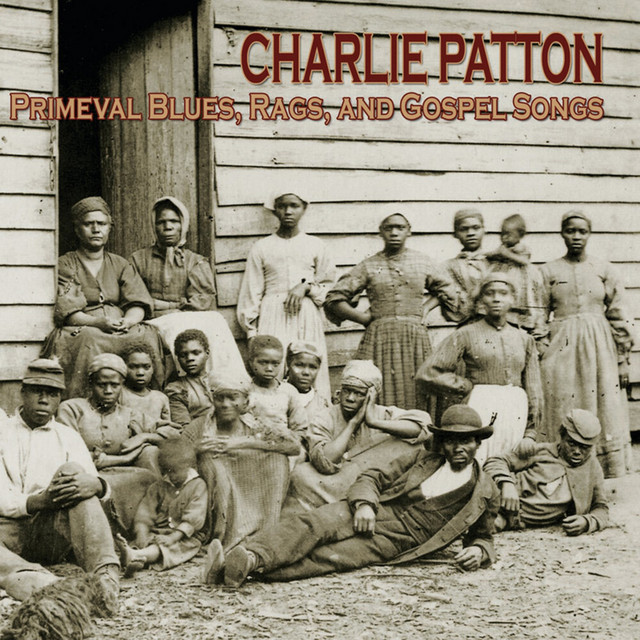
Primeval Blues, Rags, and Gospel Songs is a compilation album by Charley Patton, released by Yazoo Records in 2005 (catalog number Yazoo CD 2070). It is widely regarded as one of the best-sounding collections of Patton's Paramount recordings, drawing from the complete body of work he recorded between 1929 and 1934. The album presents 23 tracks that showcase the full range of Patton's artistry — from raw Delta blues and intricate rags to powerful gospel songs and ballads — remastered from original 78 rpm recordings with exceptional care for sonic fidelity.
The Artist: Charley Patton
Charley Patton (1891–1934) is universally acknowledged as the foundational figure of Mississippi Delta blues. Born near Bolton, Mississippi, to mixed-race parents, he was of African-American, European-American, and possibly Native American heritage. He spent most of his life in the Mississippi Delta, particularly around Dockery Plantation near Ruleville, where he absorbed the blues tradition and developed the guitar techniques — including aggressive bass-string thumping and bottleneck slide — that would define the Delta sound.
Patton was a consummate entertainer known for his showmanship: playing guitar behind his head, throwing it in the air, and performing with a theatrical intensity that set him apart from more subdued bluesmen. His influence extended directly to Robert Johnson, Son House, Howlin' Wolf, Muddy Waters, and through them to the entire British blues-rock movement. He was a "songster" in the truest sense, with a repertoire that encompassed blues, rags, spirituals, ballads, and popular songs.
The Recording Sessions
The tracks on Primeval Blues, Rags, and Gospel Songs are drawn from four distinct recording sessions:
1. June 14, 1929 — Gennett Records / Starr Recording Studio, Richmond, Indiana
Patton's first recording session, and one of the most productive and important in blues history. Paramount, still setting up their own studio in Grafton, Wisconsin, contracted Gennett to record Patton. In a single day, Patton cut 14 sides — most of his enduring "hits." The session was remarkably varied, encompassing blues, rags, ballads, and gospel material.
Key tracks from this session on the album:
-
"Pony Blues"
-
"Down the Dirt Road Blues"
-
"Banty Rooster Blues"
-
"Pea Vine Blues"
-
"Tom Rushen Blues"
-
"A Spoonful Blues"
-
"Shake It and Break It (But Don't Let It Fall Mama)"
-
"Screamin' and Hollerin' the Blues"
-
"High Water Everywhere — Part I"
-
"High Water Everywhere — Part II"
-
"Prayer of Death — Part I"
-
"Prayer of Death — Part II"
-
"Lord, I'm Discouraged"
-
"I'm Goin' Home"
Personnel: Charley Patton — vocals, guitar (solo on all tracks)
Notes: The session was interrupted by recordings from Walter "Buddy Boy" Hawkins, suggesting Patton took breaks. The two gospel songs were issued under the pseudonym "Elder J.J. Hadley." "Screamin' and Hollerin' the Blues" and "Mississippi Boweavil Blues" were issued as by "The Masked Marvel" — Paramount ran a contest where anyone guessing the artist's identity would receive a free record.
2. Late 1929 / Early 1930 — Paramount Recording Studios, Grafton, Wisconsin
Patton traveled approximately 800 miles from the Delta to Grafton in the dead of winter for this session. The exact dates have been subject to revision — recent scholarship suggests late January 1930 and February 1930 rather than the previously assumed October/November 1929. The session produced some of Patton's most emotionally powerful recordings.
Key tracks from this session on the album:
-
"Rattlesnake Blues"
-
"Some Happy Day"
-
"Mean Black Moan"
-
"Green River Blues"
-
"Circle Round the Moon"
-
"Devil Sent the Rain Blues"
-
"Frankie and Albert"
-
"Some These Days I'll Be Gone"
-
"Jim Lee — Part I"
-
"Jim Lee — Part II"
-
"Joe Kirby"
-
"Elder Green Blues"
-
"When Your Way Gets Dark"
-
"Hammer Blues"
-
"Heart Like Railroad Steel"
-
"Mean Black Cat Blues"
-
"Magnolia Blues"
-
"Jesus Is a Dying Bed Maker"
-
"I Shall Not Be Moved"
-
"Going to Move to Alabama"
-
"Runnin' Wild Blues"
-
"You're Gonna Need Somebody When You Die"
Personnel: Charley Patton — vocals, guitar; Henry Sims — violin (on selected tracks)
3. May/August 1930 — Paramount Recording Studios, Grafton, Wisconsin
Patton returned to Grafton with Willie Brown, the legendary guitarist immortalized in Robert Johnson's "Cross Road Blues." This session produced some of the most celebrated duet recordings in blues history.
Key tracks from this session on the album:
-
"Moon Going Down"
-
"Bird Nest Bound"
-
"Some Summer Day"
Personnel: Charley Patton — vocals, guitar; Willie Brown — second guitar
4. January–February 1934 — American Record Company Studios, New York City
Patton's final recording sessions, made with his common-law wife Bertha Lee and produced for the Vocalion label. These recordings show a more subdued, reflective Patton, his health declining from the heart condition that would kill him within months.
Key tracks from this session on the album:
-
"Revenue Man Blues"
-
"Hang It on the Wall"
-
"High Water Everywhere — Part II" (re-recording or alternate)
-
"34 Blues"
-
"Poor Me"
-
"Oh Death" (with Bertha Lee)
-
"Troubled 'Bout My Mother" (with Bertha Lee)
-
"Yellow Bee" (Bertha Lee, vocal; Patton, guitar)
-
"Mind Reader Blues" (Bertha Lee, vocal; Patton, guitar)
Personnel: Charley Patton — vocals, guitar; Bertha Lee — vocals; occasionally Henry Sims — violin
The Producer and Label
Yazoo Records
Yazoo Records, founded by Nick Perls in 1968, was one of the premier archival blues labels, specializing in meticulous remastering of pre-war blues and country recordings from original 78 rpm discs. The label was renowned for its sonic quality — blues enthusiasts consistently rated Yazoo transfers as superior to those of competitors like Document and even the lavish Revenant box set.
The Production Team
The 2005 Yazoo release was produced with the label's characteristic attention to sound quality. The remastering was done from original 78 rpm pressings, with careful noise reduction that preserved the music's essential character without the "overblown noise reduction" or "midrange honk" that plagued some other reissues. The result was, as one reviewer noted, "the true fidelity of the Paramount 78's... very important historically and not a hard listen at all."
The album's title — Primeval Blues, Rags, and Gospel Songs — perfectly captures Patton's range as a "songster" rather than merely a blues singer. The word "primeval" suggests both the ancient, foundational quality of the music and its raw, unpolished power.
The Songwriters
The vast majority of Patton's recorded compositions are credited to him, though like most blues artists of his era, he drew freely from traditional material, adapting folk songs, ballads, and spirituals to his own style. Key compositions include:
-
Charley Patton — "Pony Blues," "Down the Dirt Road Blues," "Banty Rooster Blues," "Pea Vine Blues," "Tom Rushen Blues," "A Spoonful Blues," "Shake It and Break It," "Screamin' and Hollerin' the Blues," "High Water Everywhere," "Lord, I'm Discouraged," "I'm Goin' Home," "Rattlesnake Blues," "Some Happy Day," "Mean Black Moan," "Green River Blues," "Circle Round the Moon," "Devil Sent the Rain Blues," "Frankie and Albert," "Some These Days I'll Be Gone," "Jim Lee," "Joe Kirby," "Elder Green Blues," "When Your Way Gets Dark," "Hammer Blues," "Heart Like Railroad Steel," "Mean Black Cat Blues," "Magnolia Blues," "Jesus Is a Dying Bed Maker," "I Shall Not Be Moved," "Going to Move to Alabama," "Runnin' Wild Blues," "You're Gonna Need Somebody When You Die," "Moon Going Down," "Bird Nest Bound," "Some Summer Day," "Revenue Man Blues," "Hang It on the Wall," "34 Blues," "Poor Me"
-
Traditional — "Oh Death," "Troubled 'Bout My Mother" (gospel standards adapted by Patton and Lee)
Track-by-Track Breakdown
1. "Revenue Man Blues" — 2:41
Recorded: January 31, 1934, New York City
Personnel: Charley Patton — vocals, guitar
Personnel: Charley Patton — vocals, guitar
One of Patton's final recordings, this track opens the album with a blues about the Prohibition-era revenue agents who enforced liquor laws. Patton's voice is rougher than in his 1929 recordings, but his guitar playing remains remarkably fluid. The song's narrative — about hiding from the law — reflects the realities of Delta life during Prohibition. The track was released on Vocalion 02931.
2. "Hang It on the Wall" — 2:44
Recorded: February 1, 1934, New York City
Personnel: Charley Patton — vocals, guitar
Personnel: Charley Patton — vocals, guitar
A ragtime-inflected number that demonstrates Patton's versatility beyond the blues. The title refers to hanging a photograph on the wall — a common theme in blues and country songs about lost love. Patton's guitar work here is lighter and more melodic than on his blues numbers, with a syncopated rhythm that points to his skills as a songster. Released on Vocalion 02931.
3. "Prayer of Death — Part I" — 3:06
Recorded: June 14, 1929, Richmond, Indiana
Personnel: Charley Patton — vocals, guitar (as "Elder J.J. Hadley")
Personnel: Charley Patton — vocals, guitar (as "Elder J.J. Hadley")
The first of two gospel recordings from the Richmond session, issued under the pseudonym Elder J.J. Hadley. The song is a powerful spiritual that demonstrates Patton's deep roots in church music. His guitar accompaniment is subdued and reverent, supporting a vocal performance of genuine religious fervor. The use of a pseudonym for gospel material was common practice — blues artists often separated their secular and sacred recordings to avoid offending church audiences. Released on Paramount 12799.
4. "High Water Everywhere — Part II" — 3:01
Recorded: June 14, 1929, Richmond, Indiana (or possibly Grafton, c. February 1930)
Personnel: Charley Patton — vocals, guitar
Personnel: Charley Patton — vocals, guitar
One of Patton's most celebrated compositions, this song recounts the devastating Mississippi River flood of 1927 — the most destructive river flood in the history of the United States. Patton's narrative is vivid and terrifying, with lyrics describing people scrambling to higher ground as the waters rise. The guitar accompaniment mimics the churning of flood waters through relentless bass-string thumping. This is Delta blues as documentary, as historical testimony, and as art. The song has been cited as one of the greatest blues recordings of all time. Released on Paramount 12909.
5. "Stone Pony Blues" — 2:49
Recorded: January 30, 1934, New York City
Personnel: Charley Patton — vocals, guitar
Personnel: Charley Patton — vocals, guitar
A variation on Patton's most famous composition, "Pony Blues," recorded during his final sessions. The song demonstrates how Patton continued to develop and refine his core repertoire throughout his career. The "stone pony" metaphor suggests a hard, unyielding woman — or perhaps a reference to a specific person. The guitar work is characteristically aggressive, with the bass-string patterns that defined Patton's style. Released on Vocalion 02680.
6. "Tom Rushen Blues" — 3:05
Recorded: June 14, 1929, Richmond, Indiana
Personnel: Charley Patton — vocals, guitar
Personnel: Charley Patton — vocals, guitar
A blues about Tom Rushing, a sheriff in Moorhead, Mississippi, who arrested Patton for drunkenness. The song is both a complaint and a celebration — Patton acknowledges his own wild behavior while protesting the harshness of the law. The guitar playing is fluid and conversational, with Patton's voice alternating between spoken and sung passages. Released on Paramount 12877.
7. "A Spoonful Blues" — 3:09
Recorded: June 14, 1929, Richmond, Indiana
Personnel: Charley Patton — vocals, guitar
Personnel: Charley Patton — vocals, guitar
A blues built around the "spoonful" metaphor — a measure of cocaine, suggesting the song's connection to drug culture. The track is notable for its extended guitar introduction and Patton's use of a knife or bottleneck for slide effects. The song would later be adapted by Willie Dixon into "Spoonful," a blues standard recorded by Howlin' Wolf, Cream, and many others. Patton's original is rawer and more personal than the later adaptations. Released on Paramount 12869.
8. "High Sheriff Blues" — 3:09
Recorded: January 30, 1934, New York City
Personnel: Charley Patton — vocals, guitar
Personnel: Charley Patton — vocals, guitar
Another of Patton's final recordings, this song addresses the law enforcement figures who were a constant presence in the lives of Black Mississippians. The "high sheriff" was both a real figure of authority and a symbol of the oppressive Jim Crow system. Patton's delivery is world-weary but defiant — he acknowledges the sheriff's power while maintaining his own dignity. Released on Vocalion 02680.
9. "Shake It and Break It (But Don't Let It Fall Mama)" — 3:09
Recorded: June 14, 1929, Richmond, Indiana
Personnel: Charley Patton — vocals, guitar
Personnel: Charley Patton — vocals, guitar
A raucous, good-time blues that showcases Patton's skills as an entertainer. The title refers to dancing — shaking it but not letting the rhythm fall apart. The song is uptempo and celebratory, with Patton's guitar driving a relentless dance beat. It demonstrates that Patton was not solely a purveyor of dark, brooding blues but could work the dance floor with the best of the jug bands and string bands. Released on Paramount 12869.
10. "Poor Me" — 2:57
Recorded: February 1, 1934, New York City
Personnel: Charley Patton — vocals, guitar
Personnel: Charley Patton — vocals, guitar
The final track on Patton's last recording session, and a fitting conclusion to his recorded legacy. "Poor Me" is a reflective, almost resigned blues that captures Patton's physical decline. His voice is rough, his guitar playing more subdued than in his prime. Yet the song has a strange beauty — a melancholy that is then, as one commentator noted, "characteristically shrugged off" by the ragtime dance tune that follows on some compilations. The song creates a mood of profound loneliness and acceptance. Released on Vocalion 02651.
11. "Screamin' and Hollerin' the Blues" — 3:11
Recorded: June 14, 1929, Richmond, Indiana
Personnel: Charley Patton — vocals, guitar (as "The Masked Marvel")
Personnel: Charley Patton — vocals, guitar (as "The Masked Marvel")
One of Patton's most intense performances, issued as by "The Masked Marvel" as part of Paramount's promotional contest. The song is a torrent of sound — Patton's voice at its most raw, his guitar pounding out a rhythm that seems to have no beginning or end. The title is apt: this is blues as primal scream, as exorcism, as pure emotional release. The track was later used as the title for the lavish Revenant Records box set devoted to Patton's complete recordings. Released on Paramount 12805.
12. "Down the Dirt Road Blues" — 3:01
Recorded: June 14, 1929, Richmond, Indiana
Personnel: Charley Patton — vocals, guitar
Personnel: Charley Patton — vocals, guitar
A blues about the dirt roads of the Mississippi Delta — the unpaved highways that connected plantations, towns, and juke joints. The song's imagery is specific and evocative: the dust, the heat, the endless walking. Patton's guitar creates a sense of forward motion, of trudging through the Delta landscape. The song was one of Patton's early hits and established many of the themes that would define Delta blues. Released on Paramount 12854.
13. "Banty Rooster Blues" — 3:06
Recorded: June 14, 1929, Richmond, Indiana
Personnel: Charley Patton — vocals, guitar
Personnel: Charley Patton — vocals, guitar
The B-side of Patton's first release, paired with "Pony Blues." The song uses the banty rooster — a small, aggressive breed of chicken — as a metaphor for the narrator's own sexual prowess and territoriality. The guitar work is among Patton's most intricate, with complex bass-string patterns and melodic upper-register phrases. The song is a masterpiece of double entendre, with the rooster's crowing and strutting standing in for more explicit sexual themes. Released on Paramount 12792.
14. "Pea Vine Blues" — 3:06
Recorded: June 14, 1929, Richmond, Indiana
Personnel: Charley Patton — vocals, guitar
Personnel: Charley Patton — vocals, guitar
A blues about the Pea Vine, a local railroad line or possibly a plantation location. The song's title has been subject to various interpretations — "pea vine" may refer to the twisting, climbing nature of pea plants, used as a metaphor for romantic entanglement. The guitar accompaniment is characterized by Patton's trademark bass-string thumping, creating a rhythmic foundation that supports his vocal. The song was a hit and helped establish Patton's reputation. Released on Paramount 12877.
15. "It Won't Be Long" — 3:30
Recorded: June 14, 1929, Richmond, Indiana
Personnel: Charley Patton — vocals, guitar
Personnel: Charley Patton — vocals, guitar
A blues of anticipation and warning — "it won't be long" before the narrator's troubles are resolved, or before judgment comes. The song's ambiguity is part of its power: it could be a promise of redemption or a threat of revenge. Patton's vocal delivery is urgent and prophetic, his guitar creating a sense of impending change. The track demonstrates Patton's ability to infuse standard blues themes with personal and spiritual significance. Released on Paramount 12854.
16. "Mississippi Boweavil Blues" — 3:11
Recorded: June 14, 1929, Richmond, Indiana
Personnel: Charley Patton — vocals, guitar (as "The Masked Marvel")
Personnel: Charley Patton — vocals, guitar (as "The Masked Marvel")
A blues about the boll weevil, the insect that devastated Southern cotton crops in the early 20th century. The boll weevil was a common subject in blues and folk songs — it represented an uncontrollable force of nature that destroyed livelihoods and forced migration. Patton's treatment is both specific and mythic, personifying the weevil as an almost supernatural agent of destruction. The song was issued as the B-side of "Screamin' and Hollerin' the Blues" under the Masked Marvel pseudonym. Released on Paramount 12805.
17. "Lord, I'm Discouraged" — 3:11
Recorded: June 14, 1929, Richmond, Indiana
Personnel: Charley Patton — vocals, guitar
Personnel: Charley Patton — vocals, guitar
A spiritual blues that bridges the sacred and secular worlds. The title suggests a gospel song, but the treatment is pure Delta blues — Patton's guitar provides the accompaniment, and his vocal is more raw than the polished gospel singers of the era. The song reflects the deep connection between blues and church music that was central to Patton's artistry and to the Delta tradition generally. Released on Paramount 12883.
18. "I'm Goin' Home" — 3:08
Recorded: June 14, 1929, Richmond, Indiana
Personnel: Charley Patton — vocals, guitar
Personnel: Charley Patton — vocals, guitar
The final track from the Richmond session, and a fitting conclusion to one of the most remarkable days in recording history. "I'm Goin' Home" can be read as both a literal statement about returning to Mississippi and a spiritual premonition of death. Patton's delivery is weary but determined — he is going home, wherever that may be. The song's ambiguity gives it a haunting quality that transcends its simple structure. Released on Paramount 12883.
19. "34 Blues" — 2:56
Recorded: January 31, 1934, New York City
Personnel: Charley Patton — vocals, guitar
Personnel: Charley Patton — vocals, guitar
A blues whose title refers to Highway 34, a road in Mississippi, or possibly to Patton's age at the time of recording (he was approximately 43, though the title may be symbolic). The song is one of Patton's more reflective late-period recordings, with a slower tempo and more deliberate phrasing than his 1929 work. The guitar playing is still authoritative but less frenetic — Patton was slowing down, but his musical intelligence remained acute. Released on Vocalion 02651.
20. "Love My Stuff" — 2:56
Recorded: January 31, 1934, New York City
Personnel: Charley Patton — vocals, guitar
Personnel: Charley Patton — vocals, guitar
A boastful blues in which Patton celebrates his own musical and sexual prowess. The phrase "love my stuff" is both a statement of self-confidence and an invitation — Patton is declaring his worth and daring the listener to disagree. The song's energy is remarkable given Patton's declining health; it demonstrates that even at the end of his life, he could summon the power that made him legendary. Released on Vocalion 02782.
21. "Oh Death" — 2:50
Recorded: January 31, 1934, New York City
Personnel: Charley Patton — vocals, guitar; Bertha Lee — vocals
Personnel: Charley Patton — vocals, guitar; Bertha Lee — vocals
A traditional spiritual performed as a duet with Bertha Lee. The song is one of the most powerful recordings in Patton's catalog — a confrontation with mortality that gains added resonance from Patton's own impending death. Lee's voice provides a haunting counterpoint to Patton's gravelly baritone, and the guitar accompaniment is stark and minimal. The song has been covered by numerous artists, including Ralph Stanley, who made it a bluegrass standard. Released on Vocalion 02904.
22. "Troubled 'Bout My Mother" — 2:55
Recorded: February 1, 1934, New York City
Personnel: Charley Patton — vocals, guitar; Bertha Lee — vocals
Personnel: Charley Patton — vocals, guitar; Bertha Lee — vocals
Another duet with Bertha Lee, this song addresses family concerns and the hardships of Southern life. The theme of worrying about one's mother is universal in blues and folk music — it connects to the broader tradition of songs about family separation, poverty, and the struggle to survive. Patton and Lee's voices blend in a way that suggests both intimacy and shared hardship. Released on Vocalion 02904.
23. "Yellow Bee" — 2:52
Recorded: January 31, 1934, New York City
Personnel: Bertha Lee — vocals; Charley Patton — guitar, second vocal
Personnel: Bertha Lee — vocals; Charley Patton — guitar, second vocal
The album closes with a track on which Bertha Lee takes the lead vocal, accompanied by Patton's guitar. "Yellow Bee" is a blues about a woman who is as busy and industrious as a bee — or possibly as dangerous as a bee's sting. Lee's voice is strong and confident, and Patton's guitar provides sympathetic support. The track demonstrates that Patton was not only a great performer but a generous accompanist who could step back and let his partner shine. Released on Vocalion 02650.
Critical Reception and Legacy
Primeval Blues, Rags, and Gospel Songs has been consistently praised as one of the best entry points into Charley Patton's music. Blues enthusiasts have noted that the Yazoo transfers "easily beat the Revenant box or any other Patton release other than John Tefteller's Blues Images CDs" in terms of sound quality. The album's sequencing, drawn from across Patton's entire recording career, provides a comprehensive portrait of his artistry without overwhelming the listener with the complete 57-track corpus.
The album's significance extends beyond its sound quality. By presenting Patton as a "songster" — a performer of blues, rags, gospel, and ballads — rather than merely a "blues singer," the album helps correct the common misconception that Delta blues was a monolithic genre. Patton's range was extraordinary: he could play raw, aggressive blues, delicate rags, reverent spirituals, and humorous dance tunes with equal facility.
The 2026 Record Store Day Reissue
In 2026, Primeval Blues, Rags, and Gospel Songs was reissued as a Record Store Day exclusive on vinyl by Shanachie Entertainment, with a limited pressing of 1,500 copies. This reissue, released on April 18, 2026, brought the album to a new generation of collectors and underscored the continuing relevance of Patton's music nearly a century after it was first recorded.
Conclusion
Primeval Blues, Rags, and Gospel Songs is more than a compilation — it is a curated journey through the foundational recordings of American blues. Charley Patton's music, captured in the primitive conditions of Paramount's Richmond and Grafton studios and in the more sophisticated New York facilities of the American Record Company, represents the bedrock upon which all subsequent Delta blues, Chicago blues, and rock and roll was built. The Yazoo Records production, with its meticulous remastering from original 78s, presents this music with a clarity and presence that allows modern listeners to hear what Sam Charters, John Fahey, and the blues revivalists of the 1960s heard: the voice of a man who embodied the very essence of the Mississippi blues, whose "solid, earthy blues" was a vehicle for "an intensely personal musical expression" that remains unsurpassed within the genre.
For more information on Charley Patton please see this article Charley Patton: The Father of the Delta Blues
Buy this Album from Amazon
 Primeval Blues, Rags, and Gospel Songs Buy from Amazon