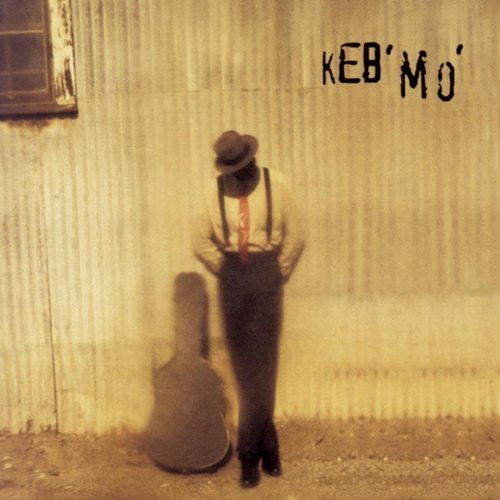
Keb' Mo' is the second studio album by Kevin Moore, but it is widely considered his debut under the stage name Keb' Mo' — a phonetic variation of his birth name that would become one of the most recognizable brands in contemporary blues. Released on June 7, 1994 by Okeh Records (a vintage blues imprint revived by Epic/Sony), the album introduced a distinctive voice that bridged the Delta blues tradition with modern singer-songwriter sensibilities. It became a staple in audiophile circles, earned critical acclaim, and launched a career that would eventually encompass five Grammy Awards, collaborations with legends from Taj Mahal to Bonnie Raitt, and performances at the White House.
Background and Context
Kevin Moore Before Keb' Mo'
Born Kevin Roosevelt Moore in South Los Angeles to parents originally from the Deep South, Keb' Mo' had already spent nearly two decades in the music business before this album. He began playing guitar at age 12 on a 1963 Silvertone acoustic from Sears, and by 21 he was playing with Papa John Creach (Jefferson Airplane violinist), appearing on four of Creach's albums and co-writing "Git Fiddler" for Jefferson Starship's million-selling Red Octopus (1975). He was a staff writer for A&M Records, arranged demos for Almo-Irving music, and released an R&B album, Rainmaker, in 1980 on Chocolate City Records (a Casablanca subsidiary) — which promptly went nowhere when the label folded.
By the early 1990s, Moore had immersed himself in the blues through stints with Monk Higgins' Whodunit Band, where he jammed with Albert Collins and Big Joe Turner. He also developed his stage persona playing "Guitar Man" in George C. Wolfe's musical Spunk (1990–1993), an adaptation of Zora Neale Hurston stories. The character of Guitar Man became the foundation for his Keb' Mo' persona. In 1994, he made a pivotal decision: after studying electronics and being hired for an entry-level job at Roland Electronics, he chose music over the corporate path and never reported for work.
The Okeh Records Signing
The album came about through a remarkable chain of industry connections. Michael Caplan, an A&R executive at Sony, signed Keb' Mo' to the Okeh-Epic label within 20 minutes of hearing him via A&R man Jack Porter. The signing was to the newly revived Okeh Records, a historic blues label originally founded in 1918 that Sony had reactivated as a vehicle for contemporary blues artists. The album was released in June 1994.
Recording Sessions
The album was recorded in 1994 with a production approach that emphasized natural, analog warmth. The recording was engineered and mixed by Joe McGrath, with production by John Porter — the legendary British producer who had worked with the Blues Brothers, B.B. King, Buddy Guy, and Ryan Adams. Porter's approach favored small ensembles, minimal overdubbing, and a sound that showcased the music's organic qualities.
The album's sonic character became legendary in hi-fi circles. As one reviewer noted, "Small ensembles, simply mic'd records, especially blues artists (think Muddy Waters Folk Singer, Lightnin' Hopkins Lightnin', Sonny Boy Williamson Keep it to Ourselves) can do this. Trust me, I know this and when you listen to this album on a good system it will make the system sound great. On a great system it will sound glorious." The Mobile Fidelity Sound Lab vinyl reissue, using their proprietary Gain 2 Ultra Analog System, became a sought-after audiophile pressing.
Producer
John Porter produced the album. Porter was already renowned for his work with the Blues Brothers, B.B. King (King of the Blues), Buddy Guy (Damn Right, I've Got the Blues), and Ryan Adams (Heartbreaker). His production style on Keb' Mo' emphasized capturing live ensemble feel with minimal studio artifice, allowing Keb' Mo's voice and guitar to remain the focal point while the band provided sympathetic support. The result was a sound that felt simultaneously timeless and contemporary — as if it could have been recorded in the 1960s or yesterday.
Personnel
- Keb' Mo' – vocals, guitars, harmonica, banjo
- Tommy Eyre – keyboards
- James "Hutch" Hutchinson – bass guitar
- Laval Belle – drums
- Quentin Dennard – drums on "Angelina"
- Tony Braunagel – percussion on "Come On in My Kitchen"
Tommy Eyre (1949–2001) was a British keyboardist known for his work with Joe Cocker, Gerry Rafferty, and Wham! His tasteful piano and organ work on the album added color without overwhelming the blues foundation. James "Hutch" Hutchinson is a veteran bassist who has played with Bonnie Raitt, Bryan Adams, and B.B. King. Laval Belle and Quentin Dennard provided the rhythmic backbone, with Dennard's drumming on "Angelina" adding a distinctive groove.
Songwriting
The album features 11 original compositions (written or co-written by Kevin Moore) and 2 Robert Johnson covers. The songwriting credits are:
- Kevin Moore — "Every Morning," "Tell Everybody I Know," "Anybody Seen My Girl," "Am I Wrong," "Dirty Low Down and Bad," "Don't Try to Explain," "City Boy"
- Kevin Moore & Eugene Powell — "Love Blues"
- Kevin Moore & Tim Kimber — "Victims of Comfort"
- Kevin Moore & Georgina Graper — "Angelina," "She Just Wants to Dance"
- Robert Johnson — "Come On in My Kitchen," "Kindhearted Woman Blues"
The inclusion of two Robert Johnson songs was deliberate and significant. Keb' Mo' had portrayed Robert Johnson in the 1990 docudrama Can't You Hear the Wind Howl? and was deeply influenced by Johnson's music. The covers served as both homage and declaration of intent — Keb' Mo' was positioning himself as a contemporary inheritor of the Delta blues tradition. Steve LaVere, who owns the publishing for the entire Robert Johnson song catalogue, spotted Keb' Mo' at the Long Beach Blues Festival and the connection proved fortuitous.
Track-by-Track Breakdown
1. "Every Morning" – 3:00
The album opens with a stark, intimate performance — just Keb' Mo's voice and acoustic slide guitar. The song is a pure analog recording that immediately establishes the album's aesthetic: minimal, warm, and deeply personal. The lyrics describe a morning ritual of renewal and gratitude, set against a Delta-style slide guitar figure. The track's simplicity is its strength — there is nowhere for the performer to hide, and Keb' Mo' delivers with confidence and emotional directness.
Musicians: Keb' Mo' – vocals, acoustic slide guitar
2. "Tell Everybody I Know" – 3:10
An uptempo blues shuffle that introduces the full band. Keb' Mo's acoustic guitar drives the rhythm, supported by Laval Belle's drums and Hutch Hutchinson's bass. The song is a declaration of independence — the narrator is moving on and telling everyone he knows about it. The vocal is playful and confident, with Keb' Mo' demonstrating his ability to work the danceable end of the blues spectrum. Tommy Eyre's keyboards add subtle color.
Musicians: Keb' Mo' – vocals, guitar; Tommy Eyre – keyboards; James "Hutch" Hutchinson – bass; Laval Belle – drums
3. "Love Blues" – 3:02
Written by: Kevin Moore & Eugene Powell
A mid-tempo blues ballad co-written with Eugene Powell. The song explores the complications of romantic love through the blues lens — love as both comfort and trouble. Keb' Mo's vocal is tender and reflective, his guitar playing melodic and supportive. The arrangement is restrained, with the band providing a gentle groove that allows the lyrics to remain the focus.
Musicians: Keb' Mo' – vocals, guitar; Tommy Eyre – keyboards; James "Hutch" Hutchinson – bass; Laval Belle – drums
4. "Victims of Comfort" – 3:21
Written by: Kevin Moore & Tim Kimber
A more contemporary-sounding track co-written with Tim Kimber. The song addresses the complacency that comes with modern life — being a "victim of comfort" and losing touch with what truly matters. The arrangement is slightly fuller than the preceding tracks, with Eyre's keyboards more prominent and the rhythm section driving a steady groove. The lyrics show Keb' Mo's interest in social commentary, a thread that would continue throughout his career.
Musicians: Keb' Mo' – vocals, guitar; Tommy Eyre – keyboards; James "Hutch" Hutchinson – bass; Laval Belle – drums
5. "Angelina" – 3:47
Written by: Kevin Moore & Georgina Graper
A ballad co-written with Georgina Graper, featuring Quentin Dennard on drums instead of Laval Belle. The song is a love letter to a woman named Angelina, delivered with Keb' Mo's characteristic warmth and storytelling sensibility. The longer running time allows for a more developed arrangement, with Eyre's keyboards creating an atmospheric bed and Dennard's drumming providing a slightly different rhythmic feel than Belle's. The track demonstrates Keb' Mo's ability to stretch beyond strict blues conventions into singer-songwriter territory.
Musicians: Keb' Mo' – vocals, guitar; Tommy Eyre – keyboards; James "Hutch" Hutchinson – bass; Quentin Dennard – drums
6. "Anybody Seen My Girl" – 2:56
A blues of searching and longing — the narrator is looking for his lost love. The song's title and theme are classic blues territory, but Keb' Mo's delivery is contemporary and conversational. The guitar work is particularly notable, with Keb' Mo' demonstrating his "less is more" style — economical phrases that carry maximum emotional weight. The band locks into a tight, sympathetic groove.
Musicians: Keb' Mo' – vocals, guitar; Tommy Eyre – keyboards; James "Hutch" Hutchinson – bass; Laval Belle – drums
7. "She Just Wants to Dance" – 3:29
Written by: Kevin Moore & Georgina Graper
Another co-write with Georgina Graper, this is an uptempo, celebratory track about a woman who lives for the dance floor. The song's energy is infectious, with a groove that invites movement. Keb' Mo's vocal is joyful and relaxed, his guitar playing rhythmic and propulsive. The track shows the influence of West Coast R&B and soul on Keb' Mo's style — a reminder of his Los Angeles roots and his years playing in R&B bands.
Musicians: Keb' Mo' – vocals, guitar; Tommy Eyre – keyboards; James "Hutch" Hutchinson – bass; Laval Belle – drums
8. "Am I Wrong" – 2:19
The shortest track on the album, a concise blues questioning a lover's fidelity. Keb' Mo's vocal is direct and unadorned, his guitar playing spare and effective. The song's brevity works in its favor — there is no time for elaboration, just the essential blues question: "Am I wrong for loving you?" The track would later gain international recognition when Keb' Mo' performed it with German rock star Peter Maffay on the multi-artist project Begegnungen (Encounters) in 1998, followed by a live album and arena tour.
Musicians: Keb' Mo' – vocals, guitar; Tommy Eyre – keyboards; James "Hutch" Hutchinson – bass; Laval Belle – drums
9. "Come On in My Kitchen" – 4:09
Written by: Robert Johnson
Keb' Mo's interpretation of Robert Johnson's 1936 masterpiece. The song is one of Johnson's most intimate and haunting compositions, and Keb' Mo' treats it with reverence and personal investment. His slide guitar work is delicate and evocative, his vocal hushed and inviting. The arrangement is minimal — primarily voice and guitar with subtle keyboard and bass support. Tony Braunagel adds percussion, creating a slightly more rhythmic texture than Johnson's original. The track runs over four minutes, allowing Keb' Mo' to stretch out and explore the song's emotional depths.
Musicians: Keb' Mo' – vocals, guitar, harmonica; Tommy Eyre – keyboards; James "Hutch" Hutchinson – bass; Laval Belle – drums; Tony Braunagel – percussion
10. "Dirty Low Down and Bad" – 3:08
A blues of complaint and self-deprecation — the narrator admits he's been "dirty, low down and bad" but makes no apologies. The song's swagger is balanced by its humor, a combination that would become a Keb' Mo' trademark. The guitar playing is more aggressive than on most of the album, with Keb' Mo' digging into the strings with authority. The band responds with a tougher groove, demonstrating their versatility.
Musicians: Keb' Mo' – vocals, guitar; Tommy Eyre – keyboards; James "Hutch" Hutchinson – bass; Laval Belle – drums
11. "Don't Try to Explain" – 3:58
A ballad of resignation — the narrator tells his lover not to bother explaining her departure, because he already knows the truth. The song's length (nearly four minutes) allows for a more developed narrative than the shorter tracks, and Keb' Mo's vocal performance is among the most nuanced on the album. The arrangement builds gradually, with Eyre's keyboards adding layers of color and the rhythm section maintaining a steady, mournful pulse.
Musicians: Keb' Mo' – vocals, guitar; Tommy Eyre – keyboards; James "Hutch" Hutchinson – bass; Laval Belle – drums
12. "Kindhearted Woman Blues" – 3:29
Written by: Robert Johnson
The album closes with Keb' Mo's second Robert Johnson cover. "Kindhearted Woman Blues" is one of Johnson's most celebrated compositions, and Keb' Mo' delivers a version that honors the original while adding his own contemporary sheen. His vocal is warm and appreciative, his guitar work fluid and expressive. The band provides sympathetic support without overwhelming the song's intimate quality. The track serves as a perfect bookend to the album — beginning with the raw "Every Morning" and ending with this polished yet heartfelt tribute to the blues tradition.
Musicians: Keb' Mo' – vocals, guitar; Tommy Eyre – keyboards; James "Hutch" Hutchinson – bass; Laval Belle – drums
Buy this Album
 Keb' Mo' Buy from Amazon
Critical Reception
Keb' Mo' received overwhelmingly positive reviews upon its release. AllMusic praised the album as "a critical and popular success that typified his modern spin on vintage blues." Rolling Stone and The Penguin Guide to Blues Recordings both reviewed the album favorably. The album's blend of traditional Delta blues with contemporary production and songwriting sensibilities struck a chord with critics who had grown weary of either overly reverent blues revivalism or blues-rock bombast.
The album's audiophile reputation grew over time. The Mobile Fidelity Sound Lab vinyl reissue became a demonstration disc for high-end audio systems, with reviewers noting that "as the album progresses, the instrumentation becomes more involved but in no case does it sound out of place in what is a basic blues album. It just showcases the stretch of the material and track by track the recorded sound remains timeless as if it could have been recorded yesterday." One reviewer gave the album 5 stars for both music and sound, translating to "Music: 11, Sound: 11" on a scale of 10.
Chart Performance and Commercial Impact
The album peaked at number 4 on the Billboard Blues Albums chart and reached number 88 on the Australian Albums Chart (ARIA). While not a massive commercial breakthrough in the mainstream pop market, it established Keb' Mo' as a significant figure in the contemporary blues scene and provided the foundation for a career that would span three decades and counting.
Legacy
Keb' Mo' is the album that introduced the world to a new kind of blues artist — one who could honor the Delta tradition without being imprisoned by it, who could write original songs that felt timeless, and who could deliver performances of such warmth and intimacy that they sounded as good on a high-end audio system as they did in a small club. The album's influence can be heard in the work of subsequent contemporary blues artists who have followed Keb' Mo's path of blending traditional forms with modern sensibilities.
The album also established Keb' Mo's working relationship with producer John Porter, who would continue to work with him on subsequent releases. The core band — particularly Hutch Hutchinson and Laval Belle — would remain part of Keb' Mo's touring and recording ensemble for years to come.
In the broader context of 1990s American music, Keb' Mo' arrived at a moment when the blues was experiencing a resurgence through the work of artists like Eric Clapton (Unplugged, 1992), the Allman Brothers Band, and the burgeoning jam band scene. Keb' Mo' offered something different — not blues-rock pyrotechnics but a quiet, assured mastery of the form that appealed to both blues purists and listeners who had never previously engaged with the genre.
As Keb' Mo' himself would later reflect, "I never set out to be a 'blues guy.' Why would I put limits on myself? At the same time I get it, blues is very powerful and fuels what I do. It's a big part of who I am." Keb' Mo' (1994) is the document that first proved this philosophy — an album that is undeniably blues, yet undeniably contemporary, and undeniably the work of an artist who would go on to become one of the most respected figures in American roots music.
Suggested Reading
 Keb’ Mo’: Modern Blues, Timeless Soul Buy from Amazon