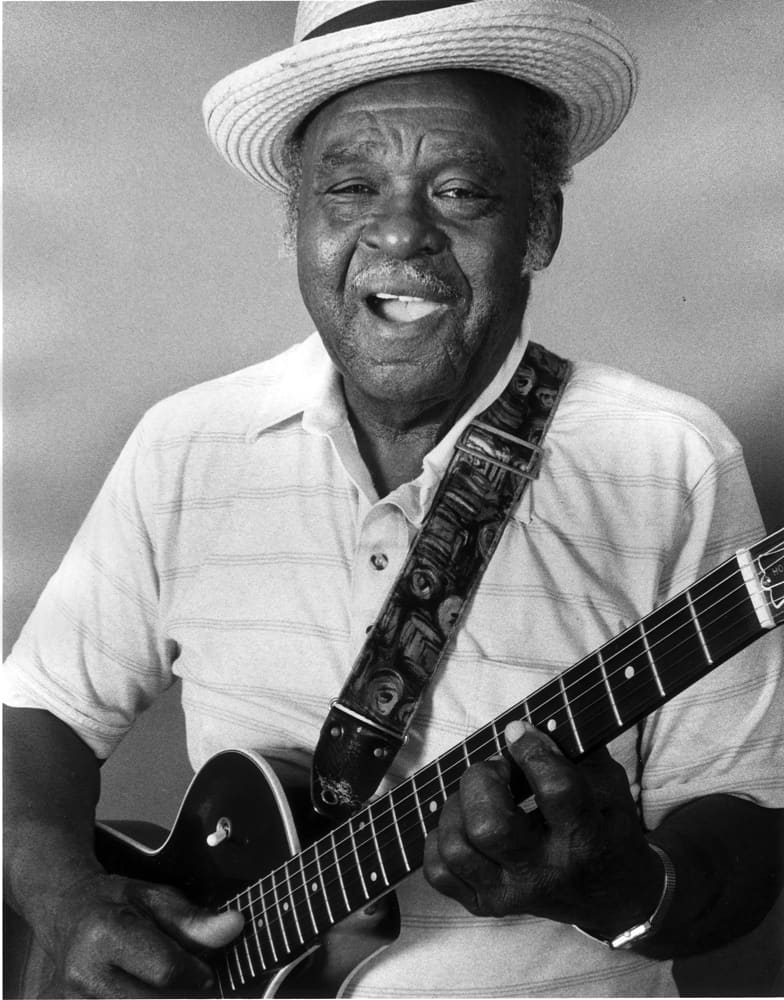
Introduction: The Sound That Could Make Your Hair Stand Up
There is a moment when you first hear Skip James — really hear him, with attention and an open ear — when something shifts in your understanding of what music can do. The voice arrives first: high and keening, hovering somewhere between singing and crying, between human expression and something stranger and more elemental. It moves through a modal space that has no interest in the reassuring resolutions of conventional harmony, floating over guitar work that is simultaneously intricate and deeply atmospheric. Nothing about it prepares you for it. Nothing in the conventional blues tradition quite explains it. AllMusic captured the experience precisely, if succinctly: "Coupling an oddball guitar tuning set against eerie, falsetto vocals, James's early recordings could make the hair stand up on the back of your neck."
Skip James was not, in any conventional sense, a successful musician. He recorded eighteen sides for Paramount Records in February 1931 and received somewhere between forty and two hundred dollars for his trouble, after which the Depression killed the market for such records and he abandoned music for ministry, bootlegging, and manual labour. For more than thirty years he was invisible — not dead, as some assumed, but absent, living in a series of Mississippi towns and Texas cities, preaching in churches, working odd jobs, occasionally playing for the patrons of the Blue Front Café in Bentonia when the mood moved him. The records he had made sat in the collections of an increasingly devoted minority of enthusiasts, their rarity making them increasingly valuable and their music making them increasingly revered.
When three young white blues enthusiasts found him in a Tunica, Mississippi hospital in June 1964, they found a man who had every reason to be bitter and was, in fact, profoundly ambivalent about returning to a music world that had once paid him so poorly and treated him with so little respect. But what they also found — and what the 1964 Newport Folk Festival audience would discover moments later, and what a generation of rock musicians would subsequently absorb — was that the music itself had survived the long years of neglect entirely intact. Skip James, at sixty-two, with cancer beginning to take him apart from the inside, could still reach into the D minor universe of "Devil Got My Woman" and pull out something that felt like the voice of the earth itself.
This is his story.
Origins: Bentonia, the Woodbine Plantation, and a Two-Dollar Guitar
Nehemiah Curtis James was born on June 9, 1902, near Bentonia, Mississippi — more precisely, on the Woodbine Plantation, fifteen miles south of Yazoo City and about a mile and a half from the town itself. The details of his parentage are somewhat contested across sources, but the essential facts are clear: his mother, Phyllis James, worked as a cook on the plantation; his father, Eddie James, was a bootlegger who abandoned the family when Skip was around five years old. Eddie James would later reform his habits and become a Baptist minister — a trajectory that his son would eventually echo — but his departure left Phyllis to raise the boy alone.
The Woodbine Plantation was the world Skip James grew up in: a Mississippi agricultural operation in the early years of the twentieth century, in which African American families lived and worked under conditions of near-feudal economic dependency. The plantation system that had replaced outright slavery after the Civil War had created sharecropping arrangements that bound Black workers to the land through debt and economic coercion — conditions that would shape James's early life and provide the emotional and experiential raw material for the blues he would eventually write.
The nickname "Skippy" came from his childhood habit of dancing at social gatherings — a penchant for movement and rhythm that presaged his musical inclinations. As a child he heard local musicians Henry Stuckey and the brothers Charlie and Jesse Sims playing at Friday-night frolics — Saturday night dance parties that were the social nexus of rural Black Mississippi life. The music he heard at these events lodged itself in his imagination with such force that his mother, recognising his musical hunger, eventually bought him a guitar for $2.50. It was the most significant financial transaction of both their lives.
Henry Stuckey, a guitarist five years older than James who lived on the nearby Sataria Plantation, was the decisive musical influence on James's guitar development. Stuckey showed him how to tune his guitar to an open E minor chord — what James would call "cross-note tuning" — and taught him his first songs. The story of how Stuckey acquired this tuning has become part of the mythology surrounding the Bentonia blues style: he was said to have learned it from Bahamian soldiers while serving in France during World War I. The Wikipedia article on James notes the complication in this account — Stuckey's service card shows he did not serve overseas — but the detail matters less than the music it allegedly produced. What Stuckey gave James was a tuning system that placed the guitar in a minor key, giving it a fundamental darkness and ambiguity from which the Bentonia sound would grow.
James attended Yazoo City High School and took rudimentary piano lessons from his cousin Alma Williams, a schoolteacher — the only formal music instruction of his life. He graduated from high school in 1919 and left Bentonia to work as a laborer, spending the early 1920s in road construction camps and lumber yards across the Delta. While working in a lumber camp, he composed what was probably his first original song, "Illinois Blues," about the experience of working away from home. On weekends, he would pick his guitar for tips in nearby towns, beginning his long apprenticeship as a performing musician.
In 1921, James moved to Weona, Arkansas, to work as a lumber grader at a sawmill camp. There he met the pianist and pimp Will Crabtree — a formidable figure who expanded James's education considerably beyond music. By James's own account, Crabtree was a pianist of significant ability who influenced his approach to the instrument, and also introduced him to a mode of living that combined music-making with hustling, gambling, and the management of women. James remained in Weona until 1923, then moved to Memphis, where he worked as a pianist in establishments on the far side of respectability.
By 1924, James had returned to Bentonia, where he remained for six years. He worked as a sharecropper, bootlegged "white lightning" whiskey to pay for the fancy clothes and jewellery he had come to enjoy during his more adventurous years, and resumed playing with Henry Stuckey at dances in Bentonia, Sidon, and as far away as Jackson. It was during this period that he developed the guitar style — three-finger picking in open D minor tuning — that would define the 1931 Paramount recordings.
The three-finger picking technique James developed during these Bentonia years was unusual and would prove difficult to imitate. The technique, also practised by Charley Patton, Mississippi John Hurt, and Jackson native Bo Carter, involved the thumb, index, and middle fingers in a way that allowed James to cover the guitar's entire register simultaneously — driving bass lines with the thumb while generating melody and harmony with the upper fingers. In his hands, this technique was exceptionally fast and clean, giving the music a quality that struck many listeners as resembling classical guitar more than the conventional blues fingerpicking of the era. His classically informed fingerpicking style was fast and clean, using the entire register of the guitar, with heavy, hypnotic bass lines.
The piano style he developed during these years drew from multiple sources: the barrelhouse tradition of the work camps, the church music he had grown up with, and the Mississippi blues pianists he had encountered, particularly Little Brother Montgomery. His piano playing was in some ways even more idiosyncratic than his guitar work — abrupt, asymmetrical, capable of sudden changes in tempo and dynamics that gave it an almost reckless quality that was entirely calculated and controlled.
H.C. Speir and the Road to Grafton: The Discovery
The path from Bentonia to Paramount Records ran through the Jackson, Mississippi record shop of Harry Charles Speir, one of the most consequential talent scouts in the history of blues recording. Speir was a furniture and record dealer who had an extraordinary ear for the music he heard in the African American communities around him, and an equally extraordinary ability to recognise which of the musicians he encountered had the quality that would translate to the recording medium. He had, as one account puts it, "single-handedly discovered most of the great Mississippi bluesmen of the 1920s and early 1930s, including Tommy Johnson, Ishmon Bracey, Bo Carter, and the legendary Charlie Patton." His shop at 111 Farish Street in Jackson was the gateway through which a generation of Mississippi blues musicians passed into the commercial recording world.
James auditioned for Speir in late 1930 or early 1931. He played a little of "Devil Got My Woman," and Speir was convinced immediately. The next day he presented James with a contract and a train ticket to Wisconsin — where Paramount Records had its studio in the small manufacturing city of Grafton, about thirty miles north of Milwaukee. Speir purchased James's ticket and provided $13 for expenses, a sum that barely covered the journey.
Paramount Records, by 1931, was past its commercial peak. The Depression had devastated the race records market, and the label was operating with reduced resources and commercial expectations. But the Grafton studio continued to function, and it had already produced some of the most important recordings in blues history — most notably the Charley Patton sessions that had helped define the Delta blues style. The studio supervisor for the Grafton sessions was Art Laibly, who had produced the monumental Charley Patton–Son House–Willie Brown–Louise Johnson session in the same facility nine months earlier, and was on hand to supervise James's session.
James arrived in Grafton in February 1931 and found the weather unbearably cold — a significant physical shock for a man from the warmth of Mississippi. He would later remember the experience as lasting two or three days and producing twenty-six songs, though the matrix numbers used for the session indicate twenty-one sides were recorded, three of which remain untraced. Of the eighteen sides that were eventually issued, thirteen were performed on guitar and five on piano.
After tuning his guitar to D minor and doing a sound check, James began with "Devil Got My Woman" — the song he had played for Speir, the song that had convinced the talent scout. He performed it at a slow, deliberate tempo, carefully enunciating both his guitar playing and his singing. What the recording engineers captured that day in Grafton was something that had apparently never existed on record before and would not exist quite like it again: eighteen performances of extraordinary depth and originality, produced by a musician working at the complete peak of his powers, in a style so personal and so strange that it would take the rest of the century for listeners to fully absorb its implications.
The Paramount Session: Eighteen Sides That Changed Blues History
The eighteen sides that James recorded at Paramount in February 1931 represent one of the most concentrated and influential single recording sessions in the history of American music. They were released as nine 78-rpm singles in the Paramount 13000 "race" series — records pressed in tiny quantities, on poor-quality materials, many of which did not survive. Very few original copies of James's Paramount 78 rpm records have survived. What has survived, in various transfers and reissues of varying quality, is the music itself.
The guitar recordings that opened the session were built around the D minor tuning that James called his "cross-note" tuning — an open D minor chord (D–A–D–F–A–D) that gave every note and every chord he played a fundamental dark, minor quality. This was not the blues tuning of the Delta mainstream. Delta blues typically used open G or open D major tunings, creating a bright, resonant sound that suited the driving, rhythmically assertive style of artists like Charley Patton and Son House. James's D minor tuning was something else entirely — modal, ambiguous, capable of great harmonic subtlety, resistant to the conventional blues resolutions that gave the Delta style its forward momentum.
"Devil Got My Woman" is the recording by which James is most immediately identified, and it is worth examining in detail because it encapsulates so much of what makes his art singular. The song opens with James's voice alone, suspended in the open D minor space of the guitar, establishing immediately that this music will not move in the directions that blues conventions predict. The lyric is a meditation on loss and desire rendered through a series of images that resist easy narrative resolution: a woman who has left, a narrator who identifies with the Devil rather than with the suffering victim he appears to be. "I'd rather be the Devil than to be that woman's man," he sings in his keening falsetto, at once mournful and threatening.
The music is not just foundational — it is substratal. This is not a blues as typically understood. It is modal, meaning there is no I-IV-V chord progression usually associated with the blues, or in fact any chord progression at all. Emotionally, there is no sense of progress: the listener can move around inside that D minor environment but cannot escape it. It is the musical analogue to James's stymied, restless lyric. The structure circles back on itself rather than moving forward, and this circularity — this refusal of the conventional blues narrative of progression and (however partial) resolution — is what gives the music its particularly unsettling quality.
Robert Johnson also recorded in this D minor tuning. His "Hell Hound on My Trail" is based on James's "Devil Got My Woman" — one of the most consequential acts of influence in blues history. James's conception became the template for one of the most celebrated blues recordings ever made, though the chain of influence was not widely recognised until the research of the folk revival era established it definitively.
"Hard Time Killing Floor Blues" is, among the Paramount recordings, the most directly connected to the historical moment of its creation. Recorded at the beginning of the Great Depression, it is one of the earliest blues recordings to engage directly with the economic catastrophe that was transforming American life. "Hard time here, everything is wrong," James sings, in a passage that could serve as the epigraph for an era. The "killing floor" of the title has multiple resonances — the literal killing floors of slaughterhouses where James may have worked, and the metaphorical killing floor of an economy that was destroying livelihoods across the country. Chris Thomas King's recording of the song for the 2000 film O Brother, Where Art Thou? introduced it to a new generation of listeners who may not have known its origins, but who felt its urgency immediately.
"I'm So Glad" represents a different dimension of James's art — lighter in mood, faster in tempo, built on a cascading fingerpicking pattern that James's biographer Stephen Calt, echoing the opinion of several music critics, considered "one of the most extraordinary examples of fingerpicking found in guitar music." The song's origins are complex: it was derived from a 1927 composition by Art Sizemore and George A. Little entitled "So Tired," which had been recorded in 1928 by both Gene Austin and Lonnie Johnson. James transformed it utterly — changed the lyrics, altered the melody, brought the full force of his virtuoso guitar technique to bear — until the finished product was as completely his own as any original composition in his catalogue. The song is a celebration of relief: the narrator is so glad to be free of a bad situation that the gladness overflows every verse and every phrase. In James's hands, it becomes a showcase for pure guitar joy.
In the 1960s, "I'm So Glad" became a hit record for Cream — Eric Clapton, Jack Bruce, and Ginger Baker — whose studio and live recordings of the song appeared on their 1966 debut album Fresh Cream. Deep Purple also covered it on their debut album Shades of Deep Purple. These covers provided James with the only financial windfall of his career, though the Cream version was based on James's simplified 1960s recording rather than the intricate 1931 original. The royalties from Cream's recording gave James some financial comfort in his final years, a small compensation for a lifetime of penury in exchange for extraordinary artistic gifts.
"22-20 Blues" showed the piano-playing Skip James — an artist who might have been, in another life, primarily known as a keyboard player rather than a guitarist. The song is built on the kind of abrupt dynamic contrasts and rhythmic asymmetries that characterised James's piano approach throughout his career. The gun of the title — a .22 on a .20 frame, a firearm whose particular specifications were well known to the men who carried such weapons — is used as a threat in the time-honoured blues tradition of using physical violence as a metaphor for emotional extremity. The song provided the direct model for Robert Johnson's "32-20 Blues" — Johnson transposing the calibres while keeping the essential structure and emotional approach of James's original.
"Cypress Grove Blues" is perhaps the most atmospherically unified of the Paramount recordings: a guitar piece built on sustained, resonant tones that evoke the dark, still quality of the cypress groves that characterised the Mississippi landscape. The cypress grove — cool, shadowed, associated with death and burial in the Southern imagination — serves as a metaphor for the emotional territory James was mapping in the 1931 recordings generally. The piece demonstrates James's ability to use guitar timbre and dynamics as expressive tools, shaping the sound of individual notes into something that feels more like an atmospheric condition than a musical performance.
Other tracks from the session — "Special Rider Blues," "Illinois Blues," "How Long Buck," "Little Cow and Calf Is Gonna Die Blues," "Cherry Ball Blues," "Drunken Spree," "Four O'Clock Blues," "If You Haven't Any Hay, Get On Down the Road" — collectively map the full range of James's musical personality: the dark blues spirituals, the dance-floor pieces, the piano showpieces, the narrative songs. As was typical of his era, James recorded a variety of material: blues and spirituals, cover versions and original compositions, frequently blurring the lines between genres and sources.
The piano recordings that completed the session showed a different but equally distinctive artistic personality. Where the guitar pieces inhabited the specific modal world of the D minor tuning, the piano recordings drew on the barrelhouse tradition that James had absorbed in work camp dance halls — a harder, more rhythmically assertive style that deployed his dramatic use of silence and sudden dynamic contrast with particular effectiveness. The piano-playing James was something of a different artist from the guitar-playing James, and the two together constitute a more complete musical portrait than either alone could provide.
Payment, Departure, and Thirty Years of Silence
The commercial and financial outcome of the Paramount session was, by any measure, disastrous for James. According to biographer Stephen Calt, James received only $40 for his 1931 recordings — a sum so inadequate relative to the quantity and quality of the work produced that it amounted to a defining humiliation. He soon quit the music business, bitterly declaring it a "barrel of crabs." He was not entirely wrong. The Paramount sessions had consumed several days of his time and produced eighteen commercially issued recordings, and the compensation he received was barely enough to cover his travel expenses.
The Depression killed whatever modest commercial potential the records might have had even with fair promotion. The race records market collapsed in the early 1930s as the economic catastrophe deepened and African American consumers — who had never had substantial discretionary income — found even the modest price of a 78-rpm record beyond their means. Paramount itself was in trouble and would cease to exist within a few years of James's session. The records that James had made — already pressed in small quantities — sold poorly and disappeared from circulation.
His response was to leave music entirely and seek God. His father Eddie James had reformed his bootlegging ways and become a Baptist minister, and Skip followed him to Plano, Texas, where he attended seminary school without graduating. He was ordained as a Baptist minister in 1932. He formed a gospel group in Dallas — The Dallas Texas Jubilee Singers — with which he traveled in support of his father's preaching. He became a choirmaster. He preached. He lived the devout life that the blues — in the theology of that era and community — was specifically opposed to.
Over the following decades, James moved through a series of Mississippi towns and returned intermittently to Bentonia. Birmingham, Alabama. Hattiesburg. Meridian. Back to Bentonia in 1948, where he occasionally played for locals at the newly opened Blue Front Café — not as a professional musician but as a man playing for the pleasure of it, for the familiar faces of his home community. He was not entirely absent from music, but he was entirely absent from the music industry, and the distinction meant that he remained invisible to anyone outside his immediate community.
Meanwhile, the records he had made for Paramount were acquiring a kind of legendary status among the small community of American and British blues collectors who had begun, through the 1950s, to systematically seek out and document pre-war blues recordings. James's Paramount sides were particularly valued — not just musically but as physical objects, since the scarcity of surviving copies made them genuine rarities in an era when blues 78s were already rare. By the early 1960s, as a blues revival was gathering momentum among young white audiences on both sides of the Atlantic, Skip James records were among the most sought-after items in the collector's world. And the man who had made them was somewhere in Mississippi, apparently lost to history.
Rediscovery: Tunica, 1964, and the Newport Moment
In the early 1960s, three young blues enthusiasts began making serious efforts to locate Skip James. John Fahey was a guitarist and musicologist who would become one of the most influential figures in the development of American primitive and folk guitar — his academic approach to blues research was matched by his intense personal investment in the music he was studying. Bill Barth was a guitarist associated with the band The Insect Trust. Henry Vestine was a guitarist who would go on to found Canned Heat. All three were men who had grown up with the Paramount records, who knew James's music intimately, and who were determined to find the man himself.
The search was not easy. James had no fixed address in public records, no phone listing, no obvious trail. The blues community that might have known his whereabouts was scattered and not always forthcoming. But eventually the trail led to Tunica, Mississippi, where in June 1964 the three men found Skip James in a hospital, suffering from the early stages of the cancer that would eventually kill him. The encounter was not, by Fahey's later account, particularly warm. "I didn't like him, and he didn't like me," Fahey said flatly. He had, in Fahey's telling, effectively purchased the bluesman's freedom from the hospital: "I bought Skip James for $200." The group covered his medical bills and provided the support necessary for him to check out and begin performing again.
The rediscovery of James — coming at virtually the same moment as the rediscovery of Son House — was, according to biographer Stephen Calt, the start of the blues revival in America. Both men appeared at the Newport Folk Festival in July 1964, and the impact of their performances on the audience that gathered at that event was extraordinary. Newport in 1964 was at the peak of its cultural significance: it was the festival at which Bob Dylan was developing his electric rock direction, at which the civil rights movement and the folk revival were most directly and publicly intertwined, and at which the rediscovered Delta blues musicians had the most intense imaginable reception from an audience that had been preparing itself for this encounter for years.
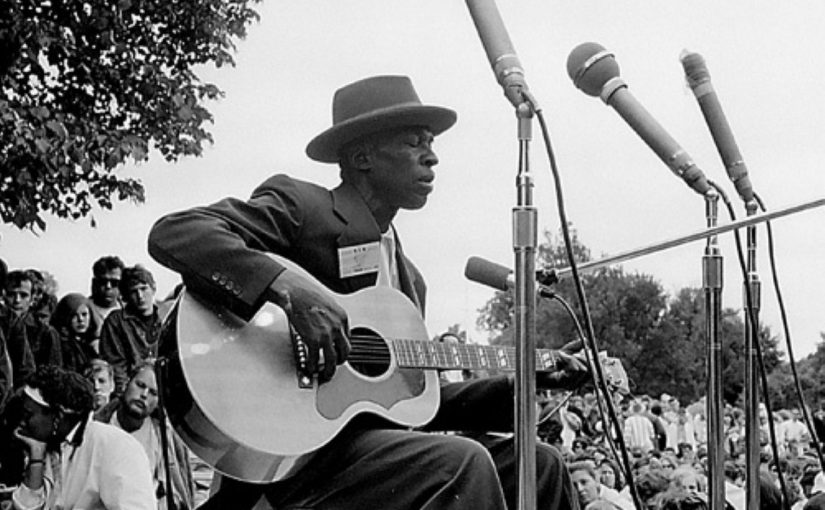
James's set at Newport was brief — nine minutes, four songs. He played in constant pain from the cancer that was advancing through his body, and his voice and guitar had the quality of someone reaching through illness to access something deeper than his immediate physical condition. His nine-minute appearance was, according to Calt, "to many blues devotees, the most dramatic moment of the festival." Dick Waterman's photographs of the performance captured something of its intensity — an elderly Black man in a suit, sitting with his guitar, doing something with it that the young white audience had never heard anything like.
The reception was overwhelming. Within months of Newport, Skip James had signed with Vanguard Records and was preparing to make the recordings that would introduce his music to the widest audience it had ever reached.
The Revival Recordings: Vanguard and the Final Chapter
Between 1964 and his death in 1969, Skip James recorded prolifically, revisiting his 1931 Paramount sides, recording traditional music and spirituals, and occasionally producing newly written blues that reflected his current situation — illness, age, the strange experience of sudden celebrity after decades of obscurity. The primary labels of this period were Takoma, Melodeon, and Vanguard, with various smaller labels also issuing recordings from concerts and sessions.
The first post-rediscovery album, Greatest of the Delta Blues Singers (Melodeon, 1964), established the template for the revival recordings: James revisiting the Paramount sides, playing them in a style that had aged and deepened since 1931 without losing its fundamental character. The voice was older, the timing occasionally more deliberate, the emotional register if anything more profoundly inhabited. The 1931 "Devil Got My Woman" sounds like a young man's formulation of something he understands conceptually; the 1960s versions sound like the same thing understood from the inside, after a lifetime of experience that confirmed its truth.
Skip James Today! (Vanguard, 1966) was the album that most successfully captured James for a contemporary audience. The Vanguard label, which had built its reputation on folk and blues recordings throughout the 1950s and 1960s, brought to the project the production values and distribution reach that a larger label could command. The album presented James revisiting old material — "Devil Got My Woman," "I'm So Glad," "Cypress Grove Blues," "Hard Time Killing Floor Blues" — with newly tuned recordings that preserved the 1960s versions of these pieces in significantly better sound than the Paramount originals. "I'm So Glad" in its 1960s recording became the direct source for Cream's famous cover, providing James with his only genuine royalty windfall.
The 1968 Vanguard album Devil Got My Woman was the final major studio recording of his career, completed as his health was failing rapidly. James performed on piano as well as guitar throughout the revival period, the keyboard recordings offering a parallel and complementary portrait of his art. The album demonstrates, even at this late stage, the absolute consistency of his musical personality: the voice still keening in that distinctive falsetto, the guitar still inhabiting the D minor universe with the authority of someone who has never lived anywhere else.
James's personality during the revival years was characteristically difficult. He was known to be aloof and idiosyncratic, seldom socialising with other bluesmen or fans. He reportedly disliked the folk scene of the 1960s and was ambivalent about the audience that had found him. He remained with his third wife, Lorenzo Meeks James, throughout this period, and the couple lived in Philadelphia. He performed at coffeehouses, folk clubs, and festivals throughout the Northeast, and made the European tour with the American Folk Blues Festival in 1967, one of the package tours that had been bringing American blues artists to European audiences since 1962. One of his last appearances was at the Festival of American Folklife in Washington, D.C., in 1968.
Skip James died of cancer in Philadelphia on October 3, 1969. He was sixty-seven years old.
The Sound: Guitar Style, Piano Approach, and the Bentonia Aesthetic
The music of Skip James is, at its technical foundation, the product of several interlocking elements that work together to produce an effect that no analysis can fully account for. Understanding the elements is a starting point, not an arrival.
The open D minor tuning — D–A–D–F–A–D across the six strings — was the physical foundation of the guitar recordings. In this tuning, every open string belongs to a D minor chord, meaning that the entire instrument resonates in a single harmonic universe when strummed without fretting. This gives the guitar a quality of sustained, ambient minor sound — a kind of musical atmosphere — over which James's melodic and rhythmic figures float. The bass strings provide a constant drone of dark resonance, while the upper strings generate the melodic content.
The three-finger picking technique that James used in this tuning was unusual for the Delta blues tradition, which more commonly used a thumb and one or two fingers in approaches closer to conventional folk guitar styles. James's technique involved the thumb, index finger, and middle finger in a way that gave him simultaneous access to the bass register and two upper register lines, allowing him to play what effectively amounted to three-part polyphony on a six-string guitar. This is what gave his recordings their quality of harmonic richness — you are hearing multiple voices at once, each with its own melodic independence.
The falsetto vocal was the element that most immediately distinguished James from his blues contemporaries. Most Delta blues singers — Charley Patton, Son House, Tommy Johnson — sang in their natural chest voice, occasionally rising into a higher register for expressive moments. James sang primarily in falsetto, the high, pure tone quality produced by the head resonators rather than the chest. In blues singing, this was unusual, and the effect was to give his voice a quality that listeners consistently described with words like "haunting," "eerie," and "ghostly." It sounded, to ears accustomed to the chest-voice authority of the Delta tradition, like something heard from a distance, or from the other side of a thin membrane between the living world and some other territory.
The combination of the D minor tuning, the three-finger picking technique, and the falsetto vocal created a sound that occupied its own distinct space in the blues spectrum — the space that subsequent writers would label the "Bentonia school," though the extent to which this represents a genuine local tradition rather than Skip James's unique personal aesthetic remains contested. Biographer Stephen Calt maintained that there was no style of blues that originated in Bentonia, arguing that the "tradition" attributed to local musicians like Jack Owens primarily consisted of musical elements derived from James's own work. Whatever its origins, the Bentonia sound as expressed in James's recordings is recognisably a unified aesthetic — not just a collection of technical choices but a way of understanding the expressive possibilities of the blues that is philosophically distinct from the Delta mainstream.
The piano style is less often discussed because James is primarily known as a guitarist, but it represents an equally important dimension of his art. His piano recordings from 1931 — "22-20 Blues," "If You Haven't Any Hay," "Four O'Clock Blues," "How Long Buck" — demonstrate a style that drew on barrelhouse blues and boogie-woogie without being reducible to either. The most distinctive element of his piano playing was its use of silence: abrupt pauses, unexpected rests, moments of suspension that created a kind of rhythmic drama unlike anything in the conventional blues piano tradition. These pauses were not failures of continuity but expressive choices — brief moments of silence that gave the surrounding notes a heightened definition and made the music feel simultaneously improvisatory and precisely calculated.
The Recordings in Context: Influence on Robert Johnson
No discussion of Skip James's recordings can proceed without extended attention to their influence on Robert Johnson — the Delta bluesman whose brief life, small recording catalogue, and legendary posthumous reputation constitute perhaps the central myth of American roots music. Johnson recorded in 1936 and 1937, five to six years after James's Paramount sessions, and the evidence that he had absorbed those recordings is present throughout his work.
The most direct connection is between James's "Devil Got My Woman" and Johnson's "Hell Hound on My Trail." Both songs use the D minor modal environment; both use the same guitar tuning; both share a similar structural and emotional approach in which the narrator identifies with dark, supernatural forces rather than positioning himself as their victim. The connection is not a case of simple copying — Johnson transformed what he took from James, filtering it through his own musical personality and producing something that was fully his own — but it is impossible to hear the two songs together without recognising the genealogical relationship between them.
The gun-themed "22-20 Blues" provided the model for Johnson's "32-20 Blues," which retained the basic structure of James's original while transposing the calibres. And the broader approach of James's Paramount sessions — the use of modal rather than conventional blues harmony, the identification of the narrator with rather than against supernatural evil, the emotional extremity that went beyond the conventional blues vocabulary of loss and longing into something darker and more metaphysically disturbing — all these elements appear, transformed and deepened, in Johnson's greatest recordings. James embodied a dark empowerment: he identified with the Devil, and influenced many subsequent Devil-based blues recordings.
The influence was not only on Johnson. Kansas Joe McCoy adapted James material. Alan Wilson, the founding guitarist of Canned Heat and a significant blues scholar, was deeply familiar with James's work. The entire tradition of blues-informed rock guitar — from Clapton to Stevie Ray Vaughan to contemporary blues players — carries traces of the James aesthetic, however many degrees of remove separate them from the original source.
The Wider Influence: Rock, Film, and the Bentonia Legacy
Skip James's influence on subsequent music operates at multiple levels simultaneously, from the direct and acknowledged to the diffuse and untraceable. The most commercially significant act of homage was Cream's 1966 recording of "I'm So Glad," which appeared on their debut album Fresh Cream and introduced James's composition to an audience of millions who had no context for understanding where it had come from. The Cream version is a rock performance — heavy, amplified, built around Clapton's guitar and Bruce's bass in ways that bear little relationship to the acoustic delicacy of James's original — but the song survives the translation, its essential quality of joyful release communicating through any idiom.
Deep Purple covered the same song on their debut album Shades of Deep Purple, giving the material a second lease of commercial life in a British rock context. These two recordings, taken together, placed "I'm So Glad" permanently in the rock canon — a status it retains to this day.
Beck's 1994 recording of "Jesus Is a Mighty Good Leader" (partially secularised) on his album One Foot in the Grave demonstrated the song's continuing relevance to young musicians working at the avant-folk end of the 1990s music world. Lucinda Williams, Rory Block, the Derek Trucks Band, Alvin Youngblood Hart, and Big Sugar have all recorded James material — a list that spans genres from country blues to jazz-influenced rock to Americana.
The 2000 film O Brother, Where Art Thou? brought "Hard Time Killing Floor Blues" to a mass audience through Chris Thomas King's performance on the soundtrack — a moment of cultural transmission that introduced the Bentonia aesthetic to listeners who had never heard of Skip James. The 2001 film Ghost World, based on the graphic novel by Daniel Clowes, featured the original 1931 "Devil Got My Woman" prominently in both plot and soundtrack — the record becomes a kind of talisman for the film's teenage protagonists, its strangeness and antiquity speaking to their sense of alienation from the present.
The British post-rock band Hope of the States released a song partially focused on the life of Skip James titled "Nehemiah," which charted at number 30 in the UK singles chart in the mid-2000s — a remarkable demonstration of the artist's continuing cultural presence decades after his death. Singer Dion DiMucci released an album titled Son of Skip James in 2007.
The Bentonia Blues Festival, ongoing since 1972, has preserved the style's core features as a living regional heritage. Jimmy "Duck" Holmes, who still owns and operates the Blue Front Café where James occasionally played in the late 1940s, carries the Bentonia tradition into the present as a performing artist. The "school" that James may or may not have founded continues — both in the specific practices of musicians who have absorbed his tuning and approach, and in the broader influence of a sound that remains unlike anything else in American music.
John Fahey, who had found James in the Tunica hospital and who had an ambivalent personal relationship with him, absorbed the Bentonia aesthetic more deeply than almost any other white American guitarist. Fahey's development of what would be called "American primitive guitar" — acoustic solo guitar music informed by blues, folk, and classical traditions — owes an acknowledged debt to James's approach. The entire tradition of solo acoustic guitar that Fahey established, and that subsequently influenced musicians from Leo Kottke to Jack Rose to countless contemporary fingerpickers, carries the genetic material of Skip James's D minor universe.
Personality, Character, and the Question of the "Barrel of Crabs"
Skip James was, by consistent contemporary report, not an easy man. He was aloof, opinionated, jealous of his artistic identity, and deeply ambivalent about the folk revival world that had given him a second career. He saw himself, as one commentator has observed, as the author of serious art, and so invested himself with value in a society which allowed him none. This self-regard was not vanity in the conventional sense but something closer to a philosophical position — a refusal to accept the social valuation that American society in the first half of the twentieth century placed on a Black man from Mississippi, and an insistence on the worth of his own creative work that the music industry had done nothing to validate.
His declaration that the music business was a "barrel of crabs" — made after the Paramount session's inadequate financial return — captures his essential attitude: sharp, unillusioned, free of the deference that the industry expected from its artists. When Cream's "I'm So Glad" became a hit, James reacted with something other than unqualified gratitude; he was aware that the version being sold was based on his simplified 1960s performance rather than the intricate 1931 original, and he knew that the commercial success accruing to Cream bore no relationship to the compensation he would receive as the song's composer.
His three marriages — to Oscella Robinson, Mabel James, and Lorenzo Meeks — are mentioned in biographical sources without much detail, though it is known that he remained with Lorenzo until his death in Philadelphia. The lyrical content of some of his songs led some commentators to characterise him as a misogynist, a charge that his supporters dispute and that the complexity of blues lyrical tradition makes difficult to assess without oversimplification.
His dual identity as a blues musician and a man of God — a Baptist minister who played the blues, an ordained minister who could equally inhabit "Devil Got My Woman" and "Jesus Is a Mighty Good Leader" — was not, as some observers imagined, a contradiction or a hypocrisy. It was, rather, a characteristically Southern African American negotiation of the tension between the sacred and the secular that ran through the entire culture. The blues and the church were, in this tradition, not opposites but complements — two ways of addressing the same fundamental human experiences of suffering, loss, and the search for meaning. That James could move between them, and could bring the same complete investment to both, was not a paradox but a wholeness.
The Legacy: What Skip James Knew
Skip James died as he had lived: apart from easy comprehension, resistant to simple characterisation, insisting on an artistic identity that the world around him was slow to recognise. In the forty-five years since his death, the recognition has come — fully and permanently. He was voted into the Blues Foundation Hall of Fame in 1992. His 1931 recordings have been reissued repeatedly on CD and streaming platforms, each new generation of listeners discovering for the first time the hair-raising quality of that voice in the D minor space.
The paradox of his career is that the Great Depression, which destroyed the commercial viability of the recordings he made, also preserved them as something more than commercial products. Because the Paramount records sold so poorly and were pressed in such small quantities, they never became familiar — never were reduced to background music or nostalgic comfort. They remained strange and challenging throughout the decades of James's obscurity, so that when they were rediscovered they still had all their original power intact. The Depression that ruined Skip James's first career inadvertently protected his legacy.
The Paramount recordings from February 1931 — those eighteen sides made in a cold Wisconsin studio by a man who received forty dollars for them — are now understood to be among the foundational documents of American music. They influenced Robert Johnson, who influenced Muddy Waters, who influenced the Rolling Stones and the Beatles, who influenced everyone who came after. They gave Cream a hit record and gave the film Ghost World its emotional centrepiece. They inspired a band to name itself after one of James's songs (22-20s) and a British post-rock group to chart with a tribute to his life. They are still being discovered by young musicians and listeners who respond to them with the same electrified surprise that every generation has felt since they were made.
AllMusic's summary of James's legacy is as precise as any: he has been hailed as "one of the seminal figures of the blues." The word "seminal" is apt — his music generated things, caused things to grow in directions that could not have been predicted. The D minor universe of Skip James is not a historical artifact but a living territory, still being explored by musicians who may not even know they are following the trail he blazed into that cold Wisconsin studio ninety-odd years ago.
"I'd rather be the Devil than to be that woman's man," he sang, in his falsetto, over a guitar tuned to D minor. He meant it — not as a theological statement but as an artistic one, as a declaration of independence from the conventional positioning of the blues narrator as passive sufferer. Skip James was never passive. He was difficult and demanding and undercompensated and half-forgotten for most of his life. And the music he left behind is among the most extraordinary in the history of American art.
Suggested Reading
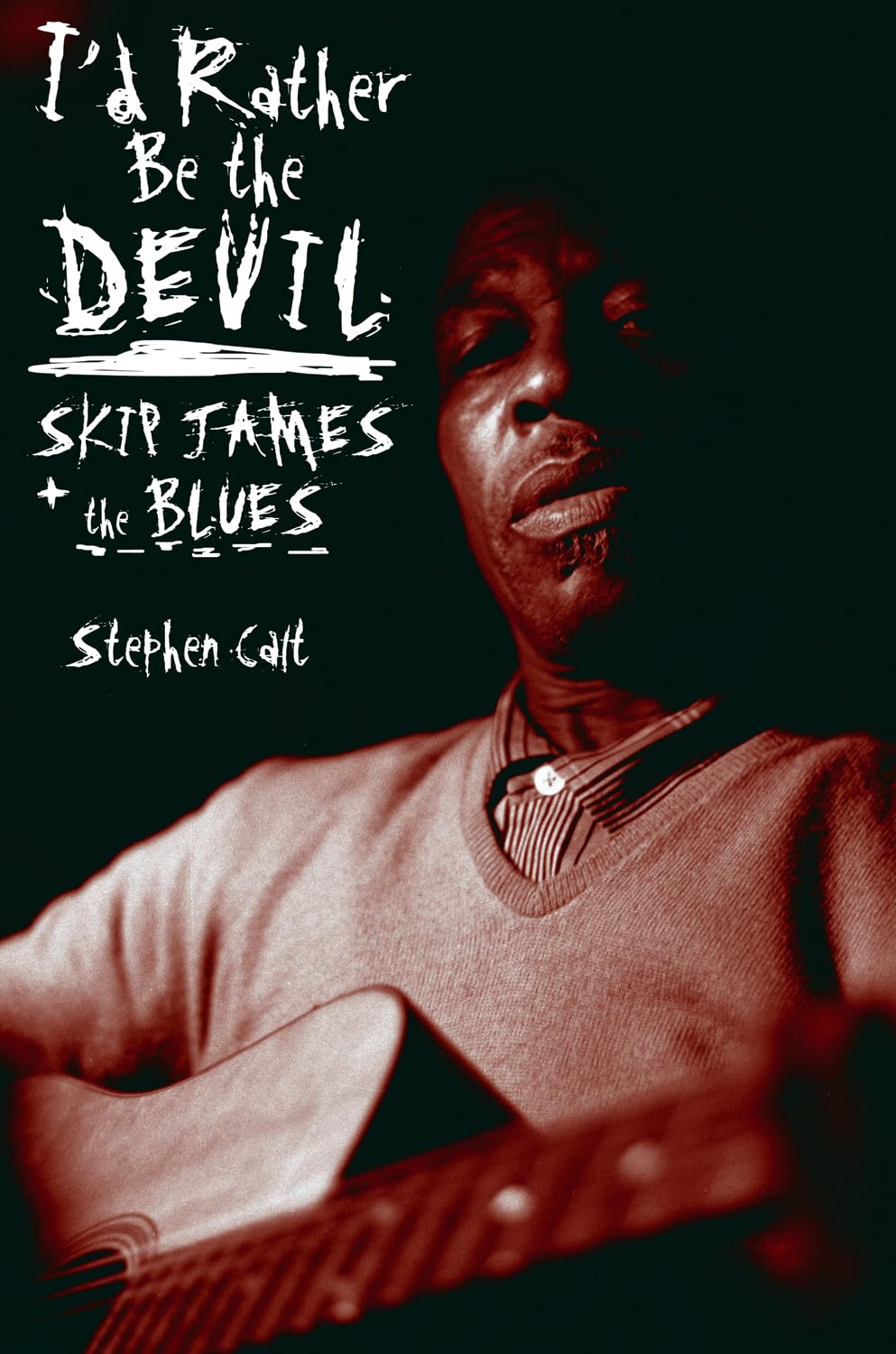
I'd Rather Be the Devil: Skip James and the Blues by Stephen Calt
Selected Discography
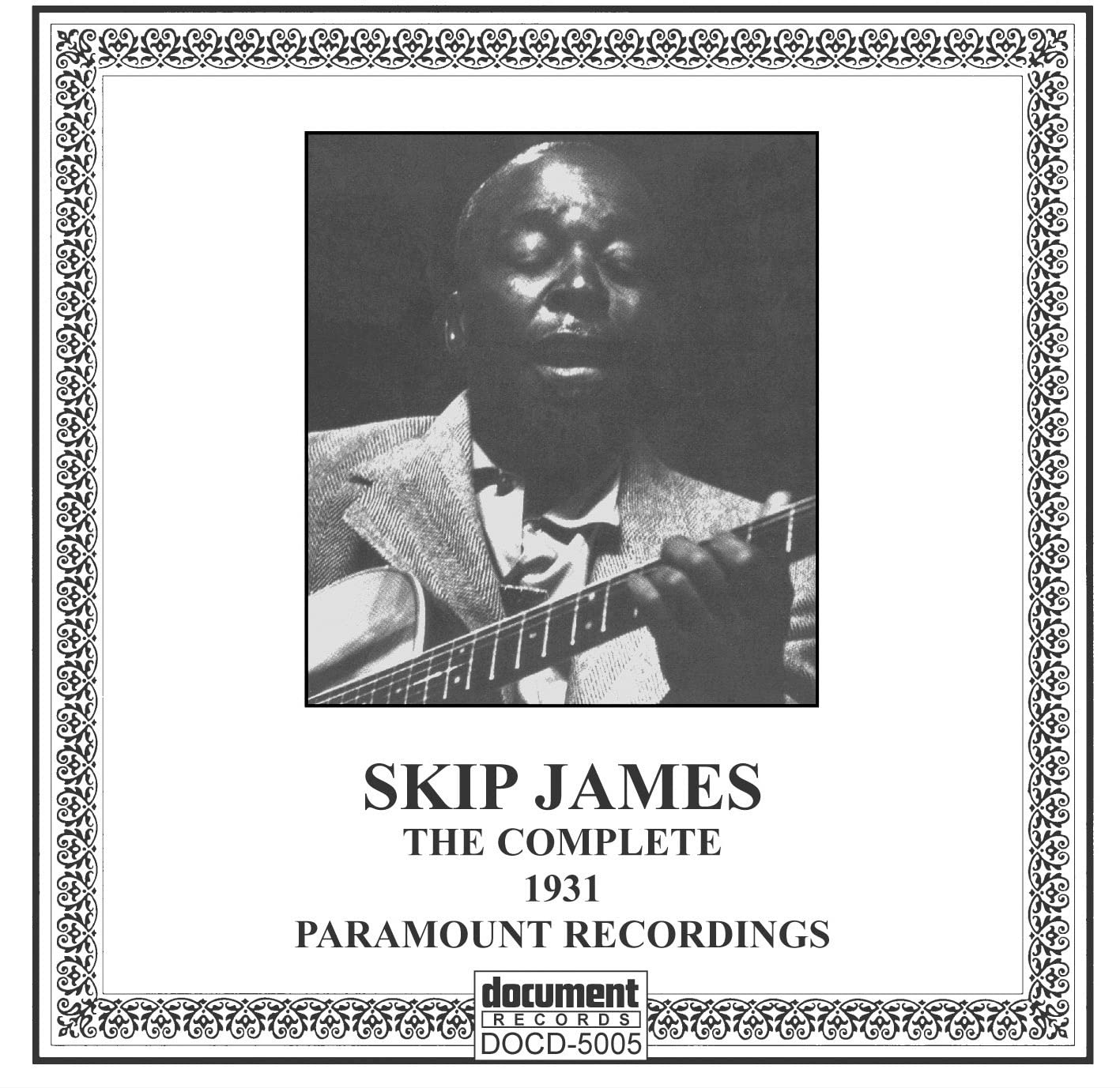
I'm So Glad: The Complete 1931 Paramount Recordings
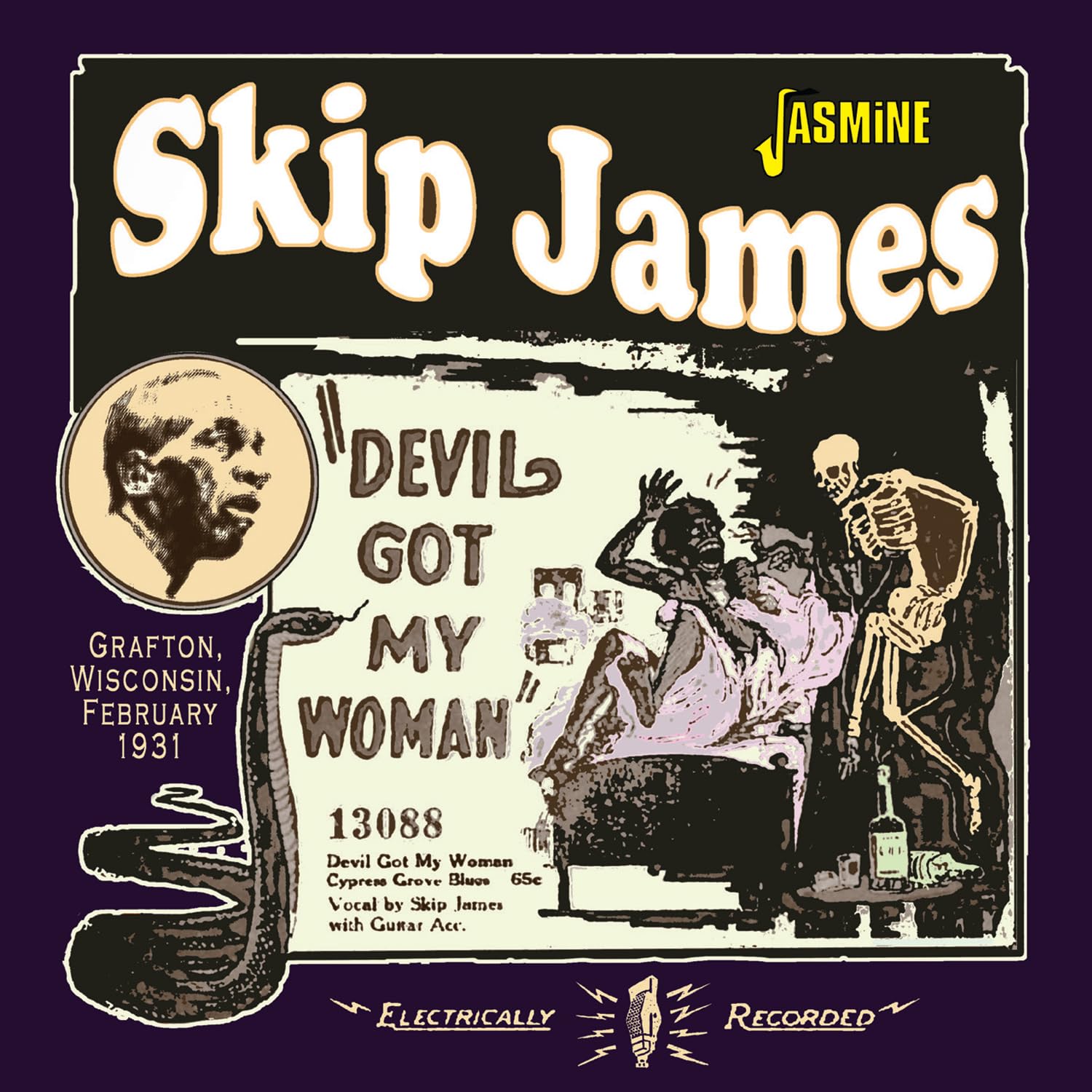
Devil Got My Woman: Grafton, Wisconsin, February 1931
Nehemiah Curtis "Skip" James, born June 9, 1902, near Bentonia, Mississippi. Died October 3, 1969, Philadelphia, Pennsylvania. Principal recordings: Paramount Records, Grafton, Wisconsin, February 1931 (18 sides); Melodeon Records, 1964; Takoma Records, 1964; Vanguard Records, 1966, 1968. Albums: Greatest of the Delta Blues Singers (Melodeon/Biograph, 1964); Skip James Today! (Vanguard, 1966); Devil Got My Woman (Vanguard, 1968). Inducted into the Blues Foundation Hall of Fame, 1992.