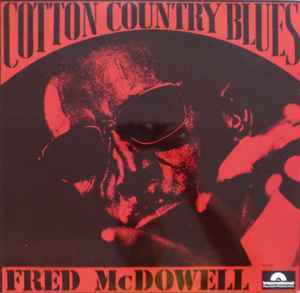
Released in 1967 on Arhoolie Records (catalog no. F1009), Cotton Country Blues is Mississippi Fred McDowell's debut album for the label and one of the most important documents of North Mississippi hill country blues ever committed to tape. Recorded in a single field session in late 1965 at McDowell's home in Como, Mississippi, the album captures the raw, hypnotic power of a style that would influence generations of blues musicians—from Bonnie Raitt to R.L. Burnside and Junior Kimbrough.
Recording Sessions & Production
The album was recorded in late 1965 in Como, Mississippi, a small town about 40 miles south of Memphis, where McDowell had settled in the early 1940s after moving from Rossville, Tennessee.
Chris Strachwitz, founder of Arhoolie Records, produced the session. Strachwitz had first heard McDowell on Alan Lomax's 1959 Atlantic LP Sounds of the South and traveled to Como in 1964 specifically to find him.
The session was conducted in McDowell's home, with Strachwitz recording him using a condenser microphone in a simple, unadorned setup that captured the natural resonance of the room and the artist's unamplified acoustic guitar.
Strachwitz stayed in McDowell's house during the session—McDowell and his wife Annie Mae gave Strachwitz their bedroom and slept on the couch.
The producer also took the photograph used for the album cover. The session was informal and spontaneous; McDowell simply sang one song after another, drawing from a repertoire he had honed over decades of playing at house parties, juke joints, and picnics around the North Mississippi hills.
The Musicians
-
Mississippi Fred McDowell — Vocals, acoustic guitar (all tracks). McDowell played in open-chord tunings favored by country guitarists, supporting his dark-hued, melancholy singing with rhythmic patterns of great tensile strength and subtlety.His bottleneck style—initially learned with a pocketknife, then a beef rib bone, and later a glass slide on his ring finger—was one of the most inventive and rhythmically incisive in the blues.
-
Annie McDowell — Vocals (on "Over The Hill"). Fred's wife contributed vocal support on at least one track, adding a domestic intimacy to the recording.
The album is entirely acoustic—no amplification, no drums, no bass, no second guitar. Just McDowell's voice and his Stella guitar, recorded in the same room where he lived and loved.
Track-by-Track Breakdown
Side One
1. "Some Day Baby"
Songwriter: Traditional / Adapted by Fred McDowell
Musicians: Fred McDowell (vocals, guitar)
The album opens with a mid-tempo blues that showcases McDowell's signature rhythmic drive. His guitar establishes the hypnotic, droning vamp that characterizes the hill country style—eschewing chord changes for the relentless pulse of a single chord. The lyric is a standard blues trope of future reckoning, delivered in McDowell's silky, field-holler voice.
2. "Milk Cow Blues" (3:26)
Songwriter: Fred McDowell
Musicians: Fred McDowell (vocals, guitar)
A reworking of the classic "Milk Cow Blues" theme that McDowell makes entirely his own. The songwriting credit on the original LP attributes this to McDowell, reflecting his extensive adaptation of the traditional material. His bottleneck guitar slides and stutters around the vocal, creating a call-and-response effect between voice and instrument that McDowell was famous for: "When you hear me play, if you listen real close, you'll hear the guitar say the same thing I'm saying, too."
3. "The Train I Ride" (6:30)
Songwriter: Fred McDowell
Musicians: Fred McDowell (vocals, guitar)
At over six minutes, this is one of the longest tracks on the album and a masterclass in the hill country's refusal of standard blues structure. The "train" motif—one of the oldest in blues—allows McDowell to stretch out, his guitar mimicking the rhythm of the rails while his vocal rides atop the groove with effortless authority. The track demonstrates his command of the idiom: "literally without parallel in the blues."
4. "Over The Hill" (2:30)
Songwriter: Fred McDowell
Musicians: Fred McDowell (vocals, guitar); Annie McDowell (vocals)
The only track on the album to feature a second voice. Annie McDowell's vocal support adds a layer of conversational intimacy, as if we are eavesdropping on a domestic exchange. The song's title refers to the common blues metaphor of being "over the hill"—past one's prime, worn down by life and labor. At just two and a half minutes, it is the most compact track on the side, but no less potent for its brevity.
Side Two
5. "Goin' Down to the River" (8:21)
Songwriter: Traditional / Adapted by Fred McDowell
Musicians: Fred McDowell (vocals, guitar)
The centerpiece of the album and one of McDowell's most celebrated recordings. At over eight minutes, it is an epic, slow-burning blues that allows McDowell to stretch out in ways that studio conventions of the era rarely permitted. The river—likely the Coldwater or Tallahatchie near Como—serves as both a literal and spiritual destination, a place of baptism, judgment, and final rest. McDowell's guitar generates a dark, droning undertone while his vocal ebbs and flows with the patience of a man who has spent his life in the cotton fields. The track is a testament to Strachwitz's willingness to let the tape roll, capturing performances that extended far beyond the standard three-minute 78 rpm format.
6. "I Wished I Were in Heaven Sitting Down"
Songwriter: Traditional / Adapted by Fred McDowell
Musicians: Fred McDowell (vocals, guitar)
A spiritual-tinged blues that draws on McDowell's deep knowledge of church music. He was a regular performer at Hunter's Chapel in Como, and spirituals were an essential part of his repertoire.
The lyric—"Wished I was in heaven sitting down"—conveys a longing for rest and redemption that transcends the blues' usual romantic concerns. The track would later appear on Smithsonian Folkways reissues, testament to its enduring power.
Songwriter: Traditional / Adapted by Fred McDowell
Musicians: Fred McDowell (vocals, guitar)
A spiritual-tinged blues that draws on McDowell's deep knowledge of church music. He was a regular performer at Hunter's Chapel in Como, and spirituals were an essential part of his repertoire.
7. "Louise"
Songwriter: Traditional / Adapted by Fred McDowell
Musicians: Fred McDowell (vocals, guitar)
A compact blues directed at a woman named Louise. McDowell's vocal is more animated here, his guitar adding stinging fills between the vocal phrases. The track demonstrates his ability to shift from the epic, meditative grooves of "Goin' Down to the River" to more conventional, uptempo blues structures without losing his distinctive rhythmic identity.
8. "Enlist"
Songwriter: Traditional / Adapted by Fred McDowell
Musicians: Fred McDowell (vocals, guitar)
The album closes with a song whose title suggests military conscription, though the exact lyrical content draws on traditional blues themes. McDowell's guitar work is particularly aggressive here, his bottleneck creating a biting, trebly attack that cuts through the acoustic texture. It is a fitting conclusion to an album that has moved from the intimate domesticity of "Over The Hill" to the spiritual longing of "I Wished I Were in Heaven Sitting Down" to this final, defiant statement.
Buy This Album
Critical Assessment & Legacy
Cotton Country Blues was not a commercial hit upon its release, but its influence has been profound and far-reaching. The album established the template for the North Mississippi hill country blues sound—a style that eschews the chord changes of Chicago blues in favor of hypnotic, droning single-chord vamps, relentless rhythmic drive, and a raw, unfiltered emotional intensity.
McDowell's impact on subsequent generations is well-documented. Bonnie Raitt studied his slide technique and treated him like a grandfather figure, opening for his final gigs and recording several of his songs.
The Rolling Stones covered his "You Got to Move" (recorded on later Arhoolie sessions) on Sticky Fingers, and R.L. Burnside and Junior Kimbrough built entire careers on the foundation McDowell laid.
Alan Lomax, who first recorded McDowell in 1959, described him as "a bluesman quite the equal of Son House and Muddy Waters, but, musically speaking, their grandaddy."
Today, Cotton Country Blues stands as an essential document of American roots music—the sound of a sharecropper and local entertainer, discovered in his fifties, playing the blues he had honed in juke joints and house parties for three decades. It is the sound of Como, Mississippi, captured in a living room, with no studio tricks, no overdubs, and no artifice—just a man, his guitar, and the truth.