Introduction: One Song, One Session, One Legacy
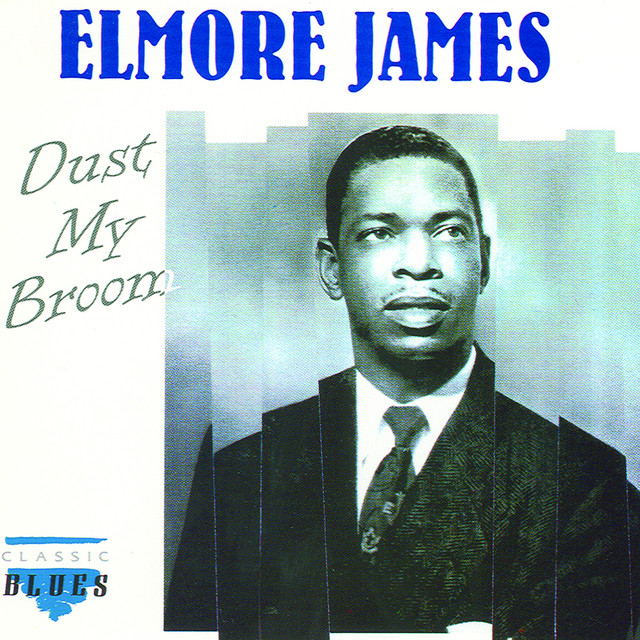
There are recordings in the history of American music that open doors — performances so original, so technically decisive, so emotionally immediate, that everything that came before them can be heard differently afterward, and everything that came after them carries their imprint. Elmore James's recording of "Dust My Broom," made on August 5, 1951, at Ivan Scott's Radio Service Studio in Jackson, Mississippi, for Lillian McMurry's Trumpet Records, is one of those recordings. Three minutes of electric slide guitar playing that launched the most imitated riff in the history of the blues — a riff so instantly distinctive that its opening notes announce themselves with the authority of something inevitable, something that had always been waiting to be played.
The Blues Foundation, which inducted the recording into its Hall of Fame in the first year of balloting for singles, confirmed the scale of the historical response with a precise observation: "more votes were cast for 'Dust My Broom' than for any other record." The Library of Congress added it to the National Recording Registry in 2013, in recognition of its cultural, historical, and aesthetic significance. The Rock and Roll Hall of Fame inducted Elmore James among its Early Influences in 1992, with the Trumpet recording at the centre of the case for his inclusion. And Rolling Stone, in its various lists of the greatest guitar recordings and greatest guitarists, has consistently placed James and this recording in the highest tier of the blues tradition.
All of this institutional recognition rests on a single session — one song recorded in one take, the only recording James ever made for Trumpet Records, produced under circumstances that became the subject of a blues mythology that the documentary evidence would eventually need to correct. The story of how "Dust My Broom" came to be recorded is inseparable from the story of the song itself, of the musicians who played it, and of the woman who created the conditions for it to be captured.
The Song's Origins: From "I Believe I'll Dust My Broom" to "Dust My Broom"
Before examining the 1951 recording session, it is essential to understand the layered history of the song itself — a history that begins with Robert Johnson and extends back even further into the pre-war blues tradition.
Robert Johnson recorded "I Believe I'll Dust My Broom" at his first recording session in San Antonio on November 23, 1936. The song was released on Vocalion Records and became one of the more commercially successful of Johnson's releases — modest by later standards, but sufficient to circulate the song through the juke joints and roadhouses of the Mississippi Delta. Johnson's version is built on a picking guitar pattern in open A tuning, his voice and guitar intertwined in the complex, multi-layered style that distinguished his best recordings.
But the phrase "dusting the broom" and the associated musical ideas predate Johnson. Kokomo Arnold had recorded "Sagefield Woman Blues" with a similar broom metaphor; "I'll Dust My Broom," in various forms, appears to have been floating in the shared pool of Delta blues material that musicians drew from, adapted, and personalised throughout the 1920s and 1930s. Johnson's specific version crystallised one form of the song, but it did not originate the underlying material.
The phrase "dust my broom" has been interpreted in multiple ways — as a sexual metaphor, as a reference to cleaning up and moving on, as a general expression of departure and renewal. The Blues Foundation's account notes that "general consensus is that it simply symbolizes moving on and making a new start," though the sexual interpretation has its advocates and the ambiguity may be intentional. Johnson's use of the phrase carried a sense of decisive action — the narrator is going to do something definitive, to make a clean break, to leave and not look back — and this sense of emotional resolution gave subsequent versions of the song their dramatic focus.
Arthur "Big Boy" Crudup, who had recorded for the same Bluebird label as Johnson and who was one of the significant links in the chain of transmission between the pre-war blues and the electric post-war styles, recorded his own version of "Dust My Broom" in 1949. The Songfacts account of the recording notes: "In 1949, Crudup did a version of 'Dust My Broom' and it seems likely that this is how Elmore got to know the song." This observation is historically important: Elmore James's path to the song may have run not directly from Robert Johnson's 1936 recording but through Crudup's 1949 adaptation, a chain of transmission that connects the song's Delta origins to its post-war electric context.
Elmore James had met Robert Johnson — or at least this has been claimed. The biographical accounts are not entirely consistent on this point, but what is clearly established is that James knew and was influenced by Johnson's music, and that by the early 1950s his version of "Dust My Broom" was already celebrated throughout the Delta as something exceptional. The Blues Foundation account is direct: the song "was 'celebrated throughout the Delta by this time'" when Lillian McMurry heard it.
The Man: Elmore James Before "Dust My Broom"
Elmore James was born on January 27, 1918, near Richland, Mississippi, to a sixteen-year-old mother named Leanna Brooks. His stepfather was Joe Willie James, from whom he took his surname. He grew up in Holmes County, Mississippi, in conditions of rural poverty that were the common experience of African American farm families in the Delta during the 1920s and 1930s.
Like so many Delta bluesmen, he taught himself music on improvised instruments — the one-string diddley-bow that boys across the Delta made from a broom wire nailed to the side of a house or barn, the instrument that served as a first guitar for anyone without access to or money for the real thing. From the diddley-bow he progressed to a cigar-box guitar, and eventually to the actual guitar that he would develop into one of the most distinctive slide instruments in the history of the blues.
His introduction to the slide guitar technique — placing a glass, metal, or ceramic object across the strings to create the singing, sliding tones that distinguish the style — came through the usual channels: watching other musicians, listening to records, absorbing what he could from anyone willing to show him. He cited several musicians as early influences, and the network of personal connections that sustained the Delta blues tradition was the medium through which his education proceeded.
The connection to Sonny Boy Williamson II (Rice Miller) was the most consequential personal relationship in James's early musical development. By the late 1940s, James was working with Williamson on the radio broadcasts that Williamson had been making from Helena, Arkansas, and West Memphis since the founding of King Biscuit Time in 1941. He appeared on Williamson's programmes, played with his band, and developed the performing skills that would eventually translate to the recording studio. As the Living Blues account documents: Williamson asked James, along with Joe Willie Wilkins, pianist Willie Love, and drummer Joe Dyson, to accompany him on his first Trumpet recording session on January 4, 1951.
The January 1951 session — which produced Williamson's debut single "Eyesight to the Blind" backed with "Crazy About You Baby" — was James's introduction to the recording studio environment. He played guitar on those sides as a sideman, not as a featured artist, but the experience familiarised him with the Trumpet operation and with Lillian McMurry's approach to recording. During the months that followed, James continued to accompany Williamson on Trumpet sessions and to back Willie Love on his own Trumpet recordings.
By August 1951, the stage was set for the recording that would transform his career.
Lillian McMurry and Trumpet Records
The woman who made the recording happen was Lillian McMurry — one of the most remarkable figures in the history of American independent record production. Born Lillian Shedd in 1921 and married to Willard McMurry, she had stumbled into the record business through an improbable route: her husband's hardware store, in the process of being converted into a furniture showroom, had workers playing records that had been left behind, and one of those records — Wynonie Harris's "All She Wants to Do Is Rock" — transfixed her. Within months she had established the Record Mart at 309 North Farish Street in Jackson, Mississippi, and within a year she had founded Trumpet Records to document the musicians she was discovering through her retail operation.
McMurry's management of Trumpet Records was characterised by unusual personal integrity — she paid royalties, maintained genuine relationships with her musicians, and treated the blues artists she worked with as professional partners rather than disposable commercial resources. Sonny Boy Williamson's tribute to her — two songs specifically written about her, including "309" (which gave out her home phone number in its lyrics) — speaks to the quality of the personal relationship that her fair dealing created.
Her approach to the James recording session was, by her own account, straightforward. The McMurry producing approach — as described in Marc Ryan's detailed history Trumpet Records: An Illustrated History with Discography — was practically minded and efficient. She used Ivan Scott's Radio Service Studio and its "Sonic Disc process," a direct-to-disc technology that had specific limitations. As Marc Ryan reported: "In his studio, Ivan Scott employed the Sonic Disc process, a direct-to-disc technology developed by a small company in Freeport, New York. It had none of the advantages of the still-new tape recorder, and its deficiencies were more apparent the larger the band. The Sonic process did yield recordings with very warm and deep midrange, and on small combo recordings of three or four instruments, it served well."
This technical detail is important: the direct-to-disc process meant there was no tape to edit, no multiple takes to choose from after the fact. What was recorded was what was released — or, if it was rejected, the disc was discarded and the cost absorbed. This technological constraint gave the Trumpet recordings their characteristic immediacy but also meant that every performance had to be as complete and as right as possible at the moment of recording.
The Legend and the Reality: Was James Tricked?
The mythology surrounding the August 5, 1951 session has proven more durable than the facts would warrant. According to the account preserved by music critic Robert Palmer and accepted by many subsequent writers, James was reluctant to record at all — nervous about the studio, unwilling to commit his celebrated "Dust My Broom" performance to disc — and was effectively tricked into a recording by McMurry and Williamson, who had the tape running while James thought he was merely rehearsing.
The Songfacts account of the recording states: "Urban legend has it that Elmore was tricked into recording the song by McMurry, though Franz' research gives a somewhat different account of the events that date — Lillian was adamant that Elmore was complicit in the recording."
The Living Blues documentation is more specific and ultimately more convincing. The publication notes that McMurry "secretly" recorded "Dust My Broom" and that James found this so upsetting he was unable to record a B-side. However, as Living Blues reported: "This was proven false when Mrs. McMurry produced the August 4, 1951, contract and check that James signed before the session." A contract signed the day before the recording, and a check that was cashed, constitute documentary evidence that James was a fully consenting participant in the session. McMurry herself set the record straight: "Elmore was supposed to have been getting another side to record, but he just couldn't come up with it."
What the legend preserves, beneath its inaccurate surface, is something emotionally true: James's complicated relationship with the recording studio, his awareness that what he was about to commit to disc was something of exceptional quality, and his inability to produce comparable material for the B-side. The reality is that he signed a contract and cashed a check, walked into the studio with Sonny Boy Williamson and the rhythm section, played "Dust My Broom" with the full commitment of a musician who understood what he had, and produced a recording of such singular quality that it required nothing more to justify the session.
The failure to produce a B-side had a comical consequence that confirmed McMurry's practical resourcefulness. Since James had only recorded one side and Trumpet needed a two-sided single, McMurry substituted another artist — Bobo "Slim" Thomas — for the flip side, crediting him as "Elmo James" to match the A-side artist credit. The Wikipedia article on the album confirms: "he only recorded this one song and so Trumpet had to use another artist (Bobo Thomas) posing as 'Elmo James' on the flip side ('Catfish Blues')." This substitution was entirely standard practice in the independent label world of the early 1950s, where the commercial necessity of filling both sides of a single often required creative solutions.
The Session: August 5, 1951, Jackson, Mississippi
The session took place at Ivan Scott's Radio Service Studio — not, in those days, a purpose-built recording facility but essentially the back room of a radio repair shop that had been adapted for recording use. The recording equipment was Scott's Sonic Disc system, which recorded directly to disc rather than to magnetic tape. The resulting discs were then used to press the commercial releases.
The personnel are confirmed by the Blues Foundation's Hall of Fame documentation, which provides the definitive statement: "Elmore James, vocal and guitar; Sonny Boy Williamson No. 2 (Rice Miller), harmonica; Leonard Ware, bass; Frock Odell, drums. Recorded August 5, 1951, Jackson, Mississippi."
The Jas Obrecht account from Talking Guitar adds a slight disambiguation to the bass player credit: "Odie Johnson or Leonard Ware on bass" — reflecting some uncertainty in the historical record. The Blues Foundation's attribution of Leonard Ware is the more widely accepted, and it is confirmed by his documented presence on Sonny Boy Williamson's Trumpet sessions of the same period.
Elmore James (vocal and guitar) had been playing the song in public for years before this session — the Living Blues documentation notes it had been "celebrated throughout the Delta" by 1951. His guitar was tuned to open A or open D tuning — standard slide guitar tunings that allow a single bar or bottleneck to produce a complete chord when pressed across all six strings. The exact tuning of the August 5 recording has been analysed by subsequent musicians and scholars, with open A generally considered the more likely.
The electric guitar he used — and the specific amplifier through which it was played — are not documented with precision in any source consulted. What is clear is that the combination of his guitar, whatever amplifier he used, and the Sonic Disc recording process produced a sound of unprecedented impact: the stinging, singing slide tone that announced a new era of electric guitar expression.
Sonny Boy Williamson II (Rice Miller, harmonica) was the musician whose relationship with McMurry had created the circumstances for the session. Williamson's King Biscuit Time broadcasts from KFFA in Helena had made him the most famous blues musician in the Mississippi Delta by 1951, and his harmonica style — complex, rhythmically sophisticated, with a singer's sense of melodic development — was the perfect complement to James's guitar. On "Dust My Broom," Williamson's harmonica occupies a secondary role relative to the guitar and vocal, providing rhythmic fills and brief harmonic commentary rather than taking an equal share of the melodic foreground. But his presence gives the recording a quality of ensemble that a guitar, bass, and drums alone could not have achieved — the harmonica adds a human tonal warmth that connects the machine-made sounds of the guitar amplifier to the acoustic tradition from which both musicians came.
Leonard Ware (bass) was a Chicago bassist who had been working in the Jackson music scene and who was a regular presence on Trumpet sessions. His bass playing on "Dust My Broom" has the quality of a musician who understands the role of the bass in a small ensemble blues recording: to provide harmonic grounding and rhythmic foundation without crowding the melodic foreground. The direct-to-disc recording process captured his bass with the warm, round midrange quality that the Sonic Disc system was specifically good at reproducing, giving the bottom of the recording a physical presence that supported James's guitar without competing with it.
Frock Odell (drums) — "Frock" being a nickname, his given name not preserved in the available documentation — was another musician associated with the Trumpet sessions who had appeared on Williamson's recordings. His drumming on "Dust My Broom" is minimal and direct: a steady rhythm that keeps the ensemble organised without adding anything unnecessary. The simplicity of the drum part is a creative choice as much as a technical limitation — on a recording this focused on a single instrumental voice (James's slide guitar), elaborate drumming would have been a distraction, and Odell's restraint serves the music's priorities.
The Recording: What Happened When They Played
The recording of "Dust My Broom" that emerged from the August 5, 1951 session is, in technical terms, one of the most carefully imitated performances in the history of the electric guitar. The opening riff — those descending slide notes that announce the song with an authority that no subsequent imitation has quite matched — has been transcribed, analysed, slowed down, and played back at every speed and in every context by musicians trying to understand exactly what James was doing with his slide guitar on that day in Jackson.
The riff descends from the high strings to the low strings in a cascading series of notes, the slide moving across the guitar's neck with a speed and precision that suggests a musician playing something so thoroughly internalised that it has become reflexive — not thought, just done. The specific tone of the slide — the way each note has a slight portamento quality, sliding into its target pitch rather than arriving at it directly — was the product of decades of practice and the specific combination of guitar, amplifier, and playing technique that James had developed.
The Library of Congress documentation, which added the recording to the National Recording Registry in 2013, describes the slide guitar performance as "what would become the most imitated of all slide guitar" openings. This assessment is confirmed by every musician who has seriously studied the recording: the riff is simultaneously simple enough to be learnable and complex enough in its execution that reproducing it with James's specific quality of tone and timing is a genuine challenge. Countless guitarists have played it; very few have played it the way James played it.
The vocal performance matches the guitar in its authority and directness. James sings the "I believe, I believe I'll dust my broom" lyric with the confident delivery of someone who has performed the song hundreds of times and knows exactly where every phrase is going. His voice has the quality that the Delta blues tradition demanded — raw but controlled, emotionally direct without being theatrically exaggerated, the feeling communicated through tone rather than through technical manipulation of the voice. He bends notes in the same way the slide bends guitar notes, the vocal and the instrumental voice inhabiting the same aesthetic universe.
The song's structure is not a conventional 12-bar blues but something slightly compressed and adapted — the verses are shorter, the turnarounds more abrupt, the whole arrangement designed to keep the slide guitar riff at the centre and the other elements in service of it. Williamson's harmonica appears between vocal phrases rather than taking an extended solo, and the rhythm section maintains its steady drive without calling attention to itself. The result is a recording whose energy and focus are entirely directed toward the slide guitar — everything else serves that single voice.
Commercial Success and Chart History
The commercial response to "Dust My Broom" confirmed what everyone who had heard James play the song in the Delta had already understood: this was something exceptional. The Blues Foundation's Hall of Fame entry confirms the trajectory: the record was "the only release on the Trumpet label to ever reach Billboard's national R&B charts (in April 1952)."
The specific Billboard position — number nine on the "Best Seller" chart — was remarkable for a small independent label from Jackson, Mississippi, with limited national distribution infrastructure. Trumpet's distribution network, which stretched primarily through the South and Southwest, was not equipped to service the national market that a Billboard chart position implied. Yet the record had penetrated that market anyway, through the radio airplay and jukebox distribution mechanisms that operated in parallel with retail distribution to carry records across the country.
The Mississippi Blues Trail marker at 309 North Farish Street confirms the regional context: "Trumpet Records was the first record company in Mississippi to achieve national stature through its distribution, sales, radio airplay and promotion." The Elmore James recording was the specific event that earned this distinction for the label — its chart success giving Trumpet its first national profile and confirming that the music being documented in Jackson, Mississippi, was commercially competitive with anything being produced in Chicago, New York, or Los Angeles.
The scale of what this success meant for James personally was complicated by his complicated relationship with the music business. He was, at the time of the recording's chart success in April 1952, still working at Holston's radio repair shop in the Delta — one account identifies his employer as a radio shop connected to the McMurry operation. The money from the Trumpet recording was modest: a session fee and a check for the contract, with no royalty arrangement that would have generated significant ongoing income from chart success. The commercial windfall flowed primarily to the label rather than to the artist — a pattern entirely consistent with the business practices of the small independent label world of the early 1950s.
The Aftermath: The Riff That Never Stopped
The career that "Dust My Broom" launched was one of the most influential in post-war electric blues. James formed his band the Broomdusters in 1952, the name itself acknowledging the single recording on which his reputation was built. He moved to Chicago, where he recorded extensively for the Meteor and Flair labels in the mid-1950s, and subsequently for the Fire, Fury, and Enjoy labels in the late 1950s and early 1960s. He recorded more than fifty sides in Chicago, New York, and New Orleans between 1959 and 1963.
He also recorded the song itself — or songs directly derived from it — multiple times throughout his career. The bibliography of Elmore James versions and variations of "Dust My Broom" is extensive, and each new recording added something to the song's history while demonstrating that the riff remained as powerful in 1963 as it had been in 1951. The compulsive return to the same material was not commercial calculation but artistic honesty: this was the song that most completely expressed what James was as a musician, and he could not leave it alone.
He died on May 24, 1963, in Chicago, of a heart attack, at the age of forty-five. His death came just as the British blues revival was beginning to bring his music to international audiences through the young rock musicians who were absorbing every American blues record they could find. He did not live to see the extent of what he had started.
The influence of "Dust My Broom" — and specifically of the opening riff that James played on August 5, 1951 — on subsequent electric guitar playing is so extensive that mapping it comprehensively would require a separate essay. The most direct transmission came through the musicians who heard the Trumpet recording in the 1950s and built their guitar approaches on its foundation. Buddy Guy, B.B. King, and Albert King all absorbed the James influence in their formative years. In Britain, the young Eric Clapton, Jeff Beck, and the Rolling Stones' Brian Jones heard James's recordings through the import market and made the slide guitar riff a central element of the British blues revival sound.
Jeremy Spencer of Fleetwood Mac built his entire early repertoire on Elmore James material, performing the song and its descendants with a fidelity to the original that was simultaneously tribute and imitation. The Allman Brothers Band incorporated the slide guitar tradition — rooted directly in James through their guitarist Duane Allman — into the Southern rock synthesis that became one of the defining sounds of American popular music in the early 1970s. Bonnie Raitt's slide guitar approach was shaped by James's technique and his recordings. Johnny Winter recorded "Dust My Broom" and made it a cornerstone of his own slide guitar vocabulary.
The Library of Congress citation for the National Recording Registry addition in 2013 captures the essential historical claim: the recording ushered in "a new era of electric slide guitar." The term "new era" is not hyperbole. Before August 5, 1951, the electric guitar was being used in the blues in various ways, but none of them had quite this quality — this combination of raw power, technical precision, and emotional immediacy that the slide could produce through amplification when a musician of James's specific gifts applied it. After August 5, 1951, every subsequent blues and rock guitarist who picked up a slide was working in the shadow of what had been accomplished in a radio repair shop in Jackson, Mississippi, on a hot summer day.
Conclusion: The Right Song, the Right Moment, the Right Musician
"Dust My Broom" reached Elmore James through a chain of transmission that ran from the earliest blues tradition through Robert Johnson's 1936 recording and Arthur "Big Boy" Crudup's 1949 version. It came to Lillian McMurry's studio through the network of personal relationships — James with Sonny Boy Williamson, Williamson with McMurry — that the Mississippi Delta blues world maintained. It was recorded with a direct-to-disc technology that captured its warm, singing, stinging sound with a directness that tape might or might not have replicated.
And it was released as "Elmo James," on Trumpet 146, with a B-side by another artist entirely — the only recording James ever made for the label, the only Trumpet record to reach the national Billboard chart, the most imitated slide guitar recording in the history of the blues.
The Blues Foundation, in inducting it into the Hall of Fame, noted that "in the first year of Hall of Fame balloting for Singles, more votes were cast for 'Dust My Broom' than for any other record." That collective verdict reflects something that every serious musician who has listened to the recording already knows: that what Elmore James did on August 5, 1951, was not merely a commercial recording or a historical document, but a musical event of the highest order — a performance so complete and so right that it could not be improved, only imitated, by every musician who came after it.
For a complete in depth look at Elmore James please see this article Elmore James: King of the Slide Guitar
Suggested Reading
 Buy from Amazon The Amazing Secret History of Elmore James
Selected Discography
 Buy from Amazon Dust My Broom
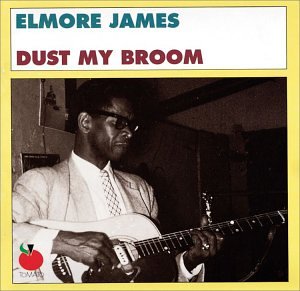
"Dust My Broom" (Elmore James, based on Robert Johnson's "I Believe I'll Dust My Broom," 1936). Recorded August 5, 1951, Ivan Scott's Radio Service Studio, Jackson, Mississippi. Released as Trumpet 146 as by "Elmo James." Personnel: Elmore James (vocal, electric slide guitar); Sonny Boy Williamson No. 2 / Rice Miller (harmonica); Leonard Ware (bass); Frock Odell (drums). Produced by Lillian McMurry. Reached #9 on the Billboard R&B "Best Seller" chart, April 1952. Inducted into the Blues Foundation Hall of Fame. Added to the Library of Congress National Recording Registry, 2013. Elmore James inducted into the Rock and Roll Hall of Fame, 1992 (Early Influences).