“Sweet Little Angel” is one of B.B. King’s signature mid-1950s recordings and a cornerstone of his early catalog. A sensual mid-tempo blues, it became a major R&B hit and later a highlight of his legendary live performances.
Recording Session and Production
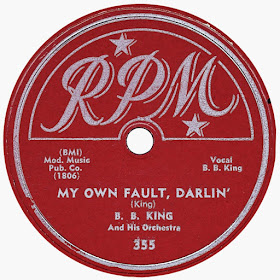
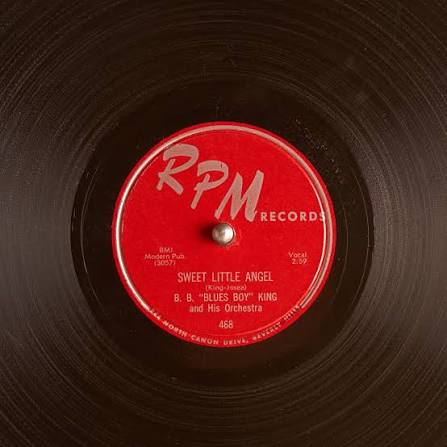
B.B. King recorded “Sweet Little Angel” in April or May 1956 (sources place the session in Little Rock, Arkansas, or related dates). It was released in August 1956 on RPM Records (RPM 468), backed with “Bad Luck.” The single reached No. 8 on the Billboard R&B chart.
Production is associated with the Bihari organization (Modern/RPM). Florette Bihari is often credited as producer on album reissues. An earlier version was cut in November 1955 but not released until later compilations; the 1956 single is the definitive commercial take. King re-recorded it for his 1957 debut album Singin’ the Blues.
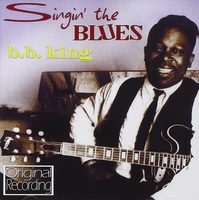 Buy from Amazon Singin’ the Blues
The most celebrated version appears on the 1965 live album Live at the Regal (recorded November 21, 1964, at Chicago’s Regal Theater), produced by Johnny Pate.
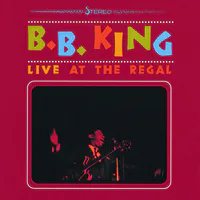 Buy from Amazon Live At The Regal
Musicians (1956 Studio Version)
- B.B. King: vocals and guitar
- Millard Lee: piano
- Jymie Merritt: bass
- Ted Curry: drums
- Lawrence Burdine: alto saxophone
- Johnny Board: tenor saxophone
- Floyd Newman: baritone saxophone
- Kenny Sands: trumpet
The arrangement features a full horn section that gives the track a polished, urban R&B flavor while still centering King’s guitar and voice.
Songwriters
The song is officially credited to B.B. King and Jules Taub (a pseudonym for Jules Bihari of the Bihari brothers). Some early labels list “King–Josea” (Joe Josea being another Bihari pseudonym). As was standard practice at Modern/RPM, label owners frequently received co-writing credits.
The song’s roots run much deeper. It originated as “Black Angel Blues,” first recorded in 1930 by classic female blues singer Lucille Bogan. Tampa Red adapted it in the 1930s/1950s, retitling a version “Sweet Little Angel.” Robert Nighthawk’s 1949 electric slide-guitar version (“Sweet Black Angel” or “Black Angel Blues”) was particularly influential on King.
King himself explained the adaptation: he drew the idea from Nighthawk’s recording, then changed the title from “Sweet Black Angel” to “Sweet Little Angel” because, in the mid-1950s, the word “black” was not commonly used in that positive sense. He later learned of the earlier Bogan and Tampa Red versions. King’s lyric retains the core imagery of a devoted, generous lover while updating the delivery for the electric R&B era.
The lyric is a warm, affectionate tribute:
“I’ve got a sweet little angel
I love the way she spreads her wings
Yes, when she spreads her wings around me
I gets joy and everything”
It continues with classic blues themes of loyalty, generosity (“asked my baby for a nickel / and she gave me a twenty-dollar bill”), and fear of loss.
Musical Style and Analysis
“Sweet Little Angel” is a medium-tempo 12-bar blues with a relaxed yet swinging feel, often in a 12/8 shuffle. The 1956 studio version is polished and horn-driven, reflecting the West Coast R&B sound that defined much of King’s RPM period. The horns provide steady, supportive riffs and fills, while the rhythm section locks into a solid groove.
King’s guitar work is central. His note-bends and vibrato already sound highly developed—smooth, vocal-like, and almost steel-guitar in places. The fills answer his vocal lines with precision and warmth rather than aggression. His singing is tender and conversational, conveying genuine affection rather than the raw urgency of some of his harder blues.
The Live at the Regal version is more expansive and interactive. King’s guitar is more fluid and patient, the band tighter and more dynamic, and the audience response becomes part of the performance. The live arrangement highlights how King could stretch a song, using dynamics, call-and-response, and Lucille’s singing tone to elevate a studio hit into a concert centerpiece.
Other Versions and Covers
Notable versions include:
- Lucille Bogan (1930 original as “Black Angel Blues”)
- Tampa Red
- Robert Nighthawk (1949)
- Earl Hooker
- B.B. King’s own studio and multiple live recordings (especially Live at the Regal)
- Later covers and interpretations by numerous blues and rock artists
Legacy
“Sweet Little Angel” helped solidify B.B. King’s reputation as a major R&B artist in the mid-1950s. It is included in the Rock and Roll Hall of Fame’s list of “500 Songs That Shaped Rock and Roll.” Robert Nighthawk’s related version was inducted into the Blues Hall of Fame.
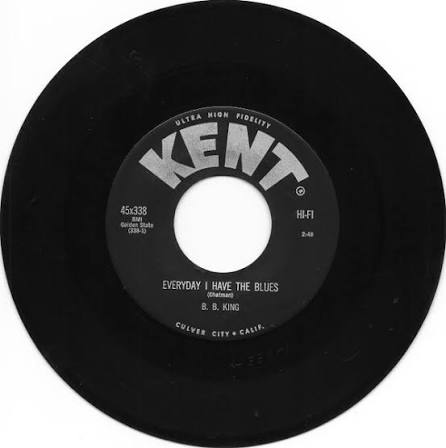
The song remains a staple of King’s live sets throughout his career and a favorite among blues guitarists for its melodic soloing opportunities. It exemplifies King’s gift for taking traditional material, refining it with sophisticated guitar and band arrangements, and turning it into something personal and commercially successful. Along with tracks like “Three O’Clock Blues” and “Every Day I Have the Blues,” it forms a core part of the foundation of modern electric blues.