“Why I Sing the Blues” stands as one of B.B. King’s most powerful and socially conscious statements. Released in 1969, it marked a turning point in his career—updating his sound with a younger, rock-influenced session band while delivering a sweeping historical and personal explanation of the blues as the soundtrack of Black American experience.
Recording Session and Production
The definitive studio version was recorded in January 1969 at The Hit Factory in New York City. Producer Bill Szymczyk (who would later produce the Eagles and other major rock acts) was instrumental in modernizing King’s sound. He paired King with a crack team of young New York session players rather than his usual touring band, creating a more contemporary, driving feel.
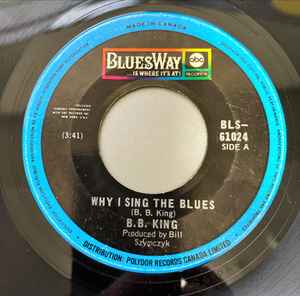
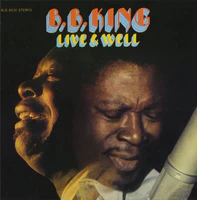
Engineers included Joe “Ears” Zagarino and Szymczyk himself. The full-length studio take (approximately 8:38) appears on the album Live & Well (BluesWay/ABC, 1969), which mixed live and studio material. A shorter single edit was released in April 1969 on BluesWay 45-61024 (backed with “Friends”). The single spent 14 weeks on the Billboard R&B chart (peaking at No. 13) and reached No. 61 on the Hot 100, giving King valuable crossover exposure.
King had recorded an earlier, unreleased version in Chicago in 1968 and had used a similar title for a different song in 1956.
Musicians
- B.B. King – vocals and lead guitar
- Hugh McCracken – rhythm guitar
- Gerald “Fingers” Jemmott – bass
- Paul Harris – piano/keyboards
- Herbie Lovelle – drums
- Al Kooper – additional piano (on some accounts of the session)
Jemmott’s deep, pulsating bass lines are particularly central to the track’s groove and energy.
Songwriters
The song is co-written by B.B. King and Dave Clark. This Dave Clark was a veteran music promoter, journalist, and songwriter (1909–1995), not the British drummer of the Dave Clark Five. Clark had a long association with Black music, later working extensively with Malaco Records and other labels. He contributed lyrics and conceptual structure that helped shape the song into a broad historical narrative.
King’s contribution is deeply personal and authoritative. The lyric traces the blues from the Middle Passage through slavery, Reconstruction, the Great Migration, urban poverty, and the welfare system of the late 1960s. It is one of the most explicit socio-historical statements in King’s catalog:
The song opens with the experience of being brought to America in chains and moves through generations of hardship, discrimination, and resilience. King frames the blues not merely as personal sorrow but as the collective voice of a people who have “paid their dues.” The refrain—“Everybody wants to know why I sing the blues”—is answered with lived history rather than simple heartbreak.
This collaboration allowed King to expand beyond the more intimate relationship-focused themes of many earlier hits into a broader cultural statement, while still retaining his signature emotional directness.
Musical Style and Analysis
“Why I Sing the Blues” is a mid-tempo to uptempo electric blues with a strong, funky undercurrent. The arrangement is driven by Jemmott’s insistent bass and a tight rhythm section that gives the track a modern, almost rock-soul propulsion uncommon in King’s earlier work.
King’s guitar playing is fiery and expansive. On the long album version he takes extended solos that build in intensity, using his trademark string bends, vibrato, and vocal-like phrasing to underscore the lyric’s emotional weight. The guitar does not merely fill space—it comments on and amplifies the historical narrative.
Vocally, King is both preacher and storyteller. His delivery is passionate and urgent, rising and falling with the story’s emotional arc. The structure allows for multiple verses that accumulate historical detail, creating a cumulative power rare in three-minute singles. The longer album cut gives the song room to breathe and develop, making it feel like a blues epic.
The production by Szymczyk is clean yet powerful, capturing the energy of the young session players while keeping King’s voice and guitar firmly in the foreground. The result is a bridge between traditional blues and the more progressive blues-rock sounds of the late 1960s.
Buy The Album
 Buy from Amazon Live & Well
Other Versions and Covers
Notable versions include:
- The original long studio version on Live & Well (1969)
- The shorter single edit
- Multiple live performances by King throughout the 1970s and beyond (including notable festival and television appearances)
- Aretha Franklin’s cover (1970)
- Later collaborative versions, including a 2010 recording with Vince Gill, Keb’ Mo’, Jonny Lang, and Lee Ritenour on Ritenour’s 6 String Theory album
- Frequent inclusion on King compilations and live sets
Legacy
“Why I Sing the Blues” was inducted into the Blues Hall of Fame as a Classic of Blues Recording. It remains one of the most important songs in King’s catalog for its combination of musical excellence and social consciousness. The track helped establish the productive partnership with Bill Szymczyk that would soon yield the career-defining “The Thrill Is Gone.”
More than a personal lament, the song functions as a concise history of the blues and of African-American struggle, delivered with the authority of a man who had lived much of that history. It stands as a high-water mark of King’s late-1960s artistic rebirth and continues to resonate as both a powerful blues performance and a cultural document.