“Rock Me Baby” is one of B.B. King’s most enduring and widely covered songs—a mid-tempo blues standard that became his first major crossover hit and a guitarists’ favorite. Released in 1964, it remains a staple of the blues repertoire.
Recording Session and Production
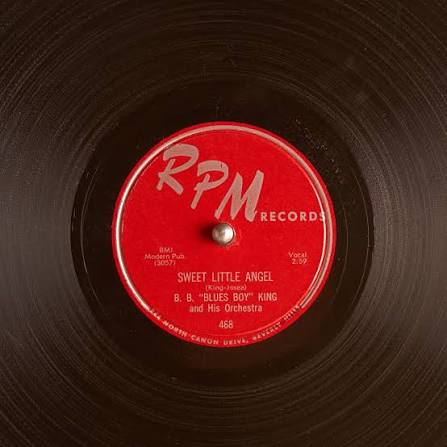
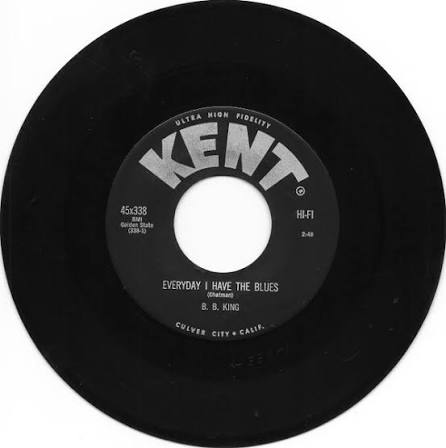
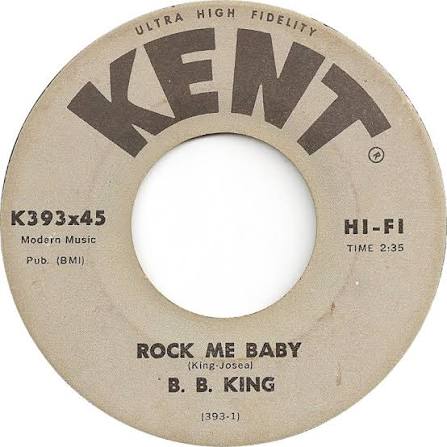
The exact recording date is uncertain. Sources place it in Los Angeles sometime between approximately 1958 and before January 14, 1962 (when King signed with ABC-Paramount). Kent Records (the Bihari brothers’ label, successor to RPM) held unreleased masters and issued the track as a single in May 1964 (Kent 393), backed with “I Can’t Lose.” It appeared on the album Rock Me Baby the same year.
Production is attributed to the Bihari organization. Joe Bihari (Kent co-owner) recalled Maxwell Davis as the pianist and a frequent collaborator/arranger for King. Other suggestions for the piano role include Lloyd Glenn or Jimmy McCracklin, but Davis is the most commonly cited.
The single reached No. 34 on the Billboard Hot 100—King’s first Top 40 pop hit—and performed strongly on the R&B charts. It was later re-recorded by King with Eric Clapton for the 1997 album Deuces Wild.
Musicians
Precise session credits are incomplete, but the core is:
- B.B. King: vocals and lead guitar
- Piano: most likely Maxwell Davis (per Joe Bihari); alternatives suggested include Lloyd Glenn or Jimmy McCracklin
- Supporting rhythm section and possible horns typical of King’s late-1950s/early-1960s West Coast sessions (bass, drums, and occasional sax)
The arrangement is tight and punchy, with prominent piano and King’s signature guitar fills.
Songwriters
The song is officially credited to B.B. King and Joe Josea. Joe Josea was a pseudonym used by Joseph Bihari (one of the Bihari brothers). As with many Modern/RPM/Kent releases, label owners often received co-writing credit.
The composition is a clear adaptation of Lil’ Son Jackson’s 1951 solo acoustic blues “Rockin’ and Rollin’.” King’s lyrics are nearly identical to Jackson’s, though the musical setting differs sharply—Jackson’s is a sparse, one-man performance, while King’s is a full ensemble piece. Earlier antecedents exist: Curtis Jones’s 1939 “Roll Me Mama” shares phrases such as “like a wagon wheel” and “ain’t got no bone.”
King himself has indicated that certain Bihari-credited songs were essentially his own compositions, with the co-credit reflecting standard industry practice of the era rather than substantial collaborative writing. The lyric is a direct, sensual plea:
“Rock me baby, rock me all night long
Rock me baby, honey, rock me all night long
I want you to rock me baby, like my back ain’t got no bone”
It continues with classic blues imagery of rolling “like a wagon wheel” and requests for slow, satisfying rocking. The straightforward sexual invitation and memorable phrasing made it highly adaptable.
Musical Style and Analysis
“Rock Me Baby” is a medium-tempo 12-bar blues in the key of C, in 4/4 time. The groove is relaxed yet insistent, with a strong, repeating riff that underpins the song. King’s guitar work is the standout feature: short, biting fills and solos that answer his vocal lines, full of his characteristic vibrato, precise bends, and melodic economy. The guitar is both rhythmic and lead, creating a call-and-response dialogue with the voice.
The piano provides a solid, rolling foundation that complements the guitar without overcrowding it. King’s vocal delivery is warm, slightly behind the beat, and conversational—more inviting than aggressive—giving the song a cheerful, disciplined sensuality. The arrangement is clean and radio-friendly for its time, bridging traditional blues structure with a polished West Coast R&B sensibility. This balance of earthiness and accessibility helped it cross over to the pop charts while remaining authentic blues.
Other Versions and Covers
The song rapidly became a standard. Notable versions include:
- Muddy Waters – influential earlier and later interpretations (his “Rock Me” from the mid-1950s is closely related)
- Otis Redding (1965, on Otis Blue)
- Jimi Hendrix Experience – dramatic, sped-up live version at the 1967 Monterey Pop Festival (a showcase for Hendrix’s radical guitar approach)
- The Animals, Jeff Beck (“Rock My Plimsoul”), Blue Cheer, Johnny Winter, Ike & Tina Turner, Hot Tuna, and many others
- King’s own 1997 duet with Eric Clapton
Legacy
“Rock Me Baby” was inducted into the Blues Hall of Fame in 2022 as a Classic of Blues Recording – Single. It was King’s first significant pop crossover success and helped establish him with wider audiences in the mid-1960s. Its simple, riff-driven structure and space for expressive guitar made it a favorite vehicle for blues and rock guitarists.
The song’s journey—from Lil’ Son Jackson’s sparse original through King’s definitive ensemble version to countless reinterpretations—illustrates the folk process of the blues. It remains a required number in the repertoires of blues bands worldwide and a highlight of King’s catalog, showcasing both his songcraft and his unmatched ability to turn a straightforward blues into something personal and enduring.