“Paying the Cost to Be the Boss” is one of B.B. King’s sharpest, most assertive mid-career statements. Released in 1968, it captures him at a confident peak—both as a songwriter and as a commanding bandleader—delivering a no-nonsense declaration of independence and authority in a relationship.
Recording Session and Production
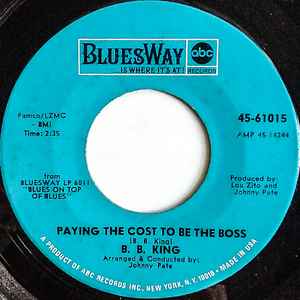
The song was recorded in 1967–1968 for BluesWay Records (an ABC subsidiary dedicated to blues). It appears on the album Blues on Top of Blues (BluesWay, 1968) and was issued as a single (BluesWay 45-61015) in March 1968, backed with “Having My Say.”
Producers: Johnny Pate and Lou Zito
Arranger/Conductor: Johnny Pate
Pate’s sophisticated big-band-style arrangements were a hallmark of King’s BluesWay period, giving the records a polished, urban R&B/jazz-blues sheen while still leaving room for King’s guitar and voice to dominate. The single reached No. 39 on the Billboard Hot 100 and performed strongly on the R&B charts, becoming one of King’s notable late-1960s hits.
Musicians
The session featured King’s working band augmented by a strong horn section under Pate’s direction:
- B.B. King – vocals, guitar (and possibly piano)
- Duke Jethro – organ
- Leo Lauchie – bass
- Sonny Freeman – drums
- Billy Butler – guitar (on some accounts)
- Horns:
- Trumpets: Hobart Dotson, John Browning, Henry Boozier
- Trombone: Pluma Davis
- Alto saxophone: Lawrence Burdine
- Tenor saxophone: Johnny Board
- Baritone saxophone: Barney Hubert
This lineup delivered a tight, punchy sound that balanced King’s blues phrasing with sophisticated horn charts.
Songwriters
Unlike many of King’s earlier hits that involved Bihari-family pseudonyms or adaptations of older material, “Paying the Cost to Be the Boss” is credited solely to B.B. King. He wrote both the music and the lyrics.
The song is a classic example of King’s mature songwriting: direct, conversational, and built around a strong, memorable title phrase. The lyric is a firm assertion of male authority and financial responsibility within a relationship. The narrator tells his partner that as long as he is paying the bills, he will live the way he wants—drinking, playing poker, coming and going—without interference:
“You act like you don’t want to listen
When I’m talking to you
You think you ought to do, baby
Anything you want to do
You must be crazy, baby
You just got to be out of your mind
As long as I’m paying the bills
I’m paying the cost to be the boss”
The tone is swaggering and unapologetic, closer to the assertive blues of artists like Howlin’ Wolf or Jimmy Reed than to King’s more wounded or pleading ballads. It reflects a man who feels he has earned the right to set the terms. The song’s strength lies in its clarity and rhythmic punch; every line drives home the central idea without excess ornamentation.
Musical Style and Analysis
“Paying the Cost to Be the Boss” is a mid-tempo blues with a strong R&B backbeat and a driving, slightly funky groove. The structure follows a classic 12-bar blues form, but Pate’s arrangement elevates it with tight, punchy horn riffs that answer King’s vocal lines and create a call-and-response dialogue throughout the track.
King’s guitar work is economical and authoritative. Rather than extended solos, he uses short, stinging fills and well-placed bends that underline the lyrical message. His tone is bright and cutting, with the controlled vibrato that had become his trademark. Vocally, he delivers the song with a mix of sly humor and genuine firmness—never shouting, but making it clear he means every word.
The rhythm section locks into a solid pocket, while the horns add both power and sophistication. The overall feel is urbane and confident—electric blues filtered through the big-band R&B sensibility that defined much of King’s late-1960s work. The arrangement leaves space for the lyric to land clearly, which is essential for a song whose impact depends so heavily on its message.
Listen
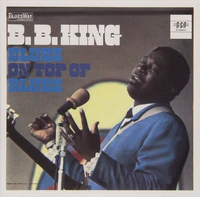 Buy from AmazonBlues on Top of Blues
Other Versions and Covers
The most high-profile later version is the 1997 collaboration with the Rolling Stones on King’s album Deuces Wild. That recording features Mick Jagger on vocals and harmonica, Keith Richards and Ronnie Wood on guitars, Charlie Watts on drums, and Darryl Jones on bass. It brought the song to a new generation of rock listeners.
King performed the song regularly in concert for decades, and it has been covered or referenced by various blues and blues-rock artists. It remains a favorite among fans who appreciate King’s more assertive side.
Legacy
“Paying the Cost to Be the Boss” stands as one of B.B. King’s strongest original compositions from the late 1960s. It showcases his ability to write tight, radio-friendly blues that retained authenticity while reaching a broader audience. The song’s theme of earned authority and its memorable title phrase have given it lasting cultural resonance beyond the blues world.
It also represents a key moment in King’s evolution: the transition from the rawer early RPM sides to the more polished, horn-driven sound of his ABC/BluesWay years, while still keeping Lucille and his voice front and center. Along with tracks like “The Thrill Is Gone” (which would follow the next year), it helped cement King’s status as the preeminent blues star of his generation—capable of both deep emotional ballads and swaggering, self-assured anthems.