Introduction: A Masterpiece Born from Crisis
In the summer of 1967, few people in the music industry would have predicted that Etta James was on the verge of recording one of the greatest soul albums ever made. The preceding years had been a sustained disaster. Drug addiction had taken her to Sybil Brand, the women's prison in Los Angeles. A period of detoxification at the USC County Hospital had been followed not by recovery but by relapse. Her recording career, which had produced a run of R&B hits for Chess Records and its subsidiaries from 1960 through 1964, had stalled. She was twenty-nine years old and, by her own account, simultaneously building toward something and falling apart entirely. "Nothing was easy then," James later recalled. "My career was building up but my life was falling apart."
Leonard Chess, who had signed her to Chess Records in 1960 and who was one of the more commercially shrewd figures in the American record business, had an idea that would address both problems simultaneously. He would send her to Muscle Shoals, Alabama, to record at Rick Hall's FAME Studios — getting her out of the city, away from the temptations that were destroying her, and into an environment that had been producing some of the most vital soul recordings in America. The move would provide musical inspiration and geographical isolation in equal measure.
It worked — beyond anything Chess, Hall, or James could reasonably have anticipated. What emerged from the sessions conducted at FAME between August and November 1967 was Tell Mama — twelve tracks of deep soul that stand comparison with anything produced in that extraordinary decade of American popular music. Rolling Stone placed it among its 500 Greatest Albums of All Time. Keith Richards described it as one of his favourite records: "Etta James has a voice from Heaven and Hell. Listen to the sister and you are stroked and ravaged at the same time. A voice, a spirit, a soul, that is immortal." It became Etta James's commercial and critical rehabilitation, produced her highest-charting singles in four years, and has grown, in the decades since its February 1968 release, into one of the essential documents of the Southern soul tradition.
This is the story of how it came to be made, what was recorded, who played on it, who wrote the songs, and what each track achieved. It is, at its core, the story of one of the great vocal performances in American music history — a performance built from crisis, recorded in a town in Alabama by musicians whose technical brilliance gave one woman's extraordinary voice the platform it deserved.
Background: Etta James Before Muscle Shoals
Jamesetta Hawkins was born on January 25, 1938, in Los Angeles, California — her mother just fourteen years old at the time of her birth, her father unknown, though she would later claim he was the pool hustler Rudolf "Minnesota Fats" Wanderone. Her childhood was itinerant and unstable; her mother was largely absent, and she was raised primarily by a foster family in the Fillmore district of San Francisco. She began singing in church at five, joined the Echoes of Eden choir at the St. Paul Baptist Church, and was absorbed completely by the music in a way that transformed the instability of her domestic life into fuel for artistic development.
At fourteen, she auditioned for bandleader and producer Johnny Otis in San Francisco, performing as part of a trio that would become the Peaches. Otis was sufficiently impressed to take them under his wing, and when he brought them to Los Angeles, Jamesetta Hawkins became Etta James — a stage name constructed by reversing the syllables of her given name. The group's first single, "Roll with Me Henry" — rebranded as "The Wallflower" to avoid racial censorship — reached number one on the R&B charts in 1955, making James a professional recording artist at the age of sixteen.
The Chess Records signing in 1960 began what should have been the most commercially successful chapter of her career. Working with producers Ralph Bass and Harvey Fuqua, she recorded a series of hits — "All I Could Do Was Cry," "My Dearest Darling," "Trust in Me," "Sunday Kind of Love," and above all "At Last," the lush ballad that would eventually become her most commercially enduring recording. The Chess and Argo label recordings placed her at the intersection of blues, gospel, R&B, and jazz vocal — a unique position in American popular music that gave her a claim on all of these traditions simultaneously.
But the personal demons kept pace with the professional ascent. Drug addiction, which had taken hold while she was still a teenager, escalated through the early 1960s. By the mid-decade, the hits had stopped and the personal chaos had intensified. The two Chess albums that immediately preceded Tell Mama — Call My Name (1967) and various other projects — had not restored the commercial momentum of the earlier Chess years. When Leonard Chess dispatched her to Muscle Shoals in the summer of 1967, he was making a last-ditch commercial bet on an artist who he believed had more to offer than her recent output had demonstrated.
The Context: Why Muscle Shoals Mattered
The story of why Etta James ended up at FAME Studios in August 1967 is inseparable from the broader narrative of the Muscle Shoals music scene and its relationship to the major labels that were feeding the Southern soul recording boom of the mid-1960s. Muscle Shoals — a collection of small towns in the northwest corner of Alabama, on the Tennessee River — had become, by 1967, the most productive location for soul recording in America. Rick Hall's FAME Studios was the reason.
Hall had founded FAME (Florence Alabama Music Enterprises) in 1959, initially recording country and pop acts in a room above a drug store in Florence. His first significant success came in 1961 with Arthur Alexander's "You Better Move On" — a record that the Rolling Stones would cover in 1964 and that demonstrated the commercial potential of Hall's particular approach to Southern recording: direct, unpolished, built around a rhythm section that had something the more produced Northern sounds lacked. That quality, consistently achieved across a succession of major hits, had attracted the attention of Atlantic Records and its producer Jerry Wexler, who began sending major Atlantic acts to Muscle Shoals from 1965 onward.
The FAME session musicians — known collectively as The Swampers — were a group of predominantly white musicians from the Alabama and Tennessee area who had developed a collective sound of extraordinary quality and versatility. Jimmy Ray Johnson and Albert "Junior" Lowe on guitars, Roger Hawkins on drums, Barry Beckett and Spooner Oldham on keyboards, David Hood on bass: these were musicians of the first rank, capable of producing the rhythmic precision and the emotional depth that Southern soul demanded. Their whiteness in a predominantly Black musical tradition was a paradox that Hall himself acknowledged directly: "Black music helped broaden my musical horizons and open my eyes and ears to the widespread appeal of the so-called 'race' music that later became known as 'rhythm and blues.'"
The political context was volatile. Alabama in 1967 was four years from George Wallace's "segregation forever" speech, two years from the Selma to Montgomery marches. The spectacle of a white studio owner in northern Alabama producing some of the most vital Black music in America was not without its dangers and its contradictions, and the history of FAME Studios is not separable from the racial dynamics of the period. But the music itself — the recordings of Wilson Pickett, Aretha Franklin, Clarence Carter, Percy Sledge, and Otis Redding that had come out of FAME by 1967 — was undeniable. When Jerry Wexler fell out with Hall following the disastrous Aretha Franklin session that ended with Aretha storming back to New York and her husband Ted White getting into a fistfight with Hall, the damage was significant but not permanent: Hall turned to Leonard Chess and brought Chess's acts to FAME, and the Etta James sessions were the most consequential result of that arrangement.
David Hood, who would become one of the great bass players in recording history through his work at both FAME and the subsequent Muscle Shoals Sound Studio, has provided some of the most valuable eyewitness testimony about the Etta James sessions. His father, David Hood Sr., was also present at some of the sessions, and his recollections give a vivid sense of the environment in which the album was made. "The Chess brothers wanted her to record where there was a chance of getting a hit, but also where she would be isolated from a lot of the temptations and distractions that go on in Chicago or New York or somewhere," Hood recalled. "We didn't know it at the time, but Etta was pregnant [with her first son, Donto]. She was a wonderful singer, a really great singer. She was not that much older than any of us, but she seemed older because she had been around."
Rick Hall: The Producer Who Found Her Voice
Roe Erister "Rick" Hall was born on January 31, 1932, into a family of sharecroppers in Forest Grove, Tishomingo County, Mississippi — the same northwest Mississippi territory that had produced the blues tradition from which so much of American popular music grew. His journey from sharecropper's son to producer of some of the most commercially successful soul music of the 1960s is one of the more remarkable in American music history, and understanding it is essential to understanding what he brought to the Etta James sessions.
Hall had grown up with country music as his primary vernacular, but his ear had always been drawn to the R&B and gospel sounds that surrounded him in the segregated South. His career as a producer was built on a specific insight: that the directness and emotional authenticity of the Southern musical traditions — both white and Black — could be captured on record in a way that the more polished studio productions of New York and Los Angeles routinely failed to achieve. When he built his second FAME studio on Avalon Avenue in Muscle Shoals after the success of "You Better Move On," he was creating the physical infrastructure for this insight.
His approach to production was characterised by technical control combined with emotional responsiveness. He was, by all accounts, a demanding producer — his fiery temperament was legendary, and the fistfight with Ted White that ended his Atlantic arrangement was consistent with a pattern of intense personal investment in the recording process. But the intensity served the music: Hall had an extraordinary ear for the specific qualities of a singer's voice and an instinct for how to capture those qualities on tape.
The technical problem he solved for Etta James was one that had limited her recordings for years. On her previous Chess and Argo recordings, James's higher notes had a tendency toward distortion — when she pushed her extraordinary voice into the upper register, the recording technology of the time could not fully accommodate the power she was generating. Hall, working with the improved recording technology at FAME, addressed this directly: "At Muscle Shoals, producers were able to mix her voice in order for it to sound stronger on previously distorted high notes." The result was, for the first time in her recording career, a document of Etta James's full vocal capabilities — a recording that could contain all of what she was capable of without technical compromise.
Hall's relationship with the songs he chose for the sessions demonstrated a similar intelligence. He had recorded a song called "Tell Daddy" with Clarence Carter a year earlier — a driving soul number that suited Carter's gritty vocal approach perfectly. When James came to FAME, Hall recognised that the same song, with a gender-swapped title and lyric, could serve as the ideal vehicle for her voice and the ideal commercial opening statement for the album. The adaptation was not merely cosmetic; it required rethinking the song's emotional dynamic from the inside, transforming it from a man's assertion of provider status into a woman's assertion of emotional authority.
The Sessions: August and November 1967, FAME Studios
The Tell Mama sessions took place across two periods at FAME Studios in Muscle Shoals, Alabama: the primary sessions in August 1967 and a second set of sessions in November 1967. The Discogs entry for the original vinyl release confirms this: "Recorded August and November, 1967 at Fame Studios, Muscle Shoals, Alabama." Rick Hall served as producer, arranger, and recording engineer — the tripartite role that gave him total creative control over the sound of the sessions.
The musicians assembled for the sessions represented the full FAME house band at its peak:
Jimmy Ray Johnson (guitar) and Albert "Junior" Lowe (guitar) provided the dual-guitar texture that was central to the FAME sound — Johnson's rhythm work locking in with the rhythm section while Lowe's fills and lead lines provided the melodic commentary between vocal phrases.
David Hood (bass) was the rhythmic and harmonic foundation of the ensemble. His bass playing on the Tell Mama sessions has a particular quality of melodic intelligence — he does not simply mark the beat but creates bass lines that interact with and respond to the vocal in ways that give the recordings their sense of a conversation between all the instrumental voices.
Roger Hawkins (drums) drove the sessions with the combination of precision and feel that made him one of the most sought-after session drummers of the era. His hi-hat work in particular — open and loose on ballads, tight and driving on the up-tempo numbers — gave each track its specific rhythmic character.
Barry Beckett and Spooner Oldham (Dewey L. Oldham) shared keyboard duties — Beckett primarily on piano, Oldham on organ and piano. The interplay between these two keyboard players, which gave the FAME sound much of its harmonic richness, is particularly evident on the album's slower tracks.
The horn section supplemented the rhythm section on most tracks:
Gene "Bowlegs" Miller (trumpet) brought a New Orleans-inflected brass quality to the arrangements, his braying trumpet providing the high-register bite in the horn section.
Floyd Newman (baritone saxophone), Charles Chalmers (saxophone), Aaron Varnell (saxophone), and James Mitchell (saxophone, on tracks 6 and 9) completed the horn section. The arrangement of the horn parts was Hall's work, and the way the brass and saxophones interact with the rhythm section and the vocal — sometimes doubling the vocal melody, sometimes providing rhythmic counterpoint, sometimes simply adding colour — is one of the defining qualities of the album's sound.
Etta James was, by David Hood's testimony, pregnant with her first son Donto during the sessions — a biographical detail that adds a particular poignancy to recordings that are consistently about loss, commitment, and the intensity of romantic love. She was also, in all likelihood, managing the ongoing struggle with addiction that would continue to define her life for years. If any of this is audible in the recordings, it is only in the sense that the emotional depth and urgency of her performances have a quality of lived experience that goes beyond mere technical accomplishment.
The Songwriters: A Constellation of Soul
One of the signal qualities of Tell Mama is the exceptional quality of its songwriting. Rick Hall and Leonard Chess made careful selections from the FAME publishing catalogue and from the broader pool of contemporary soul songwriting, and the result was a tracklist in which almost every song was, if not a classic in its own right, at least perfectly calibrated to James's specific vocal and emotional gifts.
Clarence Carter (born January 14, 1936, in Montgomery, Alabama) wrote the title track — originally recorded as "Tell Daddy" for himself before Hall recognised its potential for James. Carter was himself a significant FAME recording artist, whose subsequent recordings "Slip Away" and "Patches" would give him his own substantial commercial legacy. His compositional approach — direct, rhythmically driving, built on a simple but memorable hook — suited the FAME studio sound perfectly.
Billy Foster, Ellington Jordan, and Etta James jointly wrote "I'd Rather Go Blind." The song's origins have been discussed and disputed at length, with James claiming in various interviews that she wrote it or that it was brought to her by a friend who was in prison. The credit given on the original release lists all three writers. Whatever the precise compositional history, the song represents one of the finest blues ballads of the 1960s — a meditation on the pain of seeing a lover leave that uses the physical sensation of blindness as a metaphor for the emotional choice to refuse to witness what cannot be borne.
Don Covay — the Washington, D.C.-born singer and songwriter who also wrote "Mercy Mercy" and "See Saw" (both recorded by Aretha Franklin) — contributed "Watch Dog" and "I'm Gonna Take What He's Got" to the album. Covay was one of the more under-celebrated figures in 1960s soul songwriting, his compositions consistently delivering the combination of rhythmic precision and emotional force that the genre demanded at its best.
Ed Townsend wrote "The Love of My Man" — a biographical connection worth noting: Townsend is the man who co-wrote "Let's Get It On" with Marvin Gaye, and his songwriting sensibility — romantic, intimate, with a blues undercurrent — is evident in the Tell Mama contribution.
Otis Redding wrote "Security" — it had appeared on his 1964 debut album Pain in My Heart — and James's version gave it a different emotional colouring from Redding's own: where Redding had pushed the song with his characteristically urgent intensity, James inhabited it with a slightly more controlled, deliberate authority.
Jimmy Hughes — the Alabama-born soul singer who had recorded at FAME himself and had a significant hit with "Steal Away" for the Fame label in 1964 — wrote both "Steal Away" and "Don't Lose Your Good Thing." These two songs, by the same writer, represent different aspects of his compositional range: the yearning, church-inflected ballad quality of "Steal Away" and the more direct, rhythmically assertive statement of "Don't Lose Your Good Thing."
Charles Chalmers — who was not only a songwriter but also a saxophonist at the sessions — wrote "It Hurts Me So Much," giving the album a track in which composer and backing musician were the same person. Chalmers's sax work and vocal backing contributions appear throughout the album, giving it a personal investment in the material that went beyond the merely contractual.
Rosco Gordon wrote "Just a Little Bit" — a blues number rooted in the Memphis blues tradition that Gordon had helped define through his recordings for Chess and Sun in the early 1950s. The choice of this song as the album's closing track was not accidental: it connected the soul album's contemporary pop sensibility to the deeper blues tradition from which it grew.
Track by Track: The Twelve Songs That Made a Masterpiece
1. "Tell Mama" (Clarence Carter)
2:24 | Cadet 5578a
The opening track announces the album's character immediately and completely. From the moment Roger Hawkins's drums kick in — direct, driving, the snare crack perfectly placed — the session's quality is beyond doubt. The horn section enters with the riffing, braying energy that characterises the FAME sound at its most assertive, and then Etta James begins to sing.
The song is a declaration of commitment, delivered with the authority of someone who has earned the right to make that declaration. "Tell mama what you want," James sings, "and if it's within my power, I'll get it for you." The directness of the lyric — its refusal of any romantic qualification — suits the directness of the voice, and the combination produces something that the Rate Your Music reviewer called "quite on par with Miss Ree's 'Respect', which was cut that same year." The comparison to Aretha Franklin's signature recording is not hyperbole; "Tell Mama" and "Respect" are two performances from the same musical moment, each demonstrating what happens when a great vocalist finds the song that gives full expression to both technical ability and personal authority.
Rick Hall had previously recorded the song with Clarence Carter as "Tell Daddy" — a recording that suited Carter's gritty vocal approach but that, in Hall's assessment, had not fully realised the song's commercial potential. The gender switch — from "daddy" to "mama" — was not merely a cosmetic change but a reconceptualisation of the song's emotional dynamic. Where Carter's narrator asserts provider status, James's asserts emotional sovereignty — the offer to give the beloved whatever they need is reframed as a gift given from strength rather than from a desire to dominate.
The interplay between Jimmy Ray Johnson's and Albert Junior Lowe's guitars, David Hood's bass, and Roger Hawkins's drums gives the recording its particular rhythmic character: these four musicians function as a single organism, each element of the rhythm section aware of and responsive to all the others. The song reached number 23 on the Billboard Hot 100 and gave James her first Top 10 R&B hit in four years — a commercial vindication of Hall's instinct and Leonard Chess's gamble.
2. "I'd Rather Go Blind" (Billy Foster, Ellington Jordan, Etta James)
2:36 | Cadet 5578b
The B-side of the "Tell Mama" single became, in time, the track most associated with Etta James and the one that the vast majority of subsequent critical assessments of this album identify as its centrepiece. It is a slow blues ballad of extraordinary depth and sustained emotional intensity — a performance that Etta James seems to inhabit rather than merely deliver, the grief of the lyric becoming indistinguishable from the grief of the singer.
The song describes a narrator watching a lover leave with someone else, and choosing — impossibly, painfully — to look away rather than witness the departure. "I'd rather go blind, boy, than to see you walk away from me," James sings, and the phrasing has the halting, reluctant quality of someone articulating a truth they have been trying not to acknowledge. The guitar figures that accompany her are sparse and perfectly placed — single notes that punctuate the spaces between vocal phrases rather than filling them, allowing the voice its own space to breathe and sustain.
The song's origins are disputed. James claimed in various interviews that her friend Fugi Foster (Billy Foster) handed it to her when she visited him in prison — that he had written it but, unable to record it himself, wanted her to have it. The co-writing credit shared with Ellington Jordan and James herself reflects the complexity of the song's development, in which Jordan apparently contributed to the lyric revision that made the final version what it became.
Spooner Oldham's organ — subtle, sustained, providing harmonic depth without ever crowding the vocal — is the instrumental element that gives the recording its particular emotional character. The combination of Oldham's organ and the sparse guitar figures creates a soundscape of space and restraint that serves the lyric perfectly: this is music that understands that sometimes less is more, that the emotional weight of a performance is not determined by the density of the accompaniment.
Subsequent covers have been numerous. Chicken Shack — the British blues band — reached number 14 in the UK charts with their 1969 version. Rod Stewart, who has covered the song multiple times, brought it to further international attention. The Pretenders recorded it. Joe Cocker, Bonnie Raitt, Beyoncé, and dozens of others have attempted it. Almost without exception, the versions confirm what the original established: this is not just a great song but a song that reveals the quality of whoever sings it, that demands something from the singer that many cannot provide. Etta James provided it fully, in FAME Studios, in the late summer or early autumn of 1967.
This song is covered in more detail here I'd Rather Go Blind by Etta James
3. "Watch Dog" (Don Covay)
2:08
Don Covay's contribution is the album's most urgent and assertive performance — two minutes and eight seconds of hard-driving soul in which James adopts the persona of a territorial lover, warning rivals away from her man with the directness that Covay's lyrics demanded and James's vocal delivered without hesitation. The song is rhythmically the most insistent on the album, the guitar and horn section working in tight coordination to create a groove that sits just on the edge of aggression.
The brevity of the track — just over two minutes — is itself a statement: this song doesn't need more time because it makes its point completely and moves on. The Rate Your Music review notes that "great verve" characterises James's performance here, and the observation is accurate. She sounds like someone who is enjoying herself — enjoying the authority of the lyric and the power of her own voice — in a way that distinguishes this track from the more emotionally exhausted performances on the album's slower numbers.
4. "The Love of My Man" (Ed Townsend)
2:42
Ed Townsend's composition is a different register entirely — a deep soul ballad in which the narrator describes the emotional completeness of a loving relationship with the kind of specificity that only someone who has experienced such a relationship could make convincing. James's vocal here has the warmth and fullness of her lower register — less strained and urgent than on "Tell Mama," more inhabited and sustained.
The Rate Your Music review identifies "The Love of My Man" as one of the album's highlights, singling out James's delivery as exceptional. Townsend, who would go on to co-write "Let's Get It On" with Marvin Gaye in 1973, demonstrates here the intimate, romantic quality that distinguished his best songwriting. The FAME rhythm section provides a flowing, unhurried accompaniment that suits the song's mood of comfortable certainty — this is not the anxious love of "I'd Rather Go Blind" but the settled confidence of established devotion.
5. "I'm Gonna Take What He's Got" (Don Covay)
2:35
Covay's second contribution is another high-energy performance, this one built around the specific fantasy — half-funny, half-serious — of taking something that belongs to someone else. The song's double meaning (the "something" in question is simultaneously material and romantic) gives James room to play with the ambiguity in her delivery, and she takes full advantage, her voice moving between the comic and the sincere with the fluency of a natural entertainer.
The guitar work on this track is particularly strong — the choppy, rhythmic style that Jimmy Ray Johnson and Albert Lowe deploy here gives the song a funk-adjacent quality that anticipates the direction soul music would take through the late 1960s and into the early 1970s.
6. "The Same Rope" (uncredited / various)
2:41 | Saxophone: James Mitchell
One of the more lyrically interesting tracks on the album, "The Same Rope" develops an extended metaphor around the ambivalence of love — the same thing that elevates you can destroy you, the same commitment that sustains a relationship can bind you in ways that eventually become a constraint. "The same rope that pulls you up," James sings, "sure can hang you." The image is striking and the delivery makes it more so: she performs the lyric with the knowing quality of someone who has experienced both ends of that rope.
The saxophone work by James Mitchell — one of the musicians specifically credited on tracks 6 and 9 — adds a sinuous, bluesy colour to the track that distinguishes it from the more horn-section-dominated arrangements elsewhere on the album. The Rate Your Music review describes it as "a very busy" track, layered in the "Memphis-by-way-of-'Bama brass" that characterises the album overall.
7. "Security" (Otis Redding)
2:30
Otis Redding had written "Security" for his debut album and performed it with his characteristic urgent energy. James's version — building on the FAME rhythm section's "thundering, lurching bass," as the Rate Your Music review describes it — recasts the song's plea for emotional security in a lower emotional register: less frenetic than Redding's original, more controlled and deliberate, the urgency expressed through conviction rather than agitation.
The song gave James her second significant chart success from the sessions, reaching the Top 20 of the R&B chart. The commercial response to both "Security" and "Tell Mama" vindicated Leonard Chess's decision to send James to FAME and confirmed that Hall's production approach had solved whatever had been limiting her commercial appeal in the mid-1960s.
The FAME horn section is particularly prominent on this track, the brass arrangements complementing the piano and organ work in ways that give the recording a fullness and density that suits the song's theme of seeking a solid foundation in a world that feels unstable.
8. "Steal Away" (Jimmy Hughes)
2:22
Jimmy Hughes's composition had already made its mark as his own FAME recording in 1964, reaching number 17 on the Billboard Hot 100 and establishing the Muscle Shoals studio as a commercial force. James's version strips the song to its essential emotional core — the urgent, yearning plea to a lover to slip away from whatever holds them elsewhere and come to where they are needed.
The church influence that runs through much of Hughes's songwriting is particularly evident on "Steal Away": the call-and-response patterns, the gospel-inflected vocal approach, the sense that romantic love and divine love are not wholly separate territories. James, who had grown up singing in church and who never lost the gospel intensity that experience had given her, inhabits this dimension of the song fully. The Rate Your Music reviewer notes she "gets down in an unrestrained country blues bag" on this track and on "The Love of My Man" — the description captures the rawness that distinguishes these performances from the more polished ballad work.
9. "My Mother-in-Law" (various)
2:23 | Saxophone: James Mitchell
The album's one moment of relative lightness — a comic blues lament about the perennial difficulty of the mother-in-law relationship, delivered with the kind of tongue-in-cheek knowingness that the subject demands. James's vocal here has a looseness and a comedic timing that demonstrates the range of her artistry: she is equally convincing in the role of wronged lover, devoted partner, and exasperated daughter-in-law.
James Mitchell's saxophone returns on this track, and his contributions give the recording a slightly different tonal colour from the majority of the album — less formal, more relaxed, consistent with the track's comedy-adjacent emotional register.
10. "Don't Lose Your Good Thing" (Jimmy Hughes)
2:28
Hughes's second compositional contribution to the album takes a different approach from the romantic urgency of "Steal Away" — this is a counsel of caution, an instruction to hold onto whatever has given you happiness and not to risk it through carelessness or complacency. The lyric has the quality of hard-won wisdom, and James's delivery gives it the weight of someone who has learned the lesson the hard way.
The Rate Your Music reviewers consistently identify this track as one of the album's highlights, praising the combination of James's vocal and the FAME rhythm section's groove. The track has a flowing, relatively unhurried quality that distinguishes it from the more driven performances elsewhere — the tempo serves the lyric, slowing things down enough to give the counsel of caution the considered delivery it requires.
11. "It Hurts Me So Much" (Charles Chalmers)
2:37
Charles Chalmers's composition is the most overtly bluesy track on the album — a slow, deliberate exploration of pain that the Rate Your Music review identifies as belonging to the "country church style" of blues testimony. Chalmers, who wrote this song and who also played saxophone on several album tracks, gave James material that allowed her to access the deepest register of her emotional vocabulary.
The udiscovermusic account of the album notes that James "seems to be living the pain of songs such as 'It Hurts Me So Much'" — an observation that points to the quality that distinguishes her greatest performances from merely accomplished ones. She does not describe emotion; she occupies it, and the difference is audible. Spooner Oldham's organ is particularly effective here, sustaining long notes beneath James's vocal that create a sense of aching, unfulfilled yearning perfectly matched to the lyric's content.
12. "Just a Little Bit" (Rosco Gordon)
2:08
The album closes with Rosco Gordon's blues number — a Memphis-rooted performance that returns the album to the blues tradition from which all the soul music that preceded it ultimately derives. "Just a Little Bit" is an up-tempo, gutbucket blues romp, the kind of piece that Gordon had made his signature in the early 1950s at Chess and Sun Records, and James's performance of it brings the album to an energetic, affirmative conclusion.
The choice of a Gordon composition as the album's final track is not accidental. It grounds Tell Mama in the blues tradition that preceded it, acknowledging that beneath the sophisticated soul arrangements and the professional production of the FAME sessions lies the same fundamental emotional material that Gordon had been working with in Memphis fifteen years earlier. The closing track is a reminder that what has just happened — for all its commercial sophistication and its chart success — is blues music, and that Etta James is, in Jerry Wexler's famous formulation, "the greatest of all modern blues singers."
The Bonus Tracks: The Complete Muscle Shoals Sessions
The 2001 MCA Records reissue of Tell Mama as Tell Mama: The Complete Muscle Shoals Sessions added ten bonus tracks drawn from the same period of FAME recording, expanding the historical record of what James and Hall accomplished together in Muscle Shoals.
These bonus tracks include a version of "Do Right Woman, Do Right Man" (the Dan Penn and Chips Moman song that Aretha Franklin had made famous the same year), recorded in November 1967 alongside an alternate take that appears as the final bonus track on the reissue. The inclusion of this song — a feminist blues manifesto demanding equal treatment in relationships — gives the expanded release an additional political dimension that the original album, with its more domestic and romantic focus, had not quite achieved.
The 1968 bonus tracks include an extraordinary version of Erroll Garner's "Misty" — a jazz standard performance that demonstrates James's command of the jazz vocal tradition alongside the soul and blues material that made the original album so powerful — and a version of Sonny and Cher's "I Got You Babe" that suggests Hall was testing the commercial waters for a pop-crossover direction that was ultimately not pursued.
The Commercial and Critical Reception
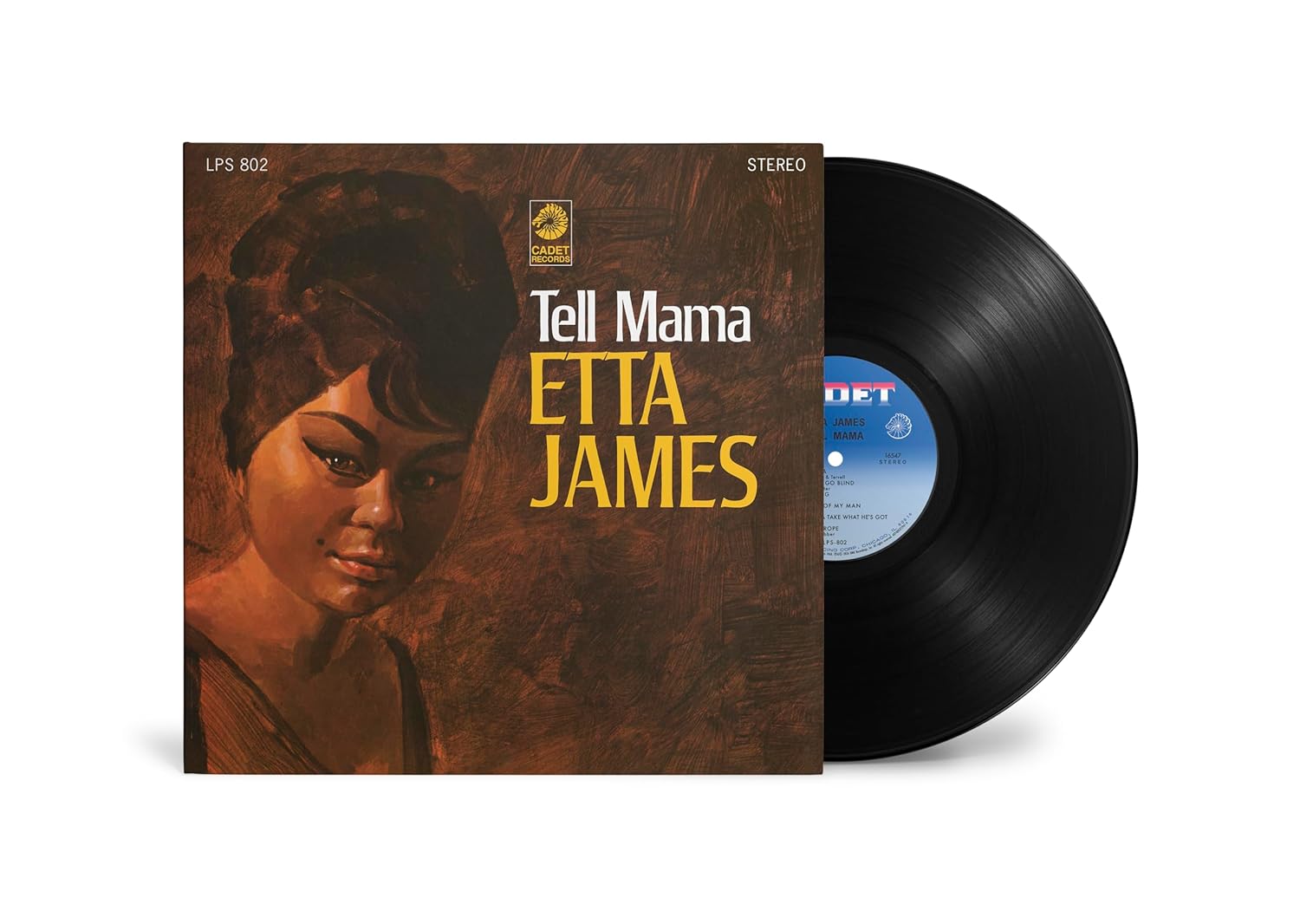
Tell Mama was released in February 1968 on Cadet Records (catalogue number LPS-802), Leonard Chess's subsidiary label. The commercial reception was immediate and enthusiastic. The "Tell Mama" single had already been charting since its release the previous autumn, reaching number 23 on the Billboard Hot 100 and the Top 10 of the R&B chart — James's highest pop chart position and her best R&B showing in four years. "Security" followed it up the R&B chart with similar success.
The album itself reached the Billboard 200 for the first time since 1964, demonstrating that the single successes had translated into broader album-buying support. Critical reception, where it existed in the still-nascent world of soul album criticism, was uniformly positive. The AllMusic review by Bill Dahl called the sessions "skin-tight" — a description that captures the precision of the rhythm section, the quality of the horn arrangements, and the overall sense of an ensemble operating at its absolute peak.
The critical reassessment that has accumulated in the decades since has been even more generous. Rolling Stone's inclusion of Tell Mama on its 500 Greatest Albums of All Time list represents the consolidation of a critical consensus that formed gradually but has become, over time, remarkably firm: this is one of the great soul albums of the 1960s, and in some assessments of the era's music, one of the great albums of any genre.
Aftermath: James, Hall, and the Legacy
The aftermath of Tell Mama was not, for Etta James, the uninterrupted commercial ascent that the album's quality and chart success might have warranted. The personal demons that had plagued her before the Muscle Shoals sessions were not banished by artistic success or commercial vindication. She returned to Chicago, to Chess Records, to the environment from which Leonard Chess had tried to extract her. Drug addiction continued to compromise her professional life through the late 1960s and into the 1970s.
But the album had permanently altered the critical assessment of her place in American music. Whatever subsequent struggles she faced, whatever commercial disappointments followed the Tell Mama peak, the record itself was permanent evidence of what she was capable of — evidence that Jerry Wexler, Keith Richards, Eric Clapton, and the many other musicians who named James as an influence had been hearing correctly. The voice that Rick Hall had figured out how to contain and document fully, without the high-note distortion that had limited its impact in previous recordings, was one of the great voices in American musical history.
Rick Hall continued producing at FAME until the studio's gradual transition to country music in the 1970s, eventually working with Mac Davis, Bobbie Gentry, Jerry Reed, and the Gatlin Brothers. He died on January 2, 2018, having been inducted into the Alabama Music Hall of Fame in 1985 and having received the Grammy Trustees Award in 2014 in recognition of his career. His epitaph as the "Father of Muscle Shoals Music" is accurate and insufficient simultaneously — a man of that complexity and achievement deserves a fuller accounting.
The FAME session musicians — particularly David Hood, Roger Hawkins, Barry Beckett, and Jimmy Johnson, who left FAME in 1969 to found the separate Muscle Shoals Sound Studio — went on to shape some of the most significant recording sessions of the next two decades: the Stones' Sticky Fingers (recorded at Muscle Shoals Sound), Paul Simon's There Goes Rhymin' Simon, Bob Dylan's Slow Train Coming, and many others all bear the imprint of musicians who had been playing together since the Tell Mama sessions.
Etta James died on January 20, 2012, at the age of seventy-three, having been inducted into the Rock and Roll Hall of Fame in 1993 and having received the Grammy Lifetime Achievement Award in 2003. Her gravestone in California marks the passing of one of the most extraordinary voices in American music — a voice that found its fullest recorded expression in a studio in Muscle Shoals, Alabama, across two stretches of August and November 1967, with a white producer and a predominantly white rhythm section, making some of the most authentic and deeply felt Black music ever committed to tape.
Suggested Reading
Selected Discography
Tell Mama Chess Acoustic Sounds Series
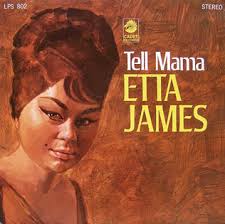
Tell Mama: The Complete Muscle Shoals Sessions by Etta James
Tell Mama (Cadet LPS-802) was released February 1968 on Cadet Records (Chess Records subsidiary). Produced by Rick Hall. Recorded August and November 1967 at FAME Studios, Muscle Shoals, Alabama. Personnel: Etta James (vocals); Jimmy Ray Johnson (guitar); Albert "Junior" Lowe (guitar); David Hood (bass); Roger Hawkins (drums); Barry Beckett (piano); Spooner Oldham / Dewey L. Oldham (piano, organ); Gene "Bowlegs" Miller (trumpet); Floyd Newman (baritone saxophone); Charles Chalmers (saxophone); Aaron Varnell (saxophone); James Mitchell (saxophone, tracks 6 and 9). Chart positions: Billboard Hot 100 – "Tell Mama" #23; R&B chart – "Tell Mama" Top 10, "Security" Top 20. Included in Rolling Stone's 500 Greatest Albums of All Time. Tell Mama: The Complete Muscle Shoals Sessions (MCA Records, 2001) adds ten bonus tracks from the same recording period.