Little Walter (Marion Walter Jacobs)
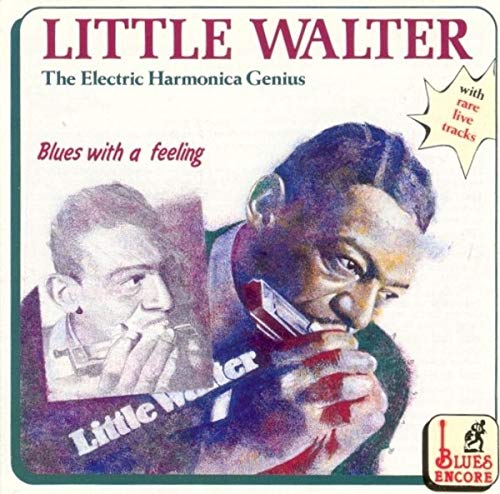
Chess / Checker Records · LP-1428 · Released 1963
Overview
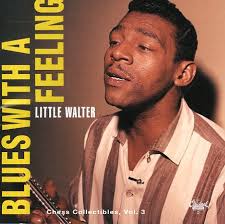
Blues with a Feeling is a landmark compilation album by Little Walter (Marion Walter Jacobs, 1930–1968), released on Chess Records' subsidiary label Checker in 1963. It draws from recording sessions spanning 1952 to 1958, capturing the harmonica virtuoso at the absolute peak of his creative and commercial powers. The album is widely regarded as one of the greatest blues recordings ever assembled, and it cemented Little Walter's reputation as the defining voice of the amplified Chicago blues harmonica.
The LP collects twelve tracks that showcase Walter's extraordinary range — from hard-driving shuffles and slow, aching blues to jump numbers and atmospheric ballads. Several of the tracks were massive R&B chart hits in their original single releases, including three that reached #1 on the Billboard R&B chart. The album title is drawn from one of Walter's signature recordings, "Blues with a Feeling," which peaked at #2 on the R&B chart in 1953.
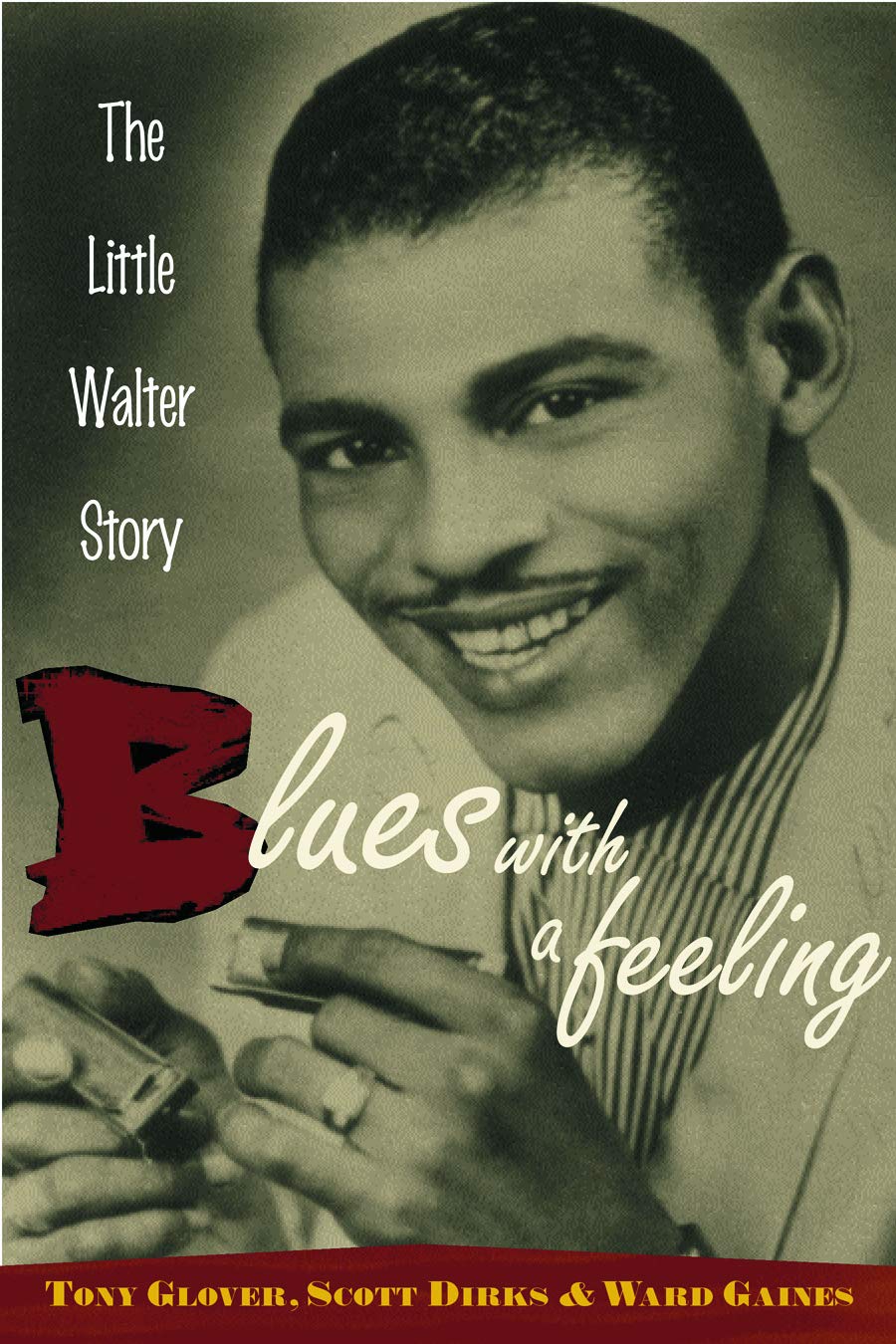
Discographers, historians, and musicians alike — including Tony Glover, Scott Dirks, and Ward Gaines, authors of Blues with a Feeling: The Little Walter Story (2002) — have documented this period as one of the most fertile in post-war blues history.
The Artist: Little Walter
Marion Walter Jacobs was born on May 1, 1930, in Marksville, Louisiana. A self-taught musician, he was playing harmonica on the streets of New Orleans and Helena, Arkansas as a child, and arrived in Chicago around 1945. His early associations with Muddy Waters' band (1948–1952) transformed him from a street musician into a studio and live phenomenon.
Walter's revolutionary approach involved amplifying his harmonica through a small microphone held cupped in his hands along with the instrument, feeding the signal into a guitar amplifier. This created a full, distorted, horn-like tone that was entirely new to blues music. His technique, phrasing, and tonal palette were so advanced that musicians and critics frequently compared him to Charlie Parker and other jazz innovators.
His 1952 recording "Juke" — recorded as a B-side for a Muddy Waters session — became the first harmonica instrumental to reach #1 on the Billboard R&B chart, where it remained for eight weeks. It launched his solo career and initiated the most productive period of his life.
The Label: Chess / Checker Records
Chess Records was founded in Chicago in 1950 by brothers Leonard and Phil Chess, who had previously operated Aristocrat Records. The label became the premier home of Chicago electric blues, recording Muddy Waters, Howlin' Wolf, Sonny Boy Williamson II, and many others. Checker Records was established as a subsidiary imprint in 1952, and Little Walter's solo recordings were issued under the Checker banner throughout his career.
The Chess brothers operated a hands-on, commercially driven operation. Leonard Chess in particular was deeply involved in the sound and direction of sessions, functioning as a de facto producer on nearly all recordings of this era, though formal producer credits were rarely assigned on blues records of the time.
Production
Label: Checker Records (subsidiary of Chess Records) Catalog Number: LP-1428 Release Year: 1963 (compiled from recordings made 1952–1958) Recording Location: Universal Recording Studios, Chicago (early sessions); Chess Records Studio, 2120 South Michigan Avenue, Chicago (later sessions) Producers: Leonard Chess (primary), with Phil Chess involved in the broader label operation Recording Engineers: Malcolm Chisholm (primary engineer for many sessions); Ron Malo (engineer at 2120 South Michigan Avenue from the mid-1950s onward)
Leonard Chess's production philosophy was rooted in capturing a raw, live energy. He favored close-miking techniques and relatively dry, unprocessed sounds in the early 1950s. By the mid-to-late 1950s, as Chess moved into its own studio at 2120 South Michigan Avenue, Ron Malo's engineering brought a slightly more polished but still gritty aesthetic. The studio's natural reverb and the room sound at 2120 South Michigan Avenue became iconic elements of the Chess Records sound.
Key Songwriters
Marion Walter Jacobs (Little Walter): Wrote or co-wrote the majority of his own recordings. His compositions reflect both his Louisiana roots and his deep immersion in the Chicago blues scene. He had an instinctive melodic gift and a strong sense of blues narrative.
Willie Dixon (1915–1992): The towering figure of Chess Records songwriting and A&R. Dixon contributed bass playing and compositions to numerous Chess and Checker sessions. His songs were carefully crafted to maximize commercial appeal while retaining blues authenticity. He wrote for virtually every major Chess artist.
Mel London: A Chicago-based songwriter and producer who contributed material to Little Walter and other Chess/Checker artists during the 1950s.
Walter Jacobs / credited variations: Some compositions are credited to "Jacobs" or "Walter Jacobs," reflecting the common Chess Records practice of using legal names or pseudonyms for publishing purposes.
Core Musicians (Across Sessions)
The recordings on this album were made across multiple sessions over six years, and personnel shifted from session to session. The following musicians appear across the various recordings:
Little Walter (Marion Walter Jacobs) — chromatic and diatonic harmonica, vocals Fred Below (1926–1988) — drums. Below was the rhythmic anchor of the Chicago blues scene and appeared on a vast number of Chess/Checker recordings. His jazz-inflected, swinging style was perfectly suited to Little Walter's horn-like approach. Robert Jr. Lockwood (1915–2006) — electric guitar. A masterful guitarist who had learned directly from Robert Johnson (his stepfather). Lockwood brought sophisticated jazz chord voicings to the blues context and was one of Walter's most important musical partners. Louis Myers (1929–1994) — electric guitar. One of the three Myers brothers who formed the backbone of the Aces, Little Walter's primary backing band. Louis was a fluid, inventive lead and rhythm guitarist. Dave Myers (1926–2001) — electric bass guitar. Louis's brother, Dave anchored the low end of the Aces' sound with a strong, driving bass approach. Willie Dixon (1915–1992) — upright bass (on select sessions). Dixon played bass on many Chess sessions in addition to his songwriting and A&R duties. Otis Spann (1930–1970) — piano (on select sessions). One of the finest Chicago blues pianists, Spann was Muddy Waters' longtime keyboardist and appeared on numerous Chess-related sessions. Henry Gray (b. 1925) — piano (on select sessions). Another key Chicago blues pianist who worked extensively with Howlin' Wolf and appeared on Little Walter sessions. Jimmy Rogers (1924–1997) — guitar (on some early sessions). Rogers was a member of Muddy Waters' band and appeared on some of Little Walter's earliest solo recordings. Elgin Evans — drums (on some early sessions, prior to Fred Below's arrival as the primary drummer).
Track-by-Track Analysis
Track 1: "Sad Hours"
Original Release: Checker 764 (1952) Chart Position: #1 R&B (Billboard, 1952) Songwriter: Marion Walter Jacobs (Little Walter) Key Musicians: Little Walter (harmonica, vocals); Robert Jr. Lockwood (guitar); Jimmy Rogers (guitar); Elgin Evans (drums); Ernest "Big" Crawford (bass)
"Sad Hours" was one of Little Walter's earliest solo recordings and an immediate commercial smash, reaching #1 on the R&B chart. The track is a slow, deeply felt blues built around a descending chord progression that gives Walter's harmonica playing ample room to breathe and moan. The recording captures the transition between Walter's raw street-blues origins and the more polished Chicago electric sound he was developing. His vocal performance is restrained and aching, while his harmonica lines — played in a low register — carry the emotional weight of the song. Robert Jr. Lockwood's guitar work is understated and sophisticated, providing harmonic support without cluttering the sonic space. The rhythm section is sparse and unhurried, perfectly complementing the mournful atmosphere. The track was recorded at the very beginning of Walter's solo career, shortly after his breakout success with "Juke," and it demonstrated that he was not merely an instrumentalist but a fully formed blues artist capable of deeply affecting vocal and compositional work.
Track 2: "You're So Fine"
Original Release: Checker 770 (1952) Chart Position: #8 R&B (Billboard, 1952) Songwriter: Marion Walter Jacobs (Little Walter) Key Musicians: Little Walter (harmonica, vocals); Robert Jr. Lockwood (guitar); the Aces (Louis Myers, Dave Myers, Fred Below) likely contributing on this or closely related sessions
"You're So Fine" represents the more upbeat, jump-blues side of Little Walter's early solo work. The track has a light, bouncing feel that contrasts sharply with the heaviness of "Sad Hours," showcasing Walter's versatility from the outset of his solo career. His harmonica playing here is more playful and melodic, incorporating jazz-inflected runs that reveal the breadth of his musical vocabulary. The song's structure is relatively conventional — a 12-bar blues with a straightforward romantic lyric — but Walter's performance elevates it through the sheer personality and control of his playing. The guitar work is clean and rhythmically precise, and the overall production has a bright, forward sound that was well-suited to jukebox play, the primary commercial vehicle for R&B music in the early 1950s.
Track 3: "Mean Old World"
Original Release: Checker 767 (1952) Chart Position: #8 R&B (Billboard, 1952) Songwriter: Marion Walter Jacobs (Little Walter) Key Musicians: Little Walter (harmonica, vocals); Robert Jr. Lockwood (guitar); Jimmy Rogers (guitar); Elgin Evans (drums); Ernest "Big" Crawford (bass)
"Mean Old World" is one of Little Walter's most celebrated recordings and one of the finest slow blues in the Chicago canon. The track is a masterclass in restraint and emotional depth. Walter's harmonica playing here is among his most expressive — long, sustained notes that bend and cry with an almost human vocal quality, punctuated by rapid chromatic runs that suggest both joy and anguish simultaneously. The lyric addresses loneliness and hardship with the directness and economy that characterizes the best blues writing. The accompaniment is minimal: a quietly picked guitar, a barely-there rhythm section, and enough space around Walter's playing that every note resonates fully. Robert Jr. Lockwood's guitar figures are perfectly placed, responding to Walter's harmonica lines in a call-and-response dialogue that gives the track an intimate, conversational quality. "Mean Old World" was later covered by T-Bone Walker (who recorded a version with a very different arrangement) and has been cited by numerous musicians as a definitive example of blues harmonica artistry.
Track 4: "Off the Wall"
Original Release: Checker 780 (1953) Songwriter: Marion Walter Jacobs (Little Walter) Key Musicians: Little Walter (harmonica); the Aces (Louis Myers, Dave Myers, Fred Below); possibly Robert Jr. Lockwood (guitar)
"Off the Wall" is an uptempo harmonica instrumental that showcases Little Walter's technical facility and his ability to drive a blues track with nothing but his harmonica and a tight rhythm section. The title reflects the track's somewhat angular, unpredictable melodic approach — Walter's lines dart and weave in unexpected directions, incorporating elements of jazz phrasing within a blues framework. Fred Below's drumming is particularly notable here: his jazz-trained sense of swing gives the track a loose, propulsive feel that lifts Walter's playing rather than simply keeping time behind it. The interplay between Walter's harmonica and the rhythm section is organic and spontaneous-sounding, a hallmark of the best Chess Records recordings of this period. As an instrumental, the track demonstrates that Walter's harmonica could carry an entire performance without the support of a vocal, a claim that very few harmonica players before or since have been able to make convincingly.
Track 5: "Blues with a Feeling"
Original Release: Checker 780 (1953) Chart Position: #2 R&B (Billboard, 1953) Songwriter: Marion Walter Jacobs (Little Walter) Key Musicians: Little Walter (harmonica, vocals); the Aces (Louis Myers, Dave Myers, Fred Below); Robert Jr. Lockwood (guitar)
The album's title track is arguably Little Walter's signature recording and one of the most celebrated blues harmonica performances ever committed to tape. "Blues with a Feeling" is a slow, deeply atmospheric blues that builds in emotional intensity from its opening notes. Walter's harmonica playing is at its most nakedly expressive — his tone is huge and full, his bends are precise and devastating, and his sense of dynamics is extraordinary, moving from whispered passages to full-throated wails within a single phrase. The lyric is a classic blues lament about love and loss, delivered with a vocal performance that matches the harmonica in its emotional directness. The Aces provide an impeccable backdrop: Louis Myers' guitar is warm and supportive, Dave Myers' bass anchors the low end with authority, and Fred Below's drumming is a model of restraint, never overplaying but always pushing the track forward with subtle momentum. The track reached #2 on the R&B chart and gave the album its title. It has been covered by countless artists and cited by musicians ranging from Paul Butterfield to Mick Jagger as a foundational influence.
Track 6: "Last Night"
Original Release: Checker 786 (1953) Chart Position: #1 R&B (Billboard, 1953) Songwriter: Marion Walter Jacobs (Little Walter) Key Musicians: Little Walter (harmonica, vocals); the Aces (Louis Myers, Dave Myers, Fred Below); Robert Jr. Lockwood (guitar)
"Last Night" reached #1 on the R&B chart and represents the more commercially polished side of Little Walter's early-to-mid 1950s work. The track has a slightly more uptempo feel than "Blues with a Feeling" and features one of Walter's most memorable harmonica hooks — a repeated melodic figure that functions almost like a chorus, giving the track an unusual structural clarity for a blues recording of the period. The production is clean and bright, with each instrument sitting clearly in the mix. Walter's vocal is confident and relaxed, and his harmonica solos are constructed with a logic and economy that suggests careful thought rather than pure improvisation, though the performances always retain a spontaneous energy. Robert Jr. Lockwood's guitar work is particularly fine here, providing both rhythmic chording and brief single-note responses to Walter's harmonica that add textural variety without disrupting the track's flow. "Last Night" demonstrated that Little Walter could craft a blues record with genuine pop appeal without sacrificing the music's emotional authenticity.
Track 7: "You Better Watch Yourself"
Original Release: Checker 793 (1954) Chart Position: #8 R&B (Billboard, 1954) Songwriter: Marion Walter Jacobs (Little Walter) Key Musicians: Little Walter (harmonica, vocals); the Aces (Louis Myers, Dave Myers, Fred Below); Robert Jr. Lockwood (guitar)
"You Better Watch Yourself" is a mid-tempo blues shuffle with a slightly threatening, assertive lyric that gives Walter an opportunity to display a harder, more aggressive vocal style. The harmonica playing is more percussive and rhythmically driving here than on the slower tracks, with Walter using short, stabbing phrases that punctuate the vocal lines rather than flowing over them. The Aces' rhythm section is tight and swinging, and Fred Below's drumming is particularly energetic, pushing the track with a crisp backbeat that was unusual in Chicago blues at the time — Below's jazz background gave him a sense of pocket and swing that most blues drummers of the era lacked. The track's slightly confrontational lyric and driving rhythm made it a natural jukebox hit, and its chart success confirmed that Little Walter's commercial instincts were as reliable as his artistic ones.
Track 8: "Lights Out"
Original Release: Checker 799 (1954) Songwriter: Marion Walter Jacobs (Little Walter) Key Musicians: Little Walter (harmonica, vocals); the Aces (Louis Myers, Dave Myers, Fred Below); Robert Jr. Lockwood (guitar)
"Lights Out" is a mid-to-uptempo number that showcases Little Walter's ability to craft a blues recording with a strong, memorable melodic identity. The harmonica lines on this track are among the most melodically developed on the album, featuring extended phrases that build and resolve with a compositional logic reminiscent of jazz soloing. The production is slightly fuller than some of the earlier tracks, reflecting the gradual evolution of Chess Records' studio sound as the label developed its own recording infrastructure. The rhythm section work is solid and supportive, and Robert Jr. Lockwood's guitar provides a clean, rhythmic backdrop that allows Walter's harmonica to dominate the sonic picture without the track feeling sparse. The vocal performance is relaxed and confident, reflecting Walter's growing comfort and authority as a frontman.
Track 9: "Too Late"
Original Release: Checker 805 (1954) Songwriter: Willie Dixon Key Musicians: Little Walter (harmonica, vocals); the Aces (Louis Myers, Dave Myers, Fred Below); Willie Dixon (bass, possibly); Robert Jr. Lockwood (guitar)
"Too Late" is one of the Willie Dixon compositions on the album and demonstrates Dixon's skill at crafting songs that perfectly suited Little Walter's vocal and instrumental style. The track has a slightly more polished, structured feel than Walter's own compositions — Dixon's songs tended to have more clearly defined verses and hooks — but Walter's performance is characteristically personal and emotionally direct. The harmonica work is fluid and expressive, and the interplay between Walter's instrument and the rhythm section is as tight as anything on the album. Dixon's bass playing, if present on this session, would have given the low end a particularly robust, authoritative quality — Dixon was a formidable bass player as well as a songwriter, and his presence on a session invariably strengthened the rhythm section's foundation.
Track 10: "Roller Coaster"
Original Release: Checker 811 (1955) Songwriter: Willie Dixon Key Musicians: Little Walter (harmonica, vocals); the Aces (Louis Myers, Dave Myers, Fred Below); Willie Dixon (bass); Otis Spann or Henry Gray (piano)
"Roller Coaster" is one of the more rhythmically adventurous tracks on the album, living up to its title with a lurching, unpredictable rhythmic feel that gives the recording an unusual kinetic energy. Willie Dixon's songwriting here plays with the blues form in a slightly unconventional way, using the title as a metaphor for an unstable romantic relationship. Little Walter's harmonica performance matches the track's unsettled energy, with phrases that seem to tumble over each other before resolving into moments of clarity. The addition of piano on this session — whether Otis Spann or Henry Gray — adds harmonic richness and textural variety, filling out the sound in a way that the guitar-bass-drums-harmonica configuration of earlier tracks did not. The rhythm section is particularly dynamic, with Fred Below's drumming responding to the track's rhythmic quirks with characteristic intelligence and flexibility.
Track 11: "My Babe"
Original Release: Checker 811 (1955) Chart Position: #1 R&B (Billboard, 1955) — 8 weeks at #1 Songwriter: Willie Dixon Key Musicians: Little Walter (harmonica, vocals); the Aces (Louis Myers, Dave Myers, Fred Below); Willie Dixon (bass); Otis Spann (piano)
"My Babe" is Little Walter's biggest commercial hit and one of the most celebrated recordings in the Chess Records catalog. Willie Dixon based the song on the gospel standard "This Train" (also known as "This Train Is Bound for Glory"), adapting the melody and structure into a secular blues context — a common practice in the blues tradition known as "signifying" or "borrowing." The result is a track with an irresistible melodic hook, a driving rhythm, and a lyric that is simultaneously playful and assertive. Little Walter's vocal performance is among his most confident and charismatic, and his harmonica playing — particularly the repeated melodic figure that serves as the song's hook — is immediately memorable. The Aces' rhythm section is locked in and swinging, and Otis Spann's piano adds a gospel-inflected warmth that reinforces the song's spiritual antecedents. "My Babe" spent eight weeks at #1 on the R&B chart and crossed over to white audiences, becoming one of the first Chess Records blues recordings to achieve broad popular success. It has been covered by hundreds of artists, including Ricky Nelson (whose pop version reached the pop charts), and remains one of the most recognized blues recordings ever made.
Track 12: "Key to the Highway"
Original Release: Checker 827 (1958) — though the song itself is a traditional blues standard Songwriter: Traditional; commonly credited to Charles Segar and Big Bill Broonzy (1941 recording); Little Walter's arrangement credited to Jacobs/London Key Musicians: Little Walter (harmonica, vocals); the Aces or a similar configuration (Louis Myers, Dave Myers, Fred Below); possibly additional session musicians
"Key to the Highway" closes the album with one of the most enduring songs in the blues repertoire. Originally recorded by Jazz Gillum in 1940 and popularized by Big Bill Broonzy in 1941, the song became a blues standard that virtually every Chicago blues artist of the period recorded at some point. Little Walter's version is distinguished by the sheer authority and depth of feeling he brings to the performance. By 1958, when this recording was made, Walter was already showing signs of the personal difficulties — heavy drinking, violent altercations — that would ultimately claim his life in 1968. But his musical powers remained formidable, and his reading of "Key to the Highway" is one of the most emotionally resonant recordings of his career. The harmonica playing is rich and full, his vocal is weathered but commanding, and the accompaniment — whatever the precise configuration of musicians on this session — provides a solid, supportive foundation. As an album closer, "Key to the Highway" functions as a kind of valediction, a great artist performing one of the blues tradition's great songs with full knowledge of what the tradition means and what it costs.
Legacy and Influence
Blues with a Feeling stands as one of the essential documents of post-war American music. Its influence extends far beyond the blues genre: the Rolling Stones, the Paul Butterfield Blues Band, the Yardbirds, Canned Heat, and virtually every British Invasion and American blues-rock act of the 1960s drew directly from these recordings. Little Walter's harmonica technique — amplified, jazz-inflected, horn-like — established the template for every electric blues harmonica player who followed, from Paul Butterfield and Charlie Musselwhite to Kim Wilson and beyond.
The album's production values, while modest by later standards, represent the Chess Records aesthetic at its most effective: raw enough to feel real, polished enough to play on the radio, and always in service of the performance rather than competing with it. Leonard Chess's instinct for capturing authentic emotion in a commercial format, Malcolm Chisholm's and Ron Malo's engineering skill, and the extraordinary musicianship of the core Chicago blues community all converge on these twelve tracks.
Little Walter died on February 15, 1968, at the age of 37, from injuries sustained in a street fight. He was inducted into the Rock and Roll Hall of Fame in 2008. Blues with a Feeling remains his definitive statement — a record that rewards repeated listening and continues to reveal new depths decades after its creation.
Suggested Reading
Blues With a Feeling - The Little Walter Story
Selected Discography
Sources: Tony Glover, Scott Dirks, and Ward Gaines, Blues with a Feeling: The Little Walter Story (2002); Robert Gordon, Can't You Hear the Wind Howl? (1997); Robert Palmer, Deep Blues (1981); Chess Records session documentation; Billboard R&B chart archives.