Introduction: Rediscovering the Most Popular Blues Man You Never Heard Of
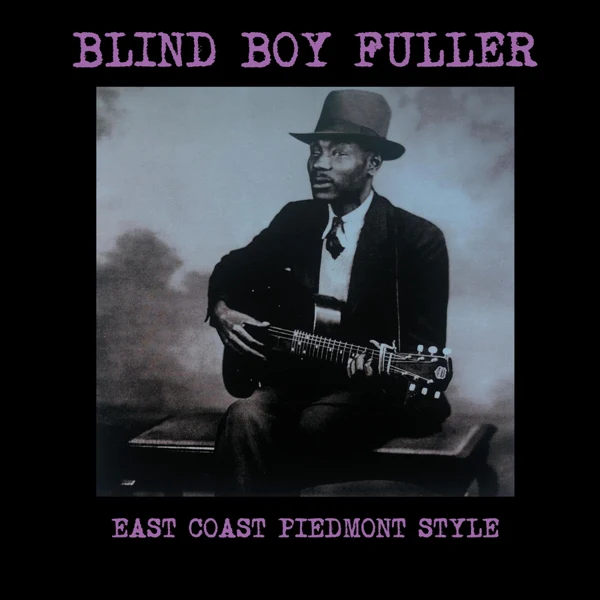
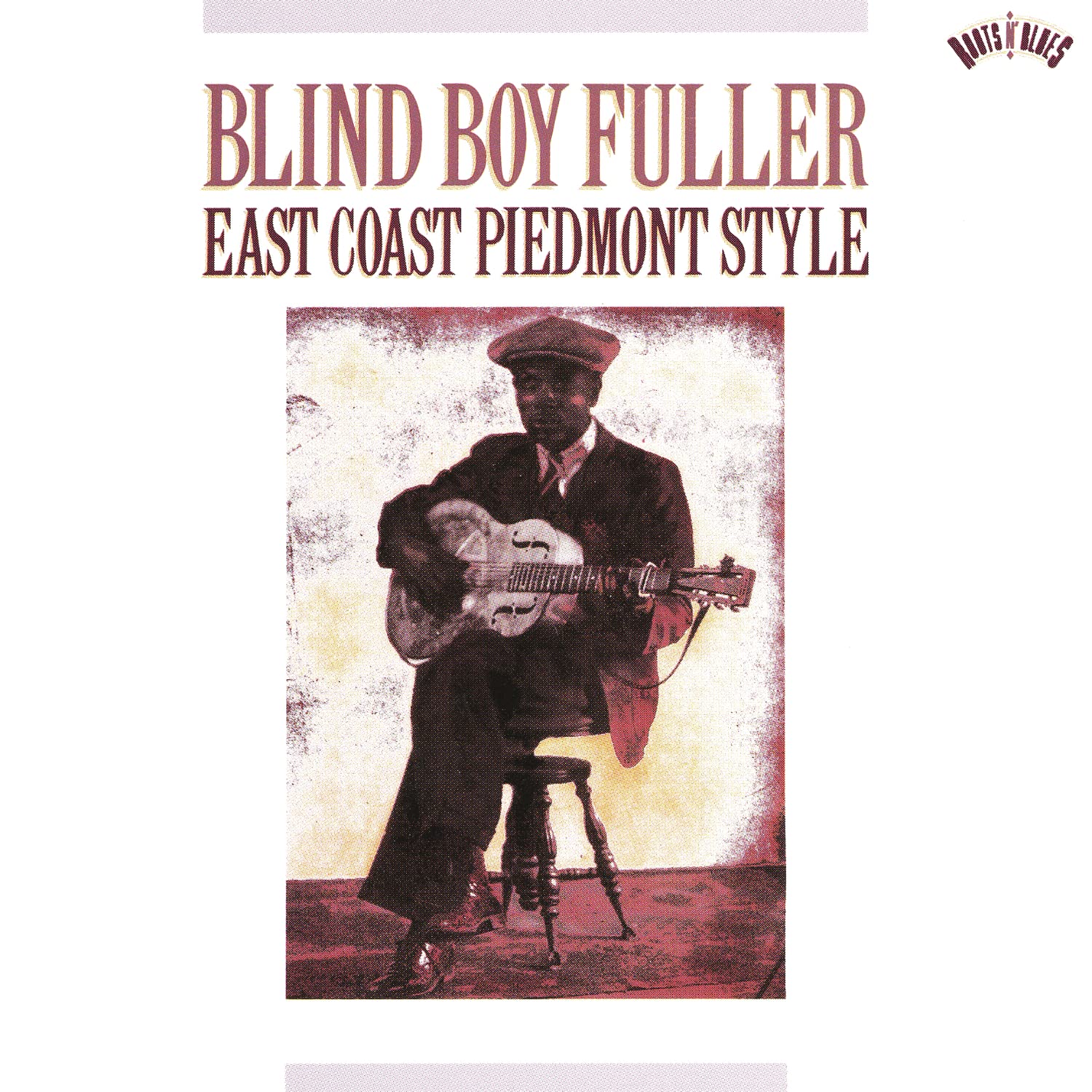
In the summer of 1991, Columbia Records released a twenty-track compilation called East Coast Piedmont Style — a carefully curated cross-section of the recordings that Fulton Allen, known as Blind Boy Fuller, had made between July 1935 and July 1939 for the American Recording Corporation. The album's liner notes were written by Bruce Bastin, the British blues scholar who had spent decades researching the Piedmont blues tradition and whose book Red River Blues: The Blues Tradition in the Southeast remains the defining academic account of the music Fuller represented. The compilation restored to commercial availability recordings that had long been available only to specialist collectors of pre-war blues 78s, and presented them to an audience that — as the folk and blues revival had increasingly established — was both larger and more diverse than anyone in 1935 could have imagined.
The title East Coast Piedmont Style announced the compilation's documentary intent: this was not merely a collection of a specific artist's recordings but a statement about a musical tradition, a geographic specificity, and an aesthetic approach that had been developed on the tobacco-town street corners and at the Saturday night fish fries of North Carolina, Virginia, and South Carolina. The Piedmont blues — characterised by the rhythmic thumb-driven bass lines and the melodic fingerpicked treble work that produced a sound somewhere between ragtime and Delta blues — was the product of a specific region's specific musical culture, and Blind Boy Fuller was its most commercially prolific and commercially successful practitioner.
Scott Yanow's AllMusic review of the album was accurate in its assessment of both the album's strengths and its limitations: Fuller "was one of the most popular of the recorded Piedmont blues artists," his "guitar playing was in the tradition of the ragtime-influenced Blind Blake and Blind Willie McTell while his singing was simple and direct," and while the album "becomes a bit repetitive after awhile for Fuller generally lacked variety," it was nonetheless the case that "taken in small doses, Blind Boy Fuller's performances were often memorable," a "reissue worth picking up for the serious blues listener."
The dismissiveness implicit in "often memorable" and "bit repetitive" tells us more about the assumptions of the rock-era music critic than it does about the recordings themselves. Fuller did not lack variety; he had a different conception of what variety was, rooted in the tradition of the street performer who gave audiences what they wanted and whose songs, therefore, needed to be immediately comprehensible and emotionally direct. Within those parameters — the parameters of a working street musician and a recording artist who was paid per side and needed to produce sellable material efficiently — Fuller produced a body of work of genuine quality, consistency, and historical significance.
This is the story of how East Coast Piedmont Style was made — the sessions, the musicians, the producer, and each of the twenty songs that the Columbia compilation gathered to tell the tale of the most popular East Coast blues recording artist of the pre-war era.
The Man: Fulton Allen and the Tobacco Towns
Fulton Allen was born on July 10, 1907 — though some sources give 1903 or 1904, the result of a biographical record that was never precisely maintained — in Wadesboro, in Anson County, North Carolina. He was one of ten children born to Calvin Allen and Mary Jane Walker, a rural family of modest means whose circumstances required Allen to begin contributing to his own support at an early age. The family was not markedly musical — his sister Ethel was reportedly a fine guitar player, which suggests some domestic musical culture — and Allen's development as a musician was shaped more by the environment he moved through than by any specific family tradition.
The loss of his eyesight was the biographical event that transformed Allen from a labourer into a musician. He began to lose his sight in his mid-teens — around 1921-1922, while living in Rockingham, North Carolina — a gradual process attributed to untreated neonatal conjunctivitis. The NC Music Office account, drawing on Bruce Bastin's research, records that "while he was living in Rockingham he began to have trouble with his eyes. He went to see a doctor in Charlotte who allegedly told him that he had ulcers behind his eyes, the original damage having been caused by some form of snow-blindness." The correct diagnosis was the untreated eye infection; whatever the precise cause, Allen was completely blind by 1927 or 1928, and the blindness made full-time physical labour impossible.
Music was the alternative that the African American community of the North Carolina Piedmont provided for its blind members through a tradition that was, by the late 1920s, well established. Allen had learned guitar as a young man — absorbing "work-songs and field-hollers he heard around him every day, and picking up ragtime tunes and popular blues songs from older players," as the All About Blues Music account describes it — and the blind musician's economic opportunity lay in street performance: playing outside the tobacco factories and warehouses where workers gathered, collecting tips from people with a small amount of disposable income and a taste for music.
He moved first to Winston-Salem, where he played on street corners near the tobacco factories. Then to Durham — the centre of North Carolina's tobacco industry, the city built on the wealth of the Bull Durham Tobacco Company and its successors — where the tobacco warehouses provided the concentrated working population that sustained street musicians. In Durham, he developed both a following and a network of musical associations that would prove crucial to his recording career: the harmonica player Saunders Terrell, who would become famous as Sonny Terry; the washboard player George Washington, who would perform with him as "Bull City Red"; the guitarist Floyd Council from nearby Chapel Hill; and the extraordinary blind guitarist and minister Reverend Gary Davis, whose guitar technique was among the most accomplished in the entire blues tradition and from whom Fuller learned much of his own playing proficiency.
The description of Fuller and his associates as "four great Piedmont bluesmen who were then all making the circuit of the North Carolina tobacco towns like Winston-Salem, Greensboro, Durham, and Raleigh during the Depression" captures the social world that produced the recordings on East Coast Piedmont Style. These were not professional musicians in the urban commercial sense but itinerant street performers whose economic survival depended on their ability to entertain mixed audiences of tobacco workers, shoppers, and passers-by. The need to hold an audience — to play music that was immediately engaging, rhythmically compelling, and lyrically accessible — shaped every aspect of Fuller's performing style and informed every recording he made.
The Producer: J.B. Long and the ARC Connection
The person responsible for connecting Blind Boy Fuller to the American Recording Corporation and producing the sessions that would eventually comprise East Coast Piedmont Style was James Baxter Long — a furniture dealer and music entrepreneur from Burlington, North Carolina, who managed the United Dollar Store in Durham and who had developed a sideline in talent scouting and session promotion that would prove consequential for the entire Piedmont blues tradition.
Long had already been working with the ARC's talent scout network before he encountered Fuller. He was, in the terminology of the period, a "race records" promoter — someone who identified local talent and brought it to the attention of the commercial recording companies that served the African American music market. His approach combined a commercial eye for what would sell on 78-rpm records with a personal enthusiasm for the specific music he was hearing in Durham and the surrounding area.
His first significant decision in managing Fuller's career was a naming one: as the musicianguide.com biography records, drawing directly on Bruce Bastin's liner notes to the compilation, "Long decided that the name Fulton Allen would not sell 78s, and as Fulton would always be elided to 'Full-ton' and 'Full' to 'Blind', so the name 'Blind Boy Fuller' was proposed." The name was not accidental: it referenced the tradition of other commercially successful blind Piedmont guitarists — Blind Blake, Blind Willie McTell — while adding the "Boy" diminutive that was simultaneously affectionate and commercially appropriate for a young street performer whose audience would respond to the informal, familiar quality of the nickname. Washington was simultaneously renamed "Bull City Red" — "Bull City" being a popular nickname for Durham, derived from the Bull Durham tobacco brand, and "Red" reportedly referring to Washington's complexion.
Long's role as producer was primarily organisational: he arranged the New York sessions, coordinated the travel from Durham to New York City, selected which musicians would accompany Fuller at which sessions, and served as the liaison between the Durham musicians and the ARC's commercial operation. He did not, in any modern sense of the term, direct the recording sessions creatively — the sonic and musical decisions were made by the ARC's New York engineers and by the musicians themselves. But his ability to navigate the commercial recording infrastructure on behalf of musicians who had no prior experience of it was essential to the existence of these recordings.
The American Recording Corporation — the ARC — was the large conglomerate that controlled multiple label imprints including Columbia, Vocalion, Melotone, Perfect, Banner, Oriole, and Romeo. It had been assembled through Depression-era acquisitions and was, by 1935, one of the major forces in the American popular music market. Its race records operation — which documented African American blues, gospel, and jazz — was one of the most commercially significant components of the company's business. The ARC's New York studios and its affiliated recording facilities in other cities were where the most important pre-war blues recordings were made.
The technical staff credited on the East Coast Piedmont Style CD release — "Frank Abbey, Engineer; Mark Wilder, Engineer" — reflects the 1991 remastering work for the Columbia release rather than the original 1935-1939 session personnel. The actual recording engineers who operated the equipment at the New York sessions in July 1935, at the April 1936 and February 1937 sessions, and at the Memphis session of July 1939 were ARC house engineers whose names have not been consistently preserved in the historical record.
The Musicians: Davis, Washington, Terry, and Fuller Alone
The personnel on East Coast Piedmont Style varies substantially across the twenty tracks, reflecting the different sessions and the different combinations of musicians that Long assembled for each trip to the recording studio.
Blind Boy Fuller (Fulton Allen, 1907–1941) was, on the vast majority of the album's recordings, the sole instrumentalist: his guitar providing both the bass line and the melody, his voice carrying the lyric. This solo guitar-and-vocal format was not merely an economic arrangement — though it was economical, requiring only one musician to be transported and paid — but reflected the reality of Fuller's street performance world, in which he regularly played alone for audiences who heard his guitar and voice as a complete musical statement.
His guitar style was rooted in the Piedmont tradition of alternating bass: the thumb striking the bass strings in a steady, rhythmic pattern while the fingers of the same hand (or of both hands) picked the treble strings for melody and accompaniment. This technique — known as "thumb-picking" or "fingerpicking" in its various forms — gave the music its characteristic quality of appearing to have two musicians playing simultaneously: one providing the rhythmic and harmonic foundation (the bass), one providing the melodic and ornamental dimensions (the treble). The technique was common to the Piedmont tradition but Fuller applied it with particular rhythmic precision, and his bass lines had a consistent drive that was one of the most immediately distinctive elements of his recorded sound.
He tuned his guitar to standard pitch but also used open G and open D tunings for specific pieces, particularly those with a slide guitar dimension. His slide work — which appears on several of the East Coast Piedmont Style tracks — has a rougher, more Delta-inflected quality than his fingerpicked playing, suggesting that he had absorbed the Delta influence without allowing it to displace his primarily Piedmont approach.
Blind Gary Davis (1896–1972) appears on the opening three tracks of East Coast Piedmont Style, recorded at the July 1935 sessions. Davis was, by every technical measure, the most accomplished guitarist in Fuller's immediate circle — a musician whose command of the instrument went beyond the Piedmont fingerpicking tradition into a comprehensive vocabulary that encompassed ragtime, gospel, blues, and jazz. He had been born in Laurens, South Carolina, and had spent much of his life in the North Carolina Piedmont area, eventually settling in Durham where he and Fuller developed their professional relationship. Long brought him to the first Fuller sessions specifically because of his technical quality — the plan being that Davis's guitar would complement and support Fuller's vocal and guitar in a way that a less accomplished player could not have managed.
Davis's subsequent career — his rediscovery by the folk revival in the late 1950s, his recordings for Prestige and Folkways, his teaching of a generation of young white guitarists including Stefan Grossman and Dave Van Ronk — gave him an independent historical significance that Fuller's early death prevented Fuller from achieving. But in July 1935, Davis was simply the most gifted guitarist that Long had available for his Durham sessions, and his contributions to the three tracks on which he appears give those recordings a musical density and sophistication that the solo Fuller sides, for all their quality, cannot match.
George Washington / Bull City Red (dates uncertain) was the washboard player and vocalist who appears on the three opening tracks of the album alongside Davis and Fuller. Washington served a dual function in Fuller's street-performance world: he was a musical accompanist (the washboard providing rhythmic percussion) and a guide (helping the blind Fuller navigate the streets of Durham). His washboard playing on the album tracks is straightforward rhythmic support rather than a featured instrumental voice, but its presence gives the three opening tracks a quality of ensemble that distinguishes them from the solo sides.
Sonny Terry (Saunders Terrell, 1911–1986) appears on the final three tracks of the album, recorded at the Memphis sessions of July 12, 1939. Terry had been born in Greensboro, Georgia, and had become blind following two separate accidents, the second of which left him with no sight whatsoever. He had settled in Durham and developed a performing relationship with Fuller that would eventually extend to the Carnegie Hall concert of December 1938 — the John Hammond "From Spirituals to Swing" event — where Sonny Terry performed in Fuller's place (Fuller having been denied a permit to leave Durham at the time). His harmonica style — characterised by high, whooping hollers and rapid rhythmic fills — was one of the most distinctive in blues, and his contributions to the three Memphis tracks give those recordings a different sonic character from both the solo guitar sides and the guitar-and-washboard ensemble of the 1935 material.
The Sessions: Four Dates, Three Cities, Five Years
The twenty tracks on East Coast Piedmont Style were drawn from four distinct recording periods, across three cities, spanning the entire length of Fuller's recording career.
The July 1935 New York Sessions (Tracks 1, 2, 3, 4, 5, 6, 7, 8, 11, 12, 20): These were the sessions at which Fuller made his commercial recording debut — the first trips to New York that Long had organised, held across four days: July 23, 24, 25, and 26. The July 1935 sessions were Fuller's introduction to the professional recording world, and the presence of Gary Davis and Bull City Red on some of the sides reflected Long's strategy of providing musical support for a musician who was, however experienced as a street performer, making his first commercial recordings.
The recording location for the July 1935 sessions was the ARC's New York studio — a professional recording facility with the electrical recording technology that had been standard in the industry since 1925. The sound quality of the 1935 recordings, as the Rate Your Music reviewer noted, is remarkable: "The sound quality is fantastic here too, it could have been recorded yesterday rather than the 30s." This quality was the product of proper studio recording technology applied to acoustic instruments in a well-prepared environment — a combination that gave the Fuller recordings a sonic clarity and warmth that field recordings of the period could not match.
The April 1936 New York Sessions (Tracks 9, 13, 14, 16): Long brought Fuller back to New York in April 1936 for a second recording session. The April 1936 sides were all recorded with Fuller accompanying himself — no Davis, no Washington, no harmonica player. The solo format gave these recordings a different character from the 1935 ensemble sides: more intimate, more directly communicative, the guitar and voice alone carrying the full weight of the musical statement.
The February 1937 Session (Tracks 10, 15): The February 1937 recording date produced only two tracks for the Columbia compilation, suggesting a session of limited scope. Fuller was accompanying himself on these sides.
The July 1939 Memphis Sessions (Tracks 17, 18, 19): The final three tracks were recorded in Memphis on July 12, 1939 — the only tracks on the album not recorded in New York City. The Memphis location reflected a practice of the ARC and its successor organisation (following the Columbia absorption) of setting up field recording operations in different regional centres. Sonny Terry's harmonica on these three tracks gave the final sessions a different sonic character from everything that preceded them on the album.
The Songwriter: Fuller's Compositional World
The song credits on East Coast Piedmont Style present a specific challenge of attribution that is common throughout pre-war blues documentation: the recordings are credited to "Blind Boy Fuller" or to "Fuller," but the compositional reality is considerably more complex. Fuller was, in the most literal sense, a songwriter — he wrote lyrics, he created melodies, he arranged music for his particular guitar style and voice. But he was also drawing on a vast pool of traditional and traditional-derived material that circulated freely through the blues and folk communities he inhabited, and the boundaries between composition and appropriation were often unclear.
The NCPedia biographical entry is direct about this complexity: "Though much of his material was culled from traditional folk and blues numbers, Fuller possessed a formidable finger-picking guitar style." The traditional material he drew from included rags, country dances, work songs, and older blues numbers that had been in circulation for decades before he recorded them. When he arranged this material for his own guitar style and voice, he was doing what blues musicians had always done: taking the common stock of shared musical material and making it his own through the specific quality of his performance and arrangement.
The songs that can be most confidently attributed to Fuller as original compositions are the ones that draw on his specific personal experience — songs about Durham geography ("Big House Bound," about his time in the Durham jail), about local figures, and about the daily circumstances of life as a blind street musician in the North Carolina Piedmont. These songs have a quality of direct autobiography that the traditional arrangements, however accomplished, cannot match.
Several of the East Coast Piedmont Style tracks were described by the Rate Your Music reviewer as "untrue blues (double entendre barely exists)," pointing to the hokum tradition that was a significant strand of Fuller's repertoire. Songs like "Sweet Honey Hole" and "Somebody's Been Playing with That Thing" belonged to the blues-hokum tradition that had been commercialised by Tampa Red, Georgia Tom (Thomas A. Dorsey), and the Famous Hokum Boys in the late 1920s, and in which the sexual double entendre was the primary commercial product. Fuller's hokum songs were neither more nor less explicit than those of his contemporaries; they were part of a commercial tradition that his audience expected and that provided reliable commercial results.
Track-by-Track Analysis
Track 1: "Rag, Mama, Rag" (Traditional, arranged Fuller)
Recorded: July 25, 1935, New York City Personnel: Blind Boy Fuller (vocal, guitar); Blind Gary Davis (guitar); Bull City Red / George Washington (washboard)
The first track — and, as the Rate Your Music reviewer notes, Fuller's "first and perhaps biggest 78" — opens the album with the most instrumentally complex of the 1935 recordings: a three-piece ensemble of Fuller's guitar, Davis's guitar, and Washington's washboard. The song is a traditional rag number that Fuller had been playing on the tobacco-town street corners for years, and its ragtime character — the syncopated rhythm, the bright, forward-moving energy, the country dance quality — is more immediately apparent here than in the slower, more introspective blues that make up other parts of the album.
Davis's guitar work on this track demonstrates the specific quality of his accompaniment: he provides a secondary guitar line that complements and occasionally answers Fuller's lead without competing with it, the two guitars interlocking in a way that gives the recording its particular sonic fullness. Washington's washboard adds rhythmic emphasis on the offbeats, his metal thimbles creating a clinking, percussive texture that suits the ragtime material perfectly.
The NCPedia account notes that Fuller had learned guitar "in the company of Blind Gary Davis, from whom he learned much of his guitar-playing proficiency" — a biographical detail that gives this first recording a quality of historical irony: the master accompanying the student on the student's debut commercial recording. The resulting performance shows Fuller's guitar holding its own with Davis's more technically advanced playing, the street performer's confidence and rhythmic authority more than compensating for whatever technical refinements Fuller had not yet absorbed.
Track 2: "Baby You Gotta Change Your Mind" (Traditional, arranged Fuller)
Recorded: July 25, 1935, New York City Personnel: Blind Boy Fuller (vocal, guitar); Blind Gary Davis (guitar); Bull City Red / George Washington (washboard)
The B-side of Fuller's debut 78 was the companion piece to "Rag, Mama, Rag," recorded at the same July 25 session with the same three-piece lineup. The Rate Your Music reviewer specifically notes that the chord sequence of this song was "adopted by Arlo Guthrie on 'Alice's Restaurant'" — a biographical detail that connects this 1935 recording to one of the most celebrated folk songs of the 1960s and demonstrates the unexpected reach of Fuller's compositional and arranging influence. The song's structure — a repeating chord sequence with lyrical variations above it — is precisely the kind of flexible musical framework that lends itself to extended narrative, as Guthrie's eighteen-minute story demonstrated.
Davis's guitar contribution to this track has a slightly more prominent melodic role than on "Rag, Mama, Rag," his single-note lines occasionally leading rather than following Fuller's vocal. Washington's washboard maintains the rhythmic drive established in the first track. The result is another document of the three-piece ensemble at its most cohesive.
Track 3: "I'm Climbing on Top of the Hill" (Traditional, arranged Fuller)
Recorded: July 26, 1935, New York City Personnel: Blind Boy Fuller (vocal, guitar); unknown second guitarist
The third track marks the first appearance of Fuller in a different ensemble configuration — accompanied by an unknown second guitarist rather than Davis and Washington. The identity of the second guitarist has not been established in the available historical record; the person may have been a New York studio musician or another Durham musician who accompanied Fuller on the July trip. Whatever the identity, the resulting recording has a different character from the Davis-accompanied tracks: more straightforward, less harmonically complex, the accompaniment guitar playing a simpler supportive role than Davis's sophisticated complementary lines.
The song itself is a traditional piece that Fuller adapted for his performing context, its imagery of "climbing on top of the hill" carrying the conventional blues metaphor of aspiration and difficulty simultaneously — the hill as both literal challenge and emblematic of the larger struggle of keeping oneself alive and moving forward.
Track 4: "My Brownskin Sugar Plum" (Fuller)
Recorded: July 23, 1935, New York City Personnel: Blind Boy Fuller (vocal, guitar)
The first of the solo Fuller recordings on the album — and chronologically the earliest track, from the first day of recording — demonstrates the guitar-and-voice format that constitutes the majority of the album. "My Brownskin Sugar Plum" is a love song directed at a specific, physically described woman, the "brownskin" of the title signalling the African American community's complex aesthetic relationship to skin tone. The guitar work here shows Fuller's thumb-picking style without the complication of a second instrument — you can hear the bass thumb driving the rhythm while the treble fingers carry the melody, the two functions of the single guitar creating the impression of a fuller ensemble.
Track 5: "I'm a Rattlesnakin' Daddy" (Fuller)
Recorded: July 23, 1935, New York City Personnel: Blind Boy Fuller (vocal, guitar)
One of the more distinctively characterised solo tracks from the first session, "I'm a Rattlesnakin' Daddy" demonstrates the ragtime-influenced dimension of Fuller's style that the Rate Your Music reviewer identified as characteristic: "brisk ragtime flourishes" in the guitar work, a lightness and forward momentum in the rhythm that connects the song to the parlour rag and country dance traditions rather than to the heavier, slower Delta blues. The "rattlesnake" identity the narrator claims is a conventional blues masculine assertion — powerful, potentially dangerous, worthy of respect — deployed with the good humour that distinguished Fuller's hokum-inflected material from his more serious blues.
Track 6: "Baby, I Don't Have to Worry" (Fuller)
Recorded: July 23, 1935, New York City Personnel: Blind Boy Fuller (vocal, guitar)
A slow blues that demonstrates the contrast within the single July 23 session between the ragtime-flavoured material and the more introspective blues. The relaxed confidence of the title — the narrator asserting that he doesn't have to worry because he has whatever he needs — has the quality of genuine contentment rather than bravado, and Fuller's vocal delivery is correspondingly relaxed and warm. The guitar provides steady rhythmic support without the busier ornamental work that characterises the ragtime pieces.
Track 7: "Looking for My Woman" (Fuller)
Recorded: July 24, 1935, New York City Personnel: Blind Boy Fuller (vocal, guitar)
Recorded on the second day of the July sessions, "Looking for My Woman" is a blues of romantic search — the narrator displaced from his romantic anchor, moving through spaces that would normally be filled by a woman's presence. The guitar work demonstrates Fuller's ability to maintain the alternating bass while using the treble strings for melodic fills that comment on and ornament the vocal line, the two guitar voices maintaining their dialogue across the performance.
Track 8: "Ain't It a Cryin' Shame?" (Traditional, arranged Fuller)
Recorded: July 24, 1935, New York City Personnel: Blind Boy Fuller (vocal, guitar)
The Rate Your Music reviewer identifies this track as "leaning towards Delta blues" in its character — a characterisation that points to the influence of the deeper, heavier Delta style on Fuller's primarily Piedmont approach. The harmonic language is darker than on the ragtime pieces, the guitar work less ornamental and more rhythmically direct, the vocal delivery more strained and emotional. The phrase "cryin' shame" belongs to the tradition of the blues as moral commentary — the observation that something is a crying shame combines personal emotion (the crying) with social judgment (the shame) in the manner characteristic of blues as a form of community expression.
Track 9: "Walking My Troubles Away" (Fuller)
Recorded: April 28, 1936, New York City Personnel: Blind Boy Fuller (vocal, guitar)
The first of the April 1936 tracks, "Walking My Troubles Away" is one of Fuller's most lyrically accomplished compositions — a song that uses the act of walking as a metaphor for the continuous effort required to deal with life's difficulties. The Rate Your Music reviewer includes this in the group that "lean towards Delta blues," and the guitar work has the rougher quality of the Delta slide tradition mixed with the Piedmont fingerpicking that characterises most of the album. The lyric — "I keep on walkin', trying to walk my trouble away / I'm so glad trouble don't last always" — has the quality of blues wisdom rather than personal complaint.
Track 10: "Untrue Blues" (Fuller)
Recorded: February 9, 1937 Personnel: Blind Boy Fuller (vocal, guitar)
One of two tracks from the February 1937 session, "Untrue Blues" addresses the theme of romantic infidelity with the directness that Fuller consistently brought to the personal dimensions of his lyric writing. The guitar work on this track has a particularly clean quality — the February 1937 recordings show Fuller at his most technically precise, the alternating bass perfectly steady, the treble fills economical and well-placed.
Track 11: "Somebody's Been Playing with That Thing" (Fuller)
Recorded: July 26, 1935, New York City Personnel: Blind Boy Fuller (vocal, guitar)
One of the hokum tracks in which, as the Rate Your Music reviewer noted, the double entendre "barely exists" — this is straightforwardly suggestive material in the tradition of blues sexual humour. The "thing" in question is available to multiple interpretations, all of them intended. Fuller's delivery has the comedic assurance of a street performer who has played this kind of material many times and knows exactly how an audience responds to it — the slight pause before the key word, the knowing quality of the vocal inflection. The guitar work is brisk and rhythmically assertive, the hokum material requiring a lighter, more dance-oriented approach than the slower blues.
Track 12: "Log Cabin Blues" (Traditional, arranged Fuller)
Recorded: July 26, 1935, New York City Personnel: Blind Boy Fuller (vocal, guitar)
Another track whose chord sequence the Rate Your Music reviewer connects to "Alice's Restaurant" — suggesting a shared traditional melodic framework that both Fuller and Guthrie drew from independently. The "log cabin" of the title invokes a tradition of rural nostalgia that runs through both blues and country music — the cabin as a symbol of a simpler, more grounded life that the narrator has moved away from or lost. Fuller's guitar work here has a particularly rolling quality, the bass lines finding a momentum that carries the lyric forward with the natural ease of a street performer who has perfected the art of keeping his audience engaged.
Track 13: "Cat Man Blues" (Fuller)
Recorded: April 29, 1936, New York City Personnel: Blind Boy Fuller (vocal, guitar)
The second of the April 1936 recordings features Fuller in the persona of the "cat man" — a figure whose capacity for independent movement, sexual adventurism, and general disregard for convention made him a useful blues character type. Fuller's solo guitar work on this track demonstrates the characteristic quality of the April 1936 sessions: clean, precise, technically accomplished, with the alternating bass and treble melody working together in the seamlessly integrated manner of a fully trained musician.
Track 14: "Black and Tan" (Fuller)
Recorded: April 29, 1936, New York City Personnel: Blind Boy Fuller (vocal, guitar)
The title refers to "black and tan" clubs — the integrated (or semi-integrated) entertainment venues where Black and white patrons mixed, a social phenomenon that was simultaneously transgressive and commercially significant in the segregated America of the 1930s. Fuller's specific reference to this world suggests a personal familiarity with the cultural geography of integration — the specific spaces where the racial boundaries of Jim Crow America were temporarily suspended, typically in the service of entertainment. The Rate Your Music reviewer classifies this among the tracks "leaning towards Delta blues" in character.
Track 15: "Sweet Honey Hole" (Fuller)
Recorded: February 9, 1937 Personnel: Blind Boy Fuller (vocal, guitar)
One of the hokum tracks from the February 1937 session, "Sweet Honey Hole" is identified by the Rate Your Music reviewer as one of the "catchy dance tunes of the type often associated with jug bands and performers like Leon Redbone." The "honey hole" metaphor — derived from the beekeeping image of the honey-filled comb — was a standard piece of blues sexual imagery, its meaning unmistakable to any audience familiar with the hokum tradition. Fuller's guitar on this track has the bright, forward-moving quality of the ragtime-influenced Piedmont style at its most danceable.
Track 16: "Keep Away from My Woman" (Fuller)
Recorded: April 28, 1936, New York City Personnel: Blind Boy Fuller (vocal, guitar)
A territorial blues — the narrator asserting ownership over a woman and warning potential rivals away — "Keep Away from My Woman" deploys the conventional blues masculine possessiveness with straightforward directness. The Rate Your Music reviewer includes this among the group "leaning towards Delta blues," and the guitar work is correspondingly more assertive and rhythmically direct than the lighter ragtime pieces. The social circumstances of Fuller's street performance world — where the threat of romantic competition was both real and constant — give the territorial assertion of the lyric a specific biographical weight.
Track 17: "I'm a Stranger Here" (Fuller)
Recorded: July 12, 1939, Memphis Personnel: Blind Boy Fuller (vocal, guitar); Sonny Terry (harmonica)
The first of the three Memphis tracks introduces Sonny Terry's harmonica — the sonic shift from the solo guitar sides immediately apparent in the density and warmth of the ensemble sound. The "stranger here" of the title invokes the blues tradition of displacement and disconnection — the narrator in a place that is not his own, among people who do not know him, navigating the social world of the recently arrived or the perpetually passing through. Terry's harmonica fills the spaces between Fuller's vocal phrases with the high, searching quality that characterised his approach, the two blind musicians from North Carolina playing together in a Memphis recording studio with the ease of musicians who have been performing together for years.
Track 18: "You've Got Something There" (Fuller)
Recorded: July 12, 1939, Memphis Personnel: Blind Boy Fuller (vocal, guitar); Sonny Terry (harmonica)
The second Memphis track, cited by the Rate Your Music reviewer as "especially" characteristic of the "brisk ragtime flourishes" of the Piedmont style, shows Fuller at his most technically assured in the late sessions. The four years between the July 1935 debut and this July 1939 recording had not changed the fundamental character of his style but had refined its execution — the guitar work is notably clean and precise, the vocal delivery relaxed and confident. Terry's harmonica has a playful quality that suits the song's relatively light emotional register.
Track 19: "Evil-Hearted Woman" (Traditional, arranged Fuller)
Recorded: July 12, 1939, Memphis Personnel: Blind Boy Fuller (vocal, guitar); Sonny Terry (harmonica)
The final Memphis track — and the last of the three Sonny Terry collaborations — addresses the blues standard theme of feminine treachery with Fuller's characteristic directness. The "evil-hearted woman" is one of the oldest stock characters in the blues tradition, her malevolence serving as the explanatory framework for whatever bad luck or suffering the narrator is experiencing. Fuller's guitar and vocal and Terry's harmonica perform this traditional material with the assurance of two musicians who have played it many times before, and the result is one of the most cohesive ensemble performances on the album.
Track 20: "Evil Hearted Woman (Alternate Version)" (Traditional, arranged Fuller)
Recorded: July 25, 1935, New York City Personnel: Blind Boy Fuller (vocal, guitar)
The album closes with a previously unissued alternate take from the 1935 sessions — one of the five "previously unreleased" tracks that the Qobuz account identifies as a feature of the East Coast Piedmont Style compilation. The 1935 version differs from the 1939 Memphis version in being a solo guitar performance rather than a guitar-harmonica duet, and the guitar work reflects the earlier stage of Fuller's technique: slightly less polished than the 1937 and 1939 recordings, but already demonstrating the characteristic alternating bass and melodic treble that would define his sound throughout his career. The decision to close the album with this solo version of the same theme that had just appeared in the Terry duet creates a satisfying formal symmetry: the compilation has moved through multiple ensemble configurations to arrive, finally, at the essential Fuller — one guitar, one voice, the complete musical statement in its most stripped-back and direct form.
The Compilation's Construction: Bruce Bastin and the Editorial Vision
The specific selection of these twenty tracks from Fuller's extensive catalogue — over 130 recorded sides in five years — reflects the editorial decisions of whoever assembled the compilation for Columbia Records' 1991 release. The liner notes by Bruce Bastin, the British scholar whose expertise in the Piedmont blues tradition was unmatched, provided the historical context that gave the album its documentary significance beyond its purely musical value.
The five previously unissued tracks — identified by the Qobuz account as a feature of the release — were presumably drawn from ARC session files that Columbia had inherited through the chain of corporate acquisitions running from ARC through CBS to Sony. Their inclusion alongside the previously released material gave the compilation both historical completeness (filling in gaps in the known Fuller discography) and commercial appeal to collectors who might already own the standard tracks on earlier reissues.
The sequencing of the album reflects a sophisticated understanding of the material's internal dynamics. Opening with the three ensemble tracks featuring Davis and Washington — the most sonically complex and historically significant recordings — established immediately the quality and range of what the compilation would offer. The subsequent solo tracks allowed Fuller's individual artistry to assert itself without the complication of ensemble dynamics. The Memphis tracks at the end of the album provided a satisfying structural conclusion: a return to the ensemble format, with Sonny Terry's harmonica providing a different but equally effective complementary voice, and a temporal completion of Fuller's recording history from 1935 beginning to 1939 near-end.
The Context: The Piedmont Blues Tradition
Understanding East Coast Piedmont Style requires understanding what it is that the album's title announces: a specific musical tradition that was geographically localised, historically distinctive, and aesthetically different from the more widely known and more extensively documented Delta blues with which it is frequently contrasted.
The Piedmont region of the American Southeast — the rolling upland country between the Appalachian Mountains to the west and the coastal plain to the east, encompassing much of Virginia, North Carolina, South Carolina, and Georgia — developed its own distinctive blues style as a result of the specific social and economic conditions that characterised the region. The tobacco economy that sustained the Piedmont's African American working class from the late nineteenth century onward created the specific performance environment — the factory shift workers, the Saturday tobacco auction crowds, the urban street corners of Durham and Winston-Salem and Raleigh — in which the Piedmont blues style was developed and refined.
The guitar technique that distinguishes Piedmont from Delta blues — the alternating bass with melodic treble, the ragtime influence, the connection to country dance and street performance traditions — was the product of this specific performance environment. A musician playing for street audiences or at dance parties needed to provide both the rhythmic foundation and the melodic interest of the music simultaneously, without the support of a full band. The fingerpicking technique that achieved this was therefore the essential Piedmont survival skill as well as its aesthetic signature.
Fuller was, as the Forced Exposure description notes, "one of the originators and most famous progenitors of what's known as the Piedmont Style of blues music, characterised by rhythmic bass lines played by the thumb while the melody is fingerpicked, resulting in a sound similar to ragtime." The comparison to ragtime was not accidental: the ragtime piano style, with its alternating bass-chord left hand and melodic right hand, was the direct musical ancestor of the Piedmont guitar style, both techniques solving the same problem of producing a complete musical statement from a single instrument.
The Influence: From Durham to the World
Fuller's influence on subsequent blues musicians was both direct and diffuse. The most traceable direct influence was on Brownie McGhee — the Tennessee-born blues guitarist who moved to Durham after Fuller's death and who began his career deliberately emulating Fuller's style, at one point performing as "Blind Boy Fuller No. 2." McGhee's subsequent career — his decades of partnership with Sonny Terry, his folk revival performances, his recordings for Atlantic and other labels — carried the Piedmont tradition into the post-war commercial blues world in ways that Fuller's early death had prevented Fuller from achieving.
The influence on the folk revival was equally significant though less direct. The researchers and enthusiasts who were documenting the pre-war blues tradition in the early 1960s found in Fuller's recordings a body of material of considerable quality and accessibility — music that was immediately engaging to non-specialist ears, that had the rhythmic appeal of ragtime alongside the emotional directness of blues, and that demonstrated what "authentic" Piedmont tradition sounded like in its commercially recorded form. The subsequent generations of young white guitarists who absorbed the Piedmont fingerpicking tradition — Ry Cooder, Stefan Grossman, Bob Dylan's early acoustic style — were drawing from a pool that Fuller had done more to document commercially than any other single artist.
The legacy of the East Coast Piedmont Style album specifically is the accessibility it provided to this tradition at a moment when the Columbia catalogue was being systematically excavated and the pre-war recordings were reaching new audiences through CD reissue. In 1991, before streaming made everything available simultaneously, a Columbia CD compilation was a significant act of cultural mediation — choosing these twenty tracks, sequencing them this way, providing Bastin's liner notes, and releasing it under the rubric of "East Coast Piedmont Style" made a specific historical claim about what this music was and why it mattered.
Conclusion: The Sound of Tobacco Town Saturdays
Blind Boy Fuller died on February 13, 1941, in Durham, North Carolina, having been treated for kidney trouble and related illnesses that had been undermining his health for several years. He was thirty-three or thirty-seven years old, depending on which birth date you accept. In his five years of recording, he had produced more than 130 commercial sides — the most prolific recording career of any East Coast blues musician of the pre-war era.
The twenty tracks that Columbia assembled on East Coast Piedmont Style represent the best of this output: the debut ensemble recordings with Gary Davis and Bull City Red that showed the Piedmont blues tradition at its most formally accomplished; the solo sides that demonstrated Fuller's specific individual artistry in its most concentrated form; and the Memphis trio recordings with Sonny Terry that gave the compilation its final chapter. Together they document a musician who was, in the specific context of his time and place, exactly what the blues tradition required: a street performer of technical accomplishment, commercial intelligence, and genuine emotional directness, who recorded his world — the tobacco towns, the street corners, the Saturday night dances, the loves and losses of the North Carolina Piedmont African American community — with the immediacy and honesty that only a working musician living inside that world could provide.
"Essential blues from one of the greatest talents of the Southeast," the Forced Exposure catalogue entry said. That is the right assessment, and East Coast Piedmont Style is the right album to make the case for it.
Selected Discography
East Coast Piedmont Blues - Blind Boy Fuller
East Coast Piedmont Style (Columbia CK 46777, 1991). Compiled from recordings originally made for the American Recording Corporation. Session dates and locations: July 23, 24, 25, 26, 1935, New York City; April 28, 29, 1936, New York City; February 9, 1937; July 12, 1939, Memphis, Tennessee. Liner notes by Bruce Bastin. Remastered by Frank Abbey and Mark Wilder. All compositions credited to Blind Boy Fuller (Fulton Allen) or arranged from traditional sources. Principal personnel: Blind Boy Fuller (vocal, guitar); Blind Gary Davis (guitar, tracks 1-3); George Washington / Bull City Red (washboard, tracks 1-3); Sonny Terry / Saunders Terrell (harmonica, tracks 17-19); unknown second guitarist (track 3). Five of the twenty selections were previously unreleased. Blind Boy Fuller (Fulton Allen): born July 10, 1907, Wadesboro, North Carolina; died February 13, 1941, Durham, North Carolina.