Introduction: The Archive the World Didn't Know It Was Building
On a Monday morning in November 1936, in room 414 of the Gunter Hotel in San Antonio, Texas, a twenty-five-year-old itinerant musician from Mississippi sat down in front of a microphone and played the first song he would ever record commercially. He had arrived in San Antonio the previous evening; the night before that recording session he had been arrested on a false vagrancy charge, beaten, and thrown in jail, rescued only by the intervention of the recording producer who had promised to look out for him. He was using someone else's guitar — his own had been smashed. And on the morning of November 23, 1936, Robert Johnson recorded "Kind Hearted Woman Blues," the first of twenty-nine songs that would constitute the most influential body of work in the history of the blues.
The men who produced that session — Don Law, the British-born ARC producer who had rescued Johnson from jail the night before, and Art Satherley, the overall ARC field producer — were doing their jobs. The recordings they were making would be released on Vocalion's Race Series, sold through dime stores and mail-order catalogues to African American audiences in the rural South, priced at a few cents each, pressed in quantities of a few thousand copies at most. The sessions paid Johnson approximately $10-$15 per song — a total of roughly $300 for his entire recording legacy. No royalties. No contracts with long-term implications. No one, on any side of the transaction, had any idea that these recordings would eventually be called, by the Rock and Roll Hall of Fame, perhaps "the first ever rock star's" recordings.
But Columbia Records owned those recordings. Through the chain of corporate acquisition that had brought the American Record Corporation — for which Vocalion was a subsidiary — into CBS's hands in December 1938, Columbia inherited Robert Johnson. It also inherited Bessie Smith, the greatest blues singer who had ever recorded. It inherited the OKeh field recordings of country blues from the late 1920s. It inherited, in embryo, the entire documentation project that would eventually produce the most comprehensive archive of pre-war blues in commercial existence.
This is the story of what Columbia did with that inheritance — and what the inheritance did to Columbia.
The Pre-History: Okeh Records and the Race Market
To understand Columbia's relationship to the blues, you must first understand that the blues came to Columbia largely through a door it had not originally opened. The commercial recording of African American music was pioneered not by Columbia but by OKeh Records — the label founded in 1918 by Otto Karl Ernst Heinemann, a German-born businessman, and named by compressing his initials with those of his business partner. OKeh's significance in the history of recorded music can hardly be overstated: it was the label whose first commercially successful recording of a Black artist — Mamie Smith's "Crazy Blues" in 1920 — essentially created the race records market as a commercial category and proved that there was money to be made from African American music made by African American artists.
Perry Bradford, a Black composer, had spent months in 1919 and early 1920 persuading OKeh's management to record Mamie Smith. The industry assumption was that Black music would not sell to Black consumers in sufficient quantities to justify the investment, an assumption rooted partly in racism and partly in the genuine absence of market research data. Bradford's persistence eventually produced "Crazy Blues" — a recording that sold over 75,000 copies in its first month and approximately one million copies in its first year, demonstrating with unmistakable commercial clarity that the assumption was wrong.
The success of "Crazy Blues" triggered a gold rush. Every major and minor record company immediately began seeking out African American blues singers to record. The market that OKeh had opened was the most significant new commercial opportunity in the record industry since the transition from cylinders to discs. Paramount Records, Black Swan Records, Victor, and Columbia all moved quickly into what the industry had taken to calling "race records" — a term that would remain in use until the late 1940s, when "rhythm and blues" replaced it.
Columbia's particular entry into the race market was through a combination of its own initiative and its eventual acquisition of OKeh. In 1925, Columbia purchased OKeh Records outright — bringing into the Columbia family not just a significant catalogue of existing recordings but the operating infrastructure, the talent relationships, and the field recording capability that OKeh had developed. Frank Walker, Columbia's head of its race division, continued the work that OKeh had begun, taking recording equipment on field trips through the American South and documenting the blues musicians and gospel singers who were creating the most vital and original music in America.
OKeh's own blues catalogue at the time of the acquisition already included recordings of enormous historical significance. Lonnie Johnson, the extraordinary guitarist and singer who had won a contest to secure his first OKeh recording contract in 1925, was one of the most sophisticated blues musicians of the 1920s and his OKeh recordings — "Mr. Johnson's Blues," "Texas Blues," "Falling Rain Blues," and dozens of others — established him as the preeminent blues guitarist of his era. The influence of Johnson's guitar style on virtually every blues and jazz guitarist who came after him, from Eddie Lang to Charlie Christian to Robert Johnson, is one of the connective threads of twentieth-century American music, and Columbia's ownership of his recordings gave the label a foundational document of that tradition.
Sara Martin, Alberta Hunter, and other blues queens whose OKeh recordings had been central to the race market of the early 1920s were also part of the acquisition. Hunter — who would go on to record for Columbia as well — brought a lyrical sophistication and a theatrical intelligence to blues singing that influenced the very different styles of Bessie Smith and Billie Holiday, and her OKeh sides are among the more undervalued recordings in the broader Columbia archive.
Frank Walker and the Signing of Bessie Smith
The most consequential act of talent acquisition in Columbia's history — at least as far as the blues is concerned — was Frank Walker's decision to sign Bessie Smith in 1923. Walker had seen Smith perform, had recognised immediately that she was something exceptional, and had tracked her down and brought her to Columbia before any of the other labels competing for talent in the newly opened race market could sign her.
Walker's role in blues history extends far beyond the Smith signing. He was Columbia's head of its race and hillbilly divisions through the 1920s and early 1930s — the man responsible for identifying and recording the regional talent that the major labels were sending field units to document. His approach to this work was marked by a combination of commercial instinct and genuine musical understanding: he heard what was extraordinary about a performance, understood why it would communicate to an audience, and had the practical skill to capture it on the primitive recording technology of the acoustic and early electrical era.
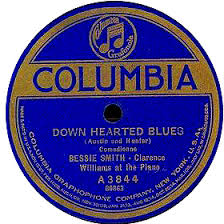
The session he set up for Smith at Columbia's recording studio on February 15, 1923, was not, by the standards of the time, remarkable. Smith was accompanied by pianist Clarence Williams, who also provided the accompaniment that gave her early recordings their characteristic sound. The first sides recorded were "Gulf Coast Blues" and "Downhearted Blues" — the latter a song whose composer Alberta Hunter had already had a hit with on the Paramount label. Smith's version, when released, sold approximately 780,000 copies in 1923 alone, making it one of the most commercially successful recordings of the year.
Columbia established its "race records" series partly as a result of the Smith success, and Smith's "Cemetery Blues" (recorded September 26, 1923) was the first song issued under the new classification. The irony of this institutional history — that the label's race series was inaugurated by one of the greatest singers in American music history — is one of the more striking coincidences in the Columbia story.
Bessie Smith recorded 160 sides for Columbia between 1923 and 1933, accompanied on different occasions by the finest jazz musicians of the era: Louis Armstrong, whose cornet work on "St. Louis Blues" and other sessions with Smith created some of the most celebrated moments in either artist's discography; Coleman Hawkins and members of Fletcher Henderson's orchestra; Charlie Green on trombone; and many others. The breadth and depth of this catalogue — collected and reissued by Columbia in a series of five double albums beginning in 1970, and then comprehensively in a five-volume Complete Recordings series beginning in 1991 — makes it the richest single body of blues documentation in commercial recording history.
Smith's professional relationship with Columbia was, like all such relationships of the era, commercially exploitative in ways that the present era finds indefensible. She was paid a flat fee per recorded side with no royalty participation in the recordings' commercial success. She made Columbia millions of dollars; she could not read, and was never paid royalties. The asymmetry between the artistic achievement and the financial return was total, and its effects were permanent: Smith died in a car accident in 1937 without having accumulated the financial security that her commercial success should have provided.
But the recordings themselves survived, and their survival — through Columbia's ownership of the masters, and its eventual decision to reissue and preserve them — has been one of the most important acts of cultural stewardship in American musical history. The reissues produced by Lawrence Cohn and others at Columbia in the 1970s, 1980s, and 1990s made Smith's recordings accessible to generations of listeners who would otherwise have had no access to them, and in doing so transmitted her influence to the present day.
Louis Armstrong and the Early Jazz-Blues Connection
Columbia's early recording activity documented not just the blues queens who sang blues professionally but the jazz musicians whose work was inseparable from the blues tradition. Louis Armstrong's first recordings as a leader — made for OKeh in 1923 — established him as the most extraordinary improvisational voice in American music, and his Columbia work of the late 1920s included the recordings with Bessie Smith that constitute some of the most extraordinary moments in the blues-jazz intersection.
Armstrong's "West End Blues" (OKeh, 1928) — one of the recordings that OKeh carried into the Columbia family — is frequently cited as the single most significant recording in jazz history, the one that most clearly established the individual improviser as the central creative force in American popular music. The recording's opening cadenza — unaccompanied trumpet, purely improvised, running for twelve seconds before the band enters — is the sound of a new aesthetic arriving in the world, of jazz and blues converging in a single instrument and a single musician's understanding of what music could do.
The broader OKeh catalogue that Columbia inherited through the 1925 acquisition contained a remarkable concentration of this early jazz-blues material: the records made by Louis Armstrong and His Hot Five and Hot Seven from 1925 to 1928 represent the most complete single document of the New Orleans jazz tradition's translation into the commercial recording medium, and they are inseparable from the blues tradition from which jazz grew.
The ARC Years: Charley Patton, Skip James, and the Country Blues Documentation
The merger of various record companies and labels through the early 1930s Depression years eventually produced the American Record Corporation — the ARC whose purchase by CBS in 1938 gave Columbia its most historically significant blues archive. Through the various labels that ARC controlled — Vocalion, Brunswick, Banner, Perfect, Oriole, Romeo, Melotone, and Conqueror — the corporation had been documenting country blues musicians through the late 1920s and early 1930s in ways that produced some of the most significant recordings in American music history.
The Vocalion Race Series was the primary outlet for blues recordings through the ARC years, and the roster of artists who recorded for it reads like a canon of American music: Charley Patton, Son House, Skip James, Big Bill Broonzy, Tampa Red, Georgia Tom Dorsey, Memphis Minnie, Peetie Wheatstraw, Big Joe Williams, Arthur "Big Boy" Crudup, and dozens of others whose recordings documented the Delta and Chicago blues traditions with a richness and variety that no subsequent documentation effort could match.
Charley Patton — the rotund, boisterous, powerful musician from the Mississippi Delta who is often called the "Father of the Delta Blues" — recorded for Paramount rather than ARC, but his influence on the entire Vocalion blues roster is pervasive. The Delta style he developed — the heavy, percussive guitar work, the shouted vocal, the use of the guitar as a rhythm as much as a melody instrument — shaped every subsequent musician who came out of the Delta, including the man who would become Columbia's most mythologised blues possession.
Big Bill Broonzy's ARC/Vocalion recordings of the 1930s were among the most commercially successful in the race market. Broonzy, who had migrated from Mississippi to Chicago and developed a polished urban blues style that drew from both the country tradition and the sophisticated jazz-inflected sound of the Chicago scene, was the most consistently successful blues recording artist of the late 1930s. His Columbia recordings of the 1940s — including the "I Can't Be Satisfied" that would provide the template for Muddy Waters's first major hit — documented the transition from pre-war to post-war blues styles with a completeness that no single artist's catalogue could otherwise provide.
Robert Johnson: The Man Who Changed Everything, Three Times Over
Columbia's ownership of Robert Johnson's recordings is the most consequential single fact in the label's relationship to the blues. It is consequential in three distinct ways: commercially, in terms of what the recordings have earned; culturally, in terms of what they have meant to subsequent music; and historically, in terms of what they represent as documents of a specific musical tradition at a specific moment.
Johnson recorded twenty-nine songs across five days in November 1936 and June 1937, under the direction of producer Don Law and field coordinator Art Satherley, for the ARC corporation that would become part of Columbia. The sessions took place in makeshift studios — room 414 of the Gunter Hotel in San Antonio, and a third-floor storage room at the former Vitagraph/Warner Bros. building in Dallas — with portable recording equipment that was the standard technology for field documentation of this period.
Law's account of the San Antonio sessions, preserved in correspondence with Frank Driggs (who produced the first Columbia LP reissue), provides one of the most vivid documentary accounts of a blues recording session in the pre-war era. The night before the first session, Johnson was arrested on a false vagrancy charge, beaten by the police, and thrown in jail. Law, who had promised to look out for him, appeared at the jail and had him released. Johnson arrived at the studio the next morning still feeling the effects of the assault, using a borrowed guitar because his own had been smashed. And in that state — beaten, jailed, playing on an unfamiliar instrument — he recorded "Kind Hearted Woman Blues," "I Believe I'll Dust My Broom," "Sweet Home Chicago," "Come On In My Kitchen," and "Cross Road Blues" in a single day.
The ARC corporation paid Johnson approximately $10-$15 per song, for a total of roughly $300 for all twenty-nine recordings. No royalties were attached to the arrangement. Johnson himself never had the opportunity to renegotiate: he died in August 1938, probably poisoned, at a plantation near Greenwood, Mississippi. He had made twelve two-sided singles for Vocalion; the most commercially successful, "Terraplane Blues," had sold as many as 10,000 copies. By any commercial standard of the time, he was a modestly successful race records artist.
When Columbia bought ARC in December 1938, the recordings became Columbia's property — stored in a vault, unheard by the vast majority of the music-buying public, generating minimal commercial activity. They remained essentially dormant for more than two decades.
The first significant act of rescue came from John Hammond, whose championing of Johnson's recordings in conversations with musicians, producers, and journalists helped build the critical mass of awareness that would eventually produce Columbia's 1961 album release. Hammond had known of Johnson's existence through talent scouting contacts in the South, had reportedly planned to include him in the "From Spirituals to Swing" concert at Carnegie Hall in 1938, and was devastated to learn that Johnson was already dead by the time the concert took place. He kept Johnson's name alive through the late 1940s and 1950s by mentioning it whenever appropriate in print or in conversation.
The 1961 Columbia LP King of the Delta Blues Singers — produced by Frank Driggs with liner notes by Don Law — was the event that ignited the conflagration. Released on Columbia Records with the label number 1654, it presented sixteen of Johnson's recordings to a folk revival audience that was hungry for exactly this kind of material: authentic, deeply personal, rooted in a specific regional tradition, and performed with a technical mastery and an emotional intensity that no contemporary popular music could match. The Rolling Stones, then in their formative stages in London, encountered the album and were transformed by it. Eric Clapton encountered it and was transformed by it. Keith Richards would later describe hearing "Come On In My Kitchen" for the first time as one of the most significant events of his musical education. The British blues revival — the movement that produced the Rolling Stones, the Yardbirds, the Animals, Fleetwood Mac, and Led Zeppelin — was substantially powered by Columbia's 1961 decision to release a sixteen-track album of recordings made in hotel rooms in Texas in 1936 and 1937.
The 1990 Columbia two-CD box set The Complete Recordings — produced by Lawrence Cohn, with essays by Eric Clapton and Keith Richards, and containing all forty-one known Johnson recordings — was commercially the most extraordinary event in the label's blues history. It reached number 80 on the Billboard 200, was certified platinum (one million copies sold), and won the Grammy Award for Best Historical Album in 1991. The rock and roll world's accumulated debt to Johnson — acknowledged directly by Clapton and Richards in their liner note essays — drove commercial interest that no race records buyer of 1937 could have imagined.
The economic disparity is staggering. Johnson was paid approximately $300 for recordings that eventually sold over one million copies in a single box set, generated many millions more in licensing fees and streaming royalties, and influenced music that has generated hundreds of millions of dollars in commercial value. His estate, after a court battle in which his son Claud Johnson was eventually recognised as the legal heir in 1998, has since received the royalties that flow from the copyright ownership of his songs — a belated justice that cannot undo the exploitation of the original transaction but represents at least a partial reckoning.
Billie Holiday and the Columbia Jazz-Blues Synthesis
If Bessie Smith represents the blues queen tradition at its most powerful and concentrated, Billie Holiday represents what happened to that tradition when it was filtered through the jazz sensibility of the swing era — and her Columbia recordings are among the most important in either genre.
Holiday's relationship with Columbia began in the mid-1930s, when John Hammond — who had heard her sing in a Harlem club and recognised immediately that she was the most exceptional jazz-blues singer of her generation — arranged her first recording sessions. The resulting recordings, made for the Brunswick and Columbia labels with various small groups that often featured Teddy Wilson on piano and, on different occasions, Benny Goodman, Lester Young, and Ben Webster, established the template for jazz singing that would prove the most influential single aesthetic in the history of the form.
Hammond, characteristically, was not just responding to her commercial potential but to her specific artistic qualities: the way she bent notes behind the beat, the combination of blues phrasing and jazz harmonic sophistication, the absolute directness of her emotional communication. Her recordings of "Strange Fruit" — the Billie Holiday song that was, in 1939, the most explicit anti-lynching statement ever committed to commercial recording — were not made for Columbia, which declined to record the song, but for Commodore Records. But her Columbia sides, accumulated across the late 1930s, document the development of a singer who drew as directly from the Bessie Smith tradition as from the jazz vocal tradition that was her professional context.
The irony that Columbia declined to record "Strange Fruit" — perhaps the most significant popular song about racial violence in American history — is another of those moments in the label's biography where commercial caution and artistic significance diverge with uncomfortable clarity. The decision not to record the song was not censorship in any formal sense; it was commercial risk management, a calculation that a song about lynching would be too controversial for mainstream distribution. The calculation was defensible on its own terms; it was also a failure of nerve at a moment when the label's position as the largest and most prestigious record company in America gave it an unusual capacity for cultural influence.
John Hammond: The Conscience of the Archive
John Hammond's influence on Columbia's blues history is so pervasive that it deserves extended treatment as a separate subject. No individual in the label's history had a more consistent commitment to African American music, a broader network of knowledge about where the significant musicians were and what they were doing, or a more persistent willingness to advocate for recording what mattered rather than what sold.
His discovery of Bessie Smith in 1933 — when he tracked her down and persuaded her to record four final sides for OKeh — produced her last documented recordings, capturing at the end of her career a sense of how her style was evolving toward the swing era. His insistence, in those sessions, on using Chu Berry, Jack Teagarden, and other swing-era musicians reflected his understanding that Smith was not a museum piece but a living artist whose music was developing. The 1933 OKeh sides, made for a flat fee of $37.50 per side with no royalties, are among the most historically significant recordings in the Columbia archive precisely because they document a transition — from the classic blues of the 1920s to something closer to jazz vocal performance — that might otherwise have gone undocumented.
Hammond's subsequent advocacy for Robert Johnson — his conversations with musicians, producers, and journalists through the 1940s and 1950s that kept Johnson's name alive in the critical consciousness, and that created the conditions for the 1961 Columbia LP release — was, in its way, as consequential as any of his talent-signing decisions. He was doing curatorial work, not commercial work; he was acting from a conviction that certain recordings mattered and needed to be heard, regardless of their immediate commercial potential.
His catalogue of direct Columbia signings in the blues-adjacent space was equally extraordinary. Bessie Smith's final sessions, Billie Holiday's early recordings, Count Basie's orchestra (whose swing carried the blues rhythm of the Kansas City tradition into the mainstream), Benny Goodman's interracial recordings with Teddy Wilson and Lionel Hampton — all of these were Hammond's work, and all of them drew from the blues tradition in different ways.
His signing of Bob Dylan in October 1961 — often discussed in the context of folk music and the counterculture — was also, in part, an act of blues cultural transmission. Dylan's early Columbia recordings were heavily influenced by Robert Johnson, Big Joe Williams, and the Delta blues tradition that Hammond had been championing for thirty years. The cover version of Johnson's songs that Dylan performed in his early sets was not accidental or decorative; it was an acknowledgement of a direct debt, and Hammond recognised it as such.
The Columbia Field Recording Legacy: Frank Walker and the Southern Expeditions
One of the less celebrated but most historically important dimensions of Columbia's blues history is the field recording work conducted through the 1920s and early 1930s under Frank Walker's supervision. The practice of sending recording equipment on train journeys through the American South, setting up temporary studios in hotel rooms and storefronts, and recording whatever musicians could be assembled, was responsible for documenting a musical tradition that might otherwise have been entirely lost.
Walker's approach was systematically eclectic: he recorded blues alongside gospel, country music alongside jazz, whatever he encountered that seemed commercially viable and musically significant. His field trips to Dallas, Atlanta, New Orleans, and Memphis produced recordings that documented the full range of African American musical culture in the 1920s and early 1930s with a completeness that no more focused documentation project could have achieved.
The OKeh field recordings of Texas blues — Blind Lemon Jefferson's Paramount sides were the most celebrated, but OKeh's Texas work was equally significant — documented a tradition of guitar blues that was quite distinct from the Delta styles that would receive more critical attention in subsequent decades. The Memphis Jug Band, recorded in Memphis in 1927; the Dallas String Band; and the various unaccompanied and lightly accompanied blues singers who appeared at Walker's sessions were all part of a documentation project that was commercially motivated but produced results of permanent historical value.
The Vocalion field sessions that Don Law conducted through the 1930s — the sessions that produced Robert Johnson's recordings and also those of Mississippi blues artists including Robert Lockwood, Sonny Boy Williamson (the original), and various country blues performers — extended Walker's documentation project through the Depression years. Law's approach was more focused than Walker's — he was specifically pursuing the Delta blues tradition — but the combination of Walker's broader documentary work and Law's more concentrated southern sessions gave the Columbia archive an extraordinary depth.
The Post-War Transition: Big Bill Broonzy and the Bridge to Chicago Electric Blues
The recordings that Columbia held from the pre-war period documented blues in its acoustic, rural, and early urban forms. The transition to the electrified, urbanised Chicago blues that emerged in the late 1940s and early 1950s — the form that Muddy Waters, Howlin' Wolf, and Little Walter would make into one of the dominant sounds of post-war American music — took place primarily on other labels: Chess, Checker, and Vee-Jay were the homes of the Chicago electric blues sound.
But Columbia held, in its Big Bill Broonzy recordings and its pre-war Chicago blues documentation, the essential bridge between the two periods. Broonzy's own recordings for Columbia in the 1940s — including the versions of traditional blues material that he had been refining for a decade — documented the moment of transition: here was a musician whose roots were in the acoustic country blues of the Delta, who had lived through the migration to Chicago and the development of the urban electric sound, and whose recordings sat at the junction of both traditions.
Broonzy's "I Can't Be Satisfied" — recorded for Columbia and demonstrating the harmonic and structural approach that Muddy Waters would adapt for his own first major hit of the same title on Aristocrat/Chess Records in 1948 — is one of those recordings that functions simultaneously as an end and a beginning: the last great statement of a particular approach and the template for what would come next.
The influence ran in multiple directions. Chicago's South Side clubs, where Broonzy had been playing since the early 1930s, were the venues that educated Muddy Waters, Howlin' Wolf, and the other Mississippi migrants who arrived in Chicago during the 1940s. The electric blues they developed was not a break from the acoustic tradition but an amplification and urbanisation of it, and the documentation of the acoustic tradition that Columbia held in its archive was the foundation on which the electric tradition was built.
John Hammond's Blues Reissues and the British Invasion Connection
The most commercially consequential act of blues documentation in Columbia's history — exceeded only by the 1990 Robert Johnson Complete Recordings box set — was the decision in the early 1960s to reissue the pre-war blues catalogue in LP form for the folk revival market. The decision was primarily Hammond's initiative, and it had consequences that extended far beyond anything he or Columbia could have predicted.
Hammond had been arguing since the late 1950s that the pre-war blues recordings in the Columbia/ARC/OKeh archive represented an artistic legacy of major importance that was being allowed to go fallow by commercial inertia. The folk revival that Harry Smith's Anthology of American Folk Music had helped create in the early 1950s had generated an audience for acoustic blues and folk material that simply had not existed in the commercial mainstream before. That audience was concentrated in college towns and urban centres, was disproportionately white and educated, and had an appetite for authentic historical documentation that the commercial mainstream had never previously served.
The Robert Johnson King of the Delta Blues Singers LP of 1961 was the first major result of Hammond's advocacy, and its effect on the emerging British rock scene was immediate and transformative. The Rolling Stones learned "Love in Vain" and "Stop Breaking Down Blues" from the Columbia LP. Eric Clapton's entire guitar style was reconsidered after he heard Johnson's guitar work on the album. The Yardbirds, the Animals, and eventually Led Zeppelin all drew directly from the Johnson recordings that Columbia had made available.
The Bessie Smith reissues that followed in the 1970s — produced in a sequence of five double albums on Columbia beginning in 1970, and then comprehensively in the Complete Recordings CD series beginning in 1991 — performed a similar function for a later generation. Janis Joplin, who was arguably the most commercially significant recording artist in the Columbia catalogue at the time of the Bessie Smith reissues, acknowledged a direct debt to Smith's vocal approach — a debt that Columbia's decision to make Smith's recordings available had made possible.
Blind Willie Johnson: The Columbia Gospel-Blues Archive
The ARC acquisition also brought into Columbia's possession the complete recordings of Blind Willie Johnson — thirty sides made for Columbia Records between 1927 and 1930, before the label's Depression-era financial collapse, that represent the most concentrated and extraordinary body of gospel blues in commercial recording history. These recordings — which eventually found their way to interstellar space on the Voyager Golden Record — were part of the Columbia archive throughout the post-war decades, largely forgotten until the folk revival created new interest in pre-war acoustic blues and gospel material.
The Columbia/Legacy series of Blind Willie Johnson reissues — most comprehensively in the Complete Blind Willie Johnson two-CD set produced by Samuel Charters in 1993 — placed Johnson's recordings in their proper historical context and made them available to the generations of musicians who would cover, adapt, and absorb them. Led Zeppelin's "Nobody's Fault but Mine" (from Presence, 1976) and Bob Dylan's "In My Time of Dying" (from Bob Dylan, 1962) both drew directly from Johnson recordings that Columbia owned; the label's ownership of the masters gave it the ability to document and distribute these connections in the reissue liner notes.
The 2017 American Epic reissue of the Blind Willie Johnson material — produced to accompany the acclaimed documentary series on the history of American field recordings in the 1920s — applied the most advanced sound restoration technology available to the original Columbia masters, producing what the project's engineers described as greater fidelity and clarity than had been heard in the recordings since their original creation. The result demonstrated that Columbia's physical preservation of the original master materials, across nearly a century of ownership changes and technological transformations, had maintained the source recordings in sufficient condition for this kind of restoration to be achievable.
The Columbia Catalogue as Blues Archive
The cumulative effect of Columbia's blues history — the recordings it made deliberately, the recordings it acquired accidentally, the recordings it preserved in vaults for decades before recognising their significance and making them available — is to constitute the most extensive single-label archive of blues music in commercial recording history. No other label comes close to matching it.
The archive's scope runs from the first commercial blues recordings of the early 1920s through Bessie Smith's complete recorded legacy; from Robert Johnson's twenty-nine songs through Blind Willie Johnson's thirty sides; from the OKeh field recordings of Texas and Mississippi country blues through the Chicago urban blues of Broonzy and others; from the jazz-blues synthesis of Louis Armstrong and Billie Holiday through the folk-blues documents of Big Joe Williams and Sonny Terry and Brownie McGhee, whose recordings for Columbia's folk-adjacent catalogues are among the most important documents of the Piedmont and pre-war acoustic blues traditions.
The reissue series that Columbia — under its various guises as Columbia, CBS Legacy, Sony Legacy, and Columbia/Legacy — produced through the 1970s, 1980s, 1990s, and 2000s have made this archive progressively more accessible, with each new format transition (from 78 to LP, LP to CD, CD to streaming) producing new compilations and new opportunities for engagement with material whose commercial history was otherwise obscure.
The Exploitation and the Legacy: Two Sides of One Story
The Columbia blues archive cannot be discussed without engaging honestly with the terms on which it was assembled. The financial arrangements under which Bessie Smith, Robert Johnson, and Blind Willie Johnson made their recordings — flat fees per side, no royalties, no long-term contractual protection, no ability to negotiate or verify the commercial returns — were standard for the era but represent a systematic pattern of exploitation that operated specifically at the intersection of race and economic power.
Smith made Columbia millions; she received a few thousand dollars. Johnson received approximately $300 for recordings that would eventually sell millions of copies. Blind Willie Johnson was paid similarly modest amounts for recordings that NASA chose to send into interstellar space. The commercial value eventually generated by these recordings accrued entirely to the label and its successive owners, not to the artists or their estates, except in cases where subsequent legal action established inheritance rights.
The history.com account of race records put it directly: "Countless others were recorded without contracts and without being paid royalties. Since black artists were mostly excluded from ASCAP, the American Society of Composers, Artists and Performers, the few who did have royalty agreements didn't have much chance of enforcing them. This led to shocking financial predicaments for artists like Bessie Smith, known as 'Empress of the Blues.' Smith made Columbia millions of dollars, but she could not read and was never paid royalties."
This exploitation is not separable from the legacy. The recordings exist because of it; the archive's richness is inseparable from the conditions under which it was assembled. Columbia's decision, in the post-war decades, to recognise the historical value of what it owned and invest in making it available — through the Hammond-era reissues of Johnson, through the Charters-produced Smith and Johnson complete recordings, through the Legacy series — represents at least a partial institutional acknowledgement that the archive constitutes a cultural trust as well as a commercial asset. Whether that acknowledgement has been adequate to the scale of the original exploitation is a question that the history of American race relations makes impossible to answer simply.
Conclusion: The Weight of What Was Recorded
The Columbia blues archive is an accident of corporate history — accumulated through field recording expeditions driven by commercial motives, through a chain of mergers and acquisitions that nobody planned with cultural posterity in mind, and through the preservation decisions of a large organisation whose institutional identity changed several times while the master tapes sat in the vault. The fact that this accident produced the most significant single repository of pre-war blues recordings in existence is one of the stranger paradoxes in American cultural history.
What Columbia did with this archive — particularly in the reissue work of the 1960s, 1970s, 1980s, and 1990s — shaped the development of popular music in ways that no one in the original sessions could have imagined. Robert Johnson's twenty-nine songs, released by Columbia as King of the Delta Blues Singers in 1961, were the proximate cause of the British blues revival that produced the Rolling Stones and Led Zeppelin. Bessie Smith's 160 Columbia sides, reissued in the early 1970s, helped form the vocal approach of Janis Joplin, the most commercially successful blues-influenced singer of the rock era. Blind Willie Johnson's thirty sides, preserved in the Columbia vault since their making in 1927-1930, eventually reached the stars.
The blues came to Columbia through doors that commercial logic opened — the race records market, the ARC acquisition, the field recording expeditions to the South. It stayed in Columbia's vault through decades of neglect and then emerged, slowly and incompletely, into the cultural consciousness through the advocacy of individuals like John Hammond and the commercial instincts of successive label executives who recognised that what they owned was too significant to remain dormant. The result is an archive of American musical history without parallel — and a permanent reminder that the most important cultural documents are not always recognised as such at the moment of their creation.
Suggested Reading
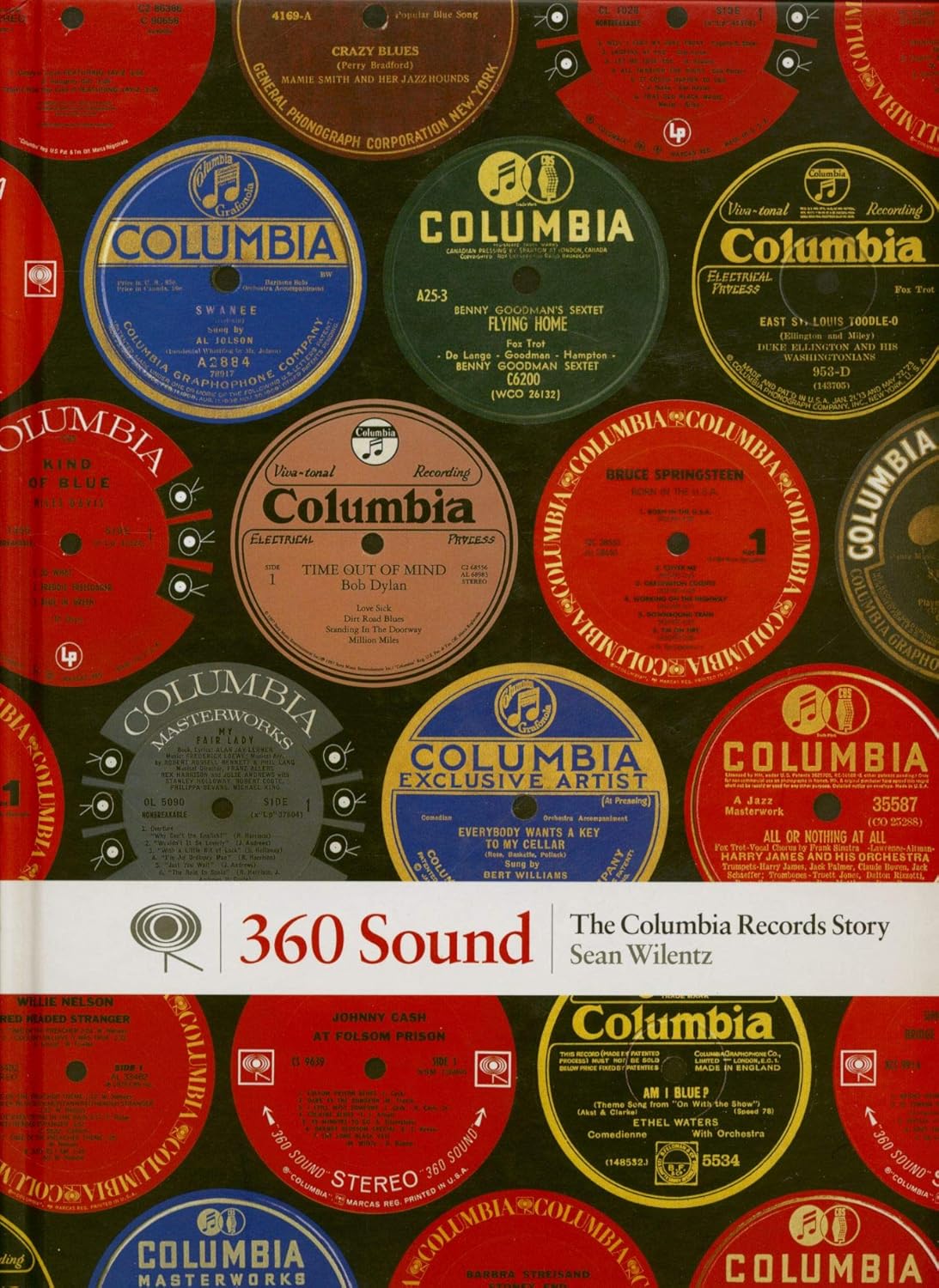
360 Sound: The Columbia Records Story
Columbia Records and its predecessor/affiliated labels documented blues music across more than four decades of field recording and studio work, from the first Bessie Smith sessions in February 1923 through the pre-war period. Principal blues-related producers: Frank Walker (Columbia race division, 1923-1938); Don Law (ARC/Vocalion field producer, 1936-1937); Art Satherley (ARC senior producer, 1937); John Hammond (Columbia talent scout and producer, 1937-1975); Lawrence Cohn (Columbia Legacy producer, 1970s-1990s). The Columbia/Legacy series of blues reissues, produced from the 1970s onward, includes: The Complete Bessie Smith (5 volumes, 1991-1996); Robert Johnson: The Complete Recordings (1990, Grammy Award for Best Historical Album); The Complete Blind Willie Johnson (1993); Big Bill Broonzy: Good Time Tonight (1990); and many others. Robert Johnson's The Complete Recordings was certified platinum (one million copies sold) in 1994.