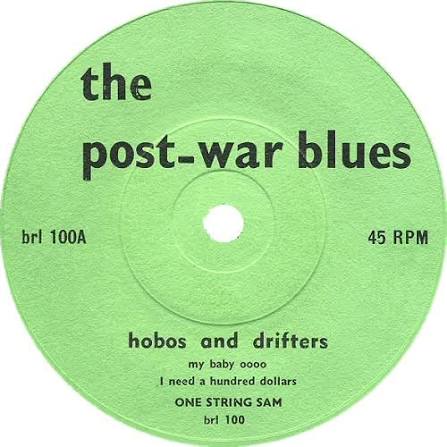
The Post War Blues was a small but highly regarded independent reissue label founded in 1965 by British blues scholar and writer Mike Rowe. It specialized exclusively in compiling and reissuing obscure post–World War II blues recordings originally released on rare 78 rpm singles. At a time when the 1960s blues revival was gaining momentum among white audiences in Britain and the United States, the label made available material that major companies were largely ignoring. Only five full-length albums (plus one EP) were issued between 1965 and 1968, yet they remain sought-after collector’s items for their thoughtful regional programming, excellent sound quality, professional packaging, and detailed liner notes.
History and Ownership
Mike Rowe, a prominent figure in British blues journalism (contributor to Blues Unlimited and later co-editor of Blues & Rhythm) and author of the influential book Chicago Blues: The City and the Music, established The Post War Blues to systematically document lesser-known postwar blues styles. The label focused on regional scenes rather than the already better-documented Chicago or Delta stars. Rowe curated the selections from original 78s, ensuring high-quality transfers. Liner notes were contributed by Rowe himself, as well as leading blues authorities Paul Oliver and Charles Radcliffe.
The series is often regarded as one of the earliest and most carefully conceived “bootleg”-style reissue projects of the blues revival era (though produced with care and scholarly intent). Later commentators, including Keith Briggs and Phil Turton in Blues & Rhythm, praised it as a pioneering effort that gave attention to artists and regional styles overlooked by larger labels. After the five volumes, the label ceased operations; a planned California volume never appeared, though Rowe later compiled related material for other reissue series.
Notable Artists and Recordings
The Post War Blues catalog consists entirely of themed compilations of postwar blues. Each volume highlights a geographic area and features a mix of relatively known and highly obscure performers:
- Chicago – The Post-War Blues Volume 1 (PWB 1, 1965)
The opening volume focused on the emerging electric Chicago sound. Tracks included sides by Johnny Shines (“Brutal Hearted Woman,” “Evening Sun”), Willie Nix, Little Willie Foster, and other Chicago artists active in the late 1940s and early 1950s. Although much of this material later became more widely available, the album set the template for the series with informative notes and solid sound.
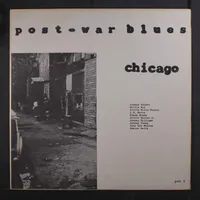 Buy from Amazon Chicago – The Post-War Blues Volume 1
- Memphis … On Down – The Post-War Blues Volume 2 (PWB 2, 1966)
Covered Memphis and related Delta/post-Delta styles. Featured Joe Hill Louis, Willie Love & His Three Aces, Harmonica Frank, Charley Booker, Driftin’ Slim, Luther Huff, Boyd Gilmore, and others. These sides documented the vibrant, often raw Memphis blues scene of the late 1940s and early 1950s.
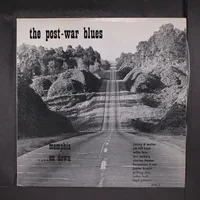 Buy from Amazon Memphis … On Down – The Post-War Blues Volume 2
- Eastern and Gulf Coast States – The Post-War Blues Volume 3 (PWB 3, 1966)
Explored East Coast, Piedmont, and Gulf Coast traditions. Artists included Curley Weaver, Leroy Dallas, Carolina Slim, Dan Pickett, Doug Quattlebaum, Skoodle Dum Doo & Sheffield, and related performers. The volume brought attention to regional styles that differed from the better-known Mississippi and Chicago sounds.
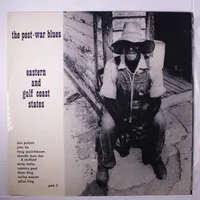 Buy from Amazon Eastern and Gulf Coast States – The Post-War Blues Volume 3
- Texas – The Post-War Blues Volume 4 (PWB 4, 1968)
Focused on Texas blues. Notable artists included Jesse Thomas, Alex Moore (Whistlin’ Alex Moore), Manny Nichols, Soldier Boy Houston, and others who represented the state’s distinctive postwar guitar and piano blues traditions. - Detroit – The Post-War Blues Volume 5 (PWB 5, 1968)
Documented the Detroit blues scene. Featured Baby Boy Warren, Bobo Jenkins, L.C. Green, Henry Smith & His Blue Flames, Sylvester Cotton, and additional local artists whose original 78s were scarce.
An additional EP, Hobos & Drifters (1966), rounded out the short catalog.
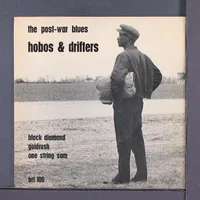 Buy from Amazon Hobos & Drifters
Across the series the label highlighted dozens of artists who were either little-known or whose postwar recordings had been difficult to obtain, including Big Walter Horton (on some Chicago-related material), Junior Brooks, Nat Terry, Harvey Hill & His String Band, Slim Pickens, Andrew Durham, and many others.
Other Musical Styles
The Post War Blues was devoted exclusively to blues. Unlike broader roots or jazz reissue labels of the period, it did not venture into jazz, folk, gospel, or other genres. Its entire purpose was the systematic regional documentation of postwar blues from original commercial 78s.
Legacy
Despite producing only five albums, The Post War Blues holds an important place in the history of blues reissues. It was among the first labels to approach postwar blues in a scholarly, geographically organized way, making rare sides accessible to the growing audience of the 1960s blues revival. The professional presentation—laminated sleeves, photographs, and extensive notes—set a high standard. Collectors and researchers continue to value the series for tracks that remained hard to find on LP for many years. Mike Rowe’s work with the label also foreshadowed his later contributions to blues scholarship and reissue projects. The Post War Blues stands as a pioneering, carefully curated document of regional postwar blues styles that major companies of the time largely overlooked.