Rooster Blues Records is an American independent blues label founded in 1980 in Chicago. Dedicated primarily to authentic blues from Chicago’s South Side and later the Mississippi Delta, it was co-founded by blues journalist and historian Jim O’Neal (best known as a co-founder of Living Blues magazine) along with Amy van Singel, Mick Huggins, and Cilla Huggins. The label became an important vehicle for documenting both established and lesser-known blues artists who were often overlooked by larger companies.
History and Ownership
Jim O’Neal launched Rooster Blues after years of writing about and promoting the blues. The name drew on traditional blues imagery (“Little Red Rooster,” “the rooster crowed ’fore day”) and echoed the spirit of classic labels such as Sun. Early sessions began around 1979–1980, with the first albums appearing in 1980–1981. The initial focus was on contemporary Chicago blues artists working in the South Side tradition.
In 1986 O’Neal relocated the label to Clarksdale, Mississippi (after a period associated with Oxford), shifting emphasis toward Delta and hill-country blues. Local musicians including Lonnie Pitchford and Lonnie Shields helped build recording facilities. The move allowed O’Neal to capture the living juke-joint and house-party blues of the region that major labels largely ignored.
The label operated steadily through the 1980s and 1990s, releasing a mix of studio albums, live recordings, and singles. Financial pressures led to a suspension of operations in 1998. In 1999 it was sold to Bottled MaJic Music, a roots-music company owned by Rob Johnson and based in Memphis and New York. O’Neal remained as producer and talent scout with creative control. Activity resumed in 2000—marketed as the “Year of the Rooster”—with new releases and reissues. Distribution has included Rounder and Redeye. O’Neal later operated related ventures such as Stackhouse Records and the Stackhouse Delta Record Mart in Clarksdale.
Notable Artists and Recordings
Rooster Blues built a strong catalog of both Chicago and Delta blues:
- Eddy Clearwater — The label’s first major release was Clearwater’s The Chief (early 1980s), a solid Chicago blues outing that showcased his energetic guitar and vocals. Later titles included Flimdoozie.
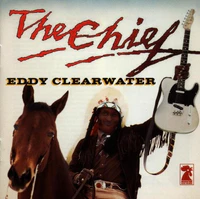 Buy from Amazon The Chief
- Magic Slim & the Teardrops — Grand Slam (1982) became one of the label’s best-known albums, capturing Slim’s hard-driving West Side Chicago sound. It was later reissued and remains a high point of the catalog.
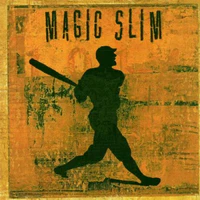 Buy from Amazon Grand Slam
- Carey Bell — The harmonica master recorded Son of a Gun with his guitarist son Lurrie Bell, a powerful father-son collaboration that highlighted traditional Chicago harmonica blues.
- John Littlejohn — The slide guitarist’s work for the label reinforced his status as a key Chicago stylist with deep Delta roots.
- Roosevelt “Booba” Barnes — The Heartbroken Man (1990) documented the Greenville, Mississippi, juke-joint guitarist and singer, bringing his raw Delta style to a wider audience.
- Lonnie Pitchford — The multi-instrumentalist (noted for one-string diddley bow as well as guitar) contributed both as a recording artist and in helping construct the Clarksdale studio facilities.
- Lonnie Shields — His debut Portrait (1993, produced by O’Neal) earned strong critical praise, including recognition in Living Blues critics’ polls, and established Shields as a notable contemporary soul-blues voice from the Delta region.
- Other key artists — Releases featured James “Son” Thomas (acoustic Delta blues), Super Chikan, Willie Cobbs, Larry Davis, Valerie Wellington, Willie King (Freedom Creek, 2000), and various Chicago and Mississippi performers. The label also issued singles and anthologies that further documented regional scenes.
These recordings generally emphasized straightforward, live-in-the-studio or small-club energy rather than heavily produced mainstream blues.
Legacy
Rooster Blues Records filled an important gap by documenting working blues artists—especially those based in the Delta—during a period when commercial interest was limited. Jim O’Neal’s dual role as journalist and producer gave the label a documentary quality rooted in deep knowledge of the music and its communities. Albums by Magic Slim, Eddy Clearwater, Booba Barnes, Lonnie Shields, and others remain valued by blues listeners for their authenticity. After the sale to Bottled MaJic Music, the catalog continued to circulate through reissues, helping preserve a significant chapter of late-20th-century Chicago and Mississippi blues.