Introduction: The Last Great Session of a Lifetime's Career
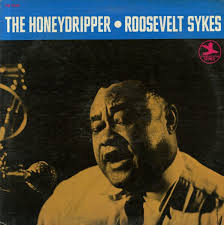
On September 14, 1960, in the chapel-like recording space that Rudy Van Gelder had purpose-built in Englewood Cliffs, New Jersey, a fifty-four-year-old pianist from Elmar, Arkansas sat down at his instrument in the company of four of New York City's finest session musicians and made a record that would prove to be one of the finest documents of his extraordinary career. The pianist was Roosevelt Sykes. The four musicians around him were King Curtis on tenor saxophone, Robert Banks on organ, Leonard Gaskin on double bass, and Belton Evans on drums. The producer was Esmond Edwards, working for the Prestige Records subsidiary Bluesville. And the album that resulted — The Honeydripper, released on Bluesville BVLP 1014 in 1961 — was, in the assessment of the AllMusic critic Ron Wynn, a recording in which Sykes "expertly fit his classic, down-home piano riffs and style into a fabric that also contained elements of soul, funk, and R&B," supported by "superb tenor sax support from King Curtis, Robert Banks' tasty organ, and steady, nimble bass and drum assistance by Leonard Gaskin and drummer Belton Evans."
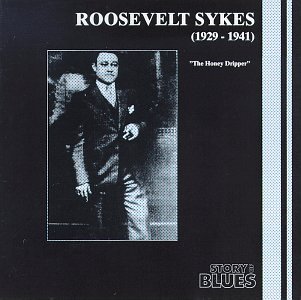
The session was not, in biographical terms, a beginning. Roosevelt Sykes had been recording since June 14, 1929, when a talent scout named Jesse Johnson had heard him playing in his St. Louis music shop and sent him to New York to record for OKeh Records. The first record he made — "44 Blues" — was a hit, and in the thirty-one years between that debut and the September 1960 Englewood Cliffs session, Sykes had recorded for OKeh, Decca, RCA Victor, United, Imperial, Delmark, and numerous other labels, had earned the nickname "The Honeydripper" for his genial personality and his ability to make any audience feel that the music was flowing specifically for them, had spent two decades as one of the most commercially successful barrelhouse piano blues musicians in America, and had survived the post-war transition to electric blues by relocating from Chicago to New Orleans in 1954 and from New Orleans to Chicago again in 1960, when the folk blues revival was creating new demand for older styles.
This is the story of that session, those musicians, those songs, and what they produced together.
Roosevelt Sykes: The Long Road to Englewood Cliffs
Any account of The Honeydripper album must begin with the man whose name it bears — not just as commercial identification but as artistic description. Roosevelt Sykes was not merely a musician who happened to have "Honeydripper" as a nickname; he was an artist whose entire performing personality was built around the concept of ease, warmth, and the ability to make music flow into an audience the way honey flows from a spoon: inevitably, unhurriedly, with a sweetness that was never cloying because it was never separated from its underlying blues flavour.
He was born on January 31, 1906, in Elmar, Arkansas — "just a little old sawmill town," as he described it to his biographer Valerie Wilmer. The family moved to St. Louis by 1909, and it was in St. Louis that Sykes grew up, absorbing the piano blues tradition that the city had developed as its own particular contribution to American music. The St. Louis barrelhouse style — characterised by heavy, stomping bass figures in the left hand, rapid melodic invention in the right, and a rhythmic drive that could fill a dance hall without electronic amplification — was the matrix out of which Sykes's mature style grew.
His earliest musical education was at his grandfather's church near West Helena, Arkansas, where his grandfather was a preacher who owned an organ. "Every summer I would go down to Helena to visit my grandfather on his farm," Sykes told Wilmer. "He was a preacher and he had an organ I used to practice on, trying to learn how to play. I always liked the sound of the blues, liked to hear people singing, and since I was singing first, I was trying to play like I sang." The detail is important: Sykes was, from the beginning, a musician who thought about his instrument in terms of the human voice, who heard the piano as a singing thing. The ability to make the piano sing, to give it the vocal warmth and flexibility of a blues voice, would prove the most distinctive element of his mature style.
He named St. Louis musicians including Bell, Joe Crump, Baby Sneed, and his mentor "Pork Chop" Lee Green as his early influences. Leothus Lee "Pork Chop" Green, in particular, is thought to have schooled Sykes in mastering separate but complementary bass and treble rhythms — the independence of the two hands that was the technical foundation of the barrelhouse style. By the time he was fifteen, Sykes was already on the road, playing piano at dances, fish fries, and juke joints across Missouri and Arkansas for a dollar a night plus room and board.
The OKeh Records debut of June 1929 launched the commercial career that would continue for the next fifty-four years. "44 Blues" was both a commercial hit and the composition that would become Sykes's most enduring standard — a song that has been recorded by B.B. King, Muddy Waters, Elvis Presley, and dozens of other artists across multiple genres and decades, and that is as fresh and durable today as it was when Sykes first played it for the OKeh recording engineers in 1929. His own assessment of that debut is characteristically direct: "I started making records 14th of June 1929. I had been playing eight years or so before I started recording. The first number I made was a hit, '44 Blues', and every record I made was a star ever since."
The nickname "The Honeydripper" arrived later in 1929, during a session on which Sykes accompanied the singer Edith Johnson. Johnson recorded "Honeydripper Blues" at that session, and later said she gave Sykes the nickname due to his kind disposition and easygoing personality. The name was so perfectly calibrated to Sykes's performing persona that it stuck permanently, eventually generating a body of recordings under the name "The Honey Dripper" (one of several aliases Sykes used to get around contractual restrictions from label to label), and finally giving its title to the 1961 Bluesville album.
The three decades between the OKeh debut and the Bluesville session saw Sykes move through several distinct phases. The 1930s were the period of his greatest pre-war commercial productivity: recordings for Decca from 1934 onward documented the full development of his barrelhouse style and produced his most enduring compositions. "Night Time Is the Right Time" — written and first recorded by Sykes, and subsequently covered by Ray Charles (whose 1959 version with The Raelets is the best-known) and dozens of others — dates from this period, as does "Driving Wheel Blues," which has been recorded by Junior Parker, the Paul Butterfield Blues Band, Steve Miller, Luther Allison, and many others. In 1943 Sykes began performing with his band The Honeydrippers — a large ensemble of as many as twelve musicians that represented his most ambitious commercial venture and the period of his greatest mainstream popularity.
The post-war years saw Sykes adapt to the changing commercial landscape with varying success. His large-band Honeydrippers period gave way, as the 1940s progressed, to smaller ensembles more suited to the recording economics of the independent label world. RCA Victor contracts, followed by work for United Records in Chicago, sustained the commercial career through the early 1950s. But the rise of the amplified Chicago electric blues — the Chess Records sound of Muddy Waters, Howlin' Wolf, and Little Walter — made Sykes's essentially acoustic barrelhouse approach seem increasingly old-fashioned in the urban market that had been his primary audience. In 1954, he left Chicago for New Orleans, "as electric blues was taking over the Chicago blues clubs," and spent the next six years playing in the clubs of the French Quarter and recording, when opportunity presented itself, for smaller labels.
Two sessions for Imperial Records in New Orleans in 1955, produced by Dave Bartholomew — the New Orleans arranger and producer who was simultaneously producing the recordings that were making Fats Domino one of the most commercially successful artists in America — gave Sykes his first sustained New Orleans recording credit. The Bartholomew sessions documented Sykes in an environment that suited his rolling, good-humoured piano style, and the New Orleans rhythm and blues context — with its Caribbean rhythmic influences and its jazz-inflected approach to the blues — gave the recordings a different flavour from the Chicago-rooted material he had been making for the previous two decades.
The return to Chicago in 1960 was motivated by exactly the phenomenon that would produce The Honeydripper album: the folk blues revival, which was generating new demand for older blues styles among the growing audience of young white enthusiasts who were discovering the deep blues tradition through records and concerts. The All About Jazz biography captures the biographical moment precisely: "He returned briefly to St. Louis in 1958 and then moved to Chicago in 1960, where he was 'rediscovered' by enthusiasts of the folk music revival." Within months of his return to Chicago, he was recording for Bob Koester's Delmark label, and he was simultaneously approached by the Prestige/Bluesville operation, which was building the most comprehensive commercial documentation of older blues artists in the American music industry.
The Label: Bluesville Records and the Prestige Documentation Project
The Bluesville label — founded in 1959 as a subsidiary of Prestige Records — was one of the most historically important American record labels of the early 1960s, though its importance was not fully recognised at the time of its active operation. Prestige itself, the jazz label founded by Bob Weinstock in 1949, had developed through the 1950s into one of the premier jazz documentation labels — the home of Miles Davis's marathon sessions, of Sonny Rollins's Saxophone Colossus, of John Coltrane's formative recordings. Weinstock's Bluesville subsidiary extended the same documentary impulse into the blues world: sign the significant older artists, record them with good musicians in the best available studio (which meant Van Gelder Studio, where Prestige had been recording its jazz catalogue for years), and release the results to an audience that was growing rapidly as the folk revival created new interest in the blues tradition.
The Bluesville roster in its short active period (1959–1966) included Lightnin' Hopkins, Big Joe Williams, Sonny Terry and Brownie McGhee, Memphis Slim, Roosevelt Sykes, Robert Pete Williams, and numerous other artists whose careers stretched back to the 1920s and 1930s. These were not "rediscoveries" in the strict sense — most were still active performers, if in diminished commercial circumstances — but they were artists whose music the mainstream commercial market had moved past, and whose documentation by Bluesville gave them a new audience and a permanent recorded legacy.
The economics of the Bluesville operation were modest by the standards of the major labels: these were not lavishly produced albums with extended rehearsals, elaborate arrangements, or extended recording sessions. They were, in most cases, single-day sessions at Van Gelder Studio, with small ensembles that had been assembled by the producer from the pool of available New York session musicians. The resulting albums have a direct, live-session quality that suits the material perfectly — this is not blues dressed up for commercial consumption but blues captured in something close to its natural performance environment.
The Producer: Esmond Edwards and the Bluesville Sessions
The producer who supervised the September 14, 1960 session was Esmond Edwards — a significant figure in the jazz and blues recording world of the late 1950s and early 1960s, whose work for Prestige and its subsidiaries produced a substantial body of important recordings across multiple genres. Edwards had worked as a photographer before moving into record production, and his photographic eye — his ability to compose a frame and capture essential qualities of a subject — extended, metaphorically, into his production approach. He had an instinct for the right combination of musicians, for the specific environment in which a particular artist would produce their best work, and for the moment when enough had been captured and the session should end.
His work for Prestige included jazz sessions with Gene Ammons, Pepper Adams, and other hard bop artists alongside the blues sessions that defined the Bluesville catalogue. His decision to surround Sykes not with a conventional blues backing band but with King Curtis, Robert Banks, Leonard Gaskin, and Belton Evans — a combination that brought New York R&B and jazz vocabulary to bear on the barrelhouse blues tradition — was the creative decision that gave The Honeydripper its distinctive character.
The combination of Sykes's barrelhouse piano with King Curtis's R&B tenor saxophone was, on paper, an unlikely pairing that could easily have produced an incoherent hybrid. In practice, it produced something more satisfying than either artist might have achieved in a more conventional setting. Curtis's Texas tenor style — big-toned, blues-rooted, with a jazz fluency that went well beyond the simple R&B saxophone vocabulary — was compatible with Sykes's piano approach in ways that a simpler, more stylistically purist session would not have revealed. Edwards trusted the combination, and the trust was vindicated.
The Studio: Van Gelder's Englewood Cliffs Chapel
The Van Gelder Studio where The Honeydripper was recorded on September 14, 1960, was not the Hackensack living-room studio where Rudy Van Gelder had made his early reputation as the definitive jazz recording engineer. By 1960, Van Gelder had moved his operation to a purpose-built studio in Englewood Cliffs, New Jersey — a Frank Lloyd Wright-inspired structure with a 39-foot ceiling and the natural reverb of a large, carefully designed acoustic space. The studio had opened in July 1959, and the first full year of its operation, 1960, was also one of the most productive years in its history: the number of Prestige, Blue Note, and other jazz and blues sessions recorded there in 1960 is extraordinary.
The Englewood Cliffs studio's acoustic character was quite different from the dry, direct sound of the Hackensack living room. The larger space and higher ceiling gave recordings made there a sense of depth and ambient space that placed the instruments more specifically in a physical environment — you could, in the best Englewood Cliffs recordings, hear the room as well as the instruments. For a blues piano recording, this quality was an asset: the piano's natural resonance — the sustain of its notes, the way they decay in a real acoustic space — was captured with a fullness that the more intimate Hackensack recordings had not always achieved.
Van Gelder's role on the Bluesville sessions was primarily technical rather than creative — he was the engineer, not the producer — but his technical decisions were as important to the sound of the recordings as any creative choice. His microphone placement, his approach to the room's acoustic, his handling of the balance between the piano, saxophone, organ, bass, and drums: all of these decisions shaped what was captured on tape, and all of them reflected decades of experience capturing jazz and blues in their most natural and compelling forms.
The Musicians: A New York Session of the Highest Quality
The musicians assembled for the September 14 session represented the upper tier of the New York session world — musicians who worked primarily in the jazz and R&B recording studios and who brought a level of technical proficiency and musical intelligence to any session they participated in.
King Curtis (Curtis Ousley, born February 7, 1934, in Fort Worth, Texas; died August 13, 1971, in New York City) was, at the time of the September 1960 Bluesville session, arguably the most in-demand R&B tenor saxophonist in New York. His "Texas tenor" sound — the big, warm, slightly honky tone quality that was characteristic of the Texas saxophone tradition — had already made him famous through his work on the Coasters' recordings, particularly the tenor solo on "Yakety Yak" (1958), which had introduced his sound to a mass audience. He was simultaneously a session musician in extraordinary demand, a solo recording artist (his own instrumental recordings for Prestige and other labels were commercially successful), and a band leader of considerable experience.
The connection between King Curtis's Texas background and Roosevelt Sykes's Arkansas/St. Louis origins was musically significant: both musicians inhabited a world in which the blues and jazz traditions were not separate compartments but the same continuous musical experience, and both had absorbed the vocabulary of both traditions without choosing between them. Curtis's saxophone playing on the Bluesville session has the warmth and directness of the blues alongside the harmonic sophistication of jazz, and this combination — blues feeling expressed through jazz technique — was the ideal complement to Sykes's own musical personality.
Curtis would go on to work with Aretha Franklin, on whose Atlantic recordings he served as musical director and session organiser through the late 1960s and early 1970s, and whose "Spirit in the Dark" he played so memorably at the 1971 Fillmore West concerts that were captured on the live album. His death at thirty-seven, stabbed on the steps of his New York apartment building on August 13, 1971, robbed American music of one of its most gifted instrumental voices at the height of his powers.
Robert Banks was an organist and pianist whose career in the New York session world was extensive and whose specific contribution to The Honeydripper — the "tasty organ" that Ron Wynn identifies as a highlight of the AllMusic review — demonstrates a musician of real sensitivity and musical intelligence. Banks was born on January 4, 1930, in Newark, New Jersey, and grew up with the jazz and R&B traditions of the northeastern city scene. His organ work on the Bluesville session occupies the harmonic middle ground of the ensemble — neither as harmonically assertive as Sykes's piano nor as melodically prominent as Curtis's saxophone, but providing the sustained, chorded foundation that gives the ensemble its particular warmth and depth. The combination of piano and organ in a blues context was not common in 1960, and Banks's ability to complement Sykes's piano without competing with it was a significant musical achievement.
Leonard Gaskin (born August 25, 1920, in Brooklyn, New York; died April 15, 2009, in the Bronx) was one of the most accomplished double bass players in the New York jazz and blues world — a musician whose career stretched from sessions with Charlie Parker, Miles Davis, and Dizzy Gillespie in the bebop era through a vast body of R&B and blues recording work that continued through the 1990s. The AllMusic review's description of his contribution as "steady, nimble bass assistance" is accurate but understated: Gaskin's bass playing on the Bluesville session is the rhythmic and harmonic foundation on which everything else rests, his walking bass lines combining the propulsive drive of the jazz tradition with the blues feeling that the context required.
His experience with the bebop masters gave Gaskin a harmonic awareness that went considerably beyond what most blues bass players of the period could offer: he could anticipate chord changes, find the harmonically interesting note in any passage, and contribute to the ensemble's musical intelligence as well as its rhythmic foundation. The combination of this harmonic sophistication with the straightforward rhythmic requirements of the blues backing role produced bass playing of unusual quality — you can hear, in the best passages of the Bluesville session, a bass player who is simultaneously fulfilling his functional role and making the kind of musical comments that a fully individual voice makes.
Belton Evans — identified in the Wikipedia article as "Sticks Evans," the drummer also known as Bill Evans, born November 20, 1929, in Fairfield, Alabama — was another New York session veteran whose drumming brought a specific combination of jazz swing and blues feel to the September 14 session. His work with King Curtis in various recording contexts gave the two musicians an established working rapport, and their interplay on the Bluesville session has the quality of musicians who know each other's tendencies and use that knowledge to create something collectively more responsive than musicians unfamiliar with each other could have achieved.
The drums on The Honeydripper have a particular quality of restraint and listening — Evans is never dominant, never drawing attention to himself at the expense of the musical context, always serving the song and the ensemble rather than his own individual statement. This is, paradoxically, one of the more demanding things a drummer can do: the self-effacement that good blues and R&B session drumming requires is a skill that many technically accomplished players lack, and Evans's ability to provide the rhythmic foundation without ever overstepping is one of the less-noticed but essential qualities of the album.
Track-by-Track: The Songs and Their Histories
1. "Night Time Is the Right Time" (Roosevelt Sykes)
The album opens with one of Sykes's most durable compositions — a song that had been circulating in various recorded forms since 1937 and that Ray Charles had made internationally famous in his 1959 Atlantic recording (the version that features the extraordinary call-and-response between Charles and Margie Hendrix of the Raelets). Sykes's 1960 Bluesville version predates the Charles version's full commercial impact, though Charles's recording had been made the previous year, and places the song back in its original barrelhouse blues context.
The composition is a deceptively simple observation: nighttime is the right time to be with the one you love. But the way Sykes inhabits that observation — his piano rolling and stomping underneath the lyric, King Curtis's saxophone responding to and commenting on the vocal, the ensemble maintaining the kind of groove that makes the song feel like something you've known all your life — transforms the simple statement into something much richer. Curtis's saxophone on this track has a particular warmth and directness that sets the tone for the entire album: this is not the aggressive, honking R&B saxophone of the rock and roll era but a more measured, conversational voice that operates within the blues ensemble rather than trying to dominate it.
2. "44 Blues" (Roosevelt Sykes)
Sykes's debut recording from 1929 — the song that launched his career and that he described as the beginning of a run of hits that never stopped — appears here in its 1960 Bluesville form, with a small ensemble that gives the decades-old composition a fresh context without betraying its essential character. The "44" of the title is a .44 calibre pistol, and the song uses the conventional blues gun imagery — the pistol as both a threat and a symbol of masculine authority — with the directness that characterised Sykes's best lyric writing.
The Bluesville version demonstrates how thoroughly Sykes had absorbed the folk revival context in which he was now operating: the performance acknowledges the song's historical weight while remaining fully alive in the present, neither a museum piece nor a mere nostalgia trip. Robert Banks's organ adds a dimension not present in the solo piano recordings of the original — a harmonic richness that transforms the spare barrelhouse piece into something that occupies more of the available sonic space. Leonard Gaskin's bass walking steadily underneath gives the ensemble a forward momentum that suits the song's assertive character.
3. "Driving Wheel" (Roosevelt Sykes)
One of Sykes's most influential compositions, "Driving Wheel Blues" (as it was titled on its first recording in 1936) entered the blues standard repertoire through the recordings of Junior Parker, who had a significant hit with his version in 1960 — the same year as the Bluesville session. The metaphor of the driving wheel — the narrator positioning himself as the motivating force in a relationship or situation — is one of the more original in the blues vocabulary, and Sykes's piano gives it a particular urgency: the rolling bass notes suggest actual forward motion, as if the music itself were the wheel in question.
Belton Evans's drumming is particularly effective on this track, his hi-hat work giving the groove a propulsive momentum that connects the song's lyrical metaphor to its musical embodiment. King Curtis takes one of his more extended solos here, his tenor saxophone carving melodic lines above the rhythm section with the assurance of someone completely comfortable in the musical territory he's inhabiting.
4. "Sugar Man Blues" (Roosevelt Sykes)
A lighter piece than the preceding tracks — more playful in its lyric and more relaxed in its musical approach — "Sugar Man Blues" demonstrates the range of Sykes's performing personality. The Bluesville review descriptions of him as "bemused" and "ironic" apply particularly to this track: he sings with a knowing, slightly self-deprecating wit that gives the blues complaint its comedy alongside its pathos. The "sugar man" of the title is simultaneously a romantic rival and a metaphor for whatever sweetness the narrator feels is being denied him, and Sykes navigates the ambiguity with the ease of a seasoned performer.
Robert Banks's organ is particularly prominent on this track, his fills between Sykes's vocal phrases adding a church-tinged quality to what is otherwise a thoroughly secular piece. The combination of the sacred sound world (organ, church harmonies) with the entirely secular lyrical content (romantic jealousy, desire) is one of the defining tensions of the blues tradition, and Sykes exploits it here with characteristic intelligence.
5. "Sunny Road" (Roosevelt Sykes)
A slow blues of considerable emotional depth, "Sunny Road" places Sykes in the tradition of the deep blues ballad — music that requires not speed or technical display but sustained, patient emotional commitment. The road imagery that gives the song its title connects it to the long blues tradition of journey-as-metaphor, but Sykes gives it a specific quality of optimism — the "sunny" road is not the dark, dangerous highway of Robert Johnson's blues but something warmer and more tentatively hopeful. King Curtis's saxophone on this track has a particular sighing quality, his long tones sustaining underneath and between Sykes's vocal phrases in a way that mirrors the song's emotional register.
The AllMusic review's description of "steady, nimble bass and drum assistance" is especially apt on the slow material: Gaskin and Evans maintain the groove without heaviness, their playing supporting the vocal without ever imposing on the emotional space that slow blues requires. This is the most technically demanding of the session's challenges — keeping time and feel in a slow blues without dragging or becoming mechanical — and both musicians meet it with the quiet confidence of professionals who have been in this situation many times before.
6. "Telephone Man" (Roosevelt Sykes)
A novelty blues — a form that Sykes had always excelled in, with a gift for the comedic lyric that was as genuine as his ability with the deep slow blues — "Telephone Man" uses the telephone as the occasion for a series of romantic double entendres. The telephone was a relatively new fixture in working-class African American homes by 1960, and its presence in the blues as a vehicle for the expression of romantic anxiety (waiting for a call, being unable to reach someone, the line going dead at the wrong moment) was a contemporary updating of older blues themes.
Sykes's vocal here has the knowing, slightly theatrical quality that characterised his best comedy blues performances: he sounds like he's enjoying the lyric's ambiguity, pleased with the wordplay, aware of the audience's response before it has happened. The rhythm section maintains a driving groove that suits the playful material perfectly, and Curtis's saxophone has the same playful quality — his tone slightly brighter on this track than on the more serious pieces, his phrasing more clipped and rhythmically assertive.
7. "Anna Lee Blues" (Roosevelt Sykes)
Named for a woman whose specific qualities the lyric enumerates with characteristic Sykes directness, "Anna Lee Blues" is a medium-tempo 12-bar blues that allows the ensemble to stretch out in ways that the more compressed arrangements of the other tracks don't quite permit. Curtis takes his most jazz-inflected solo on this track, his saxophone moving through the changes with the harmonic awareness that his bebop influences had given him alongside his Texas blues roots.
The five-piece ensemble reaches its most integrated sound on "Anna Lee Blues" — the moment on the album when you are most aware of five musicians listening to and responding to each other rather than simply performing their individual roles. Gaskin's bass contributes a melodic comment here, Banks's organ adds a harmonic detail there, Evans's drum fills arrive at exactly the right moments: this is ensemble playing of the highest quality.
8. "Boot That Thing" (Roosevelt Sykes)
One of Sykes's older compositions — he had first recorded it for Decca in the 1930s under the title "Boot That Thing" — appears on the Bluesville album in a form that demonstrates both the durability of the original and the capacity of the 1960 ensemble to refresh it without violating its essential character. The "thing" of the title is appropriately ambiguous — Sykes was a master of the blues double entendre, and this composition exercises that mastery with characteristic wit and economy.
Robert Banks's organ gives this track a particularly soulful quality, his playing drawing on the gospel organ tradition in ways that give the secular lyric an additional resonance. The combination of barrelhouse piano, jazz saxophone, gospel organ, jazz bass, and R&B drums is not, on paper, an obvious musical synthesis; in practice, in Sykes's hands and under Edwards's production, it coalesces into something that sounds entirely natural.
9. "Mercy Blues" (Roosevelt Sykes)
A slow, pleading blues — the narrator seeking mercy from a world (or a woman, or both) that has not been generous with it — "Mercy Blues" is the album's most explicitly vulnerable track. Sykes's piano drops to its most restrained and careful at the beginning, building slowly through the performance as the emotional content accumulates. Curtis's saxophone responds to the piano and the vocal with a particular tenderness, his tone warmed to something close to a whisper on the song's most exposed passages.
The influence of church music — specifically the pleading quality of traditional gospel — is most directly audible on "Mercy Blues," and the combination of this sacred quality with the thoroughly secular context of the blues is one of the album's most artistically interesting moments. Sykes the Baptist, who had told Valerie Wilmer that his lifelong religious beliefs never conflicted with playing the blues, is most directly present on this track: here is a man whose music carries the whole of his experience, the sacred and the secular simultaneously present without contradiction.
10. "Highway 61 Blues" (Roosevelt Sykes)
The inclusion of a Highway 61 blues on the album connects Sykes directly to the blues geography tradition that would be further explored by Bob Dylan just a few years later. Highway 61 — the road that runs from New Orleans through Memphis and the Mississippi Delta to St. Louis and eventually Chicago — was the literal route of the Great Migration, and as a blues metaphor it carried all the weight of that history: departure and arrival, hope and disappointment, the road as the only reliable constant in a life of movement.
Sykes had driven Highway 61 in both directions — south from St. Louis to Helena, north from New Orleans to Chicago — and his relationship to it was personal and specific rather than merely mythological. His blues about the highway has the quality of direct testimony rather than borrowed imagery, and his piano on this track has a particular rolling momentum that suggests the highway's own forward movement.
11. "Sloppy Drunk Blues" (Roosevelt Sykes)
A comic blues in the tradition of the "drinking song" sub-genre that runs through the entire history of the form, "Sloppy Drunk Blues" allows Sykes to exercise his gift for comedic timing and his ability to make even self-deprecating material sound somehow dignified. The "sloppy drunk" narrator is simultaneously the butt of the joke and its teller, aware of his own condition with the half-amused, half-rueful self-knowledge that characterises Sykes's best comic blues performances.
The ensemble swings behind this track with an obvious pleasure — this is the kind of material that professional musicians enjoy, because its emotional register is unambiguous and its musical requirements are clear. Curtis's saxophone has a loose, informal quality on "Sloppy Drunk Blues" that suits the lyrical content: this is not the careful, precise playing of the slow blues tracks but something more relaxed and improvisatory.
12. "Bad Neighborhood" (Roosevelt Sykes)
The album's penultimate track is a social observation — the narrator commenting on the specific character of his residential environment with the mixture of resignation and wry amusement that Sykes brought to his more observational blues. The "bad neighbourhood" of the title is simultaneously a literal place and a metaphor for a life situation — the kind of situation that produces blues, that makes music necessary as a way of navigating difficult circumstances.
King Curtis's saxophone takes a particularly assertive role on this track, his playing acquiring some of the edge and urgency that the lyrical subject demands. The ensemble matches him, the rhythm section tightening its groove as the musical temperature rises, the tension between the song's subject matter and its good-humoured delivery finding its perfect expression in the interaction between Sykes's confident piano and Curtis's assertive saxophone.
13. "Crosscut Saw" (Traditional, arranged Roosevelt Sykes)
The album closes with a version of "Crosscut Saw" — the double entendre blues that uses the woodcutting saw as an extended metaphor for sexual prowess, and that Albert King would later make famous in a 1967 Stax recording that became one of the defining documents of Southern soul-blues. Sykes's 1960 version predates King's celebrated recording and demonstrates both the song's durability as a vehicle for the blues double entendre tradition and Sykes's own ability to deliver that tradition with the knowing, entertainer's confidence that distinguished his best performances.
King Curtis's saxophone on "Crosscut Saw" is among the most assertive on the album — his tone hardening slightly, his phrases more rhythmically emphatic, as if the musical machinery of the crosscut saw itself is present in his playing. The ensemble brings the album to a strong, driving conclusion that leaves the listener with a clear sense of what these five musicians were capable of when they were at their collective best.
The Producer's Vision: Esmond Edwards and the Synthesis
The achievement of Esmond Edwards as the producer of The Honeydripper session was not the achievement of someone who imposed a vision on the music but of someone who created the conditions in which the music's own vision could emerge. His pairing of Roosevelt Sykes with King Curtis, Robert Banks, Leonard Gaskin, and Belton Evans was a specific creative decision that could easily have produced a stylistic incoherence — the barrelhouse blues of the 1930s in uncomfortable company with the New York R&B and jazz session world of 1960. Instead, it produced the most commercially and artistically satisfying recording of Sykes's late career.
The key to Edwards's success was his understanding that Sykes's music was not, despite its stylistic roots in the 1930s barrelhouse tradition, a museum piece. The rolling bass figures, the singing right-hand melodies, the warm and engaged vocal approach — these were not historical artefacts but living musical resources that retained their communicative power in 1960 because they had always been built on emotional truth rather than stylistic fashion. Edwards understood this, and in King Curtis he found a musician who understood it equally: Curtis's Texas blues roots gave him an instinctive connection to the tradition that Sykes inhabited, while his New York session experience gave him the technical fluency to articulate that connection in a contemporary recording context.
The Legacy: What The Honeydripper Became
The AllMusic review that has become the primary critical statement on the album identifies its most important qualities with precision: Sykes "expertly fit his classic, down-home piano riffs and style into a fabric that also contained elements of soul, funk, and R&B," producing something that was simultaneously rooted in tradition and alive in the present. The Penguin Guide to Blues Recordings gave it a four-star rating — high for a guide that applies its rankings with considerable selectivity — confirming the assessment of a significant achievement.
The album's commercial fate was modest, as was typical of the Bluesville catalogue: it sold primarily to the folk revival and blues enthusiast market, received appreciative reviews in the specialist press, and found its audience without ever making the mainstream commercial impact that its quality deserved. But it has remained in print in various reissue forms — on LP, on CD, and eventually in digital format — and its audience has grown steadily as the folk revival generation has been supplemented by subsequent generations of blues listeners who have found their way to the Bluesville catalogue.
Roosevelt Sykes himself continued performing and recording until his death from a heart attack on July 17, 1983, in New Orleans. He was inducted into the Blues Hall of Fame in 1999, and the Gennett Records Walk of Fame in 2011. The Killer Blues Headstone Project placed a headstone on his previously unmarked grave at Providence Memorial Park in New Orleans in 2015. His legacy as the composer of "44 Blues," "Night Time Is the Right Time," and "Driving Wheel Blues" — three blues standards that have been recorded by an extraordinary range of artists across multiple genres and decades — is permanent and secure.
The September 14, 1960 session that produced The Honeydripper stands as one of the definitive recordings of his later career and one of the finest documents in the Bluesville catalogue. It preserves, in thirty-six minutes and eighteen seconds of music, the sound of a great blues musician in the company of exceptional colleagues, making music in one of the finest recording studios in America, under the supervision of a producer who understood what was needed and had the wisdom to provide it without imposing himself. The Honeydripper himself, dripping his music into the microphone at Van Gelder Studio on a Wednesday in September 1960, produced something that flows as sweetly and as surely as the nickname implies, and that has not stopped flowing since.
Selected Discography
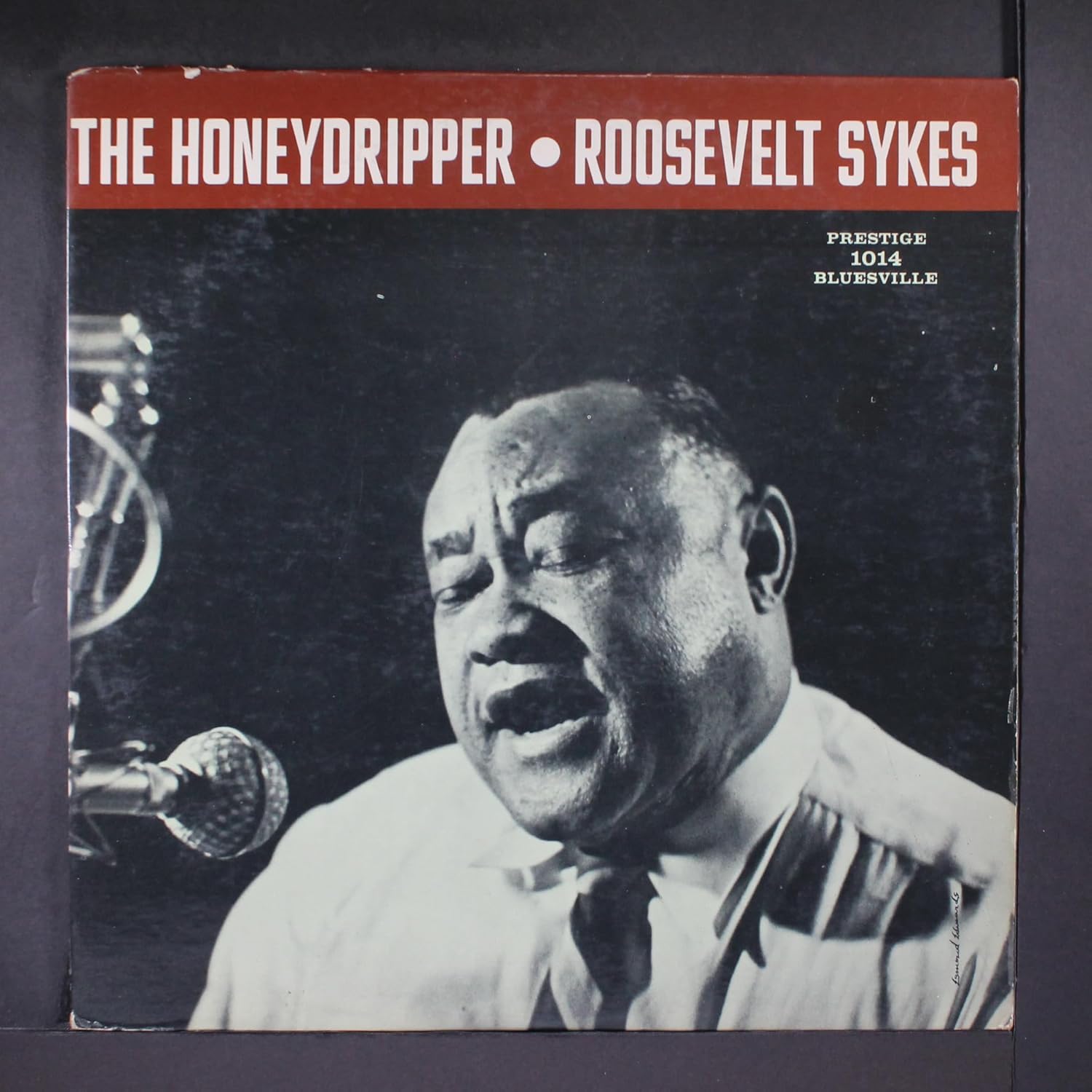
The Honeydripper was recorded September 14, 1960, at Van Gelder Studio, Englewood Cliffs, New Jersey. Released 1961 on Bluesville BVLP 1014 (Prestige Records subsidiary). Produced by Esmond Edwards. Engineered by Rudy Van Gelder. Personnel: Roosevelt Sykes (piano, vocals); King Curtis / Curtis Ousley (tenor saxophone); Robert Banks (organ); Leonard Gaskin (double bass); Belton Evans / "Sticks" Evans (drums). All compositions by Roosevelt Sykes. Running time: 36:18. Roosevelt Sykes (January 31, 1906 – July 17, 1983). Inducted into the Blues Hall of Fame, 1999.