Overview
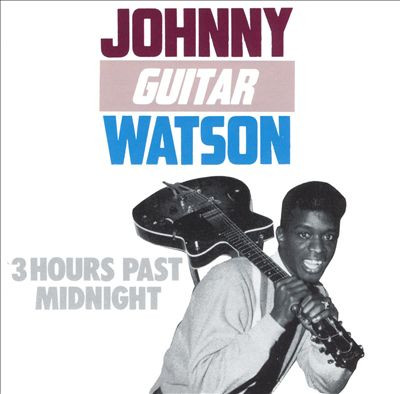
Artist: Johnny "Guitar" Watson Album Title: 3 Hours Past Midnight Label: Federal Records (King Records subsidiary) Catalog Number: Federal 12213 (original single); compiled across Federal/King releases Recorded: 1953–1957, Los Angeles, California & Cincinnati, Ohio Genre: Electric Blues, Rhythm & Blues, West Coast Blues Primary Instrument: Electric Guitar, Vocals
3 Hours Past Midnight stands as one of the defining recordings of West Coast electric blues. Originally issued as a single on Federal Records in 1956, the track — and the body of recordings Watson made for Federal between 1953 and 1957 — captures a young musician of extraordinary technical gifts rewriting the rules of electric guitar blues. Watson's slashing, high-register single-note runs, his use of whammy bar effects, his dramatic vocal phrasing, and his mastery of both slow blues and uptempo R&B placed him in a category entirely his own.
The album compilations that have gathered these Federal-era recordings under the 3 Hours Past Midnight banner present a portrait of Watson at his most raw, most inventive, and most influential. Eric Clapton has cited the title track as a direct inspiration for his own approach to slow blues, most famously demonstrated on the John Mayall's Bluesbreakers "Beano" album of 1966. Stevie Ray Vaughan, Frank Zappa, and countless others have acknowledged Watson's Federal recordings as foundational texts of electric guitar vocabulary.
Artist Biography & Context
Early Life
Johnny "Guitar" Watson was born John Watson Jr. on February 3, 1935, in Houston, Texas. He grew up in a musical household — his father played guitar, and his grandfather was a sanctified preacher whose church music left a deep imprint on the young Watson. He began playing piano first, under the influence of his grandfather, but the electric guitar quickly became his obsession after he encountered the instrument in Houston's vibrant blues scene.
Houston in the late 1940s was a crucible of electric blues. Watson absorbed the styles of T-Bone Walker — the undisputed king of West Coast electric blues — and Clarence "Gatemouth" Brown, both of whom were redefining what the electric guitar could do in a blues context. Watson's guitar style would ultimately surpass both in terms of raw technical daring.
Move to Los Angeles
Watson moved to Los Angeles around 1950, at approximately age 15, following his father. The city's Central Avenue blues and R&B scene was in full swing, and Watson quickly immersed himself in it. He began performing under the name "Young John Watson" before adopting the "Guitar" sobriquet — a nod both to his instrument and to the theatrical, outsized persona he was already cultivating.
The Federal Years (1953–1957)
Watson signed with Federal Records — a subsidiary of Syd Nathan's King Records empire based in Cincinnati — in 1953 at the age of 18. His Federal recordings, made primarily in Los Angeles with occasional sessions in Cincinnati, constitute his earliest and in many ways most viscerally exciting body of work. These recordings show Watson developing his signature techniques: the extreme string bending, the use of the tremolo arm (whammy bar) for vocal-like effects, the high-velocity single-note lines that cut through a band like a scalpel, and a vocal style that moved between plaintive tenderness and raw, almost violent intensity.
Label & Production Background
Federal Records
Federal Records was founded in 1950 as a subsidiary of King Records, itself founded by Syd Nathan in Cincinnati, Ohio in 1943. King/Federal operated as one of the most important independent labels in American music history, releasing records across R&B, gospel, country, and rockabilly. Federal's R&B roster included James Brown (whose earliest recordings appeared on Federal), Hank Ballard and the Midnighters, and a roster of blues and R&B artists that reflected the label's willingness to record raw, unpolished talent.
King Records maintained its own pressing plant, recording studio, and distribution network — a vertically integrated operation that gave Syd Nathan unusual control over his product. The Cincinnati studio at 1540 Brewster Avenue was used for some Watson sessions, while Los Angeles sessions were recorded at independent studios on the West Coast.
Syd Nathan & King Records Culture
Syd Nathan (1904–1968) was a famously combative, commercially shrewd record man who ran King Records with an iron fist. He was not a producer in the modern creative sense — he was primarily a businessman who trusted his A&R men and session leaders to deliver commercially viable recordings. Nathan's philosophy was to record prolifically, release frequently, and let the market decide. This approach meant that artists like Watson were often recorded quickly, with minimal overdubbing or studio refinement, resulting in recordings that crackle with live-in-the-room energy.
Recording Sessions
Session Overview
Watson's Federal recordings were made across several sessions between 1953 and 1957. The sessions were held primarily in Los Angeles, with the infrastructure of King/Federal's Cincinnati operation providing the label and distribution framework. The recordings were made in a relatively sparse, direct style typical of West Coast R&B of the period — small combo arrangements, live ensemble recording, minimal post-production.
Los Angeles Sessions (1953–1957)
The Los Angeles sessions drew on the pool of professional West Coast R&B session musicians who populated the Central Avenue and Hollywood studio scenes. Watson typically recorded with a small combo: guitar (himself), piano, bass, drums, and occasionally tenor saxophone. The arrangements were compact and blues-rooted, allowing Watson's guitar and vocals maximum space.
Key Session Dates & Recordings:
| Year | Notable Tracks Recorded | Notes |
|---|---|---|
| 1953 | "Highway 60," "Half Pint of Whiskey" | Debut Federal sessions; Watson billed as "Young John Watson" |
| 1954 | "Motor Head Baby," "Sad Fool" | Developing signature guitar style |
| 1955 | "Hot Little Mama," "Ruben" | Increasing confidence and technical command |
| 1956 | "3 Hours Past Midnight," "Too Tired" | Career-defining recordings; national R&B chart action |
| 1957 | "Gangster of Love," "Love Me Baby" | Final Federal sessions; Watson's style fully formed |
Recording Methodology
The Federal sessions were recorded live to tape with the full band playing simultaneously in the studio. There was no multitrack recording in the modern sense — these were mono or early stereo recordings captured in real time. This methodology demanded that Watson and his musicians be fully prepared, and it also meant that the performances had an irreplaceable spontaneity and ensemble cohesion. Mistakes could not be easily corrected; the energy of the room was captured whole.
The Producer
Ralph Bass
Ralph Bass (1911–1997) was one of the most important A&R men and producers in postwar American R&B and blues. Born in New York City, Bass worked for a succession of independent labels before joining King/Federal, where he served as a key talent scout and session supervisor throughout the 1950s.
Bass was responsible for signing and recording an extraordinary roster of artists for King and Federal, including James Brown (whom he signed after seeing him perform in Macon, Georgia), Hank Ballard, Little Esther Phillips, and Johnny Guitar Watson. Bass later moved to Chess Records in Chicago, where he worked with Muddy Waters, Howlin' Wolf, and Etta James, further cementing his reputation as one of the great ears in American music.
As a producer, Bass operated in the A&R tradition of the era: he selected material, assembled musicians, booked studio time, and supervised sessions. He was not a hands-on sonic architect in the manner of later record producers, but his instincts for talent and his ability to create an environment in which artists could perform at their best were exceptional. His decision to give Watson maximum latitude in the studio — to let the young guitarist's instincts run free — was crucial to the vitality of the Federal recordings.
Henry Glover
Henry Glover (1921–1991) also played a significant role in the King/Federal operation as a staff producer, arranger, and musician. Glover was a trained musician (trumpet) and arranger who brought a more structured, sophisticated approach to some King/Federal sessions. His involvement in Watson's sessions varied, but his influence on the overall sound and direction of the label's R&B output was pervasive.
Core Musicians
The Federal-era Watson recordings drew on a rotating cast of Los Angeles session professionals. The following musicians appear across the key sessions:
Johnny "Guitar" Watson — Guitar & Vocals
Watson himself is the dominant presence on every recording. His guitar work on the Federal sessions is startling in its modernity — he was employing techniques (extreme string bending, whammy bar manipulation, high-register melodic lines) that would not become widespread in rock and blues until the 1960s. His vocals, meanwhile, ranged from a smooth, almost crooning delivery on ballads to a raw, emotionally naked cry on slow blues.
George "Harmonica" Smith — Harmonica (selected tracks)
A Los Angeles-based blues harmonica player of considerable skill, Smith appeared on some Watson sessions, adding a second lead voice that complemented Watson's guitar.
Lloyd Glenn — Piano
Lloyd Glenn (1909–1985) was a veteran West Coast blues and R&B pianist who had worked with Lowell Fulson and T-Bone Walker. His piano work on Watson sessions provided a sophisticated harmonic foundation and a rolling, blues-drenched accompaniment style perfectly suited to Watson's guitar.
Willard McDaniel — Piano (selected sessions)
Another West Coast pianist who appeared on some Federal sessions, McDaniel brought a slightly more percussive, boogie-inflected approach to the piano chair.
Billy Hadnott — Bass
Billy Hadnott was a Los Angeles-based bassist who worked extensively in the West Coast R&B scene. His bass lines on the Watson sessions are firm, melodic, and rhythmically authoritative — a crucial anchor for Watson's often unpredictable guitar excursions.
Chuck Norris — Guitar (rhythm, selected tracks)
A rhythm guitarist who appeared on some sessions, providing chordal support that freed Watson to focus on lead lines and single-note runs.
Earl Palmer — Drums (selected sessions)
Earl Palmer (1924–2008) was one of the most recorded drummers in American music history, a New Orleans native who became the first-call session drummer in Los Angeles from the mid-1950s onward. His work on Watson's Federal sessions — where he appeared — brought a propulsive, swinging rhythmic foundation of the highest order.
Jesse Sailes — Drums (selected sessions)
Another drummer who appeared on Watson Federal sessions, Sailes provided a more raw, blues-rooted rhythmic feel on some tracks.
Maxwell Davis — Tenor Saxophone & Arranger
Maxwell Davis (1916–1970) was one of the most important figures in West Coast R&B, serving as a session musician, arranger, and de facto producer for dozens of artists recording in Los Angeles in the 1940s and 1950s. His tenor saxophone work and arrangements appeared on some Watson sessions, adding a sophisticated horn element to selected tracks.
The Songwriters
Johnny "Guitar" Watson
Watson wrote or co-wrote the majority of his Federal recordings. His songwriting drew on the blues tradition — 12-bar structures, classic blues lyrical themes of love, loss, travel, and hardship — but filtered through his own distinctive personality and his West Coast environment. His lyrics have a directness and emotional honesty that serve his vocal style perfectly.
Traditional Blues Sources
Several of Watson's Federal recordings drew on traditional blues material — themes, chord progressions, and lyrical fragments that circulated freely in the blues community. The slow blues form of 3 Hours Past Midnight, for example, draws on a deep well of blues tradition while being unmistakably Watson's own creation.
Fats Domino / Dave Bartholomew Influence
Watson's early recordings show the influence of New Orleans R&B — the rolling piano figures, the second-line rhythmic feel — alongside the West Coast T-Bone Walker tradition. Some of his uptempo material reflects the influence of the Fats Domino/Dave Bartholomew New Orleans sound that dominated R&B radio in the early 1950s.
Track-by-Track Breakdown
Note: The Federal-era recordings have been compiled and reissued under various titles and configurations. The following track-by-track analysis covers the core recordings most commonly associated with the 3 Hours Past Midnight compilation, drawing on Watson's Federal catalog from 1953–1957.
Track 1: "3 Hours Past Midnight"
Recorded: 1956 Label: Federal 12213 Writer: Johnny Watson / Robey (credited; Don Robey of Peacock Records is sometimes listed in disputed credits) Key Musicians: Johnny Watson (guitar, vocals), Lloyd Glenn (piano), Billy Hadnott (bass), Earl Palmer (drums)
The title track is Watson's masterpiece and one of the greatest slow blues recordings in the entire canon. Clocking in at a deliberate, aching tempo, the track opens with Watson's guitar stating a melancholic, descending motif over a barely-there rhythm section. The arrangement is a study in restraint — every note breathes, every silence counts.
Watson's guitar work here is extraordinary. He employs extreme string bending to push notes into microtonal territory, his whammy bar creating a vocal-like vibrato that blurs the line between instrument and human voice. His single-note lines in the upper register have a keening, almost painful quality — the sound of a man laying his emotional life bare through his instrument.
Lyrically, the song is a classic blues narrative of insomnia and heartache: the singer lies awake at three in the morning, unable to sleep, tormented by thoughts of his absent lover. Watson sings with a vulnerability and rawness that belies his youth (he was approximately 21 when this was recorded). The interplay between his voice and his guitar — each answering the other in the call-and-response tradition — is seamless and deeply felt.
Eric Clapton has specifically cited this recording as the inspiration for his own slow blues playing on the Bluesbreakers album (1966), particularly his performance on Robert Johnson's "Ramblin' on My Mind." The influence is unmistakable: Clapton absorbed Watson's high-register bending technique and his use of space and dynamics, translating them into a British blues context that would in turn influence a generation of rock guitarists.
Stevie Ray Vaughan also cited this track as a foundational influence, and the connection between Watson's 1956 recording and Vaughan's own slow blues mastery is a direct line in the history of electric guitar.
Track 2: "Highway 60"
Recorded: 1953 Label: Federal Writer: Johnny Watson Key Musicians: Johnny Watson (guitar, vocals), piano, bass, drums
One of Watson's earliest Federal recordings, Highway 60 is an uptempo blues shuffle that announces the arrival of a major talent. Watson's guitar playing here already shows the hallmarks of his mature style — the clean, cutting tone, the confident single-note runs, the rhythmic authority. The song draws on the blues tradition of highway imagery (Route 66, Highway 61, and their variants appear throughout blues literature as symbols of movement, escape, and possibility).
The production is raw and direct, with Watson's guitar sitting prominently in the mix. The rhythm section provides a solid shuffle groove, and Watson's vocal is assured and punchy. The track establishes Watson as a West Coast blues guitarist of the first rank from the very outset of his recording career.
Track 3: "Half Pint of Whiskey"
Recorded: 1953 Label: Federal Writer: Johnny Watson Key Musicians: Johnny Watson (guitar, vocals), piano, bass, drums
A mid-tempo blues with a wry, sardonic lyric about the consolations of alcohol, Half Pint of Whiskey shows Watson's early command of blues humor and his ability to deliver a lyric with both wit and conviction. The guitar work is fluid and inventive, with Watson already demonstrating his willingness to take melodic risks in his solos.
The piano accompaniment — likely Lloyd Glenn or a similar West Coast session pianist — provides a rolling, blues-drenched foundation, and the rhythm section keeps a steady, swinging groove. This is a track that reveals Watson's deep roots in the Texas and West Coast blues tradition while pointing toward the more adventurous work to come.
Track 4: "Motor Head Baby"
Recorded: 1954 Label: Federal Writer: Johnny Watson Key Musicians: Johnny Watson (guitar, vocals), piano, bass, drums, possibly tenor saxophone
An uptempo, rocking blues that shows Watson fully embracing the R&B energy of the mid-1950s, Motor Head Baby is a driving, exuberant performance. Watson's guitar crackles with energy, his rhythm playing propulsive and his lead lines sharp and precise. The song's automobile imagery — a staple of 1950s R&B — is delivered with Watson's characteristic directness.
If Maxwell Davis or another West Coast saxophonist was present on this session, the horn arrangement would have added a further layer of R&B punch to the track. The overall feel is of a young musician who has completely absorbed his influences and is beginning to forge something distinctly his own.
Track 5: "Sad Fool"
Recorded: 1954 Label: Federal Writer: Johnny Watson Key Musicians: Johnny Watson (guitar, vocals), piano, bass, drums
A slow blues of considerable emotional weight, Sad Fool shows Watson developing the introspective, vulnerable side of his artistry that would reach its fullest expression on 3 Hours Past Midnight. His guitar work here is more restrained than on the uptempo tracks, every note placed with care and deliberation. The vocal is raw and unguarded.
The track demonstrates Watson's early mastery of the slow blues form — his understanding that less is more, that the spaces between notes carry as much emotional weight as the notes themselves. The rhythm section plays with sensitivity and restraint, giving Watson room to breathe and explore.
Track 6: "Hot Little Mama"
Recorded: 1955 Label: Federal Writer: Johnny Watson Key Musicians: Johnny Watson (guitar, vocals), piano, bass, drums
A rollicking, good-humored uptempo blues, Hot Little Mama is Watson in a celebratory mood. The guitar playing is loose and joyful, with Watson's rhythm work providing a solid foundation for his own lead excursions. The lyric is straightforwardly celebratory — a young man's appreciation of an attractive woman — delivered with Watson's characteristic directness and charm.
By 1955, Watson's guitar tone and technique are clearly more refined than on the 1953 recordings. His note choices are more adventurous, his bending more precise, and his rhythmic feel more sophisticated. The influence of T-Bone Walker is still audible, but Watson is increasingly his own man.
Track 7: "Ruben"
Recorded: 1955 Label: Federal Writer: Johnny Watson Key Musicians: Johnny Watson (guitar, vocals), piano, bass, drums
An instrumental showcase, Ruben gives Watson the opportunity to demonstrate his guitar vocabulary without the demands of simultaneous vocal performance. The result is a fluid, inventive performance that reveals the full range of his technical arsenal: the high-register single-note lines, the rhythmic chord work, the use of dynamics and space.
Instrumental tracks like Ruben were important vehicles for blues and R&B guitarists of the era to establish their instrumental identities and to demonstrate their capabilities to other musicians and to the industry. Watson's instrumental work on his Federal recordings shows a guitarist already thinking in terms of pure musical expression, not merely as a vehicle for songs.
Track 8: "Too Tired"
Recorded: 1956 Label: Federal Writer: Johnny Watson Key Musicians: Johnny Watson (guitar, vocals), Lloyd Glenn (piano), Billy Hadnott (bass), Earl Palmer (drums)
Recorded in the same period as 3 Hours Past Midnight, Too Tired shares the title track's atmosphere of late-night melancholy and emotional exhaustion. Watson's guitar playing is spare and deliberate, his vocal weary and emotionally direct. The song is a slow blues of considerable power, with Watson exploring the emotional territory of a man pushed to his limits by love and loss.
Lloyd Glenn's piano work on this track — if present — would have added a sophisticated harmonic richness to the arrangement, his rolling left-hand bass figures and delicate right-hand melodic fills complementing Watson's guitar beautifully. The rhythm section maintains a slow, swaying groove that perfectly supports the song's mood.
Track 9: "Gangster of Love"
Recorded: 1957 Label: Federal Writer: Johnny Watson Key Musicians: Johnny Watson (guitar, vocals), piano, bass, drums
Gangster of Love is one of Watson's most enduring compositions and one of the great self-mythologizing statements in blues and R&B history. The song establishes Watson's persona as a smooth, dangerous, irresistibly attractive figure — a "gangster of love" who operates outside conventional social norms. It is a performance of extraordinary confidence and charisma.
The guitar work is sharp and authoritative, Watson's tone cutting and precise. His vocal delivery is cool and knowing, a man who has fully inhabited the persona he is projecting. The song would be covered numerous times — most famously by Steve Miller in 1968, whose version introduced Watson's composition to a rock audience — but Watson's original Federal recording remains the definitive version.
Gangster of Love represents the full flowering of Watson's artistic identity. By 1957, he had moved beyond his influences and created a persona and a musical style that were entirely and unmistakably his own.
Track 10: "Love Me Baby"
Recorded: 1957 Label: Federal Writer: Johnny Watson Key Musicians: Johnny Watson (guitar, vocals), piano, bass, drums
A mid-tempo blues with a pleading, emotionally direct lyric, Love Me Baby shows Watson's mastery of the blues ballad form. His guitar work is melodic and supportive of the vocal, and his singing is tender and vulnerable. The track demonstrates the full range of Watson's emotional palette — from the cool confidence of Gangster of Love to the naked vulnerability of this more intimate performance.
Track 11: "Those Lonely, Lonely Nights"
Recorded: 1955–1956 Label: Federal Writer: Johnny Watson / Earl King (disputed/shared credit in some sources) Key Musicians: Johnny Watson (guitar, vocals), piano, bass, drums
Those Lonely, Lonely Nights was one of Watson's most commercially successful Federal recordings, reaching the R&B charts and establishing his name beyond the West Coast regional market. The song is a slow blues of genuine emotional power, with Watson's vocal performance among the most affecting of his Federal period.
The track's success demonstrated that Watson's artistry had a broad appeal — that his combination of technical guitar brilliance and emotionally direct vocal style could connect with a national R&B audience. The song's chart performance validated Ralph Bass's faith in Watson and confirmed his status as one of the most significant young blues talents in the country.
Track 12: "Space Guitar"
Recorded: 1954 Label: Federal Writer: Johnny Watson Key Musicians: Johnny Watson (guitar, vocals), piano, bass, drums
Space Guitar is perhaps the most extraordinary of all Watson's Federal recordings — and one of the most extraordinary guitar recordings of the entire 1950s. An instrumental showcase of breathtaking ambition and originality, the track features Watson using his amplifier's tremolo and his guitar's whammy bar to create sounds that have no precedent in blues or R&B recording.
The title is entirely apt: Watson sounds like he is playing from another dimension. His use of the tremolo arm creates pitch fluctuations and tonal effects that anticipate the psychedelic guitar work of the late 1960s by more than a decade. Frank Zappa specifically cited Space Guitar as a foundational influence, recognizing in Watson's 1954 recording a kindred spirit — a musician willing to push the electric guitar into completely uncharted sonic territory.
Space Guitar is a document of pure musical genius. Watson, at approximately 19 years old, was doing things with an electric guitar that no one had done before and that would not be widely replicated until the generation of Hendrix, Zappa, and Beck arrived more than a decade later. It stands as one of the most remarkable recordings in the history of the instrument.
Musical & Technical Analysis
Guitar Tone & Equipment
Watson's Federal recordings were made with a hollow-body electric guitar — most likely a Gibson ES-series instrument or a similar archtop electric — played through a tube amplifier. The exact equipment used on specific sessions is not fully documented, but the tonal characteristics of his recordings suggest a relatively clean amplifier tone with the guitar's volume and the amplifier's natural breakup providing the grit and sustain that characterize his sound.
Watson was one of the first blues guitarists to exploit the tremolo arm (whammy bar) as an expressive tool rather than merely a novelty effect. On tracks like Space Guitar and 3 Hours Past Midnight, his use of the whammy bar creates pitch bends and vibrato effects that are integral to the emotional content of the music, not decorative additions.
String Bending Technique
Watson's string bending technique was, for 1953–1957, remarkably advanced. He was bending strings to intervals — a full tone, a tone and a half — that were not standard practice in blues guitar of the period. His bends have a vocal quality, mimicking the inflections of a human voice in a way that would become a defining characteristic of electric blues and rock guitar from the 1960s onward.
High-Register Playing
Watson consistently played in the upper register of the guitar neck — the area above the 12th fret — with a fluency and confidence that was unusual for blues guitarists of his era. Most blues guitar of the period was rooted in the middle register, with high-register playing reserved for occasional excursions. Watson made the high register his primary domain, creating a sound that was simultaneously more piercing and more intimate than conventional blues guitar.
Amplifier Feedback & Sustain
On some Federal recordings, Watson can be heard exploiting the natural feedback and sustain of his amplifier — holding notes and allowing them to bloom and decay in ways that were not standard practice in 1950s recording. This technique would become central to rock guitar from the mid-1960s onward, but Watson was exploring it a decade earlier.
Vocal Style
Watson's vocal style on the Federal recordings draws on several traditions: the smooth, crooning approach of West Coast R&B singers like Charles Brown and Nat King Cole; the raw, emotionally direct delivery of Texas blues singers; and a personal quality of vulnerability and directness that is entirely his own. He moves between these modes fluidly, sometimes within a single track, creating a vocal personality of considerable complexity and emotional range.
Legacy & Influence
Direct Influences on Rock Guitar
The chain of influence from Watson's Federal recordings to the mainstream of rock guitar runs through several key figures:
Eric Clapton absorbed Watson's slow blues technique — the high-register bending, the use of space and dynamics, the vocal quality of the guitar — and deployed it on the Bluesbreakers album (1966), which in turn influenced virtually every British and American rock guitarist of the late 1960s.
Stevie Ray Vaughan cited Watson as a primary influence, and the connection between Watson's Texas roots and Vaughan's own Texas blues style is a direct genealogical line. Vaughan's slow blues playing — the bending, the sustain, the emotional directness — has clear antecedents in Watson's Federal recordings.
Frank Zappa was a devoted admirer of Watson's most experimental work, particularly Space Guitar. Zappa's own approach to the electric guitar — his willingness to use the instrument as a vehicle for pure sonic exploration — owes a significant debt to Watson's early experiments.
Jimi Hendrix, while not on record as specifically citing Watson, was almost certainly aware of his work, and the parallels between Watson's 1950s experiments with feedback, whammy bar technique, and high-register playing and Hendrix's own approach are striking.
"Gangster of Love" — A Cultural Legacy
Watson's composition Gangster of Love has had an extraordinary afterlife. Steve Miller recorded it in 1968 and made it a staple of his live performances; Miller later wove the song's title into his own composition The Joker (1973), one of the best-selling singles in American music history. The phrase "gangster of love" thus passed from Watson's 1957 Federal recording into the broader cultural vocabulary.
Watson's Later Career
Watson's Federal period was only the beginning of a long and remarkable career. He continued recording through the 1960s with modest success before a commercial renaissance in the mid-1970s, when he embraced funk and soul on albums like Ain't That a Bitch (1976) and A Real Mother for Ya (1977), both released on DJM Records. These funk-era recordings brought Watson a new generation of fans and considerable commercial success, but it is the Federal recordings of 1953–1957 that represent his most enduring artistic achievement.
Discographic Notes
Original Federal Singles
Watson's Federal recordings were originally released as 45 rpm singles and 78 rpm singles, the standard format of the era. Key original releases include:
| Catalog Number | A-Side | B-Side | Year |
|---|---|---|---|
| Federal 12175 | "Highway 60" | "Half Pint of Whiskey" | 1953 |
| Federal 12183 | "Motor Head Baby" | "Sad Fool" | 1954 |
| Federal 12204 | "Space Guitar" | "Ruben" | 1954 |
| Federal 12213 | "3 Hours Past Midnight" | "Too Tired" | 1956 |
| Federal 12236 | "Gangster of Love" | "Love Me Baby" | 1957 |
| Federal 12255 | "Those Lonely, Lonely Nights" | "Hot Little Mama" | 1955–56 |
Compilation Reissues
The Federal recordings have been compiled and reissued numerous times under various titles:
- "3 Hours Past Midnight" (Ace Records, UK) — One of the most comprehensive and best-annotated compilations of the Federal material
- "Johnny Guitar Watson" (King Records LP reissue)
- "The Very Best of Johnny Guitar Watson" (various compilations)
- "Gangster of Love" (various compilations emphasizing the later Federal material)
Chart Performance
| Track | Chart | Peak Position | Year |
|---|---|---|---|
| "Those Lonely, Lonely Nights" | Billboard R&B | #7 | 1955 |
| "3 Hours Past Midnight" | Billboard R&B | Charted | 1956 |
| "Gangster of Love" | Billboard R&B | Charted | 1957 |
Conclusion
The recordings Johnny "Guitar" Watson made for Federal Records between 1953 and 1957 constitute one of the most remarkable bodies of work in the history of electric blues guitar. Watson arrived in the recording studio as a teenager and left it, four years later, as a fully formed artist of extraordinary originality and technical mastery.
The title track, 3 Hours Past Midnight, is the jewel of the collection — a slow blues of such emotional depth and technical brilliance that it has inspired generations of guitarists and remains, nearly seven decades after its recording, a touchstone of the form. But it does not stand alone. Space Guitar anticipates the psychedelic guitar explorations of the 1960s by more than a decade. Gangster of Love establishes a persona and a musical vocabulary that would resonate through blues, R&B, and rock for generations. The uptempo shuffles and mid-tempo blues that fill out the collection demonstrate a musician of complete command across the full range of his chosen form.
Watson's Federal recordings are essential listening — not merely as historical documents, but as living music of the highest order. They sound as fresh, as daring, and as emotionally direct today as they did when they were cut in Los Angeles studios in the mid-1950s. In the history of the electric guitar, Johnny "Guitar" Watson stands as a giant, and the Federal recordings are his monument.
Selected Discography
References & Further Reading
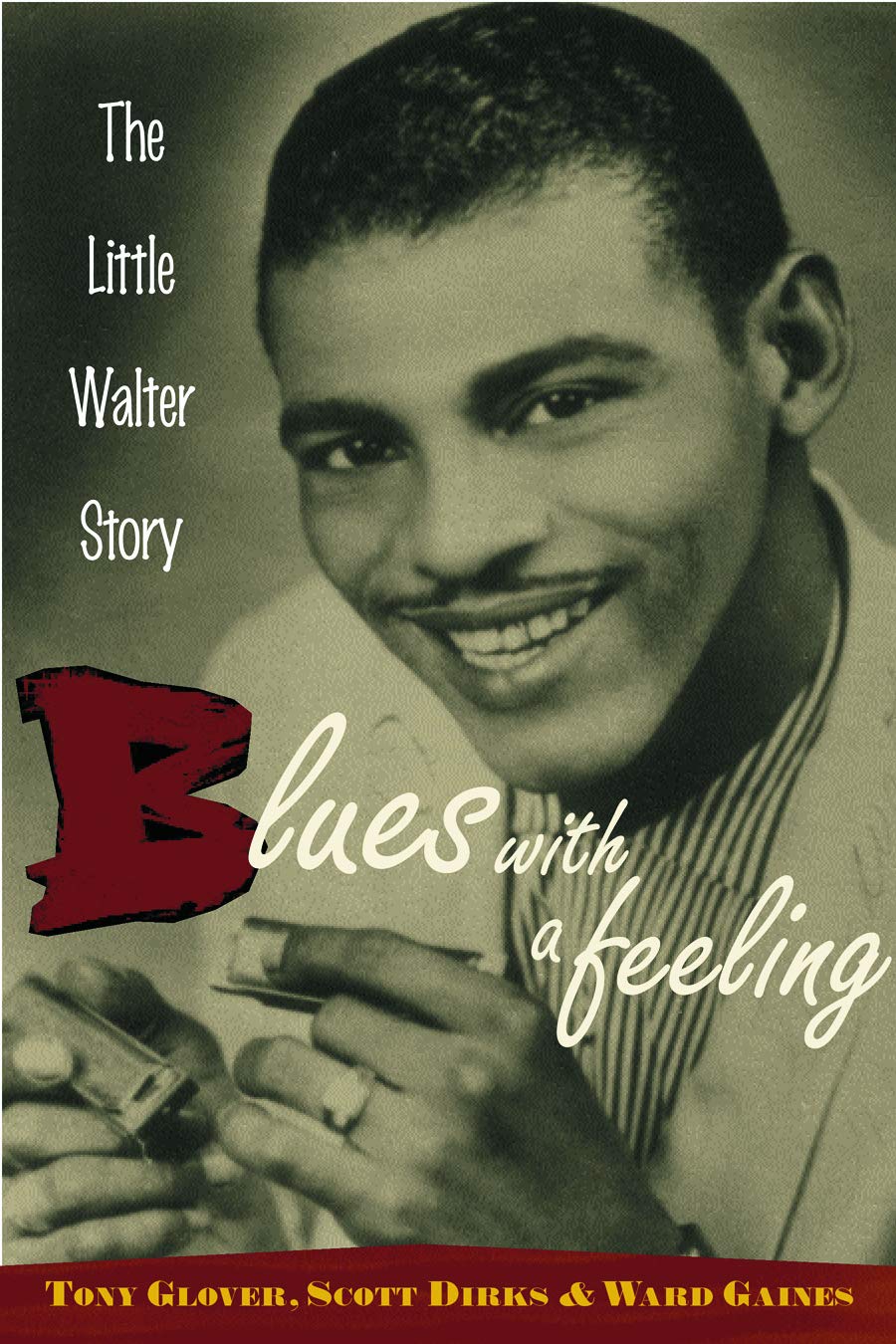 Tony Glover, Scott Dirks, Ward Gaines — Blues with a Feeling: The Little Walter Story (Routledge, 2002) (for comparative West Coast blues context)
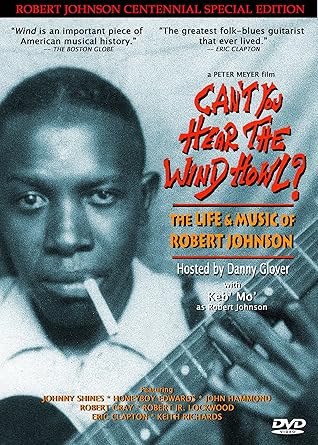 Robert Gordon — Can't You Hear the Wind Howl?: The Life and Music of Robert Johnson
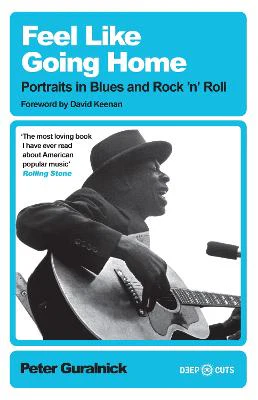 Peter Guralnick — Feel Like Going Home: Portraits in Blues and Rock 'n' Roll (1971)
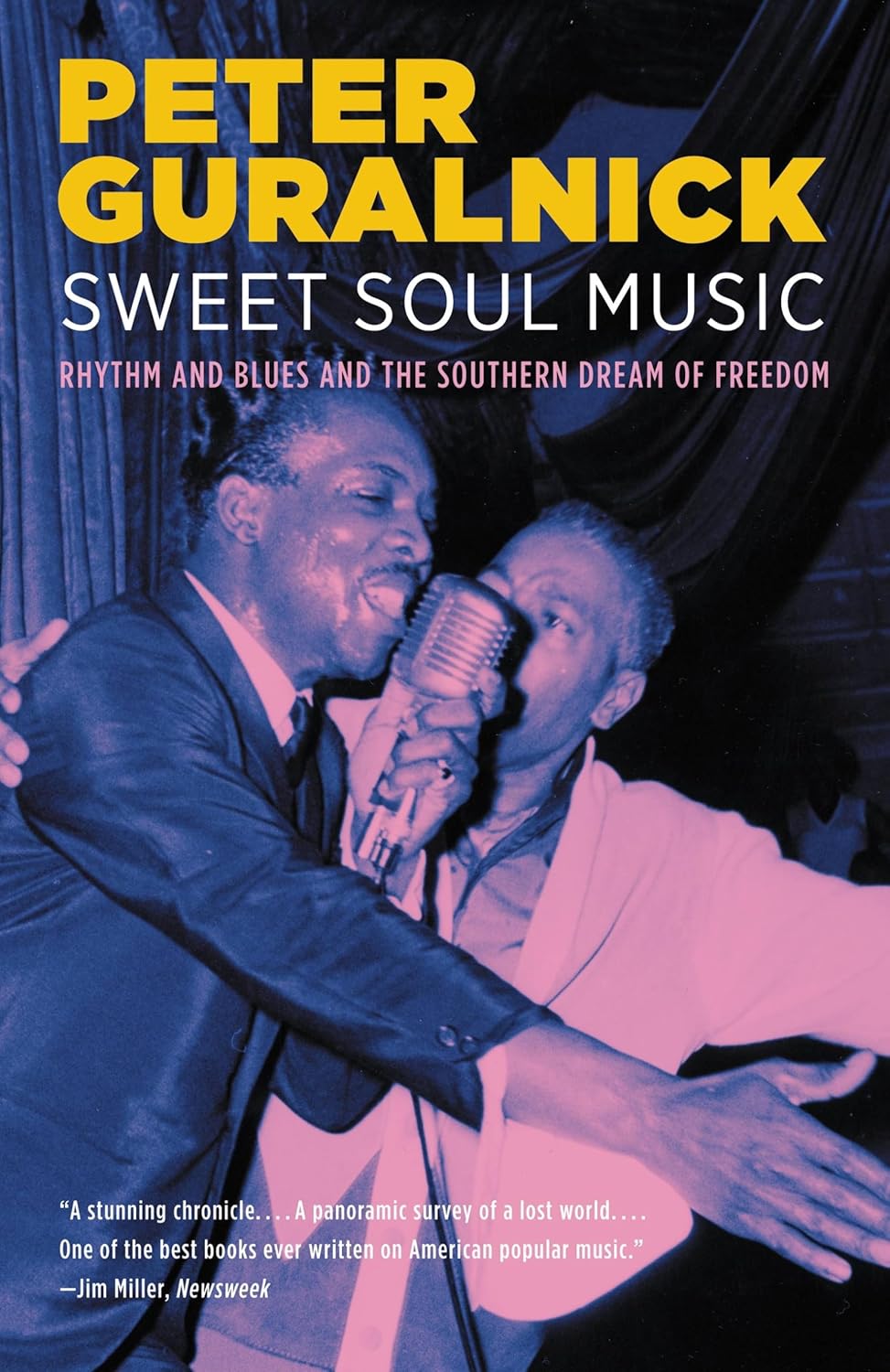 Peter Guralnick — Sweet Soul Music: Rhythm and Blues and the Southern Dream of Freedom (1986)
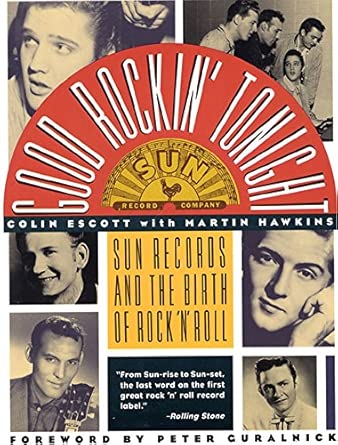 Colin Escott with Martin Hawkins — Good Rockin' Tonight: Sun Records and the Birth of Rock 'n' Roll (1991) (for independent label context)
- Bill Dahl — Liner notes to various Ace Records Watson reissues
- AllMusic — Johnny "Guitar" Watson artist page and Federal discography
- Blues Foundation Archives — Watson biographical materials
All session details reflect best available documentation; some session personnel and exact recording dates remain subjects of ongoing discographic research.