Introduction: West Coast Royalty of the Race Records Era
In February 1946, the Mesner brothers placed an advertisement in Billboard magazine announcing a new trade name for their Los Angeles record company. Their original label name — Philo — had been forced out of existence by the U.S. Patent Office's refusal to register it, on the grounds of its similarity to Philco, the radio corporation. The Mesners had initially tried "Medlee" as a compromise, but almost immediately reconsidered, placing a second Billboard ad the following week "correcting their mistake" and announcing the name they would carry for the next sixteen years: Aladdin Records.
The name was apt in ways the Mesners may not have fully calculated. The magic lamp of Arabian mythology transformed a poor boy's circumstances through supernatural assistance, granting wishes that the world's conventional mechanisms could not fulfil. Aladdin Records, operating from the independent label world of post-war Los Angeles, would perform a not entirely dissimilar transformation for dozens of African American musicians whose music the major labels had either ignored or documented inadequately — granting them commercial exposure and, in several cases, genuine stardom, through the mechanism of a small but canny independent operation with an extraordinary ear for talent and an equal gift for the rhythmic urgency that post-war Black America demanded from its popular music.
From its founding in 1945 to its sale to Imperial Records in February 1962, Aladdin Records was one of the most consistently productive and most artistically significant independent labels in the American music industry. It documented the West Coast blues and rhythm and blues tradition at its post-war peak, produced some of the foundational recordings of what would become rock and roll, launched careers that are now recognised as central to the development of American popular music, and built a catalogue that the Oxford Music Online's Grove Music describes as having been "among the most popular 'race' (later rhythm-and-blues) records of the time" while representing "many facets of African American popular music following World War II."
This is the story of that label — of the brothers who built it, the musicians who made it great, the songs that defined it, and the circumstances of its dissolution and legacy.
The Founders: Eddie and Leo Mesner
The Mesner brothers who founded Aladdin Records came to the music business through the most direct available route: they owned a record store. The Philharmonic Music Shop in Los Angeles was the commercial enterprise from which the label grew, and the retail experience it provided — the direct, daily contact with what African American music consumers were buying, what they were asking for, and what they were consistently unable to find — gave the Mesners the market intelligence that would prove essential to their label's early success.
Eddie Mesner was the younger and more commercially aggressive of the two brothers, the one who would spend the most time talent-scouting in the field, traveling to New Orleans and other Southern cities to find artists, and managing the day-to-day commercial relationships with the musicians on the roster. Leo Mesner, ten years older than Eddie, provided the business infrastructure and the organisational stability that the volatile world of independent record production required. The Amazon account of the Aladdin story captures the partnership: "Eddie and Leo were a lot like the Chess (Chez) Brothers — These people had their ears to the ground, and seemed to KNOW what would sell."
The comparison to Leonard and Phil Chess is apt and illuminating. Both pairs of brothers were immigrants to American commercial culture — the Mesners Jewish-Americans operating in the Los Angeles entertainment world, the Chesses Polish-Jewish immigrants who had come to dominate the Chicago blues recording scene. Both operations were built on a combination of commercial instinct, personal enthusiasm for African American music, and the specific kind of entrepreneurial boldness that comes from operating at the margins of an industry rather than at its commercially comfortable centre. Both were, ultimately, exploitative of the musicians they worked with in ways characteristic of the era's music business — but both also documented music that the major labels would not have touched, and in doing so preserved something genuinely irreplaceable.
Like their competitors the Bihari Brothers at Modern Records, the Mesners had started in the jukebox business before transitioning to record production. The jukebox business gave independent label operators a specific kind of commercial education: you learned quickly which records made people put money in the machine and which ones collected dust, and that knowledge translated directly into an understanding of what commercial music needed to do. The Mesners' jukebox experience gave them the same market grounding that the Chess brothers and the Bihari brothers had, and the three families' simultaneous emergence as independent label operators in the post-war Los Angeles and Chicago environments reflects the specific pathway that jukebox distribution offered into the record production business.
Philo Records: The First Sessions and the Name Change
The label's first commercial recordings, made while it still operated under the Philo name, established immediately that the Mesners had access to talent of the highest order. The very first Philo release — "Flying Home, Part 1" / "Flying Home, Part 2" (Philo P101) — was an instrumental featuring saxophonist Illinois Jacquet, one of the defining voices of the swing era and the musician whose extended solo on Lionel Hampton's "Flying Home" had effectively created the vocabulary of the rhythm and blues tenor saxophone. That Illinois Jacquet was the inaugural Philo artist was not accidental; it announced the label's jazz-rooted ambitions and its connections to the Los Angeles jazz world from which so much post-war R&B would grow.
The early Philo releases also featured Wynonie Harris, Helen Humes with the Bill Doggett Octet, Jay McShann, and Lester Young — a roster of jazz and pre-R&B talent that demonstrated both the Mesners' taste and their ability to attract established artists to a new and unproven label. Wynonie Harris, in particular, was a significant coup: he was one of the most commercially successful blues shouters of the mid-1940s, whose Philo recordings gave the label immediate market credibility.
The name change forced on the Mesners by Philco's objection produced, by accident, a better name than the one they had chosen. "Aladdin" had been present from the beginning — the original Philo label graphics had featured an Aladdin's lamp at the left side, the smoke from which spelled out "Philo" — and the transition to making the lamp image central rather than decorative gave the label a more distinctive visual identity. The rebranding was completed smoothly: the entire Philo catalogue was reprinted as Aladdin, the catalogue numbering continued without interruption, and the new name was placed before the public with the confidence of a company that understood the value of a clean commercial identity.
Maxwell Davis: The Unsung Architect
Any serious account of Aladdin Records must begin with Maxwell Davis before proceeding to the artists whose names appear on the labels, because Davis was, in many ways, the musical mind behind the label's greatest commercial successes. His dual role as arranger and A&R (Artists and Repertoire) man for Aladdin gave him an influence over the label's sound that was more systematic and more sustained than any single artist's contribution.
Davis had been born in Independence, Kansas, in 1916, and had come to Los Angeles to pursue a career as a tenor saxophonist and arranger. He had studied music formally and had worked as a session musician and bandleader in the Los Angeles jazz scene before his association with the Mesners gave him the opportunity to apply his arranging skills to the emerging R&B market. His instrument — the tenor saxophone — was the primary voice of the jump blues and R&B sound, and his understanding of how to write for brass and reed sections gave Aladdin's recordings a polished, professional quality that distinguished them from the rawer productions of some competitors.
As the bsnpubs account of the Aladdin story confirms, "A&R for the company was handled by Maxwell Davis and Eddie Mesner." This partnership — Davis handling the musical and arranging dimensions, Mesner handling the commercial and talent-acquisition dimensions — produced a division of responsibilities that served the label well through its most productive years. Davis understood what the musicians needed from their arrangements; Mesner understood what the market needed from its records; and the combination of these two forms of intelligence produced an output of consistent commercial and artistic quality.
Davis's own recordings for Aladdin — under his own name, as leader of "Maxwell Davis and His All-Stars" — were successful enough to chart, and his albums documenting his tenor saxophone work gave the label a credible jazz-instrumental dimension alongside its more commercial R&B material. His 1954 album on the label, documenting his smooth tenor saxophone work through a set of popular standards, demonstrated the versatility that made him so valuable as an in-house musical intelligence.
His legacy extends well beyond Aladdin: Davis went on to work as an arranger and session musician for dozens of other labels and artists, his work appearing on recordings by B.B. King, Lowell Fulson, T-Bone Walker, Big Joe Turner, and many others. The specific combination of jazz musicianship and commercial R&B sensibility that he brought to the Aladdin sessions was one of the defining characteristics of the West Coast R&B sound, and his contribution to its development deserves recognition alongside that of the more prominently credited artists.
Charles Brown: The Cocktail Blues Pioneer
The artist who first put Aladdin on the map as a commercially significant label was not, strictly speaking, an Aladdin solo artist in his earliest recordings: Charles Brown made his initial commercial mark as pianist and vocalist with Johnny Moore's Three Blazers, the West Coast trio whose smooth, lounge-influenced approach to the blues would define the "cocktail blues" or "club blues" style that was one of Aladdin's earliest commercial specialities.
The Three Blazers' "Driftin' Blues" — recorded for Philo/Aladdin in 1945 and released as the label was transitioning its name — was the breakthrough recording. The bsnpubs account is precise: "'Drifting Blues' was awarded the Billboard prize of being the best race recording of 1946, and from that moment until the late 1950s, Aladdin was one of the most successful R&B labels in the world." The song was a slow, intimate blues featuring Brown's smooth piano and gently pleading vocal over the simplest possible trio accompaniment — the exact opposite of the jump blues shouting style that dominated much of the R&B market. Its success demonstrated that there was a large audience for the quiet, sophisticated blues that Brown and the Three Blazers specialised in, and it gave Aladdin a commercial foundation from which to build.
Charles Brown went on to record as a solo artist for Aladdin after leaving the Three Blazers, and his solo recordings — "Trouble Blues" (1949), "Black Night" (1951), which spent fourteen weeks at number one on the R&B charts, and "Merry Christmas Baby," the 1947 recording that has become one of the most celebrated Christmas blues standards in American popular music — constitute a body of work of exceptional quality and lasting cultural significance.
"Merry Christmas Baby" deserves particular attention as a document of Brown's specific gifts. The song — which he co-wrote with pianist Johnny Moore — combined the warm sentimentality of the Christmas song tradition with the intimate, slightly melancholy quality of the cocktail blues. His piano playing was impeccably voiced, his vocal warm and slightly detached in the manner that characterised all his best work. The resulting recording became one of the most covered holiday songs in American popular music, with versions by Elvis Presley, Otis Redding, Stevie Wonder, and Bruce Springsteen attesting to its permanent place in the seasonal repertoire.
Brown's Aladdin recordings were eventually collected on reissue albums that confirmed his status as one of the defining voices of the West Coast blues style, though the critical acknowledgement came slowly and the commercial rewards never matched the artistic quality. He was in the position common to many artists of his era — someone whose recordings were enormously successful for his label and the owners who held his contracts, while he himself received minimal royalties and financial security.
Amos Milburn: The Boogie Man Who Built the Bridge
If Charles Brown represented the cocktail blues dimension of Aladdin's commercial identity, Amos Milburn represented its other and equally important dimension: the driving, insistently rhythmic boogie-woogie and jumping R&B that was the most direct precursor to rock and roll. Milburn was one of the most commercially successful artists in Aladdin's history, and his recordings from the late 1940s through the early 1950s defined the label's commercial peak.
Milburn had been born on April 1, 1927, in Houston, Texas, and had come to Aladdin's attention through the West Coast jazz and R&B scene in which the label was embedded. His piano playing was the antithesis of Brown's smooth cocktail approach: heavy, rhythmically insistent, full of the boogie-woogie patterns and the swinging shuffle rhythms that made his recordings irresistible for dancing. His voice was equally direct — a powerful, confident instrument that never needed to strain to be heard.
"Chicken Shack Boogie" (1947-48) was his breakthrough recording, reaching the top of the R&B charts and establishing the template for what would become his most commercially durable work. The Oxford Grove Music account confirms its significance: Aladdin "released upbeat boogie by Amos Milburn, such as the 1948 hit 'Chicken-Shack Boogie.'" The song's combination of a simple, repeated piano riff, a straightforward lyric about a place to have a good time, and Milburn's infectious energy was precisely the formula that the commercial R&B market of 1948 demanded.
But it was Milburn's drinking songs that have proven most durably significant in the history of the blues and rock and roll. Beginning with "Bad, Bad Whiskey" (1950), which reached number one on the R&B charts, Milburn recorded a series of songs about drinking that constituted a sustained artistic project as well as a commercial formula. "One Scotch, One Bourbon, One Beer" (1953) — the title later borrowed by John Lee Hooker for one of his own celebrated recordings — "Let Me Go Home Whiskey" (1952), "Vicious, Vicious Vodka" (1954), "Juice, Juice, Juice" (1954): these recordings collectively constituted what might be called the most complete artistic exploration of the drinking experience in American popular music. They were funny, they were insistent, they were rhythmically irresistible — and they were also, at a level that the critics of the time did not always acknowledge, genuine observations on the specific role that alcohol played in the African American working-class life that Milburn was documenting.
His influence on rock and roll was direct and traceable. The piano style he deployed on recordings like "Chicken Shack Boogie" and "Rooming House Boogie" (1949) was absorbed by the generation of musicians who would become rock and roll's founding practitioners. Little Richard has acknowledged Milburn's influence on his own approach to piano-based rock and roll performance. Fats Domino's recordings have clear harmonic and rhythmic debts to Milburn's boogie-woogie approach. Jerry Lee Lewis's work draws from the same tradition.
The Spontaneous Lunacy assessment of Milburn's importance to the label is precise: "When rock 'n' roll emerged in 1947 they scored their greatest hits with Amos Milburn working with the brilliant in-house producer Maxwell Davis." The combination of Milburn's natural boogie-woogie authority and Davis's professional arranging skill produced recordings of uncommon commercial polish — rough enough to retain the feel of the tradition they came from, slick enough to compete in the national R&B market.
Lightnin' Hopkins and the Texas Blues Dimension
Aladdin's geographical position in Los Angeles gave it access to the West Coast African American music world, but the label also reached eastward into the Texas blues tradition that was producing some of the most vital music in post-war America. Lightnin' Hopkins's Aladdin recordings — made in Los Angeles in 1946 and 1947, after the Houston talent scout Lola Anne Cullum had discovered Hopkins on Dowling Street and brought him west — were his first commercial recordings and established the commercial identity he would maintain across the subsequent thirty years of his career.
Hopkins arrived in Los Angeles accompanied by pianist Wilson Smith, and an Aladdin executive — identifying the commercial opportunity immediately — renamed both musicians for their commercial appeal: Hopkins became "Lightnin'," Smith became "Thunder," and the duo recorded as "Thunder and Lightnin'." It was a straightforward act of commercial branding, and the name stuck: Samuel John Hopkins would be "Lightnin'" for the rest of his life, the nickname generated by an Aladdin executive's marketing instinct proving more durable than anything the label itself produced.
The Aladdin Hopkins recordings — collected as The Complete Aladdin Recordings and accessible in various formats — documented a musician in transition from the acoustic street-corner blues of his Houston origins to the electric, band-accompanied style that was becoming the commercial standard. The Texas Heritage Songwriters' Association account confirms: "Aladdin was so impressed with Hopkins that the company invited him back for a second session in 1947. He eventually made forty-three recordings for the label."
The specific quality of the Aladdin Hopkins recordings has been consistently praised by subsequent listeners and critics. As the All About Jazz account notes, Hopkins's "downbeat solo blues" style — intimate, conversational, built around his guitar and his voice with minimal accompaniment — was an approach that the Aladdin production context captured with unusual directness. The label's relatively restrained production approach (compared to the more arranged, band-accompanied style that Maxwell Davis brought to the Milburn recordings) suited Hopkins's essentially solo aesthetic.
Hopkins left Aladdin after 1947, moving to the Houston Gold Star Records and then to a succession of other labels, but his Aladdin recordings remained commercially significant enough to be reissued multiple times. The Complete Aladdin Recordings compilation gave subsequent generations of blues listeners their fullest available portrait of Hopkins at the beginning of his commercial career, preserving a document of the Texas blues tradition in its pre-electric form that no subsequent recording could replicate.
Lester Young and the Jazz Catalogue
Alongside its blues and R&B catalogue, Aladdin maintained a significant commitment to jazz — a commitment embodied most completely in its relationship with Lester Young, the Kansas City-born tenor saxophonist who was one of the most influential jazz musicians of the twentieth century. Young's Aladdin recordings from the late 1940s and early 1950s gave the label a jazz credibility that complemented its R&B commercial success and demonstrated the Mesners' genuine musical breadth.
Young had been one of the defining voices of the swing era — his work with Count Basie and his famous recordings with Billie Holiday establishing him as the primary alternative voice to Coleman Hawkins's dominant approach to the tenor saxophone. Where Hawkins was robust and harmonically dense, Young was cool, light, and melodically sinuous — qualities that made him the primary influence on the cool jazz movement that would emerge in the late 1940s, and that gave his Aladdin recordings their specific character.
Young's Aladdin output included some of his most extended and carefully documented post-war performances. The label's first 10-inch LP — the first album Aladdin ever issued — was by Lester Young, demonstrating the Mesners' appreciation of his standing in the jazz world and their understanding that the new LP format was appropriate for an artist of Young's sustained improvisational approach. The subsequent LP releases in the Aladdin 800 series included "Lester Young and His Tenor Sax, Volume 1" (LP-801, 1956) — one of the label's most significant jazz documentation efforts.
The Jazz: West subsidiary label that Aladdin launched specifically for its jazz catalogue gave the label's jazz recordings a separate commercial identity and served the growing market for West Coast cool jazz that was developing in the late 1940s and early 1950s. Art Pepper, the Los Angeles alto saxophonist whose cool jazz approach was one of the defining sounds of the California jazz scene, appeared on Jazz: West alongside other West Coast musicians. The subsidiary gave Aladdin a jazz catalogue of real depth and significance.
Illinois Jacquet, who had been the label's inaugural artist, continued to appear on the Aladdin roster through various periods of the label's history. His tenor saxophone work — more extroverted and blues-inflected than Young's cool approach — provided the label with a jazz voice that connected its origins in the swing era to the more contemporary R&B sound that was its primary commercial product.
The Five Keys and the Vocal Group Tradition
The mid-1950s brought a new commercial priority to Aladdin's roster: the vocal group. The five-part harmony tradition that would eventually become doo-wop was one of the most commercially fertile territories in mid-1950s R&B, and the Five Keys were Aladdin's most significant contribution to that territory.
The Five Keys were formed in Newport News, Virginia, in the late 1940s, and had come to Aladdin's attention through their early recordings. Their sound combined gospel-derived harmonic sophistication with the secular lyrical content of the pop and R&B ballad tradition, and the combination gave their recordings the quality of sacred music applied to the most worldly possible subjects — an approach that was simultaneously commercially safe (the harmony-group aesthetic was broadly accessible) and emotionally powerful (the gospel intensity gave even the most straightforward love songs an authority they might not otherwise have possessed).
Their Aladdin recordings included "The Glory of Love" (1951) and "White Cliffs of Dover" (1951) — both reaching the R&B charts — and "Hucklebuck With Jimmy" (1951), the latter demonstrating their ability to handle the more rhythmically assertive material alongside the ballads. The loss of the Five Keys to Capitol Records in 1954 was, as the bsnpubs account notes, "a blow to Aladdin": Capitol's major label resources and distribution network could offer the group a commercial platform that Aladdin's independent operation could not match, and the group's subsequent success on Capitol — most notably "Ling, Ting, Tong" (1954) — demonstrated what they might have achieved had they stayed.
Floyd Dixon and the Texas Blues Migration
Floyd Dixon was among several Texas-born blues musicians who found their way to Aladdin and whose recordings gave the label an additional dimension of the blues tradition alongside Hopkins's work. Dixon had been born in Marshall, Texas, and had developed a piano-based blues style that was influenced by both Charles Brown's cocktail approach and the more driving boogie-woogie tradition that Milburn represented. His Aladdin recordings — "Call Operator 210" (1952), "Wine, Wine, Wine" (1952), "Red Cherries" (1952), "Sad Journey Blues" (included on the Aladdin Story compilation), "Telephone Blues" (included on the compilation) — documented a musician who occupied the same general territory as Milburn and Brown without being reducible to either.
Dixon's California residency — he had moved to Los Angeles from Texas — placed him squarely within the Aladdin orbit, and his regular recording activity for the label through the early 1950s gave him a commercial presence that his talent warranted but that the competitive R&B market of the period made difficult to sustain. His influence on subsequent West Coast blues and R&B was real, though less often acknowledged than his contemporaries' more celebrated contributions.
Peppermint Harris — the Texas-born singer and guitarist born Harrison D. Nelson Jr. — was another Texas bluesman who made significant recordings for Aladdin. His "I Got Loaded" (1951), which reached the R&B top five, was one of the label's most commercially successful blues recordings of the early 1950s, and its specific combination of comedic and plaintive qualities — the narrator both proud and slightly ashamed of his drinking — gave it a character that distinguished it from the more straightforwardly celebratory drinking songs of Milburn's catalogue.
Shirley and Lee: "Let the Good Times Roll" and the Rock and Roll Transition
As the 1950s progressed and rock and roll began to reshape the commercial landscape, Aladdin's most successful new act bridged the gap between the R&B tradition that had defined the label and the new sound that was taking over the youth market. Shirley and Lee — Shirley Goodman and Leonard Lee, both born in New Orleans — were a duo whose recordings combined the energy of New Orleans R&B with the boy-girl narrative structure that was becoming one of rock and roll's primary commercial templates.
Their 1956 recording "Let the Good Times Roll" was the zenith of their commercial achievement and one of the great recordings of the early rock and roll era. The Oxford Grove Music account confirms its significance: "Several songs released on Aladdin foreshadowed the development of rock and roll, such as Shirley and Lee's 1956 classic 'Let the Good Times Roll.'" The song's famous chorus — an invitation to abandon care and enjoy the present moment that had both specific New Orleans cultural roots and universal pop appeal — reached number one on the R&B charts and number twenty on the pop charts, giving Aladdin its broadest crossover success to that point.
Shirley's high, girlish voice against Lee's deeper response created a vocal dynamic that was simultaneously musically coherent and narratively engaging — two characters talking to each other, playing off each other's energy, representing the joy and the complexity of romantic partnership. The New Orleans rhythmic foundation — the second-line influence audible in the rhythm section's approach — gave the recording a physical urgency that West Coast blues arrangements did not always achieve.
Their Aladdin recordings prior to "Let the Good Times Roll" — "I'm Gone" (1952), "Shirley Come Back to Me" (1952), "Shirley's Back" (1953) — had established a consistent presence on the R&B charts without achieving the crossover success of the 1956 hit. The bsnpubs account traces the building of their commercial profile through these records, noting that the earlier singles "didn't sell quite enough to chart in the top 10" before the eventual breakthrough.
Thurston Harris and the Final Commercial Gasp
Aladdin's commercial swan song arrived in an unexpected form: a novelty-adjacent rock and roll record by an artist who had not been part of the label's original talent base. Thurston Harris, born in Indianapolis in 1931, had come to Aladdin in 1957 and recorded "Little Bitty Pretty One" (Aladdin 3398) — a record that became the label's best-selling single with over a million copies sold, reaching number two on the R&B chart and number six on the pop chart. The song's combination of infectious simplicity, Harris's boyish vocal, and the tight, rhythmically insistent rock and roll backing gave it an immediate commercial appeal that transcended the label's traditional African American R&B market.
The irony of Aladdin's commercial peak arriving through a record that was, in some ways, furthest from the label's artistic roots — a novelty rock and roll song by a relatively unknown artist, rather than the sophisticated cocktail blues of Charles Brown or the driving boogie of Amos Milburn — was characteristic of the independent label world of the late 1950s, where commercial survival required constant adaptation to a rapidly changing market. "Little Bitty Pretty One" demonstrated that Aladdin could still produce a massive pop hit; it also demonstrated that the specific musical traditions the label had pioneered were no longer the primary commercial opportunities available.
The bsnpubs account captures the trajectory: "In 1957, Thurston Harris joined the label and continued the pop crossovers with the hit 'Little Bitty Pretty One' [Aladdin 3398], which made #2 R&B and #6 pop. It proved to be Aladdin's all-time best selling single, with well over a million sales." That the label's best-selling single arrived in its twilight years, from an artist who hadn't been part of its formative roster, suggests both the commercial opportunism that had always been part of the Aladdin operation and the degree to which the music industry had changed around the label.
The Subsidiary Labels: Jazz: West, Intro, Score, and Others
Aladdin's commercial ambitions extended well beyond the main label imprint through a network of subsidiaries that gave the operation additional commercial reach into specific market segments. These subsidiaries — several of which became significant in their own right — demonstrated the Mesners' understanding that the LP market was developing along genre-specific lines that a single label imprint could not serve comprehensively.
Jazz: West was the most prestigious of the subsidiaries, issuing jazz LP recordings in the 10-inch format before transitioning to 12-inch in the mid-1950s. Eight 12-inch albums appeared on Jazz: West between 1955 and 1956, and the subsidiary's roster — Art Pepper, Hampton Hawes, and other West Coast jazz musicians — gave Aladdin a claim on the California cool jazz scene that was contemporary and critically credible.
Intro was the popular music subsidiary, launched in 1952 to issue 10-inch LP recordings in a format aimed at the growing adult pop market. Its two initial releases in 1952 gave the label a presence in the pop LP market; it was revived in 1957 for at least four additional albums as the Mesners sought to capitalise on the growing importance of the LP format across all genres.
Score was launched in 1957 as a budget label to reissue old Aladdin material at a lower retail price — a sensible commercial strategy as the original recordings aged out of their primary commercial moment and the catalogue became a reissue asset. The Score albums made Aladdin's most celebrated recordings accessible to the budget market that was growing alongside the discount record store phenomenon of the late 1950s.
Orfeo was the label's unlikely classical music subsidiary, issuing one 10-inch album and two 12-inch albums in 1952 before being discontinued. The existence of a classical subsidiary on an R&B and jazz label was unusual, but it reflected the Mesners' broader commercial ambitions and their understanding that the LP format was transforming the classical music market simultaneously with all the other segments.
The cvinyl.com assessment of the subsidiary label significance is accurate: "Many of the early LP releases were pressed on red vinyl and are now in high demand by collectors, fetching very high prices on the market, both for the outstanding quality of the music and the scarcity and historic value of these albums." The relative scarcity of surviving copies — a reflection of the modest pressing quantities appropriate to a small independent label's resources — has given the Aladdin and subsidiary label LPs a collector value that places them among the most sought-after items in the vintage record market.
The Competition: Aladdin and the West Coast Independent Scene
Understanding Aladdin's specific significance requires situating it within the broader competitive environment of the West Coast independent label scene that was emerging simultaneously in the late 1940s. The uDiscover account captures the geography: "The Aladdin label was started by Eddie and Leo Mesner who set about signing some of the best jump blues artists in Southern California, including Amos Milburn and Charles Brown. Modern was started a few months later by the Bihari Brothers, Jules, Joe and Saul."
Aladdin and Modern were direct commercial competitors — both Los Angeles-based independent labels, both focused primarily on African American music, both building their rosters from the talent available in the West Coast African American music community. The differences between them were matters of emphasis and specific talent: Aladdin was stronger in the cocktail blues and boogie-woogie traditions (Brown, Milburn), while Modern leaned toward guitar blues (PeeWee Crayton, Johnny Guitar Watson) and its RPM and Flair subsidiaries were pivotal for B.B. King and Elmore James. Together, the two labels — along with the Chess operation in Chicago and the Atlantic operation in New York — constituted the commercial infrastructure for post-war African American popular music.
The competition for talent was fierce, and the practices of both operations in securing and holding artists were not always admirable. The predatory contracting practices that were standard in the independent label world of the period — long-term exclusive contracts, minimal royalty rates, publisher's shares retained by the label owner rather than shared with the songwriter — were as characteristic of Aladdin as of any other label in the space. The musicians whose recordings built the label's commercial reputation rarely received compensation proportional to the commercial value they created.
The Sale to Imperial and the Final Chapter
By 1958, Aladdin's commercial position had weakened significantly. The loss of Charles Brown and the Five Keys to other labels had removed two of the roster's anchor acts; Amos Milburn's commercial peak had passed; and the rock and roll revolution was directing the youth market toward different artists and different sounds. The Thurston Harris hit in 1957 had provided a momentary commercial reprieve, but the underlying trend was clear.
The bsnpubs narrative of the decline is precise: "By 1958 Aladdin was clearly winding down. Thurston Harris had Aladdin's last chart entry in February with 'Do What You Did' [Aladdin 3399], which reached #14 R&B and #57 pop. By 1959, nobody was having much success, and the label slowly went dormant."
The sale of the Aladdin catalogue to Lew Chudd's Imperial Records on February 12, 1962, concluded the label's operational history. The price and specific terms of the acquisition have not been widely published, but the transaction gave Imperial one of the most significant independent R&B catalogues in American recording history, alongside the Imperial artist roster that already included Fats Domino — himself one of the most direct commercial descendants of the boogie-woogie tradition that Milburn had pioneered.
Imperial subsequently reissued much of the Aladdin catalogue on 15 albums, some in stereo for the first time. Imperial was itself acquired by and folded into Liberty Records in the late 1960s, and the subsequent consolidations of the American music industry eventually brought the Aladdin catalogue to EMI and then to Universal Music Group — the current owners who administer one of the most significant collections of post-war American R&B recordings in existence.
The Spontaneous Lunacy assessment of the timeline's human dimension is poignant: "The label was bought out by Imperial in early 1962 and a year later Eddie Mesner passed away just shy of fifty years old. His brother Leo, ten years his senior, lived until 1992." Eddie's early death — at approximately forty-nine, just months after completing the sale that ended what he had built — was a biographical conclusion of particular sadness. The older brother, who had provided the institutional stability for the operation, outlived it by thirty years; the younger brother, who had been its animating commercial force, barely survived it.
The Legacy: What Aladdin Left Behind
The Grove Music assessment of Aladdin's historical significance is carefully worded and accurate: the label's records were "among the most popular 'race' (later rhythm-and-blues) records of the time" and "represented many facets of African American popular music following World War II." The language captures both the commercial importance and the cultural breadth of what the Mesners had built.
The specific legacy of the recording catalogue is traceable through multiple channels. Charles Brown's recordings defined the cocktail blues style that would remain a significant presence in American music long after its commercial peak had passed, and "Merry Christmas Baby" in particular became one of the most durable Christmas standards in American popular music. Amos Milburn's boogie-woogie recordings were among the direct ancestors of rock and roll piano, and their influence on Little Richard, Fats Domino, and Jerry Lee Lewis was real and significant. Lightnin' Hopkins's Aladdin sides launched the career of one of the most extensively recorded artists in the history of the blues. Shirley and Lee's "Let the Good Times Roll" became a New Orleans R&B anthem that has been covered hundreds of times and that carries the spirit of its specific cultural moment with an immediacy that has not dimmed.
The collector significance of the Aladdin catalogue — particularly the rare LP pressings on the main label and its subsidiaries — has been consistently acknowledged. George Moonoogian's 1979 Goldmine article calling Aladdin "The King of LP Rarities" and the appearance of eight Aladdin albums on Goldmine's "100 Most Valuable U.S. Albums" list reflect both the scarcity of surviving copies and the musical quality that makes collectors willing to pay premium prices for them.
But the most significant legacy is the music itself — the recordings that the Mesner brothers and Maxwell Davis and the artists of the label created between 1945 and 1962 in the studios and performance spaces of Los Angeles, Texas, and New Orleans. The jump blues of Amos Milburn, the cocktail blues of Charles Brown, the Texas blues of Lightnin' Hopkins, the jazz of Lester Young, the R&B of Shirley and Lee — these were not minor or peripheral contributions to American popular music but central documents of one of its most productive and most historically consequential eras. Aladdin Records put them on record, and the record has not stopped playing.
Selected Discography
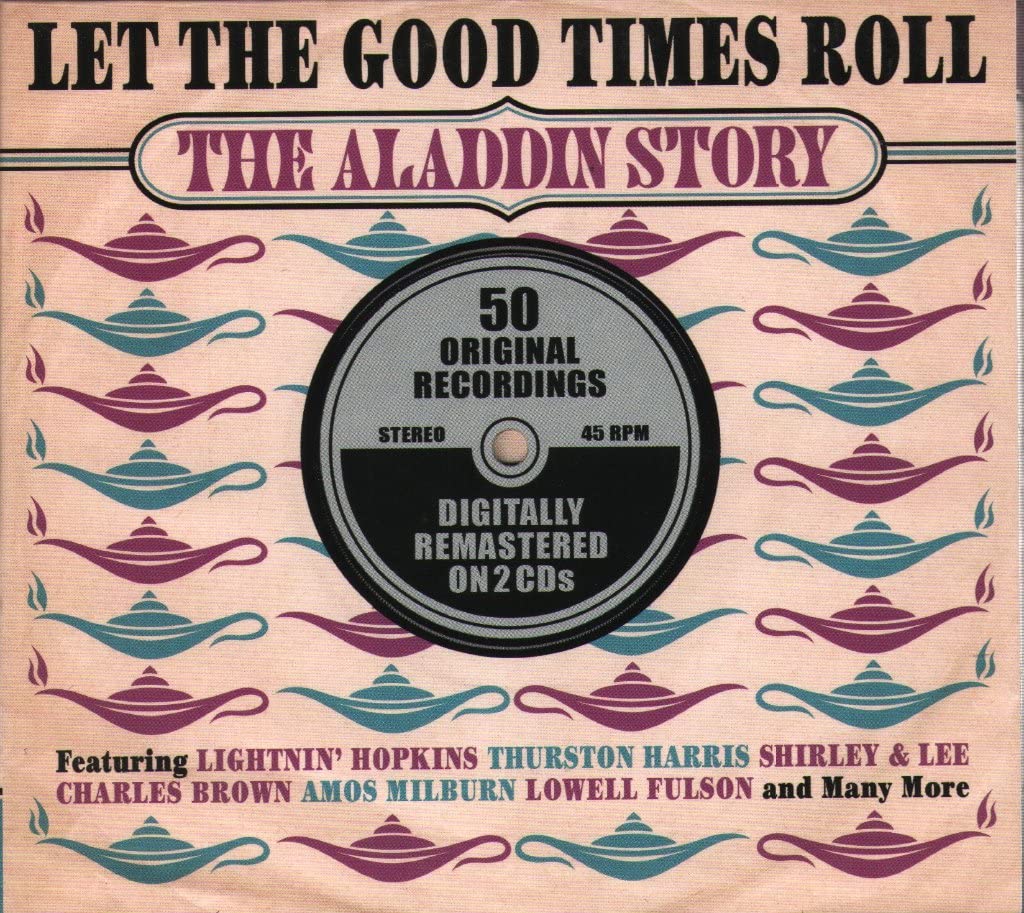
Let The Good Times Roll- The Aladdin Story
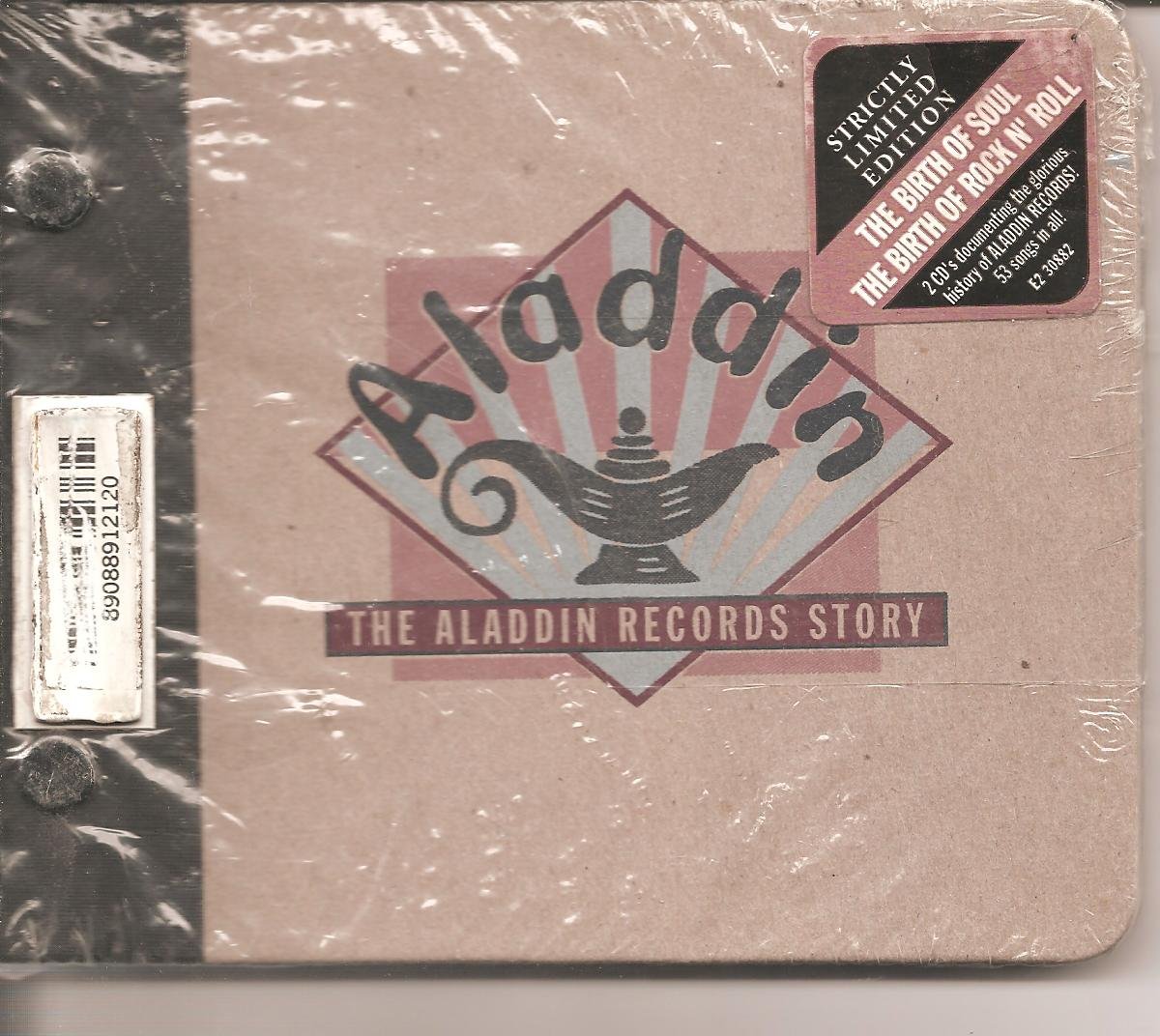
Aladdin Records (originally Philo Records, 1945-1946) was founded by brothers Eddie and Leo Mesner at 423-1/2 West Fifth Street, Los Angeles, California, later moving to 5352 West Pico Boulevard, Los Angeles. It operated from 1945 until its sale to Imperial Records on February 12, 1962. Principal subsidiary labels: Jazz: West (jazz); Intro (popular music, 1952 and 1957); Score (budget reissues, 1957); Orfeo (classical, 1952). Key producer/arranger: Maxwell Davis. Catalogue subsequently acquired by Imperial Records (1962), Liberty Records, EMI, and Universal Music Group. Eddie Mesner died 1963, aged approximately 49. Leo Mesner died 1992, aged approximately 76.