Introduction: The Label That Alan Lomax Would Have Built
There is a moment in a 1990 interview with Terry Gross on Fresh Air in which Chris Strachwitz — the founder, president, and animating spirit of Arhoolie Records — is asked about his role in the American music ecosystem, and his answer is characteristically self-effacing: "I was just a song catcher, really. I was never really a record label. I didn't promote things that well." The modesty is genuine and the self-deprecation is characteristic, but the assessment is entirely wrong. Arhoolie Records, which Strachwitz founded in 1960 in El Cerrito, California, and which he ran for fifty-six years until its sale to Smithsonian Folkways in 2016, was one of the most important independent record labels in American history — not in spite of its non-commercial orientation but because of it.
The Smithsonian Folkways description of the label is not overstatement: "It is the most important roots record label of the last sixty years." Over six decades of operation, Arhoolie documented Mississippi Fred McDowell, Mance Lipscomb, Lightnin' Hopkins, Clifton Chenier, Big Mama Thornton, Flaco Jiménez, BeauSoleil, and hundreds of other artists working in the blues, Cajun, zydeco, Tejano, norteño, klezmer, bluegrass, and gospel traditions. It recorded music in homes, front porches, beer joints, churches, and makeshift studios across Texas, Mississippi, Louisiana, and California. It preserved traditions that the commercial music industry had declared obsolete and then watched as those traditions turned out to be the foundations on which successive generations of rock and roll, blues-rock, and roots music built their empires.
Bonnie Raitt — who was personally encouraged by Strachwitz and who has consistently named his recordings as central to her development as a blues guitarist — assessed the broader significance most accurately: "The ripple effect of Chris Strachwitz in the world is immeasurable in preserving this music. I can't even imagine what it would be like to not have heard those recordings." The recordings exist because one man with a tape recorder and a passionate indifference to the commercial mainstream spent sixty years going to places that the commercial music industry wouldn't go, recording music that the commercial music industry wouldn't record, and releasing it for audiences that the commercial music industry didn't know existed.
This is the story of that man and that label.
The Founder: Christian Alexander Maria Graf Strachwitz von Groß-Zauche und Camminetz
The full name — Christian Alexander Maria Graf Strachwitz von Groß-Zauche und Camminetz — is one of the more improbable names in the history of American popular music. Born on July 1, 1931, in Berlin to an aristocratic Silesian family of the old German landed nobility, Strachwitz grew up in a world that bore no obvious relationship to the Mississippi Delta blues or the Cajun dance halls of southwest Louisiana. And yet the path from Lower Silesia to El Cerrito, California, and from the armed forces radio to the acoustic field recordings that would become Arhoolie's defining product, was more direct than it might appear.
The family was displaced at the end of the Second World War. Under the terms of the Potsdam Agreement, the Strachwitz family was among the millions of German-speaking people forcibly resettled westward when the eastern territories were absorbed into Poland. They settled temporarily with relatives in Braunschweig, in the British zone of Allied-occupied Germany, and it was there that young Strachwitz first heard swing music played on Armed Forces Radio — the American military broadcasting operation that brought jazz and pop music to the occupation forces and, inadvertently, to any German civilian with access to a receiver.
The encounter with the sounds coming out of the radio — the swing, the jazz, the early rhythm and blues — planted a seed that would germinate across the subsequent decades. In 1947, the family emigrated to the United States, settling eventually in Carmel, California, where a great-aunt had been their host. The move from Germany to California was simultaneously a geographical displacement and a cultural opening: here was the country that made the music he had been hearing on Armed Forces Radio, the landscape from which those sounds had emerged. Strachwitz was sixteen years old and already obsessed.
The specific moment of transformation that would eventually produce Arhoolie Records came through a film. The young Strachwitz saw the 1947 Hollywood musical New Orleans — a melodramatic story of jazz's origins, starring Louis Armstrong, Billie Holiday, and Woody Herman — and was, by his own account, permanently altered by the experience. "I became enamored with American regional music after seeing the film New Orleans," the Wikipedia account records, capturing the simplicity of a moment that would have consequences the filmmakers could not have imagined.
He enrolled at the University of California, Berkeley, where he eventually took degrees in political science and secondary education. But his real education was proceeding in parallel with his formal studies: buying records, attending concerts, trading 78-rpm records with the network of collectors who were systematically excavating the pre-war blues, jazz, and country music traditions that the commercial industry had left behind. He learned recording technique from Bob Geddins, the Oakland producer and recording engineer who was one of the key figures in post-war West Coast blues; he made his first recordings with Jesse Fuller, the San Francisco street musician and one-man band; and he taught high school in Los Gatos while planning his next move.
That next move was a trip to Texas in the summer of 1959, with the specific intention of recording Lightnin' Hopkins — the Houston blues guitarist and singer who had been one of the significant commercial blues artists of the late 1940s and early 1950s and who was, by 1959, living in relative obscurity. The trip's specific goal was not achieved — Strachwitz had neither the money nor the equipment ready when he arrived in Houston and discovered that Hopkins was actually in Berkeley for a performance — but the plan it embodied was fully formed: go to where the music is, record it, release it.
The First Recording and the First Release: Mance Lipscomb in Navasota, 1960
The recording that inaugurated the Arhoolie label was not made in a studio, with professional equipment, under any arrangement that resembled commercial record production. It was made in Navasota, Texas, in 1960, in the home and yard of a sixty-year-old sharecropper and farm worker named Mance Lipscomb, with the assistance of folklorist "Mack" McCormick and the portable recording equipment that Strachwitz had purchased with money earned by trading in pre-war 78-rpm records.
McCormick had told Strachwitz about Lipscomb — a Texas songster and guitarist who had been playing music at dances, parties, and social gatherings in the Navasota area for decades without any commercial recording career. Lipscomb's repertoire encompassed blues, rags, dance tunes, ballads, and folk songs accumulated across sixty years of living and playing in rural Texas — a comprehensive document of the Texas folk music tradition in its most naturally preserved form. When Strachwitz arrived at Lipscomb's house with his tape recorder, what he found was a musician of complete, unhurried mastery who needed nothing from a studio environment that his front porch and backyard couldn't provide.
The resulting recording became Texas Sharecropper and Songster (Arhoolie F-1001, 1960) — the first release on Strachwitz's new label, whose name he had derived from "arhoolie," a field holler term meaning "a cry of joy," that he had encountered in a John Lomax field recording. Strachwitz and friends personally assembled the first 250 copies, an act of DIY record production that established from the outset the garage-industry character of the Arhoolie operation. The label's name and its founding aesthetic were fully present in this first release: the music of a specific, particular American tradition, captured with minimal mediation and maximum directness, released for an audience that might not yet know it existed but would recognise it immediately when it did.
Mance Lipscomb became one of the artists most closely associated with the early Arhoolie identity. He went on to perform at the Berkeley Folk Music Festival (where Strachwitz introduced him as part of his ongoing role as cultural broker between the folk revival community and the artists it was discovering), at the Newport Folk Festival, and at venues across the country that the folk revival of the early 1960s had opened to traditional music. His subsequent Arhoolie albums — there would be seven in total — documented a musician whose storytelling, guitar playing, and deep connection to the Texas vernacular tradition made him one of the more extraordinary figures in the folk revival world.
Lightnin' Hopkins and the Commercial Foundation
The artist who gave Arhoolie its early commercial foundation was not Mance Lipscomb but Lightnin' Hopkins — the Houston blues musician whom Strachwitz had originally tried to record in 1959 and whom he finally captured on tape in 1960, when Hopkins returned to Berkeley for performances. The Hopkins recordings were made in a Berkeley hotel room with Strachwitz's portable equipment, and the resulting album — Lightnin' Hopkins (Arhoolie 2010, 1960) — became one of the label's biggest early sellers.
Hopkins was, at the time of the Berkeley recordings, in a complex professional situation. He had recorded prolifically for Aladdin, RPM, and other labels through the late 1940s and early 1950s, producing a body of commercial blues recordings that had made him one of the most commercially successful Texas blues artists of the post-war era. But by the late 1950s, the commercial blues market for his style was contracting, and he was performing in the folk revival context — at the same Berkeley venues and festivals that were providing audiences for Lipscomb, Big Joe Williams, and other traditional artists who were being rediscovered.
Strachwitz's Hopkins recordings captured the guitarist in a stripped-down, solo setting — voice and acoustic guitar, the absolute minimum required for a complete musical statement — that suited both the folk revival aesthetic and the documentary instincts that governed Arhoolie's production philosophy. The recordings were not produced in any elaborate sense; Strachwitz set up his microphones, Hopkins played and sang, and the tape captured what happened. The resulting album had the quality of field recordings rather than commercial productions, and its directness was a commercial and critical asset.
The relationship between Strachwitz and Hopkins was complicated by the multiplicity of labels that had claims on the guitarist, and by the characteristic uncertainty about what arrangements were in place with which labels at any given moment. Strachwitz navigated these complications with a combination of legal care and personal enthusiasm, eventually building a Hopkins catalogue on Arhoolie that comprised multiple albums and documented the guitarist across a range of settings — solo acoustic, small electric band, larger ensemble — that gave the Arhoolie Hopkins material a completeness that any single commercial session could not have achieved.
Mississippi Fred McDowell: The Most Important Field Recording
Among all the artists Strachwitz recorded during Arhoolie's most productive early period, the one whose story best illustrates the label's approach — and whose legacy had the most directly traceable impact on subsequent popular music — was Mississippi Fred McDowell. The story of how Strachwitz found McDowell, recorded him, and eventually ensured that the Rolling Stones' royalties from "You Gotta Move" found their way back to the dying bluesman, is one of the more remarkable in American music history.
Strachwitz's introduction to McDowell's music came through Alan Lomax's field recordings, which had been made in Como, Mississippi, in September 1959 and released on the Atlantic Southern Folk Heritage Series in 1960. "I was wiped away when I heard the Alan Lomax collection from Mississippi," Strachwitz recalled in the Terry Gross interview. "And I remember I wrote to Alan Lomax, where is this man from? And he gave me an address in Clarksdale, Miss., and I went to the post office. Where's route so-and-so? They said, oh, it's out there, north of Highway 61."
When Strachwitz drove to Como in February 1964 — eleven days, as it turned out, after Chris Strachwitz arrived, so did blues researcher Pete Welding of Testament Records, demonstrating that the word was out about McDowell simultaneously through multiple channels — he found McDowell getting off a tractor at his farm. The resulting sessions, held at McDowell's farm and in the surrounding area, produced the material for Mississippi Delta Blues (Arhoolie 1021, 1964) — an album that the Blues Foundation subsequently inducted into its Hall of Fame as one of the essential documents of the tradition.
The rolling stone story involving McDowell's "You Gotta Move" — which Strachwitz had recorded on one of the Arhoolie sessions — demonstrated both the commercial reach of Arhoolie's artist discoveries and Strachwitz's fierce personal commitment to ensuring that his artists received fair treatment. When the Rolling Stones recorded "You Gotta Move" for Sticky Fingers (1971), the question of who owned the publishing rights became a matter of significant commercial consequence. Mick Jagger credited Fred McDowell as the composer on the first recording, but the Stones' manager Allen Klein insisted that the song was traditional material that belonged to the Stones. "I said, 'Fred, where did you learn this song?' He said, 'Chris, I learned it out of a book,'" Strachwitz recalled. The dispute was eventually resolved in McDowell's favour, and Strachwitz was responsible for ensuring that McDowell received the royalties. As Strachwitz later said with characteristic directness: "I was able to give Fred McDowell the biggest check he'd ever seen in his life."
McDowell was dying of cancer when the Stones' royalties arrived. "Strachwitz prevailed over the resistance of the band's lawyers and ensured that royalties were given to McDowell, who was dying of cancer," the CBS San Francisco account records — a sentence that captures both the commercial scale of what was at stake and the personal commitment that Strachwitz brought to his artists' welfare.
The Production Philosophy: "I've Never Recorded Things I Didn't Like"
The statement that most completely captures Strachwitz's approach to running Arhoolie Records is the one that the Smithsonian Folkways account preserves: "Boldly ignoring commercial trends, Strachwitz insisted, 'I've never recorded things I didn't like.'" This is not the statement of a commercial record producer; it is the statement of a curator, an archivist, an enthusiast who happened to have a recording operation. And yet it was precisely this non-commercial orientation — this refusal to subordinate musical judgment to market calculation — that made Arhoolie what it became.
His characterisation of most commercial music as "mouse music" — a term that appears in the Wikipedia account and that he deployed with characteristic bluntness — expressed the aesthetic conviction that animated every Arhoolie recording. Commercial music was processed, overproduced, mediated: it was music designed to sell rather than to express. The music Strachwitz was interested in documenting was the opposite: music that expressed something specific and real about the lives and communities from which it came, that had not been smoothed and sweetened for commercial consumption, that retained the specific flavour of its origins.
His production approach was consistent with this philosophy: minimal intervention, maximum capture of the performer's natural voice and style. He set up his tape recorder wherever the musician was — a front porch, a kitchen, a beer joint, a farm — and recorded what happened. He did not arrange sessions weeks in advance with elaborate plans for the recordings; he showed up when he could, recorded what was available, and hoped that what he captured would be good enough to release. Often it was extraordinary.
The specific recording philosophy had a technical dimension as well. Unlike the professional studios of the period, with their microphone placement protocols, their mixing boards, their professional engineers and their post-production apparatus, Strachwitz's field recording setup was simple: good microphones, a reliable tape recorder, and the acoustic environment of wherever he happened to be recording. The resulting recordings had a quality that no studio could have replicated: the ambient sound of the specific place — the wind in the trees, the traffic on the rural road, the creak of a porch floor — giving the music a geographic and social specificity that studio production invariably strips away.
"So much of pop music has all this slop added, with this mush background that I can't even call music," he told an interviewer in 2013. "You can hardly hear the voices! They bury the voices. If somebody wants to sing, sing god damn it! You know? In the old days, you could hear them sing." The directness of the observation reflects the directness of the production philosophy: hear the voices, hear the instrument, hear the music. Everything else is unnecessary.
Country Joe McDonald and the Accidental Commercial Windfall
The commercial event that gave Arhoolie Records the financial foundation to buy its own building and establish itself as a permanent institutional presence was not any blues or roots music recording but an anti-war protest song recorded in a Berkeley living room by a local folk performer whom Strachwitz had met through his friend Ed Denson.
Country Joe McDonald — who would go on to form Country Joe and the Fish and become one of the central figures in the counterculture rock music of the late 1960s — was in 1965 a Berkeley-based folk and protest singer with no commercial recording career. Denson introduced Strachwitz to McDonald, and Strachwitz recorded him in his living room performing "I Feel Like I'm Fixin' To Die Rag" — an explicitly anti-Vietnam War song whose mordant humour and commercial chant-structure gave it an unusual combination of political edge and pop accessibility. Strachwitz "casually garnered the publishing rights to the song" as part of the arrangement — a casual decision that would have non-casual consequences.
By 1969, McDonald was leading Country Joe and the Fish, and "I-Feel-Like-I'm-Fixin'-to-Die Rag" was a highlight of the Woodstock festival. The documentary film of the festival, which gave the song its widest commercial exposure, generated royalties that would fundamentally change Arhoolie's financial situation. "Royalties from the song eventually enabled Strachwitz to purchase a building in El Cerrito, California, which served as Arhoolie's headquarters," the Smithsonian Folkways account confirms. A building in El Cerrito — the physical home of the label, the Down Home Music Store that Strachwitz established there, and eventually the Arhoolie Foundation that would preserve his life's work — was made possible by an anti-war protest song recorded in a living room as an act of cultural documentation rather than commercial strategy.
The irony was not lost on Strachwitz: a label dedicated to the most anti-commercial forms of American vernacular music, financially sustained by the biggest countercultural music event of the century. He used the money wisely and without embarrassment, investing it in exactly the kind of recording and distribution activity that the label existed to pursue.
Big Mama Thornton: The Queen Who Didn't Get Her Due
Among the blues artists who recorded for Arhoolie, Big Mama Thornton — Willie Mae Thornton, born December 11, 1926, in Ariton, Alabama — occupies a particularly complex position. She had already achieved considerable fame before Strachwitz recorded her: her original recording of "Hound Dog" (Peacock Records, 1953), produced by Johnny Otis, had spent seven weeks at number one on the R&B chart, two years before Elvis Presley recorded the same song for RCA Victor and made it famous to a worldwide audience that would never know Thornton's name. The story of "Hound Dog" — the Black woman who originated the song, the white man who made it famous, the total displacement of the original by the cover — was one of the defining injustices of the rock and roll era.
Strachwitz's Arhoolie recordings of Thornton, made in California in the 1960s, gave her a forum in which she could be documented on her own terms and for her own audience. The album Big Mama Thornton with the Muddy Waters Blues Band (Arhoolie 1032, 1966) captured her at a major festival alongside one of the most celebrated blues bands of the period — a pairing that gave both artists visibility and gave the resulting recording a quality of historical resonance that neither could have achieved independently.
Subsequent Thornton Arhoolie albums — Ball and Chain (Arhoolie 1039, 1968), Stronger Than Dirt (Polydor, 1969) — documented an artist whose commercial fortunes had never matched her talent, whose influence on rock and roll was profound and largely uncredited. Janis Joplin's version of Thornton's "Ball and Chain" at the Monterey Pop Festival in 1967 was one of the defining performances of the festival and launched Joplin's commercial career — another instance of the pattern in which a Black original becomes famous primarily through a white cover, Thornton's composition again providing the foundation for someone else's fame.
Clifton Chenier and the Zydeco Revolution
If Mississippi Fred McDowell was the artist whose story most dramatically illustrated Arhoolie's approach to blues documentation, Clifton Chenier was the artist whose Arhoolie recordings had the most lasting impact on a specific musical tradition. Chenier — the "King of Zydeco," born June 25, 1925, in Opelousas, Louisiana — was the musician who, more than anyone else, transformed the Creole accordion music of southwestern Louisiana into the commercial genre known as zydeco, and his Arhoolie recordings from the 1960s and 1970s are the definitive documents of that transformation.
Strachwitz first encountered Chenier through a recording he heard in the early 1960s — a side made for the small regional Elko label that had the quality of something genuinely new in American music. He sought Chenier out in Houston, where the accordionist was working in the oil refineries while playing music on the weekends, and found a musician who was simultaneously deeply rooted in the Creole musical traditions of Louisiana and fully engaged with the R&B, jazz, and blues sounds of the post-war era. The combination — Creole accordion tradition filtered through Black American R&B sensibility — was what gave Chenier's music its specific character and its commercial potential.
The first Arhoolie Chenier album, Louisiana Blues and Zydeco (Arhoolie 1024, 1965), introduced his music to the folk revival audience that Strachwitz had been cultivating through the Berkeley folk festivals and the Arhoolie catalogue. Subsequent albums — Bogalusa Boogie (Arhoolie 1076, 1975), which the Library of Congress added to the National Recording Registry in 2015, and many others — documented Chenier across multiple decades and multiple creative phases.
The Grammy that Chenier eventually received — in 1983, for "I'm Here" on Alligator Records — was not, in Strachwitz's assessment, for his best work. "He got his Grammy for a much inferior record," Strachwitz told the Celebrity Access interviewer. "It should have been for 'Bogalusa Boogie' that we did in Bogalusa." The observation reflects both Strachwitz's fierce pride in what Arhoolie had recorded and his characteristic impatience with commercial recognition that arrived for the wrong reasons. The Grammys also recognised Chenier with a Lifetime Achievement Award in 2014, twenty years after his death — a posthumous acknowledgement that the man himself never received while he was alive.
The Subsidiary Labels: Folk-Lyric, Blues Classics, Old Timey
Understanding Arhoolie's full scope requires attending to the subsidiary labels that Strachwitz developed alongside the main Arhoolie imprint. These subsidiaries — Folk-Lyric, Blues Classics, and Old Timey — gave the label additional documentary reach into specific musical territories that the main Arhoolie catalogue could not fully accommodate.
Folk-Lyric was a label that Strachwitz had purchased from Professor Harry Oster — a folklorist at Louisiana State University who had been one of the pioneers of academic field recording in the late 1950s and early 1960s. Oster's important field recordings of Louisiana music — Cajun, Creole, prison songs, folk music from the bayous — became Arhoolie/Folk-Lyric releases after the acquisition, giving the label some of its most historically important documents of Louisiana vernacular music.
Blues Classics was the label on which Strachwitz released archival pre-war blues recordings, beginning with a compilation of Memphis Minnie's recordings — "His first Blues Classics release featured the music of the extraordinary blues singer and guitarist Memphis Minnie (1897–1973), whom he met in Memphis, Tennessee." The Blues Classics series gave older recordings — many of which existed only as rare 78-rpm discs — a new commercial life and a new audience, connecting the folk revival generation to the pre-war tradition that had shaped everything they were hearing.
Old Timey was Strachwitz's vehicle for pre-war country and western recordings — "old country and western recordings" that occupied the other side of the American vernacular music tradition from the blues. His interest in country music and old-time string band music was genuine and deep, rooted in the same conviction that any authentic American vernacular tradition deserved documentation and preservation regardless of its commercial status.
The reissue programme that these subsidiary labels enabled was, in its overall scope, one of the most important acts of cultural stewardship in American music history. The recordings of Big Joe Turner with Pete Johnson, of Lowell Fulson's Swing Time label sides, of the pre-war Texas-Mexican border music on Folk-Lyric — these were materials that existed only in fragile physical form, accessible only to specialist collectors, without the archival infrastructure that would give them permanent commercial availability. Strachwitz provided that infrastructure through the simple means of licensing the material, pressing it on LP, and selling it to whoever wanted to hear it.
The Tejano and Norteño Revolution
As the 1970s progressed, Strachwitz's musical attention increasingly turned toward Mexican and Mexican-American music — a territory that was, in his own self-assessment, the most important he ever explored, and in which he built what "is believed to be the largest private collection of Mexican-American and Mexican music." The Strachwitz Frontera Collection, as it is known, was eventually donated to the non-profit Arhoolie Foundation, where it constitutes an archive of permanent historical significance.
The first norteño album on Arhoolie was Conjuntos Norteños, by Los Pinguinos del Norte, released in 1970 — the formal beginning of a programme of Tejano and norteño documentation that would eventually make Arhoolie the most important commercial label for this music in the United States. Lydia Mendoza — the San Antonio-born guitarist and singer known as "La Alondra de la Frontera" (the Lark of the Border), who had been recording since the 1930s and whose career Strachwitz documented extensively — was among the Mexican-American artists whose Arhoolie recordings gave them a new commercial and historical presence.
Flaco Jiménez — the San Antonio accordion player whose synthesis of conjunto norteño with country, rock, and pop elements made him the most commercially successful Mexican-American recording artist of his era — had his commercial breakthrough substantially through his Arhoolie recordings and through the Grammy that the album Ay Te Dejo en San Antonio won in 1986. "One of his biggest successes came with Flaco Jiménez, whose album Ay Te Dejo en San Antonio won a Grammy Award in 1986" — confirming that the Arhoolie recording programme in Tejano music achieved, in commercial recognition, something comparable to what it had achieved in blues and zydeco.
The two documentary films that Strachwitz made with cinematographer Les Blank in the mid-1970s — Chulas Fronteras (1976) and Del Mero Corazon (1977) — gave the norteño music that he was documenting a visual dimension that the audio recordings alone could not provide. Blank's filmmaking approach — intimate, observational, structured around performance rather than narrative explanation — was perfectly matched to the documentary philosophy that Strachwitz had been practising for fifteen years in his field recordings.
Key Artists: A Selective Survey
The Arhoolie artist roster encompasses blues, Cajun, zydeco, Tex-Mex, norteño, klezmer, bluegrass, and gospel — a range that reflects Strachwitz's eclectic musical appetite and his consistent refusal to let commercial considerations determine what he recorded.
Lightnin' Hopkins: The Houston blues guitarist whose Arhoolie recordings in Berkeley hotel rooms in 1960 helped launch the label commercially. His solo acoustic sides for Arhoolie document the singer and guitarist at his most stripped-back and direct.
Mance Lipscomb: The Texas songster whose seven Arhoolie albums constitute the most comprehensive single-artist documentation of the Texas vernacular guitar and song tradition. His Texas Sharecropper and Songster (Arhoolie F-1001, 1960) was the label's first release.
Mississippi Fred McDowell: The Como, Mississippi guitarist whose Mississippi Delta Blues (Arhoolie 1021, 1964) is one of the Blues Foundation Hall of Fame's canonical recordings, and whose "You Gotta Move" became the most commercially consequential single recording in Arhoolie's history.
Bukka White: The Mississippian guitarist and singer whose 1963 Arhoolie recordings documented him after his "rediscovery" by the folk revival, his slide guitar and powerful vocal still fully intact after decades away from commercial recording.
Big Joe Williams: The wandering Mississippi guitarist whose nine-string guitar was as singular as his personality, and whose multiple Arhoolie sessions documented him in the acoustic Delta style that had been his signature since the 1930s.
Big Mama Thornton: The original "Hound Dog" singer whose Arhoolie recordings gave her a forum for documentation that the commercial industry, which had largely moved past her by the mid-1960s, had not provided.
Clifton Chenier: The King of Zydeco, whose multiple Arhoolie albums from the 1960s and 1970s are the definitive documents of the zydeco tradition's commercial development. Bogalusa Boogie (1975) is now in the National Recording Registry.
Charlie Musselwhite: The Chicago harmonica player who settled in California and whose Arhoolie recordings from the 1960s and 1970s documented the Little Walter-inflected Chicago blues harmonica style in a West Coast setting.
Earl Hooker: The Chicago guitarist and slide player whose Arhoolie recordings documented his extraordinary technical command of the electric guitar in both solo and ensemble settings.
Flaco Jiménez: The San Antonio accordion player whose Arhoolie recordings, including the Grammy-winning Ay Te Dejo en San Antonio (1986), gave his conjunto norteño style a national commercial presence.
BeauSoleil: The Louisiana Cajun band led by Michael Doucet, described by Wikipedia as "one of Strachwitz's discoveries, and one of his biggest commercial successes," whose multiple Arhoolie albums gave Cajun music a sustained national profile.
The Klezmorim: The Berkeley-based klezmer revival band whose first two albums were on Arhoolie, making Strachwitz "the first" to document the klezmer revival and demonstrating once again that his musical interests extended far beyond any single genre.
K.C. Douglas: The Mississippi-born blues musician whose Arhoolie recording of "Mercury Blues" became famous in a completely unexpected way when country star Alan Jackson had a hit with it in 1993 — a commercial windfall that Strachwitz noted with characteristic bemusement, having recorded Douglas in the late 1950s and early 1960s.
Juke Boy Bonner: The Houston blues singer and guitarist whose Arhoolie recordings documented a solo blues performer of considerable individuality and lyrical intelligence in the tradition of the Texas country blues.
Snooks Eaglin: The New Orleans guitarist and singer whose recordings for Arhoolie — including the reissue of material originally recorded by Harry Oster for Folk-Lyric — gave his eclectic, multi-genre guitar style its most complete commercial documentation.
The Down Home Music Store
Alongside the label, Strachwitz established the Down Home Music retail store at the El Cerrito headquarters that the Country Joe royalties had made possible. The store — specialising in blues, jazz, Cajun, zydeco, Tex-Mex, country, and world music — became, like the Jazz Record Mart in Chicago that had sustained Delmark Records, a community institution as well as a commercial operation.
The Down Home Music Store served simultaneously as a retail outlet for Arhoolie's own releases, a distribution point for the independent labels whose material Strachwitz imported and distributed, and a gathering place for the musicians, collectors, and enthusiasts who formed the community around which Arhoolie's musical world revolved. Musicians came through its doors to sell their recordings, collectors came to find 78-rpm discs from before the war, and enthusiasts came simply to be in a place where the music they loved was taken seriously.
Strachwitz's role as a radio broadcaster — "From 1965, he also hosted a Sunday afternoon music program on Pacifica Radio's KPFA-FM in Berkeley, California, which ran until 1995" — was another dimension of the same documentary and curatorial impulse. Thirty years of weekly radio broadcasts, in which he played the music he cared about and talked about its contexts and histories, performed for the Bay Area radio audience the same function that the Arhoolie catalogue performed for the national record-buying public: making available, accessibly and engagingly, music that deserved to be heard.
The Arhoolie Foundation and the Frontera Collection
In 1995, Strachwitz established the Arhoolie Foundation "to document, preserve, present and disseminate authentic traditional and regional vernacular music" — a formal institutional statement of the mission that Arhoolie Records had been pursuing informally since 1960. The foundation's advisers included Bob Dylan, Bonnie Raitt, and Linda Ronstadt — a testimonial roster that confirmed the breadth of the cultural influence that Strachwitz's work had achieved.
The most significant of the Foundation's holdings is the Strachwitz Frontera Collection of Mexican and Mexican-American Music — "what is believed to be the largest private collection of Mexican-American and Mexican music," donated to the non-profit Arhoolie Foundation after Strachwitz built it across decades of collection and documentation. The collection, which encompasses recordings from the early twentieth century through the present day, is an archive of permanent historical significance, and its preservation within the institutional framework of the Arhoolie Foundation ensures that it will remain accessible to researchers, musicians, and the public indefinitely.
The Sale to Smithsonian Folkways and Strachwitz's Final Years
In 2016, after fifty-six years of running Arhoolie Records as an independent operation, Strachwitz sold his majority interest in the label to Smithsonian Folkways Recordings — the nonprofit record label division of the Smithsonian Center for Folklife and Cultural Heritage. The sale was, in every sense, an appropriate conclusion to the label's independent history: Smithsonian Folkways, which had been founded by Moses Asch and carried the legacy of recordings like Pete Seeger's and Woody Guthrie's, was the institutional home most suited to preserving and extending what Arhoolie had built.
The Celebrity Access interview, conducted when Strachwitz was ninety and living in an assisted living home due to COVID-19, captured him still fully engaged with the music he had spent his life documenting. His energy, his directness, his passionate impatience with commercial mediocrity — all of these qualities remained intact in a man who had spent sixty years doing exactly what he wanted to do, with the resources available to him, in the service of music that he believed deserved to be heard.
Chris Strachwitz died on May 5, 2023, at the age of ninety-one, peacefully at home in Marin County, surrounded by friends and family. The Arhoolie Foundation's website carried the announcement with characteristic directness. Bonnie Raitt's tribute — "The ripple effect of Chris Strachwitz in the world is immeasurable in preserving this music. I can't even imagine what it would be like to not have heard those recordings" — captured what those who knew him and what his work had done for them felt.
In 1993, he had received a lifetime achievement award from the Blues Symposium. In 1999, he had been inducted as a non-performing member of the Blues Hall of Fame. In 2012, the Arhoolie Foundation received a Grammy Award for its work. These formal recognitions confirmed what the music itself had always demonstrated: that in driving to Navasota to record Mance Lipscomb, in driving to Como to find Mississippi Fred McDowell, in setting up his tape recorder on front porches and in beer joints across Texas, Louisiana, Mississippi, and California, and in releasing what he captured for whoever wanted to hear it, Strachwitz had done something that the music industry, in its entirety, could not have done and would not have done.
Conclusion: The Song Catcher Who Built an Empire
"I was just a song catcher, really," Strachwitz said. The self-deprecation in the phrase is genuine and characteristic. But "song catcher" understates what Arhoolie did. A song catcher finds songs and writes them down; what Strachwitz did was find living musical traditions at the moment of their greatest vitality, capture them on tape with the minimum necessary mediation, and release them into a world that needed to hear them.
The artists he recorded — the Mississippi sharecropper playing slide guitar on a Como farm, the King of Zydeco playing accordion in a Houston dance hall, the Texas songster playing at a Navasota kitchen party, the San Antonio accordion player synthesising norteño and country and rock — were all alive and vital and creating music of genuine quality when Strachwitz found them. His contribution was not to revive them or rehabilitate them or produce them into something they weren't; it was to capture what they were and make it available. The Smithsonian Folkways assessment is right: "It is the most important roots record label of the last sixty years."
The ripple effects continue. Bonnie Raitt heard Arhoolie recordings and changed her guitar approach. The Rolling Stones heard an Arhoolie recording of "You Gotta Move" and put it on one of the most celebrated albums in rock history. BeauSoleil brought Cajun music to audiences who had never heard it. Flaco Jiménez won a Grammy. And in the National Recording Registry, in the Blues Hall of Fame, in the Frontera Collection, and in the thousands of recordings that Smithsonian Folkways now preserves and distributes, the work that Strachwitz did endures — not as a historical monument but as living music, still available, still heard, still speaking.
Suggested Reading
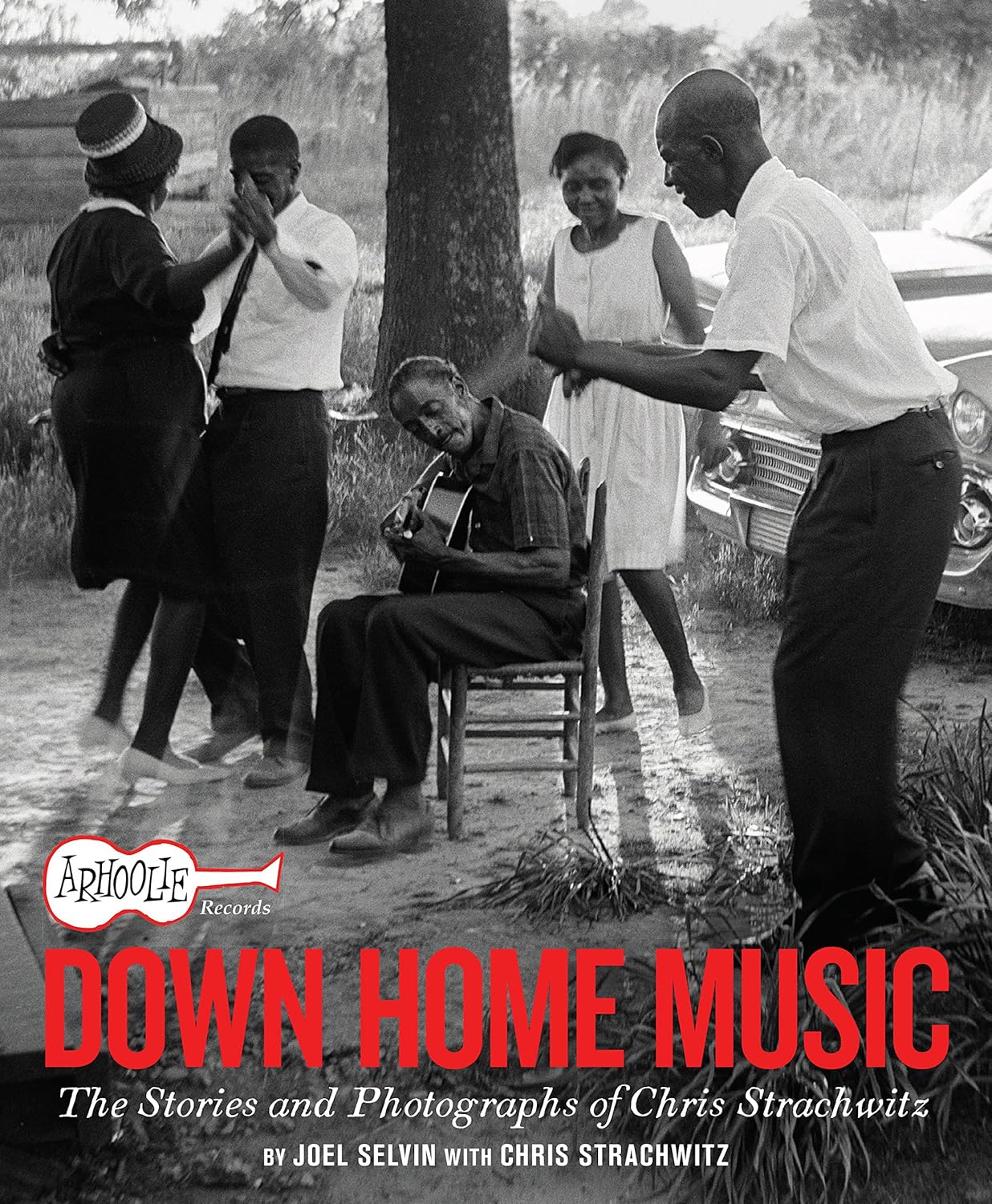 Arhoolie Records Down Home Music: The Stories and Photographs of Chris Strachwitz
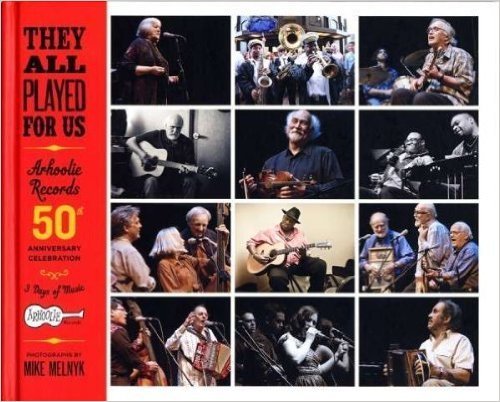
They All Played for Us: Arhoolie Records 50th Anniversary Celebration
Arhoolie Records was founded by Chris Strachwitz in 1960 in El Cerrito, California. Strachwitz sold his majority interest to Smithsonian Folkways Recordings in 2016. Chris Strachwitz (born July 1, 1931, Berlin, Germany; died May 5, 2023, Marin County, California). Principal honours: Blues Hall of Fame inductee, 1999 (non-performing member); Grammy Award (Arhoolie Foundation), 2012. Subsidiary labels: Blues Classics (archival blues reissues); Folk-Lyric (acquired from Harry Oster; Louisiana and Texas-Mexican recordings); Old Timey (pre-war country and western reissues). Related institutions: Down Home Music Store, El Cerrito, California; Arhoolie Foundation (established 1995); Strachwitz Frontera Collection of Mexican and Mexican-American Music (donated to Arhoolie Foundation). First release: Mance Lipscomb, Texas Sharecropper and Songster (Arhoolie F-1001, 1960). Grammy Hall of Fame recordings: Clifton Chenier, Bogalusa Boogie (1975, added to National Recording Registry 2015). Key collaborator for McDowell documentation: Alan Lomax (field recordings that led Strachwitz to Como, Mississippi).