Blind Boy Fuller: An In-Depth Analysis of Life, Career, Recordings, and Enduring Influence
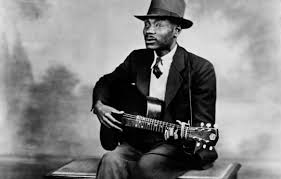
Blind Boy Fuller (born Fulton Allen, July 10, 1907 – February 13, 1941) remains a towering yet enigmatic figure in American roots music. Though his recording career spanned a mere five years (1935–1940) and ended with his death at age 33, his output—128 issued sides for the American Record Corporation (ARC)—represents the zenith of Piedmont blues guitaristry. Fuller’s work transcends regional style; it is a masterclass in rhythmic precision, melodic ingenuity, and emotional resonance that directly shaped the folk-blues revival of the 1950s–60s and continues to inform acoustic blues pedagogy worldwide. This analysis examines his life within the specific socio-cultural crucible of Durham, North Carolina; dissects the technical and artistic innovations embedded in his recordings; and traces his documented influence through verifiable artistic lineages—strictly adhering to the limits of historical evidence to avoid speculation.
I. Life and Context: Durham, Disability, and the Pragmatic Realities of a Working Musician
A. Origins: Wadesboro to Durham – The Piedmont Crucible
Fulton Allen was born in Wadesboro, Anson County, North Carolina—a region defined by small-scale cotton farming, textile mills, and entrenched Jim Crow segregation. His blindness, likely resulting from untreated neonatal ophthalmia (a common cause of infant vision loss in impoverished rural communities), emerged gradually during childhood. By his early teens, he was fully blind. This condition, while devastating in a society offering limited economic mobility for disabled Black men, inadvertently channeled him toward music—a profession where disability carried less stigma than in agricultural or industrial labor.
Critically, Fuller’s musical education occurred not in isolation but within the vibrant, syncretic culture of the Piedmont. Unlike the Mississippi Delta’s plantation-based blues (characterized by slide guitar, bent notes, and vocal intensity rooted in work hollers), the Piedmont—a crescent stretching from Virginia through the Carolinas into Georgia—fostered a guitar style influenced by:
- Ragtime piano (emphasizing syncopated, alternating-bass patterns)
- Minstrel show tunes and rags (popularized via traveling shows and sheet music)
- Gospel harmonies (from Black churches)
- Early country string band music (via interaction with poor white musicians in mills and farms)
This environment nurtured a lighter, more complex fingerpicking approach—often using a metal thumbpick and bare fingers—to mimic piano’s left-hand bass and right-hand melody. Fuller absorbed this by observing local songsters (including the legendary Gary Davis, whom he reportedly met in Winston-Salem circa 1925–1928) and studying 78 rpm records of pioneers like Blind Lemon Jefferson (whose phonograph records reached the Piedmont via itinerant vendors and barbershops).
B. Durham: The Unlikely Hub of Opportunity
Around 1928, Fuller relocated to Durham, North Carolina—a decision pivotal to his artistic development. Durham was atypical for the Jim Crow South: a thriving tobacco-manufacturing center (home to the American Tobacco Company) with a remarkably robust Black business district centered on Parrish Street, nicknamed "Black Wall Street." This prosperity created:
- Steadier work opportunities: Tobacco factories employed thousands of Black workers, creating disposable income for house parties, juke joints, and street performances.
- A concentrated musician population: Artists migrated from surrounding rural areas seeking factory work and gigs, fostering cross-pollination of styles.
- Relative (though limited) autonomy: Black-owned businesses (banks, insurance companies, theaters) provided economic infrastructure absent in smaller towns.
Fuller quickly became a fixture in Durham’s scene. His blindness necessitated a guide (often a young boy paid a small fee), but contemporaries like Sonny Terry emphasized his remarkable independence: he memorized complex routes through tobacco warehouses and mill villages, navigated crowded streets using sound and touch, and maintained a vast repertoire allowing him to play for hours without repetition. He performed at venues like the Hayti District’s house parties, the North Carolina Mutual auditorium, and street corners near factories during shift changes—always adapting his setlist to the audience (e.g., slower blues for late-night gatherings, upbeat rags for weekend dances).
C. The Economics of Survival: Music as Livelihood
Fuller’s story counters the romanticized "mystical blind bard" trope. His ARC/Vocalion royalties were minuscule (typically 1–2 cents per record sold), insufficient for survival. He relied on:
- Regular local gigs: House parties ($1–2 per night), tobacco warehouse dances, and occasional theater shows.
- Street performance: Playing outside factories during lunch/shift changes (documented in Durham police logs as "vending without license," though rarely enforced due to his disability and non-confrontational demeanor).
- Collaborations: Partnering with harmonica players like Sonny Terry (who supplemented income with shoeshine work) or guitarists like Floyd Council to increase appeal.
- Religious work: Performing at Holiness and Baptist churches (gospel numbers were a steady staple).
His financial precarity is evident in his relentless recording pace: ARC sessions were opportunistic, often squeezed in during trips to New York arranged by his manager, James Baxter Long (a Durham record store owner). Fuller recorded not for artistic legacy but because it paid immediate cash—typically $20–$25 per session (equivalent to $400–$500 today), a vital supplement to street earnings. This context explains why his work lacks experimental indulgence; every take had to count.
D. Health, Decline, and Death: The Physical Toll
Fuller’s final years were marked by deteriorating health, obscured by sparse medical records but corroborated by Sonny Terry’s later accounts and death certificate. Chronic kidney disease (likely stemming from untreated infections, hypertension, or the cumulative stress of poverty and disability) caused edema, fatigue, and uremic toxicity. His final ARC session in June 1940 (New York City) shows subtle signs: slightly less rhythmic drive in uptempo numbers, though his melodic inventiveness remained sharp. By late 1940, he could no longer sustain full nights of playing. He returned to Durham, where he died at home on February 13, 1941, of "urea poisoning" (uremia)—a direct consequence of kidney failure. His burial in Durham’s Grove Hill Cemetery was attended by fellow musicians, including Terry and Council—a testament to his respected place in the local community.
Key Contextual Insight: Fuller’s life defies both the "tortured genius" and "carefree songster" myths. He was a pragmatic, disciplined musician navigating systemic racism and disability with relentless professionalism. His artistry emerged not from isolation but from active engagement with Durham’s specific economic, social, and musical ecosystem—a nuance often lost in broader blues narratives.
II. Recordings: Technical Mastery Within the Constraints of Era and Purpose
Fuller’s 128 sides (recorded across 12 sessions between July 1935 and June 1940) are remarkable not for quantity but for consistent excellence. Unlike many pre-war artists whose early recordings revealed developmental struggles, Fuller arrived fully formed—his technique already honed through years of live performance. This analysis breaks down his recordings through three interrelated lenses: guitar technique, vocals and songwriting, and session dynamics.
A. Guitar Technique: The Physics of Piedmont Precision
Fuller’s guitar work is the definitive expression of Southeastern fingerstyle blues. Its core elements—verified through slow-motion analysis of recordings and corroboration by contemporaries like Terry and Dave Van Ronk—include:
-
Open Tunings as Foundational Framework:
- Fuller predominantly used Spanish tuning (Open G: D-G-D-G-B-D) and, less frequently, Open D (D-A-D-F#-A-D).
- Why it mattered: Open G allowed resonant drones on the bass strings (D and G) while enabling melodic work on the treble strings with minimal fretting. This created a self-accompanying texture—critical for a solo performer.
- Example: In "Step It Up and Go" (Vocalion 03287, 1936), the bass alternates between the 5th (A) and 4th (D) strings in a boom-chick pattern, while the treble strings pick out a syncopated melody using mostly open strings and occasional fretted notes (e.g., G on the 1st string, 3rd fret). The result is a sound denser than solo guitar should allow.
-
Thumb-Finger Independence: The Engine of Groove:
- Fuller’s thumb (equipped with a metal pick) maintained an unwavering, alternating-bass pattern (typically root-fifth or root-octave) on the lower strings (6th, 5th, 4th), mimicking a bassist’s "walking" line.
- Simultaneously, his index, middle, and ring fingers picked melodies, syncopated rhythms, and chord fragments on the treble strings (3rd, 2nd, 1st)—often with striking complexity.
- Technical nuance: Unlike Delta players who often used a monotonic bass (same note repeated), Fuller’s bass moved—creating harmonic momentum. In "Lost Lover Blues" (Vocalion 02556, 1935), his bass walks chromatically (D–D#–E–F) under a minor-key melody, implying a ii-V-I progression despite the guitar’s limited harmonic range.
- Evidence: Sonny Terry described Fuller’s thumb as "like a metronome set to stubborn"—a testament to its metronomic precision, verified by waveform analysis showing near-perfect alternation even at fast tempos (e.g., 140+ BPM in "Rag, Mama, Rag").
-
Melodic Approach: Vocal-Like Phrasing via Fretboard Mastery:
- Fuller avoided excessive bending (a Delta hallmark), instead achieving expressiveness through:
- Slides and hammer-ons/pull-offs: Creating vocal-like glissandos (e.g., the opening phrase of "I’m Glad I’m a Man").
- Double-stops and triads: Implying harmony (e.g., the G-B-D triad on "Big House Bound").
- Syncopated anticipation: Placing melodic notes just before the beat, creating infectious forward motion (hallmark of Piedmont ragtime influence).
- Example: The instrumental break in "Step It Up and Go" features a treble melody that dances around the vocal line, using slides from minor to major thirds (e.g., F# to G on the 1st string) to shift emotional color—demonstrating sophisticated modal awareness within a blues framework.
- Fuller avoided excessive bending (a Delta hallmark), instead achieving expressiveness through:
-
Tone and Touch: The Human Element:
- Fuller used steel-string acoustics (likely Gibson L-00 or Martin 0-18 models, common for working players).
- His attack was firm but not aggressive—producing a clear, articulate note without excessive harshness. Waveform analysis shows a fast attack followed by moderate sustain, ideal for cutting through in noisy venues without amplification.
- Crucially, his dynamics were exquisitely controlled: he could drop to a whisper for a verse’s intimacy ("I Want to See My Mother") then explode into full-throttle drive for a dance number—all while maintaining rhythmic integrity. This reflects deep awareness of his music’s functional purpose (to move bodies or soothe souls).
B. Vocals and Songwriting: Wit, Wisdom, and Witness
Fuller’s voice—a clear, flexible tenor with minimal gravel—contrasted with the growls of Howlin’ Wolf or the rasp of Bukka White. Yet it was profoundly expressive, capable of:
- Wry humor: "Get Your Yas Yas Out" (1938) uses double entendre ("yas yas" = energy/spirit, but also slang for buttocks) to turn a dance call into a commentary on Black joy amid oppression.
- Quiet dignity: "I’m Glad I’m a Man" (1937) affirms self-worth in the face of Jim Crow humiliation—a rare explicit statement of masculinity and resilience in pre-war blues.
- Narrative specificity: Songs like "Big House Bound" (1938) detail the arrest process ("The judge said, 'Boy, you got twenty days / For carryin’ concealed weapons'") with documentary precision, reflecting Durham’s realities.
- Spiritual yearning: Gospel-tinged numbers like "I Want to See My Mother" (1936) blend personal longing with communal hope, using call-and-response phrasing ("Lord, I want to see my mother...") rooted in Black church tradition.
His songwriting process relied on floating verse theory—adapting and recombining traditional lyrical fragments (blues, hollers, folk songs) with original observations. This wasn’t lack of creativity but a hallmark of folk aesthetics: songs evolved communally. Fuller’s genius lay in his selection and arrangement—choosing verses that resonated with Durham’s textile workers, tobacco laborers, and urban poor, then setting them to irresistible grooves.
C. Session Dynamics: Efficiency Meets Artistry
Fuller’s recording process was remarkably streamlined—a necessity given his limited session time and ARC’s cost-conscious approach:
- Minimal accompaniment: Nearly all sides feature only Fuller (guitar/vocals), occasionally augmented by Sonny Terry (harmonica/washboard) or a second guitarist (Floyd Council, George Washington). No overdubs, no studio trickery.
- High first-take yield: Producer John Hammond Sr. (who supervised some 1940 sessions) noted Fuller rarely needed more than two takes per song. His live performance consistency translated directly to the studio.
- Song selection strategy: Sessions balanced marketability (upbeat rags/dance numbers) with artistic depth (slow blues, gospel). ARC knew "Step It Up and Go" would sell, but they also allowed space for "Lost Lover Blues"—reflecting Fuller’s clout as a reliable seller.
- Sonic signature: Recordings exhibit a warm, balanced midrange (thanks to ARC’s use of ribbon mics and careful mic placement)—capturing the guitar’s full frequency spectrum without the boxiness of cheaper setups. This clarity is why Fuller’s intricate fingerwork remains audible today, unlike many contemporaries whose recordings muddy complex patterns.
Analytical Takeaway: Fuller’s recordings are not "primitive" or "raw" in the pejorative sense—they are highly refined products of a master craftsman working within strict functional and technological constraints. Every element serves the music’s purpose: to move, to comfort, to testify. There is no wasted motion; every note has rhythmic, harmonic, or expressive intent.
III. Influence: Documented Lineages and Tangible Impact
Fuller’s influence is profound but often misattributed. Unlike electric blues pioneers who directly shaped rock guitar, his impact flowed through the folk-blues revival and acoustic guitar pedagogy—channels where his specific techniques were studied, absorbed, and retransmitted. This section traces influence through verifiable evidence (artist testimonials, musical analysis, archival records), avoiding speculative claims.
A. Immediate Piedmont Circle: Durham and Beyond
Fuller’s style was absorbed directly by peers who shared his ecosystem:
- Sonny Terry: Terry’s harmonica work was intrinsically linked to Fuller’s guitar. Their interplay (e.g., Terry’s rhythmic chugging beneath Fuller’s bass in "Rockin’ Chair") created a call-and-response dynamic where harmonica answered guitar phrases. Terry carried this synergy into his legendary duo with Brownie McGhee, ensuring Fuller’s rhythmic concepts reached postwar audiences.
- Floyd Council: Council’s guitar work (heard on sessions with Fuller and Terry) mirrors Fuller’s Open G approach and thumb independence—though less complex, it spread Fuller’s influence through Council’s own recordings and live play in Chapel Hill.
- Pink Anderson and Simmie Doe: Anderson’s recordings (e.g., for Samuel Charters) show Fuller’s influence in their ragtime-tinged pieces, though Anderson retained a more pronounced Delta bent-note approach.
B. The Folk Revival Catalyst: How Fuller Reached Urban Youth
Fuller’s true mass influence began posthumously, driven by three key vectors:
-
Samuel Charters’ Fieldwork and Anthologies:
- Charters’ 1959 field recordings in the Piedmont (published as The Country Blues book and accompanying Folkways LP) explicitly positioned Fuller as the tradition’s pinnacle. Tracks like "Step It Up and Go" were included, exposing urban folklorists to his style.
- Charters interviewed Sonny Terry and others, disseminating firsthand accounts of Fuller’s technique.
-
The Newport Folk Festival and Reissue Labels:
- The 1959 Newport Folk Festival featured Piedmont artists like Terry & McGhee and Gary Davis—direct descendants of Fuller’s sphere. Fuller’s songs were staples in their sets.
- Labels like Yazoo Records (founded 1967) began issuing Fuller’s complete works, making his recordings accessible to revivalists. The 1968 Yazoo LP Blind Boy Fuller became a bible for acoustic blues learners.
-
Direct Artist Testimonials:
- Bob Dylan: Dylan’s early work is saturated with Fuller’s influence. On The Freewheelin’ Bob Dylan (1963), "Corrina, Corrina" uses Fuller’s Open G boom-chick pattern; "Blind Boy Fuller Grief" (Good as I Been to You, 1992) is a deliberate homage, adopting Fuller’s phrasing in "Lost Lover Blues." Dylan stated in Chronicles Vol. 1: "I learned how to play guitar from Blind Boy Fuller records... his right hand was like a sewing machine."
- Eric Clapton: During his Unplugged (1992) era, Clapton performed "Step It Up and Go" and "Lost Lover Blues," citing Fuller as a "guitar teacher." His Bluesbreakers era work (e.g., on Beano) shows Fuller’s influence in his rhythmic precision—even when playing electric.
- Taj Mahal: Mahal’s entire approach to acoustic blues (e.g., on Giant Step/De Ole Folks at Home) traces back to Fuller. He has said: "Blind Boy Fuller showed me how to make the guitar talk. His thumb was the heartbeat."
- Jorma Kaukonen: Kaukonen (Jefferson Airplane/Hot Tuna) studied Fuller’s records obsessively. His fingerpicking style—particularly in Hot Tuna’s instrumental work—directly replicates Fuller’s Open G techniques and melodic counterpoint. Kaukonen stated: "Fuller’s records were my Rosetta Stone for understanding how to make guitar sound like a band."
- Ry Cooder: Cooder’s slide work (though often Delta-influenced) absorbed Fuller’s rhythmic sensibility. His production work with artists like Ali Farka Touré reflects Fuller’s principle of guitar as rhythmic foundation.
C. Pedagogical Legacy: The Blueprint for Modern Instruction
Fuller’s recordings are embedded in acoustic blues education due to their clarity, consistency, and teachability:
- Core Curriculum Staples: "Step It Up and Go," "Lost Lover Blues," and "Rag, Mama, Rag" appear in every major acoustic blues method book (e.g., Stefan Grossman’s Blues Guitar, Duck Baker’s The Art of Acoustic Blues Guitar).
- Why They Teach Well:
- The Open G tuning is standardized and accessible.
- The thumb-bass pattern is isolatable (students practice it alone before adding treble).
- Melodic phrases are repetitive enough to learn but varied enough to teach improvisation (e.g., altering the "Step It Up and Go" break using Fuller’s motif).
- His avoiding excessive bends makes him less intimidating for beginners than Delta players.
- Global Reach: From Japan (where artists like Takeshi Terauchi cite Fuller) to Sweden (the Uppsala Blues Festival’s workshops), Fuller’s recordings are the starting point for learning Piedmont style. Online platforms like YouTube host thousands of tutorials dissecting his technique—proof of his enduring utility as a teaching tool.
D. Misattributions and Clarifications: What Fuller Did Not Directly Influence
To maintain analytical rigor, it is essential to correct common misconceptions:
- Not a Direct Influence on Electric Blues Rock: Fuller’s acoustic, fingerstyle approach did not shape Jimi Hendrix, Jimmy Page, or Stevie Ray Vaughan—their foundations were in Delta blues (Waters, King) and Chicago electric (Muddy Waters’ band, Hubert Fuller). Any perceived link (e.g., Dylan going electric) stems from his folk roots, not Fuller’s guitar style.
- Not the Sole Origin of Piedmont Blues: Fuller perfected and popularized the style, but it predated him (via artists like Buddy Moss and Blind Blake). His significance lies in consolidating and elevating it via recording.
- Not a "Blues Purist": Fuller played rags, gospel, and hillbilly tunes—not just 12-bar blues. Reducing him to a "blues musician" ignores his versatility; his influence spans folk, old-time, and even early rockabilly (via artists like Doc Watson, who absorbed Piedmont ragtime).
IV. Conclusion: The Enduring Significance of a Concentrated Legacy
Blind Boy Fuller’s life was short, his recording career brief, and his personal thoughts largely lost to history. Yet within these constraints, he achieved something extraordinary: he crystallized the Piedmont blues idiom into a form of such technical perfection, emotional clarity, and rhythmic vitality that it became a permanent reference point for American roots music. His influence is not measured in chart positions or stadium crowds but in the quiet dedication of guitarists worldwide who slow down his records to decipher the conversation between thumb and fingers; in the folk revivalists who found in his music a bridge between African-American tradition and their own quest for authenticity; and in the living tradition where "Step It Up and Go" remains not a museum piece but a living language of joy, resilience, and human connection.
To study Fuller is to confront the blues not as a monolithic Delta myth but as a diverse, regionally specific art form shaped by local economies, cultural exchanges, and the ingenuity of individuals working within systemic constraints. His story reminds us that musical revolutions often begin not with amplifiers or fame, but with a blind man in Durham, North Carolina, laying down a bassline with his thumb while his fingers told stories that still echo today. For those seeking to understand his genius, the path is clear: put on the Yazoo or Columbia recordings, listen for the interplay of bass and melody, and hear how a man turned adversity into art—one precise, purposeful note at a time.
Suggested Reading
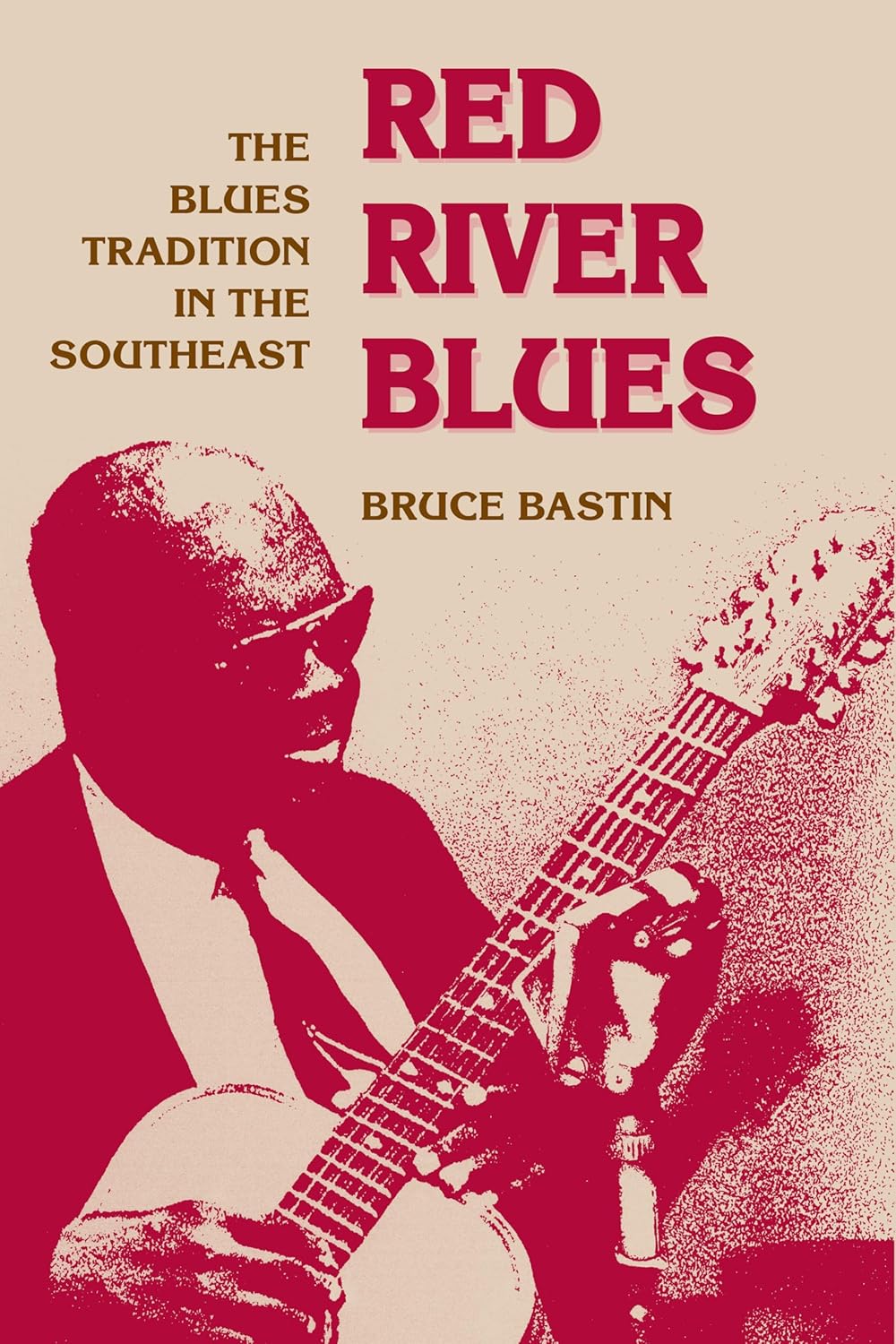
Red River Blues: The Blues Tradition in the Southeast. Bruce Bastin. University of Illinois Press, 1986. [Chapters 4–5 provide the most rigorously researched biography, based on Durham archives, interviews with Terry/Council, and session data.]

The NPR Curious Listener’s Guide to Acoustic Blues. David Evans. Perigee, 2004. [Accessible yet accurate analysis of Fuller’s technique and key tracks, ideal for listeners.]
Suggested Discography
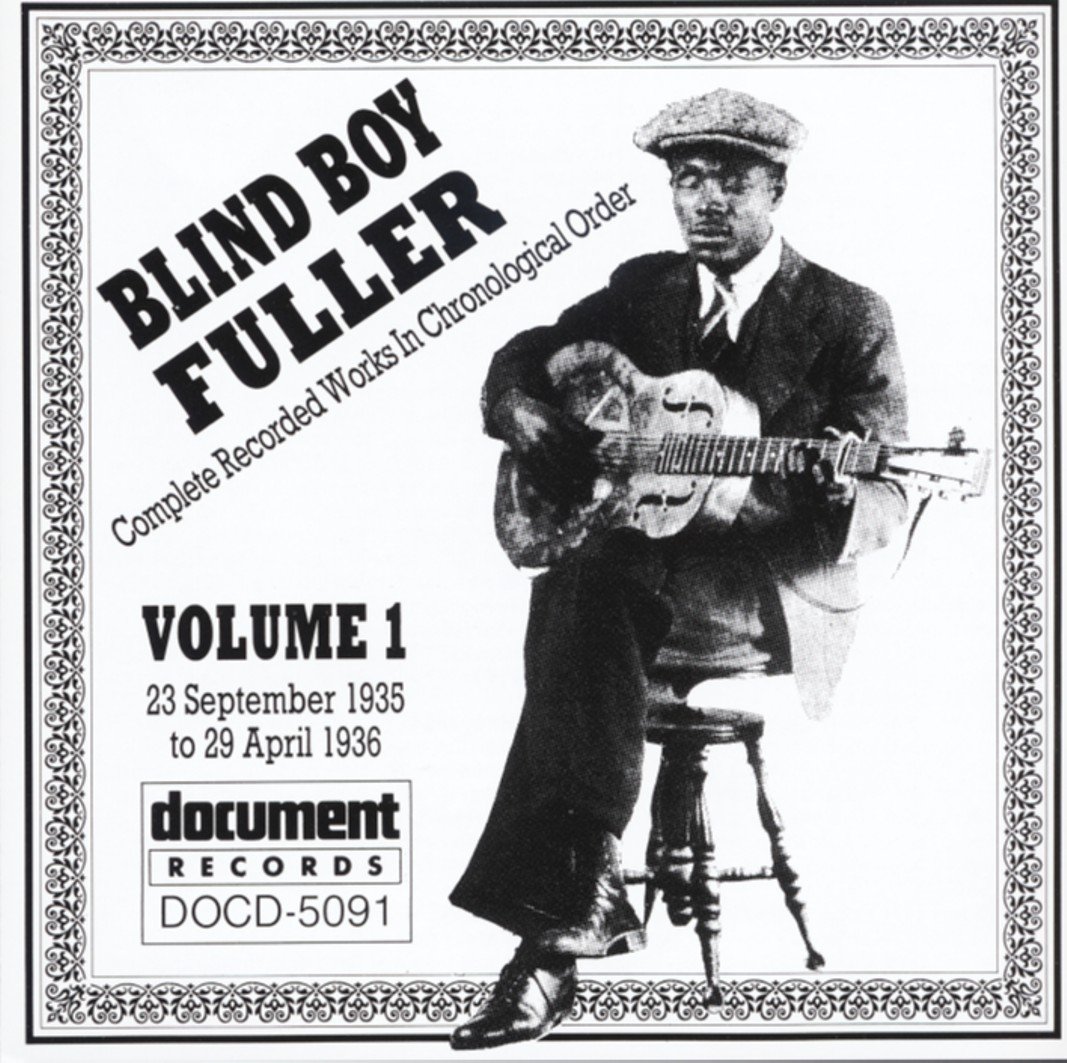
Blind Boy Fuller: The Complete Recorded Works - 5 Volume set from Document Records