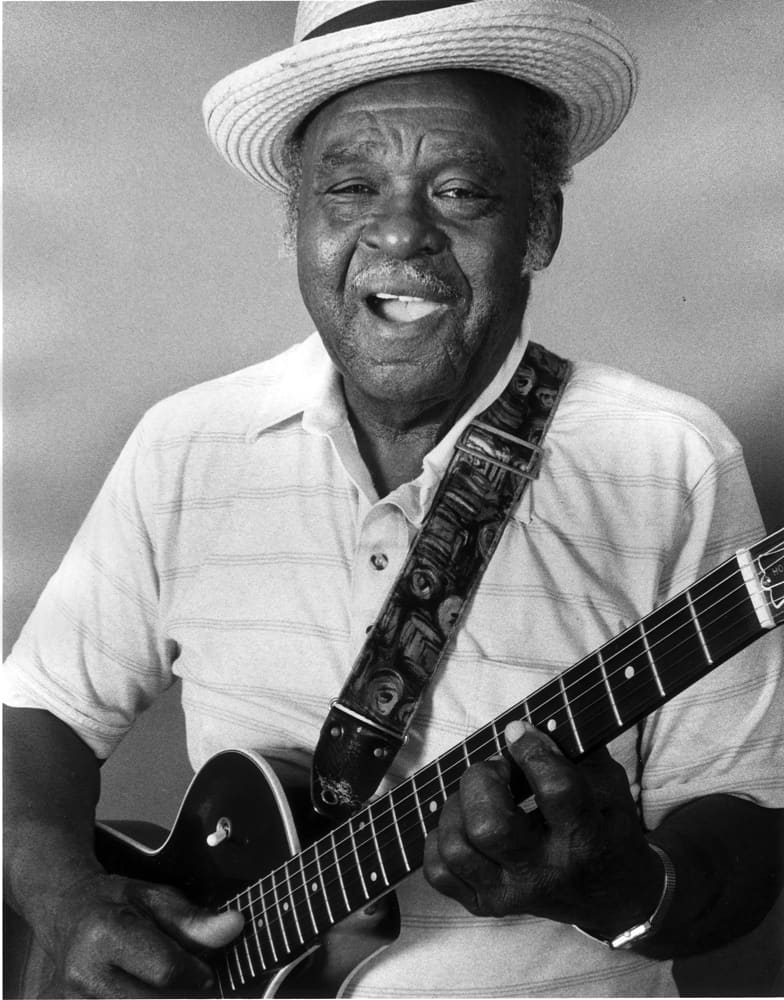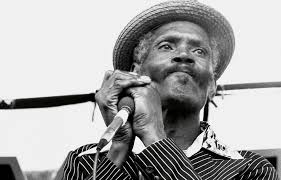
Introduction: The Greatest You've Never Heard Of
Willie Dixon — the bassist, songwriter, and producer who was the creative backbone of Chess Records through its golden years, who wrote "Hoochie Coochie Man" and "Spoonful" and "Wang Dang Doodle," who had heard every significant blues musician of the post-war era perform in the clubs and recording studios of Chicago — said it without qualification: Big Walter Horton was "the best harmonica player I ever heard." Not one of the best. The best.
Bruce Iglauer, founder of Alligator Records and a man who has spent fifty years in close proximity to the greatest blues musicians of the modern era, placed Horton in a group of "only four great creative geniuses of modern blues harmonica" — alongside Little Walter Jacobs, Sonny Boy Williamson II (Rice Miller), and John Lee "Sonny Boy" Williamson — and observed that the other three "were recognized, honored and extensively recorded with their own bands" while Horton "remained relatively obscure at his death in 1981." Charles Shaar Murray, one of the most acute rock and blues critics of the late twentieth century, wrote that "many connoisseurs regard Horton as the finest of all the great post-war harp men."
The paradox of Horton's career is encoded in these testimonials: the greatest, as Dixon called him, remained in relative obscurity; the finest, as Murray described him, was known primarily through his work as a sideman; the genius, in Iglauer's formulation, never achieved the commercial recognition of his peers. The reasons for this disparity between talent and fame are bound up in Horton's character — his shyness, his gentleness, his preference for playing over hustling, his lifelong inability or unwillingness to manage a career with the aggression that the music industry requires. "Perhaps," Iglauer wrote, this shy, withdrawn man "was never aggressive enough to hustle a contract with a major record label."
But the music itself — the recordings on which Horton's playing appears, from the Sam Phillips Memphis sessions of 1951 through the Muddy Waters sessions of 1953, the Jimmy Rogers masterpiece of 1956, the Johnny Shines collaborations of the 1950s and 1960s, and the Alligator album of 1972 — is not obscure to anyone who has heard it. It is, in the assessment of every musician and critic who has engaged with it seriously, among the most beautiful and technically accomplished music ever produced by a blues harmonica player. The Mississippi Blues Trail marker at Horn Lake captures the essential claim: Horton was "heralded as one of the most brilliant and creative musicians ever to play the harmonica." And Johnny Shines, who knew Horton from childhood and watched him play across forty years of musical partnership, told Peter Guralnick the ultimate truth: "You see, this harmonica blowing is really a mark for Walter, it's not something he picked up, he was born to do it."
Origins: Horn Lake, Memphis, and Tin Cans
The biographical record of Walter Horton's birth is characteristically ambiguous — he claimed 1917, official Mississippi Vital Records give 1921, and other sources give 1918 — but what is established beyond doubt is that he was born in Horn Lake, Mississippi, in the plantation country of DeSoto County just south of Memphis, Tennessee, and that he moved with his family to Memphis itself in early childhood. The Mississippi Blues Trail marker at Horn Lake notes that "as a child he blew into tin cans to create sounds" — a detail so specific and so vivid that it has the quality of genuine biographical memory rather than mythological construction. Johnny Shines, who met Horton in 1930 when they were both children in Memphis, confirmed the image: "I met Walter, really, in 1930, and he would be sitting on the porch, blowing in tin cans, you know, and he'd get sounds out of those things."
The harmonica that replaced the tin cans came from his father — a gift when Walter was around five years old — and by the time he was old enough to play in public, his natural ability was already sufficiently advanced to earn him recognition among musicians far older than himself. He dropped out of school at age seven, or in the first grade by some accounts; formal education simply could not compete with the music for his attention. The nicknames that accumulated around him in childhood and adolescence — "Shakey," "Tangle Eye," "Shakey Head," "Mumbles" — reflected the physical condition that had marked him from birth: nystagmus, an affliction of involuntary eye and head movement, gave him the distinctive appearance that made him immediately recognisable on the streets of Memphis and later Chicago. The condition had contributed to his departure from formal schooling; it never impeded his music.
Memphis in the 1930s, when Horton was developing as a musician, was one of the most musically productive cities in America — the home of Beale Street blues, of the Memphis jug band tradition, of the street corners and parks where musicians gathered to play for tips and for each other's education. Church Park and W.C. Handy Park were the primary outdoor performance spaces where the city's African American musical community converged, and Horton was embedded in that community from his earliest playing years. The musicians he played alongside — veterans like Jack Kelly, Garfield Akers, and Little Buddy Doyle, and contemporaries like Floyd Jones, Johnny Shines, and Honeyboy Edwards — gave him a comprehensive education in the southern blues tradition that no school could have matched.
The Memphis Jug Band connection that Horton claimed — he said he had recorded with them in the late 1920s, which would have made him six or seven years old — has been disputed by subsequent researchers, who find no documentation of such sessions. But the Memphis Jug Band was part of his musical environment: Will Shade, the jug band's leader and harmonica player, was one of the musicians Horton learned from, and the Alligator Records biography confirms that Horton "learned more about his instrument by working with pioneering harp players Will Shade of the Memphis Jug Band and Hammie Nixon, who recorded with Delta bluesman Sleepy John Estes." These two teachers — Shade representing the jug band tradition, Nixon representing the country blues tradition — gave Horton access to multiple strands of the Southern harmonica vocabulary before he had developed his own.
The depression years were hard on everyone, and Horton's life through the 1930s and into the 1940s was one of grinding poverty punctuated by musical activity. He made his way doing odd jobs — cooking, carrying ice, eventually working as an undertaker — while playing wherever he could find an audience: street corners, dance halls, juke joints, hotels, any venue that would have him. He also, at some point in the late 1930s or early 1940s, stopped playing the harmonica entirely, his health failing — possibly tuberculosis — making the physical demands of performance impossible. The period of silence that followed was not a retirement from music but a enforced interruption, and the music that emerged when he returned, around 1948, showed how much his playing had developed even during the years away from performance.
The Crucial Decade: Memphis, 1938–1952
The period between Horton's childhood musical education in the 1930s and his permanent move to Chicago in 1954 was the one in which he developed from a promising Memphis street musician into one of the most accomplished harmonica players in the history of the blues. It was also the period in which he made his first commercial recordings and in which the crucial early influences on subsequent harmonica giants were transmitted.
The claim that he influenced Little Walter Jacobs and Sonny Boy Williamson II — musicians who are generally credited as the definitive innovators of the amplified blues harmonica — is one of the more historically significant and most contested aspects of Horton's biography. The Mississippi Blues Trail marker states directly: "Horton's playing — sometimes powerful and dramatic, other times delicate and sensitive — left an influence on harmonica masters Little Walter (Jacobs) and Sonny Boy Williamson No. 2 (Rice Miller) and on the generations to follow." Johnny Shines concurred with the claim about Williamson, noting that Horton had been around the Memphis area earlier than Miller.
The specific question of whether Horton influenced Little Walter — who is generally credited with the primary innovation of electronically amplified blues harmonica — is equally complex. Horton claimed he first played amplified harp in 1940, several years before Little Walter developed the technique that would define Chicago electric blues harmonica. The Wikipedia account notes: "Little Walter is widely credited as the major innovator of electronically amplified blues harp playing, but Horton says he first played amplified harp in 1940." The claim is impossible to verify definitively, but Horton's friendship with Little Walter during the early Chicago period — the two musicians spending time together before Walter's commercial breakthrough — creates at least the possibility of mutual influence.
What is clearly documented is that Horton gave lessons to both Little Walter and James Cotton during the 1940s — a biographical fact of considerable historical significance. Cotton, who would go on to replace Little Walter in the Muddy Waters band in 1955 and build one of the most celebrated harmonica careers in Chicago blues history, learned directly from Horton in Memphis. "In the 1940s, Horton met and gave lessons to harp players James Cotton and Little Walter in the 1940s," the Wikipedia account confirms. The Alligator Records biography extends this: he "taught himself how to play the harmonica at the age of five...along with Little Walter Jacobs and Sonny Boy Williamson II, he is considered to be one of the most influential harpists ever."
The mid-1940s were also marked by other complications: Horton's health problems, his periods of working outside music, and the responsibilities of fatherhood. He had a daughter named Christine, born around 1945 or 1946, along with several other children. The domestic responsibilities combined with his personal shyness and his physical health created the conditions for the intermittent relationship with professional music that would characterise his entire career — a pattern of brilliant engagement followed by withdrawal, of recording activity clustered in specific productive periods followed by relative silence.
When he returned to active playing around 1948, the specific quality of his musical development during the years of silence was immediately apparent. He "spent time playing with a young guitarist named B.B. King and made regular broadcasts from the famed WDIA radio station" in Memphis — a combination of activities that connected him to the most commercially vibrant African American radio station in the South and to a musician who was on the verge of his own breakthrough as a solo recording artist.
The Sam Phillips sessions of 1951 — the recordings that would prove Horton's most documentarily significant from the Memphis period — came about because Phillips had built his Memphis Recording Service (later Sun Records) specifically to document the music that the major labels were ignoring, and Horton's reputation in the local blues community was such that Phillips came to him. The recordings Phillips made became Horton's first significant commercial documents, though they appeared under the nickname "Mumbles" — a moniker that Horton "despised," as the Cascade Blues Society account notes. Phillips sold the masters to Modern Records for distribution, and the resulting sides — "Little Boy Blue," "Now Tell Me Baby," "Have a Good Time," "Need My Baby," and others — reached a wider audience than Horton had previously had access to.
Sun Records and the Masterwork: "Easy"
The recording that established Horton's specific historical importance — and that remains, in the assessment of multiple critics, one of the great harmonica performances ever captured on tape — was made during these Sam Phillips sessions: the instrumental "Easy," a piece based on Ivory Joe Hunter's "I Almost Lost My Mind" and recorded with guitarist Jimmy DeBerry and drummer Houston Stokes.
"Easy" is, in the technical vocabulary of blues harmonica, a first-position piece — played in the home key of the harmonica rather than the "cross harp" second-position approach that is most associated with blues harmonica. This technical choice was distinctive in itself: as the New England Public Media account notes, Horton was "just as comfortable playing first position (A harp in the key of A) as with the more standard cross harp (D harp in the key of A)." First-position playing gives the harmonica a different tonal character from cross-harp — brighter, more open, with the instrument's natural resonance exploited rather than modified by the bending techniques associated with cross harp.
On "Easy," Horton demonstrates everything that makes his playing exceptional: the enormous, horn-like tone that seems to fill more sonic space than a ten-hole diatonic harmonica could reasonably produce; the virtuosic single-note lines that trace melodic paths of genuine sophistication; the fluid phrasing that connects notes in ways that suggest the influence of jazz as well as blues; and the expansive sense of space — the ability to let phrases breathe, to allow silence to function as part of the musical statement rather than as something to be filled. The INSCAPE analysis of the recording describes it as "a striking harp instrumental that remains unrivaled for sheer power."
The instrumental "Talkin' Off the Wall" — another Sun-era recording — showed a different dimension of Horton's musical range: faster, more rhythmically assertive, with a playful quality that demonstrated his ability to move between the meditative slow blues and the energetic uptempo styles without loss of conviction in either direction. And his version of Glenn Miller's famous swing standard "In the Mood" — a recording that might seem like a novelty but that the INSCAPE assessment calls worth seeking out — demonstrated the harmonica's capacity, in Horton's hands, to handle jazz and swing material as naturally as blues.
The Sun recordings, eventually collected by Ace Records as Mouth Harp Maestro and later under various compilation titles, give the most complete available portrait of Horton in his Memphis period. They documented a musician at a specific and fascinating transitional moment — between the acoustic Delta and jug band traditions of his Memphis musical education and the amplified Chicago electric blues toward which his subsequent career would move.
Chicago, 1953: The Muddy Waters Band
The move to Chicago was not a single decisive event but a gradual migration. Horton had been recruited to Chicago in 1952 by his childhood friend Eddie Taylor — himself a guitarist of considerable ability who would spend his career as one of Chicago's most sought-after session musicians. The IMDB account captures the sequence: "He went back to Chicago in 1953 to play in the band of his longtime friend Eddie Taylor. He soon found work playing in Muddy Waters' band as a replacement for Junior Wells, who had been drafted into the US Army."
Junior Wells's military service created an opening at the most prestigious address in Chicago electric blues, and Horton filled it. The Muddy Waters band of 1953 — with Little Walter recently departed to his own solo career, with Waters himself at the peak of his Chess Records commercial success — was the most celebrated blues ensemble in America. Horton's harmonica sat in the space Little Walter had occupied, and the specific quality he brought was different from but not inferior to his predecessor: where Little Walter's playing was assertive, rhythmically driven, and extroverted, Horton's was larger in tone, more spacious in phrasing, and capable of a melodic sophistication that complemented Waters's slide guitar and growling vocal in its own distinctive way.
The recordings he made with Muddy Waters during this period — including "Mad Love (I Want You to Love Me)," "Flood," "My Life Is Ruined," "She's Alright," and "Sad Sad Day" — documented the conjunction of two musical personalities of complementary qualities. "Mad Love (I Want You to Love Me)" is among the most frequently cited of these recordings, with Horton's harmonica simultaneously driving the rhythm and commenting melodically on Waters's vocal in a way that demonstrates the ensemble intelligence that made him such a valuable sideman throughout his career.
But Horton's tenure with Muddy Waters ended before the year was out. "He was fired by year's end for breaking band commitments — either due to excessive drinking or playing too many side gigs, depending on the account," as the Big Train Blues biography records. The specific cause is uncertain; the pattern was consistent with what would prove a lifelong characteristic — Horton's talent was unquestioned, but his reliability was not, and the combination of personal shyness, alcohol dependence, and a natural preference for playing wherever the music led him (rather than wherever a bandleader's schedule required) made him a difficult proposition as a permanent band member.
He was, as the Musicianguide account put it, "a gentle man who never quite escaped poverty and poor health he was born into." The gentleness was both his most endearing characteristic and, in the competitive world of the music industry, a professional limitation. He did not fight for his interests, did not hustle for contracts, did not insist on the recognition that his ability warranted. The career consequences were both predictable and unjust.
The Sideman's Career: Chess, Cobra, States, and the Great Recordings
After the Muddy Waters firing, Horton's career took the shape it would maintain for the remainder of his life: a brilliant sideman, an intermittent solo recording artist, a musician of enormous reputation in the Chicago blues community whose name was less well known to the general public than his playing deserved. He moved back briefly to Memphis to record with Sam Phillips again, then returned to Chicago in 1954 for the permanent residence that would last until his death.
The subsequent decade of Chicago session work produced some of the most celebrated harmonica performances in blues history, even though most of them appeared not under Horton's own name but as components of other artists' recordings.
Jimmy Rogers and "Walking By Myself" (1956): The recording that most critics identify as Horton's finest work as a sideman, his most celebrated single appearance in the entire Chicago blues catalogue. Rogers had left Muddy Waters's band in 1954 to pursue his solo career, and Horton joined his new group. The October 1956 Chess session that produced "Walking By Myself" captured Rogers at his peak, with Horton's harmonica the centrepiece of the arrangement. The Cascade Blues Society account describes it as "an engaging shuffle by Horton" — a description that understates the quality of the performance. The harmonica solo on "Walking By Myself" has been cited by multiple subsequent harmonica players as one of the great solos in the history of the instrument, and the recording became Rogers's highest-charting single of his career. Pat "Lamont" Hayes captured its lasting impact: "Big Walter Horton has always been one of the biggest influences of mine. The first tune I really learned how to play was 'Walking By Myself.'"
Otis Rush and "I Can't Quit You Baby" (1956): Another Chess Records session — this one for Otis Rush's debut recording on the Cobra label — produced what the Apple Music biography identifies as one of Horton's "greatest performances on Chicago blues classics." Rush's "I Can't Quit You Baby" became the template for the West Side blues sound that would dominate Chicago's most sophisticated electric blues through the late 1950s and 1960s, and Horton's harmonica was a significant component of its atmospheric quality. The Cobra recording context — produced by Willie Dixon, arranged with the specific quality of West Side sophistication — suited Horton's more melodically spacious approach well.
Johnny Shines and "Evening Sun": Horton's musical relationship with Shines was one of the most enduring and productive partnerships of his career, extending from their childhood in Memphis through decades of Chicago recording and performance. The New England Public Media account describes their work together as "one of the most simpatico partnerships in modern blues, his playing an astonishing display of rhythmic drive, soulful inflection, and orchestral-like comprehensiveness." "Evening Sun" — recorded with Shines and bassist Willie Dixon in 1953 — is among the most celebrated documents of this partnership.
"Hard Hearted Woman" (States Records, 1954): Horton's first-position harmonica masterpiece, recorded for the small States label in Chicago and produced by Willie Dixon. The New England Public Media account calls it "the first position classic" — a recording that demonstrated the range of harmonica positions Horton deployed and that "held pride of place in kicking off a killer album of vintage Chicago blues essentials that Arhoolie's Blues Classics label brought out in the mid-'60s." Willie Dixon's production gave the recording its professional polish; Horton's playing gave it its life.
These recordings were made across multiple labels — Chess, Cobra, States, Jewel — and multiple producers, primarily Willie Dixon and Sam Phillips. Dixon's consistent employment of Horton as a session musician through the late 1950s gave the Chess Records catalogue a harmonica voice that was simultaneously distinct from Little Walter's and fully compatible with the Chicago electric blues sound. "At the end of the 1950s, bassist and producer Willie Dixon took Walter under his wing, utilizing his enormous harmonica talents on sessions for the Cobra, Chess and Jewel labels."
The technical approach that Horton brought to these sessions was, as the Apple Music biography captures precisely, "utterly distinctive, marked by an enormous, horn-like tone, virtuosic single-note lines, fluid phrasing, and an expansive sense of space." The "enormous, horn-like tone" was the quality most immediately distinctive: where Little Walter's amplified harmonica had a sharp, cutting presence, Horton's had a warmth and body that suggested brass instruments rather than the smaller, thinner sounds more commonly associated with the harmonica. He achieved this quality through a combination of his natural embouchure (the lip and oral cavity shape that determines tone quality), his breath control, and his microphone technique — "screwing the microphone into his throat," as one eyewitness account describes, to capture the full resonance of his chest cavity as well as his mouth.
He used Hohner's Marine Band harmonicas — the standard-bearer of the diatonic blues harmonica tradition — and played them in both first and second position, demonstrating a harmonic flexibility that most blues harmonica players, focused on the cross-harp second position that Little Walter had established as the idiom's standard, did not develop. His willingness to play first-position blues and his facility in doing so was part of what gave his recorded output its variety and its harmonic richness.
The First Album: The Soul of Blues Harmonica (1964)
It was not until 1964 — a decade after his permanent move to Chicago, and more than a decade after he had established himself as one of the city's most admired session musicians — that Horton made his first full-length album under his own name. The Soul of Blues Harmonica (Chess subsidiary Argo, 1964) was produced by Willie Dixon and featured an all-star cast: Buddy Guy on guitar, Jack Myers on bass, Willie Dixon on vocals, and Willie Smith on drums. The combination of Horton's harmonica with Guy's guitar — both musicians at the heights of their respective abilities — gave the album a quality of ensemble that no previous Horton recording had quite matched.
The album's reception was honest: critics praised the performances while acknowledging that the recording did not completely capture what Horton could do in live performance. As the Big Train Blues account notes, "it didn't completely capture what Horton could do." This was a recurring frustration in assessments of Horton's recorded output — the sense that the recordings, however good, left something on the table, that the full expression of his talent required the physical presence of the man himself in the room.
The album included "Hard Hearted Woman" — the first-position masterpiece from his States Records session now documented in an LP context — and a "wild version of 'La Cucaracha'" that demonstrated the range of his repertoire. Horton had "made a specialty of playing entire tunes (often in blues style) on the harmonica ('La Cucaracha,' 'Careless Love,' 'I Almost Lost My Mind,' etc)" — a characteristic that connected him to the tradition of the melodic harmonica virtuoso as well as to the blues harpist tradition, and that demonstrated the genuine musicality underlying his blues-specific work.
Chicago/The Blues/Today! and the Folk Revival Recognition
If the Chess album represented Horton's entry into the LP market, it was the Vanguard Records compilation Chicago/The Blues/Today! Vol. 3 (1966) that definitively established his name and reputation with the white folk and blues revival audience that was becoming an increasingly important part of the blues market through the mid-1960s.
The three-volume Chicago/The Blues/Today! series — produced by Samuel Charters and released on the Vanguard label that had been building its folk and blues catalogue since the late 1950s — was one of the most significant single acts of documentation in the folk revival's engagement with Chicago blues. Each volume focused on specific artists; Volume 3 featured Johnny Shines, Johnny Young, and Big Walter Horton's Blues Harp Band, with Charlie Musselwhite as part of Horton's ensemble.
The Cascade Blues Society account describes the recording's impact: "When the landmark recordings 'Chicago/The Blues/Today!' were released in the mid-1960s, it was an enlightening experience for those listeners outside of the Chicago area. For many, this was a chance to hear that city's wonderful Blues music for the first time...Perhaps the biggest impact of this series came about with Volume 3, as a dynamic force was unleashed in the persona of harmonica player Big Walter Horton."
The INSCAPE assessment is even more direct: it is "one of the all-time great blues albums. Period. It features Big Walter with the Johnny Shines Blues Band, the Johnny Young South Side Blues Band, and Big Walter Horton's Blues Harp Band (with Charlie Musselwhite). The timing and sense of musical spaciousness is incredible. Walter's backup harp and harmonica solos mark a high point in his career."
The Technique: What Made Horton Different
Any account of Big Walter Horton's career must engage seriously with the specific technical dimensions of his playing, because the difference between his approach and that of his contemporaries is not merely a matter of stylistic preference but of fundamental musical conception.
The quality that every observer consistently identifies first is tone — that enormous, horn-like sound that made the harmonica in his hands seem like a different instrument from what other players were producing. The MSWritersAndMusicians account captures it: "There was no harp player that had Horton's big tone and spacious sense of time. Horton's harmonica style was more sweet toned and less dynamic than other harmonica players. His solos seemed to 'soothe the soul' rather than irritate it."
The "soothe the soul" characterisation is accurate but requires elaboration. Horton's tone was not merely softer or gentler than Little Walter's; it was warmer, deeper, and more fully resonant — the sound of a musician who was using his entire body as the instrument rather than just his lips and lungs. The technique of "screwing the microphone into his throat," observed by a witness at a Boston concert in 1969, was a physical manifestation of this approach: getting the microphone as close as possible to the resonant cavity of the chest, capturing the full body of the sound rather than just its surface.
His melodic intelligence was equally distinctive. The Apple Music biography captures it: "endlessly melodically adventurous, and always unpredictable." This unpredictability was not randomness but a genuine creativity — an ability to find melodic paths through familiar harmonic territory that no one had found before, to hear implications in a chord sequence that other players missed, to follow a melodic idea wherever it led rather than defaulting to established licks and phrases.
The "expansive sense of space" that multiple critics identify was perhaps his most unusual quality. Most blues musicians, faced with the pressure of performance, fill space — notes, phrases, runs, whatever keeps the music moving and prevents the dreaded silence. Horton's approach was the opposite: he used silence as an expressive tool, allowing phrases to complete themselves and then letting them breathe before the next phrase arrived. The result was music of unusual spaciousness, as if each note had room to exist fully before the next one arrived to crowd it.
The Alligator Album: Big Walter Horton with Carey Bell (1972)
The recording that gave Horton his widest late-career commercial exposure was Big Walter Horton with Carey Bell, released on Bruce Iglauer's Alligator Records in 1972 — the label's second release, following the Hound Dog Taylor debut that had inaugurated the label the previous year. The album paired Horton with Carey Bell — himself a significant Chicago harmonica player and a direct Horton disciple — in an arrangement that put two of the instrument's greatest practitioners in direct conversation.
The Musicianguide biography notes that Iglauer "produced the 1972 record Big Walter Horton with Carey Bell" and called Horton one of "only four great creative geniuses of modern blues harmonica." The decision to pair Horton with Bell was both a tribute to Horton's centrality to the Chicago harmonica tradition and a pragmatic arrangement: Bell's presence as a co-featured artist gave the album a commercial hook (two harmonica players!) while ensuring that Horton's playing would be supported by someone who understood his approach from the inside.
The album featured a remarkable supporting cast: Eddie Taylor, who had been Horton's friend and musical associate since the early 1950s, was among the guitarists; Willie Dixon contributed bass work on some tracks; the overall ensemble reflected the deep Chicago blues community that had sustained Horton through his decades as a sideman. The WBSS account notes that the album also documented a song for Horton's daughter Christine — "a personal detail that gave the sometimes impersonal world of Chicago session work a human face."
International Recognition and the Final Years
The 1960s and 1970s brought Horton a degree of international recognition that his domestic commercial career had never quite achieved. The American Folk Blues Festival tours — the annual package tours that had been presenting American blues artists to European audiences since 1962 — brought him to Germany, England, and other European countries, where audiences received him with the reverence that his talent deserved. The October 1968 UK tour produced the album Southern Comfort, recorded with guitarist Martin Stone (previously of Savoy Brown, later of Mighty Baby) — a document of Horton in an English recording context that demonstrated his adaptability to different musical environments.
"In 1969, Walter recorded Johnny Shines with Big Walter Horton, where some of his best third position playing can be heard," the Wikipedia account notes, pointing to a dimension of his harmonica technique that the Chicago club recordings had not always had space to document. The Shines partnership produced recordings of sustained quality throughout this period, with each returning to the other like a musician returning to the most comfortable and productive environment available to him.
The Fleetwood Mac connection — recorded in the Blues Jam in Chicago sessions — was one of the more unexpected cross-cultural encounters of Horton's later career, placing him in the studio with the British blues-rock band and producing recordings that demonstrated his ability to function in any musical context without compromising his fundamental blues identity. Johnny Winter, J.B. Hutto and the Hawks, Koko Taylor, and J.L. Smith were among the other 1969 recording partners, giving that year's documentation an unusual breadth.
Through the 1970s, Horton continued playing in the Chicago blues clubs — frequently with Floyd Jones, Honeyboy Edwards, Eddie Taylor, and Sunnyland Slim — and appearing at blues and folk festivals in the United States and Europe. He worked with Willie Dixon's Chicago Blues All-Stars, the collective that Dixon had assembled to promote the Chicago tradition to international audiences. At the Maxwell Street market — the open-air marketplace on Chicago's South Side that had been a blues performance venue since the early twentieth century — he continued the street-corner performance tradition that had been the foundation of his career since childhood in Memphis.
The final image of Horton that the biographical record preserves is one of extraordinary poignancy: at a nightclub in Boston, 1969, playing for an empty room after the crowd had gone home and the other musicians wanted to quit. "Walter Horton was blowing with an endless inventiveness, an aching bittersweet sound, screwing the microphone into his throat, blowing with one nostril, and creating a dazzling variety of effects. 'Blow, blow,' they shouted at him. 'Aw, blow your heart right out, Walter. I don't want him around my house.' And Walter shut his eyes tight and blew for the empty room."
The image is both sad and revelatory: the musician who lived his life as a sideman, who was "more comfortable as a sideman than as a singer or bandleader," blowing his heart out for nobody because the music itself was worth the effort regardless of who was listening. It is the image of a man who was, as Johnny Shines said, born to do it.
Death and Posthumous Recognition
Walter Horton died on December 8, 1981, in Chicago, of heart failure. "His death certificate also cited acute alcoholism," the Mississippi Blues Trail marker notes — the dual cause reflecting the two forces that had defined his final decades: the failing health of a man who had known poverty and hardship all his life, and the drinking that had been part of his story since his years with Muddy Waters. He was somewhere between sixty and sixty-three years old, depending on which birth year you accept.
He was buried in Chicago's Burr Oak Cemetery. His Blues Hall of Fame induction came the following year, 1982 — the posthumous recognition that had been delayed too long, arriving after the man it honoured was no longer alive to receive it. The Mississippi Blues Trail marker at Horn Lake, erected in 2008 by the Mississippi Blues Commission, added a physical monument to the institutional recognition, confirming that the man who had been born on a plantation near the site was now considered one of the region's most historically significant cultural figures.
The Influence: From Cotton to Musselwhite to the Present
The influence of Big Walter Horton on subsequent harmonica playing is both direct and traceable, running through specific individuals who learned from him personally and through the broader transmission of his recorded work to players who never met him.
James Cotton learned harmonica directly from Horton in Memphis in the 1940s. Cotton went on to become one of the most celebrated Chicago blues harmonica players of the post-war era, replacing Little Walter in the Muddy Waters band in 1955 and building a solo career of fifty-plus years. The Horton influence is audible in Cotton's full, round tone — a quality more reminiscent of Horton's approach than of Little Walter's sharper sound.
Charlie Musselwhite is perhaps the most directly traceable of Horton's personal students among the white musicians who absorbed the Chicago blues tradition in the 1960s. Musselwhite arrived in Chicago in 1962 and encountered Horton at the clubs and on Maxwell Street. "I learned from Walter Horton in Chicago," he told Dan Aykroyd simply. The two musicians recorded "Rockin' My Boogie" together in 1965 — Musselwhite twenty-one years old, Horton in his late forties — and the recording documents the transmission of the tradition in real time. Musselwhite's subsequent career built extensively on what he had learned from Horton.
Carey Bell, who co-featured with Horton on the 1972 Alligator album, had been absorbing Horton's approach since his arrival in Chicago in the 1950s, and Bell's own harmonica style showed the Horton influence in its warmth and its spacious melodic sense.
Billy Branch, Bob Corritore, and other members of the subsequent generation of Chicago blues harmonica players have consistently named Horton as a primary influence, the warmth and melodic sophistication of his approach providing a model that Little Walter's more rhythmically assertive style did not exhaust.
The influence on rock harmonica players — through the British blues revival musicians who heard the American Folk Blues Festival performances, through musicians like Paul Butterfield who were absorbing everything Chicago blues had to offer — is harder to trace specifically but genuinely present. The expansion of the harmonica's sonic vocabulary that Horton had contributed was available to anyone who listened carefully to the recorded evidence.
The Recordings: A Selective Survey
The Horton discography, while far smaller than those of his major contemporaries, contains several recordings of essential significance.
"Easy" (Sun Records, early 1950s): The first-position masterwork, the recording that the INSCAPE assessment calls "unrivaled for sheer power." With Jimmy DeBerry on guitar, Houston Stokes on drums.
"Walking By Myself" (Jimmy Rogers, Chess Records, 1956): "Possibly Walter's best-known work as a sideman," as the Cascade Blues Society account identifies it. Rogers's masterpiece, Horton's greatest performance on another artist's recording.
"I Can't Quit You Baby" (Otis Rush, Cobra Records, 1956): Another all-time Chicago blues classic, with Horton's harmonica giving the recording much of its atmospheric depth.
"Evening Sun" (Johnny Shines, 1953): The most celebrated of many Shines-Horton collaborations, documented by multiple assessments as representing the partnership at its finest.
"Hard Hearted Woman" (States Records, 1954): The first-position classic, produced by Willie Dixon, that became the opening track of the Arhoolie Blues Classics compilation.
The Soul of Blues Harmonica (Argo/Chess, 1964): His first full album, with Buddy Guy, Jack Myers, Willie Dixon, and Willie Smith.
Chicago/The Blues/Today! Vol. 3 (Vanguard, 1966): The compilation that most definitively established his name with the folk revival audience, featuring the Johnny Shines Blues Band and Big Walter Horton's Blues Harp Band with Charlie Musselwhite.
Big Walter Horton with Carey Bell (Alligator, 1972): The late-career album that brought him to the attention of the widest commercial audience he ever reached.
Conclusion: The Empty Room
"Walter shut his eyes tight and blew for the empty room." The image from the Boston nightclub in 1969 is the key to understanding both Horton's artistry and his career paradox. He blew for the empty room because the music was worth making regardless of who was there to hear it. He blew for the empty room because the music was what he was — not what he did for money, not what he performed for applause, but the fundamental expression of his existence. Johnny Shines said it for the biographical record: "He was born to do it."
Willie Dixon's verdict stands: the best harmonica player he ever heard. Bruce Iglauer's verdict stands: one of only four great creative geniuses of modern blues harmonica. Charles Shaar Murray's verdict stands: many connoisseurs regard him as the finest of all the great post-war harp men. These are not polite professional acknowledgements but the considered verdicts of people who knew the music deeply.
The relative obscurity in which Horton lived and died was not a musical verdict but a commercial one — the predictable consequence of a character insufficiently aggressive for the music industry's requirements applied to a talent more than sufficient for any musical requirement. He never had a major hit under his own name. He never led a band with the discipline and consistency that sustained careers demand. He played the streets for tips into his sixties, appearing at Maxwell Street market when the clubs and festivals weren't calling.
But the music — preserved in "Easy," in "Walking By Myself," in "I Can't Quit You Baby," in Chicago/The Blues/Today! Vol. 3, in the dozens of sideman appearances that grace the Chess Records catalogue and the recordings of Johnny Shines and Otis Rush and Muddy Waters — the music is there. It is, as Willie Dixon said, the best he ever heard. It is enough.
Selected Discography
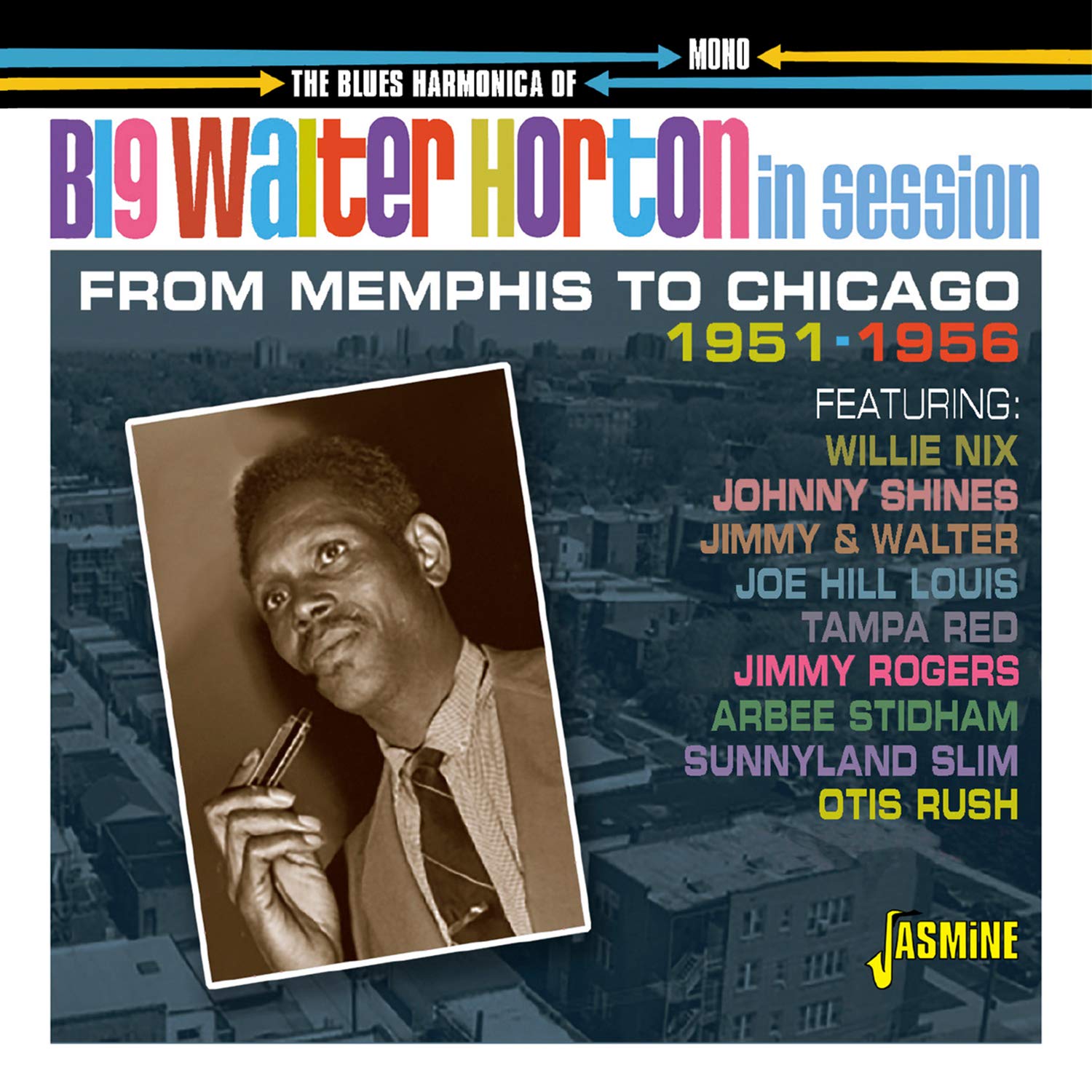
In Session, 1951-1956 - The Blues Harmonica Of Big Walter "Shakey" Horton
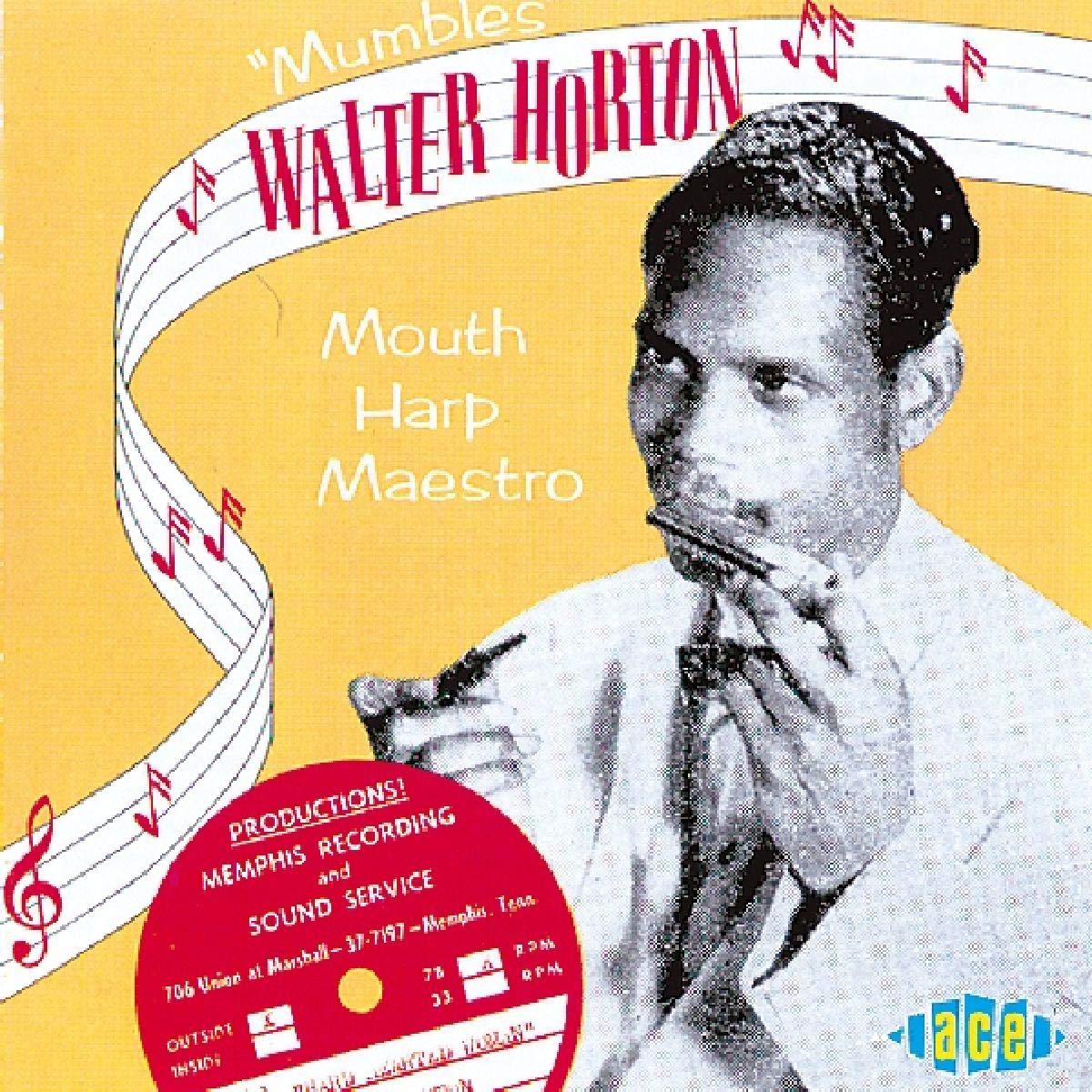
Walter "Big Walter" Horton (born April 6, c. 1917-1921, Horn Lake, Mississippi; died December 8, 1981, Chicago, Illinois). Inducted into the Blues Hall of Fame, 1982. Mississippi Blues Trail marker, Horn Lake, Mississippi, erected 2008. Principal recordings: Sam Phillips/Sun sessions, Memphis, 1951-1953 (collected as Mouth Harp Maestro, Ace Records); "Walking By Myself" with Jimmy Rogers (Chess, 1956); "I Can't Quit You Baby" with Otis Rush (Cobra, 1956); "Hard Hearted Woman" (States, 1954); The Soul of Blues Harmonica (Argo/Chess, 1964, produced by Willie Dixon); Chicago/The Blues/Today! Vol. 3 (Vanguard, 1966); Big Walter Horton with Carey Bell (Alligator, 1972, produced by Bruce Iglauer); Southern Comfort with Martin Stone (1968).