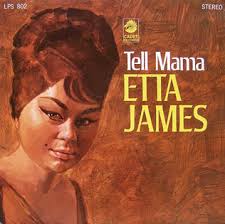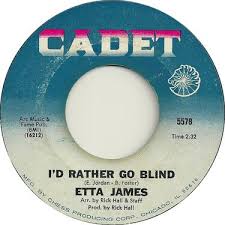
"I'd Rather Go Blind" is one of the most emotionally devastating recordings in the history of American popular music. Recorded by Etta James in 1967 at FAME Studios in Muscle Shoals, Alabama, the song was originally released as the B-side to her hit single "Tell Mama" and has since become regarded as a blues and soul classic of unparalleled emotional depth. Its story involves prison, songwriting subterfuge, tax avoidance, and one of the greatest vocal performances ever committed to tape.
The Song's Origins: Prison, Heartbreak, and a Pseudonym
The songwriting credits for "I'd Rather Go Blind" read Ellington Jordan, Billy Foster, and Etta James—but the true authorship is more complex and poignant. According to James's autobiography Rage to Survive, she first heard the song outlined by her friend Ellington "Fugi" Jordan when she visited him at Chino Prison in California in 1967. Jordan, a Detroit-born singer and songwriter, had developed the song while incarcerated, pouring out his grief from being imprisoned without knowing when he would be released.
Jordan later recalled the song's creation: "I got tired of losing and being down. I was in prison and didn't know when I was going to get out. I sat in a piano room and began to write." His original title for the song was "I'd Rather Be a Blind Man."
James and Jordan completed the song together during her prison visit. However, for tax reasons, James gave her songwriting credit to her then-boyfriend and songwriting partner Billy Foster, a member of the 1950s Los Angeles doo-wop group The Medallions. This was a decision she would come to regret deeply as the royalties accumulated over the decades. As one account noted, "The royalty payments trickled steadily into Foster's coffers from that point on, a source of chagrin that needled James for decades to come."
Fugi himself offered a slightly different account, claiming he had written the song by himself sitting at a piano in San Quentin Prison after a breakup with his girlfriend, and denied ever meeting James in prison. Regardless of the exact circumstances, the song's emotional core—desperation, heartbreak, and the willingness to sacrifice sight itself to avoid witnessing love's end—was born from genuine pain and confinement.
The Recording Session: FAME Studios, Muscle Shoals
Etta James recorded "I'd Rather Go Blind" at FAME Studios in Muscle Shoals, Alabama, during sessions for her eighth album, Tell Mama. The recording took place in August 1967—a crucial detail, as James was in the midst of a brief intermission from her heroin addiction. The isolated location of Muscle Shoals, with little access to drugs and alcohol, made it an ideal environment for her to focus on her work.
FAME Studios had already established itself as a premier recording facility. Aretha Franklin's "I Never Loved a Man (The Way I Love You)" had been recorded there, as had hits by Percy Sledge and Wilson Pickett. Leonard Chess, the shrewd founder of Chess Records, had sent James to Muscle Shoals specifically to rejuvenate his label's sound, recognizing that the studio's unique combination of Southern soul feel and technical excellence was producing some of the era's most compelling R&B.
The session was run by Rick Hall, FAME's founder and owner. According to bassist David Hood, who played on the session, "It was a pretty simple song, but her performance was great and apparently our performances were good. They may have gone back and re-did some vocals." Hood noted that in 1967, Hall was just transitioning to multi-track recording—previously, FAME had recorded in mono. "Fixing things in those days was a whole lot harder than it is nowadays. Sometimes if there was a missed note or something like that, you wouldn't do anything about it, you'd let it go."
The song was reportedly recorded in one take, a testament to both the musicians' tightness and James's ability to deliver under pressure. The performance was so powerful that when Leonard Chess first heard the recording, the profane, hard-nosed businessman "almost came to tears."
The Producer
Rick Hall (1931–2018) served as the session's producer and engineer. Hall was the founder of FAME Studios and one of the architects of the Muscle Shoals sound. His production approach emphasized live, spontaneous performances captured with minimal overdubbing. For "I'd Rather Go Blind," Hall's role was to create an environment where James could access the deepest emotional reserves of her voice, supported by musicians who understood the song's gravity without overwhelming it.
The Musicians
The Muscle Shoals Rhythm Section—later known as the Swampers—provided the instrumental backing. The personnel on "I'd Rather Go Blind" included:
-
Etta James – lead vocals
-
Spooner Oldham – piano
-
Jimmy Johnson – guitar
-
Junior Lowe – guitar
-
David Hood – bass
-
Roger Hawkins – drums
-
Carl Banks – organ
-
Charles Chalmers – tenor saxophone
-
Aaron Varnell – tenor saxophone
-
Floyd Newman – baritone saxophone
-
Gene "Bowlegs" Miller – trumpet
This ensemble represents the classic FAME Studios house band of the era. Spooner Oldham on piano and Jimmy Johnson on guitar were key architects of the Muscle Shoals sound, their playing characterized by tasteful restraint and deep groove. Roger Hawkins on drums and David Hood on bass formed one of the most celebrated rhythm sections in American popular music—their work on Aretha Franklin's hits at the same studio had already made them legendary.
The horn section—Charles Chalmers, Aaron Varnell, Floyd Newman, and Gene "Bowlegs" Miller—provided the soulful brass punctuation that lifts the track from intimate blues to full-bodied R&B. Their arrangement is subtle, never overwhelming James's vocal, but adding emotional weight at crucial moments.
Carl Banks on organ provided the warm, gospel-tinged harmonic bed that underpins the entire track. The organ's sustained chords create a sense of spiritual longing that complements the song's themes of sacrifice and devotion.
The Song's Structure and Lyrics
"I'd Rather Go Blind" is a masterclass in emotional economy. In just 2:36, the song delivers a gut punch that most artists couldn't achieve in twice the time. The lyrics are brutally direct:
Something told me it was over
When I saw you and her talking
Something deep down in my soul said, "Cry, girl"
When I saw you and that girl, walking around
The chorus is one of popular music's most devastating declarations:
I would rather, I would rather go blind boy
Than to see you walk away from me
The second verse deepens the emotional stakes:
So you see, I love you so much
That I don't want to watch you leave me baby
Most of all, I just don't, I just don't want to be free
The final verse brings the imagery to a haunting close:
I was just, I was just, I was just sitting here thinking
Of your kiss and your warm embrace
When the reflection in the glass that I held to my lips now baby
Revealed the tears that was on my face
Music critic Dave Marsh, in his book The Heart of Rock and Soul: The 1001 Greatest Singles Ever Made, noted that the song "provides a great metaphor for her drug addiction and intensifies the story." James herself, in her autobiography, explained that the lyrics were about being blind in her love life and addictions, though she discreetly replaced references to heroin with alcohol.
Release and Commercial Performance
"I'd Rather Go Blind" was released in 1967 as the B-side to the single "Tell Mama" on Cadet Records (a Chess subsidiary). The A-side, "Tell Mama," reached No. 10 on the Billboard R&B charts and No. 23 on the Billboard Hot 100. The B-side, despite its secondary status, quickly became recognized as the more emotionally profound of the two tracks.
The song was included on the album Tell Mama, released in 1968. Some critics have regarded the "Tell Mama"/"I'd Rather Go Blind" single as one of the great double-sided releases of the period—a testament to the depth of the Muscle Shoals sessions.
Ironically, Etta James herself was not initially fond of the song. She later admitted, "Never liked it. Never liked singing it." Yet she had a lot of time for Rod Stewart's 1972 version, and the song became a staple of her live performances for decades.
Critical Reception
"I'd Rather Go Blind" has received extraordinary critical recognition. Dave Marsh included it in The Heart of Rock and Soul, one of the definitive books on popular music. Critic Matthew Greenwald of AllMusic called it "one of the great double-sided singles of the period." The song's emotional depth and James's vocal performance have made it a touchstone for discussions of soul music's power.
The track's power lies in its negative space—the absence of anger in James's voice, the absence of resentment toward the other woman. As one critic noted, "There's simply no room for it. Grief is all-encompassing." The performance is not theatrical; it is confessional, raw, and devastatingly real.
Cover Versions and Legacy
The song has been recorded by a remarkable array of artists across genres:
-
Chicken Shack (1969) – The British blues band's version, featuring Christine Perfect (later Christine McVie of Fleetwood Mac), reached No. 14 on the UK Singles Chart. The single was recorded at CBS studio on New Bond Street in London, with a horn section arranged by Terry Noonan.
-
Rod Stewart (1972) – Recorded for his album Never a Dull Moment. James herself praised this version favorably in her autobiography.
-
B.B. King, Little Milton, Koko Taylor, Clarence Carter (1969), Sydney Youngblood (1990, UK No. 44), Elkie Brooks, Paul Weller, Ruby Turner, Marcia Ball, Barbara Lynn
-
Beyoncé – Performed the song in the 2008 film Cadillac Records, where she portrayed Etta James. The film brought the song to a new generation of listeners.
-
Beth Hart and Joe Bonamassa (2011) – Included on their album Don't Explain. At the 2012 Kennedy Center Honors concert honoring Buddy Guy, Beth Hart received a standing ovation for a rendition accompanied by Jeff Beck on guitar.
-
Chris Stapleton – His 2015 hit "Tennessee Whiskey" features a near note-for-note rendition of the song's melody, demonstrating its enduring influence on contemporary country and soul.
-
Grace Potter (2018) – Recorded the song at FAME Studios for the tribute album Muscle Shoals...Small Town, Big Sound, returning to the same room where James had created the original.
Fugi's Version and Later Career
After his release from prison, Ellington "Fugi" Jordan recorded his own version of the song, retitled "I'd Rather Be a Blind Man," backed by the psychedelic funk rock group Black Merda in 1968. He also collaborated with Black Merda on the track "Mary Don't Take Me on No Bad Trip." Fugi remained active in the Fresno music scene until his death on June 18, 2020. His 1994 CD The Cold-Blooded City They Call the 'No' featured a rap song about Fresno. Despite writing one of the most beloved songs in American music, Fugi never achieved widespread recognition during his lifetime.
The Live Performance: Montreux 1975
One of the most celebrated live versions of "I'd Rather Go Blind" was captured at the Montreux Jazz Festival in 1975. This was James's first European visit, not long after her stint in a drug rehabilitation program for heroin addiction. She told the crowd, "I can't speak French, I can't speak nuthin' but English and American English...slang." But her performance transcended language entirely.
The 1975 performance is remarkable for its raw intensity. By this point, James had been singing the song for almost ten years, yet its edge was "in no way blunted by the passing of years and countless deliveries, nor the singer's own hardships. If anything, her experiences galvanised the song's sentiment." The audience's nervous laughter at her pained expression and uninhibited, almost confrontational entreaty to the heavens at the song's finale only heightens the effect—because when Etta James sings, it's for real.
Certifications and Modern Recognition
The original recording has achieved significant commercial recognition in the streaming era:
-
United Kingdom: Gold certification (400,000 units)
-
New Zealand: Platinum certification (30,000 units)
-
Denmark: Gold certification (45,000 units)
-
Spain: Gold certification (30,000 units)
The Unpaid Musicians
One of the darker footnotes to the song's legacy involves the compensation of the session musicians. David Hood, who played bass on the original recording, has noted that when "I'd Rather Go Blind" was used in the HBO series Luck and other media, the musicians who played on the track were not properly compensated. "I said, 'I cut that. That's me playing.' And so we have written it down, and now I'm going to go through whatever process it takes to try to get paid on that. Because when they make a show and they put music in it, the producers of the show have to pay to use that song. And if they can't find the people who played on it, that money just sits with the Musicians Union or wherever it goes. Someplace there's a lot of money stacked up."
Conclusion
"I'd Rather Go Blind" is a song born from prison, shaped by tax avoidance, and delivered by one of the greatest voices in American music. In just two and a half minutes, Etta James and the Muscle Shoals musicians created a monument to heartbreak that has transcended its origins to become one of the most covered and beloved songs in the blues and soul canon. The song's power lies in its absolute emotional honesty—there is no artifice, no theatricality, just the raw, devastating truth of love's end. As one critic observed, "In two and a half minutes Etta James took every song of broken love and heartache up to that point, every songwriter and singer who tried to articulate their pain, and brushed them aside. You only thought you felt loss. You only thought you knew what hurt was."
From FAME Studios in 1967 to the Kennedy Center Honors in 2012, from Chino Prison to the charts of the UK and New Zealand, "I'd Rather Go Blind" has proven that the deepest pain, when transformed into art, becomes the most universal beauty.
Suggested Reading
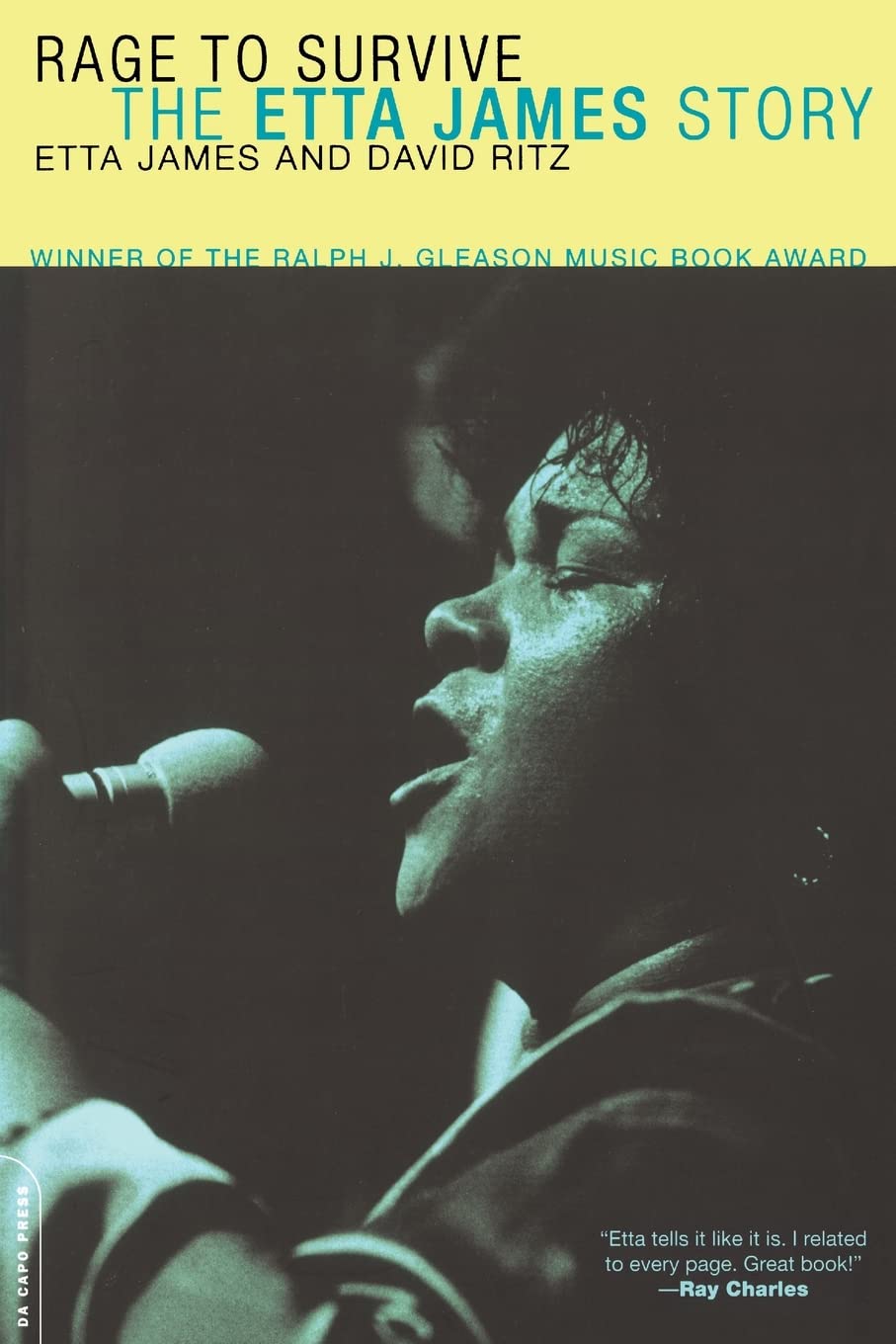 Rage To Survive: The Etta James Story