Introduction: A Song Born from Chicago's West Side
"Sly and Sleazy" is one of the most tantalizing and elusive titles in the Magic Sam catalogue — an instrumental blues track that encapsulates the raw, crackling energy of the Chicago West Side sound at its peak. Unlike Sam's more celebrated vocal showcases such as "All Your Love" or "Sweet Home Chicago," "Sly and Sleazy" operates almost entirely as a showcase for his guitar voice: wiry, stinging, and full of the coiled tension that made Samuel Gene Maghett one of the most important blues guitarists of the twentieth century. To fully understand the song, one must understand the man, the era, and the extraordinary series of sessions that produced it.
The Man Behind the Music: Samuel Gene Maghett
Magic Sam was born on February 14, 1937, in Grenada County, Mississippi. He was raised in the Delta tradition, learning the blues by ear from records by Muddy Waters and other Chicago masters before migrating north as a teenager. By the mid-1950s he had settled on Chicago's West Side, where a new, more aggressive and harmonically adventurous style of electric blues was taking root — distinct from the South Side's Muddy Waters–rooted tradition.
Sam's stage name came from his very first recording session for Cobra Records, where it was coined as a phonetic approximation of "Maghett Sam." Alongside Otis Rush and Buddy Guy, Magic Sam formed the triumvirate of West Side blues guitar, each man bringing a distinct emotional and technical personality to the style. Sam's playing was characterized by a bright, singing tone, fluid string bends, and a rhythmic intensity that bridged blues, soul, and early rock and roll.
The Recording Context: Delmark Records and the Final Sessions
The Delmark Years (1967–1969)
After his promising Cobra period in the late 1950s and a lean stretch through the early 1960s, Magic Sam's career was revitalized when he signed with Chicago's Delmark Records in 1967. The label's founder, Bob Koester, became a crucial guiding force in Sam's studio work. Koester had a deep belief in authentic Chicago blues and gave Sam both creative latitude and professional support.
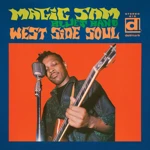
The first fruit of this partnership was West Side Soul (Delmark DS-615), recorded in 1967 and released in 1968. The album was made at Ter-Mar Recording Studios in Chicago and featured a tight, hand-picked band: Mighty Joe Young on second guitar, Stockholm Slim (Aron Burton's predecessor, actually pianist Aron "Stockholm Slim" Lindberg) on piano, Earnest Johnson or Mack Thompson on bass, and Odie Payne Jr. or Odie Payne III on drums, depending on the session date.
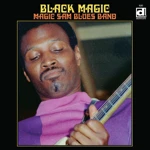
West Side Soul became an instant landmark — it is routinely cited as one of the greatest blues albums ever recorded. Its success led directly to a second Delmark album, Black Magic (Delmark DS-620), recorded in late 1968 at Sound Studios, 230 North Michigan Avenue, Chicago. Sam himself considered Black Magic his personal favorite of the two, saying he was finally beginning to believe in himself as an artist.
The Genius: Final Sessions (1969)
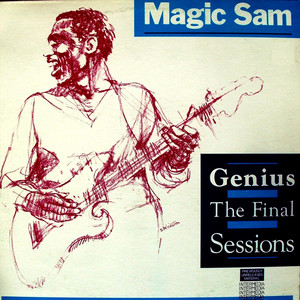
Tragically, Magic Sam died of a heart attack on December 1, 1969, at just 32 years of age. He left behind a body of unissued recordings from sessions conducted in 1969 — material that Delmark would eventually compile and release posthumously as Genius: The Final Sessions (Delmark DE-697), issued in 1997.
It is within Genius: The Final Sessions that "Sly and Sleazy" found its official home. The album collects the last recordings Magic Sam made before his death, capturing him at a moment of remarkable artistic confidence, even as his health was quietly failing.
"Sly and Sleazy": The Song Itself
Track Placement and Album Context
On the original vinyl configuration of Genius: The Final Sessions, "Sly and Sleazy" appears as track A6 — the sixth and final track on the first side of the LP. It is sandwiched between "Chi-Town Boogie" and "Creole 'N' Roll," two other instrumentally driven pieces that reveal Sam's love of groove-based, non-vocal blues. The complete track listing of Genius: The Final Sessions is as follows:
| Side | Track | Title |
|---|---|---|
| A | 1 | E.J.'s Thing |
| A | 2 | F.P. Blues |
| A | 3 | P.J. Blues |
| A | 4 | West Madison Street Blues |
| A | 5 | Chi-Town Boogie |
| A | 6 | Sly and Sleazy |
| B | 1 | Creole 'N' Roll |
| B | 2 | Blues 'Nooze |
| B | 3 | Boppin' the Blues |
| B | 4 | 43rd and S. Park Blues |
| B | 5 | Scatter Shot |
| B | 6 | Black Magic |
The track's very title — "Sly and Sleazy" — is a declaration of intent. In the lexicon of Chicago blues, "sly" connotes cunning and wit; "sleazy" carries the low-down, gritty, after-midnight atmosphere of the West Side clubs where Magic Sam made his name. Together, the two words perfectly describe the guitar tone and mood Sam conjures: a melody that sneaks up on you, coils around your expectations, and leaves you slightly off-balance.
Musical Character
"Sly and Sleazy" is a guitar-led instrumental blues, built on a shuffling groove typical of the late-1960s Chicago style. Sam's guitar work on the track demonstrates the full range of his technique: his ability to make the instrument sing with a vocal-like expressiveness, his use of stinging single-note runs in the upper register contrasted with chunky rhythmic chord work in the lower, and his signature vibrato — wide, slow, and emotionally saturated. The track's instrumental nature places the entire narrative burden on the guitar, and Sam rises to the challenge with playing that is simultaneously relaxed and intensely focused.
The title's dual meaning — sly (clever, wily) and sleazy (low-down, funky) — maps directly onto the musical texture. The melody is not innocent; it prowls rather than walks, and there is a knowing, almost conspiratorial quality to the way Sam phrases his lines, as if he is letting the listener in on a private joke.
The Sessions: Musicians and Production
The 1969 Final Sessions Band
The musicians on the Genius: The Final Sessions recordings represented the cream of the Chicago blues sideman world in 1969. While specific per-track personnel credits for "Sly and Sleazy" are not exhaustively documented in currently available public sources, the broader session band for these final recordings drew from the same pool of players who had worked with Sam throughout his Delmark period.
Key musicians associated with Magic Sam's final recording period include:
- Magic Sam (Samuel Maghett) — lead guitar, vocals (where applicable)
- Mighty Joe Young — second guitar (Young was a constant presence throughout Sam's Delmark years)
- Stockholm Slim — piano
- Mack Thompson / Earnest Johnson — bass
- Odie Payne Jr. / Odie Payne III — drums
Eddie Shaw also appears on some of the final sessions material, adding further depth to the ensemble.
The Producer: Bob Koester
Bob Koester, founder of Delmark Records, served as producer across Magic Sam's Delmark output, including the sessions that yielded the Genius material. Koester was a self-described "purist" — a man deeply committed to capturing blues musicians in as natural and unadorned a setting as possible, without the commercial overlays that often compromised blues recordings of the era. His production philosophy was one of sympathetic documentation: create the right atmosphere, assemble the right players, and let the music breathe. This approach gave Magic Sam's recordings a directness and emotional immediacy that has helped them endure.
The Genius: The Final Sessions material was not produced with an eye toward commercial release at the time of recording — these were working sessions, exploratory and sometimes raw. That rawness is part of what makes "Sly and Sleazy" and its companion pieces so compelling: they capture Magic Sam at work, thinking through ideas, pushing his guitar vocabulary in real time.
The Recording Environment
The 1969 sessions were conducted in Chicago, consistent with Sam's entire Delmark recording history. The city's studio infrastructure — particularly Ter-Mar and Sound Studios — provided the sonic environment that defines the West Side sound: a relatively dry, close-miked guitar tone, a punchy rhythm section, and a minimum of studio processing. The result is a recording that sounds like it was made in the same room where Sam performed every weekend on the West Side club circuit.
Versions, Reissues, and Alternate Appearances
The Definitive Release: Delmark DE-697 (1997)
"Sly and Sleazy" was first made available to the public on the 1997 Delmark release Genius: The Final Sessions (catalog number DE-697). This was a significant posthumous release, arriving nearly three decades after Sam's death and drawing on the vault of unissued 1969 session tapes that Koester had carefully preserved. The album was also issued as Delmark DG-765 in certain formats.
Streaming and Remastered Versions
"Sly and Sleazy" has subsequently been made available in remastered form on streaming platforms. A remastered version (running approximately 3:19) appears on Spotify and other digital services, credited to Magic Sam and listed under various compilations and the Genius album itself. An earlier, slightly shorter version (approximately 3:10) also circulates, suggesting that different mastering or editing decisions were applied across reissue generations.
Compilation Appearances
The track has appeared on various Magic Sam compilations, including collections that survey his complete Delmark recordings. Delmark's 2020 anthology of Magic Sam's complete Delmark output brought renewed attention to the Genius material, positioning "Sly and Sleazy" within the full arc of Sam's recorded legacy.
Legacy and Influence
Magic Sam's Place in Blues History
Magic Sam was inducted into the Blues Foundation's Blues Hall of Fame, a recognition of his foundational role in shaping the West Side sound. blues.org His Black Magic album was selected in the category of Classics of Blues Recordings — Albums by the Blues Foundation. West Side Soul consistently appears on "greatest blues albums of all time" lists, chosen by Living Blues magazine as one of its top ten Desert Island Blues Discs.
His influence extended far beyond the blues world. Guitarists from Buddy Guy to Stevie Ray Vaughan have cited Magic Sam as a primary influence. Robert Cray has spoken extensively about the impact of Sam's recordings on his own playing. The West Side sound that Sam helped define — with its emphasis on a singing, vocal-like guitar tone, sophisticated chord voicings, and emotional intensity — became one of the primary tributaries of blues-rock in the late 1960s and 1970s.
The Significance of the Instrumental Tracks
Within Sam's catalogue, the instrumentals — of which "Sly and Sleazy" is among the most fully realized — occupy a special place. Because Sam's voice was so powerful and distinctive, it is easy to overlook the purely instrumental dimension of his artistry. Tracks like "Sly and Sleazy" demonstrate that his guitar playing was complete in itself: it needed no vocal to carry emotional weight, narrative structure, or musical sophistication. In this sense, "Sly and Sleazy" stands as a kind of private communiqué from Sam to the listener — the sound of a master musician talking to himself, working through ideas, and finding joy in the pure act of playing.
The Posthumous Revelation
The fact that "Sly and Sleazy" was not released until 1997 — nearly three decades after it was recorded — gives it an additional layer of poignancy. Magic Sam never heard it issued; never saw the reaction it would generate among blues fans and musicians. The Genius: The Final Sessions release revealed that even in his final months, Sam was generating music of the highest order, and that the vault of unissued material held treasures that enriched the understanding of his artistry.
Conclusion
"Sly and Sleazy" is more than a footnote in the Magic Sam discography. It is a window into the creative process of one of the blues' greatest guitar voices — recorded in the last year of his life, preserved by a dedicated producer, and finally shared with the world nearly thirty years after his death. The track distills everything that made Magic Sam exceptional: the coiling, predatory guitar lines, the impeccable rhythmic sense, the ability to tell a complete story without a single word. Its title, perfectly chosen, captures both the character of the music and the spirit of the West Side blues world from which it emerged — a world that was sly enough to know its own worth, and sleazy enough not to care what anyone else thought.
In a career cut tragically short at 32, Magic Sam left behind a body of work that continues to define and inspire. "Sly and Sleazy" is one of the last dispatches from that genius — and one of the most revealing.
Selected Discography
 Genius: The Final Sessions Buy from Amazon
 West Side Soul Buy from Amazon
 Black Magic Buy from Amazon
Note: Specific per-track session personnel breakdowns for individual cuts on Genius: The Final Sessions are not exhaustively documented in currently available public sources. The musician credits above reflect the confirmed band roster for Magic Sam's 1967–1969 Delmark sessions as a whole. Researchers seeking definitive per-track attribution should consult the original Delmark Records liner notes for DE-697.