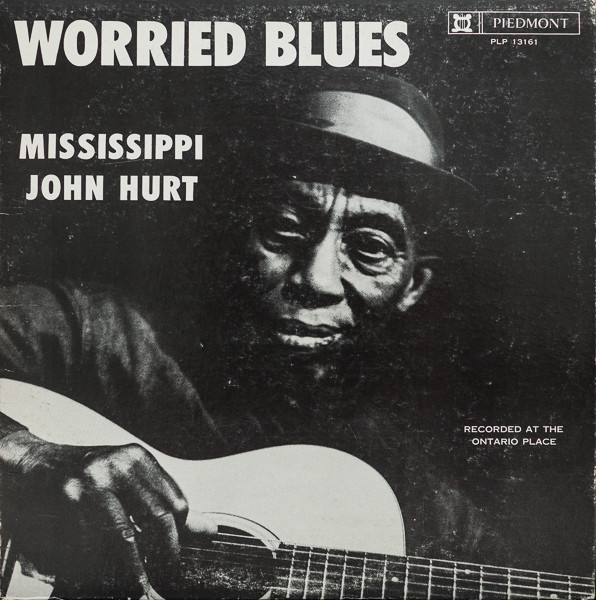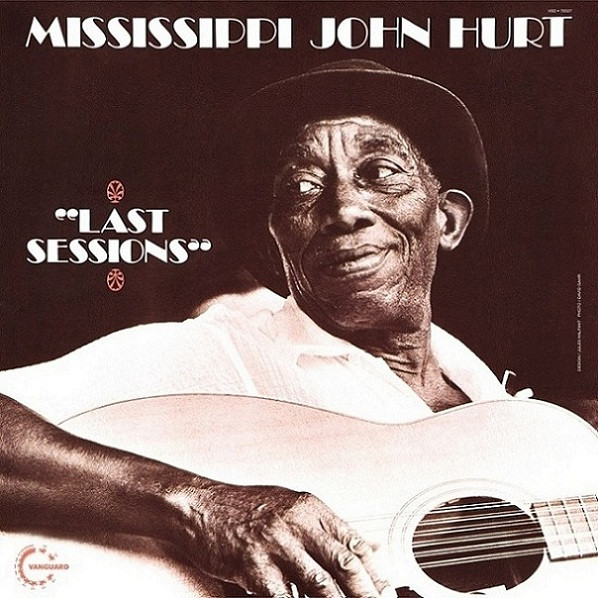
Last Sessions is a posthumous album by the legendary country blues guitarist and singer Mississippi John Hurt (born John Smith Hurt, March 8, 1893 – November 2, 1966). Released in 1972 on Vanguard Records (VSD 79327), the album captures some of the final studio recordings Hurt made before his death, offering an intimate and poignant farewell from one of the most beloved figures in American folk and blues music. The recordings represent the twilight of a remarkable second career that had been resurrected from almost total obscurity.
Background and Context
The Rediscovery
Mississippi John Hurt's story is one of the most extraordinary in American music. He had recorded a handful of sides for Okeh Records in 1928, including the iconic "Frankie" and "Avalon Blues," but the Great Depression killed his recording career almost before it started. He returned to Avalon, Mississippi, where he lived in near-total anonymity for over three decades, farming and playing guitar for his own pleasure and for local social gatherings.
In 1963, folk music enthusiast Tom Hoskins used the lyrical clue in "Avalon Blues" ("Avalon's my home town, always on my mind") to locate the then-seventy-year-old Hurt in Avalon, Mississippi. Hoskins brought Hurt to Washington, D.C., and almost overnight the gentle, fingerpicking guitarist found himself a sensation on the folk revival circuit. Hurt appeared at the Newport Folk Festival in 1963 and 1964, recorded several albums for Vanguard Records, and became a fixture in the coffeehouse and college concert scene.
The Final Years
Between 1963 and his death on November 2, 1966, Hurt recorded prolifically for Vanguard, producing the albums Today! (1966), The Immortal Mississippi John Hurt (1967), and other material. He also appeared on the Piedmont label. His health was declining during this period—he suffered from heart problems—but his playing remained remarkably fluid and his voice warm and intimate. The sessions captured on Last Sessions date from the final period of his recording activity, representing some of the last material he committed to tape in a studio setting.
The Sessions
Recording Details
The recordings on Last Sessions were made in 1966, during what would be the final year of Hurt's life. The sessions took place in New York City, at Vanguard's preferred recording facilities. The exact dates of the sessions have been documented variously, but they fall within the period of Hurt's last active months of performing and recording, likely in the spring and summer of 1966, only months before his death from a heart attack on November 2, 1966, in Grenada, Mississippi.
The album was not released until 1972, six years after Hurt's death, as Vanguard worked through its backlog of material from the prolific folk and blues sessions of the mid-1960s.
Production
The album was produced by Samuel Charters (Samuel Barclay Charters IV, 1929–2015), the noted blues historian, author, and record producer. Charters was one of the most important figures in the documentation and popularization of blues music. His landmark 1959 book The Country Blues had been instrumental in sparking the folk-blues revival that eventually led to Hurt's rediscovery. Charters served as a staff producer for Vanguard Records during this period and oversaw recording sessions with numerous traditional blues and folk artists, including Skip James, Doc Watson, and others.
Charters' production approach with Hurt was characteristically understated and respectful. He understood that Hurt's genius lay in the unadorned simplicity of his fingerpicking guitar style and his warm, conversational vocal delivery. The recordings are sparse and intimate, placing the microphone close to Hurt and capturing him in what feels like a private performance. There is minimal studio intervention—no overdubs, no added instrumentation, no attempt to "modernize" or "enhance" the sound. This approach was consistent with Vanguard's philosophy for its folk and blues recordings and with Charters' own deep respect for traditional performance styles.
Musicians
The album is essentially a solo performance throughout. Mississippi John Hurt performs:
- Vocals
- Acoustic guitar (his trademark fingerpicking style on a standard acoustic guitar)
One of the defining characteristics of Hurt's music—and of this album in particular—is the complete self-sufficiency of his performances. His intricate fingerpicking technique, in which the thumb maintained a steady, alternating bass pattern while the index and middle fingers picked out melody lines on the treble strings, created the illusion of two or more instruments playing simultaneously. This technique, rooted in the Piedmont blues and country music traditions of the hill country of Mississippi and the broader Upper South, meant that no additional accompaniment was needed or desired.
There are no credited sidemen on the album. The intimacy of a single voice and a single guitar is the entire sonic world of Last Sessions.
Mississippi John Hurt's Style
Before examining the tracks individually, it is worth noting the distinctive elements of Hurt's musical approach, as they inform every track on the album:
-
Fingerpicking guitar: Hurt's right-hand technique was extraordinarily refined. His thumb alternated between bass strings (typically the 4th, 5th, and 6th strings) in a steady rhythmic pattern, while his fingers (primarily index and middle) picked melodic figures on the treble strings. This created a full, self-accompanying sound that was rhythmically propulsive yet melodically intricate.
-
Vocal style: Hurt's voice was gentle, warm, and conversational. He did not shout, moan, or wail in the manner of Delta blues singers. His delivery was intimate and understated, often with a hint of humor or wistfulness. He sang as if speaking directly to the listener.
-
Repertoire: Hurt drew from a vast well of traditional material—folk songs, ballads, spirituals, ragtime pieces, country dance tunes, and blues—reflecting the diverse musical culture of rural Mississippi in the early twentieth century. His music was not "pure blues" in the Delta sense but rather a broad-based American vernacular tradition.
-
Tuning: Hurt primarily played in standard tuning, unlike many Delta blues artists who favored open tunings. This gave his playing a different harmonic character and facilitated his complex fingerpicking patterns.
Track-by-Track Breakdown
The album contains a collection of traditional songs, original compositions, and folk standards that showcase the breadth of Hurt's repertoire. Below is a detailed examination of each track:
1. "Funky Butt"
Songwriter: Traditional / arranged by Mississippi John Hurt
Details: "Funky Butt" is a traditional song with deep roots in early New Orleans jazz and African American vernacular culture. The song is most famously associated with Buddy Bolden, the legendary early New Orleans cornet player, who reportedly played a tune called "Funky Butt" (also known as "Buddy Bolden's Blues") at dance halls in the early 1900s. The term "funky butt" was slang that referred to the sweaty, odorous conditions of crowded dance halls.
Hurt's version transforms this raucous dance hall number into something characteristically gentle and playful. His fingerpicking creates a lively, syncopated accompaniment while his vocal delivery is sly and humorous, delivering the mildly risqué lyrics with a twinkle rather than vulgarity. The performance demonstrates Hurt's ability to absorb material from across the spectrum of African American musical traditions and make it entirely his own.
The guitar work features Hurt's trademark alternating bass with melodic fills between vocal phrases, maintaining a bouncy, ragtime-inflected feel throughout.
2. "Talking Casey"
Songwriter: Traditional / arranged by Mississippi John Hurt (based on the legend of Casey Jones)
Details: This is Hurt's spoken-word and sung version of the Casey Jones legend, one of the great American folk narratives. The historical John Luther "Casey" Jones (1863–1900) was an Illinois Central Railroad engineer who died in a train wreck near Vaughan, Mississippi, on April 30, 1900, when his passenger train collided with a stalled freight train. Jones stayed at the throttle, trying to brake, and saved his passengers' lives at the cost of his own.
Hurt's "Talking Casey" is a talking blues—a semi-spoken, semi-sung narrative form in which the performer recites the story over a rhythmic guitar accompaniment, breaking into more melodic singing at certain points. The talking blues format allows Hurt to tell the story in his own words with his characteristic warmth and narrative skill. The form was popular in folk and country traditions and was used by artists from Woody Guthrie to Bob Dylan.
The guitar accompaniment is relatively simple and rhythmic, providing a steady backdrop for the narrative. Hurt's delivery is intimate and engaging, drawing the listener into the story as if sitting on a front porch hearing it told firsthand. The Casey Jones story had particular resonance for a Mississippi musician—the wreck occurred in Mississippi, and the legend was deeply embedded in the folk culture of the state.
3. "Chicken"
Songwriter: Traditional / arranged by Mississippi John Hurt
Details: "Chicken" is a lighthearted, humorous number reflecting the playful side of Hurt's personality and repertoire. Songs about chickens—stealing them, eating them, chasing them—were common in the folk and blues traditions of the rural South, where chickens were a staple of the diet and a common element of everyday life. The theme of chicken stealing in particular was a recurrent motif in African American folk humor.
Hurt performs the song with evident relish, his voice carrying the gentle humor that made him such a beloved figure on the folk revival circuit. The guitar work is characteristically intricate, with the fingerpicking pattern providing both rhythm and counter-melody. The performance captures the informal, entertaining quality that Hurt would have brought to social gatherings and house parties in Avalon before his rediscovery.
4. "Baby, What's Wrong with You"
Songwriter: Mississippi John Hurt
Details: This is one of the more blues-oriented numbers on the album, dealing with the classic blues theme of romantic dissatisfaction and confusion. The lyrics address a lover whose behavior is puzzling and frustrating, a theme as old as the blues itself.
Even in this more conventionally "bluesy" context, Hurt's approach remains distinctive. His vocal delivery is more bemused than anguished—he sounds more puzzled than heartbroken, which gives the song a unique emotional quality quite different from the intense suffering expressed in Delta blues. The guitar work maintains the characteristic fingerpicking pattern, with perhaps a slightly more insistent bass line reflecting the song's emotional urgency.
5. "Farther Along"
Songwriter: Traditional gospel hymn (often attributed to W.B. Stevens and J.R. Baxter Jr., though the song's origins are debated and likely lie in earlier oral tradition)
Details: "Farther Along" is one of the great American gospel hymns, with origins in the late nineteenth or early twentieth century. The song addresses the age-old theological problem of why the righteous suffer while the wicked prosper, offering the consolation that understanding will come "farther along"—in the afterlife or at the final judgment. The chorus typically runs: "Farther along we'll know more about it / Farther along we'll understand why / Cheer up, my brother, live in the sunshine / We'll understand it all by and by."
Hurt's performance of this hymn is deeply moving, particularly given the context of these being among his final recordings. His vocal delivery is sincere and reverent without being overwrought. The fingerpicking accompaniment adapts his secular playing style to the sacred context, creating a gentle, contemplative musical setting.
The inclusion of this and other spiritual numbers reflects the important role of church music in Hurt's life and repertoire. Like many rural Southern musicians, Hurt's musical world encompassed both sacred and secular traditions, and he moved between them naturally. The song had been recorded and performed by countless artists across folk, country, and gospel traditions, including Elvis Presley, the Byrds, and many others.
6. "Shortnin' Bread"
Songwriter: Traditional (sometimes attributed to poet James Whitcomb Riley, though the song almost certainly predates his 1900 published version and has roots in African American folk tradition)
Details: "Shortnin' Bread" (also spelled "Shortening Bread" or "Shortenin' Bread") is one of the most widely known American folk songs, a children's song and play-party song about making and eating shortening bread (a simple bread made with flour, sugar, and shortening or lard). The song has been performed by everyone from the Andrews Sisters to Paul Robeson.
Hurt's version is characteristically charming, with his gentle voice and lively fingerpicking bringing out the song's playful, celebratory quality. The guitar arrangement features a bouncy, syncopated feel that suggests the joyful anticipation of the lyrics. This is the kind of informal, community-oriented music that formed the bedrock of Hurt's repertoire—music for children, for families, for front porches and kitchens.
7. "If You Don't Want Me Baby"
Songwriter: Mississippi John Hurt
Details: Another blues-inflected original, this song deals with the theme of romantic rejection with Hurt's characteristic equanimity. Rather than the desperation or anger that many blues singers bring to such material, Hurt's approach is more philosophical—if you don't want me, so be it. This emotional restraint is one of the hallmarks of his style and part of what made his music so broadly appealing during the folk revival.
The guitar work features the standard Hurt fingerpicking approach, with a steady alternating bass and melodic treble figures. The performance has an easy, relaxed feel that belies the technical sophistication of the playing.
8. "Wise and Foolish Virgins"
Songwriter: Traditional / spiritual (based on the Parable of the Ten Virgins from Matthew 25:1-13)
Details: This spiritual is based on one of Jesus' parables from the Gospel of Matthew, in which ten virgins await the arrival of the bridegroom. Five wise virgins bring extra oil for their lamps, while five foolish virgins do not. When the bridegroom arrives at midnight, the foolish virgins' lamps have gone out, and they are shut out of the wedding feast. The parable is traditionally interpreted as an allegory about being prepared for the Second Coming of Christ.
Hurt's performance brings the narrative quality of the parable to the fore, telling the story with the same engaging conversational style he brings to secular narratives. The fingerpicking accompaniment is reverent but not stiff, maintaining the rhythmic vitality characteristic of his playing. This track further illustrates the depth of Hurt's engagement with the sacred music tradition.
9. "Pera Lee"
Songwriter: Traditional / arranged by Mississippi John Hurt
Details: "Pera Lee" is a folk song that Hurt performs with characteristic warmth. The song reflects the kind of local, regional material that formed a significant part of Hurt's repertoire—songs that may not have circulated widely in published form but were part of the living oral tradition of the communities in which he grew up and lived. Hurt's versions of such songs often represent unique or rare variants that might otherwise have been lost entirely.
The performance showcases Hurt's ability to make even unfamiliar material feel immediately accessible through the warmth of his delivery and the beauty of his guitar accompaniment.
10. "Nearer My God to Thee"
Songwriter: Lyrics by Sarah Flower Adams (1841); music most commonly by Lowell Mason ("Bethany," 1856)
Details: "Nearer, My God, to Thee" is one of the most famous hymns in the English language, written by the English poet and hymn writer Sarah Flower Adams in 1841 and most commonly sung to the tune "Bethany" composed by Lowell Mason. The hymn is famously (though perhaps apochryphally) associated with the sinking of the Titanic in 1912, when the ship's band reportedly played it as the vessel went down.
Hurt's solo guitar-and-voice arrangement transforms this stately Victorian hymn into something more personal and intimate. His fingerpicking style gives the familiar melody a new rhythmic and harmonic character, rooting it in the African American folk tradition rather than the European hymnody from which it originated. The performance is gentle and devotional, capturing Hurt's sincere faith.
Given that these were among Hurt's final recordings, the choice of a hymn about drawing closer to God carries an unavoidable poignancy that deepens the emotional impact of the performance.
11. "Goodnight Irene"
Songwriter: Huddie "Lead Belly" Ledbetter and John A. Lomax (as credited, though the song has traditional roots and Lead Belly adapted it from earlier folk sources)
Details: "Goodnight Irene" (or "Irene, Good Night") is one of the most famous American folk songs of the twentieth century, most closely associated with Huddie "Lead Belly" Ledbetter, who recorded it for the Library of Congress in the 1930s. After Lead Belly's death in 1949, the Weavers' pop-folk version became a massive number-one hit in 1950. The song became a standard of the folk revival.
Hurt's version is, characteristically, gentler and more intimate than Lead Belly's powerful renditions. Where Lead Belly brought a commanding baritone and driving twelve-string guitar, Hurt offers his soft voice and intricate fingerpicking, creating a more lullaby-like quality that is arguably closer to the song's waltz-time origins. The contrast between the two artists' approaches to the same material illustrates the enormous stylistic diversity within African American folk and blues traditions.
12. "Beulah Land"
Songwriter: Edgar Page Stites (lyrics, 1876) and John R. Sweney (music, 1876)
Details: "Beulah Land" is a well-known gospel hymn written in 1876. The title refers to the "land of Beulah" mentioned in John Bunyan's The Pilgrim's Progress and derived from Isaiah 62:4, where "Beulah" (meaning "married" in Hebrew) is used as a name for the land of Israel in its future restored state. In Christian hymnody, "Beulah Land" became a metaphor for heaven or the state of grace.
Hurt's performance is devotional and serene, with his fingerpicking creating a gentle, rocking accompaniment that suggests the peace and rest promised by the lyrics. The arrangement is simple and direct, allowing the beauty of the melody and the sincerity of Hurt's delivery to carry the performance. Like the other sacred numbers on the album, this track reveals an important dimension of Hurt's artistry that is sometimes overshadowed by his better-known secular recordings.
13. "Boys, You're Welcome"
Songwriter: Traditional / arranged by Mississippi John Hurt
Details: This is one of the more sociable, informal numbers on the album—a welcoming, convivial song that reflects the communal context in which much of Hurt's music originally functioned. Before his rediscovery, Hurt was primarily a social musician—he played for local dances, picnics, and gatherings in and around Avalon, Mississippi. Songs like "Boys, You're Welcome" evoke that context, suggesting the warmth and hospitality of community music-making.
The guitar work is lively and rhythmically driving, suggesting the dance-music function that much of Hurt's repertoire originally served. The performance has an engaging, interactive quality, as if Hurt is welcoming the listener into a gathering.
14. "Waiting for You"
Songwriter: Mississippi John Hurt
Details: This gentle, romantic song is one of Hurt's original compositions on the album. The lyrics express patient devotion—the singer waits faithfully for the return of a loved one. The emotional tone is characteristic of Hurt: tender, hopeful, and understated rather than passionate or desperate.
The fingerpicking accompaniment is particularly melodic on this track, with the guitar seemingly singing along with the voice. The interplay between vocal melody and guitar figures is one of the most beautiful examples of Hurt's fully integrated approach to singing and playing.
15. "Stocktime"
Songwriter: Traditional / arranged by Mississippi John Hurt
Details: This is an instrumental or near-instrumental piece that showcases Hurt's guitar technique in a more purely musical context. The title likely refers to the time of year when livestock activities (such as rounding up, feeding, or selling stock) were a focus of rural life—connecting the music to the agricultural rhythms that governed life in Avalon.
The guitar work on this track is particularly impressive, demonstrating the full range of Hurt's fingerpicking technique. Without the need to accompany vocals, the guitar takes center stage, and Hurt's right-hand technique—the steady alternating bass, the syncopated treble picking, the subtle dynamic variations—can be appreciated in its full complexity.
(Note: Track listings for Last Sessions vary slightly across different pressings and reissues. Some editions may include additional tracks or present them in a different order. The above track listing follows the most commonly cited version of the album.)
Buy The Album
Significance and Legacy
As a Document of an Artist
Last Sessions carries an inherent emotional weight as a farewell recording. Though Hurt could not have known with certainty that these would be his final studio sessions, his declining health lends the performances a valedictory quality, particularly the sacred songs. When he sings "Nearer, My God, to Thee" or "Farther Along," the listener cannot help but hear a man contemplating his own mortality with the gentle equanimity that characterized everything he did.
The album also serves as a valuable document of the extraordinary range of Hurt's repertoire. The track listing encompasses folk ballads, blues, spirituals, hymns, ragtime-influenced numbers, talking blues, and instrumental pieces—a panoramic survey of the musical traditions of rural Mississippi and the broader American South. This breadth is one of the things that distinguished Hurt from many of his contemporaries and that has made his music so enduringly appealing.
Musical Significance
Last Sessions demonstrates that Hurt's artistry remained undiminished in his final months. The fingerpicking is fluid and precise, the voice warm and expressive, the interpretive intelligence fully engaged. There is no sense of decline or diminishment in these performances—only the fully mature artistry of a master musician in complete command of his instrument and his tradition.
The album is particularly significant for its inclusion of sacred material, which rounds out the picture of Hurt as an artist. While his secular recordings have been more widely celebrated, the spiritual songs on Last Sessions reveal the depth of his engagement with the religious traditions that were central to life in rural Mississippi.
Influence on Other Musicians
Mississippi John Hurt's influence on subsequent generations of musicians has been enormous, and Last Sessions, as part of his recorded legacy, has contributed to that influence. His fingerpicking style has been studied and emulated by countless guitarists, including:
- Bob Dylan, who was deeply influenced by the folk and blues artists of the revival period
- Jerry Garcia of the Grateful Dead, who credited Hurt as a major influence on his acoustic guitar playing
- Doc Watson, a contemporary on the folk circuit who shared Hurt's fingerpicking mastery
- John Fahey, the experimental acoustic guitarist who was deeply influenced by pre-war country blues
- Ry Cooder, who absorbed Hurt's approach as part of his encyclopedic engagement with American roots music
- Chris Smither, Taj Mahal, Keb' Mo', Ben Harper, and many other artists who have drawn on the country blues tradition
Hurt's influence extends beyond specific techniques to a broader approach to music-making: the idea that blues, folk, country, sacred, and popular traditions are not separate genres but interconnected streams of a single living tradition. This integrative, non-hierarchical approach to American vernacular music has been enormously influential on the Americana and roots music movements.
Place in the Discography
Within Hurt's discography, Last Sessions occupies a special place. It is not as well known as Today! or The Immortal Mississippi John Hurt, which are generally considered his essential albums from the revival period. However, it is highly valued by devotees and scholars for several reasons:
-
Unique material: Several of the songs on Last Sessions do not appear on his other Vanguard albums, making it an essential complement to the rest of his catalog.
-
Emotional resonance: The knowledge that these are among Hurt's final recordings gives the album a poignancy that deepens with each listening.
-
Production quality: Samuel Charters' sympathetic production captures Hurt's artistry with clarity and warmth.
-
Repertoire breadth: The album's wide-ranging track listing provides the most comprehensive single-album survey of the different types of music Hurt performed.
Critical Reception
When released in 1972, Last Sessions was received warmly by critics and folk/blues enthusiasts, though it did not achieve wide commercial success. The album has been recognized as an important part of Hurt's legacy and of the broader documentation of American folk and blues traditions. It has been reissued on CD and digital formats, ensuring its continued availability to new generations of listeners.
Cultural Legacy
More broadly, Last Sessions is part of the remarkable body of recordings that documented traditional American music during the folk revival of the 1960s. Along with the recordings of Skip James, Son House, Bukka White, and other "rediscovered" blues artists, Hurt's Vanguard recordings preserved musical traditions that were in danger of disappearing. These recordings have become primary source documents for understanding the rich musical heritage of the American South.
The album also represents the intersection of two cultural moments: the living folk tradition of the pre-modern South, embodied by Hurt, and the urban folk revival of the 1960s, which created the audience and the institutional infrastructure (labels like Vanguard, festivals like Newport) that made the recording possible. Last Sessions captures a tradition in its twilight—not because the music had lost its vitality, but because the world that produced it was rapidly disappearing.
Conclusion
Last Sessions is a quietly powerful album that rewards repeated and careful listening. It is not a dramatic or flashy recording; it is the sound of a gentle, masterful musician performing the songs he loved with consummate skill and deep feeling. As a final chapter in one of the most remarkable stories in American music—the story of a man who recorded a handful of songs in 1928, returned to obscurity for thirty-five years, and then emerged to charm a new generation with the same undiminished artistry—it is both a celebration and an elegy.
The album stands as a testament to the enduring beauty of Mississippi John Hurt's music and to the rich, diverse tradition from which it sprang. In its modesty, its warmth, and its unassuming mastery, Last Sessions is a fitting final statement from one of America's greatest folk musicians.
Album Details Summary:
- Artist: Mississippi John Hurt
- Album: Last Sessions
- Label: Vanguard Records (VSD 79327)
- Recorded: 1966, New York City
- Released: 1972
- Producer: Samuel Charters
- Format: Solo performance (voice and acoustic guitar)
- Genre: Country blues, folk, gospel, traditional