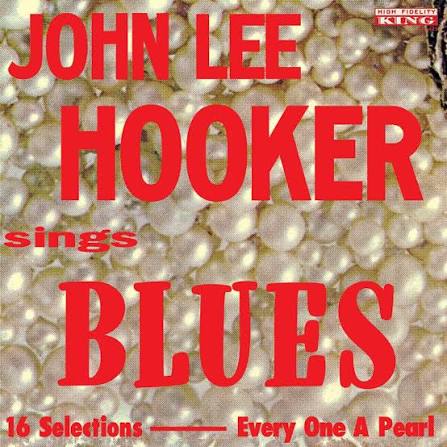
Sings Blues is an album by the legendary Detroit blues guitarist and singer John Lee Hooker (August 22, 1917 – June 21, 2001), released on the Crown Records label (CLP 5157) in 1961. The album is one of numerous releases that Crown issued featuring Hooker's recordings during the late 1950s and early 1960s, a period when the prolific bluesman was recording at a furious pace for multiple labels simultaneously, often under pseudonyms. Crown Records, a budget label based in Los Angeles, was one of several outlets for Hooker's prodigious output during this era.
The album captures Hooker in a raw, elemental setting that showcases his most distinctive qualities: the hypnotic, droning boogie patterns, the deeply personal vocal style that ranged from a menacing growl to a falsetto moan, and the idiosyncratic approach to rhythm and song structure that set him apart from virtually every other blues artist of his generation.
Background and Context
John Lee Hooker's Recording Career in the Late 1950s and Early 1960s
To understand Sings Blues, it is essential to understand the chaotic, prolific nature of John Lee Hooker's recording career during this period. After his massive hit "Boogie Chillen'" for Modern Records in 1948, Hooker became one of the most in-demand blues artists in America. However, his contractual arrangements were notoriously complicated. While nominally under exclusive contract to Modern Records (and later Vee-Jay Records), Hooker routinely recorded for other labels under a bewildering array of pseudonyms, including John Lee Booker, Johnny Lee, John L. Hooker, Johnny Williams, Delta John, Birmingham Sam and His Magic Guitar, The Boogie Man, Texas Slim, and many others.
By the late 1950s and early 1960s, Hooker was recording for Vee-Jay Records as his primary label, producing classic sides like "Boom Boom," "Dimples," and other iconic tracks. Simultaneously, he was recording material that ended up on budget labels like Crown, King, Riverside, Chess, and others. Crown Records in particular issued a series of Hooker albums during this period, drawing on sessions recorded specifically for the label or acquired from other sources.
Crown Records
Crown Records was a budget record label based in Los Angeles, California, operated by the Bihari brothers (Jules, Joe, Saul, and Lester Bihari), who also ran Modern Records, RPM Records, Flair Records, and Kent Records. The Biharis were significant figures in the history of rhythm and blues and blues recording, having recorded B.B. King, Elmore James, Etta James, and many other important artists.
Crown was their budget-line imprint, releasing albums at a lower price point than major label releases. The albums were typically produced inexpensively, with minimal packaging and sometimes with material drawn from earlier sessions or recorded quickly with small budgets. Despite the budget nature of the label, many Crown releases contain excellent performances and have become valued collector's items and important documents of blues history.
The Sessions
Recording Details
The recordings on Sings Blues were made in the late 1950s to early 1960s, likely in sessions conducted in Los Angeles at studios associated with the Bihari brothers' recording operations. The exact session dates for many Crown releases are poorly documented, as the label did not maintain meticulous session logs in the manner of major labels. However, the recordings are generally dated to approximately 1959-1960 based on discographical research.
The Bihari brothers had a long history with Hooker, having recorded him extensively for their Modern Records label in the late 1940s and early 1950s. By the late 1950s, their relationship with Hooker had evolved, and they continued to record him for their various imprints, including Crown.
Production
The production of Sings Blues is credited to the Bihari brothers, with the sessions most likely overseen by Joe Bihari, who was the brother most actively involved in the recording studio. Joe Bihari had produced many of the seminal blues recordings of the late 1940s and 1950s for Modern Records, including early sessions with B.B. King and John Lee Hooker himself.
The production approach is raw and unpolished, consistent with both the Crown Records budget aesthetic and Hooker's own artistic preferences. Hooker's music, particularly in its most powerful form, resisted studio polish. His idiosyncratic sense of time—his refusal to adhere to standard bar structures, his tendency to add or drop beats, his freedom with chord changes—made him notoriously difficult for other musicians to accompany and for producers to "clean up." The best Hooker recordings embrace this rawness, and Sings Blues is no exception.
The recordings have a close, immediate sound, with Hooker's guitar and voice prominently placed in the mix. Where additional musicians are present, they are mixed behind Hooker, serving as a backdrop rather than equal partners.
Musicians
The personnel on Sings Blues varies from track to track. Some tracks feature Hooker performing completely solo—just voice and electric guitar—while others include small combo accompaniment. The specific personnel are not comprehensively documented on the original Crown release, which was typical of the label's minimal packaging. However, based on discographical research and the sonic evidence of the recordings, the musicians likely include:
- John Lee Hooker – vocals, electric guitar (all tracks)
- Eddie Kirkland – second guitar (on some tracks; Kirkland was Hooker's frequent accompanist and touring partner during this period)
- Jimmy Reed or other uncredited harmonica players (possible, on selected tracks)
- Various uncredited musicians – bass, drums (on tracks with rhythm section accompaniment)
Hooker's foot-stomping, which serves as a percussive element on his solo recordings, is audible on several tracks and is as much a part of his sound as his guitar and voice.
The instrumentation varies across the album:
- Solo tracks: Voice, electric guitar, and foot-stomping only
- Combo tracks: Voice, electric guitar, second guitar, bass, drums, and occasionally harmonica
This variation reflects the different contexts in which the recordings were made and gives the album a dynamic range despite its lo-fi production values.
John Lee Hooker's Style
Understanding Hooker's unique musical approach is essential to appreciating the performances on Sings Blues:
-
One-chord boogie: Many of Hooker's most powerful performances are built on a single chord or riff, repeated hypnotically with subtle variations. This approach, rooted in the deepest traditions of African American music, creates a trance-like effect that distinguishes Hooker from blues artists who worked within more conventional harmonic frameworks (such as the standard twelve-bar blues progression).
-
Free-form structure: Hooker's songs often do not follow standard bar counts or verse structures. He might play a thirteen-bar verse followed by an eleven-bar verse, adding or dropping beats according to the emotional logic of the performance rather than any predetermined structure. This made him extremely difficult to accompany—musicians had to watch and listen intently to follow his unpredictable changes.
-
Vocal style: Hooker's voice was one of the most distinctive in all of blues. He could deliver a deep, resonant growl, a conversational speaking tone, a falsetto cry, or a wordless moan, often within the same song. His vocal delivery was intensely personal and emotionally direct.
-
Electric guitar tone: Hooker's electric guitar sound was typically raw and aggressive, with a thick, distorted tone that prefigured rock and roll. He favored a heavy, percussive attack, often using his guitar as much as a rhythmic instrument as a melodic one.
-
Foot-stomping: On solo recordings, Hooker's amplified foot-stomping provided the rhythmic foundation, creating a primal, driving beat that anchored his performances.
-
Boogie patterns: Hooker was the undisputed master of the boogie—a driving, rhythmic guitar pattern typically based on a repeated bass figure. His boogie patterns were the foundation of many of his most famous recordings and have been enormously influential on rock music.
Track-by-Track Breakdown
The following track listing follows the most commonly documented version of the Sings Blues album on Crown CLP 5157. As with many Crown releases, track listings may vary slightly across different pressings.
1. "Big Fine Woman"
Songwriter: John Lee Hooker
Details: The album opens with a driving, up-tempo boogie number that immediately establishes Hooker's commanding presence. "Big Fine Woman" is a celebration of physical attraction, delivered with Hooker's characteristic combination of swagger and humor. The lyrical theme—admiration for a woman's physical beauty—is one of the most common in blues, but Hooker's treatment is distinctively his own.
The guitar work features one of Hooker's trademark boogie patterns—a relentless, hypnotic riff built on a single chord that drives forward with unstoppable momentum. The rhythm section, if present, falls in behind the guitar, adding weight and propulsion. Hooker's vocal delivery is confident and assertive, his deep voice riding atop the insistent guitar pattern.
The recording captures the raw energy of Hooker's electric blues at its most visceral. The guitar tone is thick and slightly overdriven, with a percussive attack that emphasizes the rhythmic character of the playing. This is music designed to make bodies move—dance music in the deepest blues tradition.
2. "I'm So Worried Baby"
Songwriter: John Lee Hooker
Details: This track shifts to a slower, more contemplative mood. "I'm So Worried Baby" is a slow blues dealing with the anxiety and emotional turmoil caused by a troubled romantic relationship. The lyrics express the narrator's restless concern about his woman, a theme that Hooker returned to repeatedly throughout his career.
The performance is more intimate than the opening track, with Hooker's guitar playing taking on a more melodic, less percussive character. The vocal delivery is anguished and intense, with Hooker's voice dropping to a low, gravelly murmur at times and rising to a higher, more strained register at moments of emotional intensity.
The arrangement is sparse, possibly featuring Hooker solo or with minimal accompaniment. The space in the arrangement allows the emotional weight of the performance to fill the room. Hooker's guitar work includes bent notes and sustained tones that cry and moan in sympathy with the vocal.
3. "Come and See About Me"
Songwriter: John Lee Hooker
Details: "Come and See About Me" is a plea to a lover who has been absent or neglectful—the narrator begs his woman to come back and attend to the relationship. The theme of abandonment and longing is central to the blues tradition, and Hooker's treatment is characteristically direct and emotionally powerful.
The song features a medium-tempo groove with Hooker's guitar establishing a rhythmic pattern that suggests both urgency and patience—the narrator is desperate but willing to wait. The interplay between the insistent guitar rhythm and the pleading vocal creates a compelling emotional tension.
Hooker's vocal performance on this track is particularly expressive, moving between speaking and singing, between commanding and begging, in a way that captures the complex emotions of someone trying to hold onto a relationship that may be slipping away. The guitar fills between vocal phrases are melodic and conversational, as if the instrument is echoing and amplifying the singer's emotions.
4. "Blues for Christmas"
Songwriter: John Lee Hooker
Details: "Blues for Christmas" is a seasonal blues number—a subgenre with a long and rich history in blues and R&B music. Christmas blues songs typically contrast the holiday's associations with joy, togetherness, and celebration with the narrator's experience of loneliness, poverty, or romantic loss. Artists from Charles Brown ("Merry Christmas Baby") to Lowell Fulson ("Lonesome Christmas") had explored this territory.
Hooker's version is characteristically stark and personal. The narrator faces Christmas alone, without the woman he loves, and the holiday's promise of happiness only intensifies his sense of loss. The performance has a melancholy quality that is deepened by the contrast between the cultural expectations of Christmas and the reality of the narrator's situation.
The guitar work is subdued and atmospheric, creating a moody backdrop for the vocal. Hooker's delivery is introspective and sorrowful, making this one of the more emotionally exposed performances on the album. The song demonstrates Hooker's ability to take a potentially gimmicky concept (the holiday blues song) and invest it with genuine emotional depth.
5. "She Left Me on My Bended Knee"
Songwriter: John Lee Hooker
Details: This track addresses the humiliation and pain of being abandoned by a lover. The image of being "on bended knee"—a posture of supplication, begging, and prayer—captures the narrator's desperation and vulnerability. The song explores the wounded pride and emotional devastation that accompany romantic rejection.
The performance features a medium-slow tempo with Hooker's guitar playing a mournful, repetitive figure that reinforces the song's emotional weight. The vocal delivery is raw and unguarded, with Hooker allowing the pain of the narrative to come through without artifice or protection.
The arrangement is minimal, keeping the focus squarely on Hooker's voice and guitar. The repetitive guitar pattern creates a trance-like quality that draws the listener deeper into the emotional world of the song. This is Hooker at his most personal and confessional, using the simplest musical means to achieve maximum emotional impact.
6. "Pea Vine Special"
Songwriter: John Lee Hooker (drawing on traditional material associated with Charley Patton and the Mississippi Delta blues tradition)
Details: "Pea Vine Special" takes its name from the Peavine railroad line, a branch of the Yazoo and Mississippi Valley Railroad that ran through the Mississippi Delta. The Peavine (often spelled "Pea Vine") was an important cultural reference point in Delta blues—Charley Patton recorded "Pea Vine Blues" in 1929, and the railroad and its sounds were woven into the fabric of Delta life and music.
Hooker, who grew up near Clarksdale, Mississippi, before migrating north to Memphis, Cincinnati, and eventually Detroit, was deeply rooted in the Delta blues tradition, and "Pea Vine Special" connects him to that heritage. The song evokes the sound and rhythm of the train—a central metaphor in blues music, representing escape, freedom, movement, loss, and longing.
The guitar work on this track is particularly notable for its rhythmic drive, mimicking the chug and rumble of a train on the tracks. Hooker's boogie pattern becomes a musical onomatopoeia, the repetitive guitar figure suggesting the relentless forward motion of the locomotive. The vocal delivery is energetic and rhythmically forceful, riding the momentum of the guitar.
This track is one of the most historically resonant on the album, connecting Hooker's urban electric blues back to the rural Delta traditions from which he emerged. The train motif links him to a lineage that includes Charley Patton, Son House, Robert Johnson, and Muddy Waters—all artists who drew on the imagery and sounds of the railroad in their music.
7. "I Like to See You Walk"
Songwriter: John Lee Hooker
Details: This is another celebration of female beauty and movement, with Hooker expressing his appreciation for the way a particular woman walks. The theme of watching a woman walk—and the attraction conveyed by her gait and physical bearing—is a classic blues motif, explored by artists from Muddy Waters ("She Moves Me") to Junior Wells and countless others.
Hooker's treatment is characteristically direct and earthy, his deep voice conveying physical appreciation without the coyness or euphemism that might characterize a pop song on the same subject. The guitar work features a medium-tempo boogie pattern with a swinging, loose feel that suggests the rolling, rhythmic movement described in the lyrics.
The performance has a warm, good-humored quality that provides a welcome contrast to the darker emotional territory explored on some of the album's other tracks. Hooker's ability to shift between emotional registers—from deep sorrow to playful appreciation—is one of the characteristics that made his body of work so rich and varied.
8. "I Need Some Money"
Songwriter: John Lee Hooker
Details: "I Need Some Money" addresses the fundamental economic anxiety that runs through so much blues music. The narrator is broke, in need of cash, and feeling the social and personal consequences of poverty. Money—its absence, its pursuit, its power to transform relationships and circumstances—is one of the great themes of the blues, reflecting the economic realities faced by African Americans in the Jim Crow South and in the industrial cities of the North.
Hooker's treatment of this theme is characteristically personal and specific, grounding the universal experience of financial need in the details of his own voice and musical personality. The guitar work is driving and insistent, suggesting the urgency of the narrator's need. The vocal delivery is forceful and direct, with Hooker speaking and singing his way through the lyrics with an immediacy that collapses the distance between performer and audience.
The arrangement is likely sparse—Hooker's solo guitar or guitar with minimal accompaniment—keeping the focus on the emotional truth of the performance.
9. "No More Doggin'"
Songwriter: John Lee Hooker (the title and theme echo Roscoe Gordon's "No More Doggin'" and relate to a broader blues tradition, but Hooker's version is his own composition)
Details: "No More Doggin'" is a declaration of romantic independence—the narrator announces that he will no longer tolerate being mistreated ("dogged") by his woman. The term "doggin'" in blues parlance refers to mistreatment, infidelity, or disrespect within a relationship. The song represents the moment when the narrator reaches his limit and decides to assert his dignity.
The performance has an assertive, defiant quality, with Hooker's guitar playing a hard-driving boogie pattern that underscores the narrator's newfound resolve. The vocal delivery is strong and commanding, a marked contrast to the pleading vulnerability of tracks like "She Left Me on My Bended Knee." This emotional journey—from supplication to assertion—is one of the great narrative arcs of the blues.
The guitar tone is aggressive and percussive, with Hooker attacking the strings with force and conviction. The rhythm is relentless and forward-driving, suggesting a man who has made up his mind and is not looking back.
10. "I've Been Mistreated"
Songwriter: John Lee Hooker
Details: This slow blues is a litany of grievances—the narrator catalogs the ways in which he has been wronged, abused, and taken advantage of. The theme of mistreatment is perhaps the single most common subject in blues music, and Hooker's version adds his distinctive voice to a tradition that stretches back to the earliest recorded blues.
The performance is intense and emotionally heavy, with Hooker's voice conveying a deep sense of injury and injustice. The guitar work is slow and deliberate, each note weighted with significance. The pace of the performance allows space for the emotional content of each line to register fully.
This is one of the more emotionally demanding tracks on the album, requiring the listener to sit with the narrator's pain and frustration. Hooker's ability to sustain this level of emotional intensity over the course of a slow blues performance is a testament to his artistry. Where a lesser artist might lapse into monotony or melodrama, Hooker finds subtle variations of tone, timing, and dynamics that keep the performance alive and compelling.
11. "Boogie Chillen'"
Songwriter: John Lee Hooker (often credited as John Lee Hooker and Bernard Besman)
Details: "Boogie Chillen'" (also spelled "Boogie Chillun") is arguably the most important song in John Lee Hooker's catalog and one of the most significant recordings in the history of blues and rock and roll. Originally recorded in 1948 for Bernie Besman's Sensation label and distributed by Modern Records, the song was a massive hit, reaching number one on the Billboard R&B chart and establishing Hooker as a major force in postwar blues.
The original 1948 recording was a solo performance—just Hooker's voice, electric guitar, and amplified foot-stomping—that created a hypnotic, driving boogie that was unlike anything else on the market. The song tells an autobiographical story about young John Lee going out to hear the boogie at Henry's Swing Club in Detroit, with the famous spoken/sung narrative: "One night I was layin' down, I heard mama and papa talkin'..."
The version on Sings Blues is a re-recording of this classic, made approximately a decade after the original. Re-recordings of hit songs were common in this era, particularly when artists were recording for labels that did not own the rights to the original recordings. Hooker re-recorded "Boogie Chillen'" numerous times throughout his career for various labels.
This version retains the essential elements of the original—the driving one-chord boogie pattern, the autobiographical narrative, the foot-stomping—but the sound and feel differ from the 1948 recording. The guitar tone, the recording quality, and the vocal delivery all reflect the passage of time and the different recording context. While no re-recording can replicate the lightning-in-a-bottle quality of the original, this version offers its own pleasures and demonstrates the song's durability as a performance vehicle.
The significance of "Boogie Chillen'" in music history cannot be overstated. The song's driving, one-chord boogie pattern was a direct precursor to rock and roll, influencing everyone from the Rolling Stones to the White Stripes. Its inclusion on Sings Blues, even in re-recorded form, anchors the album in the history of American popular music.
12. "I'm a Boogie Man"
Songwriter: John Lee Hooker
Details: The album closes with "I'm a Boogie Man," a self-mythologizing declaration that positions Hooker as the embodiment of the boogie itself. The song is a boastful, swaggering number in which Hooker claims his identity as the master of the boogie—a claim that few would dispute.
The guitar work features an insistent, propulsive boogie pattern that seems to embody the very quality Hooker is claiming for himself. The rhythm is relentless and infectious, driving forward with an almost mechanical intensity that nonetheless retains the human warmth and unpredictability of Hooker's playing. The vocal delivery is confident and commanding, with Hooker's deep voice projecting authority and self-assurance.
"I'm a Boogie Man" connects to a long tradition of boastful self-identification in African American music, from the field hollers and work songs through the blues to hip-hop. The performer claims a specific identity and powers for himself, establishing his place in the musical and social hierarchy. Hooker's claim—that he is the Boogie Man—is at once a statement of musical identity and a declaration of almost supernatural power.
The track provides a powerful conclusion to the album, ending on a note of energy and affirmation that contrasts with the more sorrowful and vulnerable moments earlier in the sequence.
Buy The Album
Significance and Legacy
Place in Hooker's Discography
Sings Blues occupies a particular niche within the vast, sometimes bewildering discography of John Lee Hooker. It is not one of his "canonical" albums in the way that The Folk Blues of John Lee Hooker (Riverside, 1959), Burnin' (Vee-Jay, 1962), or The Healer (Chameleon, 1989) are. However, it has its own value and significance:
-
Accessibility: As a Crown Records budget release, Sings Blues was available at a lower price point than major-label releases, making Hooker's music accessible to listeners who might not have been able to afford full-price albums. This democratization of access was an important aspect of the budget label phenomenon.
-
Raw performances: The lo-fi production values of the Crown recordings strip away any polish or artifice, presenting Hooker's music in its most elemental form. For listeners who value rawness and authenticity in blues music, this is a feature rather than a bug.
-
Breadth of material: The album presents a good cross-section of Hooker's thematic range—from boogie celebrations to slow blues laments, from self-mythologizing boasts to confessional expressions of vulnerability.
-
Historical documentation: The album documents Hooker's sound during a transitional period in his career, between the early solo recordings and the more band-oriented work he would do for Vee-Jay and later labels.
The Crown Records Legacy
Sings Blues is part of a series of Crown albums featuring John Lee Hooker that collectively form an important body of work. Other Crown Hooker releases include:
- The Blues (CLP 5157)
- I'm John Lee Hooker (CLP 5232)
- John Lee Hooker Plays and Sings the Blues (CLP 5232)
- The Folk Lore of John Lee Hooker (not to be confused with the Vee-Jay album of a similar name)
These Crown releases, along with similar budget-label recordings, have been extensively reissued and repackaged over the decades, appearing on numerous compilation albums and in various digital formats. While the original Crown pressings are collector's items, the music has remained available and accessible.
Influence on Rock Music
The recordings on Sings Blues, like Hooker's work generally, have had an enormous influence on rock music. Hooker's one-chord boogie approach, his raw electric guitar tone, and his primal rhythmic intensity were direct precursors to:
-
British blues: The Rolling Stones, the Animals, the Yardbirds, John Mayall's Bluesbreakers, and other British bands of the 1960s were deeply influenced by Hooker. The Animals' version of "Boom Boom" was a significant hit, and the Stones covered multiple Hooker songs.
-
Garage rock and punk: Hooker's raw, stripped-down approach—particularly his solo recordings with just guitar, voice, and foot-stomping—anticipated the aesthetic of garage rock and punk. The minimalism, the aggression, and the refusal to adhere to conventional musical structures all resonated with later generations of rock musicians.
-
The White Stripes: Jack White has frequently cited Hooker as a primary influence, and the White Stripes' stripped-down guitar-and-drums approach echoes Hooker's minimalism. Songs like "Boogie Chillen'" are direct ancestors of the White Stripes' sound.
-
ZZ Top: Billy Gibbons has been an outspoken admirer of Hooker's boogie style, and ZZ Top's driving, riff-based approach owes a significant debt to Hooker.
-
Canned Heat: The band took their name from a Tommy Johnson song but were deeply influenced by Hooker. They recorded the album Hooker 'n Heat with him in 1971, one of the landmark collaborations in blues-rock history.
-
George Thorogood: His boogie-blues style is directly descended from Hooker's approach.
The Solo Electric Blues Tradition
Sings Blues is an important document of the solo electric blues tradition—a performance practice in which a single musician, armed only with an electric guitar (and sometimes foot-stomping or other body percussion), creates a complete musical experience. This tradition, of which Hooker was the supreme practitioner, influenced the development of solo performance in rock and experimental music.
The power of Hooker's solo performances—their ability to fill a room, to create rhythm and melody and emotion simultaneously from a single instrument and voice—demonstrated possibilities that later musicians would explore in different contexts. From Jimi Hendrix's solo performances to Jack White's minimalist recordings, the lineage traces back through Hooker.
Cultural Significance
More broadly, Sings Blues and the other Crown recordings document the blues during a period of significant cultural transition. In the late 1950s and early 1960s, the blues was simultaneously:
- The foundation of the emerging rock and roll revolution
- A living tradition being maintained by artists like Hooker, Muddy Waters, Howlin' Wolf, and others
- The subject of growing interest from folk revival audiences, particularly young white listeners
- Being displaced on the Black popular music charts by R&B, soul, and other newer styles
Hooker's Crown recordings capture this moment of transition—the music is rooted in the deepest traditions of Mississippi Delta blues but performed with the electric intensity that would influence rock and roll. The budget-label format itself reflects the economics of Black music in this period, when blues artists often received minimal compensation and had little control over the distribution of their work.
Reissues and Continuing Availability
The material from Sings Blues has been reissued numerous times in various formats and configurations. The Crown catalog was acquired by other entities over the years, and Hooker's Crown recordings have appeared on countless compilations, box sets, and digital releases. While the original Crown LP is a collector's item valued for its historical significance and cover art, the music itself remains widely available.
The ongoing availability of these recordings ensures that new generations of listeners can discover the raw power of Hooker's early electric blues. In the digital age, the Crown recordings circulate alongside Hooker's better-known Vee-Jay, Riverside, and later recordings, contributing to a comprehensive picture of one of the most important and influential blues artists in history.
Conclusion
Sings Blues is not the album most critics or fans would point to as John Lee Hooker's definitive statement—that distinction belongs to recordings like the original "Boogie Chillen'," the Riverside acoustic sessions, the Vee-Jay band recordings, or the late-career comeback album The Healer. However, it is a valuable and rewarding album that captures Hooker's essential qualities in an unvarnished, unmediated form.
The album's strengths are the strengths of Hooker himself: the hypnotic power of his boogie patterns, the emotional directness of his vocal delivery, the primal intensity of his guitar tone, and the raw, unpolished authenticity of his musical approach. In an era of increasingly sophisticated studio production, Hooker's Crown recordings stand as a reminder that the most powerful music is often the simplest—a voice, a guitar, a stomping foot, and the blues.
Sings Blues is a document of a musical genius working in the most elemental form of his art, and it rewards listeners who are willing to meet it on its own terms. For students of blues history, for fans of raw electric guitar, and for anyone interested in the roots of rock and roll, it remains an essential listening experience.
Album Details Summary:
- Artist: John Lee Hooker
- Album: Sings Blues
- Label: Crown Records (CLP 5157)
- Recorded: Approximately 1959-1960, Los Angeles
- Released: 1961
- Producer: Joe Bihari / Bihari Brothers
- Format: Solo and small combo performances (voice, electric guitar, foot-stomping, with occasional rhythm section accompaniment)
- Genre: Electric blues, boogie, Delta blues