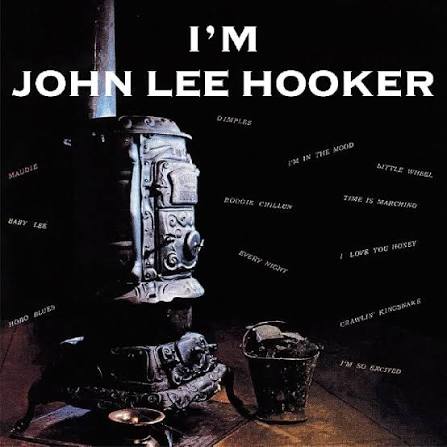
I'm John Lee Hooker is a landmark album by the iconic Detroit blues guitarist and singer John Lee Hooker (August 22, 1917 – June 21, 2001), released on Vee-Jay Records (VJLP 1007) in 1959. It was Hooker's first full-length LP for Vee-Jay Records and represents a significant milestone in his career—a serious, coherent album statement at a time when the LP format was becoming increasingly important in popular music, particularly for adult audiences and for genres like jazz and folk.
The album gathers together some of Hooker's most important Vee-Jay singles from the mid-to-late 1950s, presenting them as a unified artistic statement. It captures Hooker at a peak moment of creative and commercial vitality, having successfully transitioned from the solo boogie recordings of his early career to a more polished, band-oriented sound that would characterize his most commercially successful work.
Background and Context
John Lee Hooker's Career Before Vee-Jay
Born in Coahoma County, Mississippi, near Clarksdale, on August 22, 1917 (though he sometimes gave earlier dates for his birth), John Lee Hooker grew up in the heart of the Mississippi Delta, absorbing the blues from his stepfather, Will Moore, and other local musicians. He left home as a teenager, working his way through Memphis and Cincinnati before settling in Detroit in the 1940s. In Detroit, he worked as a janitor at various auto plants while playing blues in the city's African American clubs and house parties.
His breakthrough came in 1948 when he recorded "Boogie Chillen'" for producer Bernie Besman, released on the Sensation label and distributed by Modern Records. The song was a massive hit, reaching number one on the Billboard R&B chart and establishing Hooker as one of the most distinctive voices in postwar blues. Over the next several years, he recorded prolifically for Modern and its subsidiaries, producing hits like "I'm in the Mood" (1951) and countless other sides.
By the mid-1950s, however, Hooker's relationship with Modern was fraying. He had been recording for other labels under pseudonyms throughout his time with Modern (a practice that infuriated the Bihari brothers who ran the label), and he was seeking a more stable and profitable arrangement. In 1955, he signed with Vee-Jay Records of Chicago.
Vee-Jay Records
Vee-Jay Records was founded in Gary, Indiana in 1953 by Vivian Carter and James C. Bracken (the label name derives from their first initials: "V" and "J"). Later, Carter's brother Calvin Carter joined as the label's primary A&R man and producer. Vee-Jay was one of the most important Black-owned independent record labels of the 1950s and early 1960s, releasing significant recordings in blues, R&B, gospel, doo-wop, jazz, and pop.
Vee-Jay's roster included Jimmy Reed, Memphis Slim, Eddie Taylor, Elmore James (briefly), Jerry Butler and the Impressions, Gene Chandler, Betty Everett, the Four Seasons, and—most famously—the earliest American releases of the Beatles. The label was based in Chicago and drew heavily on the city's rich blues and R&B scene while also having a national reach.
For Hooker, moving to Vee-Jay meant working with a label that would give him a more coherent artistic and commercial platform than the chaotic multi-label environment he had inhabited in the early 1950s. At Vee-Jay, he would create some of his most commercially successful and artistically important recordings.
The Move to Band-Based Recordings
One of the most significant developments in Hooker's Vee-Jay years was the shift from solo recording to full-band arrangements. Hooker's earliest hits had been solo performances—just his voice, electric guitar, and foot-stomping. This approach was uniquely his and had a raw, primal power. However, it was also notoriously difficult to accompany, given Hooker's free approach to bar structures and chord changes.
At Vee-Jay, producer Calvin Carter worked with Hooker to develop a band sound that would preserve the essence of Hooker's style while giving it more contemporary commercial appeal. The Vee-Jay recordings feature Hooker with a small combo—typically guitar, bass, drums, and sometimes second guitar or harmonica—that provides propulsive rhythmic support while allowing Hooker's distinctive voice and guitar to remain at the center of the sound.
Key to this development was the presence of Eddie Taylor, a superb Chicago blues guitarist who had a rare gift for accompanying idiosyncratic bandleaders. Taylor was best known as Jimmy Reed's musical partner, providing the rhythmic and harmonic foundation that made Reed's laid-back style work in a band context. Taylor performed the same essential function for Hooker on many of his Vee-Jay sessions.
The Sessions
Recording Details
The recordings on I'm John Lee Hooker were made across multiple sessions between 1955 and 1959 in Chicago, primarily at Vee-Jay's preferred recording facilities, which included Universal Recording Corporation at 111 East Ontario Street in Chicago. Universal was one of the premier recording studios in Chicago during this era, used by numerous jazz, blues, and R&B artists.
The tracks that make up the album were originally released as singles during this period, with the album serving to compile the best of Hooker's Vee-Jay 45s into LP format. This was a common practice in the era, when the LP format was more associated with adult audiences and prestige releases while the 45 rpm single was the primary commercial format for blues, R&B, and rock and roll.
Production
The recordings were produced by Calvin Carter, Vee-Jay's chief A&R man and producer. Carter was one of the most talented and versatile producers in independent R&B music during this era, with a gift for capturing the essential qualities of artists as diverse as Jimmy Reed, John Lee Hooker, Gene Chandler, and Jerry Butler. He understood that his job with Hooker was not to impose external ideas but to create a supportive context in which Hooker's unique musical personality could flourish.
Carter's production approach on the Vee-Jay Hooker sessions was to keep things relatively simple and direct: a small, tight band; clear microphone placement that gave Hooker's voice and guitar prominence; and minimal studio effects or processing. The recordings have a warm, immediate sound that captures the energy of live performance while benefiting from professional studio production values.
Musicians
The core personnel on the I'm John Lee Hooker sessions included:
- John Lee Hooker – lead vocals, lead guitar (all tracks)
- Eddie Taylor – second guitar, rhythm guitar (most tracks with band accompaniment)
- Jimmy Reed – harmonica (on selected tracks; Reed was a Vee-Jay labelmate and frequent collaborator)
- George Washington – bass (on some sessions)
- Tom Whitehead – drums (on some sessions)
- Earl Phillips – drums (on some sessions; Phillips was a regular Vee-Jay session drummer who played on many Jimmy Reed recordings)
The specific personnel varied from session to session, and the album is not always definitive about which musicians play on which tracks. Some tracks may feature Hooker in a solo or near-solo setting, while others feature the full band.
The presence of Eddie Taylor is particularly important. Taylor had a rare ability to follow Hooker's unpredictable timing and chord changes without disrupting the momentum of the performance. His steady rhythm guitar provided a foundation that allowed Hooker's more free-form playing to soar. This partnership was crucial to the success of the Vee-Jay recordings and produced some of the most powerful band-based performances in Hooker's discography.
Track-by-Track Breakdown
The following analysis covers the tracks on I'm John Lee Hooker (Vee-Jay VJLP 1007, 1959). As with many LP compilations of this era, track listings may vary slightly across different pressings and reissues.
1. "Dimples"
Songwriter: John Lee Hooker
Original Release: Vee-Jay single 205, 1956
Details: "Dimples" is one of the most iconic recordings in John Lee Hooker's catalog and one of the essential documents of postwar electric blues. Released as a single in 1956, it became one of Hooker's biggest hits at Vee-Jay and has remained a staple of his repertoire ever since.
The song is a celebration of a woman's physical beauty, specifically her dimples—the small indentations that appear in her cheeks when she smiles. The lyrical conceit is simple but effective: the narrator is captivated by this specific physical feature and by the woman who possesses it. The song joins a long tradition of blues numbers that celebrate specific physical attributes of the female form.
Musically, "Dimples" features one of Hooker's most infectious grooves. The song is built on a driving, syncopated rhythm with an insistent riff-based structure. Eddie Taylor's rhythm guitar provides a steady, propulsive foundation, while Hooker's lead guitar plays the distinctive riff that anchors the song. The rhythm section drives forward with irresistible momentum.
Hooker's vocal delivery is warm and admiring, with a hint of playfulness that reflects the affectionate nature of the lyrics. His voice rides over the top of the arrangement with confident authority, alternating between conversational verses and more emphatic hook lines.
"Dimples" was covered by the Animals on their 1964 debut album, introducing the song to a massive new audience of British and American rock fans. The Yardbirds also performed it. The song became a standard of the blues-rock repertoire and has been covered by countless artists over the decades.
2. "I Love You Honey"
Songwriter: John Lee Hooker
Original Release: Vee-Jay single 265, 1958
Details: "I Love You Honey" is a declaration of romantic devotion, delivered with the sincerity and directness that characterized Hooker's approach to love songs. Unlike some of his more menacing or troubled numbers, this is a straightforward expression of affection—the narrator loves his woman and wants her to know it.
The song features a medium-tempo groove with the classic Vee-Jay-era Hooker band sound: driving rhythm section, Eddie Taylor's rhythm guitar, and Hooker's expressive lead guitar and vocal. The arrangement gives the song a warm, romantic feel that supports the sentiment of the lyrics without becoming saccharine.
Hooker's vocal delivery on this track is particularly effective, moving between spoken interjections and sung passages in a way that creates an intimate, conversational quality. It sounds as if he is speaking directly to his beloved, alternately declaring his love and reflecting on its nature.
The guitar work includes some of Hooker's characteristic single-note lead playing, with bent notes and sustained tones that convey emotional depth. The interplay between his lead guitar and Taylor's rhythm guitar is a masterclass in blues ensemble playing.
3. "Little Wheel"
Songwriter: John Lee Hooker
Details: "Little Wheel" (sometimes titled "Little Wheel Spin and Spin" or variants) uses the image of a spinning wheel as a metaphor for the cyclical, sometimes unpredictable nature of life and relationships. The wheel motif has deep roots in blues and folk music, appearing in numerous songs that use the image of rotation and return to convey ideas about time, fortune, and fate.
Hooker's treatment of this theme is characteristically direct and personal, grounding the metaphorical imagery in specific emotional experiences. The song moves at a medium tempo with a steady, rolling groove that itself suggests the turning of a wheel. The rhythmic pattern is hypnotic without being monotonous, drawing the listener into the song's meditative quality.
The band arrangement features Hooker's guitar and vocal at the forefront, with tight support from bass and drums. Eddie Taylor's rhythm guitar work adds harmonic depth to the arrangement without cluttering it. The performance builds gradually, with subtle intensification of the groove as it progresses.
4. "Baby Lee"
Songwriter: John Lee Hooker
Details: "Baby Lee" is one of Hooker's affectionate address songs, in which the narrator speaks directly to his beloved (in this case, "Baby Lee"). The name "Lee" here may or may not refer to a specific person; in blues tradition, generic names like "Baby," "Baby Lee," "Baby Ruth," and similar formulations are often used as universal terms of endearment rather than specific personal names.
The song has a warm, romantic quality, with Hooker's vocal delivery conveying deep affection. The medium tempo and gentle rhythmic feel create a mood of intimacy and connection. The band arrangement is supportive and understated, allowing the emotional content of the vocal to be the primary focus.
Musically, the track features Hooker's characteristic guitar work—melodic single-note lines that comment on and extend the vocal melody, with the rhythm section providing steady but unobtrusive support. This is Hooker in one of his most accessible and lyrical modes.
5. "Time Is Marching"
Songwriter: John Lee Hooker
Details: "Time Is Marching" addresses the passage of time and its inexorable effects on human life and relationships. Time is a great theme in blues music, appearing in countless songs that reflect on aging, on missed opportunities, on the fleeting nature of pleasure and pain. Hooker's contribution to this tradition is characteristically philosophical and grounded in personal reflection.
The song moves at a moderate tempo with a marching feel that supports the title imagery. The rhythmic pattern is steady and deliberate, evoking the relentless forward motion of time itself. The arrangement is spare but effective, with each instrumental element contributing to the overall mood.
Hooker's vocal delivery on this track is contemplative and slightly melancholy, reflecting the weight of the subject matter. He sings with the authority of experience, of someone who has felt the effects of time in his own life. The performance has a gravitas that lifts it above ordinary blues fare.
6. "Mambo Chillun"
Songwriter: John Lee Hooker
Original Release: Vee-Jay single 164, 1955
Details: "Mambo Chillun" is a fascinating example of Hooker adapting his boogie style to incorporate elements of the mambo craze that swept American popular music in the mid-1950s. The mambo, a Cuban-derived dance music, was enormously popular during this period, with artists like Pérez Prado, Tito Puente, and Machito enjoying widespread success. Even blues and R&B artists incorporated mambo rhythms into their music.
Hooker's "Mambo Chillun" combines his familiar boogie approach with rhythmic elements suggesting the mambo, creating a distinctive hybrid that is both danceable and characteristically Hooker. The title itself echoes "Boogie Chillen'," Hooker's landmark 1948 recording, positioning the new song as a variation on his signature theme.
The performance features a driving groove with Latin-influenced rhythmic elements. The band arrangement supports the mambo feel while maintaining the fundamental blues character of the music. Hooker's vocal and guitar work retain their essential identity even as they engage with new rhythmic territory.
This track is historically significant as an example of the cross-fertilization between blues and Latin music that was occurring in mid-1950s American popular music. It shows Hooker as an artist willing to engage with contemporary trends while maintaining his artistic identity.
7. "I See You When You're Weak"
Songwriter: John Lee Hooker
Details: This track has a more menacing, threatening quality than some of the album's warmer romantic numbers. The lyrics suggest a knowing, watchful narrator who observes his subject's vulnerabilities and weaknesses. There is an ambiguity to the song—is this the perspective of a jealous lover, a wronged party seeking revenge, or something more metaphysical, perhaps a supernatural presence?
The performance features a darker, moodier feel than many other tracks on the album. The tempo is slower and more deliberate, with a spare arrangement that emphasizes the ominous quality of the lyrics. Hooker's vocal delivery is low and gravelly, projecting a sense of quiet menace.
The guitar work is atmospheric rather than driving, with sustained tones and bent notes that create an unsettling emotional landscape. The band accompaniment (if present) is minimal, giving the performance a stark quality that reinforces its emotional weight.
This is Hooker in one of his darker modes—the same artist who could deliver warm love songs like "I Love You Honey" also had access to deep wells of menace and threat, and songs like this demonstrate the emotional range of his artistry.
8. "Every Night"
Songwriter: John Lee Hooker
Details: "Every Night" addresses the theme of nightly loneliness and longing—the narrator's experience of missing a lover during the nighttime hours, when solitude becomes most acute. The nighttime setting is a recurring one in blues music, associated with reflection, sorrow, sexual longing, and vulnerability.
The song features a slow, moody tempo appropriate to its subject matter. The arrangement is spare and intimate, allowing space for the emotional content of the performance to breathe. Hooker's vocal delivery is deeply expressive, moving between sung passages and more spoken interjections in a way that creates an emotionally immediate experience.
The guitar work is melodic and sorrowful, with sustained notes and bent phrases that evoke the aching quality of the lyrics. This is Hooker as a master of slow blues—a form that requires the artist to sustain emotional intensity over an extended duration without falling into monotony or melodrama.
9. "Rosie Mae"
Songwriter: John Lee Hooker
Details: "Rosie Mae" is another of Hooker's songs addressed to a specific (though possibly generic) female character. Songs addressing named women were a staple of blues music, from Robert Johnson's "Kind Hearted Woman" to Muddy Waters' "Louisiana Blues" (with its references to specific women) and countless others.
The performance features a moderate tempo with a rolling, comfortable groove. The band arrangement is warm and supportive, providing a solid foundation for Hooker's vocal and guitar work. There is an affectionate quality to the performance that suggests genuine feeling for the woman being addressed, whether real or imagined.
The guitar work includes some of Hooker's characteristic melodic figures, with single-note lines that comment on the vocal melody and add harmonic and rhythmic interest to the arrangement. The interplay between Hooker's lead guitar and the accompanying band creates a rich texture that showcases the maturity of his mid-1950s band sound.
10. "You've Taken My Woman"
Songwriter: John Lee Hooker
Details: This track addresses one of the most classic themes in blues music: the loss of a woman to another man. The theme of romantic betrayal and rivalry has generated countless blues songs, from Robert Johnson's "Kind Hearted Woman" (with its rival implications) to Willie Dixon's compositions for Muddy Waters and Howlin' Wolf.
Hooker's treatment is characteristically direct—he addresses the man who has taken his woman with a mixture of accusation, sorrow, and warning. The performance has an emotional edge that reflects the personal nature of the material, whether autobiographical or imagined.
The band arrangement supports the emotional intensity of the vocal without overwhelming it. The tempo is moderate, allowing space for the lyrics to register while maintaining sufficient momentum to keep the performance engaging. The guitar work is expressive and pointed, with phrases that echo and amplify the vocal's emotional content.
11. "Maudie"
Songwriter: John Lee Hooker
Original Release: Vee-Jay single 253, 1957
Details: "Maudie" is one of Hooker's most beloved Vee-Jay recordings, a song addressed to a woman named Maudie (or Maudy). The song has a bright, driving quality that made it a popular choice for radio play and for live performance. Its infectious groove and memorable melodic hook have made it one of the enduring highlights of Hooker's catalog.
The performance features a strong, propulsive rhythm with Eddie Taylor's rhythm guitar providing solid support. Hooker's vocal delivery is enthusiastic and engaged, conveying real affection for his subject. The song has a joyful quality that stands in contrast to some of the darker material on the album, demonstrating the emotional range of Hooker's Vee-Jay work.
The guitar interplay between Hooker's lead work and Taylor's rhythm playing is particularly effective on this track, creating a rich, layered sound that maintains its momentum throughout the performance. The rhythm section drives the song forward with confident energy.
"Maudie" has been covered by numerous artists in the years since its release, further cementing its status as a classic of the postwar blues repertoire.
12. "Hey Baby"
Songwriter: John Lee Hooker
Details: "Hey Baby" closes the album with another of Hooker's direct addresses to his beloved. The greeting "hey baby" is one of the most common openings in blues and R&B songs, functioning as an immediate hook that engages the listener and establishes the intimate, one-to-one address that characterizes so much of the tradition.
The performance has a warm, casual quality, with Hooker sounding relaxed and confident. The band arrangement is supportive and understated, allowing the vocal and guitar to take center stage. The tempo is moderate, creating a groove that is both danceable and reflective.
The song provides a fitting conclusion to the album, echoing the intimacy and emotional directness that characterize much of Hooker's Vee-Jay work. It leaves the listener with a sense of the artist as a warm, engaging presence—a man addressing his listeners as directly as he addresses his beloved.
Buy The Album
Significance and Legacy
Historical Importance
I'm John Lee Hooker is a genuinely important album for several reasons:
-
First Major LP Statement: As Hooker's first proper LP for Vee-Jay Records, the album represents his introduction to the album format at a time when LPs were becoming increasingly important cultural artifacts. While Hooker's music had previously been available primarily on singles and on budget-label compilations (like the Crown recordings), I'm John Lee Hooker presented his work in a more prestigious and coherent format.
-
Documentation of the Vee-Jay Sound: The album captures the mature Vee-Jay-era Hooker sound, with its characteristic combination of Hooker's idiosyncratic playing and singing with tight band support. This sound was different from both his solo recordings of the late 1940s and his later folk-blues recordings for Riverside, representing a specific chapter in his artistic development.
-
Compilation of Classic Singles: The album gathers together some of Hooker's most important mid-1950s Vee-Jay singles, including "Dimples," "Maudie," and "Mambo Chillun." For listeners who did not have the individual 45s, the album provided access to essential recordings in a convenient format.
Influence on Rock Music
The songs on I'm John Lee Hooker have had an enormous influence on rock music. Several of them became standards of the blues-rock repertoire, covered by countless artists in the 1960s and beyond:
-
"Dimples" was covered by the Animals on their 1964 debut album, becoming a hit in the UK and introducing Hooker's music to a massive new audience of rock listeners. The Yardbirds also performed the song.
-
"Maudie" has been covered by numerous blues and rock artists, becoming a standard of the postwar blues repertoire.
-
The general Vee-Jay-era Hooker sound—with its driving rhythms, memorable riffs, and direct vocal delivery—was hugely influential on British Invasion bands and on subsequent generations of blues-rock musicians.
Bands and artists who have cited Hooker as an influence or who have covered material from his Vee-Jay period include:
- The Rolling Stones
- The Animals
- The Yardbirds
- The Doors (Jim Morrison was a devoted Hooker fan)
- ZZ Top
- George Thorogood
- Canned Heat (who recorded with Hooker on the classic Hooker 'n Heat album in 1971)
- Jack White and the White Stripes
The Vee-Jay Legacy
I'm John Lee Hooker was followed by several other important Vee-Jay LPs by Hooker, including Travelin' (1960), The Big Soul of John Lee Hooker (1963), and Burnin' (1962), which included his massive hit "Boom Boom." Together, these Vee-Jay albums represent one of the most important bodies of work in Hooker's discography and a peak of postwar Chicago-based blues recording.
Vee-Jay itself, unfortunately, would collapse in 1966 due to financial mismanagement, ending one of the most important independent record labels of its era. The Vee-Jay catalog, including Hooker's recordings, has been repeatedly reissued by various labels over the decades and remains widely available.
Place in Hooker's Discography
Within Hooker's vast discography, I'm John Lee Hooker holds a special place as his introduction as an "album artist"—a musician whose work could be appreciated in extended, coherent LP format rather than just in three-minute single form. It bridges his early boogie-focused recordings for Modern and his later, more diverse work for Vee-Jay and other labels.
The album is often overshadowed by Burnin' (which contains "Boom Boom") and by his acoustic folk-blues recordings for Riverside, but it deserves recognition as a foundational document of Hooker's mature style. It captures him at a moment of full artistic maturity, working with excellent musicians in a supportive production environment.
Cultural Impact
More broadly, I'm John Lee Hooker and Hooker's Vee-Jay work generally played an important role in the cultural transmission of blues music. During the late 1950s and early 1960s, as the blues was being "discovered" by white audiences in America and Europe, Hooker's Vee-Jay recordings were among the most accessible and influential examples of postwar electric blues available. The songs on this album became part of the vocabulary of a generation of musicians who would go on to shape rock music in fundamental ways.
The album also contributed to Hooker's own longevity and continuing relevance. Unlike some blues artists of his generation who faded from view as musical tastes changed, Hooker managed to remain a vital presence in music for decades, culminating in his triumphant late-career comeback with The Healer (1989) and subsequent albums. The foundation for that longevity was laid in the mid-to-late 1950s with recordings like those on I'm John Lee Hooker, which established him as one of the essential voices in American music.
Reissues and Continuing Availability
The material from I'm John Lee Hooker, along with the rest of Hooker's Vee-Jay recordings, has been repeatedly reissued in various formats over the decades. Comprehensive box sets have gathered the complete Vee-Jay recordings, and the individual songs have appeared on countless compilations. The album itself has been reissued on CD and digital formats, ensuring its continued availability to new generations of listeners.
Conclusion
I'm John Lee Hooker is a landmark album that captures one of the essential voices in American blues at a peak moment of artistic and commercial success. The recordings gathered on the album represent Hooker's successful transition from solo performer to band-based artist while maintaining the idiosyncratic qualities that made his music unique.
The album's greatest strength is its combination of Hooker's distinctive artistic personality with the polished, supportive production values of the Vee-Jay operation. The result is music that is at once raw and refined, direct and sophisticated, deeply rooted in tradition and freshly relevant to its moment.
For anyone seeking to understand John Lee Hooker's artistry, the postwar electric blues tradition, or the roots of rock and roll, I'm John Lee Hooker is essential listening. It stands as a testament to a great artist working at the height of his powers, supported by talented collaborators, in a production environment that understood and respected his unique gifts.
Album Details Summary:
- Artist: John Lee Hooker
- Album: I'm John Lee Hooker
- Label: Vee-Jay Records (VJLP 1007)
- Recorded: 1955-1959, Chicago (primarily at Universal Recording Corporation)
- Released: 1959
- Producer: Calvin Carter
- Format: Small combo recordings with occasional solo tracks
- Personnel: John Lee Hooker (vocals, guitar), Eddie Taylor (guitar), Jimmy Reed (harmonica on some tracks), various rhythm section players
- Genre: Electric blues, Chicago blues, R&B