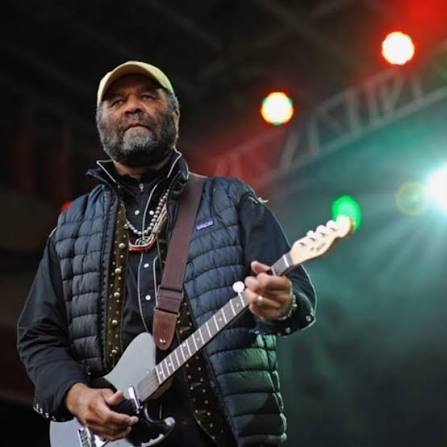
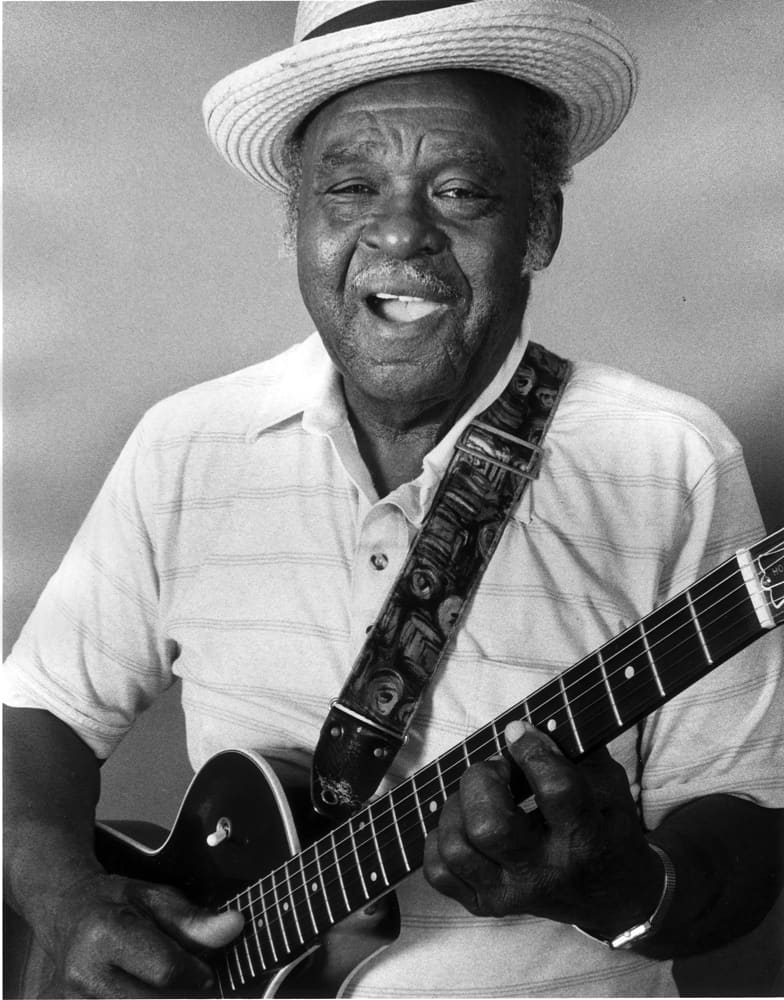
The story of James Edward Pryor, the man who would become Snooky Pryor, begins in the rich, dark soil of the Mississippi Delta, that narrow alluvial plain between the Yazoo and Mississippi Rivers that has produced more transformative blues musicians per square mile than any other region on earth. He was born in Lambert, Mississippi, a small town in Quitman County not far from the Arkansas line, on September 15, in either 1919 or 1921, depending on which records one consults. The uncertainty of his birth year is itself a kind of blues trope, a reminder that the lives of rural African Americans in the early twentieth century were often poorly documented, their arrivals and departures marked more by memory than by official record. What is certain is that Pryor came of age in the Delta during the deepest years of the Great Depression, in a landscape of cotton fields, plantation stores, and dirt roads where the blues was not entertainment but a way of processing the daily facts of existence.
Pryor took up the harmonica at the age of eight, an early start that would give him the kind of intuitive mastery of the instrument that can only come from decades of living with it. His father was a minister, and the tension between the sacred and the secular would shadow Pryor throughout his life, as it has shadowed so many blues musicians who grew up in the church. The harmonica was his rebellion and his refuge, a pocket-sized instrument that could be carried anywhere and played anywhere, from front porches to juke joints to the fields themselves. He learned by listening, by watching, by absorbing the sounds that floated through the Delta air. His primary influences were the two men who defined blues harmonica in the pre-war era: John Lee Williamson, the first Sonny Boy Williamson, whose clean, melodic approach and innovative cross-harp technique had revolutionized the instrument; and Aleck Ford, known as Rice Miller, who would later assume the Sonny Boy Williamson name himself and whose more aggressive, vocalized style pointed toward the electric future. Pryor studied both men, synthesizing their approaches into something that was recognizably his own even in his teenage years.
In the mid-1930s, around Vance, Mississippi, Pryor fell in with a loose circle of young harmonica players who would gather informally to trade licks and play for whoever happened to be passing by. Among this group was a young man named Jimmy Rogers, who had not yet taken up the guitar and who was still finding his musical identity. The two of them played in impromptu harmonica quartets, developing the ensemble discipline and lung power that would serve them both in their later careers. It is worth pausing to consider the image: four young black men in the Mississippi Delta, surrounded by cotton and poverty, blowing harmonicas in harmony, creating music that was at once a distraction from their circumstances and an acknowledgment of them. This was Pryor's education, far more important than any formal schooling he might have received. He was learning the language of the blues, its grammar of call and response, its vocabulary of moans and cries and shouts, its syntax of twelve-bar repetition and variation.
The Road to Chicago and the War Years
By around 1940, Pryor had made his way to Chicago, joining the great migration of Southern blacks who were fleeing the Jim Crow South for the industrial promise of the North. He was not yet twenty years old, but he carried with him the Delta sound in his bones and the harmonica in his pocket. Chicago in 1940 was a city in transition, its South Side swelling with new arrivals from Mississippi, Alabama, Arkansas, and Louisiana, all of them bringing their music with them and all of them finding, in the crowded tenements and bustling streets, a new context for old traditions. Pryor found work, found friends, and found the Maxwell Street Market, the open-air bazaar that served as the informal conservatory for the city's emerging blues scene.
Then came the war. Pryor was drafted into the United States Army and stationed at Fort Sheridan, just north of Chicago on the shores of Lake Michigan. It was during his military service that he had the epiphany that would change not only his life but the sound of blues harmonica forever. As a soldier, Pryor was required to blow bugle calls, and those calls were amplified through the Army's public address system. Standing before the microphone, hearing his instrument transformed by electricity into something loud enough to reach hundreds of men, Pryor had a revelation. If a bugle could sound that powerful through a PA system, why couldn't a harmonica? The idea seems obvious now, in an era of ubiquitous amplification, but in the early 1940s it was genuinely innovative. Acoustic blues was still the norm, and even in Chicago, where musicians were beginning to experiment with electric guitars, the harmonica remained largely unplugged, its natural volume sufficient for house parties and small clubs but easily overwhelmed by the noise of a busy street corner or a crowded bar.
Pryor's Army experience gave him both the conceptual framework and the practical knowledge to change this. He learned how microphones worked, how amplifiers functioned, how sound could be shaped and projected. When he was discharged in 1945, he did not return to the acoustic world he had left. Instead, he obtained his own amplifier and a small microphone, and he began to experiment with the technique that would become his trademark: cupping the microphone in his hands along with the harmonica, creating a seal that concentrated the sound and allowed for unprecedented volume and tonal control. This method, which Pryor always claimed to have pioneered, would become the standard approach for amplified blues harmonica players, used by everyone from Little Walter to Paul Butterfield to the countless harp players working in blues bars around the world today.
Maxwell Street and the Birth of Electric Blues
In late 1945, Pryor took his new electric rig to Maxwell Street, the sprawling Sunday market on Chicago's Near West Side that was the proving ground for generations of blues musicians. Maxwell Street was chaos and commerce, a place where vendors sold everything from socks to saxophones and where musicians set up on corners to play for tips from the passing crowd. The competition was fierce, the noise was constant, and only the loudest and most compelling performers could hold an audience. Pryor's amplified harmonica cut through the din like a knife. People stopped. They listened. They dropped coins in his hat.
The sound Pryor produced was unlike anything Maxwell Street had heard before. It was not merely louder than an acoustic harmonica; it was different in kind. The amplification allowed him to sustain notes, to add vibrato, to create overtones and feedback effects that were impossible without electricity. He could make the harmonica sound like a saxophone, like a trumpet, like a human voice screaming. He could play single-note lines with the clarity of a lead guitarist or chordal figures that filled out the sound of a small ensemble. And because he cupped the microphone in his hands, he had a degree of control over the tone that standing at a fixed vocal microphone could not provide. He could move the mic closer or farther from the harp, angle it to emphasize certain frequencies, use his hands to create a wah-wah effect by opening and closing the cup.
Pryor quickly became a regular on the Maxwell Street scene, a fixture at the market and in the surrounding clubs and house parties. He fell in with a circle of musicians who were similarly pushing the boundaries of the blues: Floyd Jones, the singer and guitarist whose dark, brooding songs captured the alienation of the urban migrant; Moody Jones, the guitarist who would become one of Pryor's most important collaborators; Homesick James, the slide guitarist whose raw, emotional playing complemented Pryor's harp perfectly; and Sunnyland Slim, the pianist and bandleader who served as a kind of godfather to the younger generation of South Side musicians. These were the men who would create what critics would later call the "Maxwell Street School" of Chicago blues, a raw, electric, street-level sound that stood in contrast to the more polished productions of the Chess Records studio bands.
The First Postwar Recordings
In 1948, Pryor made his recording debut, and the sides he cut that year stand as landmarks in the history of postwar blues. Working with guitarist Moody Jones, he recorded "Telephone Blues" and "Snooky & Moody's Boogie" for the tiny Planet label, a shoestring operation even by the standards of independent Chicago blues labels. The records were raw, immediate, and revolutionary. "Telephone Blues" was a straight-ahead blues with Pryor's amplified harp dominating the arrangement, his tone already fully formed, aggressive and swinging. "Snooky & Moody's Boogie" was an instrumental showcase, a boogie-woogie figure that gave Pryor room to stretch out and demonstrate the possibilities of his electric approach. These recordings are now considered among the earliest examples of postwar Chicago blues, made at a time when the Chess brothers were still figuring out how to record Muddy Waters and when the sound that would conquer the world was still being forged in small studios on the South Side.
The historical significance of these 1948 sides cannot be overstated. They predate the classic Chess recordings of Muddy Waters, Little Walter, and Howlin' Wolf, and they capture a moment when the Chicago blues sound was still in its embryonic stage, before the formulas had hardened and before the commercial pressures had fully exerted themselves. On these records, you can hear the transition from country blues to city blues, from acoustic to electric, from the Delta to Chicago, embodied in the playing of one man and his harp.
Pryor followed these initial releases with a steady stream of singles throughout the late 1940s and 1950s. He recorded for JOB, the label run by the colorful and sometimes erratic Joe Brown, cutting sides like "Boogy Fool" and "Raisin' Sand" in 1949. He recorded for Parrot, cutting "Crosstown Blues" and "I Want You For Myself" in 1953 with Lazy Bill Lucas on piano and Moody Jones on bass. He recorded for Marvel and Old Swing-Master, for Vee-Jay, and for a host of other small labels that came and went with the volatility of the independent record business. Many of these recordings were excellent, showcasing Pryor's developing songwriting, his increasingly confident vocals, and his ever-more-sophisticated harp playing. But commercial success proved elusive. Pryor was not a natural showman in the manner of Howlin' Wolf or a crossover hopeful in the manner of Muddy Waters. He was a musician's musician, respected by his peers but never quite able to translate that respect into the kind of record sales that would have made him a star.
The "Juke" Controversy and the Shadow of Little Walter
No account of Snooky Pryor's career can avoid the subject of Little Walter Jacobs and the controversy surrounding "Juke," the 1952 harmonica instrumental that became the biggest hit in Chess Records history and that established Little Walter as the dominant figure in postwar blues harmonica. Pryor maintained until his dying day that Walter had lifted the signature riff of "Juke" from "Snooky & Moody's Boogie," the 1948 instrumental that Pryor had recorded four years earlier. The claim is not without merit. The opening eight bars of "Snooky & Moody's Boogie" do feature a repeated ascending riff that bears a striking resemblance to the head of "Juke," and Pryor was certainly playing around Chicago during the years when Walter was developing his style. Pryor himself stated in interviews that Walter "picked up 'Snooky and Moody's Boogie' and made 'Juke' out of it."
However, the full story is more complicated. Music historians have pointed out that the riff in question was a common one in jazz and swing circles, used most notably by Louis Armstrong in his 1941 recording of "Leap Frog" and by other artists in the 1940s. Jimmy Rogers, who played guitar on the "Juke" session, claimed that parts of the tune were based on an unrecorded intermission theme frequently played by the pianist Sunnyland Slim, which went by the name "Get Up the Stairs Mademoiselle." And Little Walter's genius was not merely in borrowing riffs but in transforming them, in taking raw material and shaping it into something unprecedented through his revolutionary approach to amplified harmonica tone and phrasing. Whether Pryor's claim was justified or not, the fact remains that he spent much of his career in Walter's shadow, watching as a younger man achieved the stardom that had eluded him. It was a source of genuine bitterness for Pryor, and it colored his relationship with the music business for decades to come.
What is indisputable is that Pryor was playing amplified harmonica in Chicago before Little Walter made his first recordings, and that his 1948 sides represent a genuine milestone in the development of the electric blues harp sound. Even if Walter developed the approach further and more famously, Pryor's role as a pioneer deserves recognition. As one modern harmonica commentator noted, Pryor probably recorded amplified harmonica in the studio before Walter did, even if the results did not achieve the same revolutionary impact. The tone on Pryor's early records is only slightly different from his acoustic sound, suggesting that he was still exploring the possibilities of the technology rather than fully exploiting them. Little Walter, by contrast, pushed the amplifier to its limits, creating a sonic palette that had never been heard before. Both men were necessary to the story, and to reduce their relationship to a simple question of who stole from whom is to miss the larger picture of creative ferment that characterized Chicago blues in the late 1940s and early 1950s.
The Vee-Jay Years and the Slow Fade
The high point of Pryor's recording career in the 1950s came in 1956, when he cut two sides for Vee-Jay Records, the black-owned label that was then challenging Chess for dominance in the Chicago market. "Someone to Love Me" and "Judgement Day" were released as a single on Vee-Jay, and they represent some of Pryor's finest studio work. "Judgement Day" in particular is a masterpiece of the genre, a slow blues with apocalyptic lyrics and a harp performance that mixes menace with melancholy. The song would later be revived by British rockers the Pretty Things and by Eric Clapton, a testament to its enduring power and its appeal across genres and generations. "Someone to Love Me" was a more uptempo affair, showcasing Pryor's vocal charm and his ability to craft a catchy, danceable blues.
But these Vee-Jay sides were not the beginning of a breakthrough; they were the last significant recordings of Pryor's first career. The 1950s were tough on blues musicians who did not have the backing of a major label or the charisma to break through to the growing rhythm and blues market. Pryor recorded sporadically for JOB in the late 1950s, cutting tracks like "Boogie Twist" and "Uncle Sam Don't Take My Man," but the records failed to sell, and the gigs became fewer and farther between. He toured the South regularly during this period, playing the chitlin' circuit of juke joints, roadhouses, and small theaters, but the life of a traveling bluesman was grueling and poorly paid. The music business, with its exploitative contracts, its unpaid royalties, and its indifference to artists who were not immediate commercial prospects, wore Pryor down.
By the early 1960s, Pryor had had enough. The folk-blues revival that was beginning to bring white college students to the music held little interest for him; he was a bluesman, not a folk singer, and the acoustic nostalgia of the revival did not speak to his electric sensibility. The British Invasion that would soon make blues a global phenomenon was still a few years away. Pryor was a man in his forties, with a large family to support and no pension plan, no health insurance, no safety net of any kind. In 1967, he made a decision that must have felt like surrender but that probably saved his life: he moved to Ullin, Illinois, a small town in the southern part of the state, far from the Chicago scene, and he quit music altogether.
The Carpenter and the Long Silence
Ullin, Illinois, is not a place that figures prominently in blues history. It is a rural community in Pulaski County, not far from the confluence of the Ohio and Mississippi Rivers, surrounded by farmland and woodland. For Pryor, it represented a kind of exile, a retreat from the world that had used him up and spit him out. He found work as a carpenter, a trade at which he excelled and which provided the steady income and regular hours that the music business never could. He was good with his hands, precise and careful, and the work satisfied something in him that the uncertainty of performing had not. He also took up fishing with a bow and arrow, a backwoods skill that spoke to his self-sufficiency and his connection to the natural world. He raised his family, went to church, and lived the life of a respectable working man in a small Midwestern town.
For a long while, Pryor's whereabouts were unknown to the blues community. He had simply vanished, another musician who had walked away from the life and been forgotten by the industry that had never properly valued him. The 1960s blues revival, which rediscovered so many aging masters and brought them to new audiences, passed Pryor by. While Son House and Skip James were being interviewed by college students and Muddy Waters was playing for white rock audiences, Pryor was framing houses and catching fish in southern Illinois. The music he had helped to create was being transformed by younger musicians who had never heard his name, and the records he had made were gathering dust in the collections of a few dedicated enthusiasts.
But the blues has a way of finding its own, and Pryor's story was not over. In the early 1970s, blues fans and promoters began to track down the missing musicians of the postwar era, and Pryor's name kept coming up in conversations with older players who remembered his Maxwell Street days and his pioneering recordings. He was persuaded to make a comeback, to pick up the harp again and see if the old magic was still there.
Rediscovery and the European Awakening
The comeback began in earnest in January 1973, when Pryor joined the American Blues Legends '73 tour alongside Homesick James, the slide guitarist who had been his contemporary in the Chicago of the late 1940s. The tour played throughout Europe, introducing Pryor to audiences that treated him not as a forgotten sideman but as a living legend. In London, the tour recorded an album for Jim Simpson's Big Bear Records, titled Homesick James & Snooky Pryor, that captured the raw energy of two veterans who had nothing left to prove and everything to give. Pryor also recorded a solo album, Shake Your Boogie, for the same label, reintroducing himself to the world with the same boogie figure that had announced his arrival twenty-five years earlier.
The European tours were a revelation for Pryor. He discovered that his music had traveled farther than he had ever imagined, that young white fans in England and France and Germany knew his records and revered his playing. The respect he received overseas was in stark contrast to the neglect he had experienced at home, and it gave him the motivation to continue performing and recording. He toured Canada and the United States in the early 1970s with Willie Dixon, the bassist and songwriter who was then at the height of his influence as an ambassador for the blues. These were not nostalgia trips; they were genuine artistic statements, proof that Pryor's chops had not atrophied during his years away from the stage.
The Blind Pig Revival and the Antone's Years
The real turning point in Pryor's late career came in 1987 with the release of Snooky, an album on Blind Pig Records that announced to the world that the veteran harpist was alive, well, and playing better than ever. Produced by guitarist Steve Freund, the album featured a stellar backing band drawn from the ranks of Chicago's blues elite: Robert Stroger on bass, Willie "Big Eyes" Smith on drums, and Freund himself on guitar. The material mixed Pryor originals with blues standards, all of it delivered with the authority of a man who had been playing this music for half a century. Songs like "Crazy 'Bout My Baby," "Cheatin' and Lyin'," and a definitive version of "Judgement Day" showed that Pryor's voice was still strong, his harp playing still inventive, and his songwriting still sharp.
The success of Snooky forced Pryor out of semi-retirement. The attention the album generated increased demand for his personal appearances both in the United States and abroad, and he spent the next two decades touring and recording with a frequency that would have exhausted a much younger man. In 1991, he reunited with Johnny Shines, the Delta blues guitarist and singer who had traveled with Robert Johnson in the 1930s and who had recorded with Pryor for the JOB label in the early 1950s. Their album Back to the Country, released on Blind Pig, was a deliberate return to the acoustic country blues of their Mississippi youth, a stripped-down set that showcased the depth of their roots and the range of their musical imaginations. It was a fascinating counterpoint to Pryor's electric work, proof that he could still play acoustic with the same authority he brought to his amplified performances.
The 1990s saw a flurry of activity. In 1992, Pryor released Too Cool to Move on Antone's Records, the label founded by Clifford Antone to document the vibrant blues scene at his Austin, Texas nightclub. The album featured a mix of Pryor originals and blues standards, with Pryor's harp and vocals supported by a tight band that understood the Chicago tradition from the inside out. In This Mess Up to My Chest followed in 1994, also on Antone's, with a title that captured Pryor's earthy humor and his gift for the memorable phrase. The track list included "Bury You in a Paper Sack," "Stick Way Out Behind," and a revisited "Judgement Day," all delivered with the swagger of a man who had seen it all and was still standing.
In 1996, Antone's released Mind Your Own Business, another strong set that included "Come On Down to My House," "Goin' Back to Arkansas," and the title track. These albums were not mere exercises in nostalgia; they were vital contributions to a living tradition, records that stood comparison with Pryor's classic 1950s sides and with the best work of his younger contemporaries. The production was clean and uncluttered, the bands were tight and sympathetic, and Pryor's performances were consistently excellent, his tone as piercing and his rhythm as swinging as they had been in his Maxwell Street days.
The Electro-Fi Years and the Final Decade
As the millennium turned, Pryor showed no signs of slowing down. In 1999, Blind Pig released Shake My Hand, an album that opened with the title track and moved through a program of Pryor originals and blues classics with the ease of a master craftsman. "Work With Me Annie," "Tomorrow Night," a revisited "Telephone Blues," and "My Babe" were among the highlights, with Pryor's harp dancing over the grooves laid down by his seasoned accompanists. The album had the feel of a victory lap, a celebration of a career that had finally received its due.
In 2000, Pryor teamed with guitarist Mel Brown for Double Shot! on Electro-Fi Records, a Canadian label that had become an important outlet for traditional blues. The following year brought Superharps II, a summit meeting with three other harmonica masters: Carey Bell, Lazy Lester, and Raful Neal. The album was a harp player's dream, four generations of blues harmonica tradition sharing the studio and trading licks with the competitive camaraderie of men who spoke the same musical language. In 2002, Pryor released Snooky Pryor and His Mississippi Wrecking Crew, another Electro-Fi set that found him in top form, leading a band of Chicago veterans through a program of hot and greasy blues. The title was apt: Pryor's music had always had a demolishing quality, a way of tearing down the walls between performer and audience, between past and present, between the Delta and Chicago.
Mojo Ramble, released in 2003, was Pryor's final studio album, and it served as a fitting capstone to a remarkable late-career renaissance. The album found him still exploring, still pushing, still finding new ways to say what he had been saying for more than sixty years. By this time, he was in his eighties, an age when most men have long since retired to their rocking chairs, but Pryor was still on the road, still playing festivals and clubs, still proving that the blues was not a young man's game but a lifelong vocation.
The Man and His Music
To understand Snooky Pryor's contribution to the blues, one must listen to his records with fresh ears, setting aside the accumulated weight of history and the inevitable comparisons to Little Walter. Pryor was not a technician in the Walter mold; he did not play chromatic harmonica, he did not explore the outer reaches of third position, he did not create the kind of sonic fireworks that made Walter the most influential harp player of his generation. What Pryor did was something more fundamental: he established the basic vocabulary of amplified blues harmonica, the grammar of tone and phrasing that every subsequent player would have to learn.
His tone was raw and immediate, with a slight edge of distortion that came from pushing his amplifier hard. He favored a direct, declarative style of phrasing, stating his themes clearly and then varying them with subtle inflections rather than elaborate embellishments. His rhythm was impeccable, a legacy of his years playing on street corners where the ability to hold a groove was essential to earning tips. He could play fast when the occasion demanded it, but his natural tempo was a medium shuffle, the heartbeat rhythm of Chicago blues, and he inhabited that tempo with the comfort of a man who had spent his life there.
As a vocalist, Pryor was underrated. His voice was not as powerful as Muddy Waters's or as distinctive as Howlin' Wolf's, but it had a warmth and sincerity that drew listeners in. He sang like he played, with a conversational directness that made his lyrics feel personal rather than generic. Whether he was singing about romantic trouble, economic hardship, or spiritual reckoning, he sounded like a man who had lived what he was singing about, because he had.
As a songwriter, Pryor contributed several standards to the blues repertoire. "Judgement Day" remains his most enduring composition, a song that has been covered by rock and blues artists on both sides of the Atlantic. "Telephone Blues" and "Snooky & Moody's Boogie" are essential texts for anyone studying the development of postwar Chicago blues. "Someone to Love Me," "Crosstown Blues," and "Uncle Sam Don't Take My Man" are all strong songs that demonstrate his range and his ability to craft memorable hooks. And his late-period originals, written after his comeback, showed that he had lost none of his creative spark during his years away from the music business.
Influence and Legacy
Snooky Pryor's influence on the blues harmonica tradition is both specific and diffuse. Specifically, he pioneered the technique of cupping a microphone in the hands while playing, a method that remains the standard approach for amplified blues harp and that has been adopted by virtually every professional player in the genre. This may seem like a small thing, a mere technical detail, but it is in fact the foundation upon which the entire edifice of electric blues harmonica is built. Without Pryor's innovation, Little Walter could not have developed his revolutionary sound, and without Little Walter, the history of blues and rock would be unimaginably different.
More diffusely, Pryor helped to establish the sound and feel of the Maxwell Street School, the raw, street-level Chicago blues that stood in contrast to the more polished studio productions of Chess and Vee-Jay. His records from the late 1940s and early 1950s capture a moment of creative ferment, a time when the rules of electric blues were still being written and when every recording session felt like an experiment. Musicians like Floyd Jones, Moody Jones, Homesick James, and Sunnyland Slim all benefited from Pryor's presence, and the records they made together form an essential chapter in the story of Chicago blues.
Pryor's influence extends to the rock musicians who discovered the blues through his records and those of his contemporaries. Eric Clapton's cover of "Judgement Day" brought Pryor's music to a massive audience, and the British blues boom of the 1960s, which produced bands like the Rolling Stones, the Yardbirds, and John Mayall's Bluesbreakers, was built on the foundation that Pryor had helped to lay. The Pretty Things, the legendary British R&B band, also recorded "Judgement Day," testament to the song's enduring appeal among musicians who understood the blues from the inside.
In the world of professional blues harmonica, Pryor is revered as an elder statesman and a pioneer. His playing influenced generations of harp players, from the Chicago masters of the 1950s to the contemporary players who still study his records for their rhythmic drive, their tonal authority, and their emotional honesty. The Blues Foundation recognized this contribution with Pryor's induction into the Blues Hall of Fame in 2023, a posthumous honor that corrected a long-standing oversight and placed him where he belonged: among the immortals of the genre.
The Son Carries On
The Pryor musical legacy continues through his son, Richard "Rip Lee" Pryor, a blues musician who performs in and around Carbondale, Illinois, carrying his father's name and his instrument into the twenty-first century. The father-son tradition is one of the great through-lines in blues history, from the Patton family to the Hookers to the Kings, and the Pryor lineage is a worthy addition. Rip Lee Pryor plays with the same fire and conviction that characterized his father's work, and his presence on the contemporary blues scene ensures that the Snooky Pryor sound will not be forgotten.
The Final Chorus
Snooky Pryor died on October 18, 2006, in Cape Girardeau, Missouri, near his home in southern Illinois. He was eighty-five years old, or possibly eighty-seven, depending on which birth year one accepts. He had lived long enough to see his music rediscovered, his contributions acknowledged, and his place in history secured. He had outlived most of his contemporaries and had played long enough to become a direct link between the Delta of the 1930s and the global blues scene of the twenty-first century.
His death was not accompanied by the fanfare that greeted the passing of some of his more famous peers, but those who knew his music mourned deeply. The blues had lost one of its true pioneers, a man who had taken the humble harmonica and transformed it into an instrument of electric power and expressive depth. The tributes that followed recognized what should have been obvious all along: that Snooky Pryor was not a footnote in the story of Chicago blues but one of its principal authors.
In 2023, the Blues Foundation inducted Pryor into the Blues Hall of Fame as part of its 43rd class, alongside Carey Bell, Junior Kimbrough, Esther Phillips, John Primer, Fenton Robinson, and Josh White. The induction was posthumous, as Pryor had been gone for seventeen years, but it carried the weight of institutional recognition that had been slow in coming. The Blues Foundation cited his pioneering work in amplifying the harmonica, his groundbreaking recordings of the late 1940s, and his role in shaping the sound of postwar Chicago blues. It was a fitting tribute to a man who had given his life to the music and who had waited perhaps too long for the world to catch up with his achievements.
Reassessing Snooky Pryor in the Twenty-First Century
As we move further into the twenty-first century, the music of Snooky Pryor sounds less like a historical curiosity and more like a living testament to the power of innovation. We now have the perspective to see his career as part of a larger narrative, the story of African American musicians who took the technologies of the modern world—electricity, amplification, recording—and bent them to the service of ancient emotional truths. Pryor's Army bugle calls, blasted through a PA system, became the template for a sound that would conquer the world. His Maxwell Street experiments, playing for tips on a crowded Chicago street corner, laid the groundwork for a musical revolution. His 1948 recordings, made on a shoestring budget for a label that barely existed, stand as monuments to a moment when the future of American music was being decided in small rooms by men who had no idea how important their work would become.
To listen to Snooky Pryor is to hear the sound of transition, of a music moving from the country to the city, from the acoustic to the electric, from the margins to the mainstream. It is to hear a man who took the harmonica, that most portable and democratic of instruments, and made it roar like a saxophone and sing like a human voice. It is to hear the foundation of Chicago blues, the bedrock upon which Muddy Waters and Howlin' Wolf and Little Walter built their monuments. Snooky Pryor was not the most famous bluesman of his generation, nor the most commercially successful, nor the most technically dazzling. But he was, in his quiet, determined way, one of the most important. And his music, thank God, is still here for us to hear.
For those seeking to explore Snooky Pryor's music in depth, the 1991 Paula Records compilation presents his early singles and unissued material in one comprehensive package, or An Introduction to Snooky Pryor from Fuel Records which gathers some of his J.O.B. material, while the 2001 Westside UK compilation Snooky Pryor and Friends: Pitch a Boogie Woogie If It Takes Me All Night Long gathers his seminal postwar recordings. The 1989 Blind Pig album Snooky and the 1999 follow-up Shake My Hand document his powerful comeback, and the 1991 Blind Pig release Back to the Country with Johnny Shines offers a moving return to acoustic Delta roots. For a taste of his classic Chicago blues at its finest, one could do worse than to start with "Judgement Day," "Telephone Blues," "Snooky & Moody's Boogie," or "Someone to Love Me"—songs that capture the essence of a musician who helped to invent the sound of electric blues and who played it with a conviction that remains undimmed by time.

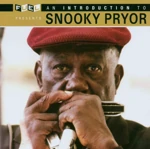 Buy from Amazon An Introduction to Snooky Pryor
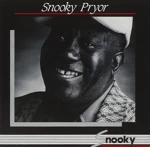 Buy from Amazon Snooky