"Smokestack Lightnin'" (also styled "Smoke Stack Lightning" or "Smokestack Lightning") is one of the most iconic and enduring songs in blues history, recorded by Howlin' Wolf (Chester Arthur Burnett) in January 1956 at Chess Studios in Chicago.
It exemplifies Chicago blues at its raw, hypnotic peak and has profoundly influenced rock, blues rock, and beyond. The track is a propulsive, one-chord vamp (nominally in E but with blue notes evoking E minor) that builds like a gathering storm or accelerating train, featuring Wolf's powerful, gravelly vocals, howls, and harmonica blasts over a driving rhythm.
Background and Songwriting
Howlin' Wolf, born in 1910 in Mississippi, absorbed Delta blues traditions from mentors like Charley Patton. He performed an early form of the song by the early 1930s in small Delta communities. Wolf described its inspiration as watching trains at night: "We used to sit out in the country and see the trains go by, watch the sparks come out of the smokestack. That was smokestack lightning."
Lyrically, it is a pastiche of traditional blues lines and train imagery, evoking romantic betrayal, longing, and escape. Themes include lines like "Well, stop your train; let a poor boy ride" and cryptic references to absence and infidelity. It draws from earlier blues such as Tommy Johnson's "Big Road Blues" (1928), the Mississippi Sheiks' "Stop and Listen Blues" (1930), and Charley Patton's "Moon Going Down" (1930).
Wolf first recorded a version as "Crying at Daybreak" in 1951 (for RPM/Modern), which included similar imagery like "O-oh smokestack lightnin', shinin', just like gold." The 1956 Chess recording refined it into the definitive, more electrified and intense take.
Songwriter credit goes to Chester Burnett (Howlin' Wolf) himself. While Willie Dixon (a key Chess figure) contributed to production and played bass, he is not credited as a primary songwriter here, though he shaped much of Wolf's and Chess's output.
Recording Sessions and Production
The master version was recorded in January 1956 at Chess Studios in Chicago. Producers were Leonard Chess, Phil Chess, and Willie Dixon. Chess Records, founded by the Chess brothers, was the premier home for Chicago blues, having signed Wolf after his early Sun Studios work with Sam Phillips.
Musicians on the recording:
- Howlin' Wolf (Chester Burnett): Vocals and harmonica.
- Hubert Sumlin: Guitar (credited with the distinctive, curling guitar line that defines the riff).
- Willie Johnson: Guitar (part of Wolf's band, providing slashing electric style).
- Willie Dixon: Bass (the legendary bassist and songwriter anchored the rhythm).
- Earl Phillips: Drums.
- Hosea Lee Kennard: Piano.
This lineup captured Wolf's electrified Delta sound—raw, amplified, and intense. The track was released as a single in March 1956 (Chess) with "You Can't Be Beat" on the B-side. It reached No. 11 on the Billboard R&B chart, one of Wolf's bigger commercial successes, though his records were often more influential than massive sellers.
It later appeared on compilations and albums like Moanin' in the Moonlight (1959).
Musical Analysis
The song's power lies in its simplicity and intensity: a hypnotic one-chord drone that feels both primitive and propulsive and is largely attributed to Sumlin. Wolf's vocal delivery—growling, howling in falsetto, and moaning—conveys deep emotional agony and urgency, like a "field holler" amplified. The harmonica adds raw country blues texture, while the guitars (especially Sumlin's) provide tension and drive without flashy solos. The rhythm section locks in a train-like momentum.
It features a one-chord vamp (nominally E) with a driving, train-like momentum: thumb anchoring a steady bass note (often open low E or pedal tone) while fingers play melodic lines and fills on the higher strings. Techniques featured are a dead thumb for the pulsing bass, fingerstyle brushing for percussive drive, sparse, vocal-like phrases that respond to Wolf’s howls and harmonica and a use of space and repetition to build the hypnotic tension.
Critics like Bill Janovitz (AllMusic) call it "almost like a distillation of the essence of the blues... a pleasingly primitive and raw representation," with Wolf sounding "in otherwise inexpressible agony."
Other Versions and Covers
Wolf himself revisited the song in live performances, including a notable 1964 filmed version from the American Folk Blues Festival in Europe (often cited as a high point, showcasing his commanding physical presence).
It has been widely covered, becoming a blues standard:
- The Yardbirds (with Eric Clapton) made it a live staple in the 1960s, sometimes extending it to 30 minutes; Wolf reportedly called their version definitive.
- Other notable covers include the Grateful Dead (with Pigpen), The Animals, George Thorogood, Etta James, John Lee Hooker, Bob Dylan, Soundgarden, Gov't Mule, and many more.
These interpretations span blues, rock, psychedelic, and hard rock, stamping personal styles on the hypnotic base.
Legacy
"Smokestack Lightnin'" is a cornerstone of Chicago blues and American music. It was inducted into the Blues Foundation Hall of Fame (1985, Classics category), Grammy Hall of Fame (1999), Rock and Roll Hall of Fame's 500 Songs That Shaped Rock and Roll, and ranked No. 291 on Rolling Stone's 500 Greatest Songs. In 2009, it was preserved in the U.S. Library of Congress National Recording Registry.
Its influence extended to the British Invasion (via bands like the Yardbirds and Rolling Stones' blues enthusiasm) and rock's development. It embodies the raw power and emotional depth that inspired generations, from Delta roots to electric blues and rock 'n' roll. Wolf's larger-than-life persona—towering stage presence, gravelly voice, and authenticity—made the song a vehicle for "the soul of a man" (as Sam Phillips once described Wolf's music).
Decades later, it remains a staple in blues repertoires and a testament to Howlin' Wolf's genius as a performer who didn't just sing the blues but embodied them. The song's timeless, chant-like quality ensures it continues to resonate as pure, hypnotic blues essence.
Suggested Reading
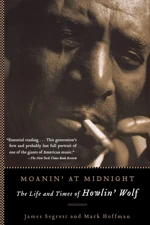 Moanin' at Midnight: The Life and Times of Howlin' Wolf Buy from Amazon