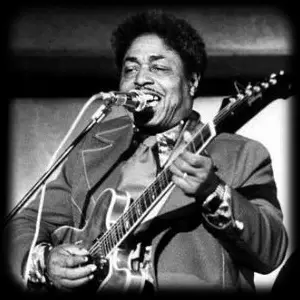
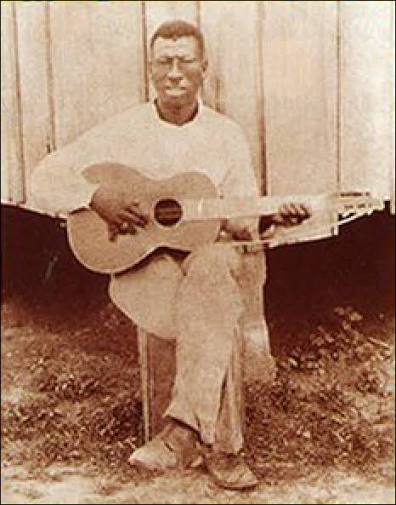
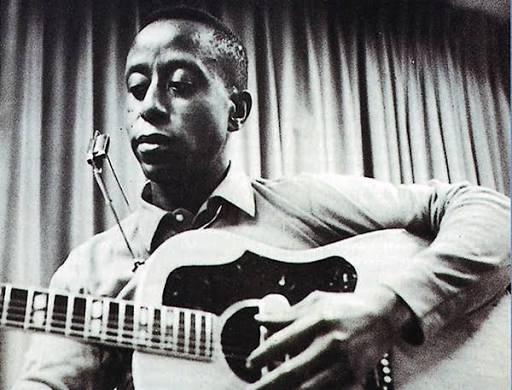
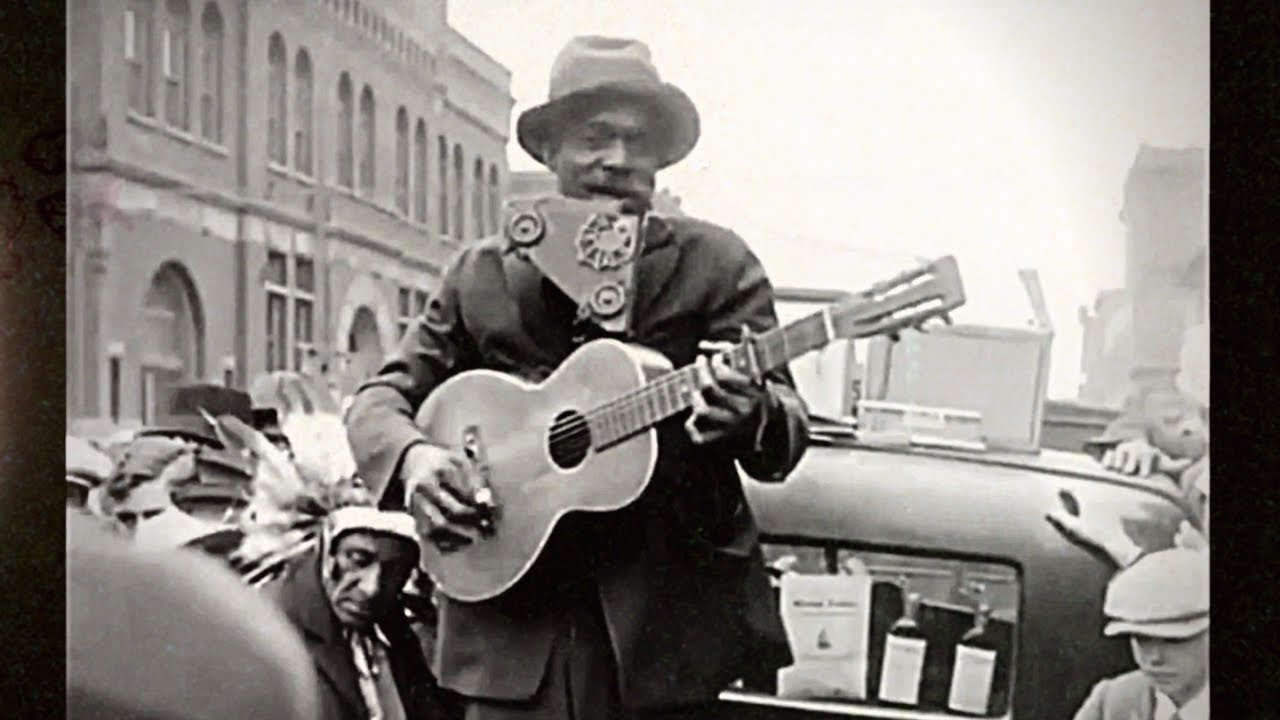
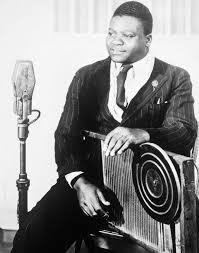
The story of Robert Clifford Brown, the man the world would come to know as Washboard Sam, begins in the familiar fog that surrounds so many blues musicians of the pre-war era—a haze of uncertain dates, contested birthplaces, and family connections that blur the line between fact and the kind of mythology that the blues itself thrives upon. Most reference books and discographies have long listed his birth as July 15, 1910, in Walnut Ridge, Arkansas, a small railroad town in the northeastern corner of the state not far from the Missouri bootheel. Yet the meticulous researchers Bob Eagle and Eric LeBlanc, working from Social Security records and other archival documents, have suggested that Brown may actually have been born in 1903 or 1904 in Jackson, Tennessee, a city that sits hard against the Mississippi River in the western part of the state. The discrepancy matters less than the truth it reveals: like so many African Americans of his generation who would find their way to Chicago and into the recording studios of the Great Migration, Brown's early life was one of movement, improvisation, and self-invention. When he applied for his musicians union card, he gave his birthdate as July 15, 1914, adding yet another layer to the puzzle. What we do know is that he was raised in the rural South, reportedly on a farm, and that the agricultural life of Arkansas or Tennessee would have exposed him to the work songs, field hollers, and country dance music that formed the bedrock of his musical imagination.
Perhaps the most tantalizing and debated aspect of Brown's early biography is his relationship to Big Bill Broonzy, the towering figure of pre-war Chicago blues. For decades, the story has circulated that Washboard Sam was Broonzy's half-brother, the illegitimate son of Frank Broonzy, who also fathered Big Bill. Big Bill himself propagated this tale in his autobiographical writings, claiming that his father had purchased an eighty-acre farm some thirty-five miles from where the Broonzy family lived and that another woman—Washboard Sam's mother—resided there. Yet Yannick Bruynoghe, who worked closely with Broonzy on his memoirs, noted that this particular story seems to be one of the places where Big Bill's imagination ran furthest from the facts. Whether the blood relation was real or a convenient fiction that bound two musicians together in the competitive world of Chicago blues, what is undeniable is that the bond between Robert Brown and Lee Conley Broonzy was profound, lasting, and musically transformative. They would record together dozens of times, support each other on countless sessions, and forge a partnership that stands as one of the most productive in the history of blues music.
Memphis and the Education of the Streets
Before Chicago, there was Memphis. In the early 1920s, Brown made his way to that bustling Mississippi River city, where Beale Street was already becoming the epicenter of black musical culture in the Mid-South. Memphis in those years was a training ground for musicians who would go on to shape American music, and Brown found himself in extraordinary company. He fell in with Sleepy John Estes, the country blues guitarist and songwriter whose haunting, conversational style would make him a legend, and Hammie Nixon, the harmonica player who would become Estes's longtime musical partner. The three of them busked on street corners, playing for tips from passersby, learning the art of holding a crowd, of adapting to the mood of the sidewalk, of making music that could cut through the noise of traffic and commerce. It was in Memphis that Brown picked up the washboard as his instrument of choice, and it was there that he began to develop the rhythmic approach that would define his career.
Hammie Nixon would later recall those Memphis days with clarity and affection: "He was a young guy, always well dressed. He would scrape his washboard with any musician. He used to follow us around, Sleepy John and me, and we played together quite a bit. At that time, he was calling himself Bob Brown. And when I saw him again in Chicago years later, he had become Washboard Sam! I really don't know why he had taken that name, Sam." The transformation from Bob Brown to Washboard Sam was more than a change of moniker; it was an act of artistic self-creation. The washboard was not merely a percussion instrument to Brown; it was a vehicle for expression, a means of turning the most humble of household objects into a vehicle for swing, drive, and rhythmic complexity. He would augment his washboard with a phonograph turntable and a couple of cowbells, rigging up a setup that gave him a range of tones and textures unavailable to the standard player. This ingenuity, this willingness to experiment and adapt, would serve him well in the years to come.
Arrival in Chicago and the Melrose Machine
By around 1930, Brown had made his way to Chicago, joining the great river of black Southerners flowing north in search of work and opportunity. The Chicago he encountered was a city in the grip of the Great Depression, yet its South Side was already developing into a vibrant cultural capital, with clubs, rent parties, and street corners providing ample opportunity for musicians who could entertain. At first, Brown played on the streets for tips, just as he had in Memphis, but his talent and his connections quickly opened doors. His association with Big Bill Broonzy, whether familial or fraternal, gave him entry into the circle of musicians who were already recording for the city's burgeoning blues industry.
The Chicago blues recording scene of the 1930s was dominated by Lester Melrose, a producer and talent scout whose influence over the music was so pervasive that critics would later coin terms like the "Bluebird Beat" and, less charitably, the "Melrose Mess" to describe the consistent, sometimes cookie-cutter sound that emerged from his sessions. Melrose ran a tight operation for Bluebird Records, the budget label owned by RCA Victor, and he cultivated a house band of reliable musicians who could back any singer who walked into the studio. This concept of a house style, a stable of session players who could deliver consistent product, would be copied many times down the years by labels like Chess, Stax, and Motown, but in the mid-1930s it was still a relatively novel approach to recording blues.
Washboard Sam became one of Melrose's most dependable and versatile sidemen. His washboard playing was consistently driving and swinging, capable of propelling a dance number or underpinning a slow blues with equal authority. But Sam was more than just a rhythm man. His fine voice, his sunny personality, and his growing reputation as a songwriter made him an asset in any recording situation. He played behind Bluebird's biggest stars—John Lee "Sonny Boy" Williamson, Roosevelt Sykes, Bukka White, Jazz Gillum, Tampa Red, Memphis Slim, and of course Big Bill Broonzy. The list of his session credits reads like a who's who of pre-war Chicago blues, and his washboard can be heard on hundreds of records made between 1932 and the early 1940s.
The Solo Career: A Star Is Born
If Washboard Sam had remained only a session musician, his place in blues history would still be secure. But Robert Brown had larger ambitions, and in 1935 he stepped out from behind the band to claim the spotlight for himself. His recording debut as a leader came on April 12, 1935, with a two-song session for Bluebird, on which Big Bill Broonzy and probably Carl Martin accompanied him. The records were issued under the name Washboard Sam, and they marked the beginning of a solo career that would make him one of the most popular blues performers in Chicago and beyond.
Between April 1935 and July 1942, Brown made no fewer than 151 recordings, most of them issued, a staggering output that speaks to both his popularity and his productivity. He recorded for Bluebird and Vocalion Records, sometimes cutting sides for both labels in quick succession. The pace of his work was relentless: four sides in 1935, eighteen in 1936, about the same number in 1937, thirty in 1938, two dozen as the decade closed, twenty more to open the 1940s, thirty-two in 1941, and fourteen in 1942 before the recording ban imposed by the American Federation of Musicians brought studio work to a halt. These were not throwaway performances; they were carefully crafted recordings that showcased a mature artist at the height of his powers.
What made Washboard Sam so appealing to audiences was his remarkable versatility. He was equally at home with straight-ahead blues, good-time hokum numbers, and novelty songs that showcased his wit and imagination. His voice was strong and flexible, capable of the grit and gravel of a blues shouter or the smooth croon of a pop balladeer. And his songwriting was genuinely original, drawing on the themes and language of the blues while injecting them with a personal perspective and a sense of humor that set him apart from many of his contemporaries.
Among the songs that emerged from this prolific period were several that would become staples of the pre-war blues repertoire. "Diggin' My Potatoes," with its suggestive lyrics and infectious rhythm, became one of his signature tunes, a song that managed to be simultaneously earthy and playful. "Mama Don't Allow" was a hokum standard that Sam made his own, its defiant good-time spirit capturing the essence of his appeal. "Back Door" (also known as "Back Door Blues") was a straight blues that showcased his vocal power and emotional depth. "Low Down Woman," "Bucket's Got a Hole in It," "She Belongs to the Devil," "Flying Crow Blues," "Rockin' My Blues Away," "River Hip Mama," "Soap and Water Blues," "Get Down Brother," "My Feet Jumped Salty," "Life Is Just a Book," "Booker T. Blues," "Levee Camp Blues," "Do That Shake Dance," "Easy Ridin' Mama," "Crazy About Nancy Jane," "Who Pumped the Wind in My Doughnut?," "Jesse James Blues," "Barber Shop Blues," "Good Old Cabbage Greens," and "I've Been Treated Wrong" were among the more than 160 tracks he cut, each one a window into his musical world.
The musicians who backed Sam on these sessions were drawn from the top tier of Chicago's blues and jazz community. Big Bill Broonzy played guitar on virtually all of Washboard Sam's recording sessions, and the two men developed a musical rapport that was almost telepathic. Their partnership reached its peak in the early 1940s, when Broonzy's guitar work and Sam's vocals and washboard combined to create a sound that was at once raw and sophisticated, country and city, traditional and modern. Other regular collaborators included pianists Black Bob, Memphis Slim, and Roosevelt Sykes; bassists Ransom Knowling and Willie Dixon; saxophonists Frank Owens and others; and a rotating cast of horn players and additional guitarists who filled out the sound. The recordings were made almost exclusively in Chicago, with the exception of a few sessions in 1937 and 1938 when Melrose used the Leland Hotel in Aurora, Illinois, as a makeshift studio.
Sam's records sold well, and his live performances drew packed audiences. He was a natural showman, a bandleader who could command a stage and work a crowd. His good-time material, his powerful voice, and his cast of excellent sidemen meant that his washboard was often used more as a stage prop than as a primary instrument during live shows; he had evolved beyond the limitations of his chosen tool to become a genuine frontman. In the clubs and theaters of Chicago's South Side, in the juke joints of the Midwest, and on the airwaves that carried blues programming to African American communities across the country, Washboard Sam was a star.
The Session Man: Behind the Scenes of the Bluebird Empire
To fully appreciate Washboard Sam's contribution to blues music, one must look beyond his own recordings to the vast body of work on which he appeared as a sideman. The Bluebird recording machine ran on the labor of musicians like Sam, who could walk into a studio cold, listen to a run-through, and lay down a perfect accompaniment track in one or two takes. This was not artistic indulgence; it was industrial music-making, a production line of 78-rpm records aimed at a market that consumed music with an appetite that seems astonishing today. And Sam was one of the best in the business.
He backed Jazz Gillum, the harmonica player and singer whose "Reefer Head Woman" and other tracks became classics of the Chicago style. He played behind Bukka White, the towering Delta bluesman whose National steel guitar and roaring voice were captured on some of the most intense records of the era; White himself would later recall his admiration for Sam, placing him alongside Memphis Minnie, Tampa Red, and Big Bill as artists who "really would knock the cover off a house. They play in the nightclubs, would play house parties through the day." Sam accompanied Yank Rachell, the mandolin-playing bluesman from Indiana whose distinctive sound bridged country blues and urban sophistication. He played with Frank Edwards, Red Nelson (also known as Dirty Red), Sugar Cane Johnny, and Sonny Boy Williamson, the first and perhaps greatest of the blues harmonica virtuosos. He was a member of several studio groups that existed primarily on record, including the State Street Swingers, Vocalion's answer to the Harlem Hamfats; the Hokum Boys, purveyors of the risqué, good-time blues that was so popular in the 1930s; the Midnight Ramblers; and the Washboard Rhythm Kings, whose hot records from around 1931 to 1933 had established the washboard as a viable jazz and blues instrument years before Sam came to prominence.
The State Street Swingers, in particular, illustrate the anonymous but essential role that session musicians played in the blues industry of the era. The group existed for only about half a year in 1936, recording twenty-five sides at ten sessions, frequently sounding like a different band on each date because the personnel shifted according to who was available. They used five different vocalists, all well-known recording artists in their own right, and the instrumental lineup was fluid, with clarinet probably by Arnett Nelson, trumpet possibly by Herb Morand, and piano by Black Bob or Myrtle Jenkins depending on the session. Washboard Sam's percussion held these disparate elements together, providing the rhythmic foundation that allowed the soloists to shine.
This was the world in which Sam operated: a world of early mornings in recording studios, of quick rehearsals and faster takes, of cash payments and no royalties, of constant work and constant competition. It was a world that demanded professionalism, reliability, and the ability to play any style at any tempo. Sam met these demands and exceeded them, earning the respect of his fellow musicians and the trust of producers like Melrose. That he could do all this while simultaneously building a solo career of such magnitude is a testament to his energy, his talent, and his sheer love of the music.
The War Years and the Turning Tide
The early 1940s represented the peak of Washboard Sam's popularity. He was recording prolifically, performing regularly, and enjoying the kind of success that few blues musicians of his era achieved. But the world was changing, and the music was changing with it. The recording ban of 1942, imposed by James Petrillo and the American Federation of Musicians in a dispute over royalties for radio play and jukeboxes, brought studio work to a standstill for nearly two years. When the ban was lifted, the landscape of American music had shifted. The war years had accelerated the Great Migration, bringing hundreds of thousands more African Americans to Chicago and other northern cities. The audience for blues was growing, but its tastes were evolving.
The post-war blues scene in Chicago was increasingly dominated by electric instruments. Musicians like Muddy Waters, Howlin' Wolf, Little Walter, and Jimmy Rogers were amplifying their guitars and harmonicas, creating a sound that was louder, more aggressive, and more modern than the acoustic-based music that had defined the pre-war era. The small-combo format that Sam had mastered—washboard, guitar, piano, bass, maybe a horn—was beginning to sound old-fashioned to younger listeners who wanted the visceral punch of electric blues.
Washboard Sam found himself caught in this transition. His acoustic washboard, even with its phonograph turntable and cowbell attachments, could not compete with the volume and intensity of an amplified band. His style, rooted in the hokum and good-time blues of the 1930s, seemed increasingly quaint in an era when blues was becoming more urban, more confrontational, and more overtly sexual. He made a dozen sides in 1947 and eight final sides in 1949 for RCA Victor, but the magic was fading. His audience was shrinking, and the record sales that had once flowed so steadily began to dry up.
The final recording session of his first career came in 1949. It was a quiet end to a remarkably noisy and productive chapter in American music. Washboard Sam, who had made over 160 recordings in little more than a decade, who had played on hundreds more as a sideman, who had been one of the biggest stars in Chicago blues, stepped away from the microphone and into an uncertain future.
The Policeman and the Long Silence
What Washboard Sam did in the years immediately following his retirement from music has the quality of a blues song itself: the fallen star, the quiet desperation, the unexpected turn. He left music and became a Chicago police officer, a career choice that seems almost surreal in retrospect. The man who had spent his youth scraping a washboard on Memphis street corners, who had driven the rhythm for some of the greatest blues recordings of the century, who had packed theaters and sold thousands of records, now walked a beat in the same city where he had once been a celebrity. The details of his police career are sparse—how long he served, what precinct he worked, what his fellow officers thought of his musical past—but the fact of it speaks volumes about the precariousness of life as a blues musician in mid-century America. There was no pension plan for recording artists, no health insurance for sidemen, no royalty stream to sustain a musician into middle age. When the work dried up, you found other work.
Yet Sam never entirely disappeared from the consciousness of the blues community. In 1953, he was coaxed back into the studio for one last session with his old compatriots Big Bill Broonzy and Memphis Slim, this time for Chess Records, the label that was becoming the new powerhouse of Chicago blues. The session was a reunion of old friends, a momentary return to the world they had built together. But it was not the beginning of a comeback; it was a farewell. Sam returned to his other life, and the blues moved on without him.
In 1959, Samuel Charters included Washboard Sam's "I've Been Treated Wrong" on his landmark compilation album The Country Blues, released on Folkways Records. Charters's book and album were instrumental in introducing pre-war blues to a new generation of white college students and folk music enthusiasts, and Sam's inclusion was a recognition of his importance to the genre. Yet Charters's assessment of Sam was characteristically mixed. He coined the term "the Bluebird Beat" to describe what he considered the stereotyped, cookie-cutter quality of much of Bluebird's output, and while he granted that Washboard Sam was "fairly distinctive," the overall impression left by his writing was that Bluebird's blues records were, "with few exceptions, a stereotyped product" where it was "almost impossible to tell one singer from another."
This judgment, delivered from the perspective of a listener in the 1950s hearing these records on 78-rpm discs without the benefit of modern reissues or critical reassessment, would cast a long shadow. For decades, many blues fans and scholars dismissed the Bluebird catalog as formulaic, and artists like Washboard Sam suffered from this collective undervaluation. It is only in recent years, with the advent of comprehensive CD reissues and the work of dedicated researchers, that Sam's true stature has begun to be recognized. As the Dutch blues historian Guido van Rijn has noted, African American listeners in the 1930s and 1940s took a quite different and much more enthusiastic view of Washboard Sam. They did not hear a stereotype; they heard a star.
The Folk-Blues Revival and a Brief Return
The early 1960s brought a seismic shift in American popular music. The folk revival, sparked by the success of artists like the Kingston Trio and Joan Baez and fueled by the civil rights movement's embrace of black musical traditions, created a new audience for acoustic blues. Young white college students, British rock musicians, and folk festival organizers began seeking out the surviving masters of the pre-war era, bringing them back into the spotlight for a final bow. Muddy Waters and Howlin' Wolf found themselves playing for audiences of enthusiastic young white fans; Son House and Skip James were rediscovered in the Mississippi Delta; and Big Bill Broonzy, never far from the spotlight, became an ambassador for the blues in Europe and America.
Washboard Sam was not immune to this renewed interest. Willie Dixon and Memphis Slim, both of whom had known Sam in his prime and respected his contributions, tried to persuade him to return to performing. At first, he refused. The years had taken their toll, and the life of a working musician held little appeal for a man who had found stability, however modest, in his life after music. But the pull of the blues is strong, and in 1963 Sam relented. He began performing concerts in Chicago clubs and coffeehouses, playing for the new folk-blues audience that was eager to hear the music in its original acoustic setting. In early 1964, he even made a trip to Europe, joining the wave of American blues musicians who were discovering that their music had found a devoted following across the Atlantic.
The comeback was modest and short-lived. Sam's health was failing, and the years of hard living—late nights, irregular meals, the stress of a musician's life—had weakened his heart. He made his final recordings in 1964 for the Spivey label, a small Chicago-based operation run by Victoria Spivey, the veteran blues singer who had become a champion of older artists. These last sides are poignant documents, the work of a man who still possessed his musical intelligence and his rhythmic instincts but whose physical powers were clearly diminished. They are not the triumphant return of a conquering hero; they are the quiet, dignified testament of an artist who had given his life to the blues and was now saying goodbye.
The Final Chorus
Washboard Sam died of heart disease in Chicago on November 6, 1966. He was fifty-six years old, or perhaps sixty-two, or perhaps fifty-two, depending on which birthdate one accepts. What is certain is that he died too young, and that he died without the recognition that his contributions deserved. He was buried in an unmarked grave at Washington Memory Gardens Cemetery in Homewood, Illinois, a suburb south of Chicago. The man who had made over 160 recordings, who had played on hundreds more, who had been one of the most popular blues performers of his generation, was laid to rest without so much as a stone to mark his passing.
For more than four decades, his grave remained unmarked, a silent testament to the neglect that so often befalls blues musicians after their deaths. The music industry that had profited from his labor had moved on; the fans who had bought his records and danced to his rhythms had grown old or passed away; and the history books that might have preserved his memory were still being written, still struggling to assess the true scope of his achievement. It was not until 2009 that a group of dedicated blues enthusiasts, organized by Steve Salter of the Killer Blues organization, took it upon themselves to right this wrong. A concert was held on September 18, 2009, at the Howmet Playhouse Theater in Whitehall, Michigan, to raise funds for a proper headstone. The show was a success, featuring artists like Washboard Jo and R.B. and Co., headlined by the Big House Blues Band. The concert was recorded and filmed for television broadcast by a crew from Central Michigan University. In October 2009, a headstone was finally placed on Washboard Sam's grave, bearing his name and the dates of his birth and death, a belated but deeply deserved acknowledgment of a life spent in service to the blues.
The Music: A Closer Listen
To understand Washboard Sam's artistry, one must listen to his records—not as historical artifacts, but as living music, as performances that still possess the power to move, to entertain, and to surprise. The Document Records series, compiled by Victor Pearlin and released in seven volumes between 1993 and the present, represents the most comprehensive attempt to gather Sam's complete recorded works in chronological order. These CDs, spanning the years from his 1935 debut to his final 1949 sides, allow us to hear his development as an artist, to trace the evolution of his style, and to appreciate the consistency of his achievement.
The earliest recordings, from 1935 and 1936, show a young artist finding his voice. "Who Pumped the Wind in My Doughnut?" is pure hokum, a novelty number that relies on sexual innuendo and good-time humor, but Sam delivers it with a confidence and rhythmic precision that belie his newcomer status. "You Done Tore Your Playhouse Down" is a more straight-ahead blues, with Sam's voice already displaying the power and flexibility that would become his trademarks. "(Mama) Don't 'Low" is a declaration of independence, a refusal to be constrained by respectability, and Sam sings it with the swagger of a man who knows exactly what he wants.
By 1937 and 1938, Sam had hit his stride. "Back Door" is a masterpiece of the genre, a slow blues that builds from a whisper to a roar, with Big Bill Broonzy's guitar providing the perfect counterpoint to Sam's vocal. "I Drink Good Whiskey" is a drinking song in the finest blues tradition, its lyrics a catalog of pleasures and pains. "Crazy About Nancy Jane" is a love song that manages to be both tender and earthy, a reminder that the blues has always had room for romance alongside its more notorious preoccupations. "Diggin' My Potatoes," recorded in this period, would become his most enduring composition, a song that has been covered by countless artists and that remains a staple of the blues repertoire. Its lyrics—"Baby, they diggin' my potatoes / Lord, they trampin' on my vine"—are a masterpiece of double entendre, suggestive without being crude, playful without being trivial.
The recordings of 1939 and 1940 show an artist at the peak of his powers. "Going Back to Arkansas" is a nod to his Southern roots, a country blues that looks backward even as the Chicago sound around it pushes forward. "Down at the Bad Man's Hall" is a narrative blues, a story song that demonstrates Sam's skill as a lyricist. "Flying Crow Blues" is a train song, that most venerable of blues subgenres, with Sam's washboard mimicking the rhythm of the rails. "Booker T. Blues" pays tribute to the great bandleader and educator Booker T. Washington, a rare moment of social commentary in Sam's otherwise apolitical catalog.
The early 1940s brought some of Sam's most polished and sophisticated work. "Life Is Just a Book" is a philosophical meditation, a surprisingly reflective song from an artist known for his good-time material. "Get Down Brother" is a dance number, a call to the floor that must have set juke joints jumping from Mississippi to Michigan. "Rockin' My Blues Away" is pure joy, a celebration of music's power to heal and transform. "She Belongs to the Devil" is a dark, brooding blues that shows Sam could inhabit the shadow side of the music as convincingly as he could its sunnier aspects. "My Feet Jumped Salty" is a tour de force of rhythmic interplay, with Sam's washboard and Broonzy's guitar engaged in a dialogue that transcends the simple roles of accompaniment and lead.
The post-war recordings, made between 1947 and 1949, are more uneven, reflecting both the changing tastes of the era and Sam's own struggles to adapt. But even here, there are moments of brilliance. "River Hip Mama" is a return to the hokum style, a reminder of what Sam did better than anyone. "Soap and Water Blues" is a comic novelty that shows his wit was still sharp. "Do That Shake Dance" is a dance instruction song, a genre that had been popular since the 1920s and that Sam could still deliver with authority. "No. 1 Drunkard" is a drinking song that looks back to the tradition of artists like Peetie Wheatstraw and Luke Jordan, a acknowledgment of the blues's deep roots in the culture of alcohol and its consequences.
The Washboard as Art
It is impossible to discuss Washboard Sam without considering the instrument that gave him his name and his livelihood. The washboard is, by any conventional standard, a primitive percussion instrument: a rectangular frame of wood or metal, corrugated with ridges that produce a rattling sound when scraped with thimbles, spoons, knitting needles, or metal finger picks. It has its origins in the household technology of the nineteenth century, when it was used for laundry, and its transformation into a musical instrument is a classic example of the African American tradition of making music from whatever materials were at hand.
In the early twentieth century, the washboard became a staple of jug bands, skiffle groups, and street-corner ensembles, providing a cheap and portable rhythm section for musicians who could not afford drums. In the blues, it was particularly associated with the hokum style, the good-time, sexually suggestive music that flourished in the 1920s and 1930s. Artists like the Washboard Rhythm Kings had demonstrated that the washboard could drive a jazz band with the same authority as a drum kit, and by the time Washboard Sam came along, the instrument had a small but respectable pedigree.
What Sam brought to the washboard was a level of musicality and sophistication that elevated it beyond mere novelty. His playing was not just rhythmic; it was melodic, dynamic, and expressive. He understood that the washboard was not a drum substitute but a unique voice with its own timbral possibilities. By adding a phonograph turntable and cowbells to his setup, he expanded that vocabulary, creating a percussion orchestra that could match wits with any drummer in Chicago. His washboard playing on records by Jazz Gillum, Bukka White, and others is never obtrusive; it is always supportive, always listening, always finding the pocket and staying there.
Samuel Charters, in The Roots of the Blues, described seeing African percussionists in the Gambia playing dried calabashes with metal finger rings in a manner strikingly similar to the way American washboard players worked their instruments. The connection is suggestive: the washboard, for all its humble origins, may be a distant cousin of the West African percussion traditions that form the deepest stratum of blues music. Whether or not this historical link can be proven, the fact remains that Washboard Sam took an instrument associated with laundry and turned it into a vehicle for art. He was, as Guido van Rijn has written, the only player of his makeshift instrument to become a star in the blues world, and that achievement alone guarantees him a place in the pantheon.
The Broonzy Connection: Brotherhood in Blues
The relationship between Washboard Sam and Big Bill Broonzy was one of the most significant in the history of blues music. They recorded together dozens of times, with Broonzy playing on virtually all of Sam's solo sessions and Sam returning the favor on many of Broonzy's. Their musical partnership was based on a deep mutual understanding, a shared sense of rhythm and phrasing that allowed them to anticipate each other's moves and create performances that sounded effortless.
Broonzy's guitar style in the 1930s and early 1940s was perfectly suited to Sam's music. He could provide the steady bass-string pulse of a country blues, the chordal accompaniment of a pop song, or the single-string leads of a jazz guitarist, often shifting between these approaches within a single chorus. On Sam's records, he is rarely the featured soloist; instead, he weaves his guitar into the fabric of the ensemble, supporting Sam's vocals and washboard with a discretion that speaks to his professionalism and his respect for his partner.
The personal relationship between the two men was equally important, though its exact nature remains shrouded in the ambiguities of Broonzy's storytelling. Whether they were truly half-brothers or simply brothers in the music, they shared a bond that transcended the competitive, often cutthroat world of the blues business. They looked out for each other, recommended each other for sessions, and maintained their association through the ups and downs of their respective careers. When Sam made his comeback in the early 1960s, Broonzy was already an established figure in the folk-blues revival, and his support undoubtedly helped open doors for his old partner. Their 1953 Chess session together, with Memphis Slim on piano, was a reunion of veterans who had helped define an era, and it stands as a touching coda to their long collaboration.
The Bluebird Legacy and the Question of the "House Style"
Any assessment of Washboard Sam's career must contend with the legacy of Bluebird Records and the critical controversies that have surrounded its output. Lester Melrose's approach to recording blues was, by modern standards, highly interventionist. He chose the songs, selected the musicians, determined the arrangements, and supervised the sessions with a producer's ear for commercial viability. The result was a body of work that shares certain characteristics: a consistent rhythm section, a predictable song structure, a polished sound that prioritizes clarity over rawness. Critics like Mike Rowe, in his pioneering book Chicago Blues, dubbed this the "Melrose Mess," and Samuel Charters's dismissal of the "Bluebird Beat" as stereotyped product has influenced generations of listeners.
There is some truth to these criticisms. Melrose was running a business, not an art gallery, and his primary concern was selling records to a specific market. The musicians who worked for him were employees, not auteurs, and the creative freedom they enjoyed was limited by the demands of the marketplace. But to dismiss the entire Bluebird catalog on these grounds is to miss the extraordinary artistry that flourished within its constraints. Musicians like Washboard Sam, Big Bill Broonzy, Tampa Red, and Sonny Boy Williamson were not automatons; they were creative artists who found ways to express their individuality within the parameters of the house style. Sam's powerful voice, his catchy songs with their imaginative lyrics, and his evolving arrangements—all featuring piano, bass, drums, and often clarinet or saxophone—demonstrate that he was never merely a cog in Melrose's machine. He was a star who used the system to his advantage, who turned the limitations of the studio into opportunities for invention.
The proof of this is in the listening. Put on a Washboard Sam record from 1938, then one from 1941, and you will hear an artist growing, changing, responding to the musical currents around him. The early records are simpler, more dependent on the guitar-and-washboard format; the later ones are fuller, more orchestrated, more sophisticated in their use of horns and piano. This is not the work of a stereotyped product; it is the work of a musician who was paying attention, who was listening to what was happening in jazz and pop and finding ways to incorporate those influences into his own distinctive voice.
Influence and Legacy
Washboard Sam's influence on the blues is both direct and diffuse. Directly, he influenced the generations of washboard players who followed him, from the zydeco rub-board players of Louisiana to the folk-revival percussionists of the 1960s to the contemporary artists who still keep the instrument alive in blues and roots music. His recordings remain a touchstone for anyone interested in the pre-war Chicago style, and his songs continue to be covered and reinterpreted by musicians who recognize their enduring quality.
More diffusely, Sam helped to define the sound of Chicago blues in its formative period. The rhythmic approach he pioneered—driving, swinging, relentlessly danceable—became part of the DNA of the city's music, influencing the drummers and rhythm sections of the post-war electric era even if they never consciously studied his records. The good-time, hokum-inflected side of Chicago blues, often overshadowed by the more serious, Delta-derived strain associated with Muddy Waters and Howlin' Wolf, owes much of its character to Sam and his contemporaries. Without Washboard Sam, the picture of Chicago blues is incomplete; he represents a essential thread in the tapestry, the thread of joy and humor and danceable rhythm that has always been part of the music's appeal.
Sam's legacy also extends to the scholarly and archival work that has preserved his music for future generations. The Document Records series of his complete works, compiled by Victor Pearlin, is a model of blues discography, presenting the recordings in chronological order with meticulous attention to detail. The 2023 book The Chicago Blues of Washboard Sam, published by Agram Blues Books, represents the most comprehensive attempt to date to assess his career and place it in its proper historical context. These projects, along with the headstone placed on his grave in 2009, are signs that the neglect of earlier decades is finally being remedied, that Washboard Sam is taking his rightful place in the history of American music.
The Unmarked Grave and What It Means
The story of Washboard Sam's unmarked grave is more than a biographical detail; it is a parable about the value that American society has placed on its blues musicians. Sam was not a marginal figure; he was a star, a prolific recording artist, a beloved entertainer who gave pleasure to thousands of people. Yet when he died, there was no money for a headstone, no organization to ensure that his final resting place would be marked, no institutional recognition of his contributions. He was buried in anonymity, his grave indistinguishable from the surrounding lawn, his name slowly fading from memory.
This was not unique to Sam. The history of the blues is littered with stories of musicians who died in poverty, who were buried in unmarked graves, whose recordings went out of print and whose names were forgotten. It took the efforts of dedicated enthusiasts—record collectors, scholars, festival organizers, and fans—to begin the work of recovery, to track down the surviving musicians, to reissue their records, to place headstones on their graves. The Killer Blues organization, which orchestrated the 2009 concert and headstone dedication for Washboard Sam, is part of this tradition, a testament to the power of grassroots activism in the service of cultural preservation.
The headstone that now stands at Washington Memory Gardens Cemetery is a modest thing, but it carries a profound weight. It says, simply, that this man lived, that he made music, that he mattered. For Washboard Sam, who spent his life making people dance and laugh and feel less alone, it is a belated but deeply deserved tribute.
Reassessing Washboard Sam in the Twenty-First Century
As we move further into the twenty-first century, the music of Washboard Sam sounds less like a relic and more like a living tradition. The resurgence of interest in acoustic blues, the popularity of roots music festivals, the scholarly reassessment of pre-war recording practices—all of these developments have created a climate in which Sam's achievements can be properly appreciated. We now understand that the "Bluebird Beat" was not a monolith but a spectrum, that within the house style of Lester Melrose there was room for genuine artistry and individual expression. We now have the technology to hear Sam's records in pristine digital sound, to appreciate the subtlety of his washboard playing and the power of his voice in ways that were impossible on scratchy 78s. And we now have the historical perspective to see his career as part of a larger story, the story of the Great Migration, the transformation of rural Southern music into urban Northern art, the creation of a Chicago blues sound that would conquer the world.
Washboard Sam was not a tragic figure in the mold of Robert Johnson or Charlie Parker; his life did not end in violence or addiction, and his music does not carry the weight of doom that clings to some blues narratives. He was, instead, a working musician who made a living doing what he loved, who adapted to changing circumstances, who found dignity in labor whether it was on a bandstand or a police beat. His story is the story of countless African American musicians who built the foundations of American popular music without ever receiving the recognition they deserved. And his music—joyful, rhythmic, clever, and deeply human—remains as fresh and appealing today as it was when it first poured out of jukeboxes and phonographs across the Midwest.
To listen to Washboard Sam is to hear the sound of Chicago in the 1930s and 1940s, a city of factories and clubs, of migration and transformation, of hardship and celebration. It is to hear a man who took the humblest of instruments and made it sing, who wrote songs that have outlived their moment, who stood at the center of one of the most creative musical communities in American history and helped to shape its sound. Robert Brown, alias Washboard Sam, alias Shufflin' Sam, alias Ham Gravy—whatever name he went by, whatever date he was born, whatever grave he lies in—was a giant of the blues. And his music, thank God, is still here for us to hear.
Epilogue: The Headstone Dedication Concert
On September 18, 2009, at the Howmet Playhouse Theater in Whitehall, Michigan, a remarkable event took place. Musicians gathered from across the region to pay tribute to a man most of them had never met, to play his songs and raise money for a headstone that would finally mark his grave. The concert featured Washboard Jo, a contemporary practitioner of the instrument that Sam had made famous, and R.B. and Co., and was headlined by the Big House Blues Band. The event was recorded by Vinyl Wall Productions and filmed for television broadcast by a crew from Central Michigan University. In October 2009, the headstone was placed.
It is fitting that the tribute to Washboard Sam took the form of a concert. Music was his life, his language, his legacy. And it is through music—through the continued playing of his records, the covering of his songs, the study of his career, the celebration of his artistry—that his memory will endure. The blues is a music of memory, of keeping alive the stories and the voices of those who came before. Washboard Sam's voice, strong and rhythmic and full of life, still speaks to us across the decades. All we have to do is listen.
For those seeking to explore Washboard Sam's music in depth, the Document Records seven-volume series of his complete recorded works remains the definitive resource, presenting his Bluebird, Vocalion, and post-war recordings in chronological order with full discographical information. The 2023 Agram Blues Books volume The Chicago Blues of Washboard Sam*, which includes a CD of selected recordings, offers the most comprehensive biographical and critical treatment of his career to date. For a good representative compilation the 3 CD set The Washboard Sam Collection, 1935-1953 is a great entrance. And for a taste of his good-time, hokum-inflected Chicago blues at its finest, one could do worse than to start with "Diggin' My Potatoes," "Mama Don't Allow," "Back Door," or "Rockin' My Blues Away"—songs that capture the essence of a musician who knew how to make people feel good, and who did so with a skill and a joy that remain undimmed by time.

 Buy from Amazon The Washboard Sam Collection, 1935-1953
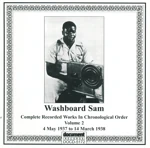 Buy from Amazon Washboard Sam The Complete Recorded Works Vol 2 1937-1938