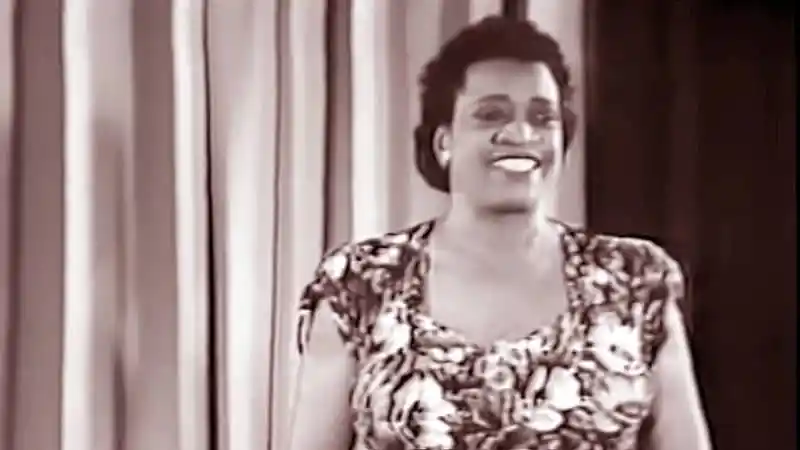
In the pantheon of classic blues singers who defined the 1920s, certain names rise to the surface with the force of legend. Bessie Smith, the Empress, whose volcanic voice could shake the walls of any theater. Ma Rainey, the Mother, whose earth-shaking moans connected the blues to something ancient and African. And then there was Ida Cox, the woman Paramount Records billed as the "Uncrowned Queen of the Blues," a title that captured both her regal bearing and her stubborn independence.
Cox did not possess the sheer sonic power of Smith or the primal authority of Rainey, yet she may have been the most complete artist of them all: a songwriter who composed the majority of her own material, a businesswoman who owned and managed her own touring companies, a comedian who could hold a variety stage with sharp wit, and a singer whose phrasing and emotional intelligence made every lyric feel like a confession torn from lived experience. She was, in the estimation of many who heard her, the classic blues singer who most fully embodied the liberated, self-possessed spirit of the Jazz Age Black woman, and her influence echoes through the decades in ways that are only now receiving their proper due.
To understand Ida Cox is to understand that the blues was never merely a music of sorrow. In her hands, it was a music of strategy, of survival, of sly humor and open defiance. Her songs addressed unemployment, capital punishment, sexual independence, romantic betrayal, and the daily indignities of Jim Crow America, all from a perspective that centered the Black female experience with an unapologetic directness that was revolutionary for its time.
She was a feminist before the word had entered common parlance, a working-class intellectual who understood that the blues could be a vehicle for social commentary as well as personal catharsis. And she built her career not through the patronage of powerful men but through her own relentless drive, organizing tent shows that toured the South and Midwest when other female blues singers had retreated from the road, managing her own contracts, and writing her own ticket in an industry that offered Black women little more than exploitation.
Georgia Roots and the Road to Independence
Ida M. Prather was born on February 25, 1896, in Toccoa, Georgia, though some sources suggest 1888, and she grew up in Cedartown, near Rome, in the northwestern part of the state.
Her parents, Lamax and Susie Knight Prather, had been enslaved at Riverside Plantation before Emancipation, and the world into which Ida was born was one where the shadows of slavery still fell across every aspect of Southern life. Yet her childhood was also steeped in music. She sang in the choir of the Methodist Episcopal Church, absorbing the spirituals and hymns that would later inform the mournful gravity of her graveyard blues.
She also observed the traveling minstrel shows that passed through Cedartown, watching from the margins as performers brought laughter and song to towns starved for entertainment.
By the time she was a teenager, Ida had seen enough of the world to know that she did not want to spend her life in the confines of rural Georgia. In 1910, at approximately fourteen years old, she ran away from home to join the White and Clark's Black and Tan Minstrels, a traveling tent show that offered her an apprenticeship in the only profession she would ever know.
It was a brutal education. The minstrel circuit was a world of canvas tents, plank stages, Coleman lanterns for footlights, and roustabouts who raised the big top while a brass band paraded through town to drum up business.
There were no microphones; the weaker-voiced singers used megaphones, but the featured women blues singers scorned such aids, developing instead the projection and power that would serve them in the theaters to come.
During these years, Ida developed not only her voice but her comedic timing. When she was not singing, she performed as a sharp-witted comedian in vaudeville variety shows, cultivating a stage presence that combined glamour with a knowing, almost cynical humor.
It was also during this period that she married Adler Cox, a trumpeter with the Florida Orange Blossom Minstrels. Their marriage was cut short by his death in World War I, but Ida kept his surname for the rest of her performing career, a decision that suggests both genuine attachment and the practical recognition that "Ida Cox" had already begun to mean something on the Southern circuit.
From the Tent to the Theater
By 1915, not yet twenty years old, Ida Cox had advanced from the "pickaninny" roles of her early minstrel years to singing the blues almost exclusively.
The blues was still a relatively new genre in the commercial sense, though it had been circulating through the South for decades. What Cox brought to it was a theatrical sophistication honed in the crucible of the tent show circuit. She understood that the blues was not just music; it was theater, narrative, and persona. She could sell a sad song with the same commitment she brought to a comic routine, and she could shift between modes with the ease of a seasoned professional.
In 1920, she briefly left the road to manage the Douglass Hotel in Macon, Georgia, but the stage called her back with an urgency she could not ignore. That same year, she appeared as a headline act at the 81 Theater in Atlanta with the pianist Jelly Roll Morton, one of the towering figures of early jazz.
Her bluesy voice, combined with a commanding stage presence and physical beauty, earned her star billing. By the early 1920s, she was recognized as one of the premier solo acts on the Theater Owners' Booking Association circuit, the network of Black theaters that stretched across the South and into the Midwest. She worked the East Coast with regularity, performing at the Plantation Club and Grand Theatre in Chicago, the Bijou Theater in Nashville, and theaters up and down the seaboard.
In March 1922, a performance by Cox at the Beale Street Palace in Memphis was aired on radio station WMC, exposing her to a wider audience and generating positive reviews that extended her reputation beyond the cities she could physically reach.
It was the kind of breakthrough that mattered in an era when Black performers were denied access to most mainstream media, and it signaled that Ida Cox was ready for the next level.
The Paramount Years and the Birth of a Recording Star
The success of Mamie Smith's "Crazy Blues" in 1920 had opened the floodgates. Record companies that had previously ignored Black artists now recognized the existence of a massive market for what the industry termed "race records." Paramount Records, a Wisconsin-based label that had already begun recording Ma Rainey, was among the most aggressive in pursuing female blues talent. In 1923, with her popularity in the South rapidly increasing, Cox caught the attention of Paramount talent scouts and secured a contract.
Her first recording session took place in Chicago in June 1923, and the two songs she laid down—"Graveyard Dream Blues" and "Weary Way Blues"—announced the arrival of a major artist.
The former, in particular, established a theme that would recur throughout her career: the blues as meditation on mortality. Over the next six years, between September 1923 and October 1929, Cox recorded seventy-eight titles for Paramount, a prolific output that placed her among the most recorded female blues singers of the decade.
Paramount provided her with outstanding backup musicians, most notably the pianist Lovie Austin and her Blues Serenaders, a Chicago-based ensemble that featured at various times the cornetists Tommy Ladnier and Bob Shoffner, clarinetist Jimmy O'Bryant, and other rising stars of the Midwest jazz scene.
Austin was herself a pioneering figure, one of the few female bandleaders in jazz, and her partnership with Cox produced some of the most musically sophisticated records of the classic blues era. The Blues Serenaders provided a tight, responsive accompaniment that allowed Cox to stretch her phrasing, to linger behind the beat or push ahead of it, to shape her vocals with the subtlety of a jazz instrumentalist.
Cox's voice did not have the extraordinary depth and raw power of Bessie Smith, nor the gutbucket authority of Ma Rainey. What she possessed was something perhaps more rare: an uncanny ability to convey varying emotions and manipulate moods through superior vocal and rhythmic phrasing.
She could make a listener feel the weight of sorrow in "Death Letter Blues," then turn around and deliver the sly, swaggering defiance of "Wild Women Don't Have the Blues" with equal conviction. Her timing was impeccable, her diction clear, her sense of drama innate. She was, in the truest sense, a singer's singer.
The Songwriter and the Many Names
What truly set Ida Cox apart from most of her contemporaries was her role as a composer. While many classic blues singers relied on professional songwriters or adapted folk material, Cox wrote the majority of the songs she recorded.
Her catalog is a remarkable document of Black female experience in the 1920s, addressing themes that ranged from romantic independence to economic survival to the social realities of Jim Crow America.
"Wild Women Don't Have the Blues," recorded in 1924 with Lovie Austin's Blues Serenaders, remains her most famous composition and one of the earliest feminist anthems in American popular music.
The lyrics declare a sexual and emotional independence that was radical for the era: "I've got a disposition and a way of my own / When my man starts to kicking I let him find a new home / I get full of good liquor, walk the street all night / Go home and put my man out if he don't act right / Wild women don't worry, wild women don't have the blues."
The song was not merely a personal manifesto; it was a declaration of autonomy that spoke directly to Black women who found themselves trapped by demeaning racial and social conditions yet longed for dignity and respect, especially from the men in their lives.
But "Wild Women" was only the most celebrated of her compositions. "Death Letter Blues," recorded in 1924, is a devastating narrative of a woman who receives word that her man is dying, rushes to his side, and follows him to the burying ground. In the simple format of twelve-bar blues, Cox constructed a powerful lament that overflows with regret and sadness.
She returned to this theme repeatedly, creating what blues aficionados call her "graveyard songs": "Graveyard Dream Blues," "New Graveyard Dream Blues," "Coffin Blues," "Bone Orchard Blues," and "Cemetery Blues."
These were not morbid exercises; they were acknowledgments of the proximity of death in a society where Black life was cheap, where medical care was inadequate, and where loss was a constant companion. In singing about death, Cox was singing about life, about love that persists beyond the grave, about the community that gathers around the dying and the dead.
Her social consciousness extended beyond the personal. "Pink Slip Blues," recorded in 1940, addressed the devastation of unemployment with a specificity that grounded the blues in economic reality. "Last Mile Blues" confronted capital punishment from a female perspective. "Chicago Bound Blues," one of her earliest recordings, captured the energy of the Great Migration, the massive movement of African Americans from the rural South to the industrial North that was reshaping the nation.
Cox was also a savvy businesswoman who understood the economics of the recording industry. In addition to her Paramount sessions, she released recordings under the Harmograph and Silvertone labels using pseudonyms such as Velma Bradley, Kate Lewis, Julia Powers, and Jane Smith.
These side deals allowed her to maximize her income and maintain a degree of independence from any single label, a strategy that few of her contemporaries employed.
The Uncrowned Queen on Stage
If Cox's recordings conveyed emotion and intelligence, her stage presence offered audiences something even more visceral. She understood her role as the "Queen of the Blues" and played it to perfection. Her larger-than-life presence included regal costumes that might feature a tiara, a cape, and a rhinestone wand.
She had beauty, glamour, and an air of sophistication and confidence that enthralled her listeners. She carried herself with such authority that even when she sang the off-color lyrics of her vaudeville-influenced songs, she was perceived as no less a lady, no less the Queen.
Variety, the bible of the entertainment industry, reviewed her "Darktown Scandals" revue at the Roxy Theater in Salt Lake City in 1937 and described her as "an ebony edition of Sophie Tucker," noting that she "whams with 'My Handy Man,' topped by a shiver dance that rocks the house."
The British critic Chris Hillman, writing in Storyville magazine decades later, captured her essence more precisely: "Ida Cox combined the poise and artistry of vaudeville with the passion of the blues and with an armour plated cynicism all her own."
This was the key to her appeal. She was not a raw folk artist; she was a polished professional who had spent years learning how to work a crowd, how to build a set, how to move from pathos to comedy and back again without losing her audience's attention. She was, in the best sense of the word, an entertainer, and she brought to the blues a theatricality that expanded its possibilities.
Raisin' Cain: The Tent Show as Empire
In 1927, Ida Cox married Jesse "Tiny" Crump, a blues piano accompanist who was active on the Theater Owners Booking Association circuit. Crump collaborated with her on the composition of many songs, including "Gypsy Glass Blues" and "Death Letter Blues," provided piano and organ accompaniment on several of her recordings, and served as manager of her blossoming career in the years that followed.
Together, they formed a partnership that was both personal and professional, and in 1929, they launched their own tent show revue, aptly named "Raisin' Cain."
The show was a full-scale variety production featuring sixteen chorus girls, comics, and backup singers, and it toured Black theaters across the Southeast and westward through Texas, with performances in Florida, Alabama, Tennessee, Texas, Missouri, Oklahoma, and Chicago.
The "Raisin' Cain" tent show proved so popular that in 1929 it became the first show associated with the Theater Owners Booking Association circuit to open at the famed Apollo Theater in Harlem, New York.
Cox, sometimes billed as the "Sepia Mae West," headlined touring companies into the 1930s, and this period represented the pinnacle of her performing career.
The achievement cannot be overstated. In an era when virtually no Black women owned and managed their own businesses, Ida Cox had created a touring enterprise that employed dozens of performers and traveled thousands of miles. She broke barriers not merely by being a successful entertainer but by being a successful entrepreneur, controlling her own product, her own image, and her own economic destiny.
By the end of the decade, however, the economic hardships of the Great Depression and the waning popularity of female blues singers made it difficult to maintain the show's schedule, with frequent layoffs and gaps in its touring itinerary.
Unlike many of her contemporaries who simply faded from view, Cox adapted. In 1935, she and Crump reorganized "Raisin' Cain," which by then had been renamed "Darktown Scandals," and continued to tour the South and Midwest until 1939.
It was during this period that a young tap dancer named Earl Palmer—who would later become one of the most influential drummers in rock and roll history—got his start in show business as a performer in Cox's "Darktown Scandals" revue.
The Depression, Carnegie Hall, and the Jazz Connection
The 1930s were difficult years for the classic blues singers. The crash of 1929 devastated the recording industry, and the shift in public taste toward swing music and male blues guitarists left many of the great female vocalists of the 1920s without contracts or audiences. Yet Ida Cox refused to disappear. She continued to perform throughout the decade, booking shows and playing dances in hotels, ballrooms, and nightclubs to stay afloat.
In 1934, she and Bessie Smith appeared together in the musical revue "Fan Waves" at the Apollo Theatre, a pairing of two of the greatest blues singers of the era that must have been electrifying for those fortunate enough to witness it.
By 1939, she had established herself as a regular performer at the Cafe Society nightclub in New York City, the integrated venue that was becoming a crucial platform for progressive jazz and blues. That same year, the impresario John Hammond invited her to perform in his second "From Spirituals to Swing" concert at Carnegie Hall, the historic series that sought to present African American music in its full range to a broad, integrated audience.
Cox sang "Lowdown Dirty Shame" and "'Fore Day Creep" before a sold-out house, accompanied by an all-star band that included James P. Johnson on piano, Lester Young on tenor saxophone, Buck Clayton on trumpet, and Dicky Wells on trombone.
The concert introduced her to a new audience and briefly revitalized her recording career.
Following the Carnegie Hall appearance, Cox recorded for Vocalion in 1939 and Okeh in 1940 with bands that included some of the most important jazz musicians of the emerging bebop era: Charlie Christian on guitar, Hot Lips Page on trumpet, Red Allen on trumpet, J.C. Higginbotham on trombone, and Lionel Hampton on drums.
These sessions produced some of her most socially conscious material, including "Pink Slip Blues," which dealt with the woes of unemployment in language that spoke directly to the Depression-era experience: "After four long years, Uncle Sam done put me on the shelf / Cause that little pink slip means you got to go for yourself."
She also recorded "Four Day Creep," a warning to women against trusting a man to remain faithful, and "Hard Time Blues," which captured the desperation of the era with a directness that only someone who had lived through it could convey.
The radio show "Hobby Lobby" did a feature story on Cox in the early 1940s and announced her comeback, and Columbia Records scheduled additional recording sessions. For reasons that remain unclear, those recordings were never released, and Cox's recording career once again stalled.
But she continued to perform on stage, maintaining the grueling schedule of a working entertainer even as the world around her changed.
The Stroke, the Silence, and the Knoxville Years
In 1945, while performing at a nightclub in Buffalo, New York, Ida Cox suffered a debilitating stroke that struck her down in the middle of a show.
It was a catastrophic event for a woman whose entire identity was bound up in her ability to command a stage. She was not yet fifty years old, but the stroke forced her into retirement. She moved to Chicago briefly, then in 1949 returned to the South, settling in Knoxville, Tennessee, where she lived with her daughter, Helen Goode, who worked as a schoolteacher.
For the next decade, Ida Cox effectively disappeared from the music world. She sang exclusively in her church choir, returning to the sacred music of her Georgia childhood, and lived in relative obscurity in a city that had once welcomed her "Darktown Scandals" revue to a sold-out Gem Theatre in 1932.
The woman who had been the Uncrowned Queen of the Blues, who had toured the nation with her own tent show and recorded nearly eighty sides for Paramount, was now a churchgoing grandmother in East Tennessee, her records gathering dust in the collections of a dwindling number of enthusiasts.
The Final Statement
In 1959, John Hammond, the same producer who had brought her to Carnegie Hall two decades earlier, placed an advertisement in Variety magazine in search of Ida Cox.
After locating her in Knoxville, Hammond and the record producer Chris Albertson urged her to make one more recording. Cox, then in her mid-sixties, agreed. In April 1961, fifteen years after her last sessions, she entered a studio in New York and recorded the album "Blues for Rampart Street" for the Riverside label.
The album was a summit meeting of generations. She was accompanied by the Coleman Hawkins Quintet, featuring Hawkins on tenor saxophone, Roy Eldridge on trumpet, Sammy Price on piano, Milt Hinton on bass, and Jo Jones on drums—swing-era veterans who had come up after Cox was already a major name but who recognized her stature and treated her with the deference due a monarch.
The repertoire drew from her classic catalog: "Wild Women Don't Have the Blues," "Death Letter Blues," "Blues for Rampart Street," "Hard Times Blues," "Fogyism," "Cherry Picking Blues," "Lawdy, Lawdy Blues," "Mama Goes Where Papa Goes," and W.C. Handy's "St. Louis Blues."
A review in The New York Times noted that Cox at the age of sixty-five had lost some quality in range and intonation but retained her charismatic and expressive delivery.
The assessment was fair. Her voice was not the instrument it had been in 1924; time and illness had taken their toll. But the feeling, the phrasing, the dramatic intelligence that had always been the core of her art remained intact. She referred to the album as her "final statement," and in many ways it was a summation of a life spent in the blues.
After recording it, she returned to Knoxville to live with her daughter. She had another stroke in 1965, and in 1967 she entered East Tennessee Baptist Hospital, where she died of cancer on November 10, 1967, at the age of seventy-one.
She was buried in Longview Cemetery in Knoxville, far from the spotlight she had once commanded, far from the tent shows and the recording studios and the theaters where she had reigned as the Uncrowned Queen.
The Music in Detail
To fully appreciate Ida Cox's artistry, one must spend time with the body of work she produced across four decades. Her catalog is not merely a historical document; it is a sustained exploration of the emotional and social terrain of Black American life in the first half of the twentieth century.
The 1923 sessions with Lovie Austin's Blues Serenaders established the template. "Graveyard Dream Blues" and "Weary Way Blues" introduced the themes of mortality and weariness that would recur throughout her career. "Any Woman's Blues," written by Austin, gave Cox a platform to declare universal female solidarity. "Bama Bound Blues" and "Chicago Bound Blues" captured the restless energy of migration, the sense that the South was no longer tenable and the North offered uncertain promise.
The 1924 recordings deepened her repertoire. "Wild Women Don't Have the Blues" became her signature, but "Death Letter Blues," recorded in August of that year with the Blues Serenaders, is arguably her masterpiece. In it, she constructs a narrative of almost novelistic precision: the arrival of the letter, the frantic journey home, the deathbed vigil, the funeral procession, the final farewell. Tommy Ladnier's cornet and Jimmy O'Bryant's clarinet weave counterpoint around her voice, and the result is one of the most moving recordings in the entire classic blues canon.
The mid-1920s sessions expanded her range. "How Long Daddy," recorded in 1925, became a blues standard, later adapted by Leroy Carr and countless others. "Coffin Blues," "Rambling Blues," and "Bear-Mash Blues" demonstrated her ability to shift between the mournful and the comic, the sacred and the profane. By 1927, with Jesse Crump accompanying her on piano, she was recording songs like "Mojo Hand Blues," "Fore Day Creep," and "Gypsy Glass Blues" that drew on folk traditions while maintaining her sophisticated theatrical approach.
The late 1920s recordings, including "Bone Orchard Blues," "Crow Jane Woman," "Broadcasting Blues," and "Western Union Blues," showed an artist still at the height of her powers, adapting to changing musical fashions while remaining true to her vision. Even her 1929 recordings, made as the classic blues era was drawing to a close, retained their vitality, including a version of Bessie Smith's "Jail House Blues" that demonstrated Cox's ability to inhabit another artist's material without losing her own identity.
The 1939-1940 sessions for Vocalion and Okeh, with their all-star jazz accompaniment, represent a fascinating coda to her classic period. "Pink Slip Blues" and "Hard Time Blues" brought her social consciousness to the fore, while "Deep Sea Blues" and "Death Letter Blues" (revisited with a modern jazz ensemble) showed her ability to reinterpret her own catalog with fresh urgency. These recordings are sometimes overlooked because they fall outside the classic blues window, but they are essential to understanding her as an artist who evolved rather than froze in time.
And then there is "Blues for Rampart Street," the 1961 album that serves as her testament. Hearing her sing "Wild Women Don't Have the Blues" at sixty-five, accompanied by Coleman Hawkins's smoky tenor saxophone, is to hear a lifetime of experience compressed into three minutes. The voice is thinner, the high notes more tentative, but the authority is undiminished. She is still the Uncrowned Queen, still declaring her independence, still refusing to be diminished.
The Legacy: Wild Women and the Blues They Don't Have
Ida Cox's influence extends across multiple domains of American music and culture. As a songwriter, she established a model for the blues as personal narrative and social commentary that would be taken up by subsequent generations. "How Long Daddy" became a standard, recorded by artists from Leroy Carr to modern blues revivalists. "Wild Women Don't Have the Blues" became the signature song of the rhythm-and-blues vocalist Francine Reed, who performed it regularly with Lyle Lovett and recorded a rousing version on Lovett's 1999 album "Live in Texas."
Nancy Harrow and Barbara Dane both recorded versions of "Wild Women" in the wake of the 1961 album, helping to introduce the song to the folk and jazz revival audiences of the 1960s.
Cyndi Lauper included it as a bonus track on her "Memphis Blues" album, and Cass Elliot recorded it with the Big Three in the 1960s, demonstrating the song's enduring appeal across genres and generations.
As a feminist icon, Cox occupies a singular place. In an era when Black women were expected to be subservient, silent, and invisible, she wrote and performed songs that declared sexual independence, economic self-sufficiency, and emotional autonomy. "Wild Women Don't Have the Blues" is often cited as one of the earliest feminist anthems in American music, a declaration that a woman who lives by her own rules need not suffer the anxieties and indignities that plague those who wait for men to validate their existence.
Her graveyard songs, meanwhile, asserted the right to grieve publicly, to acknowledge death as a part of life, and to find in mourning a form of community and continuity.
As a businesswoman, she broke ground that would not be fully recognized for decades. Her ownership and management of the "Raisin' Cain" and "Darktown Scandals" tent shows represented a level of entrepreneurial independence that was virtually unprecedented for a Black woman of her era. She proved that female artists could control their own careers, their own images, and their own economic destinies, and in doing so she established a precedent for the artist-entrepreneurs who would follow.
As a singer, she influenced the development of blues phrasing and vocal interpretation in ways that are difficult to trace precisely but impossible to deny. Her rhythmic flexibility, her dramatic use of pauses and dynamics, and her ability to convey complex emotional states through subtle inflection all contributed to the vocabulary of blues singing. Bessie Smith may have had the greater instrument, and Ma Rainey may have had the deeper connection to folk tradition, but Ida Cox had the most complete artistic vision, and it is no accident that she outlasted so many of her contemporaries, both on the stage and in the recording studio.
In the broader narrative of American music, Ida Cox stands as a crucial bridge between the minstrel and vaudeville traditions of the early twentieth century and the classic blues and jazz age that followed. She was not a folk primitive; she was a professional entertainer of the highest order, and she brought to the blues the craft, calculation, and theatrical intelligence of the variety stage. In doing so, she helped establish the blues not merely as a folk music but as a popular art form capable of sustaining complex narratives, social critique, and sustained emotional engagement.
Suggested Listening
 Buy from Amazon The Uncrowned Queen Of The Blues
 Buy from Amazon Complete Recorded Works in Chronological Order, Vol. 1, 1923
 Buy from Amazon Complete Recorded Works, Vol. 2, 1924-1925
 Buy from Amazon Complete Recorded Works, Vol. 3, 1925-1927
Conclusion
Ida Cox lived a life that spanned the arc of Black entertainment in the first two-thirds of the twentieth century, from the church choirs of Georgia to the minstrel tents of the South, from the cabarets of Chicago to the stage of Carnegie Hall, from the acoustic recording horn of 1923 to the stereo microphones of 1961. She was not the loudest blues singer, nor the most commercially successful, nor the most celebrated by the white critics who would later construct the canon of American roots music. But she may have been the most complete: a singer, songwriter, comedian, bandleader, businesswoman, and survivor who refused to be diminished by the racism and sexism of her era.
When she recorded "Graveyard Dream Blues" in that Chicago studio in June 1923, she could not have known that she was embarking on a recording career that would produce nearly eighty titles and influence generations of musicians. She was simply doing what she had always done: performing, entertaining, using her voice and her intelligence to command a room. But the room, in this case, was the entire nation, and the echo of that performance has never truly faded.
She died in relative obscurity in a Knoxville hospital, her music career behind her, her records known only to collectors and historians. But history has a way of correcting such oversights, and the recognition that has come to her in recent decades—through reissue campaigns, scholarly studies, and the continued performance of her songs by artists across genres—suggests that the Uncrowned Queen may finally be receiving her due. She was not merely a blues singer. She was an architect of her own kingdom, a woman who wrote her own songs, managed her own shows, and declared her own independence in an age that offered her neither crown nor scepter. And in the end, she did not need them. She had the blues, and she had the wildness, and she had the unshakable knowledge that a woman who could do all that needed no crown to be a queen.