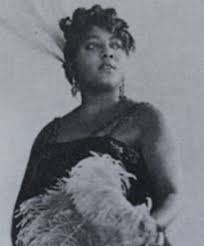
On the afternoon of August 10, 1920, in a recording studio in New York City, a thirty-seven-year-old Black woman from Cincinnati named Mamie Smith stepped up to the horn of an acoustic recording apparatus and sang a song that would alter the trajectory of American music forever. The tune was "Crazy Blues," written by Perry Bradford, and the musicians backing her were a handpicked ensemble of African American players who would soon be known as the Jazz Hounds. What happened in that studio did not merely produce a hit record; it detonated an explosion that rippled through the entire recording industry, through the segregated theaters and juke joints of Jim Crow America, and across the Atlantic to listeners who had never before heard a Black woman sing the blues on wax. Within a month, the record sold seventy-five thousand copies. Some accounts claim it moved over a million units within a year, and eventually surpassed two million.
Whatever the precise tally, the commercial reality was undeniable: there was a massive, hungry market for Black music recorded by Black artists, and the industry that had spent decades ignoring or mimicking African American musical expression could no longer look away.
Mamie Smith was not, by strict definition, a blues singer in the Mississippi Delta sense. She was a vaudeville performer, a cabaret artist, a dancer, and an entertainer who had spent nearly three decades on the stage by the time she made her first record. Yet it was precisely her theatrical polish, her commanding contralto, and her ability to bridge the worlds of popular song and earthy blues expression that made her the perfect vessel for this historic moment. She did not arrive by accident. She was the product of a lifetime spent in the trenches of Black show business, from the minstrel tents of the Midwest to the glittering cabarets of Harlem, and she carried with her the ambition, the craft, and the sheer force of personality necessary to break down a door that had been bolted shut by racism, commercial caution, and cultural blindness.
Cincinnati and the Making of a Performer
Mamie Robinson entered the world on May 26, 1891, in Cincinnati, Ohio, though for decades her birth year was believed to be 1883, a confusion that persisted until her birth certificate was discovered in 2018.
She was born in a boarding house at 14 Perry Street in downtown Cincinnati, and she attended the city's public schools before the stage claimed her at an extraordinarily young age. By the time she was ten years old, she had already joined the Four Dancing Mitchells, a minstrel troupe that toured Ohio and the surrounding states.
Originally hired as a dancer, she absorbed everything she could from the rough-and-tumble world of Black vaudeville, learning not only movement but timing, stage presence, and the art of holding an audience's attention.
In 1912, the Four Dancing Mitchells became attached to a larger and more prestigious production: Salem Tutt Whitney and Homer Tutt's "The Smart Set," one of the most important traveling shows in African American theater. The Smart Set was a proving ground for Black talent, a variety show that moved through the Midwest and South, presenting comedy, song, dance, and drama to audiences starved for professional Black entertainment. Mamie, still in her teens, traveled with the show as a chorus dancer, and it was during these years that she began to envision a life beyond the chorus line. She studied the headliners, absorbed the repertoire, and gradually developed the confidence to step forward as a solo performer.
When The Smart Set arrived in New York City in 1913, Mamie Robinson made a fateful decision. She quit the show and stayed in Harlem.
It was a gamble, but Harlem was becoming the center of Black cultural life in America, and the neighborhood's cabarets and theaters offered opportunities that the touring circuit could not match. She began performing as a singer and dancer in clubs like Baron Wilkin's Little Savoy Club, Leroy's, Edmund's, Percy Brown's, and Banks' Place.
It was in this milieu that she met and married William "Smitty" Smith, a nightclub singer whose surname she adopted and would carry for the rest of her life. By 1918, she had established herself as one of Harlem's most reliable entertainers, a singer with a sweet but powerful contralto voice and a stage manner that combined elegance with earthy immediacy.
The Bradford Connection and the Long Road to Wax
The path to the recording studio was neither straight nor easy. In 1918, Mamie Smith was hired by Perry Bradford, a multi-talented songwriter, pianist, dancer, and entrepreneur, to perform in his revue "Made in Harlem" at the Lincoln Theater. Bradford, like Smith, was a veteran of the minstrel circuit who had arrived in New York in 1910 and built a career as a composer and hustler. He recognized in Smith something that the recording industry had yet to acknowledge: a Black female singer with the charisma and technical skill to sell records to a mass audience. At the time, the notion was almost unthinkable. African Americans had been recorded before—George W. Johnson made cylinders in the 1890s, Bert Williams was a major star, and various Black vocal groups had laid down tracks—but these were exceptions, and none had been marketed specifically as blues or jazz artists to Black consumers. The Chicago Defender, the nation's most influential Black newspaper, had argued as early as 1916 that "records of the Race's great artists will be placed on the market" once the industry recognized how many African Americans owned phonographs.
But four years later, that promise remained unfulfilled.
Bradford was determined to change this. He had written a song called "Harlem Blues" for the "Made in Harlem" revue, and Smith's performance of it was the hit of the show.
Encouraged by her success, Bradford began pestering recording companies to take a chance on her. He first approached Victor Records, where Smith auditioned with "That Thing Called Love" in 1918, but the label declined to release the recording.
Undeterred, Bradford turned his attention to Okeh Records and its recording director, Fred Hager. Bradford was a persuasive man, and he reportedly told Hager that Mamie Smith could "do more with those songs than a monkey can do with a peanut."
Hager, despite warnings from some white associates not to work with Black musicians, took the plunge.
On February 14, 1920, Mamie Smith made her official recording debut. The session produced two Perry Bradford compositions: "That Thing Called Love" and "You Can't Keep a Good Man Down." She was backed by Okeh's house orchestra, which may have been all-white, and the label released the disc with minimal publicity, crediting her simply as "Mamie Smith, contralto."
The record was not a blockbuster, but it sold well enough—particularly in the South and in large Northern cities—to convince Hager that there was money to be made. The Chicago Defender helped by pointing out the record's existence to its readers.
Encouraged by these results, Hager agreed to a follow-up session. This time, however, the circumstances would be different. Mamie Smith would record with an all-Black band, and the material would be blues.
"Crazy Blues" and the Birth of an Industry
On August 10, 1920, Mamie Smith returned to the studio with a group of musicians that included cornetist Johnny Dunn, trombonist Dope Andrews, clarinetist Ernest Elliott, violinist Leroy Parker, and pianist Perry Bradford himself. The exact personnel has been disputed over the years—pianist Willie "The Lion" Smith later claimed that he, not Bradford, had assembled the group and played piano on the session, and his presence in a publicity photograph from the period lends some credence to his account—but what is beyond dispute is the power of the music they produced.
They recorded two songs: "It's Right Here for You (If You Don't Get It, 'Tain't No Fault of Mine)" and, most importantly, "Crazy Blues," a retitled and reworked version of the "Harlem Blues" that Smith had performed in Bradford's revue.
To modern ears accustomed to the twelve-bar blues structure of Chicago or Delta blues, "Crazy Blues" may sound unusual. It is not a strict twelve-bar blues but rather a theatrical composition that embeds blues choruses within a broader pop-song architecture. The first chorus is sixteen measures, the second is a twelve-bar blues, the third returns to sixteen measures, and the fourth and fifth are blues choruses, with the final section reprising the opening theme.
The instrumentation—cornet, trombone, clarinet, violin, and piano—owes as much to New Orleans jazz and Dixieland as it does to rural blues, and because the recording was made acoustically, Smith's voice sometimes struggles to rise above the horns. Yet the record possesses an undeniable vitality, a raucous high spirits that leaps from the grooves. Lyrically, it builds slowly from a verse of romantic lament into a declaration of emotional intensity: "There's a change in the ocean, change in the deep blue sea... my baby, he's gone, but he won't see me."
When Okeh released the record in November 1920 on catalog number 4169-A, the response was immediate and overwhelming. The disc flew off the shelves in Harlem and sold seventy-five thousand copies in its first month alone.
Some sources claim it sold a million copies within a year and eventually surpassed two million.
Whether or not the million-seller figure is precisely accurate, the commercial impact was transformative. Record companies that had previously scorned Black artists now saw dollar signs. The "race records" industry was born, and within months, competitors were scrambling to find female blues singers who could replicate Smith's success.
The significance of "Crazy Blues" cannot be overstated. It was added to the National Recording Registry by the Library of Congress in 2005, recognized as a recording of enduring cultural, historical, and aesthetic importance.
But beyond its archival status, the record represented a fundamental shift in the relationship between African American artists and the commercial recording industry. For the first time, a Black female singer had proven that she could sell records not as a novelty, not as a minstrel caricature, but as a popular artist whose voice and story resonated with a mass audience. The door, once bolted, had been kicked open.
The Jazz Hounds and the Sound of Classic Blues
In the wake of "Crazy Blues," Mamie Smith became a recording star, and her backing band, the Jazz Hounds, became one of the most important ensembles in early jazz and blues. Over the next several years, Smith recorded more than one hundred songs for Okeh and other labels, and the Jazz Hounds accompanied her on the majority of them.
The band's personnel shifted over time, but it consistently featured some of the finest young Black musicians in New York. Cornetist Johnny Dunn, who led the group in its earliest incarnation, was a fiery soloist whose work on records like "Royal Garden Blues" helped define the hot jazz style of the early 1920s. When Dunn left, he was replaced by Bubber Miley, whose growling, plunger-muted trumpet would later become a signature sound of Duke Ellington's orchestra.
Perhaps the most significant musician to pass through the Jazz Hounds was a young saxophonist from Missouri named Coleman Hawkins. Smith is credited with discovering Hawkins, bringing him into the band when he was still a teenager and giving him a platform that would launch one of the most celebrated careers in jazz history.
Other notable players included clarinetist Buster Bailey, pianist Willie "The Lion" Smith, and various trombonists and rhythm section players who moved between the recording studios, theater pits, and dance halls of Harlem.
The music that Smith and the Jazz Hounds produced was what later generations would call "classic blues" or "vaudeville blues": a sophisticated, urban style that blended blues lyricism with the structures of popular song, the harmonies of Tin Pan Alley, and the instrumental excitement of New Orleans jazz. It was distinct from the rural, guitar-driven blues of the Mississippi Delta, and it was aimed at a Northern, urban audience that frequented cabarets and theaters rather than juke joints and street corners. Smith's singing style reflected this context. Her voice was more refined than that of many Southern blues performers, shaped by her Northern upbringing and her years in New York's competitive entertainment world.
She used ornamentation, dramatic pauses, and clear diction, delivering lyrics that addressed romantic betrayal, sexual independence, and female agency with a directness that was revolutionary for the time.
Songs like "Don't You Advertise Your Man," recorded in 1931 with a beautifully balanced ensemble, offered cautionary tales to young women with a sardonic wit. "Jenny's Ball," from the same final session, captured the atmosphere of Harlem nightlife with a call-and-response between Smith and the band that showcased her theatrical instincts.
Even her earlier hits like "It's Right Here for You" and "You Can't Keep a Good Man Down" revealed a performer who understood how to sell a song, how to inhabit a lyric, and how to make a three-minute record feel like an event.
The Queen on the Road
Mamie Smith was not merely a recording artist; she was a full-fledged entertainer whose live performances were legendary for their extravagance. She toured relentlessly throughout the 1920s, playing nightclubs, theaters, and dance halls across the country with the Jazz Hounds in tow. Her shows were variety spectacles that included not only singing but dancing, comedy, trapeze acts, and elaborate costume changes. She was known for her lavish wardrobe, her diamonds and pearls, and her insistence on presenting herself as a star of the first magnitude. "I feel that the best is none too good for the public that pays to hear a singer," she once said, and she lived that philosophy.
Her audiences were racially mixed in many cities, though the realities of Jim Crow meant that she performed for segregated crowds in the South and faced the indignities of travel in a nation that denied Black citizens basic human dignity. Newspaper accounts from the era describe her receiving countless curtain calls, selling out theaters, and drawing record crowds. In February 1921, the Chattanooga News announced her arrival at the Billy Sunday Tabernacle and noted that she had already sold out a performance in Norfolk, Virginia, to a crowd of over nine thousand, with so many turned away that she was obliged to return twice.
In April 1921, she returned to her hometown of Cincinnati to perform at Music Hall, becoming only the second African American singer to appear as a solo act on the prestigious Springer Auditorium stage, following the great soprano Sissieretta Jones in 1893.
The economics of her success were substantial. At the height of her fame, she earned one thousand dollars a week for performances and reportedly collected one hundred thousand dollars in royalties from her recordings.
She owned homes in New York, maintained a lavish wardrobe, held gold securities, and drove one of the finest automobiles of the day. She was, by any standard, one of the most successful Black entertainers of her generation, and she carried herself with the regal bearing that earned her the title "Queen of the Blues."
The Music in Detail
To understand Mamie Smith's artistry, one must listen closely to the body of work she produced between 1920 and 1931. Her catalog is not merely a historical curiosity; it is a rich document of the moment when blues, jazz, and popular song were intertwining to create something new.
"Crazy Blues" remains the cornerstone, not because it is the most musically complex record she made, but because it was the first. Its hybrid structure—part pop song, part blues, part jazz—established a template that would dominate the classic blues era. The controlled tempo allows Smith to build emotional intensity across the choruses, and her final verses carry a weight of lived experience that transcends the theatrical setting.
"That Thing Called Love," her first release, is a more conventional pop song, but it reveals a singer already in command of her instrument. The 1921 re-recording with the Jazz Hounds adds instrumental heat that the earlier version lacked. "Royal Garden Blues," recorded in January 1921 with the Jazz Hounds, is a joyous instrumental showcase that demonstrates the band's cohesion and Dunn's cornet prowess.
By 1922, Smith and the Jazz Hounds were producing records of remarkable variety. "I Ain't Gonna Give Nobody None o' This Jelly Roll" is a risqué romp that winks at the sexual subtext of jazz-age nightlife. "Mean Daddy Blues" and "Lonesome Mama Blues" explore the darker emotional territory of abandonment and longing. "You Can Have Him, I Don't Want Him, Didn't Love Him Anyhow Blues" delivers its kiss-off with a swagger that would influence generations of female vocalists.
The 1923 recordings with the Harlem Trio, including "Kansas City Man Blues" and "Lady Luck Blues," show Smith adapting to smaller ensemble settings with equal facility. And her final sessions in 1931, for Victor Records, produced some of her finest work. "Don't You Advertise Your Man" is a masterclass in vocal control and dramatic interpretation, with the band providing tight, responsive accompaniment. "Jenny's Ball," her only record released in Britain, captures the call-and-response energy of Harlem cabaret with cornet commentary and piano figures that finally emerge clearly from the acoustic recording process.
Throughout this catalog, one hears a singer who refuses to be pinned down. She is not a folk blues artist in the manner of a Memphis Minnie or a Robert Johnson, nor is she a pure pop singer in the manner of the white Broadway stars of the day. She occupies a unique middle ground, a space she carved out through sheer force of will and talent.
The Silver Screen and the Shadow of the Crash
Mamie Smith's talents extended beyond the recording studio and the stage. In 1929, she appeared in "Jailhouse Blues," an early sound film that capitalized on her fame.
Unfortunately, no complete print of the film is known to survive, though clips suggest it was a short vehicle built around her singing. The film marked her entry into motion pictures, but it also coincided with the onset of the Great Depression, which would devastate the entertainment industry and Smith's personal finances.
After 1929, Smith's recording career effectively ended. She made her final records in 1931, including the aforementioned Victor sides that stand as some of her best work, and then she retreated from the public eye. The stock market crash of 1929 had wiped out her investments, her gold securities, and her property.
The lavish lifestyle that had defined her years of stardom became unsustainable, and she was forced into a semi-retirement that lasted nearly a decade.
But Mamie Smith was not finished. In 1939, she returned to performing in the motion picture "Paradise in Harlem," produced by her husband, Jack Goldberg.
The film was part of a wave of "race movies"—independent productions aimed at Black audiences that flourished in the segregated theater circuit. Smith sang "Lawd Lawd" and "Harlem Blues" (a retitled "Crazy Blues") in the picture, and her voice remained strong and compelling. She followed this with roles in "Mystery in Swing" (1940), "Sunday Sinners" (1940), "Stolen Paradise" (1941), "Murder on Lenox Avenue" (1941), and "Because I Love You" (1943).
In "Murder on Lenox Avenue," she delivered a memorable performance of "I'll Get Even With You," accompanied only by piano, demonstrating that even in her fifties, she could command the screen with nothing but her voice.
These films were made on shoestring budgets and distributed to segregated theaters, but they kept Smith working and visible during a difficult era. They also represent an important, if underappreciated, chapter in the history of African American cinema, and Smith's presence in them underscores her status as a pioneer who refused to disappear.
Decline, Death, and the Long Road to Recognition
The final years of Mamie Smith's life were marked by poverty and obscurity. Despite her decades of work and her historic achievements, she found herself living off the charity of friends as the 1940s wore on.
She died on October 30, 1946, in New York City, reportedly penniless.
She was interred at Frederick Douglass Memorial Park on Staten Island, but her grave remained unmarked for decades.
The neglect of her final resting place stands as a painful symbol of how quickly the industry she helped create forgot its founding mother. In 1963, musicians from Iserlohn, West Germany, raised money through a Hot Jazz benefit to purchase a headstone reading "Mamie Smith (1883–1946): First Lady of the Blues." With the help of fellow blues singer Victoria Spivey and Len Kunstadt of Record Research Magazine, Smith was re-interred at Frederick Douglass Memorial Park, and a gala was held in her honor on January 27, 1964.
Yet even this marker eventually disappeared or fell into disrepair, and by 2012, she was once again buried without a headstone.
That year, blues journalist Michael Cala and his wife Anne Fanciullo Cala launched a crowdfunding campaign on Indiegogo to raise funds for a proper monument. With support from the philanthropy Music Cares, the campaign raised over eight thousand dollars, and on September 20, 2013, a four-foot-high etched granite headstone was erected at Frederick Douglass Cemetery in Staten Island.
The ceremony drew fans, historians, and musicians who understood that without Mamie Smith, the landscape of American music would be unimaginably different.
The Legacy: Opening Doors That Stayed Open
Mamie Smith's greatest achievement was not any single record, nor any particular performance, but the simple, revolutionary fact that she proved it could be done. She demonstrated that a Black woman could walk into a white-owned recording studio, sing blues and jazz with an all-Black band, and produce a commercial product that millions of people would pay to hear. In doing so, she opened the doors of the recording industry to generations of African American artists who followed.
Without Mamie Smith, there might still have been a Bessie Smith, a Ma Rainey, an Ethel Waters, an Alberta Hunter, an Ida Cox, a Clara Smith, or a Victoria Spivey—but their path to the microphone would have been far longer and far more uncertain. Bessie Smith, the "Empress of the Blues," made her first records in 1923, three years after "Crazy Blues," and quickly surpassed Mamie's commercial success to become the highest-paid Black entertainer in America. Ma Rainey, the "Mother of the Blues," had been performing blues on the vaudeville circuit since before Mamie was born, but she did not enter a recording studio until 1923. Ethel Waters and Alberta Hunter both debuted on record in 1921, directly in the wake of Mamie Smith's breakthrough.
Harry Pace, who had been W.C. Handy's music publishing partner, was so inspired by the success of "Crazy Blues" that he dissolved his partnership with Handy in 1921 to start Black Swan Records, the first Black-owned recording label.
The entire "race records" industry, which documented the flowering of blues, jazz, and gospel in the 1920s and 1930s, was built on the commercial foundation that Mamie Smith laid. Her records spread the sound of the blues from the rural South and the Black clubs of the North into homes across America and as far away as Britain, where "Jenny's Ball" was released and where her influence touched musicians who might never have encountered the music otherwise.
Beyond the commercial and industrial impact, Smith's work carried a cultural weight that resonated far beyond the phonograph. She was, in essence, the first female blues singer to present herself as an autonomous artist rather than a reflection of male desire or a minstrel stereotype. Her songs addressed women's experiences—romantic betrayal, sexual independence, economic self-sufficiency—with a directness that predated the feminist movements of the 1960s and 1970s by decades. She refused to be the mistress, the kept woman, or the tragic mulatto. She was a star, and she demanded to be treated as such.
In the broader narrative of American music, Mamie Smith stands as a crucial bridge between the minstrel and vaudeville traditions of the early twentieth century and the classic blues and jazz age that followed. She was not a folk primitive; she was a professional entertainer of the highest order, and she brought all the craft and calculation of the stage to the new medium of recorded sound. In doing so, she helped establish the preeminence of African American traditions in popular culture and proved that Black art could be both commercially viable and aesthetically profound.
Suggested Listening
 Buy from Amazon Crazy Blues: Best of Mamie Smith
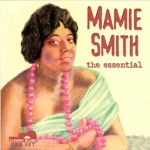 Buy from Amazon The Essential Mamie Smith
Conclusion
Mamie Smith lived a life that spanned the arc of Black entertainment in the first half of the twentieth century, from the minstrel tents of Ohio to the cabarets of Harlem, from the acoustic recording horn to the silver screen, from stardom to poverty and back to a modest redemption in race films. She was not the greatest blues singer who ever lived; she would have been the first to acknowledge that Bessie Smith possessed a power and depth she could not match. She was not the most innovative jazz artist; the musicians who passed through her Jazz Hounds would go on to eclipse her in technical brilliance. But she was the first. She was the one who knocked on the door until it opened, who sang into the horn until the industry could no longer ignore her, who proved that the voice of a Black woman singing the blues was not a curiosity to be exploited but a commodity to be celebrated.
When she recorded "Crazy Blues" on that August afternoon in 1920, she could not have known that she was making history. She was simply doing what she had always done: performing, entertaining, using her voice and her presence to command a room. But the room, in this case, was the entire nation, and the echo of that performance has never truly faded. Every blues record by a Black woman that followed, every jazz vocal, every soul single, every hip-hop track that samples the blues tradition, owes something to the moment when Mamie Smith stepped up to the microphone and sang.
She died poor and largely forgotten, buried in an unmarked grave while the industry she created churned on without her. But history has a way of correcting such oversights, and the headstone that now stands at Frederick Douglass Memorial Park—erected nearly seven decades after her death by strangers who understood her worth—bears an inscription that captures only a fraction of her story. She was not merely the "First Lady of the Blues." She was the woman who made the blues a recorded art form, who turned a three-minute shellac disc into a weapon against cultural erasure, and who sang, with all the power and polish of a lifetime on the stage, until the world finally listened.