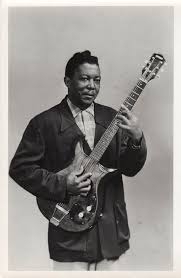
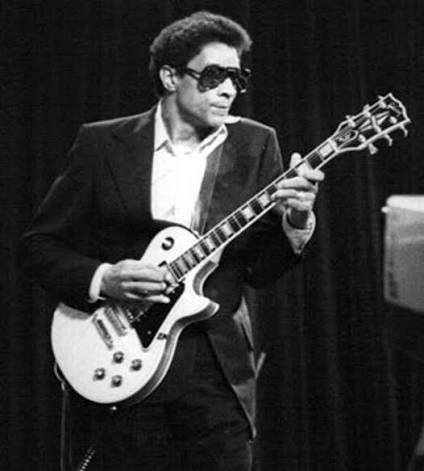
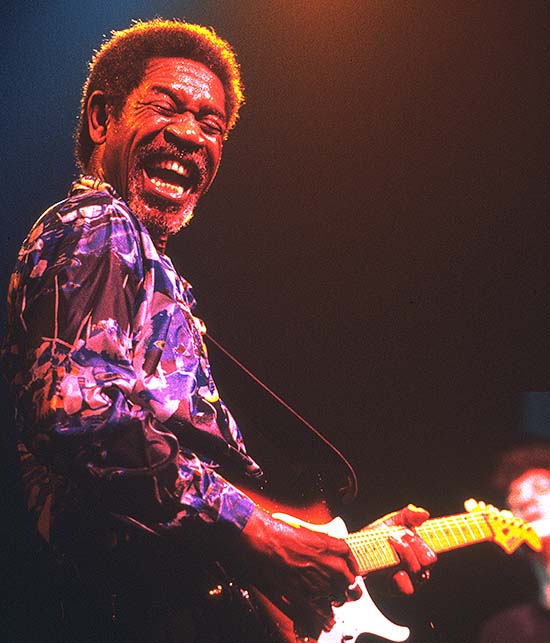
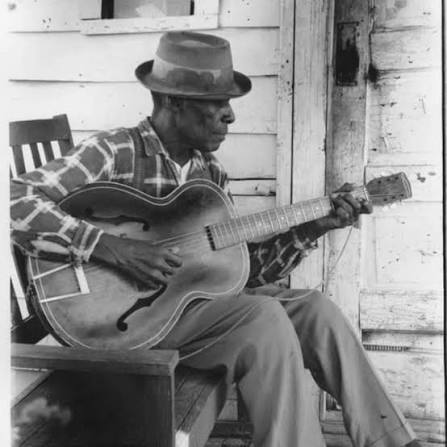
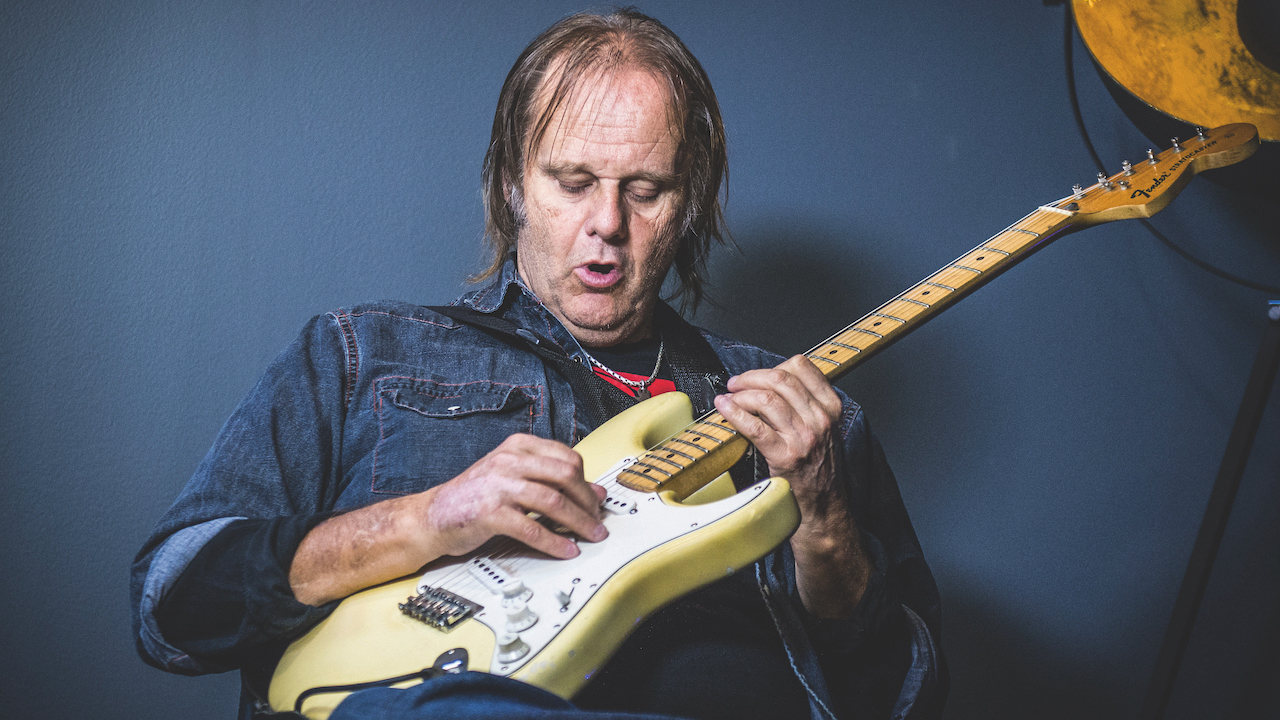
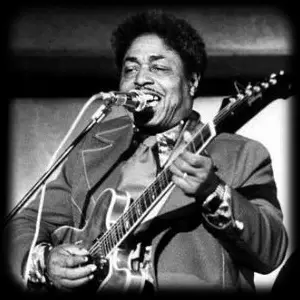
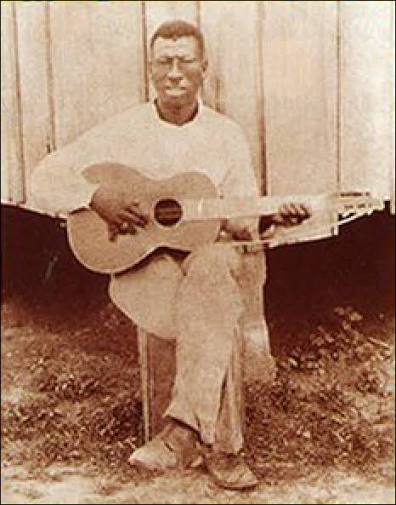
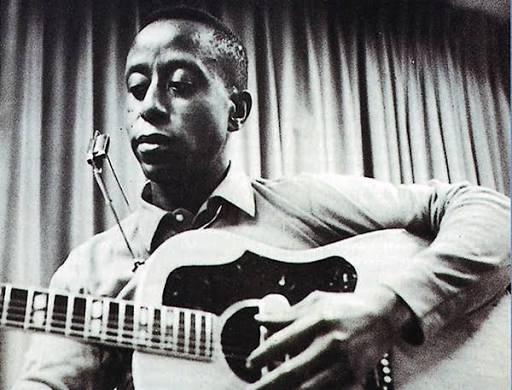
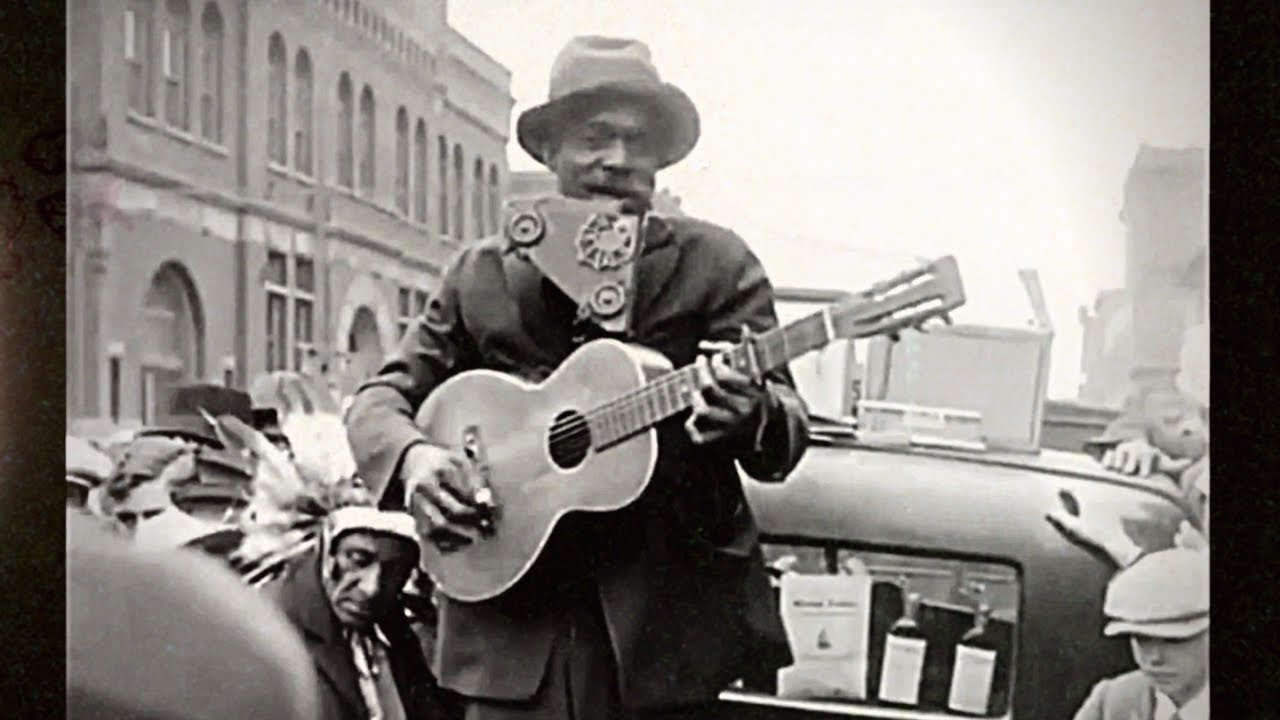
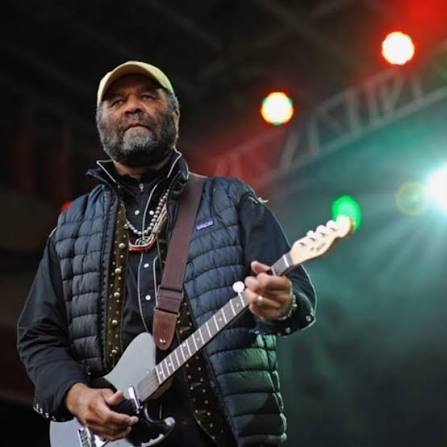
There is a particular kind of blues musician who seems to exist more in rumor than in documentation, whose legend grows in direct proportion to the scarcity of his recordings, and whose influence spreads through the fingers of other players rather than through the fame of his own name. Robert Nighthawk was such a musician. He was, by any reasonable measure, one of the most important slide guitarists in the history of the blues, a player whose crystal-clear technique and brooding, atmospheric sound influenced Muddy Waters, B.B. King, Earl Hooker, and Elmore James, among countless others. He was a fixture of the Mississippi Delta juke joint circuit for three decades, a radio personality whose broadcasts reached deep into the rural South, and a recording artist whose sporadic sessions produced some of the most enduring blues records of the prewar and postwar eras. Yet he was also a man who seemed determined to evade the spotlight, a restless rambling bluesman who changed his name as often as he changed his address, who recorded under a dizzying array of pseudonyms, and who never stayed in one place long enough to build the kind of career that the music industry rewards. When he died in 1967, he left behind a body of work that could fit on a handful of compact discs, a reputation that was larger in the memories of his fellow musicians than in the consciousness of the general public, and a legacy that would take decades to be fully appreciated. To understand Robert Nighthawk is to understand the blues as a music of motion, of displacement, of constant searching, and of the stubborn belief that the next town, the next gig, the next recording session might finally be the one that changes everything.
Helena, Arkansas and the Musical Family
Robert Lee McCollum was born on November 30, 1909, in Helena, Arkansas, a city situated on the Mississippi River in the eastern part of the state, just across the water from the Mississippi Delta. Recent census research has suggested that the McCollum family may have actually been living in nearby Searcy at the time of his birth, but Nighthawk himself always claimed Helena as his hometown, and it was Helena that he would return to throughout his life, the gravitational center around which his restless orbit revolved.
He was born into a musical family. His father, Ned McCollum, and his mother, Mattie Mae McCoy McCollum, both played music, as did his siblings. "Well all my people played music," Nighthawk recalled in a 1964 interview. "Mother and Dad and sister and brother and all. My brother played guitar. My brother helped me in all kind of ways. (My family)...mostly played dances, parties, picnics and all that."
The McCollum household was not a family of professional musicians in the modern sense; they were working people who played music for their community, at social gatherings and local events, providing the soundtrack for a rural Black population that had few other forms of entertainment. But this amateur tradition was the foundation upon which Robert McCollum would build his professional career, and the informal training he received at home would prove to be as valuable as any formal education.
Robert's first instrument was the harmonica, which he learned to play around 1927. He was a teenager by then, already working in the fields and already immersed in the musical culture of the Delta region. The harmonica was a common first instrument for young Black men in the rural South; it was cheap, portable, and capable of producing a sound that could cut through the noise of a crowded juke joint or a busy street corner. But Robert soon moved to the guitar, the instrument that would define his life. His initial instruction came from his brother, but his most significant early teacher was Houston Stackhouse, a guitarist from Wesson, Mississippi, who was a few years older than Robert and who would become a lifelong friend and musical associate. Stackhouse was a disciple of Tommy Johnson, the legendary Delta bluesman whose "Big Road Blues" and "Canned Heat Blues" were already classics of the genre, and through Stackhouse, Robert absorbed the Johnson style: the intricate fingerpicking, the melancholy vocal delivery, and the sense of the blues as a narrative art form.
Stackhouse and McCollum formed a musical partnership that would last, with interruptions, for nearly four decades. They traveled together throughout the Delta, playing at juke joints, house parties, and country suppers, developing the repertoire and the stage presence that would serve them both in their later careers. The Delta of the late 1920s and early 1930s was a harsh environment for Black musicians. The plantation system was still largely intact, and the musicians who played for the sharecroppers and tenant farmers were often paid in whiskey, food, or a place to sleep rather than in cash. But it was also a musically rich environment, a place where the blues was being played and transformed every night, where young musicians could learn from their elders and from each other, and where the competition was fierce enough to weed out the mediocre and reward the exceptional. Robert McCollum was exceptional, and by the early 1930s, he had begun to develop a reputation as one of the finest young guitarists in the region.
The Memphis Years and the First Recordings
Around 1932, Robert McCollum made the move that would introduce him to the wider world. He relocated to Memphis, Tennessee, the city that was rapidly becoming the commercial and cultural capital of the mid-South. Memphis was a magnet for musicians from Mississippi, Arkansas, and Tennessee, a place where the rural blues could be heard on Beale Street and where the recording industry was beginning to take an interest in the music that was pouring out of the Delta. For a young guitarist with ambition, Memphis was the place to be.
It was in Memphis that McCollum made his first recordings. In 1932, he traveled to New York City with Houston Stackhouse and the harmonica player Robert Tamm (also known as "Poor Bob"), a journey that must have been an extraordinary adventure for three young men from the rural South. The session was arranged by Clarence Williams, a New Orleans-born musician and entrepreneur who had established himself as one of the most important figures in the early recording industry. Williams recorded the trio for the Bluebird label, the budget subsidiary of RCA Victor that was the primary outlet for race records during the 1930s. The resulting sides, "Stack Shot Billy" and "Maggie Campbell Blues," were released under the name "Robert Lee McCoy," a spelling variation that would be one of many pseudonyms McCollum would adopt over the years.
The Bluebird recordings are fascinating documents of McCollum's early style, but they are also frustratingly scarce. "Stack Shot Billy" is a narrative blues that tells the story of a violent confrontation, a common theme in the blues of the period, while "Maggie Campbell Blues" is a more conventional twelve-bar blues that showcases McCollum's guitar work and his developing vocal style. Both tracks reveal a musician who was already technically accomplished but who had not yet found the distinctive voice that would make him famous. The influence of Tommy Johnson is audible in the phrasing and the chord progressions, and McCollum's guitar playing, while precise, lacks the slide technique that would later become his trademark.
The New York session did not make McCollum a star, and he returned to Memphis to continue the grind of the working musician's life. He played on the streets, in the parks, and in the clubs of Beale Street, developing his craft and his reputation. It was during this period that he began to experiment with the slide guitar, the technique that would define his mature style. The slide, a tube of metal or glass worn on the finger and used to fret the strings, allowed the guitarist to produce a continuous, gliding tone that mimicked the human voice and that could express emotions that were beyond the reach of conventional fretting. McCollum's slide technique was not the raw, slashing approach of Elmore James or the droning modalism of Mississippi Fred McDowell; it was a more refined, melodic style that emphasized clarity and precision over volume and aggression. He played in standard tuning, unlike many slide guitarists who preferred open tunings, and he used the slide to create lyrical, singing lines that could suggest both joy and sorrow in the same phrase.
The Peetie Wheatstraw Connection and the Bluebird Sessions
In 1935, McCollum's career took a significant turn when he joined the band of William Bunch, better known as Peetie Wheatstraw, the "Devil's Son-in-Law" and one of the most popular blues recording artists of the 1930s. Wheatstraw was a pianist and singer whose persona—a boastful, devil-may-care figure who claimed supernatural powers—made him one of the most distinctive characters in the blues. His records sold well, and his band was one of the most prestigious outfits a young musician could join. For McCollum, the association with Wheatstraw was both a professional opportunity and a musical education. He traveled with the band throughout the Midwest and the South, playing on the theater circuit that catered to Black audiences, and he recorded with Wheatstraw on numerous sessions for the Vocalion and Decca labels.
The Wheatstraw recordings are not primarily showcases for McCollum's guitar; they are Wheatstraw's records, and the pianist's boogie-woogie style and charismatic vocals are the main attractions. But McCollum's guitar is audible on many of the tracks, providing the rhythmic and harmonic foundation that allowed Wheatstraw to work his magic. The experience of playing in a professional band, of learning how to arrange material for a group, and of understanding the demands of the recording studio was invaluable for McCollum, and it prepared him for the solo career that he would eventually pursue.
In 1937, McCollum made his first recordings under his own name since the 1932 New York session. The recordings were made for Bluebird in Aurora, Illinois, and they featured McCollum on guitar and vocals, with Alfred Elkins on string bass and possibly second guitar. The Aurora session produced "Prowling Night-Hawk," the song that would give McCollum his most enduring stage name. The record was a slow, brooding blues that showcased McCollum's slide guitar in a way that his previous recordings had not. His playing was clear and precise, each note ringing out with a bell-like purity, and his vocal was a murmured, intimate confession that drew the listener into a world of nocturnal wandering and romantic despair. The title, "Prowling Night-Hawk," was a perfect description of McCollum's persona: the restless, solitary figure who moves through the darkness, searching for something that always seems to elude him.
The Aurora session also produced "Friars Point Blues," a tribute to the Mississippi town that was a center of Delta blues activity, and "Crying Blues," a slow lament that demonstrated McCollum's growing mastery of the slide guitar. These recordings are among the finest prewar blues sides ever made, and they reveal a musician who had fully absorbed the lessons of his apprenticeship and was now ready to step out on his own. The Bluebird releases sold reasonably well, and McCollum began to attract attention as a solo artist, a guitarist and singer who could hold his own with the best in the business.
The War Years and the Move to St. Louis
The late 1930s and early 1940s were a period of transition for McCollum, as they were for the entire country. The Great Depression was slowly lifting, but the music industry was changing, and the race record market that had sustained so many blues artists was beginning to contract. McCollum continued to record sporadically, including a 1940 session for Decca in which he was credited as "Peetie's Boy," a reference to his association with Wheatstraw, and a 1942 session for Bluebird that produced "Black Angel Blues" and "Annie Lee Blues," two tracks that would become staples of his repertoire and that would be covered by countless artists in the decades to come.
"Black Angel Blues" was a particular triumph. The song, a slow blues built around a descending guitar figure that McCollum played with the slide, was a masterpiece of atmospheric blues. The lyric told of a "sweet black angel" who had stolen the singer's heart, and McCollum's vocal delivery was a model of restrained emotion, never rising to a shout but always conveying the depth of his feeling. The guitar solo, played with the slide in standard tuning, was a marvel of melodic invention, each note placed with the precision of a jeweler setting stones. The record was a hit, and it established "Black Angel Blues" as one of the most important songs in the blues repertoire.
But McCollum's personal life was in turmoil. In 1940, he had shot a man in a juke joint in Southeast Missouri, an incident that may have been related to a dispute over a woman or a gambling debt, and he had been sentenced to a term in the Arkansas State Penitentiary. The exact details of the incident are murky, and McCollum himself was never forthcoming about it, but the prison sentence interrupted his career and left him with a criminal record that would complicate his life for years to come. After his release, he moved to St. Louis, Missouri, where he established himself as a regular performer on the local club scene and where he continued to develop his guitar style.
St. Louis in the 1940s was a city with a vibrant blues tradition, and McCollum found plenty of work in the clubs and bars of the city. He also began to establish himself as a teacher and mentor to younger guitarists, including his cousin Houston Stackhouse, who had followed him to St. Louis, and a young Earl Hooker, who would later become one of the most celebrated slide guitarists in Chicago. McCollum's influence on Hooker was profound. He taught the younger man the standard-tuned slide technique that would become his trademark, and he demonstrated the possibilities of the electric guitar at a time when most blues musicians were still playing acoustic instruments. McCollum had been one of the first guitarists in the South to embrace amplification, and his electric slide sound—clear, precise, and hauntingly lyrical—was a revelation to the young Hooker.
The Chess Years and the Postwar Chicago Scene
In 1948, McCollum made the move that would define the final phase of his career. He relocated to Chicago, the city that had become the undisputed capital of the postwar blues, and he brought with him the slide guitar style that he had been refining for nearly two decades. Chicago in the late 1940s was a city in musical ferment. The Great Migration had brought hundreds of thousands of Black Southerners to the city, and with them came the Delta blues, which was being electrified and amplified in the clubs of the South and West Sides. Muddy Waters, Howlin' Wolf, Little Walter, and Willie Dixon were the reigning monarchs of this new musical kingdom, but there was room for other voices, and McCollum's distinctive guitar style found a receptive audience.
It was in Chicago that McCollum fully adopted the stage name Robert Nighthawk, a nod to his 1937 recording and a persona that suited his nocturnal, solitary image. He also began recording for Aristocrat Records, the label founded by the Chess brothers that would soon become Chess Records. His first Aristocrat session, in 1948 or 1949, produced "My Sweet Woman" and "Annie Lee Blues," the latter a reworking of his 1942 Bluebird recording. The records were well received, and Nighthawk established himself as a regular presence on the Chicago scene, playing in the clubs and recording for Chess and its subsidiaries.
The Chess recordings of the late 1940s and early 1950s are among the finest in Nighthawk's discography. They feature his electric slide guitar in a band context, supported by pianists like Sunnyland Slim and Johnny Jones, bassists like Willie Dixon, and drummers like Elga Edmonds. The sound is tougher and more urban than his prewar recordings, but the essential qualities of Nighthawk's playing—the clarity, the precision, the lyrical melodicism—remain intact. "Annie Lee Blues," in particular, is a masterpiece of the electric blues, with Nighthawk's slide guitar weaving in and out of the vocal lines, creating a dialogue between voice and instrument that is one of the hallmarks of his style.
In 1950, Nighthawk recorded what many consider his greatest single, "Sweet Black Angel" (also known as "Black Angel Blues"), for the United label. The record was a reworking of his 1942 Bluebird recording, but the electric guitar and the band arrangement gave it a new power and urgency. Nighthawk's slide guitar was front and center, and his vocal was a model of blues phrasing, each syllable placed with the care of a poet choosing his words. The record was a hit, and it established "Sweet Black Angel" as one of the most enduring songs in the blues repertoire. B.B. King would later record a version that became a staple of his live shows, and the song has been covered by artists as diverse as Buddy Guy, Keb' Mo', and the Allman Brothers Band.
The KFFA Radio Years and the Return to Helena
Despite his success in Chicago, Nighthawk was never content to stay in one place for long. In the early 1950s, he returned to Helena, Arkansas, where he established himself as a regular performer on KFFA radio's "King Biscuit Time," the daily broadcast that had become the most important radio program in the Delta. The show, sponsored by the King Biscuit Flour Company, featured live performances by local blues musicians, and it reached an audience of thousands of Black listeners throughout the Mississippi Delta and beyond. For Nighthawk, the KFFA broadcasts were both a professional opportunity and a homecoming. He was back in the region where he had learned to play, performing for the same community that had nurtured him, and he used the platform to refine his repertoire and his stage presence.
The KFFA broadcasts were informal affairs, often featuring Nighthawk playing solo or with a small group, and they allowed him to experiment with new material and new arrangements. The radio audience was different from the juke joint crowd; it was a home audience, listening in kitchens and living rooms, and the music had to be clear and engaging without the benefit of the visual spectacle that a live performance provided. Nighthawk rose to the challenge, developing a radio-friendly style that emphasized his guitar work and his storytelling abilities. He also used the broadcasts to promote his live appearances at local clubs and juke joints, and he became one of the most popular musicians in the Helena area.
The Helena years were a period of relative stability for Nighthawk, but they were also a period of professional frustration. The recording industry had largely lost interest in the down-home blues by the mid-1950s, as rock and roll and rhythm and blues began to dominate the market, and Nighthawk found it increasingly difficult to secure recording sessions. He continued to play live, traveling throughout the Delta and into Tennessee and Missouri, but the glory days of the 1940s and early 1950s seemed to be behind him. He was still a revered figure among his fellow musicians, still capable of mesmerizing an audience with his slide guitar, but the wider world had moved on.
The 1960s: Rediscovery and the Maxwell Street Sessions
The blues revival of the 1960s, driven by the discovery of the music by young white audiences in America and Europe, created new opportunities for artists who had been bypassed by the first wave of success. Nighthawk, however, was not immediately embraced by the revivalists. His style was too sophisticated, too urban, too reliant on the electric guitar for the folk enthusiasts who were searching for acoustic country bluesmen. He was not a Delta primitive in the mold of Son House or Mississippi John Hurt; he was a professional musician who had spent decades refining his craft, and his music did not fit the romantic image of the bluesman as an untutored folk artist.
But Nighthawk's talent could not be ignored forever. In 1963, he was recorded by the Swedish collector and documentarian Samuel Charters, who was in the South making field recordings for his book
The Bluesmen. The resulting tracks, recorded in Helena, were raw and powerful, a reminder of Nighthawk's abilities that helped to introduce him to a new generation of listeners. The following year, in 1964, Nighthawk was filmed for the documentary
And This Is Free, a remarkable document of the Maxwell Street market in Chicago, where Nighthawk was filmed playing on the street, his slide guitar ringing out over the noise of the crowd. The film captures Nighthawk in his element, a working musician plying his trade in the most democratic of settings, playing for whoever would listen and whatever they could spare.
The Maxwell Street footage is one of the most important visual documents of the blues, a rare opportunity to see a master musician at work in an unguarded moment. Nighthawk is playing a resonator guitar, his slide moving up and down the neck with a fluidity that belies the difficulty of the technique, and his face is a mask of concentration, eyes closed, lost in the music. The crowd around him is a mixture of Black and white, young and old, and the scene is a microcosm of the blues as a democratic art form, a music that belongs to everyone who hears it.
In 1964, Nighthawk also recorded an album for the Testament label, Live on Maxwell Street, produced by Pete Welding. The album was recorded on the street, with Nighthawk playing through a small amplifier and singing into a single microphone, and it captures the raw energy of his live performance in a way that studio recordings never could. The set list includes "Sweet Black Angel," "Annie Lee Blues," "Maggie Campbell," and other staples of his repertoire, and the playing is as powerful and precise as anything he had recorded in the 1940s. The Testament album was a critical success, and it helped to establish Nighthawk as a major figure in the blues revival, a living link to the prewar tradition who was still capable of delivering the goods.
The Final Years and Death
The mid-1960s were a period of renewed activity for Nighthawk. He recorded for several small labels, including Excello and Jewel, and he continued to perform regularly in the Delta and in Chicago. He also began to receive recognition from the blues community, appearing at festivals and in magazine articles that celebrated his contributions to the music. But his health was declining, and the years of hard living—the late nights, the constant travel, the alcohol that was a staple of the musician's life—were taking their toll.
In November 1967, Nighthawk was in Helena, playing a gig at a local club. He was staying with his mother, Mattie Mae, who was by then in her eighties. On the night of November 5, he complained of feeling unwell and went to bed early. The next morning, he was found dead of heart failure. He was fifty-seven years old, an age that was not unusual for a bluesman of his generation but that seemed tragically premature for a musician who was still playing at the peak of his powers.
Nighthawk was buried in Magnolia Cemetery in Helena, a modest grave that would remain unmarked for decades. He died without a will, without savings, and without the kind of estate that would ensure his family's security. His mother, who had outlived him, was left to manage the funeral expenses, and the blues world lost one of its most distinctive voices. The obituaries were few and far between; Nighthawk had never been a star in the conventional sense, and his death was noted primarily by the musicians who had known him and by the small circle of collectors and enthusiasts who had followed his career.
The Nighthawk Sound: Technique, Style, and Influence
To understand Robert Nighthawk's place in the blues pantheon, one must listen closely to his guitar playing, for it was here that his true genius resided. Nighthawk was a master of the slide guitar, but his approach to the instrument was radically different from that of his contemporaries. While Elmore James played slide in open tuning, producing a raw, droning sound that was powerful but limited in its harmonic range, and while Mississippi Fred McDowell used the slide to create a hypnotic, repetitive trance music, Nighthawk played slide in standard tuning, allowing him to move fluidly between slide and fretted passages and to incorporate complex chord voicings into his solos.
His slide technique was characterized by a clarity and precision that was almost classical in its refinement. Each note rang out with a bell-like purity, and his vibrato—achieved by moving the slide back and forth across the fret—was a model of controlled expression. He used the slide not merely to produce the glissando effects that were the trademark of the style but to create melodic lines that could rival the human voice in their expressiveness. His solos on "Sweet Black Angel" and "Annie Lee Blues" are masterclasses in slide guitar, demonstrating a level of technical control and musical imagination that has rarely been matched.
Nighthawk's influence on subsequent generations of guitarists is incalculable. Muddy Waters, who played with Nighthawk in the Headhunters and who recorded with him on numerous occasions, absorbed Nighthawk's slide technique and incorporated it into his own style, particularly on his early Chess recordings like "I Can't Be Satisfied" and "Rollin' and Tumblin'." B.B. King, who recorded Nighthawk's "Sweet Black Angel" and made it a staple of his live shows, has cited Nighthawk as a major influence on his approach to the blues guitar. Earl Hooker, Nighthawk's most famous student, took the standard-tuned slide technique that Nighthawk had taught him and extended it into new territories of virtuosity, becoming one of the most celebrated slide guitarists in Chicago blues history. Elmore James, though he played in a different style, acknowledged Nighthawk's influence, and the two guitarists were often compared by critics and fans.
Beyond these direct connections, Nighthawk's influence can be heard in the playing of virtually every blues guitarist who has ever picked up a slide. His emphasis on clarity and precision, his use of standard tuning, and his lyrical, melodic approach to the instrument established a template for slide guitar that has been followed by artists as diverse as Duane Allman, Ry Cooder, and Derek Trucks. The Allman Brothers Band's "Dreams," with its soaring slide guitar lines, owes a debt to Nighthawk's "Sweet Black Angel," and Derek Trucks' fluid, singing slide style is a direct descendant of the technique that Nighthawk pioneered.
The Recordings: A Discography of Scarcity and Quality
Nighthawk's recorded legacy is frustratingly small. He recorded sporadically over a career that spanned more than three decades, and many of his sessions produced only a handful of sides. But the quality of what he did record is extraordinarily high. The prewar Bluebird and Decca sessions, the postwar Chess and United recordings, the Testament field recordings, and the scattered tracks for Excello, Jewel, and other small labels all reveal a musician of consistent excellence, a guitarist and singer who never gave less than his best.
The 1937 Aurora session, with "Prowling Night-Hawk" and "Friars Point Blues," is a landmark of prewar blues, a document of the Delta style in its transition from acoustic to electric. The 1942 Bluebird session, with "Black Angel Blues" and "Annie Lee Blues," established the songs that would define his repertoire. The 1950 United recording of "Sweet Black Angel" is one of the greatest blues records ever made, a perfect marriage of song, voice, and guitar. The 1964 Testament album, Live on Maxwell Street, is a raw, powerful document of his live performance, and the 1963 Swedish field recordings capture a side of Nighthawk that was rarely heard in the studio.
In the decades since his death, Nighthawk's recordings have been compiled and reissued on numerous labels. The Testament album has been reissued on CD, and the complete Bluebird and Chess recordings have been anthologized by labels like Document and Classics. These reissues have helped to introduce Nighthawk to new generations of listeners, and they have solidified his reputation as one of the most important and influential blues guitarists of the twentieth century.
Posthumous Recognition and Legacy
Robert Nighthawk's posthumous recognition has been slow but steady. He was inducted into the Blues Foundation's Blues Hall of Fame in 1983, a belated but necessary acknowledgment of his central role in the development of the blues guitar. The induction was a milestone not merely for Nighthawk but for the slide guitar itself, an instrument that had often been marginalized in the blues pantheon in favor of the more conventionally fretted styles. Nighthawk's induction announced to the world that the slide guitar was not merely a novelty or a folk artifact but a legitimate and essential voice in the blues tradition.
In 1991, a headstone was finally placed on Nighthawk's grave in Magnolia Cemetery, funded by the Mt. Zion Memorial Fund and the National Academy of Recording Arts and Sciences. The stone reads "Robert Nighthawk, 1909–1967, The Prowling Night-Hawk," a fitting tribute to a musician who had spent his life in motion, always searching, always playing, always prowling. The ceremony was attended by musicians, fans, and historians who had come to recognize Nighthawk's importance, and it marked a formal acknowledgment of what the blues community had long known: that Robert Nighthawk was one of the greats.
Nighthawk's influence continues to resonate in the work of contemporary blues and rock guitarists. His standard-tuned slide technique has become the dominant approach to the instrument, and his emphasis on melodic clarity and emotional expression has shaped the playing of artists who may never have heard his name. The blues, as Nighthawk played it, was not a music of brute force or empty virtuosity; it was a music of nuance and subtlety, of the spaces between the notes as much as the notes themselves. He proved that the slide guitar could sing, could weep, could tell stories, and in doing so, he expanded the possibilities of the instrument in ways that are still being explored.
In the final analysis, Robert Nighthawk stands as one of the most original and influential figures in the history of the blues. He was a bridge between the rural Delta and the urban North, between the acoustic tradition and the electric revolution, between the prewar era and the postwar boom. He was a mentor to younger musicians, a colleague to his peers, and a challenge to everyone who heard him play. His recordings are few but precious, his influence is vast but often unacknowledged, and his story is a reminder that the blues is not merely a music of the famous and the celebrated but also of the restless, the searching, and the profoundly gifted. The Prowling Night-Hawk is gone, but his music still echoes in the night, clear and precise as starlight, haunting as a memory, eternal as the blues itself.
Suggested Listening
 Buy from Amazon Prowling with the Nighthawk
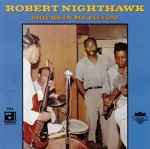 Buy from Amazon Bricks in My Pillow