There is a particular kind of obscurity in American music that has less to do with failure than with the cruel geometry of cultural change. Ricky Allen was not a failed musician. For the better part of a decade, he was one of the most popular artists in Chicago's Black community, a singer whose records sold in the tens of thousands, whose name appeared on marquees alongside Muddy Waters and Junior Wells, whose voice defined a transitional moment in African-American music when the electrified Delta blues of the 1950s was giving way to the soul-inflected blues of the 1960s. He had a national R&B hit. He wrote songs that became standards of the Chicago repertoire. He fronted a band that featured some of the finest musicians in the city. And yet, when the history of the blues was written by the white enthusiasts who discovered the music in the 1960s and 1970s, Allen was largely omitted. He did not fit the narrative they constructed, a narrative that privileged rural roots over urban sophistication, acoustic purity over electric amplification, and the Delta bluesman over the soul-blues crooner. Allen was too modern, too slick, too Black for the white blues revival. He sang for his own community, and when that community's tastes shifted again, toward Motown and funk and the emerging sounds of the 1970s, Allen found himself without an audience, without a record deal, and without the recognition that his talent and his contributions deserved. His story is the story of a musician who was always slightly ahead of his time, who helped to invent a genre that would not be named until after he had stopped recording, and who spent the last three decades of his life in a kind of exile from the music that had once made him a star.
Ricky Allen: The Soul-Blues Pioneer Who Bridged Two Worlds
- Details
- Written by: Simon Godfrey
- Category: Artists
- Hits: 101
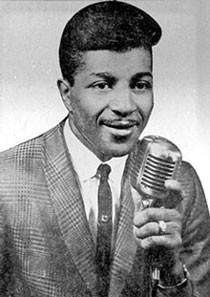
Richard A. Allen was born on January 6, 1935, in Nashville, Tennessee, a city that would later market itself as the capital of country music but that was, in Allen's youth, a vibrant center of African-American musical culture. The Nashville of the 1930s and 1940s was a segregated city, its Black community concentrated in neighborhoods like North Nashville and the area around Jefferson Street, where clubs, theaters, and churches provided the infrastructure for a thriving music scene. It was in church that Allen first found his voice, singing in choirs from an early age and absorbing the harmonic language and emotional intensity of gospel music that would inform his secular singing for the rest of his life.
The Nashville gospel tradition was not merely a musical education for Allen; it was a vocational training. Gospel singing in the Black church of the mid-twentieth century was a serious business, requiring not only vocal talent but also discipline, stage presence, and the ability to connect with an audience on a spiritual level. The young Allen developed all of these qualities, and by his teenage years, he was already displaying the smooth, emotive vocal style that would later distinguish him from the rougher shouters of the Chicago blues scene. But gospel singing, for all its rewards, did not pay the bills. Allen, like many young Black singers of his generation, found that the church offered spiritual sustenance but not economic security, and he began to look toward the secular world for opportunities to make a living from his talent.
Around 1957, an opportunity of sorts presented itself. James Brown, the Godfather of Soul who was then in the early stages of his career, offered Allen a position as a supporting act. It was a chance to join the burgeoning R&B circuit, to travel the South playing theaters and dance halls, and to build a reputation in the world of secular music. Allen, however, turned the offer down. The reason, as he later explained, was simple: James Brown did not pay too well.
It was a decision that revealed something essential about Allen's character. He was not a starry-eyed dreamer, willing to sacrifice everything for a shot at fame. He was a practical man, a working musician who understood that music was a job as well as a calling, and that a job that did not pay was not worth taking.
Allen's move into secular music was gradual and pragmatic. He began hanging out with Earl Gaines and Larry Birdsong, two Nashville singers who were already making names for themselves in the R&B world. Gaines, a powerful baritone who would later record for the Sound Stage 7 label, and Birdsong, a smooth crooner who had been a schoolmate of Allen's, provided both companionship and professional guidance. They showed Allen the ropes of the secular music business, introduced him to the network of clubs, radio stations, and record producers that controlled access to the industry, and demonstrated that it was possible to make a living singing blues and R&B without sacrificing one's dignity or one's artistry.
The Nashville R&B scene of the late 1950s was a vibrant but competitive environment. The city had a long tradition of Black music, stretching back to the Fisk Jubilee Singers and the early blues recordings of the 1920s, but it was not a major recording center in the manner of Chicago, New York, or Los Angeles. Local artists who wanted to record often had to travel to other cities, and Allen's first significant recording opportunity came when he was invited to Houston, Texas, to record for Duke Records. Duke was owned by Don Robey, one of the most powerful and notorious figures in the independent record business, a man whose Peacock and Duke labels had launched the careers of Bobby "Blue" Bland, Junior Parker, and countless other R&B stars. Robey was looking for a singer in the mold of Clyde McPhatter, the former lead singer of the Drifters who had achieved massive success as a solo artist for Atlantic Records. McPhatter's smooth, gospel-inflected tenor was the dominant male vocal style of the late 1950s, and Robey believed that Allen had the voice to compete in that market. The plan was to record Allen with a big band and position him between Bobby Bland and Junior Parker, two of Duke's biggest stars.
The Houston experience, however, did not go as planned. Allen's initial encounters with the Duke Records operation were unhappy ones. The details of what went wrong have never been fully explained, but the result was that Allen, fed up with the situation, returned to Nashville before any recording took place. It was a setback, but not a defeat. Allen was still young, still developing as an artist, and still convinced that he had something to offer the world of secular music.
His next recording opportunity came through the Look label, distributed by Dot Records, one of the larger independents of the era. The Look session, however, was a disaster of a different kind. The producers, in their wisdom, decided to make Allen sound like Frankie Avalon, the clean-cut teen idol whose "Venus" and "Why" were among the biggest pop hits of the late 1950s. The result was a record that bore no resemblance to Allen's actual style, a watered-down, whitebread production that satisfied no one and sold almost nothing. "They made me sound like Frankie Avalon," Allen remembered ruefully years later. "I bet that record sold 20 copies at most."
It was a lesson in the power of record producers to shape, and misshape, an artist's career, and it reinforced Allen's determination to find a musical context where his own voice could be heard.
By 1960, Allen had made the decision that would define his professional life. He moved to Chicago, joining the great wave of African-American migration that had been transforming the city's South and West Sides for three decades. The Chicago that greeted him was a city in musical ferment, the undisputed capital of the postwar blues, a place where the rural traditions of the Mississippi Delta had been electrified, amplified, and urbanized into a sound of unprecedented power and sophistication. Muddy Waters, Howlin' Wolf, Little Walter, and Willie Dixon were the reigning monarchs of this musical kingdom, but the kingdom itself was vast and diverse, encompassing not only the down-home blues of the South Side clubs but also the smoother, more commercial R&B that was increasingly finding favor with Black audiences.
Allen arrived in Chicago at a propitious moment. The blues was still the dominant form of African-American popular music in the city, but it was beginning to evolve, absorbing influences from gospel, soul, and the emerging pop sounds of the early 1960s. The young singers who would define the soul-blues style—Bobby Rush, Denise LaSalle, Bill Coday, and others—were just beginning their careers, and the territory that Allen would help to map was still largely uncharted. He was, in retrospect, a pioneer, one of the first artists to successfully bridge the gap between the electrified Delta blues of the 1950s and the soul music of the 1960s, creating a hybrid style that would eventually be labeled "soul-blues" but that, at the time, was simply the sound of young Black Chicago.
Ricky Allen's entry into the recording industry was a classic example of the serendipity that has launched countless musical careers. In 1961, he accompanied Bobby Little, the drummer for Earl Hooker, to a recording session that Mel London was producing for Hooker at London's Age label. The session was business as usual for London, one of the most prolific and successful independent producers in Chicago, who had built a roster of talent that included not only Hooker but also Junior Wells, A.C. Reed, Lillian Offitt, and others. When the Hooker session ended, there was still studio time left on the clock. Rather than let it go to waste, London offered Allen a chance to record.
Allen was prepared. He had already written two songs: "You'd Better Be Sure" and "You Were My Teacher." He recorded both, and the result was a single that would launch his career. "You'd Better Be Sure," released as Age 29102, was a fast blues with a rock and roll feel, driven by a propulsive rhythm and Allen's urgent, gospel-inflected vocal. The record became a major hit in Chicago, establishing Allen as a force to be reckoned with in the city's competitive blues market.
The success of "You'd Better Be Sure" was not merely a matter of luck or timing. It was the result of Allen's years of preparation, his church-trained voice, his understanding of what made a record work on the dance floor, and his ability to craft lyrics that spoke directly to the experiences of his audience. The song's title was a warning, a declaration of romantic independence that resonated with listeners who had heard too many promises and seen too many betrayals. Allen's vocal delivery was smooth but insistent, the voice of a man who was not angry but determined, who had learned his lessons and was not about to be fooled again.
The band that backed Allen on his Age recordings was a who's who of Chicago blues talent. Frank Swan played drums, A.C. Reed played saxophone, Earnest Johnson played bass, and Ivory Parkes played guitar. These were not session hacks; they were some of the finest musicians in the city, players who understood the new soul-blues sound and who could provide the tight, punchy accompaniment that Allen's vocals required. The combination of Allen's voice and this crack band created a sound that was both contemporary and rooted, modern enough to compete with the soul records coming out of Memphis and Detroit but bluesy enough to satisfy the hardcore fans of Muddy Waters and Howlin' Wolf.
If "You'd Better Be Sure" established Allen as a local star, "Cut You A-Loose," recorded two years later, made him a national figure. Released as Age 29118 in 1963, the record was Allen's biggest hit, reaching number 20 on the Billboard R&B chart and number 126 on the pop chart. For a blues record on a tiny independent label, this was a remarkable achievement, a testament to the song's universal appeal and to Allen's growing reputation as one of the most exciting young singers in the business.
"Cut You A-Loose" was a masterpiece of the soul-blues genre, a song that combined the emotional directness of the blues with the rhythmic drive of soul music and the polished production values of early 1960s R&B. The lyric was a classic blues complaint, updated for the modern era: "I work, work, work, pretty baby / And what have I got to show? / The only thing that you give me, baby / Is the hard way to go." The protagonist's grievance was economic as well as romantic, a recognition that the promises of the Great Migration—the promise of steady work, fair wages, and a better life—had not always been kept. Allen's vocal was a marvel of controlled intensity, building from a conversational opening to a full-throated climax that demanded the listener's attention.
The song's success transformed Allen's career. He was no longer merely a local Chicago artist; he was a national R&B star, his name mentioned in the same breath as the biggest acts in the genre. The record also established "Cut You A-Loose" as a standard of the Chicago blues repertoire, a song that would be recorded by Otis Rush, Luther Allison, Koko Taylor, and countless others in the decades that followed. Allen's composition had entered the collective consciousness of the blues world, and it would remain there long after his own recording career had ended.
Between 1961 and the mid-1960s, Ricky Allen was at the absolute height of his fame, one of the most popular artists in Chicago's Black community, his popularity rivaling that of Muddy Waters and Junior Wells. He recorded a string of singles for Age that maintained his presence on the local charts and kept his name in the public eye. "Ouch!" followed "Cut You A-Loose," and other releases like "Going or Coming," "Can't Stand No Signifying," "Nothing In This World Can Hurt Me," and "It's A Mess I Tell You" all found significant audiences in Chicago and beyond.
The records that Allen made during this period were remarkable for their consistency and their forward-looking style. While many of his contemporaries were still playing the straight Chicago blues of the 1950s, Allen was pushing the music in new directions, incorporating the smoother vocal techniques of soul music, the horn-driven arrangements of R&B, and the polished production values that were becoming the industry standard. Songs like "It's A Mess I Tell You" and "I Can't Stand No Signifying" were not merely blues records; they were social commentaries, observations on the complexities of urban Black life that went beyond the traditional blues themes of love and loss. "Can't Stand No Signifying," in particular, was a pointed critique of the verbal gamesmanship that was a staple of Black social interaction, a song that said what many people were thinking but that few had the courage to put on record.
Allen's entry in the standard blues discographies, Blues Records 1943-70, boasts an impressive list of recordings, more than forty titles made during a time when most blues artists were struggling to adapt to changing public tastes. This productivity was a testament to Allen's work ethic and to his popularity with audiences. He was not a one-hit wonder or a novelty act; he was a consistent hitmaker who understood his audience and who delivered what they wanted.
Yet for all his success, Allen remained largely unknown to the white blues audience that was beginning to discover the music in the mid-1960s. The British Invasion bands and the American folk revivalists who were scouring the Chess catalog for material were not interested in Allen's soul-blues sound. They wanted the raw, country-rooted blues of Muddy Waters and Howlin' Wolf, the music that sounded ancient and authentic, not the contemporary R&B that Allen was making. This failure to cross over would have profound consequences for Allen's career and for his historical reputation. While the Chess artists were being celebrated by white critics and college students, Allen was playing to Black audiences in Chicago clubs, his music dismissed as too commercial, too modern, too Black for the new blues enthusiasts.
When Age Records folded in the mid-1960s, Allen found himself without a label and without the infrastructure that had supported his career. He recorded for Vee-Jay, the Chicago independent that had launched the careers of the Spaniels, the Dells, and Jimmy Reed, but the sessions, produced by Al Smith, were never released. Smith also tried to secure Allen a contract with Mercury, one of the major labels, but the deal fell through. In a cruel twist of fate, the same week that Allen was shot—an incident that seems to have been related to the rough world of Chicago club culture rather than to any personal vendetta—Sam Cooke called to offer him a recording contract for his own SAR label. Cooke, one of the most successful and visionary artists in R&B, had recognized Allen's talent and wanted to bring him into his fold. But the shooting, and the circumstances surrounding it, derailed the opportunity, and Allen never recorded for SAR.
The loss of the SAR deal was a blow from which Allen's career never fully recovered. Cooke's death in December 1964, under circumstances that remain controversial to this day, closed the door on what might have been Allen's best chance to reach a national audience. In the years that followed, Allen recorded for a variety of small Chicago labels—USA, 4Brothers, Bright Star, Apogee, One-Way, Mel Records, and Tam-boo—releasing singles that found local success but failed to match the national impact of "Cut You A-Loose." "I Ain't Never," released on USA 858 in 1966, was a Billboard R&B Spotlight Chart record for the week of December 17, a sign that Allen still had commercial potential, but the momentum of his Age years was gone.
The problem was not merely a matter of bad luck or missed opportunities. The music industry was changing, and Allen's style of soul-blues was being squeezed between two competing forces. On one side, the mainstream R&B market was moving toward the smoother, more polished sound of Motown and Philadelphia soul, music that was designed for crossover success and that had little use for the blues roots that Allen's style still acknowledged. On the other side, the white blues revival was creating a new audience for traditional blues, but that audience was not interested in Allen's contemporary, soul-influenced sound. He was caught in the middle, too bluesy for the R&B market and too soulful for the blues purists, and his commercial prospects dwindled accordingly.
By the early 1970s, Allen had had enough. He disbanded his band in 1974 and retired from music, drifting into the kind of obscurity that has swallowed countless talented artists who happened to be on the wrong side of a cultural shift. He ran a laundry business, a respectable if unglamorous occupation that provided the steady income that music no longer could. For three decades, Allen was all but forgotten by the music industry and by the blues historians who were busy constructing the canon of the genre. With the exception of a few appearances on compilation albums—starting with one issued on Storyville in 1965, Chicago Rhythm & Blues Sounds, and continuing with occasional inclusions on Flyright, Charly, and P-Vine collections in the 1980s—his music was unavailable, his story untold.
The neglect was not merely commercial; it was historical. For over thirty years, there was only one widely known photograph of Ricky Allen, a single image that appeared on his record sleeves and that became the visual shorthand for his entire career. Researchers and reissue producers ignored him, preferring to focus on the artists who fit the narrative of the blues as a rural, acoustic music played by elderly Black men in overalls. Allen, with his modern sound, his urban sophistication, and his commercial success, did not fit this narrative, and he was written out of the history that was being constructed by white enthusiasts who had discovered the music through records and who were now determining which artists were worthy of celebration.
There were occasional attempts to return to music. In 1983, Allen recorded a single, "Hard Working Woman," though he later could not remember for which label. The record failed to find an audience, and Allen quit again. In 1993, he made another attempt, starting a five-piece band and playing a few dates around Chicago. But the economics of the blues business had not improved, and after paying his band, Allen found himself with nothing left. It was a familiar story for working musicians, the gap between the romantic image of the bluesman and the grinding reality of making a living from music. After this final disappointment, Allen started a limousine service, driving his own car and connecting to a private stop. He was still driving, still working, still making a living, but the music was gone.
The rediscovery of Ricky Allen was a story of persistence and international cooperation, a reminder that the blues is a global music whose history is written not only in America but in Europe, where audiences have often shown a deeper appreciation for the music than the country that created it. The process began with Jefferson, the Swedish blues magazine, which printed Allen's biography in 2000. The article was written by Sebastian Danchin, a French researcher who had undertaken the painstaking work of reconstructing Allen's career from scattered sources: record labels, discographies, newspaper clippings, and the memories of those who had known him. Danchin's biography was later revised and printed in England by Blues & Rhythm, the renowned British blues magazine, bringing Allen's story to a wider audience.
The publication of Danchin's biography had immediate and dramatic consequences. Allen, who had been living in obscurity in Chicago, was suddenly the subject of international interest. He was booked for the 2001 Mönsterås Bluesfestival, the biggest blues festival in Sweden, and when he played the festival on May 25, 2001, it was a moment of profound significance. It was the first time Allen had been outside the United States, except for some touring dates in Canada in the 1960s. It was also, quite possibly, the first time he had ever performed for a predominantly white audience. The Swedish crowd, knowledgeable and enthusiastic, received him with an ovation that must have seemed like a dream after three decades of neglect. The local press declared him the highlight of the festival, and the set was recorded by Sweden Radio Corporation for later release.
The live album, Ricky Allen – Live, released on the Swedish Jefferson label, was a revelation. Recorded at the Mönsterås Blues Festival, it captured Allen in front of an appreciative audience, his voice still powerful and emotive after all the years of silence. The set list included "Everyday I Have the Blues," "Help Me Mama," and "You Were My Teacher," songs that spanned his career and that demonstrated the breadth of his repertoire. The recording received favorable reviews from important blues magazines around the world: Living Blues in the United States, Blues News in Finland and Germany, Soul Bag in France. After three decades of obscurity, Ricky Allen was back.
The success of the Swedish appearance led to further opportunities. In 2002, Allen played at the Chicago Blues Festival, the city's premier blues event, and he was again very well received. The Chicago audience, which included both Black and white fans, recognized in Allen a living link to the city's musical past, a singer who had been there at the creation of the soul-blues sound and who could still deliver it with authority. He also made occasional appearances at clubs around Chicago, playing to small but enthusiastic crowds who understood that they were witnessing something rare: a comeback that was not merely commercial but historical, a restoration of an artist to his rightful place in the pantheon.
But the years of neglect had taken their toll. Allen's health, never robust, began to decline. He suffered his first heart attack in December 2004, and though he survived, his condition deteriorated in the months that followed. On May 29, 2005, Ricky Allen died after a second heart attack. He was seventy years old, a respectable age for a man who had lived as hard as he had, but a tragic loss for a music that had only recently rediscovered him. His funeral was held on June 6 at A.R. Leake Funeral Home on Chicago's South Side, a final homecoming for a son of the city who had given it some of its most memorable music.
To understand Ricky Allen's contribution to the blues, one must listen closely to his voice, for it was here that his artistry was most fully expressed. Allen was a tenor with a smooth, gospel-inflected delivery that set him apart from the rougher shouters of the Chicago blues scene. His voice had the flexibility to navigate the melismatic passages of gospel music and the power to cut through a horn-driven R&B arrangement, but it also had a warmth and an intimacy that made his ballads feel like personal confessions. He was not a screamer; he was a singer, in the tradition of Clyde McPhatter and Sam Cooke, artists who understood that the most powerful emotion is often conveyed through restraint rather than excess.
This vocal style was perfectly suited to the soul-blues genre that Allen helped to invent. Soul-blues was not merely blues with a soul beat; it was a synthesis of two musical traditions that shared a common root in the African-American church. The blues provided the harmonic framework and the emotional vocabulary of struggle and resilience; soul music provided the vocal techniques, the horn arrangements, and the rhythmic drive of contemporary R&B. Allen's records from the Age years are textbook examples of this synthesis, combining the twelve-bar structure and the guitar-based instrumentation of the blues with the smooth vocals and the polished production of soul music.
As a songwriter, Allen had a gift for the pithy phrase and the memorable hook. "You'd Better Be Sure" was a warning, a declaration of romantic independence that resonated with listeners who had learned to be cautious in matters of the heart. "Cut You A-Loose" was a complaint, but it was also a declaration of self-respect, a refusal to be taken advantage of any longer. "It's A Mess I Tell You" was social commentary, an observation on the chaos of urban life that went beyond the personal to address the collective. These were not merely songs; they were statements, articulations of a worldview that was shaped by the Great Migration, by the struggles of the civil rights era, and by the daily realities of life in Black Chicago.
Ricky Allen's influence on the blues is both direct and foundational. Directly, his songs have been recorded by some of the most important artists in the genre. "Cut You A-Loose" has been covered by Otis Rush, Luther Allison, Koko Taylor, and many others, and it remains a staple of the Chicago blues repertoire, a song that every blues band is expected to know. "You'd Better Be Sure" and "You Were My Teacher" have also been widely recorded, and they continue to find audiences among blues fans who value the soul-blues tradition.
More broadly, Allen's influence can be heard in the work of every soul-blues artist who followed him. Bobby Rush, Bill Coday, Denise LaSalle, and the other singers who defined the soul-blues sound of the 1970s and beyond were all working in a territory that Allen had mapped out a decade earlier. He was the bridge between the electrified Delta blues of Muddy Waters and the contemporary R&B of Bobby Bland, the artist who showed that the blues could absorb the influences of soul music without losing its identity. In this sense, Allen was not merely a singer but a genre creator, a musician who expanded the boundaries of the blues and made room for new voices and new styles.
Yet Allen's historical significance extends beyond his musical innovations. He is also a symbol of the ways in which the blues canon has been constructed and distorted by the preferences of white enthusiasts. The neglect that Allen suffered for three decades was not an accident; it was the result of a historical narrative that privileged certain kinds of blues artists—rural, acoustic, elderly, male—over others who did not fit the romantic image of the bluesman. Allen was urban, modern, commercial, and sophisticated, and these qualities, which made him successful in his own community, made him invisible to the white critics and collectors who were writing the history of the blues. His rediscovery in the early 2000s was a corrective, a recognition that the blues is a richer and more diverse music than the standard narrative allows, and that artists like Ricky Allen are essential to any complete understanding of the genre.
Ricky Allen's story is the story of American music in the twentieth century: the migration from the rural South to the urban North, the struggle for recognition in a recording industry that exploited its artists, the creation of a new musical language that spoke to the experiences of a changing community, and the eventual neglect and rediscovery that have shaped the careers of so many Black musicians. He was a pioneer of soul-blues, a hitmaker, a songwriter of lasting significance, and a performer of rare power and emotional depth. He was also a victim of the music industry's fickleness, of the racial dynamics that determined which artists were celebrated and which were forgotten, and of the cultural changes that rendered his style temporarily unfashionable.
From the church choirs of Nashville to the clubs of Chicago, from the recording studios of Mel London to the blues festivals of Sweden, Allen's career traced a path that was both typical and extraordinary, a working musician's journey through the ups and downs of an unforgiving industry. He sang the blues because it was the only music that could contain his experience, and he sang it with a grace and a conviction that made every performance a testament to the resilience of the human spirit. "Cut You A-Loose" was his greatest commercial success, but his true legacy lies in the example he set for every musician who has ever tried to bridge the gap between tradition and innovation, between the blues and the soul, between the past and the future.
In the end, Ricky Allen was a musician's musician and a singer's singer, an artist who gave his voice to a music that America was often too indifferent to properly celebrate. His records remain, his songs continue to be played, and his influence echoes in the work of every soul-blues artist who has followed in his footsteps. The blues, as Allen lived it, was not a museum piece or a relic of a bygone era. It was a living, breathing music, capable of change and growth, and he was one of the artists who proved it. That he had to wait three decades for the world to catch up to what he had already demonstrated is a tragedy, but it is also a testament to the enduring power of his art. Ricky Allen was ahead of his time, and time, eventually, caught up with him.