Magic Sam’s career lasted scarcely more than a decade, and his recorded legacy can be contained within a relatively small number of sessions. Yet few musicians in postwar blues made a more concentrated contribution. As a singer, guitarist, bandleader and songwriter, Sam helped transform Chicago blues from the heavy, urbanized language associated with Muddy Waters and Howlin’ Wolf into something leaner, sharper and more openly connected to rhythm and blues, gospel, soul and emerging rock. His music was tough without being ponderous, passionate without becoming theatrical, and modern without abandoning the emotional directness of the blues.
Sam’s life ended at thirty-two, just as his career appeared ready to break beyond the clubs and specialist blues market. He had released two landmark albums for Delmark Records, played acclaimed festival dates in the United States and Europe, and begun attracting the attention of musicians and audiences who saw in him a major new voice. His death on December 1, 1969, turned a promising career into a legend, but it did not create his importance. That importance was already present in the records: in the clipped authority of “All Your Love,” the restless exhilaration of “Feelin’ Good,” the tenderness of “I Need You So Bad,” and the almost impossibly alive performances collected on West Side Soul and Black Magic.
Sam’s music still matters because it captures a decisive moment. He belonged to the generation that inherited the amplified Mississippi blues and Chicago electric blues, but he did not merely repeat either tradition. He made them move.
Mississippi Roots and the Journey North
Magic Sam was born Samuel Gene Maghett on February 14, 1937, in Grenada County, Mississippi. He grew up in a sharecropping environment, part of the vast Black Southern population whose lives were shaped by agricultural labor, segregation, church culture, family music-making and the pressure to seek greater opportunity elsewhere. His early musical world included the sounds of religious singing, country dances, fiddle tunes and the blues. Like many Southern musicians of his generation, he absorbed music through records, radio, community performance and imitation long before he had access to formal instruction.
The Great Migration had already transformed Chicago by the time Sam’s family moved north. According to accounts of his life, the family relocated to Chicago in the early 1950s, and Sam began establishing himself professionally in the city by the middle of the decade. Other biographical accounts place his arrival at approximately nineteen years old, but the broader story is consistent: a young Mississippi musician entered Chicago’s fiercely competitive West Side scene and rapidly developed a distinctive identity.
Chicago offered opportunity, but it offered no guarantees. The city’s clubs and neighborhood bars were full of accomplished musicians. Muddy Waters, Little Walter, Howlin’ Wolf, Elmore James, Otis Rush, Freddie King, Buddy Guy and many others had already made the electric blues a major urban language. A young guitarist could not survive simply by knowing the standard repertoire. He needed a sound that would announce him immediately.
Sam found that sound through a combination of economy and intensity. His guitar playing was not based on an extravagant display of technique. He did not need long runs of notes to establish authority. Instead, he used compact phrases, insistent rhythmic figures, sudden vocal-like bends and a strongly articulated attack. His playing often sounded as though it were pushing against the beat while remaining completely in command of it. That tension—between restraint and urgency—became one of his signatures.
He also understood that the singer and guitarist did not have to occupy separate roles. His guitar lines answered his voice, reinforced it or anticipated the next phrase. The vocal delivery could be sweet, cracked, pleading or buoyant, while the guitar supplied a hard-edged counterweight. This relationship gave his performances an unusual sense of movement. The songs seemed to breathe through the interaction of voice, guitar, bass, drums and piano rather than through a rigid division between lead and accompaniment.
Sam’s early development also benefited from the musical environment around him. He listened closely to established Chicago blues figures, particularly Muddy Waters and Little Walter, while absorbing the increasingly important influence of soul and rhythm and blues. His later recordings would show that he understood the appeal of a strong backbeat, concise arrangements and memorable hooks. But his music never became generic R&B. The emotional grammar remained blues-based: desire, disappointment, self-assertion, loneliness, sexual tension, celebration and the search for release.
Cobra Records and the Arrival of a New Voice
Sam’s first important opportunity came through Cobra Records, the independent Chicago label founded by Eli Toscano. The label was closely associated with producer and songwriter Willie Dixon, whose work helped shape the modern West Side sound. Dixon recognized Sam’s potential and brought him into the studio in 1957. The resulting records announced a musician who was not simply another young electric guitarist but a compelling stylist with a strong sense of song.
The most famous of the early Cobra recordings was “All Your Love.” Its opening guitar figure is among the most recognizable statements in Chicago blues: concise, insistent and instantly memorable. The arrangement is economical, allowing the riff to establish the song’s identity before Sam’s voice enters. The recording has the force of a declaration. It is a love song, but not a soft one; its emotional world is urgent, physical and slightly unstable.
“All Your Love” also reveals the qualities that would distinguish Sam throughout his career. The guitar does not merely accompany the vocal. It creates the emotional climate of the performance. The rhythm section gives the song forward motion, while the guitar’s repeated phrases add pressure and anticipation. Sam’s voice, meanwhile, carries both vulnerability and command. He sounds like someone asking for affection who already knows that asking may not be enough.
Cobra’s recordings also included “Easy Baby,” “Everything Gonna Be Alright” and other sides that helped establish Sam as a local attraction. His early success was significant, but it did not lead to a smooth ascent. Independent record labels were financially fragile, distribution was uneven, and the blues market was changing rapidly. Rock and roll, soul and polished rhythm and blues were competing for the attention of Black audiences, while the emerging folk revival was beginning to reframe the blues for white listeners.
Sam’s Cobra work is important not only because it contains early versions of songs he would revisit, but because it documents a fully formed personality in progress. The records are youthful, but they are not tentative. He already possessed the unusual combination of guitar attack, vocal charisma and rhythmic intelligence that would later make West Side Soul so compelling.
The Cobra period also placed Sam within a network of musicians who were redefining Chicago blues. Otis Rush and Buddy Guy, both associated with the West Side, shared a commitment to a more contemporary, emotionally volatile sound. Willie Dixon’s songwriting and production connected musicians to a larger commercial tradition, while the club circuit forced them to develop strong, immediate performances. The West Side style was not a single formula, but it often favored brighter guitar tones, more pronounced rhythmic drive, sharper arrangements and a closer relationship to soul music than the older South Side tradition.
Sam became one of its central figures.
Military Service, Interruption and Reinvention
The momentum created by the Cobra singles was interrupted in 1959, when Sam was drafted into the United States Army. Accounts of his military service describe him as having gone absent without leave and subsequently serving time in prison. The episode disrupted his career at a crucial point. He had begun to establish himself, but the music business rarely rewarded absence. By the time he returned, the market and the competitive landscape had shifted.
This interruption is important when considering the shape of Sam’s career. His discography does not represent a steady progression from obscurity to success. It is marked by breaks, changes of label, periods of limited recording and a long interval in which his development took place largely onstage rather than in the studio. The public record can therefore make his career appear more discontinuous than it actually was.
After Cobra Records collapsed, Sam recorded for Mel London’s Chief label around 1960 and 1961. These recordings were generally more openly connected to rhythm and blues than the Cobra sides, and they show him adapting to changing commercial conditions. His work for Chief included “Feelin’ Good,” one of the most important recordings of his career. The song combined blues feeling with a driving, almost celebratory rhythmic design, and it demonstrated that Sam could write and perform material that reached beyond the familiar architecture of the twelve-bar form.
“Feelin’ Good” is particularly revealing because it turns exhilaration into a physical experience. The performance does not simply describe happiness; it creates propulsion. The repeated phrases, churning rhythm and vocal insistence make the song sound as though it is already halfway to a dance floor. Yet its energy remains rooted in the blues tradition, where emotional transformation is often expressed through repetition and intensification.
The Chief period also underscores Sam’s ability to adapt without losing his personality. Some musicians responded to the rise of soul by smoothing away the rougher elements of their blues identity. Sam did something more interesting. He absorbed the new rhythmic language while retaining the hard-edged guitar sound and direct emotional address that made his earlier work distinctive.
Still, the early 1960s were difficult. Sam’s recordings did not establish him as a national star, and his career entered a quieter period. He continued performing in Chicago clubs, where he sharpened the material and stagecraft that would later become central to his Delmark albums. This period should not be treated simply as a fall from promise. It was also a period of experimentation and endurance. Sam remained a working musician in a scene that demanded constant reinvention.
The clubs shaped him in ways the studio could not. A musician playing night after night had to learn how to sustain attention, vary a performance, respond to an audience and make a song communicate before the listener had time to analyze it. Sam’s best recordings preserve that sense of immediacy. Even in the studio, he sounds as though he is performing for people in the room rather than constructing a carefully sealed artifact.
The West Side Sound
The phrase “West Side sound” has sometimes been used too casually, as though it described a simple technical recipe. In reality, the West Side Chicago blues associated with Sam, Rush, Guy and their peers was a social and musical formation rather than a strict genre. Its musicians shared neighborhoods, clubs, audiences and professional networks, but they did not all play in the same way.
Sam’s version of the sound was especially distinctive. He combined several elements that were not always found together:
His guitar playing could be hard and percussive, but it was also unusually lyrical. His voice was capable of both force and delicacy. His rhythms were strongly connected to R&B and soul, yet his phrasing retained the flexible timing of the blues. His arrangements favored hooks and momentum, but he was not afraid of space. Above all, his performances possessed a sense of emotional immediacy. The listener is rarely allowed to remain distant.
The guitar tone is central. Sam often used a thick, cutting electric sound that could sit prominently above the rhythm section without becoming brittle. His phrases were carefully shaped. He did not rely on speed as proof of virtuosity; instead, he made a small number of notes sound consequential. A bent note might hang in the air like a vocal cry, while a clipped rhythmic figure could function almost like a drum part.
His influence on later guitarists is partly explained by this economy. Players could imitate the surface of his sound—gain, vibrato, bends, repeated riffs—but the deeper lesson was about proportion. Sam understood when a phrase needed to answer the voice, when it needed to create tension and when it needed to disappear. His solos often feel composed even when they retain the spontaneity of a live performance.
He was equally important as a vocalist. Sam’s singing has sometimes been overshadowed by discussion of his guitar, but the two cannot be separated. His voice could be bright and youthful, with a slightly nasal edge that made the words immediately recognizable. He did not possess the massive, declamatory presence of Howlin’ Wolf or the relaxed authority of Jimmy Reed. His vocal persona was more exposed: eager, wounded, impatient and hopeful.
That vulnerability gave his songs their distinctive emotional color. Even when he sang a familiar blues theme, he often sounded as though he were discovering the feeling in real time.
Delmark Records and the Making of West Side Soul
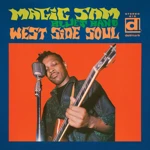
The decisive turning point came when Bob Koester of Delmark Records signed Sam in the mid-1960s. Koester had a deep commitment to blues and jazz, and Delmark provided a setting in which Sam could make a full album rather than depend primarily on scattered singles. The result was West Side Soul, recorded in 1967 and released by Delmark.
The album is often described as one of the greatest Chicago blues records, and the description is justified. Delmark itself identifies the album as a classic and notes that it was selected by Living Blues as one of its top ten “Desert Island Blues Discs.” The record features Mighty Joe Young on guitar, Stockholm Slim on piano, bassists Earnest Johnson or Mac Thompson, and Odie Payne Jr. or Odie Payne III on drums.
The title is both geographical and aesthetic. West Side Soul is an album about Chicago, but it is not confined to documentary realism. It takes the rawness of the city’s West Side and places it in dialogue with gospel, soul, rhythm and blues and the broader language of Black popular music. Sam’s Mississippi roots remain audible, but the album is unmistakably urban and modern.
The opening track, “That’s All I Need,” establishes the album’s central balance. Sam’s vocal is direct and emotionally exposed, while the band gives the performance a firm, almost jubilant pulse. The guitar does not crowd the arrangement. Instead, it punctuates the vocal and reinforces the song’s emotional insistence. The track feels both intimate and public, as though a private plea has been turned into a communal performance.
“I Need You So Bad” moves in a different direction. Its slow tempo gives Sam room to display the expressive side of his playing and singing. The guitar lines are not merely blues decorations; they function as extensions of the vocal. Each phrase seems to carry a question. The song’s power comes from restraint, from the sense that the performance could break open but chooses instead to hold its tension.
The album also includes “All Your Love,” allowing listeners to hear how Sam’s earlier Cobra recording could be reimagined in a fuller album context. The song is not simply repeated. The later version has the authority of an established performance, and the arrangement gives the old riff a broader frame. The track demonstrates Sam’s awareness of his own history: he could revisit an earlier success without being trapped by it.
“Sweet Home Chicago” provides another revealing moment. The song had already become a standard through Robert Johnson’s recording and its subsequent transformation by Chicago musicians. Sam’s version is faster, brighter and more celebratory than many earlier treatments. It reflects the way Black Southern migrants made Chicago both a real place and a musical idea. The city is not presented as an abstract destination; it is a living environment of clubs, work, desire and possibility.
“Feelin’ Good” brings the earlier Chief-era material into the album’s new setting. Its presence links the stages of Sam’s career and shows that the energy of the early single had not disappeared. If anything, the album version places that energy within a more mature band sound.
The greatness of West Side Soul lies in its consistency. It does not depend on a single famous track. The album’s mood changes from song to song, but the performance never loses its identity. There is no sense that Sam is trying on different personas to satisfy a market. Whether he is pleading, boasting, dancing or mourning, he remains recognizably himself.
The album’s sound also benefits from its refusal to overproduce. The performances are vivid and spacious. The instruments occupy clear positions, and Sam’s guitar retains its physical presence. The record does not flatten the band into a polished studio object. It preserves the feeling that these musicians are responding to one another.
For many listeners, West Side Soul is the ideal entry point into Magic Sam’s work because it contains nearly every essential quality: the sharp guitar, the expressive singing, the rhythmic lift, the gospel-inflected emotional intensity and the modern Chicago setting. It is also an unusually generous album. Sam does not merely demonstrate his abilities; he creates an environment in which the listener can stay.
Black Magic: Expansion, Ambition and Darkness
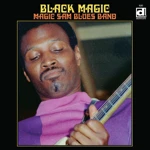
If West Side Soul presents Sam as a fully realized bandleader, Black Magic reveals a musician expanding his palette. The album was recorded on October 23 and November 6, 1968, with Eddie Shaw on tenor saxophone, Mighty Joe Young on guitar, Lafayette Leake on piano, Mack Thompson on bass and Odie Payne Jr. on drums. Delmark states that the album was released shortly before Sam’s death and later received a W.C. Handy Award in the classic blues album category.
The difference between the two albums is not absolute. Black Magic remains unmistakably Sam’s music, and it retains the muscular relationship between guitar, voice and rhythm section. But the arrangements are often broader, and the presence of tenor saxophone adds another dimension to the sound. The record feels less like a snapshot of a club style and more like a statement from an artist aware of larger possibilities.
The title itself carries a certain ambiguity. “Black Magic” can suggest the mystical power of the blues, the stage name’s own aura or the cultural force of Black music. Sam did not need theatrical mystification to make his performances compelling, but the title suits the combination of sensuality, danger and technical command that runs through the album.
His singing on Black Magic is especially important. The voice is more confident than on the early singles, but confidence does not erase vulnerability. Sam can sound assured one moment and emotionally exposed the next. He understood that blues singing is not simply about sounding sad. It is about making an emotional condition audible—whether the condition is longing, anger, relief, desire or renewal.
The album also shows how much Sam’s music depended on arrangement. His guitar is central, but it does not dominate every moment. The saxophone can answer the vocal, the piano can thicken the harmony, and the rhythm section can turn a blues progression into a danceable drive. Sam’s genius was not isolation; it was integration. He created space for a band while ensuring that the band remained unmistakably his.
The timing of Black Magic adds to its poignancy. It was recorded during a period when Sam’s opportunities appeared to be widening. He was no longer simply a respected local musician. He had become a figure of international interest, and his festival appearances introduced him to audiences who had previously known Chicago blues primarily through older stars or record collections.
The album therefore feels like a threshold. It is not a final statement in the conventional sense, because Sam was still developing. But it allows us to hear a musician prepared to move into a larger career.
Live Performance and the Ann Arbor Breakthrough
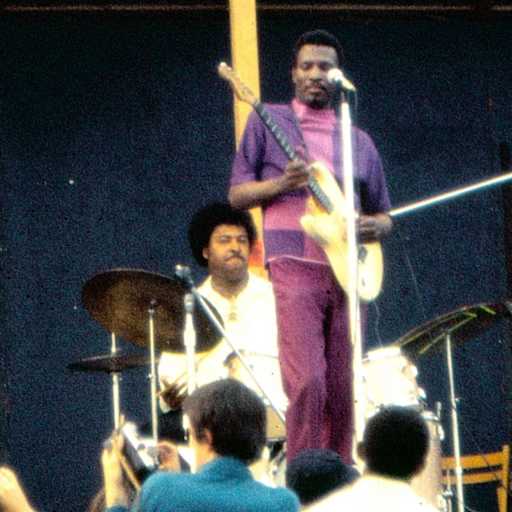
Magic Sam was a powerful studio artist, but his reputation rested heavily on live performance. The club circuit had given him the ability to create immediate contact with an audience, and festival appearances showed that his intensity could survive outside the intimate conditions of a Chicago bar.
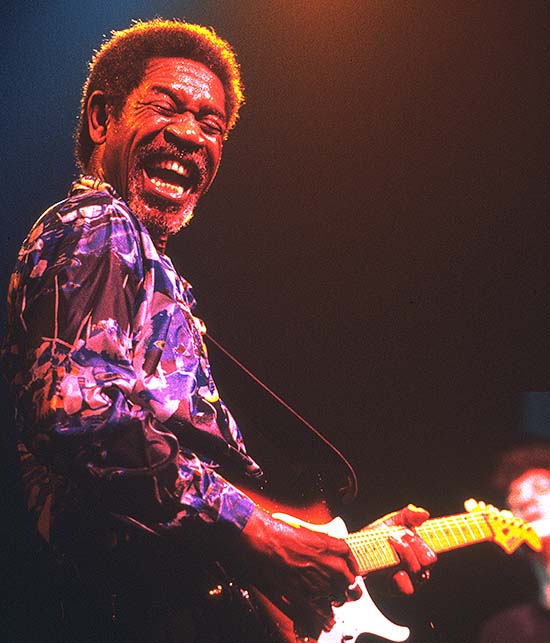
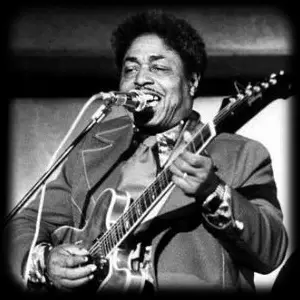
One of the most important events of 1969 was the Ann Arbor Blues Festival. Sam’s appearance there helped bring him to wider attention and is often regarded as a breakthrough performance. Images from the festival show him in a striking stage presentation, singing into a microphone while playing electric guitar before a large audience.
The significance of Ann Arbor was not simply that Sam played to a larger crowd. The festival placed him within a changing blues culture. In the late 1960s, blues was being heard by multiple audiences at once: Black listeners who understood it as a living contemporary music, white rock audiences who were discovering it through British performers, folk enthusiasts who often treated it as historical roots music, and younger musicians searching for models of authenticity and expressive force.
Sam could speak to all of these audiences without simplifying himself. He was rooted in Chicago’s working music culture, but his band was powerful enough for a festival stage. He could perform familiar blues forms, but his rhythmic energy connected with soul and rock. He was a traditionalist only in the sense that he understood the tradition from the inside. He had no need to imitate the past as a museum object.
His live recordings reveal a more expansive performer than the studio albums alone might suggest. The performances can be rawer, more elastic and more openly physical. Songs stretch, vocal lines become more emphatic, and guitar figures are pushed harder. The audience is not an abstract presence; it is part of the performance’s energy.
Delmark has released several posthumous live and archival collections, including Live, material from the Avant Garde in Milwaukee and other recordings drawn from Sam’s working life. The label notes that the Avant Garde performance was recorded on June 22, 1968, and features Big Mojo Elem on bass and Bob Richey on drums. The set includes “That’s All I Need,” “I Need You So Bad,” “Two Trains Running” and “Come On in This House.”
Such recordings should be approached with the understanding that not every archival release has the same sound quality or historical completeness as the major studio albums. Their value lies in what they reveal about Sam as a performer: his pacing, his interaction with a band, his ability to vary a familiar song and the emotional force he generated without studio editing.
The live material also counters a common misunderstanding of Sam’s style. Because his recorded guitar parts are often economical, listeners may underestimate how much movement existed within his performances. Onstage, the restraint becomes a platform for escalation. He could begin with a compact phrase and gradually turn it into a larger rhythmic event.
The Final Months
By 1969, Sam’s circumstances seemed to be changing. He had received important exposure through festival performances and European appearances, and his Delmark recordings had established him as one of the leading younger figures in electric blues. Accounts also describe plans for further recording opportunities, including interest from John Mayall.
The promise of that moment makes his death particularly devastating. On December 1, 1969, Magic Sam died in Chicago of a heart attack at the age of thirty-two. The death was sudden, and it came at the very moment when his career seemed poised to expand beyond its established boundaries.
There is an understandable temptation to interpret his entire career through the tragedy of its ending. His records can begin to sound like evidence of lost possibilities, and his unrealized future can overshadow what he actually achieved. But Sam deserves better than to be remembered only as a musician who died young. His accomplishments were substantial before his death. He had helped define a major regional sound, made two classic albums, written enduring songs and developed a guitar-and-vocal style that could not be confused with anyone else’s.
The tragedy is not that he failed to become important. It is that he had already become important and had not yet reached the full scale of what he might have done.
The Recordings: A Guided Listening History
A serious consideration of Magic Sam’s recordings must account for the way they exist in several layers. There are the early singles, the later studio albums, live performances, home recordings and compilations. Each layer presents a different Sam.
The Cobra Recordings
The Cobra sides from 1957 through 1959 are essential for hearing Sam’s emergence. “All Your Love” and “Easy Baby” are the central landmarks, but the larger value of the sessions lies in their sense of discovery. Sam sounds young, hungry and already sharply individual.
The recordings are compact, as singles had to be, but they do not feel musically small. A riff, vocal phrase or drum accent can carry enormous weight. Sam’s guitar has a nervous energy, and his voice is immediately identifiable. The performances also show how closely his writing was tied to arrangement. The songs are not simply chord progressions with improvised solos; they are built around hooks that remain memorable after the record ends.
The Cobra material is also where listeners can hear the earliest version of Sam’s relationship to Willie Dixon’s production world. The records sit within a professional Chicago blues framework, but Sam’s personality is never subordinate to it. He uses the framework as a launching point.
The Chief Recordings
The Chief recordings reveal Sam’s response to changing musical conditions. “Feelin’ Good” is the best-known example, but the sessions as a whole show him moving toward a more pronounced R&B sensibility. The rhythmic patterns are often more insistent, and the arrangements suggest an artist searching for a wider audience without surrendering his blues identity.
These recordings are sometimes treated as secondary to the Cobra and Delmark work, but that judgment misses their historical importance. They document Sam’s resilience after the disruption of military service and the collapse of Cobra. They also show that he was not artistically frozen in the late 1950s. He continued to listen, adapt and develop.
West Side Soul
For most listeners, West Side Soul should be the foundation. It is the album in which Sam’s earlier strengths become fully integrated: the songwriting of the singles, the emotional range of his voice, the authority of his guitar, the danceable rhythmic drive and the communal force of a strong Chicago band.
The album should be heard as a complete statement rather than merely as a collection of tracks. Its sequencing creates a balance between urgency and tenderness. The harder-driving songs gain depth from the slower performances, while the intimate material benefits from the energy established elsewhere. Sam’s personality remains constant, but the album allows different sides of him to emerge.
The record also demonstrates the difference between a great single and a great album. A single can establish identity through concentration. An album must create duration. West Side Soul succeeds because Sam can sustain interest across a broad emotional and rhythmic range.
Buy the Album
Black Magic
Black Magic belongs beside West Side Soul, not beneath it. The two albums are complementary. If West Side Soul captures Sam’s immediate, club-centered brilliance, Black Magic suggests greater ambition in arrangement and presentation.
The involvement of Eddie Shaw, Lafayette Leake and Mighty Joe Young gives the album a fuller instrumental profile, but Sam remains the organizing force. His guitar and voice still determine the emotional center. The record feels like a continuation rather than a departure, but it also hints at possible future directions: more complex arrangements, larger ensembles and a wider relationship to soul and contemporary R&B.
Buy the Album
Live and Archival Releases
The posthumous releases require selective listening, but they are indispensable for understanding Sam’s performance practice. Live, Live at the Avant Garde, Give Me Time and archival collections such as The Magic Sam Legacy allow listeners to hear music that falls outside the two canonical studio albums.
Home recordings and informal tapes can be sonically imperfect, yet they sometimes offer an extraordinary sense of proximity. Delmark describes Give Me Time as material recorded at Sam’s home in January 1968 by Bill Lindemann, a close personal friend. The recordings were not made with commercial release in mind, which gives them a different atmosphere from the polished studio albums.
The complete Cobra, Chief and related recordings are also valuable because they show the arc of Sam’s development rather than isolating the final achievements. A listener who moves chronologically can hear him pass from the concentrated intensity of the early singles through the rhythmic experimentation of the Chief period and into the mature authority of the Delmark albums.
Sam as Songwriter
Magic Sam’s reputation often rests on his guitar playing, but his songwriting deserves equal attention. His best compositions are concise, memorable and emotionally direct. They do not depend on elaborate narratives. Instead, they create a strong emotional situation and intensify it through repetition, rhythm and vocal emphasis.
“All Your Love” is a model of economy. The central riff, title phrase and arrangement establish a complete world in a few minutes. “Easy Baby” uses a similarly direct approach, combining a memorable vocal hook with a band feel that is both relaxed and charged. “Feelin’ Good” expands the vocabulary by turning the blues into a song of movement and release.
His songwriting is also rooted in performance. The songs are shaped for the body as much as for the ear. They invite response: a dancer’s movement, a singer’s repetition, a guitarist’s answer, a band’s rhythmic lift. This quality helped his music cross boundaries between blues clubs, soul-oriented audiences and rock listeners.
At the same time, Sam’s songs retain the ambiguity of the blues. “Feelin’ Good” is not merely a slogan of happiness; it sounds like a hard-won state. “I Need You So Bad” is not simply a declaration of love; it carries dependence, uncertainty and the risk of rejection. Sam’s emotional world is never one-dimensional.
His Guitar Style
Magic Sam’s guitar style can be described technically, but technical description alone cannot explain its impact. He used blues vocabulary—bent notes, vibrato, repeated figures, minor-key tension and call-and-response—but arranged those elements with unusual rhythmic precision.
His attack was often sharp and compact. Rather than letting every note ring expansively, he could cut a phrase short, leaving space for the vocal or rhythm section. That space created anticipation. When he did allow a note to sustain, the contrast made it more powerful.
His phrasing was also vocal. He seemed to understand the guitar as a second singer. The instrument could cry, plead, tease or insist. This is one reason his solos rarely feel detached from the song. They are not technical interruptions inserted between verses; they continue the emotional argument.
There is a gospel dimension to this approach. In gospel music, a singer’s phrase is often answered by a congregation, organ, piano or choir. Sam transferred that principle to the relationship between voice and guitar. His guitar answers him, challenges him and sometimes seems to complete a thought he has begun vocally.
The rhythmic side of his playing is equally important. Sam was not only a lead guitarist. He could make the guitar function as a rhythmic engine, particularly in songs built around repeating figures. His riffs often lock into the bass and drums while retaining enough flexibility to push the performance forward.
This balance between rhythm and lead became a major part of his influence. Later blues-rock guitarists often emphasized sustained notes, volume and extended solos. Sam offered another model: a guitarist could be powerful through timing, articulation and economy.
His Voice and Emotional Identity
Sam’s singing is one of the reasons his music remains immediately recognizable. His voice was youthful, direct and emotionally transparent. He did not hide behind a grand persona. Even when the band was forceful, his vocals preserved a sense of personal address.
That directness can be heard in the way he handled simple lines. A phrase such as “I need you so bad” could easily become generic in another singer’s hands. Sam made it sound specific. The words seem to come from a particular moment, addressed to a particular person, with real consequences attached.
His singing also contains a subtle tension between confidence and vulnerability. He could sound like a man who knew his worth, but he could also sound uncertain that love, loyalty or happiness would last. This tension is central to the emotional power of his records. The songs do not present blues feeling as permanent defeat. They present it as a struggle between desire and circumstance.
Sam’s voice helped define the modernity of his music. He did not sing like an archival representative of rural blues, nor did he adopt the polished manner of a mainstream soul singer. His delivery belonged to the urban present. It was shaped by Chicago clubs, amplified bands, contemporary rhythm and blues and the changing expectations of Black popular music.
Influence on Blues, Soul and Rock
Magic Sam’s influence has spread through several overlapping channels. Some musicians learned from his guitar technique; others absorbed his rhythmic approach, vocal style, songwriting or album-making. His influence is not always easy to measure through direct quotations because the most important lessons he offered were stylistic and structural.
He demonstrated that electric blues could be modern without being diluted. The music could incorporate soul, R&B and pop energy while remaining emotionally and musically grounded in the blues. That example mattered to musicians who wanted to move forward without abandoning the form.
He also helped establish the idea of the young, contemporary blues artist. In the late 1950s and 1960s, the blues was often presented through older masters whose authority was tied to long careers and established traditions. Sam represented a different possibility: a younger musician who could inherit the language, transform it and speak directly to the present.
His influence can be heard in the work of guitarists who favored a sharp tone, compact phrases and strong rhythmic attack. It can also be heard in performers who treated blues albums as carefully shaped statements rather than simply collections of singles. West Side Soul in particular became a model for how a blues record could be both rooted and contemporary.
The British blues movement and later blues-rock audiences also helped preserve and amplify Sam’s reputation. Musicians in Britain and Europe were intensely interested in Chicago blues, and Sam’s records circulated among guitarists searching for models beyond the most widely known figures. His work demonstrated that the West Side sound possessed its own identity and deserved to be heard alongside the music of Muddy Waters, Howlin’ Wolf and Elmore James.
His influence was not limited to guitarists. Singers could learn from his emotional directness, arrangers from his restraint and bandleaders from his ability to combine individual personality with ensemble strength. He showed that a band could be forceful without becoming cluttered.
The connection to Magic Slim is another part of his personal and musical legacy. Morris Holt, later known as Magic Slim, took his nickname from his friend Magic Sam. The Blues Foundation notes that Sam gave him the name, and that Magic Slim went on to lead one of the most durable hard-driving bands in Chicago blues. The story offers a reminder that influence is not always transmitted through records alone. It can pass through friendships, shared stages, advice and the informal culture of musicians.
Why His Legacy Endures
Magic Sam’s legacy endures because the music combines immediacy with depth. The records are easy to enter but difficult to exhaust. A listener can enjoy “All Your Love” for its riff and rhythm, then return to it and hear the precision of the arrangement, the tension in the vocal, the relationship between guitar and drums and the way Sam creates momentum without overcrowding the performance.
His music also resists nostalgia. Although his recordings belong to the 1950s and 1960s, they do not sound like museum pieces. The emotional situations remain recognizable, and the rhythmic energy remains physical. A band playing “Feelin’ Good” or “That’s All I Need” is not reenacting a vanished era; it is drawing on a vocabulary that still works.
His brevity contributes to the sense of concentration. There is no long late-career period in which his style becomes repetitive or loses focus. The surviving work captures him at different stages, but the central identity remains vivid. We hear the young musician announcing himself, the experienced performer adapting to changing conditions and the mature artist creating albums of lasting authority.
Yet his importance should not be reduced to the romance of premature death. Many musicians die young, but not all leave recordings of this quality. Sam’s legacy is not powerful merely because his career was interrupted. It is powerful because, within that short career, he solved difficult artistic problems. He found a personal guitar voice. He developed a recognizable vocal identity. He wrote songs that lasted. He led bands effectively. He connected regional blues to broader currents in Black popular music. And he made records that remain coherent, exciting and emotionally persuasive.
The Essential Listening Path
A listener approaching Magic Sam for the first time should begin with West Side Soul. Hear it as an album, allowing its sequence of hard-driving and slow material to establish the full range of his artistry. “That’s All I Need,” “I Need You So Bad,” “All Your Love,” “Feelin’ Good” and “Sweet Home Chicago” provide the essential landmarks, but the record’s achievement lies in the way the tracks belong together.
From there, Black Magic reveals a somewhat broader and more ambitious sound. The contrast between the albums is instructive: the first emphasizes immediate West Side energy, while the second suggests a musician expanding his instrumental and arrangement possibilities.
The Cobra recordings should follow, particularly “All Your Love,” “Easy Baby” and “Everything Gonna Be Alright.” They show the early formation of the style and make clear how much of the later Sam was already present. The Chief sides, especially “Feelin’ Good,” complete the picture by documenting his movement toward a more pronounced R&B vocabulary.
Finally, the live and archival releases provide context. They show that Sam was not merely a brilliant studio presence. He was a working bandleader whose music could stretch, intensify and respond to an audience. Delmark’s catalog includes both celebrated live recordings and previously unreleased material from the period surrounding the two major albums.
The most revealing way to listen is not to rank the recordings too rigidly. The early singles, the Delmark albums and the live material illuminate one another. Together they reveal a musician whose career was brief but not narrow.
Conclusion: A Career Measured in Force, Not Years
Magic Sam’s life and career form one of the great compressed narratives in American music. He came from Mississippi, entered the Chicago West Side scene as a young guitarist, recorded a series of influential singles, endured interruption and uncertainty, and returned with two albums that rank among the defining achievements of modern electric blues.
His music joined opposites without neutralizing them. It was raw but sophisticated, local but widely communicative, traditional but modern, disciplined but alive with danger. The guitar could be cutting and tender in the same phrase. The voice could project confidence while exposing need. The band could drive forward without losing space.
He died before his potential had been fully realized, but potential is not the same as achievement. Magic Sam achieved enough to alter the course of Chicago blues and enough to give later generations a durable artistic model. His records continue to teach the value of economy, emotional honesty, rhythmic authority and personal sound.
The essential Magic Sam is not an idea of what he might have become. It is the sound of the musician he already was: the riff that arrives with no hesitation, the voice that turns a simple line into a crisis, the band that catches fire around him, and the unmistakable feeling that every performance is moving toward something just beyond reach.
That is why the fire remains.