Introduction: The Song That Launched Two Careers and a Sound
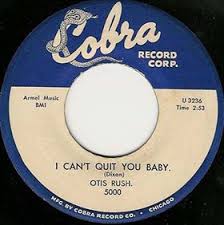
On a July evening in 1956, in a small recording studio on Roosevelt Street in Chicago, Illinois, a twenty-three-year-old left-handed guitarist from Philadelphia, Mississippi named Otis Rush pressed his borrowed right-handed guitar — strung and played upside-down — against the microphone and sang the opening of a slow twelve-bar blues that Willie Dixon had written for him. The performance that followed — two minutes and fifty-six seconds of aching vocal, guitar lines of extraordinary intensity, and an ensemble of complementary virtuosity assembled by producer Dixon — became simultaneously Rush's debut recording, the debut single of the Cobra Records label, and one of the most celebrated blues recordings in the history of the form.
"I Can't Quit You Baby" reached number six on the Billboard R&B charts in the autumn of 1956. It was inducted into the Blues Foundation Hall of Fame in 1994. It was subsequently covered by Clarence Edwards, John Lee Hooker, Little Milton, B.B. King and Buddy Guy together, and — most consequentially for its global reach — by Led Zeppelin, whose live version from the Royal Albert Hall in 1970 introduced the song to audiences on three continents who had never heard Otis Rush's name.
But the historical significance of "I Can't Quit You Baby" extends far beyond its chart position, its Hall of Fame induction, and its famous cover versions. It was the recording that established the West Side Chicago blues sound — that specific combination of minor key harmonics, intensely emotional vocal, sophisticated guitar work, and ensemble support that distinguished the musicians working in Chicago's West Side clubs from the South Side and Delta traditions that had preceded them. It was the song that established Otis Rush as one of the great blues voices of his generation. And it was the vehicle through which Willie Dixon, working at a new label after falling out with Chess Records, demonstrated that his producing and songwriting gifts could be applied successfully in any commercial context he chose to inhabit.
The City, the Club, and the Meeting: Otis Rush Before "I Can't Quit You Baby"
Otis Rush was born on April 29, 1934, in Philadelphia, Mississippi — not the Mississippi Delta heartland from which most Chicago blues migrants had come, but the hilly country of Neshoba County, a geography that placed him slightly outside the core Delta blues tradition even as it made him part of the broader Mississippi blues world. He came to Chicago in the late 1940s, while still a teenager, drawn by the same combination of economic necessity and musical aspiration that had brought hundreds of thousands of African Americans north from Mississippi during the Great Migration.
He was, in these early Chicago years, an enthusiastic but unpolished musician — a guitarist who was finding his sound, absorbing the influences available in the South and West Side clubs where he performed, developing a style that would eventually prove among the most instantly recognisable in Chicago blues. The specific quality that would become his signature — the ability to combine a deeply emotional vocal with guitar lines of equally emotional intensity, playing a right-handed instrument strung upside-down to accommodate his left-handedness — was already present in embryo but not yet fully formed.
The meeting that changed everything took place at the 708 Club in the Bronzeville neighbourhood of Chicago's South Side, where Rush had found regular work as a performer. Willie Dixon — the bassist, songwriter, and increasingly the effective A&R director of Chicago's blues recording world — heard Rush play there and recognised something exceptional. Dixon's own account of the meeting, preserved in various interviews and in his autobiography, described his immediate recognition of Rush's potential as a recording artist, and his decision to help Rush find a home at the right label.
That label was Cobra Records — a new operation, founded by Eli Toscano on the city's West Side, for which Dixon had gone to work after his falling-out with Leonard and Phil Chess. Cobra's debut would be Rush's debut, and the song that Dixon chose for both was one he had written specifically for this young singer and guitarist: "I Can't Quit You Baby."
The Song: Willie Dixon's Composition and Its Architecture
"I Can't Quit You Baby" is, in formal terms, a slow twelve-bar blues in a minor key — a structural simplicity that is, as so much of Dixon's songwriting demonstrates, the vehicle for considerable emotional and harmonic sophistication. The song's minor-key character was itself significant in the context of Chicago blues circa 1956: the genre's commercial mainstream favoured major-key shuffles and up-tempo boogies, and the specifically minor-key sensibility that Rush brought to his best recordings was one of the defining characteristics that distinguished him from his contemporaries.
Dixon's lyric is a meditation on the psychological trap of romantic obsession — the narrator knows that the relationship is harmful, knows that he should end it, and cannot. "I can't quit you, baby, so I'm gonna put you down for a while" — the half-measure in that second line, the substitution of a temporary suspension for the complete break that the rational mind demands, captures the essential ambivalence of the situation. The blues has always been the music of emotional honesty rather than emotional resolution, and "I Can't Quit You Baby" is a particularly direct statement of the condition it names: not the blues of loss (the relationship has ended) or the blues of desire (the relationship hasn't yet begun), but the blues of entrapment — the narrator is in the relationship, knows he shouldn't be, and cannot leave.
The uDiscover Music account notes that the song "is notable for its powerful vocals rather than expert guitar playing, as Rush had yet to develop the distinctive timing and clean technique that would mark his later recordings." This assessment is historically accurate but aesthetically slightly misleading: the "powerful vocals" are not a consolation prize for undeveloped guitar technique but the primary vehicle of the song's emotional content, and Rush's guitar playing on the recording — while less technically sophisticated than his later work — is entirely appropriate to the musical context. The song does not need guitar pyrotechnics; it needs the raw emotional conviction that Rush provides.
Boulevard Recording and the Production: Willie Dixon at the Controls
The original session was recorded on approximately July 8, 1956, at Boulevard Recording in Chicago — a small facility whose specific acoustic qualities contributed to the sound of all the Cobra Records recordings that Dixon produced there. The All About Jazz review of the Complete Cobra Sessions describes "an ambient quality about these recordings due in equal parts to the acoustics of Cobra's tiny Roosevelt St. studio, Willie Dixon's echo-laden production, and the supremely soulful sax section that underscores the emotion in the music."
That echo-laden production quality was not accidental but deliberate. Dixon, who had absorbed the techniques of the Chess Records studio operation through his years working with Leonard and Phil Chess, understood how to use the recording environment's natural reverb and whatever artificial echo was available to give the recordings their particular atmospheric quality. The slight roominess of the Boulevard Recording studio — its tendency to allow some ambient sound into the recorded signal rather than isolating it completely — gave the Cobra recordings a warmth and depth that more sterile studio environments would have prevented.
Dixon's role as producer went well beyond the technical. He had written the song; he had recruited the artist; he had assembled the musicians; and in the studio he directed the performance, ensuring that Rush's vocal had the emotional conviction that the song required and that each instrumental element of the arrangement was contributing to the overall effect rather than competing with it. This comprehensive involvement — writer, producer, bassist — was characteristic of Dixon's Cobra operation and gave the recordings a creative coherence that labels with more compartmentalised working practices could not easily match.
The Musicians: An All-Star Chicago Ensemble
The specific cast of musicians that Dixon assembled for the "I Can't Quit You Baby" session was, by any measure, exceptional. The Blues Foundation Hall of Fame documentation is precise: "Vocal and guitar with Walter Horton, harmonica; James 'Red' Holloway, tenor sax; Lafayette Leake, piano; Wayne Bennett, guitar; Willie Dixon, bass; Al Duncan, drums."
Walter "Big Walter" Horton on harmonica was, as discussed elsewhere in this series, one of the supreme harmonica players in the history of the blues — described by Dixon himself as "the best harmonica player I ever heard." His presence on Rush's debut recording was not a coincidence; Dixon specifically chose Horton for these sessions because his warm, melodic, spacious harmonica style complemented rather than competed with Rush's guitar. Where Little Walter's amplified harp would have been a more assertive presence — fighting for the melodic foreground — Horton's approach was to provide harmonic and melodic support, his horn-like tone filling the middle register of the arrangement and his melodic lines responding to and extending Rush's guitar and vocal. The Big Train Blues account confirms his excellence on the recording, identifying "I Can't Quit You Baby" among his "greatest performances on Chicago blues classics."
James "Red" Holloway on tenor saxophone was one of the more accomplished saxophonists in Chicago's jazz and blues world. Born James Holloway in Helena, Arkansas, in 1927, he had established himself in Chicago as a musician of genuine sophistication — a player with jazz training and credentials who could bring harmonic and rhythmic intelligence to a blues session without losing the blues feeling. His tenor saxophone on "I Can't Quit You Baby" occupies the high-register end of the horn spectrum, his lines providing a melodic dimension above the piano and below the harmonica, contributing to the ensemble's remarkable density of musical information.
Lafayette Leake on piano was the consummate Chicago session pianist — a musician whose name appears on an extraordinary proportion of the significant recordings made at Chess and Cobra studios through the late 1950s and early 1960s. His piano work on "I Can't Quit You Baby" is characteristically supportive: rolling bass figures in the left hand providing harmonic foundation, right-hand commentary between vocal phrases adding melodic interest without crowding the foreground. Leake's sensitivity to context — his ability to play exactly what the song needed and nothing more — was one of the qualities that made him so consistently effective in session work.
Wayne Bennett on second guitar was a Nashville-born guitarist whose clean, jazz-influenced single-note style provided a melodic complement to Rush's more emotionally intense guitar work. Bennett's guitar on the recording occupies a supportive role — he is not soloing or attempting to match Rush's emotional intensity but providing a secondary melodic voice that enriches the arrangement's harmonic texture.
Willie Dixon on bass provided both the rhythmic foundation and the harmonic framework that allowed the other musicians to operate freely. Dixon's bass playing was always melodically intelligent — walking bass lines that not only held the rhythm but contributed to the harmonic movement of the song — and on "I Can't Quit You Baby" his bass is particularly active in the turnarounds and the transitions between sections, his melodic instincts as a composer finding expression through his instrument.
Al Duncan on drums completed the rhythm section. Duncan was a Chicago drummer whose name appears on numerous South and West Side blues recordings of the period, his style direct and supportive — the hi-hat and snare providing the rhythmic drive that the slow twelve-bar shuffle required without imposing on the emotional space that Rush's vocal needed.
The Performance: Rush's Vocal and Guitar
The specific qualities of Rush's vocal performance on "I Can't Quit You Baby" are what have made the recording so durable. As the EBSCO Research account notes, the song "is notable for its powerful vocals rather than expert guitar playing, as Rush had yet to develop the distinctive timing and clean technique that would mark his later recordings. The direct simplicity of Rush's singing secured the recording's popularity and heralded the talented young bluesman's professional arrival."
The "direct simplicity" of the singing is more accurately described as directness of feeling: Rush sings the lyric with the urgency of someone for whom the words are immediately, personally true. There is no performance distance between the narrator's emotional state and the singer's delivery — no irony, no detachment, no rhetorical management of the emotion. He simply sings it as it is: he cannot quit this woman, and the inability to do so is both painful and shameful, and he knows it, and he cannot stop.
His guitar playing on the original recording is, as noted, less technically accomplished than his later work — but the specific qualities of his guitar approach are already present. He plays a right-handed guitar strung upside-down to accommodate his left-handedness, and this technical arrangement gives his playing a distinctive quality: the bass strings are at the top of his field of vision rather than the bottom, and his attack from below gives individual notes a slightly different tonal character from the standard approach. His bending technique — already developed enough on the original recording to give his single-note lines their characteristic expressiveness — would become, on subsequent recordings, one of the most immediately identifiable sounds in Chicago blues.
The Commercial Response and the Launch of Cobra
The commercial success of "I Can't Quit You Baby" was significant for both parties most directly involved. For Otis Rush, it was the commercial validation of everything he had been working toward since his arrival in Chicago — proof that his specific musical approach had an audience and a market. For Cobra Records and Eli Toscano, it was the proof of concept that the label could produce commercially competitive blues recordings.
The uDiscover Music account confirms the numbers: "It reached No.6 on the Billboard charts." The Blues Foundation documentation adds context: "Although both Rush and Cobra came up with other classics, this was to be the only chart hit for either." The qualification is important: Rush would go on to record what many critics consider more artistically significant recordings — "Double Trouble," "All Your Love (I Miss Loving)" — but none of them would match the chart performance of the debut. And Cobra Records, despite producing an extraordinary body of West Side blues recordings through 1958, never achieved another chart success before the label's collapse.
The Led Zeppelin Cover: The Recording That Changed Everything
The cover that most dramatically extended "I Can't Quit You Baby"'s reach was Led Zeppelin's version, which the band performed live from their earliest concerts and recorded at the Royal Albert Hall in London on January 9, 1970. The recording appeared on Led Zeppelin (Box Set) in 1990 and on Led Zeppelin: Royal Albert Hall 1970 in 2003, and it introduced the song to audiences across the world who had no prior exposure to Otis Rush.
Led Zeppelin's version credited the song as "I Can't Quit You Baby" with a Willie Dixon composition credit — a factual attribution that acknowledged the song's origins while placing it in the context of the British blues revival's comprehensive engagement with the Chess and Cobra catalogues. Jimmy Page's guitar work on the Royal Albert Hall version — his slide guitar playing drawing directly from the tradition that Rush had helped establish — demonstrated how thoroughly the West Side Chicago sound had been absorbed into the British blues-rock vocabulary.
The version also introduced "I Can't Quit You Baby" to an album context: where Rush's original was a 2:56 single, Led Zeppelin's live version extended it to over eight minutes, the extended jam format that the group had pioneered giving the song room for extended guitar exploration. This expansion of the song's form was itself a tribute to the quality of its underlying structure — a twelve-bar blues that could sustain this extended treatment was a composition of genuine durability.
Other Major Cover Versions
Clarence Edwards (1964) was, as the uDiscover Music account notes, "the first to record a cover version of the song." Edwards, a Louisiana blues musician, followed the original arrangement closely, his version remaining in the tradition of the Cobra recording without significantly transforming it.
John Lee Hooker (1967) recorded a version for Chess Records — one that "remained in the vaults until 1991" according to the uDiscover account — that approached the song with Hooker's characteristic rhythmic looseness and emotional directness. The Chess context gave the recording a different sonic character from the Cobra original.
Little Milton — the Mississippi-born singer and guitarist who had been a fixture of the Chess Records world throughout the 1960s — recorded his own version that drew on his specific combination of blues intensity and soul vocal sophistication.
B.B. King and Buddy Guy recorded the song together — a pairing of two of the most celebrated blues guitarists of their generation approaching material that had been central to both their musical educations.
The Blues Foundation Hall of Fame Induction: 1994
The Blues Foundation's induction of "I Can't Quit You Baby" into its Hall of Fame in 1994 — in the "Singles/Albums" category — confirmed the institutional recognition of what listeners and musicians had known for decades: this was one of the canonical recordings of the blues tradition. The Blues Foundation documentation accompanying the induction preserves the most precise available account of the recording session: "A Willie Dixon production revealing Rush as an extraordinary talent with an impassioned approach, 'I Can't Quit You Baby' remained a signature tune for Rush and was later covered by Little Milton, Led Zeppelin, Buddy Guy and others."
The induction placed the song in the company of other Cobra Records recordings that the Blues Foundation had recognised, and confirmed that Eli Toscano's operation — despite its brief life and single chart hit — had produced recordings of permanent historical significance.
The Legacy: West Side Sound and Beyond
The legacy of "I Can't Quit You Baby" operates at multiple levels. As a commercial recording, it launched two careers (Rush's and Cobra's) and demonstrated that the West Side Chicago blues sound had commercial viability in a market dominated by the Chess Records South Side aesthetic. As an artistic statement, it established the specific qualities of Rush's approach — the minor key, the emotional intensity, the guitar style — that would characterise his subsequent work and make him one of the most admired blues musicians of his generation.
As a cultural document, it helped define what the "West Side sound" was — the term that blues historians subsequently applied to the style emerging from Chicago's West Side clubs in the mid-to-late 1950s, characterised by the minor-key emotional intensity, the sophisticated guitar work, and the ensemble approach that Rush, Buddy Guy, Magic Sam, and their contemporaries developed simultaneously in the same geographic and musical environment. The specific qualities that the All About Jazz account identifies in the Cobra recordings — "most blues singers manage to act emotional, but Otis Rush's intensity seems channeled directly from his soul" — are qualities that "I Can't Quit You Baby" established and that Rush's subsequent career built on.
Willie Dixon's songwriting instinct — his recognition that this specific young guitarist with this specific vocal approach needed a specific kind of song to launch his career, and his ability to write that song — was the creative intelligence behind the recording's commercial success. "I Can't Quit You Baby" was not the best song Dixon ever wrote for a blues singer; but it was precisely the right song for this singer at this moment, and the combination of Dixon's compositional intelligence and Rush's specific performing gifts produced something that has outlasted both the commercial moment of its creation and the institutional framework (Cobra Records) that brought it into being.
Selected Discography
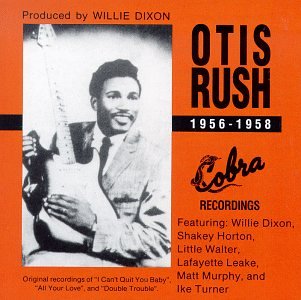
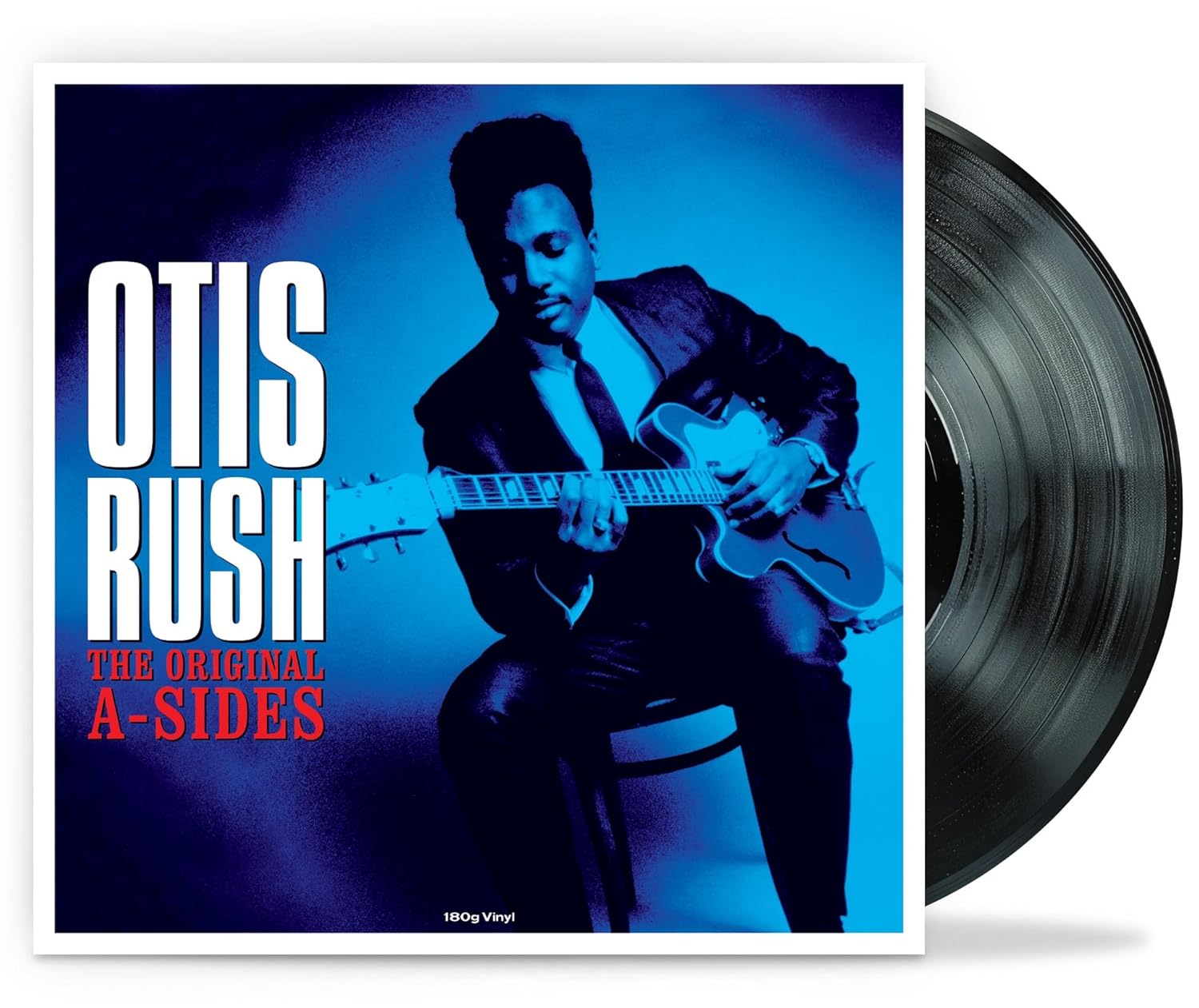
"I Can't Quit You Baby" (Willie Dixon). Recorded approximately July 8, 1956, Boulevard Recording, Chicago, Illinois. Released as Cobra 5000 (78 and 45 rpm), August 1956. Personnel: Otis Rush (vocal, lead guitar); Big Walter Horton (harmonica); James "Red" Holloway (tenor saxophone); Lafayette Leake (piano); Wayne Bennett (second guitar); Willie Dixon (bass); Al Duncan (drums). Produced by Willie Dixon. Reached number 6 on the Billboard R&B charts. Inducted into the Blues Foundation Hall of Fame, 1994. Covered by: Clarence Edwards (1964); John Lee Hooker (1967, Chess, unreleased until 1991); Little Milton; B.B. King and Buddy Guy; Led Zeppelin (Royal Albert Hall, January 9, 1970; released 1990 and 2003).