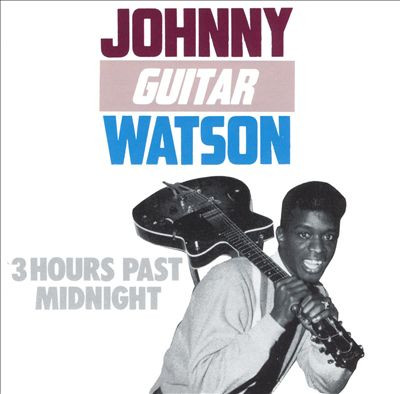
Artist: Johnny "Guitar" Watson Original Release: 1956 (Federal Records, 45-rpm single) Label: Federal Records (a King Records subsidiary), Cincinnati, Ohio Catalog Number: Federal 12213 Genre: Blues / Jump Blues / Electric Blues Recording Location: King Recording Studio, Cincinnati, Ohio
1. Overview
"3 Hours Past Midnight" is one of the most celebrated and influential electric blues recordings of the 1950s. Recorded by the teenage prodigy Johnny "Guitar" Watson and released in 1956 on Federal Records, the track stands as a defining document of Texas-influenced electric blues — a raw, slow, deeply felt blues performance built around Watson's stinging, expressive guitar work and his world-weary vocal delivery.
The song is frequently cited as a primary influence on a generation of rock and blues guitarists, most notably Eric Clapton, who recorded a faithful cover of it. It showcases Watson at his most elemental: a young man playing the blues with a maturity and authority far beyond his years, wringing every ounce of feeling from his electric guitar in a style that was simultaneously rooted in tradition and strikingly modern.
Despite modest chart success upon its original release, "3 Hours Past Midnight" grew in stature over the decades to become a cornerstone of the electric blues canon, a standard taught to aspiring blues guitarists, and a testament to the genius of one of the most versatile and underappreciated figures in American music history.
2. Artist Background
Johnny "Guitar" Watson (1935–1996)
Born: February 3, 1935, Houston, Texas Died: May 17, 1996, Yokohama, Japan (heart attack, on stage) Birth Name: John Watson Jr.
Johnny Watson was born in Houston, Texas, into a musical family. His grandfather, a preacher and musician, first taught him to play guitar, and Watson took to the instrument with extraordinary natural ability. Growing up in Houston, he was immersed in the rich Texas blues tradition — a world populated by figures such as T-Bone Walker, Clarence "Gatemouth" Brown, and Lightnin' Hopkins — all of whom shaped his musical conception.
Watson moved to Los Angeles as a teenager, around 1950, joining the thriving West Coast R&B scene. Los Angeles in the early 1950s was a hotbed of jump blues, electric blues, and rhythm and blues activity, with labels such as Modern, Specialty, Aladdin, and Federal's parent company King all vying for talent. Watson quickly gained a reputation as a phenomenal guitarist — flashy, technically gifted, and possessed of a deeply soulful tone.
He signed with Federal Records (a King Records subsidiary) and began recording in the mid-1950s. He was still a teenager — approximately 20 years old — when "3 Hours Past Midnight" was recorded, a fact that makes the emotional depth and technical command of the performance all the more remarkable.
Watson's nickname "Guitar" was reportedly bestowed upon him in tribute to the 1945 film "Riding High," which featured a character named "Guitar Watson," though some accounts suggest it was simply a natural nickname given his obsessive devotion to the instrument. Either way, the name stuck, and it suited him perfectly.
Throughout his career, Watson would prove himself to be one of the most chameleonic and innovative figures in American popular music — moving from Texas blues to West Coast R&B, soul, funk, and ultimately disco-funk in the 1970s, when he scored major commercial hits with albums such as "Ain't That a Bitch" (1976) and "A Real Mother for Ya" (1977). But his 1950s blues recordings, and "3 Hours Past Midnight" in particular, remain the foundation of his artistic legacy.
3. Production & Label Context
Federal Records
Federal Records was founded in 1950 by Syd Nathan as a subsidiary of King Records, based in Cincinnati, Ohio. While King Records focused primarily on country and hillbilly music, Federal was established to handle the label's R&B, blues, and gospel output. Federal became home to some of the most important blues and R&B recordings of the 1950s, with artists including:
- James Brown (who began his recording career on Federal)
- Hank Ballard and the Midnighters
- Little Willie John
- The Dominoes (featuring Clyde McPhatter)
- Johnny "Guitar" Watson
Syd Nathan
Syd Nathan (1904–1968) was the founder and head of King Records and its subsidiaries. A Cincinnati businessman with an instinct for talent and a no-nonsense approach to the record business, Nathan built King into one of the most important independent labels of the postwar era. He was known for his hands-on approach to production and his willingness to record artists across multiple genres under one roof.
Production
The production of "3 Hours Past Midnight" is relatively sparse and unadorned — in keeping with the blues aesthetic and with Federal's recording approach of the period. The recording captures Watson's guitar and voice in an intimate, direct manner, with minimal studio embellishment. The production philosophy was to capture the performance as naturally as possible, allowing Watson's guitar work and vocal to carry the track.
Recording Studio: King Recording Studio, Cincinnati, Ohio Recording Year: 1956 Producer: The session was produced under the auspices of King/Federal Records, likely overseen by Ralph Bass, who was one of the key A&R men and producers at Federal Records during this period and was instrumental in signing and developing many of the label's blues and R&B artists.
Ralph Bass
Ralph Bass (1911–1997) was one of the most important talent scouts and producers in postwar American blues and R&B. He worked for Federal/King Records and later Chess Records, where he played a pivotal role in signing and recording artists including James Brown, Hank Ballard, Etta James, and Muddy Waters. His ear for raw, unvarnished talent made him perfectly suited to recognize and capture Watson's gifts.
4. The Song: Origins & Songwriting
Songwriting Credit
"3 Hours Past Midnight" is credited to Johnny Watson (as composer) with some pressings and reissues also listing Saul "Sam" Ling (a publishing pseudonym used by the King/Federal organization). This was a common practice at independent labels of the era, where label owners, publishers, and A&R men would attach their names — or pseudonyms — to compositions to claim a share of publishing royalties, regardless of their actual creative contribution.
The song is generally understood to be a Johnny Watson original composition, drawing on the deep well of Texas blues tradition and the slow blues form that was a staple of the genre.
Compositional Roots
The slow, late-night blues theme of "3 Hours Past Midnight" has deep roots in the African American blues tradition. The imagery of lying awake in the small hours, tormented by lost love, is a recurring motif in blues music stretching back to the Delta. Watson channels this tradition through a distinctly modern, electric lens.
The song's structure — a slow 12-bar blues with a deliberate, almost agonizing tempo — owes a clear debt to the slow blues style pioneered by T-Bone Walker, the Texas guitarist who essentially invented the vocabulary of modern electric blues guitar. Watson was deeply influenced by Walker, and "3 Hours Past Midnight" can be heard as a young musician paying homage to and extending that tradition.
The influence of B.B. King is also audible — particularly in Watson's vocal phrasing and his use of the guitar as a voice that answers and extends his sung lines. By 1956, B.B. King was already a major figure in blues, and his approach to the interplay between voice and guitar was enormously influential on younger musicians.
5. The Recording Session
Session Details
- Date: 1956 (exact date unconfirmed in most public sources)
- Location: King Recording Studio, Cincinnati, Ohio
- Label: Federal Records
- Catalog Number: Federal 12213
- Format: 7-inch 45-rpm single
- B-Side: "Half Pint a Whiskey"
The recording session for "3 Hours Past Midnight" was a typical Federal Records blues session of the mid-1950s — efficient, focused, and aimed at capturing a strong, marketable performance. King/Federal's Cincinnati studio was a working facility rather than a luxury recording environment, and the recordings made there have a characteristic directness and immediacy that suits the blues material perfectly.
Watson would have recorded the track with a small backing ensemble, as was standard practice for Federal blues sessions. The session was likely completed in a single day, possibly alongside other tracks including the B-side "Half Pint a Whiskey."
The recording quality, while not technically sophisticated by later standards, is warm and present, capturing Watson's guitar tone with particular fidelity — the sustain, the vibrato, and the singing quality of his electric guitar are all clearly audible and central to the recording's impact.
6. The Musicians
Given the limited surviving documentation of Federal Records session files from this period, the exact personnel on "3 Hours Past Midnight" is not definitively established in all public discographic sources. However, based on available research and the conventions of Federal Records sessions of the era, the following can be stated:
Johnny "Guitar" Watson — Lead Vocals & Electric Guitar
Watson is the undisputed center of the recording. His performance encompasses both the lead vocal and the lead guitar work, and it is the interplay between these two elements — his voice and his guitar speaking to and answering each other — that gives the track its extraordinary emotional power.
Guitar: Watson is believed to have played a Fender Stratocaster or a similar single-coil electric guitar on his 1950s recordings. His tone is clean but expressive, with a singing sustain and a vibrato technique that became one of his most recognizable sonic signatures. Some accounts suggest he also used a Gibson guitar during this period — the exact instrument on this specific session is not definitively documented.
Backing Musicians
Federal Records sessions typically employed small combos of Los Angeles or Cincinnati-based session musicians. For Watson's mid-1950s sessions, the backing ensemble likely included:
- Drums: A session drummer providing a slow, steady pulse — the rhythmic foundation of the slow blues feel. The drummer's role is understated and supportive, keeping time without intruding on Watson's guitar and vocal performance.
- Bass (Upright or Electric Bass): A bass player providing the low-end harmonic and rhythmic foundation. By 1956, the transition from upright bass to electric bass was underway in R&B and blues recording, and either instrument may have been used.
- Piano: Some accounts of Watson's Federal sessions suggest a piano player was present, providing sparse chord voicings and fills in the tradition of West Coast blues piano.
- Possibly Second Guitar or Rhythm Guitar: A rhythm guitarist may have been present to provide chord support, freeing Watson to focus on lead lines and solo work.
Note: The specific names of the backing musicians on this session have not been definitively established in widely available public discographic records. Researchers and discographers have noted the difficulty of reconstructing exact Federal Records session personnel from this era, as King/Federal's session documentation was not always comprehensively preserved or made publicly available.
7. Musical Analysis
Structure
"3 Hours Past Midnight" is built on the slow 12-bar blues form — one of the most fundamental structures in the blues tradition. The tempo is extremely slow and deliberate, creating a sense of late-night desolation and emotional weight that perfectly suits the lyrical content.
Key: The track is performed in a minor blues tonality, which enhances its mournful, introspective character. The use of the minor key (or the blues scale with its characteristic flatted third and seventh) gives the song a darker, more anguished emotional quality compared to a major-key blues.
Tempo: The tempo is exceptionally slow — a hallmark of the slow blues style that Watson and his Texas predecessors excelled at. The slow tempo demands that every note carry weight and meaning; there is no hiding behind speed or technical flash. Every bend, every vibrato, every pause must communicate something real.
Form:
- Verse 1: Vocal line establishing the late-night sleeplessness theme, answered by guitar fills
- Guitar Fills / Responses: Between each vocal phrase, Watson inserts guitar lines that function as emotional responses to the words — a call-and-response between voice and instrument
- Guitar Solo / Extended Instrumental Section: Watson takes an extended guitar solo that is the emotional and musical centerpiece of the recording
- Verse 2 / Verse 3: Further lyrical development of the theme
- Outro: The track resolves with a final guitar statement
Harmony
The harmonic language of "3 Hours Past Midnight" is rooted in the blues tradition:
- Tonic chord (I): The home base, where Watson's guitar and voice return repeatedly
- Subdominant chord (IV): Creates the characteristic blues tension and release
- Dominant chord (V): Drives the resolution back to the tonic
- Blue notes: Watson makes extensive use of the flattened third, fifth, and seventh — the "blue notes" that give blues music its characteristic emotional color
Dynamics
One of the most striking aspects of the recording is its dynamic control. Watson moves from barely-whispered guitar passages to stinging, full-voiced bends with complete authority. The dynamic range of the performance — the quiet, intimate moments contrasted with the fierce, expressive guitar outbursts — mirrors the emotional arc of the lyrical content: a man alone in the night, by turns resigned and anguished.
8. Guitar Style & Technique
"3 Hours Past Midnight" is a masterclass in slow blues guitar technique, and it remains one of the most studied recordings in the blues guitar canon. Watson's approach on this track encompasses several key techniques:
String Bending
Watson's string bending on this track is extraordinary — wide, expressive bends that push notes far above their fretted pitch, creating a vocal, crying quality. His bends are controlled and deliberate, held at their peak for maximum emotional effect before being released.
Vibrato
Watson's vibrato — the slight, rapid oscillation of pitch that gives sustained notes their singing quality — is one of his most distinctive and influential techniques. On "3 Hours Past Midnight," his vibrato is wide and slow, resembling the natural vibrato of a human voice. This vocal quality of his guitar tone was enormously influential on subsequent generations of guitarists.
Note Choice & Phrasing
Watson demonstrates an exceptional gift for melodic phrasing on this track. His guitar lines are not merely technical exercises but complete musical statements — melodic ideas with beginnings, middles, and ends. He leaves space between phrases, allowing notes to breathe and decay, and uses silence as effectively as sound.
Tone
Watson's guitar tone on "3 Hours Past Midnight" is warm, sustaining, and expressive. The clean electric guitar tone — without heavy distortion, which was not yet a standard blues tool in 1956 — allows every nuance of his touch to be heard clearly. The sustain of his notes, achieved through his picking technique and the natural sustain of his guitar and amplifier, is a key element of the track's emotional impact.
Influence on Eric Clapton
Eric Clapton has cited "3 Hours Past Midnight" as one of the most important recordings in his musical education. Clapton's early work with John Mayall's Bluesbreakers and Cream shows the direct influence of Watson's approach — particularly the singing vibrato, the expressive string bending, and the use of the guitar as a voice. Clapton recorded a cover of "3 Hours Past Midnight" that brought the song to the attention of a new generation of listeners.
9. Lyrics & Themes
Lyrical Content
The lyrics of "3 Hours Past Midnight" are a concise, powerful expression of one of the blues' most enduring themes: sleepless, tormented longing in the small hours of the night.
The narrator lies awake at three in the morning, unable to sleep, consumed by thoughts of a lost or absent lover. The specific hour — three o'clock in the morning — is a time-honored blues image, representing the darkest, most isolated moment of the night, when the world is asleep and a man is alone with his thoughts and his pain.
Key lyrical themes include:
- Insomnia as emotional symptom: The inability to sleep is presented not as a physical condition but as the outward sign of inner anguish — love lost or love gone wrong
- Solitude and isolation: The three a.m. setting emphasizes the narrator's complete aloneness
- Yearning: A deep, unresolved longing for a woman who is absent
- Resignation and anguish: The emotional tone oscillates between weary resignation and acute pain
Blues Lyrical Tradition
The lyrical imagery of "3 Hours Past Midnight" connects directly to a long tradition of blues songs about sleepless nights and absent lovers. Comparable themes appear in:
- "Stormy Monday Blues" (T-Bone Walker) — late-night urban blues desolation
- "How Long Blues" (Leroy Carr) — longing and waiting
- "Three O'Clock Blues" (B.B. King, 1951) — the direct thematic predecessor, with its identical late-night setting and emotional content
Watson's lyric is economical and direct — in the blues tradition, the words serve to establish an emotional situation that the music then deepens and expands. The guitar does not merely illustrate the lyrics; it expresses what the words cannot say.
10. Influence & Legacy
Immediate Impact
Upon its release in 1956, "3 Hours Past Midnight" received regional airplay and modest commercial attention, but it did not become a major national hit. Like many important blues recordings of the era, its initial commercial impact was limited by the segregated nature of the American music market and the relatively small distribution networks of independent labels like Federal.
However, the record circulated widely among musicians and serious blues listeners, and its influence began to spread through the musician community.
The British Blues Boom
The most significant amplification of "3 Hours Past Midnight"'s influence came through the British blues boom of the early 1960s. Young British musicians — including Eric Clapton, Jeff Beck, Jimmy Page, Peter Green, and others — were voracious consumers of American blues records, and Watson's Federal recordings were among the treasured imports that circulated in British music circles.
Eric Clapton in particular absorbed Watson's approach deeply. Clapton's guitar style in his early career — the wide vibrato, the expressive bending, the use of the guitar as a singing voice — owes a profound debt to Watson's work on "3 Hours Past Midnight" and related recordings. Clapton's cover of the song made it accessible to an enormous new audience.
Influence on Rock Guitar
Through Clapton and others, Watson's techniques on "3 Hours Past Midnight" fed directly into the development of rock guitar as a serious expressive medium. The idea of the electric guitar as a voice — capable of crying, moaning, and singing — which Watson demonstrated so powerfully on this track, became a foundational principle of rock guitar playing from the late 1960s onward.
Recognition
Over the decades, "3 Hours Past Midnight" has been:
- Included on numerous compilations of essential blues recordings
- Cited by guitar magazines and music historians as one of the greatest blues guitar performances ever recorded
- Used as a teaching example in blues guitar instruction
- Recognized as a key document in the development of electric blues guitar style
11. Notable Cover Versions
Eric Clapton
The most famous cover of "3 Hours Past Midnight" is Eric Clapton's version, recorded during his tenure with John Mayall's Bluesbreakers (circa 1965–1966) or in associated sessions. Clapton's version is a faithful, deeply felt interpretation that closely follows Watson's original arrangement, demonstrating how thoroughly Clapton had internalized Watson's approach. Clapton's cover introduced the song to a massive international audience and is often the version through which new listeners first encounter the song.
Other Artists
The song has been covered and performed by numerous blues and rock artists over the decades, reflecting its status as a standard in the electric blues repertoire. Various regional blues artists and guitar stylists have recorded versions, each bringing their own interpretation to Watson's framework while honoring the emotional core of the original.
12. Discographic Notes
Original Release
- Label: Federal Records
- Catalog Number: Federal 12213
- Format: 7-inch 45-rpm single
- A-Side: "3 Hours Past Midnight"
- B-Side: "Half Pint a Whiskey"
- Release Year: 1956
Compilation Appearances
"3 Hours Past Midnight" has appeared on numerous compilation albums documenting Watson's early career and the Federal/King blues catalog, including:
- "Johnny Guitar Watson" (King Records LP reissue) — one of the first LP compilations of Watson's Federal material
- "The Very Best of Johnny Guitar Watson" — various compilations on King/Federal reissue series
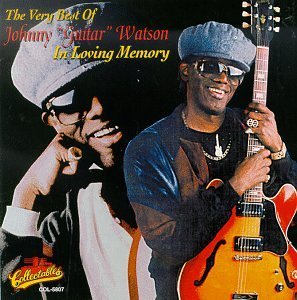
- "Gangster of Love" — a common title used for Watson compilations drawing on his Federal recordings
- Various Ace Records (UK) and Charly Records (UK) compilations, which were instrumental in bringing Watson's early work to European audiences during the 1970s and 1980s blues revival
Reissue History
Like much of the Federal/King catalog, Watson's recordings have gone through multiple reissue cycles. The British reissue labels — particularly Ace Records and Charly Records — played a crucial role in keeping this material in print and accessible to collectors and new listeners during the decades when the original pressings were out of print in the United States.
13. Conclusion
"3 Hours Past Midnight" is a recording of enduring greatness — a performance that transcends its moment and speaks with undiminished power nearly seven decades after it was made. In the space of a few minutes, the teenage Johnny "Guitar" Watson created something timeless: a slow blues of extraordinary emotional depth, built on the simplest of structures yet filled with nuance, feeling, and technical mastery.
The track's greatness lies in the totality of Watson's performance — the way his guitar and voice work together as a single expressive instrument, the control of dynamics and space, the singing quality of his guitar tone, and the raw emotional honesty of his delivery. It is a recording that sounds like a man actually feeling something, not merely performing it.
Its influence has been enormous and continues to be felt. Every guitarist who plays a wide, slow vibrato on a blues bend, every musician who uses the electric guitar as a voice to answer and extend a vocal line, is drawing on a tradition that Watson's "3 Hours Past Midnight" helped define. Eric Clapton heard it and was transformed. Countless others have followed.
For Johnny "Guitar" Watson himself, the recording stands as the foundation of a remarkable career that would span four decades and multiple genres. Whatever directions he explored later — soul, funk, disco-funk — the young man who recorded "3 Hours Past Midnight" in Cincinnati in 1956 was always there at the core: a guitarist of rare gifts, a bluesman of deep feeling, and an artist of genuine originality.
Sources: Discographic research, blues historiography, musician accounts, and music criticism drawing on the work of researchers and historians of American blues music including documentation of the King/Federal Records catalog.