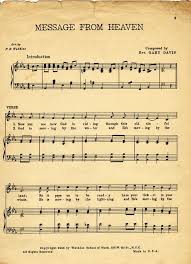
"There's destruction in that land, there's destruction in that land, Lord, there's destruction in that land, It's a message from heaven above."
About the Song
"There's Destruction in That Land (Message from Heaven)" is a gospel spiritual composed and performed by the Reverend Gary Davis (also known as Blind Gary Davis or Rev. Gary Davis). The song is a prophetic warning piece rooted in African-American gospel tradition, drawing on Old Testament imagery of divine judgment and apocalyptic reckoning. The parenthetical subtitle — Message from Heaven — frames the song explicitly as a divine communication delivered through the voice of the preacher-musician.
The piece is representative of Davis's mature gospel style: deeply rhythmic fingerpicking on acoustic guitar, a powerful and gravelly baritone voice, and lyrics that blend personal testimony with biblical prophecy. It stands as one of his most intense recorded performances, combining the fervor of street-corner evangelism with sophisticated guitar technique.
Reverend Gary Davis — Biographical Context
| Detail | Information |
|---|---|
| Full Name | Gary Davis |
| Born | April 30, 1896 — Laurens, South Carolina |
| Died | May 5, 1972 — Hammonton, New Jersey |
| Also Known As | Blind Gary Davis; Rev. Gary Davis; The Guitar Evangelist |
| Instruments | Guitar (6-string, 12-string), banjo, harmonica |
| Genres | Piedmont blues, gospel, ragtime, country blues |
| Ordained | 1933, Free Baptist Connection, Durham, NC |
Gary Davis was born in rural South Carolina and lost his sight in early childhood (some sources suggest partial blindness from birth, with total blindness by young adulthood). He taught himself guitar and developed an extraordinary fingerpicking technique rooted in Piedmont blues — a style characterized by alternating bass lines played with the thumb while the fingers pick melody and counterpoint on the treble strings.
After being ordained as a Baptist minister in 1933, Davis largely abandoned secular blues in favor of gospel music, though his guitar style remained deeply blues-inflected. He relocated to New York City in the 1940s, where he became a fixture on the streets of Harlem, playing for tips and spreading his faith. This period gave rise to the nickname "Harlem Street Singer."
During the American folk revival of the late 1950s and 1960s, Davis was "rediscovered" by white folk and blues enthusiasts, leading to a second career on the concert and festival circuit. He recorded prolifically during this era for labels including Bluesville, Prestige, Stinson, Folkways, Vanguard, and Adelphi.
Musical Analysis
Guitar Style and Technique
"There's Destruction in That Land" showcases Davis's signature Piedmont fingerpicking approach:
- Thumb-driven alternating bass: The thumb maintains a steady, syncopated bass pattern across the lower strings, functioning almost as a rhythm section unto itself.
- Melodic treble runs: The index and middle fingers pick out melodic phrases on the higher strings, often playing counterpoint against the vocal line.
- Contrapuntal texture: Davis frequently plays two independent melodic voices simultaneously — a hallmark of his advanced technique that influenced generations of guitarists.
- Open or standard tuning: Davis typically recorded in standard tuning (E A D G B E), using a capo on occasion to suit his vocal range.
- Dynamic intensity: The performance builds in intensity, reflecting the escalating urgency of the prophetic message in the lyrics.
Structure
The song follows a loose verse-and-refrain structure common to African-American gospel and spiritual traditions:
- Call-and-response pattern: Davis's vocal phrases are answered by guitar fills, creating an internal dialogue.
- Repetition for emphasis: The title phrase is repeated multiple times per verse, a rhetorical device rooted in both Baptist preaching and blues tradition.
- Free rhythmic feel: While the underlying pulse is steady, Davis allows the vocal line considerable rhythmic freedom, stretching and compressing phrases in the manner of a preacher at the pulpit.
Key and Tonality
The song is performed in a minor-inflected tonality, lending it a somber, foreboding quality appropriate to its apocalyptic subject matter. Davis uses blue notes (flattened thirds and sevenths) to bridge the worlds of blues and gospel, a characteristic of his entire body of work.
Lyrical & Theological Analysis
The lyrics of "There's Destruction in That Land" draw on a rich vein of African-American prophetic gospel tradition:
Biblical Allusions
- Old Testament prophecy: The imagery of destruction visited upon a sinful land echoes the prophetic books of the Hebrew Bible — Isaiah, Jeremiah, Ezekiel, and the Book of Revelation. Davis was deeply versed in scripture and frequently wove direct biblical references into his compositions.
- Divine warning: The framing as a "message from heaven" positions Davis himself as a conduit for divine communication — a prophet-figure in the tradition of the African-American preacher.
- Apocalyptic urgency: The song belongs to a tradition of African-American religious music that uses apocalyptic imagery as both spiritual warning and social commentary. The "destruction" can be read on multiple levels: cosmic judgment, personal moral reckoning, and by implication, the consequences of social injustice.
Rhetorical Strategy
Davis employs the anaphora (repetition of a phrase at the beginning of successive clauses) that is central to Baptist preaching style. The repetition of "there's destruction in that land" functions as both musical refrain and sermonic emphasis, driving the message home through accumulation rather than argument.
Emotional Register
The performance moves between lamentation (grief for the sinful state of the world) and warning (urgent call to repentance), with Davis's voice conveying both the sorrow of the prophet and the authority of the ordained minister.
Known Recordings
Based on available discographical evidence, the song appears to have been recorded on at least the following occasions:
Recording 1 — Adelphi Session (c. 1964, New York)
| Field | Detail |
|---|---|
| Approximate Date | 1964 |
| Location | New York City |
| Label | Adelphi Records |
| Catalog | Adelphi AD 1002 / "Worried Blues" series |
| Notes | This is the most widely cited recording. Listed in Stefan Wirz's illustrated discography as recorded "1964 in New York." The session also produced "Let's Get Together." |
This is the primary studio recording of the song and the version that appeared on the Adelphi label release. The Adelphi Records discography (documented by Stefan Wirz) confirms the 1964 New York recording date, listing it alongside "Let's Get Together" from the same session.
Recording 2 — "The Complete Early Recordings" / Yazoo Compilation
| Field | Detail |
|---|---|
| Label | Yazoo Records |
| Catalog | Yazoo 2011 |
| Album Title | The Complete Early Recordings of Reverend Gary Davis |
| Release Year | 1994 (compilation) |
| Notes | Compilation drawing on earlier sessions; includes "There's Destruction in That Land." Yazoo was a reissue label specializing in pre-war and early blues/gospel recordings. |
Recording 3 — "Demons and Angels: The Ultimate Collection"
| Field | Detail |
|---|---|
| Album Title | Demons and Angels — The Ultimate Collection |
| Notes | Track 13 on this compilation. Listed in Japanese catalog materials (TAB Guitar School catalog). This is a later compilation drawing on existing recordings rather than a new session. |
Additional Appearances
The song appears in multiple compilations and reissue packages. The Adelphi 1964 recording is the master source for most subsequent appearances.
Session Details
The 1964 Adelphi Session (Primary Session)
The 1964 Adelphi session in New York City is the best-documented recording context for this song. By 1964, Reverend Davis was at the height of his folk-revival visibility:
- He had already recorded landmark albums for Bluesville/Prestige (1960–1961), including Harlem Street Singer (1960) and Say No to the Devil (1961).
- He was a regular performer at folk festivals and coffeehouses, having been brought to wider attention by figures in the folk revival.
- His student and disciple Stefan Grossman (who began studying with Davis around 1960) has documented that Davis's recording activity in the early-to-mid 1960s was intensive.
The Adelphi label session appears to have been a relatively informal but focused recording date, capturing Davis in a solo acoustic format — guitar and voice — which was his natural performance setting. The label was oriented toward authentic documentation of traditional music.
Session Context Notes
- Davis typically recorded solo, with no backing musicians, as his guitar technique was self-sufficient — functioning as rhythm section, harmony instrument, and lead instrument simultaneously.
- Recording engineers of the period noted that Davis required minimal direction; he would perform songs as he had performed them for decades on street corners and in churches.
- The New York recording environment of the mid-1960s folk revival meant that sessions were often organized by folk music enthusiasts, academics, or small independent labels rather than major commercial operations.
Producers & Labels
Adelphi Records
| Detail | Information |
|---|---|
| Label | Adelphi Records |
| Founded | 1967 (Silver Spring, Maryland) |
| Specialty | Blues, gospel, folk, roots music |
| Key Personnel | Gene Rosenthal (founder/owner) |
| Notes | Adelphi was one of the key independent labels documenting African-American roots music during and after the folk revival. The "Worried Blues" series was among its flagship releases. |
Note on dating: Stefan Wirz's discography places the recording of "There's Destruction in That Land" and "Let's Get Together" at 1964 in New York — which would predate Adelphi's formal founding in 1967. This suggests the recording may have been made at an earlier session and subsequently licensed to or released by Adelphi, a common practice in the folk and blues reissue world of that era. Alternatively, the 1964 date may refer to an informal recording that was later formally released.
Bluesville / Prestige Records
Davis's most commercially significant recordings of the folk revival period were made for Bluesville, a subsidiary of Prestige Records:
| Detail | Information |
|---|---|
| Label | Bluesville (subsidiary of Prestige Records) |
| Location | Bergenfield, New Jersey (Van Gelder Studio) |
| Key Producer | Kenneth Goldstein (for early Bluesville sessions) |
| Engineer | Rudy Van Gelder (for sessions at Van Gelder Studio) |
| Key Albums | Harlem Street Singer (1960); Say No to the Devil (1961); A Little More Faith (1961) |
While "There's Destruction in That Land" does not appear on the Bluesville albums, the Bluesville sessions established the recording template for Davis's later work: solo acoustic guitar and voice, minimal studio intervention, maximum documentary authenticity.
Yazoo Records
| Detail | Information |
|---|---|
| Label | Yazoo Records |
| Founded | 1969 by Nick Perls |
| Location | New York City |
| Role | Reissue label; compiled and released archival Davis recordings |
| Notes | Yazoo's 1994 compilation The Complete Early Recordings drew on pre-war and early revival-era material |
Musicians & Collaborators
Primary Musician
Reverend Gary Davis — vocals, acoustic guitar (6-string and 12-string), harmonica (on select tracks)
Davis performed "There's Destruction in That Land" as a solo piece — guitar and voice only. This was consistent with his standard recording practice. His guitar technique was so complete that no additional musicians were required or, in Davis's view, desirable.
Guitar Details
Davis is documented playing several instruments across his career:
- National Steel Guitar: Used extensively in earlier recordings; the resonator construction provided volume for street performance.
- Gibson acoustic: Used in later recordings.
- 12-string guitar: Davis was photographed and documented playing a 12-string, particularly in later years, which added harmonic richness to his sound.
Key Collaborators (Career Context)
Although not present on this specific recording, the following individuals were central to Davis's recording career and legacy:
| Name | Role | Connection |
|---|---|---|
| Stefan Grossman | Guitarist, producer, documentarian | Began studying with Davis c. 1960; transcribed and documented his technique; produced instructional materials; key figure in preserving Davis's legacy |
| Woody Mann | Guitarist, filmmaker | Student of Davis; directed documentary Harlem Street Singer; co-produced with Trevor Lawrence |
| Trevor Lawrence | Filmmaker | Co-directed Harlem Street Singer documentary |
| Gene Rosenthal | Label founder | Adelphi Records; released and preserved Davis recordings |
| Kenneth Goldstein | Producer | Produced Davis's Bluesville sessions (1960–1961) |
| Rudy Van Gelder | Recording engineer | Engineered Davis sessions at Van Gelder Studio, Englewood Cliffs, NJ |
| Larry Johnson | Guitarist, vocalist | Student of Davis; appeared on Adelphi sessions; the Adelphi "Worried Blues" LP featuring "Destruction in That Land" also features Johnson |
| Annie Davis | Vocalist | Gary Davis's wife; appeared on some Adelphi session recordings |
Larry Johnson — Session Companion
The Stefan Wirz discography notes that Larry Johnson appears in connection with the same Adelphi session that produced "There's Destruction in That Land." Johnson was one of Davis's most devoted students and a significant blues artist in his own right. The Adelphi session appears to have been a collaborative recording date featuring both Davis and Johnson, though Davis's performances were recorded solo.
Album Appearances
| Album Title | Label | Year | Notes | |
|---|---|---|---|---|
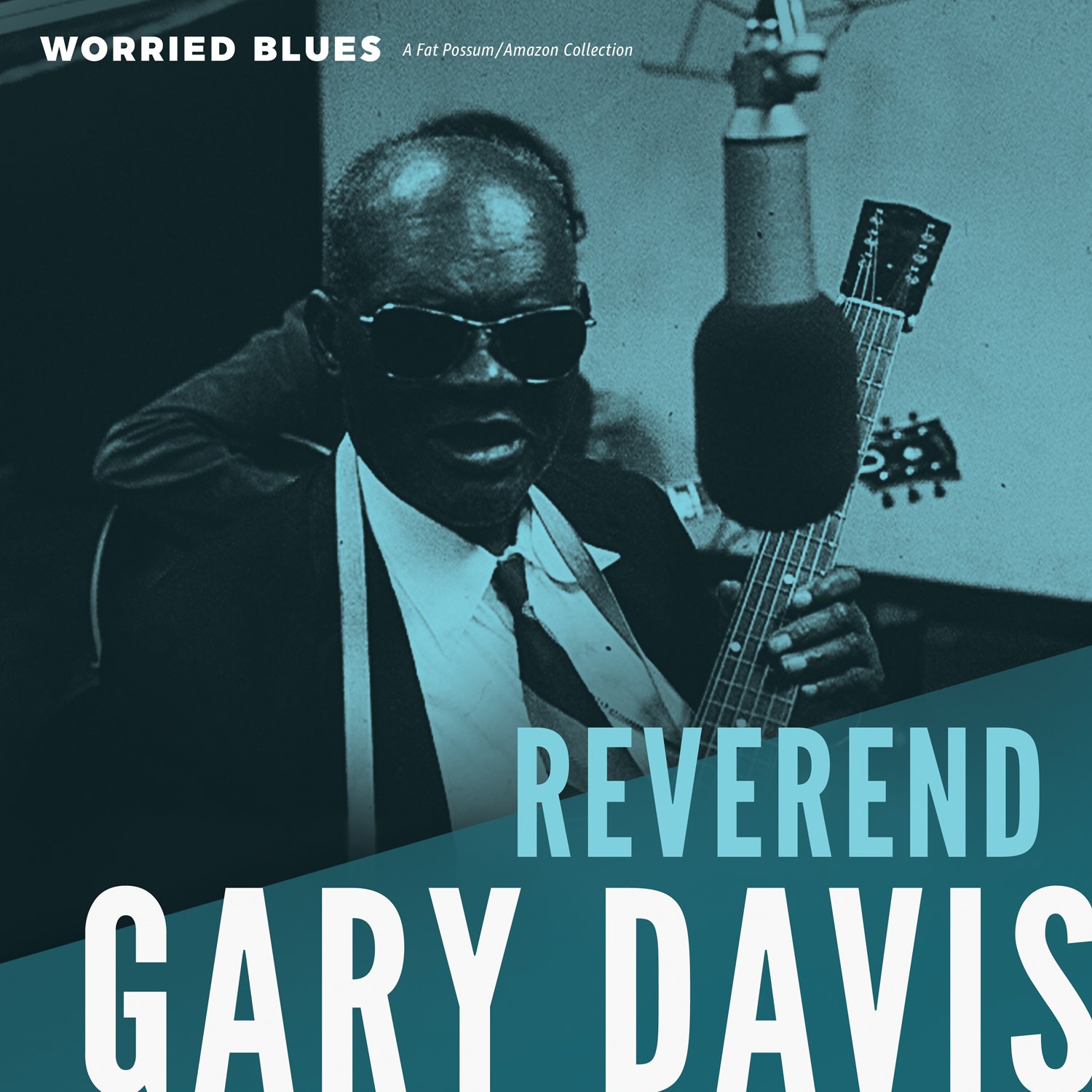 |
Adelphi AD 1002 ("Worried Blues" series) | Adelphi Records | c. 1964/released 1960s–70s | Primary release; solo guitar and voice |
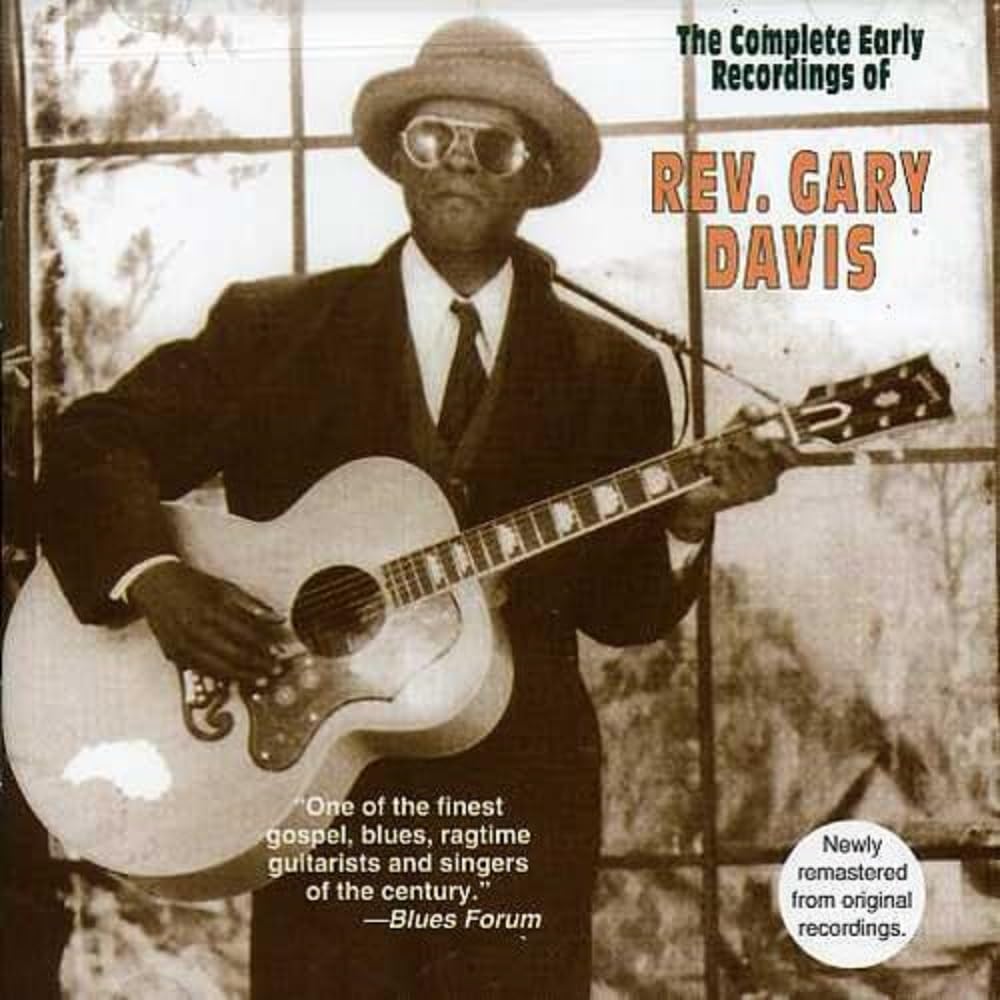 |
The Complete Early Recordings of Reverend Gary Davis | Yazoo 2011 | 1994 | Compilation; major archival release |
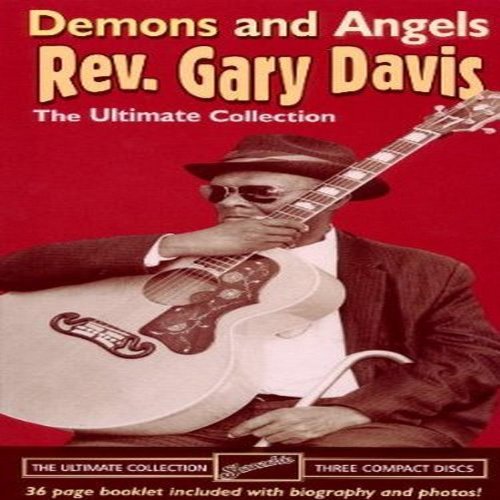 |
Demons and Angels — The Ultimate Collection | Various | Compilation | Track 13; draws on existing recordings |
| Various Adelphi compilations | Adelphi | Various | Multiple reissue appearances |
Legacy & Influence
Influence on Folk and Blues Revival
"There's Destruction in That Land" is representative of the body of work that made Reverend Gary Davis one of the most influential figures of the American folk revival. His recordings were studied intensively by a generation of guitarists who went on to define popular music:
- Bob Dylan cited Davis as an influence and reportedly sought him out in New York.
- The Grateful Dead covered Davis's "Samson and Delilah" (as "If I Had My Way") — a song in the same prophetic gospel tradition as "Destruction."
- Taj Mahal, Ry Cooder, Dave Van Ronk, and Peter, Paul and Mary were among the many artists influenced by or connected to Davis.
- Stefan Grossman went on to found Kicking Mule Records and produce instructional guitar materials that disseminated Davis's techniques to hundreds of thousands of guitarists worldwide.
The Song in Davis's Broader Gospel Catalog
Within Davis's own catalog, "There's Destruction in That Land" belongs to a cluster of prophetic and apocalyptic gospel pieces that include:
- "Death Don't Have No Mercy" — his most famous song in this vein
- "Samson and Delilah" — Old Testament narrative gospel
- "Twelve Gates to the City" — New Jerusalem imagery
- "Pure Religion" — doctrinal gospel
- "Lord, I Feel Just Like Going On" — perseverance gospel
These songs collectively demonstrate Davis's theological range and his ability to translate complex biblical themes into emotionally direct musical statements.
Documentary Record
The song is documented in:
- Stefan Wirz's illustrated Rev. Gary Davis discography (wirz.de) — the most comprehensive online discographical resource for Davis
- The Adelphi Records discography (wirz.de/music/adelphi.htm) — confirming the session and release details
- The Larry Johnson discography (wirz.de) — confirming the shared session context
- AllMusic and Spotify — confirming album appearances and compilation history
Sources & References
- Stefan Wirz, Illustrated Rev. Gary Davis Discography, wirz.de/music/davisgar.htm
- Stefan Wirz, Illustrated Adelphi Records Discography, wirz.de/music/adelphi.htm
- Stefan Wirz, Illustrated Larry Johnson Discography, wirz.de/music/johnsdsc.htm
- Wikipedia, "Reverend Gary Davis," en.wikipedia.org/wiki/Reverend_Gary_Davis
- John Cody, "Bluesman Gary Davis Influenced an Entire Generation," johncodyonline.com
- The Association for Cultural Equity, "Reverend Gary Davis," culturalequity.org
- Stefan Grossman, Facebook post on Reverend Gary Davis & Blind Boy Fuller, blueslegends.fvh
- The Rough Guide to Rev. Gary Davis (The Guitar Evangelist), worldmusic.net
- Jim Shelley / The Woodstock Whisperer, "Rev Gary Davis Van Gelder," woodstockwhisperer.info
- Spotify: The Complete Early Recordings of Reverend Gary Davis, Yazoo 2011 (1994)
- TAB Guitar School Catalog (Japan), listing Demons and Angels — The Ultimate Collection
- Gary Davis (1896–1972), CBN Black History, secure.cbn.com
- Tom Moon, "If I Had My Way," EchoLocator/Substack, echolocator.substack.com
- Sing Out! Magazine, "Samson and Delilah / If I Had My Way," singout.org
All recording dates and session details are drawn from available discographical sources; some details (particularly precise session dates and personnel) remain incompletely documented in the public record, reflecting the informal nature of many folk-revival-era recording sessions.