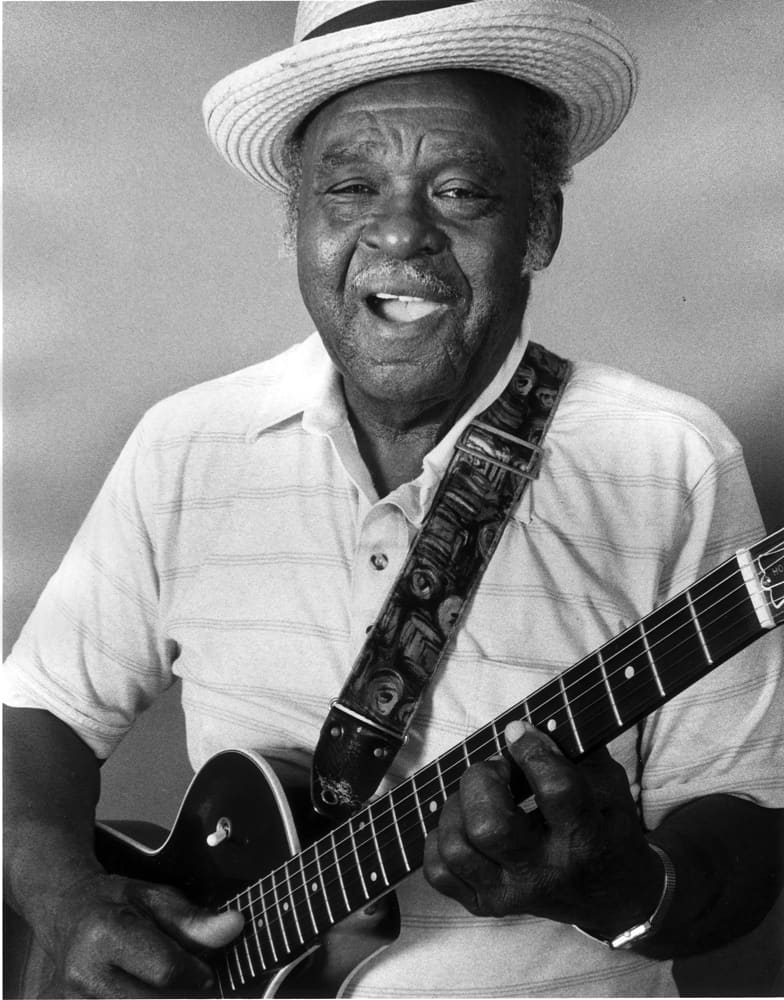
The story of Larry Alonzo Johnson begins in the red clay country of central Georgia, where he was born on May 15, 1938, in Wrightsville, a small town in Johnson County, though some accounts place his birth in Fulton County, near Atlanta. His father was a preacher, a man of the cloth who traveled extensively from town to town, carrying the Word to rural congregations across the state. In the segregated South of the 1940s, the preacher was more than a religious figure; he was a community leader, a moral authority, and a mobile institution who brought structure and hope to lives that were often defined by hardship. Young Larry traveled with his father, sitting in the back of the car or standing at the edge of the tent, watching his father work the crowd with voice and conviction. It was an education in performance, in the power of the spoken and sung word, though neither father nor son could have known that the boy would eventually apply those lessons to a very different kind of music.
The Johnson household was, by Larry's own description, a place where the blues was not merely tolerated but actively present. His father's travels exposed the family to a wide range of influences, and Larry grew up hearing the early blues records that were then circulating through the South on 78-rpm discs and radio broadcasts. Among these, the recordings of Blind Boy Fuller made the deepest impression. Fuller, the prolific North Carolina bluesman whose ragtime-inflected fingerpicking and good-time vocals had made him one of the best-selling black artists of the late 1930s, was a revelation to the young Larry. "It was Fuller's records that made Johnson pick up a guitar," as one biographer noted, and the choice was significant. Fuller represented the country blues tradition at its most accessible and rhythmic, a style that relied on clean, melodic fingerpicking rather than the slide guitar pyrotechnics of the Delta. It was a style that suited Larry's temperament and his emerging technical approach, and it would remain a touchstone throughout his career.
The guitar that Larry acquired was an acoustic instrument, and he taught himself the rudiments of playing by listening to Fuller's records and trying to replicate the intricate patterns of thumb and fingers. He was not a child prodigy; he was a dedicated student, spending hours working out the bass lines and melody figures that characterized the Piedmont style. The rural Georgia of his youth was not a major blues center like the Mississippi Delta or the Texas prairies, but it was part of the broader Southern musical landscape where blues, gospel, ragtime, and country music intermingled freely. Larry absorbed it all, developing an ear for the traditional forms that would serve him well in the decades to come.
The Navy and the Great Migration
In 1955, at the age of seventeen, Larry Johnson did what hundreds of thousands of young black Southerners were doing in the mid-1950s: he left home. But rather than following the well-worn path of the Great Migration north to Chicago or Detroit, he enlisted in the United States Navy. His service lasted four years, from 1955 to 1959, and it took him far from the pine woods and red clay of Georgia to ports and bases around the country. The Navy was, for Larry, a different kind of education. He encountered men from every region of the United States, heard new music, and developed the discipline and self-reliance that would characterize his adult life. He also continued to play guitar during his off-hours, entertaining fellow sailors with the country blues he had learned in Georgia and absorbing new influences that would expand his musical vocabulary.
When his enlistment ended in 1959, Larry made the decision that would define the rest of his life: he moved to New York City. The New York of 1959 was not the blues capital that Chicago was, but it was the center of the American folk music revival, a movement that was just beginning to discover the riches of traditional blues and country music. Young white college students and aspiring musicians were flocking to Greenwich Village, buying records by Lead Belly, Woody Guthrie, and the newly rediscovered country bluesmen of the 1920s and 1930s. There was a hunger for authenticity, for music that spoke of real experience rather than the manufactured pop that dominated the airwaves, and Larry Johnson arrived in the city at precisely the moment when his skills were most in demand.
The Village and the McGhee Brothers
New York in the late 1950s and early 1960s was a city of neighborhoods, and for a young black musician from the South, the transition was not always easy. But Larry had talent, and talent opened doors. He fell in with Brownie McGhee and Sticks McGhee, the legendary blues brothers who had been fixtures of the New York folk and blues scene since the 1940s. Brownie, in particular, was a major figure, a guitarist and singer whose long partnership with Sonny Terry had made him one of the most recognized blues artists in the world. The McGhee brothers took a liking to the young Georgian, recognizing in him a genuine feel for the tradition that so many of the white folk revivalists were trying to imitate. Through Brownie and Sticks, Larry found his first professional opportunities in the city, playing on sessions and sitting in at the clubs and coffeehouses that were springing up around Greenwich Village and Harlem.
It was through the McGhee connection that Larry began recording, though initially only as a sideman. He played harmonica on sessions for Big Joe Williams, the prolific Delta bluesman who had relocated to Chicago but who recorded frequently in New York. He also recorded with Harry Atkins and Alec Seward, the latter a guitarist and singer who recorded under the name Guitar Slim and who was a respected figure in the city's small but vibrant blues community. These early sessions were informal affairs, often produced on shoestring budgets for small labels that catered to the growing folk and blues market. But they put Larry in the studio, gave him experience working with other musicians, and introduced him to the network of producers, writers, and record collectors who would shape his career.
The Reverend and the Disciple
The most important relationship of Larry Johnson's life began through Alec Seward. Seward, who had known Larry from their work together on various sessions, recognized that the young Georgian was searching for something deeper than the casual club work that was paying his rent. Seward was a student of Reverend Gary Davis, the blind gospel and blues guitarist who had become one of the most revered figures in the New York folk scene. Davis, who had moved to the city from South Carolina in the 1940s, was a master of the fingerstyle guitar tradition, a man whose technical prowess and spiritual depth had made him a mentor to dozens of young musicians, both black and white. His apartment in the Bronx was a kind of informal conservatory, where aspiring guitarists came to learn the "hard chords" and complex picking patterns that Davis had developed over a lifetime of playing on street corners and in churches.
Seward introduced Larry to Davis, and the meeting was transformative. Larry became one of Davis's most devoted students, and over the course of the 1960s and into the 1970s, he spent countless hours at the Reverend's side, absorbing not just the technical aspects of Davis's playing but the spiritual and philosophical underpinnings of his music. Davis taught his students to play the "hard chords," the complex voicings and inversions that gave his arrangements their rich, orchestral sound. He taught them to use their thumb as a separate voice, laying down a steady bass line while the fingers danced across the higher strings in intricate melodic patterns. And he taught them that music was a form of service, a gift from God that carried with it a responsibility to play with conviction and integrity.
Larry Johnson proved to be an exceptional student. As one critic later observed, he was "probably the most true to Davis in style and sensibility of Davis' many students," a remarkable claim given the caliber of Davis's other pupils, which included David Bromberg, Jorma Kaukonen, Ry Cooder, and Steve Katz. Where some students took elements of Davis's style and incorporated them into rock or jazz contexts, Larry absorbed the tradition whole, becoming a kind of living repository of the Reverend's approach. His picking was clean, melodic, firm, delicate, and harmonically complex, displaying a technical mastery that was rare among blues guitarists of any generation. And his singing, while not as flamboyant as Davis's, carried the same emotional weight, the same sense of a man testifying to his own experience.
The relationship with Davis was not merely musical; it was personal and familial. Davis, who often said, "I have no children, but I have sons," embraced Larry as part of his extended musical family. Larry appeared on numerous live dates with Davis throughout the 1960s, playing second guitar, harmonica, and providing vocal support. He was present at the recording sessions that produced some of Davis's most important late-period work, including the landmark O, Glory: The Apostolic Studio Sessions, recorded in 1969 and released in 1973, where Larry's harmonica can be heard weaving around Davis's guitar and vocals. And he was part of the circle of students and friends who cared for Davis in his final years, when the Reverend's health began to fail.
The First Recordings: Catfish Blues and So Sweet
Larry Johnson's first recordings under his own name came in 1962, when he cut a single for the small Blue Soul label. The record featured "Catfish Blues" backed with "So Sweet," and it announced the arrival of a major talent. "Catfish Blues" was a version of the traditional Delta song that had been recorded by Robert Petway and Muddy Waters, but Johnson's approach was distinctively his own, informed by Davis's fingerstyle technique and his own Georgia roots. "So Sweet" was an original composition that showcased his songwriting and his gentle, melodic vocal style. The single was not a commercial hit—the independent blues market of the early 1960s was too small for that—but it established Larry as a recording artist and caught the attention of the collectors and enthusiasts who were then building the infrastructure of the blues revival.
The 1962 single was actually recorded in the fall of 1959, produced by Bobby Robinson, the legendary Harlem record producer whose labels had launched the careers of countless R&B and blues artists. Robinson was a shrewd businessman with an ear for talent, and his involvement with Larry's early recordings lent them a credibility that helped them circulate in the growing market for vintage-style blues. But the masters from these sessions were not all released at the time; many of them sat in the vaults for years, emerging only on later compilations and reissues. This was a common fate for blues recordings of the era, when labels often recorded more material than they could afford to release, and when the commercial lifespan of a record was measured in months rather than years.
Larry & Hank: The Blues / A New Generation
In 1965, Larry Johnson made his first full-length album, recorded in New York City on November 25, 1965, and released the following year on Prestige Records as Larry & Hank: The Blues / A New Generation. The album paired Larry with Hank Adkins, a second guitarist who shared Larry's devotion to the traditional forms. The record was produced by Samuel Charters, the legendary blues writer, producer, and folklorist whose work for Prestige and Folkways had done so much to document the country blues tradition for the growing folk audience. Charters was a sympathetic producer who understood that Larry's music was not a museum piece but a living tradition, and he gave the musicians the space to play without excessive interference.
The album was a strong debut, featuring a mix of Larry's originals and traditional material. "Four Women Blues," "The Captain Don't 'Low That Here," "Tell You Women 'Bout Me," "Watchdog Blues," "Death Call" (based on "Summertime"), "Two Gun Green," "When I'm Drinking," "Whiskey Store Blues," "If You Don't Want Me Baby," "My Gal Ain't Fat," "Country Road Blues," and "Take These Blues Off My Mind" made up the track list, with all songs credited to Larry Johnson. The album showcased his developing guitar style, which by this time had fully absorbed the Davis influence while retaining its own identity. His vocals were relaxed and conversational, lacking the histrionics of some blues shouters but possessed of an intimacy that drew the listener in. And his guitar playing was already remarkable for its precision, its harmonic sophistication, and its rhythmic drive.
The title of the album—The Blues / A New Generation—was apt. Larry represented a new generation of blues artists who had not learned the music in the juke joints and on the street corners of the South but who had studied it through records, through formal instruction, and through the mentorship of older musicians. He was not a naive folk artist; he was a trained musician who had chosen to dedicate himself to a traditional form. This distinction would become important in the years to come, as the blues revival matured and the question of authenticity became increasingly contentious.
The Sideman Years: Big Joe, Alec Seward, and the Bluesville Label
Throughout the 1960s, Larry Johnson continued to work as a sideman on a variety of recording sessions, building his resume and his reputation among the cognoscenti of the New York blues scene. In 1961, he played harmonica on a session for Big Joe Williams that produced the album Studio Blues, released on the Bluesville label in 1966. The session, recorded on October 7, 1961, featured Big Joe on vocals and a variety of guitars, Larry on harmonica, and Willie Dixon on bass, with production by Kenneth S. Goldstein. It was a stellar lineup, and Larry's harmonica work—though not his primary instrument—was solid and sympathetic, showing that he was a versatile musician capable of contributing to an ensemble in multiple ways.
In 1965, Larry appeared on another Bluesville release, Creepin' Blues by Alec Seward. The album, recorded in New York City by Mel Kaiser and produced by Goldstein and Pete Welding, featured Seward on vocals and guitar, with Larry contributing harmonica to tracks like "Big Hip Mama," "Evil Woman Blues," "Sweet Woman," "Some People Say," "Creepin' Blues," "I Made A Mistake In Life," "Late One Saturday Evening," and "Let A Good Thing Do." The record was a fine example of the acoustic blues style that Bluesville specialized in, and Larry's contributions, while not flashy, demonstrated his growing maturity as a musician.
These sideman appearances were important not just for the paychecks they provided but for the relationships they fostered. Working with Big Joe Williams, a direct link to the Delta tradition, reinforced Larry's commitment to the rural blues aesthetic. Working with Alec Seward, his introducer to Reverend Gary Davis, deepened his connection to the New York blues community. And working with producers like Goldstein, Welding, and Charters placed him in the orbit of the most serious and influential figures in the blues revival, men who would continue to support his career for decades to come.
Fast & Funky: The Blue Goose Years
By 1970, Larry Johnson had established himself as one of the most respected acoustic blues guitarists in New York, and he was ready to step out as a solo artist in his own right. The result was Fast & Funky, recorded on April 10, 1970, in New York and released on Nick Perls's Blue Goose label. Perls, a dedicated record collector and blues enthusiast, had founded Blue Goose to document the traditional blues and ragtime performers who were then working in the city, and his label became one of the most important outlets for acoustic blues in the 1970s. The album was produced by Perls himself, with liner notes by Stephen Calt, another major figure in the blues revival.
Fast & Funky was a revelation. The album featured fourteen tracks that showcased Larry's guitar and vocals at their most assured, with Nick Perls himself contributing second guitar on "My Game Blues." The material was a mix of Larry's originals and traditional songs, including "Keep It Clean," "Charley Stone," "Four Women Blues," "Nobody's Business If I Do," "Pick Poor Robin Clean," "Up North Blues," "The Beat From Rampart Street," "Spoonful Blues," "Two White Horses," "Ragged And Dirty," "Cookbook," "Frisco Blues," "My Game Blues," and "Lordy Good Lord." The title track was not, as some listeners might have expected, a funk number in the James Brown mold; it was a fast, fingerpicked blues that demonstrated Larry's ability to generate rhythmic excitement without a rhythm section, using only his thumb and fingers to create a full, driving sound.
The album was praised for its technical excellence and its emotional depth. Critics noted Larry's ability to combine "soulful" singing with "great feeling" and "strong technical skills," a combination that was rare in any genre. His version of "Charley Stone," a song about a traveling trombone player, became a particular favorite among fans, while "Pick Poor Robin Clean" and "Frisco Blues" demonstrated his mastery of the ragtime-inflected blues that had been a specialty of Blind Boy Fuller and Reverend Gary Davis. The record established Larry as a leading figure in the acoustic blues revival, a musician who could hold his own with the rediscovered masters of the pre-war era.
The following year, Larry appeared on another Blue Goose release, the compilation These Blues Is Meant To Be Barrelhoused, alongside Graham Hine, John Lewis, Bill Williams, Stephen Calt, Kenneth McNichol, and Roy Book Binder. Larry contributed "Seabord Train Blues" and, in a duet with Woody Mann, "Bad Feeling Blues" and "Barrelhouse Blues." The album was a snapshot of the New York acoustic blues scene at its peak, and Larry's contributions were among the highlights.
The 1970s: Retreat and Reflection
Despite the success of Fast & Funky and his growing reputation, Larry Johnson did not pursue the kind of high-profile career that some of his contemporaries enjoyed. The 1970s were a difficult time for traditional blues artists. The folk revival had peaked and was giving way to singer-songwriters and soft rock, while the blues-rock boom of the late 1960s had fragmented into a thousand subgenres. The audience for pure acoustic country blues was small and specialized, consisting mainly of collectors, scholars, and dedicated enthusiasts. Larry could have played the college circuit, as many folk artists did, or he could have tried to adapt his style to the changing tastes of the market. Instead, he chose to retreat, to play on his own terms, and to let the music find its audience rather than chasing fame.
This is not to say that he was inactive. He continued to perform in New York, playing the small clubs and coffeehouses that still valued traditional blues. He appeared on the 1973 album O, Glory: The Apostolic Studio Sessions with Reverend Gary Davis, playing harmonica on tracks like "Right Now," "Sun Goin' Down," "Lo, I'll Be With You Always," and "Mornin' Train." He also appeared on the 1976 Folkways release Sun Is Going Down, another Davis album where his harmonica can be heard on "Sun Is Going Down," "Oh, What A Beautiful City," "Morning Train," and "Fast Stepping Time." These sessions were important documents of Davis's late style, and Larry's presence on them was a mark of the trust and affection that existed between teacher and student.
In 1973, Larry also appeared on The All Star Blues World of Maestro Willie Dixon and his Chicago Blues Band, a Spivey Records release produced by Len Kunstadt. The album featured an all-star cast including Carey Bell, Buster Benton, Lafayette Leake, and Willie Dixon himself, with Larry contributing two tracks: "My Hoodoo Doctor" and "Put It All In There." It was a rare opportunity for Larry to record with a full electric band, and his performances showed that he could adapt his style to a more urban, Chicago-oriented setting without losing his identity.
Country Blues and the Biograph Session
In 1971, Larry recorded a session that would eventually be released in 1974 as Country Blues on Biograph Records. The album, recorded on February 2, 1971, featured Larry on vocals and guitar, with John Hammond contributing harmonica and National steel guitar on several tracks, and with production by Arnold S. Caplin. The record was a more subdued affair than Fast & Funky, emphasizing the gentle, melodic side of Larry's playing. Tracks like "Blood Red River," "One Room Country Shack," "Saturday Evening Blues," "Peace Breakin' People," "Walking Blues," "Mama-Less Rag," "Red River Dam Blues," "Nobody's Biz-Ness," "Midnight Hour Blues," and "When Things Go Wrong" demonstrated his range as an interpreter of traditional material, while the liner notes by Chris Albertson placed his work in the context of the broader blues tradition.
The Country Blues album was significant for its pairing of Larry with John Hammond, the white blues revivalist whose own career was then taking off. Hammond's harmonica and National steel guitar provided a sympathetic accompaniment to Larry's fingerpicked figures, and the two men developed a musical rapport that would continue in subsequent collaborations. The album also showed that Larry was not merely a disciple of Reverend Gary Davis; he was an artist with his own perspective, his own repertoire, and his own way of approaching the blues.
The 1980s: Low Key but Persistent
The 1980s were a lean time for traditional blues artists in the United States. The disco era had given way to the early days of hip-hop, and the blues was increasingly marginalized in the American market, finding its most appreciative audiences in Europe and Japan. Larry Johnson, who had never been a prolific recording artist, released only a handful of albums during this decade, but they were significant documents of his continuing development.
In 1983, he released Johnson! Where Did You Get That Sound? on Spivey Records, the label run by Len Kunstadt and Victoria Spivey that had become a major outlet for traditional blues and jazz. The album featured Larry on vocals and guitar, with Nat Riddles contributing harmonica, and it included a mix of originals and covers that demonstrated his encyclopedic knowledge of the tradition. "Don't Get Mad With Me," "Davison County Blues," "Standing By My Window," "Crawdad Whole," "I Believe," "Katie Mae," "Basin Free," "Sally, Where You Get That Liquor From," "Little Woman, You're So Sweet," "John Henry," "Mama Don't Allow," "Baby Let Me Lay It On You," "Now You Have Two Hearts," "Sundown Blues," "Cab Driver," and "Sugar Babe" made up the track list, with Larry drawing from sources as diverse as DeFord Bailey, Robert Johnson, Lightnin' Hopkins, Gary Davis, Blind Boy Fuller, Chuck Bradford, Alec Johnson, Carson Parks, and Roosevelt Sykes. The album's title was a tribute to the question that audiences often asked him, and his answer was implicit in every note he played: he got that sound from the tradition, from his teachers, and from his own dedication to the craft.
In 1984, Larry and Nat Riddles released Basin Free, another Spivey release that continued their musical partnership. The album was a low-key affair, recorded with minimal production and distributed mainly to collectors and dedicated fans. But it kept Larry's name in circulation and gave him material to perform on the occasional gigs that were still available in New York.
The American Folk Blues Festival and European Recognition
One of the most important developments in Larry Johnson's career came not in the United States but in Europe, where the blues had found a devoted and knowledgeable audience through the American Folk Blues Festival. The festival, which had begun in 1962 under the direction of German jazz publicist Joachim-Ernst Berendt and promoters Horst Lippmann and Fritz Rau, brought original African-American blues performers to European concert halls, introducing them to audiences that treated them with a reverence that was often lacking at home. The festival had featured virtually every major blues artist of the era, from Muddy Waters and Howlin' Wolf to John Lee Hooker and Sonny Boy Williamson, and it had played a crucial role in spreading the blues to the British musicians who would launch the rock and roll revolution.
In 1983, Larry Johnson was invited to participate in the revived American Folk Blues Festival, joining a lineup that included James "Sparky" Rucker, Louisiana Red, Lonnie Pitchford, Carey Bell, Lovie Lee, Jimmy Rogers, and Queen Sylvia Embry. The tour took him to Germany, where he performed at the Volksbildungsheim in Frankfurt and the Music Hall in Würzburg, among other venues. The performances were recorded and released on the German L+R label as American Folk Blues Festival '83 and American Folk Blues Festival Live '83, and they captured Larry in excellent form, playing "Midnight Hour," "That's The Wrong Woman," and other staples of his repertoire with the confidence of a man who had finally found the audience he deserved.
The European tours were a turning point. Larry discovered that his music, which had struggled to find a consistent audience in the United States, was deeply appreciated overseas. The German and British fans knew his records, understood his connection to Reverend Gary Davis, and treated him with the respect that was due a master of the tradition. This recognition led to more regular live work in the 1990s, particularly in Europe, where he would record some of his finest late-period albums.
Railroad Man: The JSP Sessions
In 1990, Larry Johnson released Railroad Man on JSP Records, a British label that had become a major force in blues reissues and new recordings. The album was recorded at Falconer Studio in London, England, with a backing band that included Richard Studholme on guitar, Julian Taylor on bass, and Steve Thorneycroft on drums, and it was produced by John Stedman. The record represented a departure from Larry's usual solo and duo format, placing his guitar and vocals in a more band-oriented context that showed his versatility as a bandleader.
The album featured ten tracks, all Larry Johnson originals: "I Been Watching You," "Johnson, Where'd You Get That Band," "Johnson's Early Morning Blues," "Railroad Man," "Summer Sun," "Flip To Flop," "Evil," "Two Hearts," "When I'm In Your Arms," and "Gone With The Blues." The material was strong and varied, with the title track standing out as a particular highlight. The production was clean and professional, and the British musicians provided sympathetic support without overwhelming Larry's distinctive voice. The album was well received in Europe and helped to solidify Larry's reputation as an international artist.
Blues for Harlem and The Gentle Side
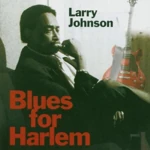
The 1990s and early 2000s saw a steady stream of activity from Larry Johnson, as he entered a period of renewed creativity and recognition. In 1999, he released Blues for Harlem on the British Armadillo label. The album was a more stripped-down affair than Railroad Man, featuring Larry on vocals and guitar in a solo and duo setting that emphasized his fingerpicking mastery and his vocal warmth. The track list included "Mr. Johnson Sound," "Mean Ol' Frisco," "Banks Of The River," "Trouble In Mind," "Sally Where You Get Your Liquor From," "Blues For Harlem," "That's Alright Mama," "Hear The Angels Singing," "Jesus Loves Me," "Don't You Leave Me Here," "Ma Story Should Be Told," and "The Reverend And Me - A Tribute," the latter a medley of "Swing Low Sweet Chariot" and "Give Me Back Me Glory" that paid explicit homage to Reverend Gary Davis.
The album was produced with a minimum of fuss, allowing Larry's guitar and voice to occupy the center of the soundstage. The liner notes by Samuel Charters, Brian Kramer, and Kevin Thorpe placed his work in historical context, emphasizing his role as a carrier of the Davis tradition and his importance as a living link to the country blues of the pre-war era. Blues for Harlem was not a nostalgic exercise; it was a vital, contemporary statement by an artist who was still growing, still exploring, and still finding new nuances in the music he had devoted his life to.
In 2004, another British label, Stella, released The Gentle Side of Larry Johnson, a live album recorded at the Stamford Arts Centre in Stamford, England, on June 11-13, 1999. The album was produced by Michael Roach, Bernie Marsden, and Larry himself, and it featured a program of traditional songs and blues standards that showcased the more reflective, melodic side of his playing. "Pioneer Blues," "Charley Stone," "Take This Hammer," "Hang Your Head Over," "Pick A Bale Of Cotton," "Keep Your Home Fire Burning," "Give Me Back My Glory," "I Got The Blues," "Mean Ol' Frisco," "That's Alright Mama," a medley of "Blues In E" and "Blues Before Sunrise," "I Can't Afford To Loose My Gal," and "Old Time Religion" made up the set list, with Larry's guitar work displaying the kind of relaxed authority that comes only from decades of dedicated practice.
Two Gun Green: The Final Masterpiece
The final studio album of Larry Johnson's career was, in many ways, his most unexpected and most rewarding. Two Gun Green, released in 2002 on Armadillo Records, paired Larry with Brian Kramer and the Couch Lizards, a Swedish band that brought a fresh, contemporary energy to his traditional material. The album was recorded on July 30, 2001, at The Grange in Norfolk, England, and it featured Larry on vocals and guitar, with Brian Kramer on metal Dobro and National slide guitars and backing vocals, Mats Qwarfordt on harmonica and backing vocals, Pa Ulander on upright bass and backing vocals, and Jim O'Leary on drums, percussion, and backing vocals.
The collaboration was a stroke of genius. Kramer, a Brooklyn-born guitarist who had relocated to Sweden, was a devoted student of the blues who had played with Junior Wells, Buddy Guy, and other legends during his years in New York. He had met Larry during the 1990s, when they performed together frequently in the city's club scene, and their reunion in the studio was a joyous occasion. The Couch Lizards provided a loose, swinging backdrop that allowed Larry to stretch out and play with a freedom that his more formal solo recordings sometimes lacked.
The album featured ten tracks: "Can't Last Very Long," "Late Last Night," "Midnight Train," "I Used To Be Down," "Old Time Religion," "Evening Sun Go Down," "Two Gun Green," "Goodnight Irene," "Back To The Groove," and "Charlie Stone." The title track, "Two Gun Green," was a tale that harked back to Larry's early original compositions, while "Charlie Stone" was a reworking of the fan favorite from Fast & Funky. Samuel Charters, who wrote the liner notes, captured the spirit of the sessions perfectly: "The group working with Larry on this album reflects some of the new realities of the blues… We're deeply fortunate he's here with Brian and the Couch Lizards to lay it down for us."
Two Gun Green was a critical success, earning praise for its warmth, its humor, and its demonstration that traditional blues could still sound fresh and relevant in the twenty-first century. It was also, unbeknownst to anyone at the time, Larry's final studio statement. He would continue to perform occasionally in the years that followed, but his health was beginning to decline, and the grind of the road was becoming too much for a man who was now in his sixties.
My Story Should Be Told: The Late Recordings
In 2007, ZBark Records prepared a release titled My Story Should Be Told, a collection of live recordings from February 2007 in New York, interspersed with spoken-word segments in which Larry talked about his influences and paid tribute to his mentors. The album featured "Trouble In Mind," "Stop That Noise Up There," "You Gonna Look Like A Monkey When You Get Old," "My Story Should Be Told," a spoken tribute to Lightnin' Hopkins, "That's All Right," "Can't You Hear Angels Singing," a spoken tribute to Reverend Gary Davis, and "Sleepy Time In Harlem / The Things I Used To Do." The record was never officially released, but it circulated among collectors and provided a poignant document of Larry in his final years, still playing with skill and conviction, still telling his story.
The Style: Hard Chords and Clean Picking
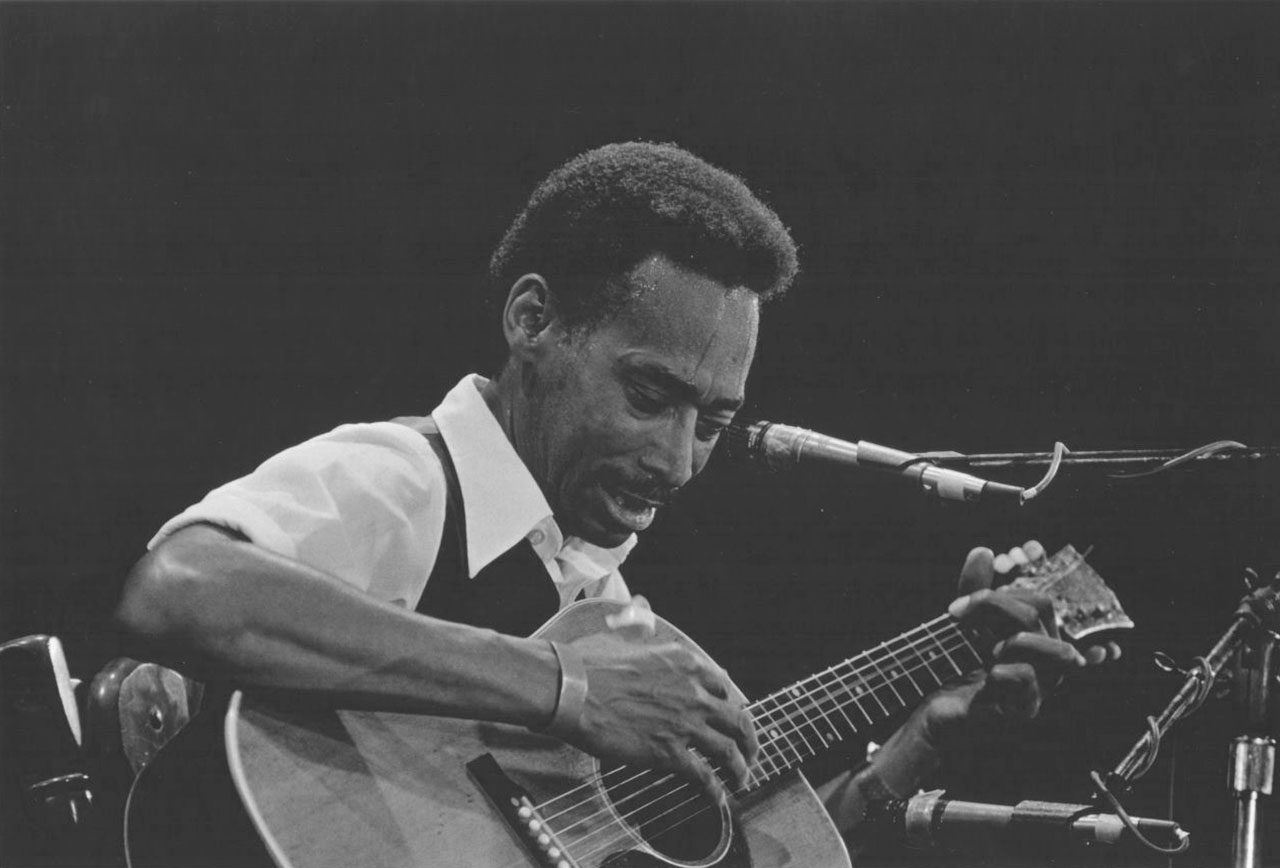
To understand Larry Johnson's contribution to the blues, one must understand his approach to the guitar, which was as distinctive as it was deeply rooted in tradition. He was a fingerstyle player exclusively, using no pick, and his right-hand technique was a marvel of independence and control. His thumb provided a steady, rolling bass line that could function as a rhythm section all by itself, while his fingers plucked melody lines, chordal accents, and rhythmic figures on the higher strings. This was the classic Piedmont approach, perfected by Blind Blake and Blind Boy Fuller and elevated to an art form by Reverend Gary Davis, but Larry brought his own sensibility to it.
What set Larry apart was his harmonic sophistication. Following Davis's advice to play the "hard chords," he employed complex voicings and inversions that gave his arrangements a richness and depth that was rare in country blues. He could move from a standard first-position blues figure to a jazzy diminished chord without breaking stride, and his knowledge of the fretboard allowed him to find unexpected melodic pathways through familiar songs. His picking was clean and precise, with none of the sloppiness that sometimes characterizes self-taught players. Every note was intentional, every phrase was shaped, and every song was a miniature composition rather than a simple strum-along.
As a vocalist, Larry was understated but effective. He did not have the raw power of a Howlin' Wolf or the dramatic flair of a Bobby Bland. His voice was gentle, conversational, and warm, with a slight rasp that suggested experience without theatricality. He sang like a man telling you a story over a kitchen table, and his delivery was perfectly suited to the intimate, acoustic settings in which he usually performed. When he did raise his voice, as on the gospel-tinged numbers that were part of his repertoire, the effect was all the more powerful for its rarity.
The Legacy of the Reverend
Larry Johnson's most enduring legacy is his role as a carrier of the Reverend Gary Davis tradition. Among the dozens of students who passed through Davis's door in the 1960s and 1970s, Larry was the one who remained most faithful to the Reverend's style and sensibility. While David Bromberg became a star of the folk-rock circuit, Jorma Kaukonen took the Davis approach to Jefferson Airplane and Hot Tuna, and Ry Cooder explored world music and soundtracks, Larry stayed true to the acoustic country blues that Davis had taught him. He was not a purist in the narrow sense; he was open to new influences and new collaborations. But he understood that the tradition he had inherited was a precious thing, and he dedicated his life to preserving and transmitting it.
This role as a tradition-bearer was recognized by critics and fellow musicians throughout his career. Blues Access magazine described him as "a student and disciple of the Rev. Gary Davis (and probably the most true to Davis in style and sensibility of Davis' many students)," a judgment that has been echoed by virtually everyone who has written about his work. His recordings of Davis's songs—"Death Don't Have No Mercy," "Twelve Gates to the City," "I Belong to the Band"—were not mere covers but living testimonies, performances that channeled the spirit of the original while adding Larry's own interpretive stamp.
Influence and Recognition
Larry Johnson's influence on the blues tradition is both direct and diffuse. Directly, he influenced the younger musicians who studied with him or who heard his records and were inspired to explore the fingerstyle tradition. His work with Brian Kramer, which culminated in Two Gun Green, helped to introduce his music to a new generation of European blues fans. And his appearances on the American Folk Blues Festival tours exposed his playing to audiences who might never have encountered acoustic country blues otherwise.
More diffusely, Larry helped to sustain the credibility of traditional blues during a period when the music was under pressure from electrification, commercialization, and the changing tastes of the mass market. His presence in the New York scene, his recordings for labels like Blue Goose and Biograph, and his collaborations with Reverend Gary Davis all contributed to the sense that the acoustic blues tradition was not a dead artifact but a living, breathing music that could still produce vital new work.
Despite his contributions, Larry never achieved the fame of some of his contemporaries. He was not a household name, even in blues households. His records were released on small labels with limited distribution, and his performances were often confined to small clubs and coffeehouses. But among those who knew his work, he was revered. The British blues scene, in particular, embraced him, giving him the kind of recognition that had been harder to come by in his own country. The albums he recorded in England—Railroad Man, Blues for Harlem, The Gentle Side of Larry Johnson, and Two Gun Green—represent some of his finest work, and they stand as a testament to the international community of blues enthusiasts who kept the tradition alive.
The Final Years and the Quiet End
As the 2000s progressed, Larry Johnson's public appearances became less frequent. The life of a working musician, with its constant travel and uncertain income, was not conducive to aging gracefully, and Larry had never been one to chase the spotlight. He continued to play when the opportunity arose, and he remained a respected figure in the New York blues community, but he gradually withdrew from the active performance circuit.
In June 2016, Larry checked himself into a nursing home in Harlem, the neighborhood where he had lived and worked for more than half a century. It was a pragmatic decision, made by a man who understood that his body was no longer capable of the demands that his music had placed upon it. He died there on August 6, 2016, at the age of seventy-eight. The news was slow to circulate; there was no major obituary in the New York Times, no tribute from the Recording Academy, no outpouring of public grief. But among the community of blues musicians, collectors, and fans who had known him and loved his work, the loss was deeply felt. He was interred at Calverton National Cemetery on Long Island, a final resting place for a veteran who had served his country and his art with equal dedication.
Reassessing Larry Johnson in the Twenty-First Century
As the years pass and the generation of musicians who came of age during the blues revival recedes into history, the work of reassessing and preserving Larry Johnson's legacy continues. His recordings, scattered across dozens of small labels and reissue programs, remain available to those who seek them out. The compilations that feature his work—The Blue Horizon Story, The Prestige/Folklore Years, the various Reverend Gary Davis reissues—introduce him to new listeners who may not know his name but who recognize his artistry. And the fingerstyle guitar tradition that he helped to sustain continues to thrive, passed down through generations of players who have learned from his example.
To listen to Larry Johnson is to hear the sound of a tradition being carried forward by a man who understood its value and who refused to compromise its integrity. It is to hear the hard chords and clean picking that Reverend Gary Davis demanded from his students. It is to hear the gentle, soulful voice of a man who had seen the world from the back of a preacher's car, from the deck of a Navy ship, from the stages of European concert halls, and from the small clubs of New York City. It is to hear the blues not as a relic of the past but as a living language, spoken with precision, feeling, and an unwavering commitment to the truth.
Larry Johnson was not the most famous bluesman of his generation. He was not the most commercially successful, nor the most flamboyant, nor the most prolific. But he was, in his quiet, determined way, one of the most authentic. He was a keeper of the flame, a disciple of the Reverend, and a master of the acoustic blues guitar. And his music, thank God, is still here for us to hear.
For those seeking to explore Larry Johnson's music in depth, the 1970 Blue Goose album Fast & Funky remains the definitive statement of his early style, featuring the clean, melodic fingerpicking and soulful vocals that made his reputation. The 2002 Armadillo release Two Gun Green, with Brian Kramer and the Couch Lizards, offers a late-period masterpiece that demonstrates his continued vitality and his ability to collaborate with younger musicians. The 1999 album Blues for Harlem and the 2004 live set The Gentle Side of Larry Johnson document his mature artistry in intimate settings. And for a taste of his classic country blues at its most refined, one could do worse than to start with "Catfish Blues," "Charley Stone," "Four Women Blues," or "Trouble In Mind"—songs that capture the essence of a musician who played the hard chords, sang the truth, and carried the Reverend's flame with a grace and authority that remain undimmed by time.

 Buy from Amazon Fast and Funky
 Buy from Amazon Two Gun Green
 Buy from Amazon Blues For Harlem