Before Fleetwood Mac became the soundtrack to divorce and cocaine-fueled California dreams, it was a blues band—raw, hungry, and unmistakably British. The architect of that first incarnation was Peter Allen Greenbaum, born in the East End of London on October 29, 1946, a Jewish kid from Bethnal Green who absorbed the blues from imported American records the way a sponge takes on water. By his early teens he was playing in local skiffle and R&B groups—the Muskrats, the Tridents—before landing in Peter Bardens's outfit Peter B's Looners, where he first crossed paths with a teenage drummer named Mick Fleetwood. It was in Bardens's band that Green made his recording debut, cutting an instrumental cover of "If You Wanna Be Happy" backed with "Jodrell Blues," but the session was merely a prelude to the main event.
In 1966, Eric Clapton left John Mayall's Bluesbreakers, and Green stepped into the vacancy. The feat was audacious; Clapton was already "God" to British guitarists, and his work on the Blues Breakers with Eric Clapton album had set the standard for electric blues in the United Kingdom. But Green was not intimidated. He made his recording debut with Mayall on A Hard Road (1967), contributing two original compositions, "The Same Way" and the instrumental "The Supernatural," the latter announcing a guitarist of uncommon emotional depth. Mike Vernon, the Decca producer who would soon become central to Green's story, recalled his shock when Mayall introduced the new guitarist: "Don't worry, we got someone better... He might not be better now, but you wait, in a couple of years he's going to be the best." Green's peers quickly dubbed him "The Green God," a riff on Clapton's divine status, and the nickname stuck with equal parts admiration and prophecy.
By mid-1967, Green had grown restless. Mayall's direction was drifting toward jazz, and Green wanted to play the blues—specifically, the kind of Chicago blues he had studied on imported Chess and Vee-Jay singles. He left the Bluesbreakers with a clear vision: form a band with a rhythm section of Mick Fleetwood on drums and John McVie on bass. The two had been his colleagues in Mayall's group, and Green knew their interplay was special. Fleetwood had been fired by Mayall for what the bandleader called "chronic insobriety," but his drumming was idiosyncratic and powerful, never repeating a pattern twice. McVie was the anchor, a bassist who locked into the groove with the solidity of a metronome carved from oak. Green named the proposed band Fleetwood Mac—a combination of their surnames—and set about recruiting the rest of the lineup.
The First Rehearsals and the Windsor Debut
McVie, however, was not immediately convinced. He was earning a steady wage with Mayall and saw no reason to gamble on an unproven startup. Green and Fleetwood proceeded without him, recruiting slide guitarist Jeremy Spencer from the Levi Set, a West Hartlepool band that had been making noise on the club circuit. Spencer was a pint-sized dynamo with a shock of curly hair and an obsession with Elmore James; his slide guitar work was ferocious, and his ability to mimic other artists—from Elvis Presley to Buddy Holly to John Mayall himself—made him a natural showman. To fill the bass chair until McVie came around, Green hired Bob Brunning, a Bournemouth-born musician who was studying to be a teacher while playing in the college band Five's Company. Brunning understood the arrangement was temporary: if McVie agreed to join, he would step aside. He later joked that his tenure came with the "fairly harsh condition" of imminent replacement.
The new group made its live debut on August 13, 1967, at the Windsor National Jazz and Blues Festival, billed cumbersomely as "Peter Green's Fleetwood Mac featuring Jeremy Spencer." Within weeks, McVie changed his mind. Mayall's turn toward jazz had grown too pronounced for the bassist's taste, and in September 1967 he formally joined, displacing Brunning but cementing the classic founding trio. The band signed with Mike Vernon's Blue Horizon label, a independent imprint that had already established itself as the leading British blues specialist. Vernon understood exactly what Green was after: unvarnished, Chicago-style electric blues, played by young Englishmen who had done their homework on the masters.
Their first single, released in late 1967, paired Spencer's "I Believe My Time Ain't Long" with Green's "Rambling Pony" on the B-side. It did not chart, but it announced the band's aesthetic with startling clarity. Spencer's track was a slide-guitar showcase in the Elmore James mold, while Green's contribution was a shuffling blues that demonstrated his already mature command of tone and phrasing. These early sessions also produced "Long Grey Mare," the only track on the debut album to feature Bob Brunning on bass, a fact that preserves his brief contribution for posterity.
The Debut Album: Fleetwood Mac (1968)
The self-titled debut album—later distinguished as Peter Green's Fleetwood Mac to avoid confusion with the 1975 blockbuster—was recorded between April and December 1967 at CBS and Decca Studios in London, with Vernon producing. Released in February 1968, it was a revelation. The album entered the British charts and remained there for thirty-seven weeks, an extraordinary achievement for a blues record on a small independent label. It peaked inside the UK Top Five, proving that there was a substantial audience for authentic blues played with conviction.
The album's opening track, Spencer's "My Heart Beat Like a Hammer," explodes from the speakers with slide guitar that sounds like it was recorded in a Chicago basement rather than a London studio. Green's "Merry Go Round" follows, a slower blues highlighted by Fleetwood's restless hi-hat work and Green's vocal, which carried a warmth and vulnerability that distinguished him from the more aggressive British blues shouters. "Long Grey Mare," with Brunning's bass, leans toward a pop-rock feel but maintains a blues core, embellished by Green's harmonica. The band's arrangement of Robert Johnson's "Hellhound on My Trail" is stripped down and haunting, with Spencer on piano accompanying Green's soulful vocal. Elmore James's "Shake Your Moneymaker" is rendered with frenzied intensity, Spencer's slide building toward a climax that must have set dance floors alight.
Green's originals "I Loved Another Woman" and "The World Keep On Turning" demonstrate a songwriter already moving beyond mere imitation. The latter, a solo acoustic performance by Green, is a quiet masterpiece that foreshadows the introspective turn his writing would take. The album closes with another Elmore James rave-up, "Got to Move," capturing the loose, live feel that would become the band's trademark. Critics and audiences alike recognized that this was not simply another British blues combo riding the coattails of the Stones or Cream; it was a band with its own identity, rooted in respect for the source material but played with a freshness that made it sound vital rather than academic.
Mr. Wonderful and the Arrival of Danny Kirwan
The second album, Mr. Wonderful, arrived in August 1968, recorded quickly with Vernon at CBS Studios. It was a rawer, more ragged affair than the debut, essentially a live studio recording that captured the band's on-stage energy without much polish. The formula remained pure blues, but the arrangements expanded to include a horn section on several tracks, adding a layer of R&B grit. Christine Perfect, the keyboardist and singer from Chicken Shack who would later marry John McVie and become Christine McVie, appeared on piano, though she was not yet a full member. The album opens with "Stop Messin' Round," a Green original co-written with manager Clifford Davis that would become a staple of the band's repertoire and a favorite of blues-rock aficionados for decades.
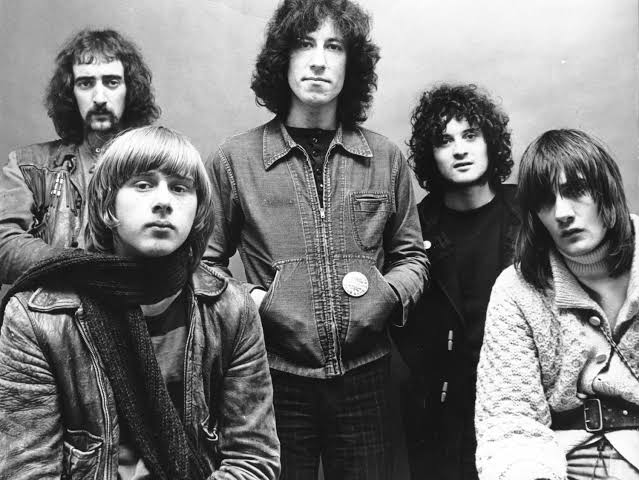
It was during this period that Fleetwood Mac became a five-piece. Green had seen an eighteen-year-old guitarist named Danny Kirwan playing with his London trio Boilerhouse at the Nag's Head in Battersea and the Marquee Club. Kirwan was unusual for his age: his influences included Hank Marvin, Django Reinhardt, and Jimi Hendrix, but his playing was disciplined and melodic, with a controlled vibrato that caught Green's ear. Mick Fleetwood recalled that Kirwan's presence was "one of those 'ah-ha' moments when you realise the answer is right there in front of you." In August 1968, Kirwan was invited to join, expanding the band to three guitarists—a rarity in the 1960s, and a configuration that risked cacophony. But Kirwan, Green, and Spencer each occupied distinct sonic territory: Spencer was the Elmore James firebrand, Kirwan the melodic harmonist, and Green the soulful bridge between them.
Kirwan's first recorded appearance came in November 1968 with the single "Albatross," an instrumental that bore little resemblance to the band's blues repertoire. It was a dreamy, minor-key guitar piece with a hypnotic groove, featuring Kirwan and Green's interlocking Les Pauls creating a soundscape that was almost cinematic. Released as a single, it shot to number one on the UK charts in January 1969, becoming the band's first chart-topping hit and announcing that Fleetwood Mac was capable of more than straight-ahead blues. The B-side, Kirwan's "Jigsaw Puzzle Blues," was a ragtime guitar showcase that further demonstrated the young guitarist's range.
The Chess Sessions: A Homecoming in Chicago
In January 1969, Fleetwood Mac toured the United States, opening for Muddy Waters at the Regal Theatre in Chicago and sharing bills with B.B. King and the Byrds. While in Chicago, producer Mike Vernon learned that the legendary Chess Records studio on East 21st Street—the Ter-Mar complex where Muddy Waters, Howlin' Wolf, and Little Walter had cut their classics—was about to close. He contacted Marshall Chess, son of label co-founder Leonard Chess, and arranged an impromptu recording session on January 4. It was a historic occasion: a young British blues band jamming with the very American legends who had inspired them.
Willie Dixon organized the session, calling in Otis Spann on piano and vocals, Buddy Guy on guitar, Big Walter "Shakey" Horton on harmonica, J.T. Brown on tenor saxophone, Honeyboy Edwards on guitar and vocals, and S.P. Leary on drums. The British and American musicians recorded eighteen tracks in a single day, with no overdubs, resulting in the double album Blues Jam in Chicago (also released as Fleetwood Mac in Chicago and as two separate volumes). The atmosphere was loose and competitive. Dixon reportedly chastised Horton for missing cues, and at one point, when John McVie struggled to nail a part on electric bass, Dixon picked up an upright bass and said, "If you can't do it, I'll do it."
The album is a document of mutual respect. Green's guitar weaves around Spann's piano on "I Got the Blues," trades licks with Buddy Guy on the scorching "Red Hot Jam," and locks into Chicago shuffle patterns behind Horton's harmonica. For Green, the session was a validation; for the Chicago veterans, it was proof that these British kids could actually play the music they loved. Jeff Lowenthal, a photographer Marshall Chess called in at the last minute, captured the day in a series of remarkable images that would not see wide publication for decades. As one writer noted, the session acted as "a kind of stylistic homecoming for the band," a pilgrimage to the source.
Then Play On and the Peak of the Green Era
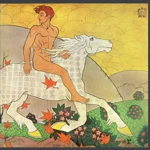
By mid-1969, Fleetwood Mac had signed with Warner Bros.' Reprise label after a brief, ill-fated dalliance with Immediate Records, which released the single "Man of the World" before collapsing. The move to Reprise gave them major-label distribution in the United States, and their third studio album, Then Play On, released in September 1969, remains the crowning achievement of the Peter Green era. Recorded at Kingsway Studios in London, the album was the first to prominently feature Danny Kirwan as a songwriter and vocalist, with Green having promised him half the album before a note was recorded.
The record is a seamless blend of blues, hard rock, and psychedelia. Kirwan's contributions—including "Coming Your Way," "When You Say," "Although the Sun Is Shining," and the instrumental "My Dream"—are melodic and intricate, showcasing his dual-lead guitar interplay with Green. Green's own songs push into darker, more complex territory. "Oh Well," released as a single that reached number two in the UK, is a two-part masterpiece: the first section a churning, flamenco-tinged riff driven by Green's fingerpicked electric guitar and vocals, the second a mournful instrumental featuring cello and Green's lead. It was the only song from the Peter Green era that all subsequent lineups of Fleetwood Mac would continue to perform live.
"Rattlesnake Shake" is a grinding, sexually charged blues-rocker that became a concert favorite, while "Searching for Madge" is an extended instrumental jam that demonstrates the band's improvisational power. The album's closing track, the Green-Kirwan collaboration "Like Crying," hints at the melancholy that was beginning to envelop the band's founder. The US release of the album was complicated by record company shuffling; tracks were dropped and added, including the full "Oh Well" single, making the American version a different listening experience from the British original. But regardless of sequencing, Then Play On proved that Fleetwood Mac was not merely a blues covers band. It was a creative force with multiple songwriters and a sound that was becoming impossible to categorize.
The Gathering Darkness
The success of Then Play On and the string of hit singles—"Albatross," "Man of the World," "Oh Well"—should have set the stage for even greater triumphs. Instead, they marked the beginning of the end. Green had always been an introspective, sensitive man; his girlfriend later attributed his emotional playing to childhood scars from anti-Semitic taunts. "The blues to him are Jewish blues," she said, suggesting that his music was a refuge from pain as much as an expression of artistic passion. But by 1969, that introspection was curdling into something more dangerous.
Green had begun experimenting with LSD, and while the drug was commonplace in the rock world of the late 1960s, it seemed to affect him differently than it did his peers. He grew a beard, began wearing white robes and a crucifix, and developed an obsessive concern with the band's financial success. Mick Fleetwood recalled conversations in which Green was "obsessive about us not making money, wanting us to give it all away." The other band members, who had worked hard for their success, were not receptive. "Well you can do it, I don't wanna do that, and that doesn't make me a bad person," Fleetwood told him.
The breaking point came during a European tour in the spring of 1970. After a concert in Munich, Green was approached by a pair of German hippies—a man who resembled John Lennon in glasses and a black cape, and a striking woman. They were allegedly Rainer Langhans and Uschi Obermaier, leading figures of the wealthy Highfisch-Kommune. Green was collected from the airport and taken to a party at a mansion in the Bavarian countryside, where the walls were painted in psychedelic patterns and, according to Fleetwood, "weird stuff" was happening in every room. Both Green and Danny Kirwan took LSD at the party. Manager Clifford Davis later claimed that both men became "seriously mentally ill" as of that day.
The experience shattered Green. He told Jeremy Spencer in the car afterward that the music they had just played was "the most spiritual music I've ever recorded in my life," but the statement carried an ominous finality. He began to withdraw from the band, his personal hygiene declined, and his rehearsals grew erratic. He wrote "The Green Manalishi (With the Two Prong Crown)" after waking from a nightmare in the wake of the commune party. The song, which reached number ten in the UK, was a haunting, metallic blues driven by a descending guitar riff and lyrics about a demonic figure chasing the narrator. Green explained that the "Green Manalishi" was money itself: "The Green Manalishi is the wad of notes, the devil is green and he was after me."
The Departure
On April 11, 1970, while the band was still on tour in Germany, Peter Green told his bandmates that he was leaving. He had finished the tour out of obligation, but his mind was made up. John McVie recalled his reaction with characteristic understatement: "Oh shit!" Management asked Jeremy Spencer to try to talk Green out of it, but Spencer, sensing the finality of Green's decision, refused to interfere. Green played his final gig with Fleetwood Mac on May 20, 1970, and by the end of the month he was gone.
The departure was as sudden as it was devastating. Green was not merely the lead guitarist and primary vocalist; he was the band's founder, its guiding intelligence, and its link to the blues authenticity that had been their calling card. Without him, Fleetwood Mac lost its center. The single "The Green Manalishi" climbed the charts even as its author walked away from the group, a bitter irony that underscored the disconnect between commercial success and personal peace.
In the immediate aftermath, Green recorded a jam session that was released as The End of the Game, his first solo album, a sprawling, unfocused document of a mind in flux. He also made a brief, pseudonymous return to Fleetwood Mac in 1971 under the name Peter Blue, helping the band finish a US tour after Jeremy Spencer's own sudden defection. But the Peter Green who had written "Albatross" and "Oh Well" was effectively gone. He was eventually diagnosed with schizophrenia, spent time in a mental institution in the mid-1970s undergoing electroconvulsive therapy, and gave away most of his money. For a time he was reportedly homeless in West London before settling with his brother in Great Yarmouth in the 1980s. He would eventually find his way back to music with the Peter Green Splinter Group in the late 1990s, and in 1998 he was inducted into the Rock and Roll Hall of Fame alongside the other founding members of Fleetwood Mac. He died on July 25, 2020, at the age of seventy-three, leaving behind a legacy that remains the spiritual foundation of everything Fleetwood Mac became.
The Sound and the Influence
Peter Green's Fleetwood Mac lasted barely three years, produced only three proper studio albums of new material (plus the Chess jam session), and never achieved the global superstardom of the later lineup. Yet its influence is incalculable. Green's guitar tone—derived from a 1959 Gibson Les Paul nicknamed "Greeny" that produced a unique out-of-phase sound thanks to a reversed neck pickup magnet—was warm, vocal, and piercingly melodic. He favored the minor mode and slow, soulful bends over flashy pyrotechnics, and his playing on tracks like "The Supernatural" (recorded with Mayall) and "Albatross" demonstrated a control of harmonic feedback and sustained notes that sounded almost otherworldly.
His songwriting provided the template for the band's future. "Black Magic Woman," which Santana turned into a worldwide hit in 1970, was a Green composition that blended Latin rhythms with blues structure years before Carlos Santana touched it. "Oh Well" was covered by everyone from Tom Petty to the Rockets. "The Green Manalishi" was recorded by Judas Priest, among others. Gary Moore, the Northern Irish guitar hero, bought Green's Les Paul and made it his own signature instrument, preserving the "Greeny" sound for a new generation. Kirk Hammett of Metallica later acquired the guitar, ensuring that its legend continues.
More importantly, Peter Green's Fleetwood Mac proved that British musicians could play the blues with an emotional authenticity that rivaled the American originators. They were not tourists in the tradition; they were converts, evangelists, and ultimately contributors to its evolution. The Chess sessions, the hit singles, and the albums Fleetwood Mac, Mr. Wonderful, and Then Play On form a body of work that stands alongside the best of the British blues boom, and in many ways surpasses it for sheer soulfulness.
What Became of Them
After Peter Green walked away in May 1970, the remaining members scattered into wildly different fates, some triumphant, some tragic, all indelibly marked by their time in the original blues powerhouse.
Peter Green endured decades of mental illness and obscurity before experiencing a late-career renaissance. After The End of the Game and scattered solo singles, he largely withdrew from public life, battling schizophrenia and the aftereffects of LSD and electroshock therapy. He gave away his money, lived simply, and gradually rebuilt his health in the 1980s. In the late 1990s, he formed the Peter Green Splinter Group, releasing nine albums of blues between 1997 and 2004. He made sporadic appearances in the 2000s and was celebrated in 2020 at the all-star "Mick Fleetwood and Friends" tribute concert in London, though he was too ill to attend. He died five months later, on July 25, 2020.
Jeremy Spencer remained in Fleetwood Mac only until February 1971. While on tour in Los Angeles, hours before a sold-out show at the Whisky a Go Go, he left the hotel to visit a bookstore and never returned. He had joined the Children of God, a religious commune (later known as The Family International), and refused to come back despite frantic pleas from management. He released a solo album in 1970 and later recorded with the Children of God band, but his commercial recording career essentially went dormant for over thirty years. He resurfaced in 2006 with Precious Little on Blind Pig Records, returned to blues and slide guitar, and released several more albums in the 2010s. He was inducted into the Rock and Roll Hall of Fame in 1998 and made a surprise appearance at the 2020 Peter Green tribute concert, his first stage appearance with Mick Fleetwood in forty-nine years.
Danny Kirwan stayed with Fleetwood Mac through Kiln House (1970), Future Games (1971), and Bare Trees (1972), becoming the band's central songwriter during the transition period. But the pressure of replacing Green, combined with heavy drinking and mental health struggles, led to his dismissal during the Bare Trees tour in 1972. He released four solo albums in the 1970s that failed commercially, then descended into alcoholism and homelessness. In 1993, Mick Fleetwood asked the Missing Persons Bureau to locate him; he was found in a London homeless shelter. He was inducted into the Rock and Roll Hall of Fame in 1998 but did not attend. He died in London on June 8, 2018, at age sixty-eight, largely forgotten by the mainstream but revered by those who understood his contribution to the band's early melodic sensibility.
John McVie never left Fleetwood Mac. He remained the constant bassist through every lineup change, every divorce, every triumph and disaster. He married Christine Perfect in 1968; she joined the band after Green's departure and they divorced in 1976, the same year Rumours was recorded. McVie later married Julie Ann Reubens in 1978, with whom he had a daughter, Molly. He released a solo album in 1992 and continued to tour with Fleetwood Mac into the twenty-first century, his unflappable bass lines providing the bedrock for the band's evolution from blues to pop-rock.
Mick Fleetwood also remained the band's drummer and de facto leader for its entire history. After Green's departure, he steered the group through the Kirwan and Spencer eras, the Bob Welch years, and the eventual arrival of Lindsey Buckingham and Stevie Nicks in 1974, which transformed Fleetwood Mac into one of the biggest-selling acts in history. Fleetwood endured multiple marriages—including two to Jenny Boyd, with whom he had daughters Lucy and Amy—and later ventures into wine, restaurants, and acting. He published several autobiographies and in 2021 released Celebrate the Music of Peter Green and the Early Years of Fleetwood Mac, a tribute to the founder who had set him on his path.
Bob Brunning, the original bassist who held the chair only until McVie's arrival, went on to join Savoy Brown briefly before embarking on a thirty-year career as a schoolteacher in London. He never abandoned music, forming the Brunning Sunflower Blues Band, playing with Tramp and the De Luxe Blues Band, and running BB's Blues Club and the Abbey Mills Blues Festival. He also became an authoritative historian of the British blues scene, writing Fleetwood Mac: Behind the Masks, Blues: The British Connection, and other books. He died suddenly of a heart attack on October 18, 2011, at the age of sixty-eight, a beloved figure in the British blues community who had witnessed the entire saga from the inside.
The band that Peter Green built in the summer of 1967 was gone by the spring of 1970, but its echo never faded. Every time a guitarist plugs in a Les Paul and searches for a sustained, singing tone; every time a fan drops the needle on "Albatross" or "Oh Well"; every time a young musician discovers that the blues can be played with equal parts fire and fragility, the spirit of Peter Green's Fleetwood Mac lives on. It was a brief, incandescent moment—three years of pure blues, psychedelic exploration, and soul-baring honesty—and it remains one of the most compelling chapters in the history of British rock.

 Buy from Amazon Fleetwood Mac
 Buy from Amazon Then Play On