There are blues musicians who learn their craft in juke joints and barrelhouses, and then there is Robert Pete Williams, who learned his in the cotton fields and lumberyards of Louisiana, who forged his first instrument from a cigar box and copper wire, and who sang his most haunting songs from behind the walls of the most notorious prison in the American South. His was not a career plotted along the familiar lines of the blues circuit—no steady migration from Delta plantations to Chicago clubs, no apprenticeship under a legendary master, no gradual climb from local obscurity to regional fame. Instead, Williams emerged almost fully formed, a middle-aged man with a life sentence and a guitar, discovered by accident in a prison tool room by a university professor who had gone looking for work songs and found something far more unsettling and profound.
Robert Pete Williams was born on March 14, 1914, in Zachary, Louisiana, a small town north of Baton Rouge in the heart of East Feliciana Parish.
He came into the world as the child of sharecroppers, and like so many African American children of that era and place, he was given no formal schooling. His education was the land itself—picking cotton under the blistering Louisiana sun, cutting sugar cane in the humid fields, learning early that the earth demanded everything and gave back almost nothing. This was not a childhood of leisure or learning; it was a childhood of labor, of calloused hands and bent backs, of watching adults wear themselves down against the implacable economics of the Jim Crow South.
In 1928, when Williams was fourteen, his family moved to Baton Rouge, the state capital, where he found work in a lumberyard.
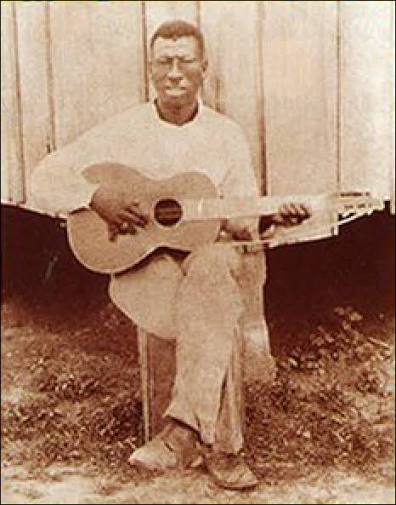
It was there, amid the sawdust and the heavy logs, that music first took hold of him. At the age of twenty, he fashioned his first guitar by attaching five copper strings to a cigar box, a crude instrument that nonetheless spoke to a desperate need for creative expression. Soon after, he managed to acquire a cheap, mass-produced guitar, and the real apprenticeship began. He was taught by Frank and Robert Metty, local musicians who gave him the fundamentals, and his earliest influences were the recorded sounds of Peetie Wheatstraw—the "Devil's Son-in-Law"—and the legendary Blind Lemon Jefferson, whose complex guitar work and haunting vocals had set the standard for country blues in the 1920s.
From the 1930s through the 1950s, Williams lived a double life that would be familiar to countless working-class bluesmen of his generation. By day, he labored in the lumberyards of Baton Rouge, stacking timber and hauling loads, his body bearing the physical toll of industrial work. By night, and on weekends, he played music wherever he could find an audience—church gatherings, fish fries, suppers, and dances. These were not glamorous gigs; they were community events, neighborhood affairs where a man with a guitar could earn a few dollars and perhaps a plate of food. Williams played for the people he knew, in the places he lived, and if his music never traveled far during these decades, it was nonetheless being refined in the crucible of live performance, shaped by the immediate feedback of dancers and drinkers, by the spiritual fervor of churchgoers, and by the solitary hours of practice in cramped rooms.
What we know of this period is fragmentary, pieced together from later interviews and the recollections of those who knew him. Williams married, had children, and struggled with the domestic tensions that poverty and hard labor inevitably produce. He continued to play throughout the Baton Rouge area, becoming a known figure in the local black community, a reliable musician who could be called upon when a party needed music. But he was not a professional musician in any conventional sense; he was a working man who played music, and there is no indication that he ever recorded or even aspired to record during these years. The blues world of the 1940s and early 1950s, with its traveling musicians and its burgeoning urban scenes, passed him by almost entirely. He was, in essence, a folk artist in the truest sense—someone who made music for his own community, for his own reasons, without any thought of fame or commercial success.
The Night That Changed Everything
The trajectory of Robert Pete Williams's life was irrevocably altered on a night in 1956, the details of which remain shadowed by time and conflicting accounts. What is known is this: Williams was playing at a local club, a juke joint somewhere in the Baton Rouge area, when a confrontation occurred. Shots were fired, and a man lay dead. Williams maintained that he had acted in self-defense, that the killing was not murder but the desperate act of a man fighting for his life.
The courts saw it differently. In the Louisiana of 1956, a black man who killed another man in a nightclub, regardless of the circumstances, could expect no mercy from the justice system. Williams was convicted of murder and sentenced to life in prison.
He was sent to the Louisiana State Penitentiary at Angola, a place whose very name carried a weight of dread in the black communities of the South. Angola was not merely a prison; it was a plantation, a sprawling eighteen-thousand-acre farm worked by incarcerated men under conditions that differed little from the convict lease system of the previous century. It was a place of violence, of forced labor, of racial terror institutionalized under the guise of corrections. For a man like Williams, who had spent his life doing hard physical labor, the work itself may not have been unfamiliar, but the loss of freedom, the severing of family ties, and the constant threat of violence from both guards and fellow inmates must have been a kind of living death.
He served two years in this environment before his life took its most improbable turn. In 1958, Dr. Harry Oster, a professor of English at Louisiana State University in Baton Rouge, began a project that would eventually transform the study of American folk music. Oster, who had a background in literary folklore, had initially set out to collect French and Anglo ballads in Louisiana, but his curiosity quickly expanded to encompass the full range of traditional music in the state—Cajun dance music, Creole hymns, African American fiddle tunes, prison work songs, and the blues.
A colleague suggested he apply for a grant to collect local folklore, and before long, Oster was traveling the back roads with a tape recorder, capturing sounds that the commercial music industry had no interest in and that academic musicology had largely ignored.
Oster's approach was methodical and unconventional. Rather than tracking down musicians who had recorded commercially in the 1920s and 1930s, he sought out living traditions in their natural habitats—at house parties, church services, and, most fatefully, in the prison camps of Angola. He obtained permission from the state to record incarcerated musicians, and the warden, perhaps influenced by Oster's position at the state university, proved cooperative. Oster started with the prison choir, which led him to work songs, which led him to the individual camps where men labored in the fields by day and played music by night.
It was in this context, in the tool room of Camp H at Angola, that Oster and his colleague Richard B. Allen set up an impromptu recording studio in 1959. They had already found several impressive blues singers—Hogman Maxey, Guitar Welch, Roosevelt Charles—but nothing prepared them for Robert Pete Williams. Oster would later write, with the precision of a man who recognized genius when he encountered it, that "the blues of Robert Pete Williams are more original, more directly personal, and more evocative in their expression of love, frustration, and despair."
The recordings that emerged from those sessions are among the most extraordinary documents in the history of American music. Williams sang not the standard blues repertoire of broken hearts and rambling men, but songs that sprang directly from his immediate circumstances—songs about prison life, about the injustice of his sentence, about the crushing weight of time. "Prisoner's Talking Blues" was a stream-of-consciousness narrative that wandered through his thoughts and fears with a kind of hypnotic inevitability. "Pardon Denied Again" captured the specific agony of hope raised and then dashed, of a man who had been told he might be freed only to have that possibility snatched away. "Some Got Six Months" drew the bitter contrast between the sentences of other inmates and his own life term. "I'm Blue As A Man Can Be (I'll Be Glad When I'm From Behind Iron Walls)" stated its case with a stark simplicity that no amount of poetic embellishment could improve upon.
What struck Oster and Allen immediately was not merely the content of Williams's songs but their form. Here was a musician who seemed to operate outside the conventions of the blues as they were commonly understood. His songs did not adhere to the standard twelve-bar structure. They did not follow the familiar AAB lyric pattern. They were long, sometimes very long, unfolding in a manner that seemed closer to West African griot traditions or to the free-associative methods of jazz improvisation than to the rigid forms of commercial blues. Williams would start with a theme—a prison guard, a memory of home, a prayer for freedom—and then circle it, elaborating upon it, returning to it, departing from it, creating structures that were unique to each performance and that could not be replicated, only rediscovered.
The guitar work was equally idiosyncratic. Williams employed unconventional tunings and playing positions that gave his music a dark, dissonant quality. He often avoided standard chord shapes altogether, instead using his fretting hand to find melodic lines that responded to his vocal phrasing in real time.
Where most blues guitarists would accompany a sung minor third with the major third of the chord, creating the characteristic tension of the blues, Williams frequently matched minor with minor, producing a sound of profound and unrelieved melancholy. His bass lines were not the steady alternating thumb patterns of Mississippi John Hurt or the driving rhythms of Muddy Waters, but something more fluid and unpredictable, shifting between the root and the minor third, between the expected and the strange. The result was music that felt ancient and modern simultaneously, rooted in the traditions of the rural South but utterly personal, unmistakably the product of a single mind working through its isolation in real time.
Freedom of a Sort
The discovery of Robert Pete Williams by Harry Oster and Richard Allen was not merely an aesthetic event; it was, quite literally, a matter of life and death. Oster, deeply moved by Williams's artistry and convinced of the injustice of his situation, began to agitate for the musician's release. He and Allen pleaded with the parole board, using the recordings as evidence of Williams's character and his value to the cultural life of the state. Under pressure from Oster, the board eventually issued a pardon, commuting Williams's life sentence to twelve years.
In December 1958, after serving approximately three and a half years, Robert Pete Williams walked out of Angola a free man.
But freedom, in the Louisiana of the late 1950s, was a conditional and circumscribed thing for a black man with a murder conviction. Williams was released into what was termed "servitude parole," a arrangement that required him to perform eighty hours of labor per week on a farm in Denham Springs, for which he received no wages, only room and board.
This was not freedom in any meaningful sense; it was a transfer from one form of bondage to another, from the walls of Angola to the fields of a private farm, where his labor was extracted without compensation and his movements were monitored and restricted. The terms of his parole explicitly prevented him from working as a musician, a cruel irony that meant the very artistry that had secured his release was now forbidden to him as a profession.
For the first five years after his release, Williams was effectively confined to Louisiana. He could not tour, could not seek work in clubs, could not even legally accept payment for playing music. He was able, occasionally, to play with local musicians Butch Cage and Willie B. Thomas at Thomas's home in Zachary, keeping his fingers limber and his spirit sustained by the company of fellow musicians.
But these were private gatherings, not public performances, and they offered no path to a career. Williams was, in effect, silenced by the state at the very moment when his music was beginning to reach an audience beyond the prison walls.
Yet the recordings that Oster had made at Angola could not be silenced. They began to circulate among folk music enthusiasts, blues collectors, and the growing network of college students and young intellectuals who were discovering traditional African American music through the folk revival of the late 1950s and early 1960s. The Louisiana Folklore Society issued
Angola Prisoner's Blues in 1959, an album that featured three tracks by Williams alongside performances by his fellow inmates Hogman Maxey and Guitar Welch.
The album was not a commercial blockbuster—how could it be, with its raw, unvarnished sound and its harrowing subject matter?—but it found its way into the hands of the people who mattered: folk festival organizers, record collectors, musicologists, and the small but passionate community of blues devotees who recognized that something extraordinary had been captured on tape.
Word of mouth began to build. Blues enthusiasts spoke of a man in Louisiana who played like no one else, who sang songs that seemed to come from some deeper, darker place than the conventional blues allowed. The recordings on Folk-Lyric and the Louisiana Folklore Society labels, though limited in their initial distribution, created a kind of underground reputation that would serve Williams well when the opportunity finally came to perform in public.
Newport and the Breaking of the Dam
The year 1964 marked a turning point not only for Robert Pete Williams but for the entire relationship between traditional blues and the American mainstream. The folk music revival, which had been gathering momentum since the late 1950s, had created a new audience for acoustic blues, an audience of young, largely white college students and urban intellectuals who encountered the music through folk festivals, LP reissues, and the advocacy of collectors like Alan Lomax and Samuel Charters. The Newport Folk Festival, established in 1959 by George Wein, had become the premier showcase for this revival, a place where traditional musicians from across America could perform for thousands of enthusiastic listeners who treated their music not as entertainment but as cultural heritage.
In 1964, Robert Pete Williams was invited to perform at Newport.
It was his first concert outside of Louisiana, his first exposure to a national audience, and his first opportunity to step onto a stage as a professional musician rather than a convict or a farm laborer. The significance of this moment cannot be overstated. For a man who had been sentenced to life in prison just eight years earlier, who had been forbidden by the terms of his parole to work as a musician, to stand before the assembled masses at Newport was a kind of vindication that transcended any individual performance.
We do not have a complete recording of his Newport set, but the accounts of those who were there speak of a powerful, if perhaps bewildering, performance. Williams was not a polished entertainer; he did not banter with the crowd or tailor his set to festival expectations. He played his songs—long, winding, improvisatory pieces that must have seemed alien to an audience accustomed to the three-minute structures of pop music and the familiar patterns of folk standards. But the very strangeness of his music, its refusal to conform to expectations, was precisely what made it compelling. Here was authenticity in its rawest form, a man singing his own truth in his own way, and the Newport audience, for all its naivete about the realities of the blues life, recognized something genuine when they heard it.
The Newport performance opened doors that had been firmly shut. By 1965, the restrictions of Williams's parole had loosened enough that he was able to tour the country, traveling to Los Angeles, Massachusetts, Chicago, and Berkeley, California.
These were not the chitlin circuit juke joints of the South, but the coffeehouses, college auditoriums, and folk clubs that constituted the new blues circuit of the 1960s. Williams found himself sharing stages with the likes of Mississippi Fred McDowell, Son House, and other rediscovered bluesmen who were experiencing similar late-career renaissances. He was, in essence, a member of a new and peculiar fraternity: the Angola-to-Newport pipeline, the prison-to-prestige circuit that only the folk revival could have created.
In 1966, Williams made his first tour of Europe, a continent that had long harbored a fascination with American blues and that treated its practitioners with a reverence that could be both gratifying and disorienting. European audiences, less burdened by the racial assumptions of American society and more inclined to view blues as high art, embraced Williams with an enthusiasm that contrasted sharply with the indifference or hostility he had encountered at home. The tour was a success, establishing him as an international figure and providing him with an income that farm labor never could.
The Music Itself: A Style Without Precedent
To discuss Robert Pete Williams's recordings is to enter a world where the usual categories of blues scholarship—Delta blues, Texas blues, Piedmont blues, Chicago blues—become not merely inadequate but actively misleading. Williams was a Louisiana musician, and there is certainly something of the region's musical traditions in his work—the influence of Creole music, of zydeco, of the French and Spanish musical heritage that permeates Louisiana culture. But to reduce his music to geography is to miss the essential point: Robert Pete Williams sounded like no one else because he thought like no one else, because his approach to the guitar and to song structure was the product of a mind that had never been formally trained, that had learned music by ear and by instinct, and that had spent years in solitary creative development before anyone thought to record him.
The technical analysis of Williams's playing reveals a musician who operated according to his own internal logic. He used standard tuning, dropped-D tuning, and Spanish tuning (DGDGBE) interchangeably, sometimes tuning his guitar considerably lower than standard pitch to achieve a slack, resonant sound that allowed for wide string bends and a vocal-like quality in his melodic lines.
He played in positions that other guitarists avoided—B position in standard tuning, for instance, or Spanish tuning played in the key of the IV chord rather than the more common I chord.
What is most striking about Williams's technique is his rejection of chordal thinking. Where most blues guitarists organize their playing around chord shapes—an E chord here, an A chord there, a B7 to resolve—Williams often played without any fixed chordal positions at all, using his left hand to find individual notes that responded to his vocal line in a kind of contrapuntal dialogue.
His right hand, meanwhile, employed a variety of approaches: thumb-led bass patterns, frailing motions more commonly associated with banjo playing, and intricate fingerpicking that defies easy categorization. On "So Much Is Happenin' In The News" and "Dyin' Soul," he utilized a frailing approach that gave the music a raw, percussive energy.
On "Church On Fire With The Word Of God," he played in DGDGBE tuning but treated the open sixth string as his tonal center, creating a floating, disorienting sound that bears comparison to the avant-garde jazz of the period.
His use of minor tonality was particularly unusual. The blues, as commonly understood, is built on the tension between major and minor, between the major third of the chord and the minor third of the vocal line. Williams frequently eliminated this tension by accompanying his minor vocal lines with minor intervals on the guitar, producing a sound of unrelieved darkness.
On "I'm Lonesome Blues," one of his earliest recorded performances, he alternates his bass between the root and the minor third, both played on the same string, creating a funky, unsettling groove that sounds like nothing else in the pre-war or post-war blues canon.
Lyrically, Williams was equally unconventional. His songs were not the standardized narratives of travel and romance that dominated the blues repertoire, but intensely personal statements that drew upon his own experiences and observations. "Prisoner's Talking Blues" is not really a blues at all in the formal sense, but a talking piece, a monologue set to music, in which Williams rambles through his thoughts about prison life, his legal case, his hopes and fears, creating a structure that is dictated by the logic of speech rather than the logic of song. "Up And Down Blues" contains the unforgettable verse: "Sometime now I set down, I have to write to my own self sometime / I have to fool these other inmates, like I'm receiving mail from home."
It is a moment of such profound loneliness, such desperate imagination, that it transcends the genre entirely.
"Angola Special" gives us "Come here, baby, tell poor Bob your downfall," a line that manages to be simultaneously seductive and despairing, sexual and confessional. "Pardon Denied Again" is a masterpiece of restrained fury, its title phrase repeated like a mantra of injustice, the guitar accompaniment circling around the vocal line in a way that suggests both entrapment and the possibility of transcendence. These are not songs that could be covered by other artists in any straightforward way; they are too tied to Williams's specific voice, his specific phrasing, his specific way of inhabiting the guitar. They are, in the truest sense, folk art—music made by and for a specific individual, which happens to speak to universal human experiences of suffering, resilience, and the need for creative expression.
The Recorded Legacy
The body of recorded work that Robert Pete Williams left behind is not vast by the standards of commercial music, but it is extraordinarily rich, spanning more than two decades and encompassing some of the most important labels in the folk and blues revival. The story of these recordings is inseparable from the story of the folk revival itself, and from the dedication of a small group of collectors, producers, and enthusiasts who recognized Williams's genius and worked tirelessly to preserve and disseminate it.
The earliest recordings, made by Harry Oster and Richard Allen at Angola State Penitentiary in 1959 and 1960, remain the foundation of Williams's reputation. These sessions, conducted in the tool room of Camp H with primitive equipment, captured Williams in the most direct and unmediated circumstances possible. The first album to emerge from these sessions,
Angola Prisoner's Blues, was issued by the Louisiana Folklore Society in 1959 and featured Williams alongside his fellow inmates Hogman Maxey and Guitar Welch.
The album included "Prisoner's Talking Blues," "Some Got Six Months," "I'm Lonesome Blues," and "Motherless Children Have A Hard Time"—performances that announced the arrival of a major artist to the small but discerning audience that sought out such releases.
Oster continued to record Williams throughout 1959 and into 1960, amassing a body of material that would sustain the musician's career for years to come. The sessions of January 26, 1959, produced "Levee Camp Blues," a six-minute epic that evoked the brutal labor of the levee camps where generations of black men had worked under conditions little better than slavery. The January 27 session brought forth "I'm Blue As A Man Can Be," played on a twelve-string guitar that added a shimmering, almost orchestral richness to Williams's sound. On January 28, he recorded "Army Blues" and "Boogy Woman" with Matthew "Hogman" Maxey contributing second guitar. The February and March sessions yielded "Bulldog Blues," "Some Got Six Months," "I'm Lonesome Blues," and the monumental "Up And Down Blues" and "Prisoner's Talking Blues."
These prison recordings were not merely historical documents; they were works of art that stood comparison with anything being produced in the blues world at the time. The fact that they were recorded under such unlikely circumstances—amid the violence and deprivation of Angola, with no commercial expectations, no thought of audience or market—only adds to their power. They are music made for its own sake, by a man who had nothing else to offer and nothing else to lose.
After Williams's release, Oster continued to record him in various locations around Baton Rouge and Denham Springs. The sessions of February 10, 1960, produced "Almost Dead Blues," a title that speaks to the precariousness of Williams's existence in the months after his release. The September through November 1960 sessions, conducted at house parties and informal gatherings, captured Williams in a more social context, playing alongside other Louisiana musicians like Butch Cage, Willie B. Thomas, Clarence Edwards, and Smoky Babe. These recordings, which eventually appeared on the Bluesville album
Free Again and the Folk-Lyric release
Country Negro Jam Session, show Williams as a participant in a living musical community, not merely a solitary genius but a man who played with and for his neighbors.
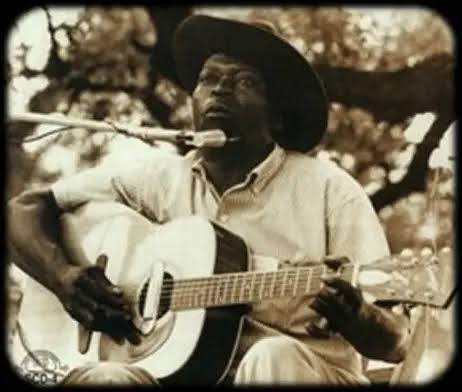
The album Those Prison Blues, first issued on Folk-Lyric in 1963 and later reissued by Arhoolie, compiled some of the strongest material from the Angola and post-Angola sessions. Tracks like "Pardon Denied Again," "Louise," "I Got The Blues So Bad," and "Make Me A Pallet On The Floor" demonstrated the range of Williams's repertoire, from the intensely personal prison narratives to more traditional blues and even spiritual material. The album's cover photograph, taken by Harry Oster, showed Williams with the weathered face of a man who had seen too much too young, and the music within fulfilled the promise of that image.
In 1966, Takoma Records issued
Louisiana Blues, an album that represented Williams's first recording specifically intended for the growing market of blues enthusiasts. Produced by Oster and featuring extensive notes by Alan Wilson of Canned Heat—who was himself a serious student of country blues—the album included "Tom And Old Master" and "Lord, What's Gonna Become 'o Me," performances that found Williams extending his improvisatory methods to new lengths and new depths of expression.
The Takoma release was significant not only for the quality of the music but for the company it placed Williams in; Takoma was the label of John Fahey, a guitarist and composer whose own work was deeply influenced by country blues, and whose advocacy helped to establish Williams as a musician's musician, someone whose work repaid close study by other players.
The 1970s saw a flurry of recording activity as Williams's touring schedule intensified. The album
Robert Pete Williams on Ahura Mazda in 1970,
When I Lay My Burden Down on Southland in 1971, and
Sugar Farm Blues on Blues Beacon in 1972 captured him in various studio and live settings, showing an artist who had lost none of his inventiveness with age. The 1972 session with Big Joe Williams on Storyville was a fascinating pairing of two generations of bluesmen, with Big Joe's kazoo adding a raucous counterpoint to Robert Pete's brooding intensity.
Samuel Charters, the legendary producer and historian, recorded Williams for the Swedish label Sonet in 1972, resulting in
Legacy of the Blues Vol. 9. Charters's production was more polished than Oster's field recordings, but it did not tame Williams's essential wildness. The album included "Angola Penitentiary Blues," a return to the themes of his earliest work, as well as "Late Night Boogie" and "Goin' Out Have Myself A Ball," which showed that Williams was capable of lighter, more celebratory moods when the occasion demanded.
In 1979, while touring Europe, Williams recorded
Santa Fe Blues for the Paris Album label, and in 1980, he made his final recordings,
Ferraillages, with the French musician Dick Annegarn on Spalax.
These late European recordings have a valedictory quality, the sound of a man who knows his time is running out but who still has things to say. They are looser, more reflective, sometimes almost whimsical, as if the distance from Louisiana and the passage of years had allowed Williams to view his life with a measure of detachment.
The Arhoolie label, under the stewardship of Chris Strachwitz, has done more than any other institution to preserve and disseminate Williams's work. Strachwitz, who purchased the Folk-Lyric catalog from Oster, reissued the prison recordings on a series of meticulously curated CDs, including
I'm Blue As A Man Can Be (1994),
When A Man Takes The Blues (1994), and the comprehensive anthology
Poor Bob's Blues (2004).
These releases, with their detailed notes and superior sound, have ensured that Williams's music remains accessible to new generations of listeners, and that the full scope of his achievement—spanning from the raw prison recordings of 1959 to the reflective late work of 1980—can be appreciated as a unified body of work.
The Ann Arbor Moment and the Festival Years
If Newport in 1964 introduced Robert Pete Williams to the national folk audience, the Ann Arbor Blues Festival of 1970 marked his apotheosis as a major figure in the blues revival. The Ann Arbor festivals, organized by a group of University of Michigan students and local music enthusiasts, were landmark events that brought together the greatest names in country blues for performances that have since become legendary. The 1970 festival, in particular, was a gathering of giants: Son House, Mississippi Fred McDowell, Mance Lipscomb, and Robert Pete Williams shared a stage that represented the pinnacle of the acoustic blues tradition.
A photograph from that festival, preserved in the archives of the Ann Arbor District Library, shows Williams alongside Mance Lipscomb, two elder statesmen of the blues sharing a moment of camaraderie amid the chaos of the festival grounds.
It is a poignant image, capturing a world that was already passing away, a moment when these musicians—who had spent their lives in obscurity, poverty, and struggle—were finally receiving the recognition they deserved, even if that recognition came too late to materially change their circumstances.
The 1970s were Williams's most active period as a performer. He played coffeehouses and concerts across the United States, appeared at blues and folk festivals from coast to coast, and made repeated tours of Europe, where his music was celebrated with an intensity that sometimes surprised him. He appeared in several documentary films, including
Roots of American Music; Country and Urban Music (1971), and two French productions,
Out of the Blacks into the Blues (1972) and
Blues Under the Skin (1972), which introduced his music to international audiences who might never have heard of Angola Prison or the lumberyards of Baton Rouge.
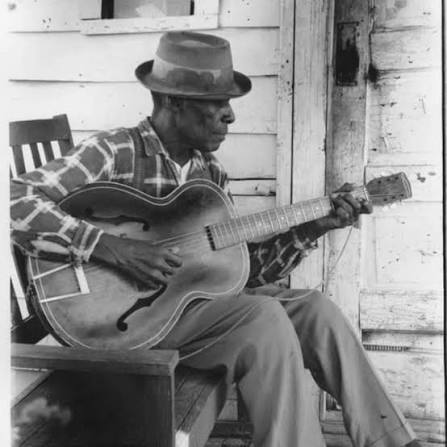
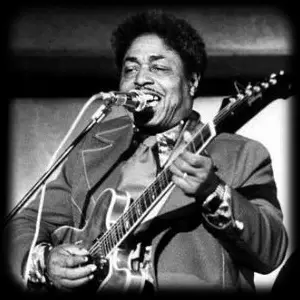
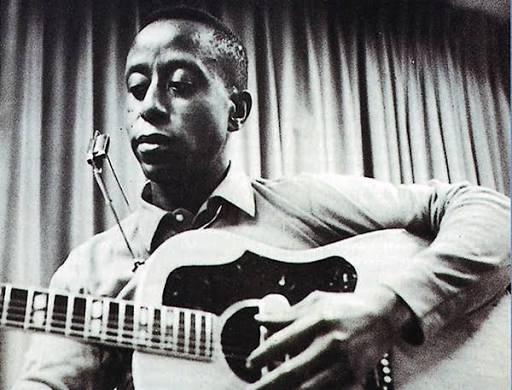
These films are valuable not only for the music they contain but for the visual record they provide of Williams in his prime. He was not a young man by the standards of the music industry—he was in his fifties when the folk revival discovered him, and in his sixties during his busiest touring years—but he possessed a physical presence that commanded attention. His face, lined and weathered, spoke of decades of hard labor and harder living. His hands, large and calloused, moved over the guitar with a delicacy that belied their roughness. When he sang, he did not perform in the manner of a stage entertainer; he testified, he confessed, he bore witness. Audiences who came expecting the familiar comforts of folk-blues standards were often disconcerted by what they encountered; those who came with open ears found themselves in the presence of something genuinely transformative.
Influence and Afterlife
The influence of Robert Pete Williams on subsequent generations of musicians is difficult to measure in conventional terms. He was not a hitmaker; his songs did not enter the blues standard repertoire in the way that "Sweet Home Chicago" or "Crossroads" did. He was not widely covered during his lifetime, and his unconventional structures and deeply personal lyrics made his material resistant to the kind of easy interpretation that fuels cover versions. Yet his impact on those who did encounter his music was profound and lasting, and his legacy has grown steadily in the decades since his death.
The most notable cover of a Williams song came from an unlikely source: Captain Beefheart, the avant-garde rock musician whose own work was characterized by its rejection of conventional structures and its embrace of the raw and the strange. Beefheart recorded "I've Grown So Ugly" for his 1967 album
Safe as Milk, bringing Williams's music to an audience of psychedelic rock fans who might never have encountered country blues otherwise.
Nearly four decades later, the rock duo The Black Keys covered the same song for their 2004 album
Rubber Factory, introducing Williams to yet another generation of listeners raised on indie rock and garage blues.
These covers are significant not merely for the exposure they provided but for the affinity they revealed between Williams's radical approach to the blues and the experimental impulses of rock musicians who were themselves seeking to break free from convention.
Among serious students of the guitar, Williams has achieved a kind of cult status. His tunings, his right-hand techniques, his approach to minor tonality and free-form structure have been analyzed and debated on forums and in instructional videos by players seeking to understand how he achieved his distinctive sound.
The detailed analysis of his playing positions and tunings, compiled by dedicated researchers and made available through websites like Weenie Campbell, has revealed the depth of his innovation, showing that what initially sounds like primitive simplicity is in fact a highly sophisticated and individual approach to the instrument.
For blues historians and ethnomusicologists, Williams represents a crucial case study in the relationship between social conditions and artistic expression. His music is inseparable from the circumstances of its creation; the Angola recordings cannot be understood without reference to the prison itself, to the system of convict labor that produced them, to the intervention of Harry Oster that brought them to light. Scholars have used Williams's story to explore the politics of folk music collecting, the racial dynamics of the folk revival, and the ways in which the criminal justice system has both suppressed and inadvertently fostered African American musical creativity.
In 2014, more than three decades after his death, Robert Pete Williams was inducted into the Blues Hall of Fame, a posthumous recognition that placed him among the immortals of the genre.
He had already been inducted into the Louisiana Blues Hall of Fame, an honor that acknowledged his role as one of the most distinctive voices to emerge from the state's rich musical tradition. These honors, though they came too late for Williams to enjoy them, serve as a reminder that his contribution to American music was not merely a footnote or a curiosity, but a substantial and enduring body of work that continues to reward serious attention.
The Final Years
By the late 1970s, Robert Pete Williams had begun to slow down. The constant touring, the travel between Europe and America, the demands of a performance schedule that would have exhausted a much younger man, all took their toll on a body that had already endured more than its share of hardship. He settled in Rosedale, Louisiana, not far from where he had been born, and his public appearances became less frequent.
There is a tendency, when writing about blues musicians of Williams's generation, to romanticize their final years, to imagine them as elder statesmen enjoying a well-deserved rest, surrounded by family and honored by their communities. The reality was almost certainly more complicated. Williams had never achieved financial security; the folk revival that brought him fame did not bring him wealth, and the structural inequalities that had defined his life from childhood did not disappear in his old age. He died on December 31, 1980, in Rosedale, at the age of sixty-six, a lifespan that seems shockingly short by contemporary standards but that was, sadly, typical for men of his race and class who had spent their lives in physical labor.
The cause of his death is not widely recorded, which is itself a commentary on the marginal status of blues musicians in American society, even those who had achieved a measure of fame. What matters is not the clinical details but the larger fact: a man who had created some of the most original and powerful music in American history died without the security or recognition that his artistry deserved. It is a familiar story in the blues, repeated with depressing regularity across the generations, but it loses none of its power to sadden and to anger for being familiar.
Suggested Listening
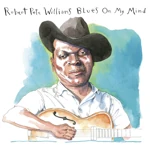 Buy from Amazon Blues On My Mind
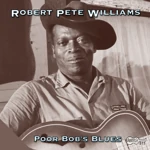 Buy from Amazon Poor Bob's Blues
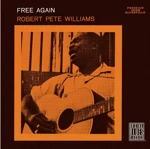 Buy from Amazon Free Again
The River Flows On
Robert Pete Williams was not a bluesman in the conventional sense. He did not ride the rails from town to town, he did not cut his teeth in the juke joints of the Delta, he did not migrate to Chicago and plug in his guitar. He was a sharecropper's son who became a lumberyard worker, who killed a man and went to prison, who was discovered by accident and freed by the intervention of a college professor, who spent his brief years of freedom playing to audiences that could never fully understand the world he came from. His music was too strange, too personal, too deeply rooted in specific experiences of injustice and survival, to be easily assimilated into the mainstream of blues history.
And yet it is precisely these qualities that make his work essential. In an era when the blues has often been reduced to a set of clichés—sad songs about cheating women, twelve-bar progressions played by white kids in blues bars, a genre packaged for tourist consumption—Robert Pete Williams stands as a reminder of what the music was and what it could be. His blues was not entertainment; it was testimony, survival, art made under conditions that would have silenced a lesser man. The fact that he created it in the tool room of a prison camp, with no expectation that anyone would ever hear it, and that it has survived to reach us across more than six decades, is one of the small miracles of American cultural history.
To listen to "Prisoner's Talking Blues" today is to be transported to a specific moment in time—the humid air of a Louisiana prison, the scrape of a cheap guitar, the voice of a man who has nothing left but his words and his music. But it is also to hear something timeless, something that speaks to the universal experience of confinement, whether physical or spiritual, and to the human capacity for creative expression in the face of overwhelming adversity. Williams's music does not ask for our pity; it demands our attention, our respect, our recognition that here was a mind and a spirit that could not be broken, that found in the blues not merely a form of entertainment but a mode of existential resistance.
The dark river of Robert Pete Williams's life—flowing from the cotton fields of Zachary to the lumberyards of Baton Rouge, through the hell of Angola and out into the uncertain freedom of the folk revival, across the stages of Newport and Ann Arbor and the concert halls of Europe, and finally back to the quiet of Rosedale—has long since reached its end. But the music he made continues to flow, finding new listeners, new interpreters, new meanings with each passing year. He was, in the end, what the greatest artists always are: a man who turned his particular suffering into something universal, who made from the materials of his own life a music that belongs to all of us, and that will endure as long as there are ears to hear it and hearts to feel it.
For the blues enthusiast, Robert Pete Williams offers something that cannot be found elsewhere: not the polished brilliance of a Robert Johnson, not the raw power of a Howlin' Wolf, not the technical mastery of a Muddy Waters, but something rarer and more precious—a voice that sounds like no other, that speaks truths heard nowhere else, that reminds us that the blues, at its deepest level, is not a genre or a style but a way of being in the world, a method of surviving the unsurvivable, of singing when every reason to sing has been taken away. In the vast and varied landscape of American music, Robert Pete Williams remains a singular figure, a dark star whose light, though it burned briefly and in obscurity, continues to illuminate the hidden corners of the human experience.